 Talmud Bavli
The learning on the whole site is dedicated : L'ilui Nishmat Margalit bat Ledicia
The learning on the whole site is dedicated : L'ilui Nishmat רינה בת לדיסיה
The learning on the whole site is dedicated : L'ilui Nishmat Nissim ben Barukh Malka
Yoma 35a : Youtube
Daf TubeYoutube
3 video classes :
Yoma Page 35a
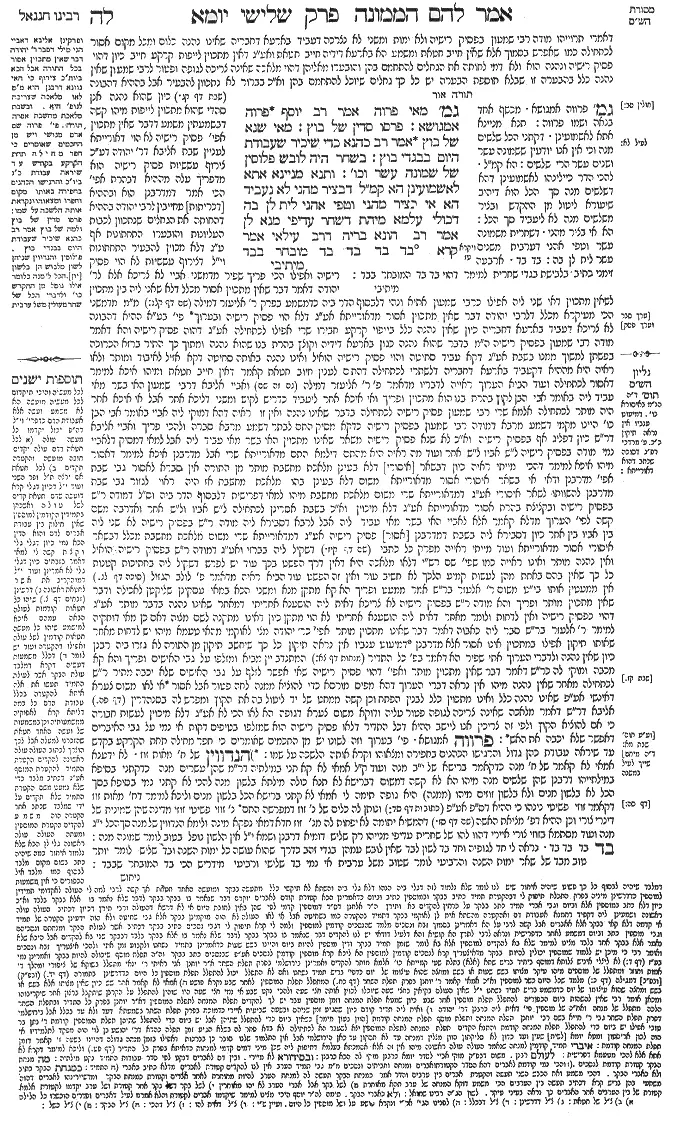
Yoma 35a - Guemara
גמ׳ מאי פרוה אמר רב יוסף פרוה אמגושא פרסו סדין של בוץ מאי שנא של בוץ אמר רב כהנא כדי שיכיר שעבודת היום בבגדי בוץ בשחר היה לובש פלוסין של שמונה עשר וכו' ותנא מניינא אתא לאשמועינן הא קמ"ל דבציר מהני לא נעביד הא אי בציר מהני וטפי אהני לית לן בה דכולי עלמא מיהת דשחר עדיפי מנא לן אמר רב הונא בריה דרב עילאי אמר קרא (ויקרא טז, ד) בד בד בד בד מובחר בבד
Comments from Rashi on Masechet Yoma Page 35a
גמ' פרווה אמגושא . מכשף אחד בנאה ושמו פרווה: תנא מניינא אתא לאשמועינן . דקתני הכל שלשים מנה וכי אין אנו יודעין ששמונה עשר ושנים עשר הרי שלשים: הא קמ"ל . להכי הדר כיילינהו לאשמועינן דהא דשלשים מנה סך הכל הוא דיהיב שיעורא ליטול מן ההקדש ובציר משלשים מנה לא ליעביד סך הכל: הא אי בציר מהני . דשחרית משמונה עשר וטפי אהני דערבית משנים עשר לית לן בה: בד בד . ארבעה זימני כתיב בלבישת בגדי שחרית למימר דהוי בד בד המובחר בבד:
Comments from Tosafot - Yoma 35a
פרווה אמגושא . פי' בערוך וזה לשונו יש מן החכמים שאומרים כי חפר מחילה תחת הקרקע בקדש עד שיראה עבודת כהן גדול והרגישו הכהנים בחפירה ומצאוהו וקרא אותה הלשכה על שמו: בד בד בד בד . נראה לי חד לגופיה וחד בד לשון לבד שאין לובש עמהן בגדי זהב כדרך שהוא עושה כל ימות השנה ובד שלישי לומר יותר טוב מבד של שאר ימות השנה והרביעי לומר שטוב משל ערבית אי נמי בד שלישי ורביעי מידריש הכי בד המובחר שבבד:
Yoma 35a - Mishnah translated into english
GEMARA: What is the meaning of the name Parva? Rav Yosef said: Parva is the name of a Persian sorcerer, whose name is associated with the chamber due to a particular incident.
§ It was stated in the mishna: They spread there a sheet of fine linen. The Gemara asks: What is different that the sheet that they spread was made of fine linen? Rav Kahana said: It was so that the High Priest will be aware and remember that the service of the day is performed in fine linen.
§ The mishna continues: In the morning, he would wear garments worth eighteen maneh, and in the afternoon he would wear garments worth twelve maneh. In total, the clothes were worth thirty maneh. The Gemara expresses surprise at the total in the mishna: Does the tanna come to tell us the tally that eighteen and twelve equal thirty? The Gemara answers: This comes to teach us that one may not fashion garments worth less than the total of these morning and afternoon garments. The Gemara elaborates: If one decreases the value of these morning garments, and raises the value of those afternoon garments, we have no problem with it. One can distribute the total of thirty maneh between the two sets of garments in any manner that he chooses.
The Gemara comments: However, everyone, both Rabbi Meir and the Rabbis, agrees that the clothes of the morning are superior and must be more valuable than those of the afternoon. From where do we derive this? Rav Huna, son of Rav Ilai, said that with regard to the linen garments donned by the High Priest in the morning, the verse states: “He shall be dressed in a sacred linen tunic, and with linen trousers next to his flesh, and he shall be girded with a linen belt, and he shall wear a linen mitre” (Leviticus 16:4). From the fact that the verse repeats the term linen four times it is derived that the choicest linen should be used for this purpose.
Traduction : The William Davidson digital edition of the Koren Noé Talmud, with commentary by Rabbi Adin Even-Israel Steinsaltz.