 Talmud Bavli
Yoma 19a : Youtube
Daf TubeYoutube
3 video classes :
Yoma Page 19a
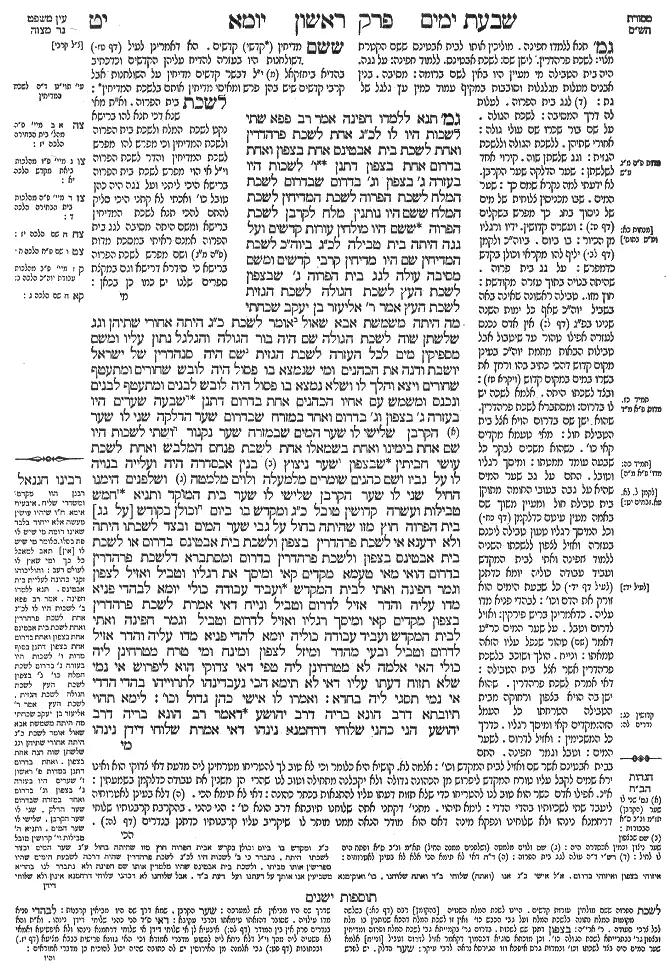
Yoma 19a - Guemara
גמ׳ תנא ללמדו חפינה אמר רב פפא שתי לשכות היו לו לכ"ג אחת לשכת פרהדרין ואחת לשכת בית אבטינס אחת בצפון ואחת בדרום אחת בצפון דתנן ו' לשכות היו בעזרה ג' בצפון וג' בדרום שבדרום לשכת המלח לשכת הפרוה לשכת המדיחין לשכת המלח ששם היו נותנין מלח לקרבן לשכת הפרוה ששם היו מולחין עורות קדשים ועל גגה היתה בית טבילה לכ"ג ביוה"כ לשכת המדיחין שם היו מדיחין קרבי קדשים ומשם מסיבה עולה לגג בית הפרוה ג' שבצפון לשכת העץ לשכת הגולה לשכת הגזית לשכת העץ אמר ר' אליעזר בן יעקב שכחתי מה היתה משמשת אבא שאול אומר לשכת כ"ג היתה אחורי שתיהן וגג שלשתן שוה לשכת הגולה שם היה בור הגולה והגלגל נתון עליו ומשם מספיקין מים לכל העזרה לשכת הגזית שם היה סנהדרין של ישראל יושבת ודנה את הכהנים ומי שנמצא בו פסול היה לובש שחורים ומתעטף שחורים ויצא והלך לו ושלא נמצא בו פסול היה לובש לבנים ומתעטף לבנים ונכנס ומשמש עם אחיו הכהנים אחת בדרום דתנן שבעה שערים היו בעזרה ג' בצפון וג' בדרום ואחד במזרח שבדרום שער הדלקה שני לו שער הקרבן שלישי לו שער המים שבמזרח שער נקנור ושתי לשכות היו שם אחת בימינו ואחת בשמאלו אחת לשכת פנחס המלבש ואחת לשכת עושי חביתין שבצפון שער ניצוץ בנין אכסדרה היה ועלייה בנויה לו על גביו ושם כהנים שומרים מלמעלה ולוים מלמטה ושלפנים הימנו החיל שני לו שער הקרבן שלישי לו שער בית המוקד ותניא חמש טבילות ועשרה קדושין טובל כ"ג ומקדש בו ביום וכולן בקודש [על גג] בית הפרוה חוץ מזו שהיתה בחול על גבי שער המים ובצד לשכתו היתה ולא ידענא אי לשכת פרהדרין בצפון ולשכת בית אבטינס בדרום או לשכת בית אבטינס בצפון ולשכת פרהדרין בדרום ומסתברא דלשכת פרהדרין בדרום הואי מאי טעמא מקדים קאי ומיסך את רגליו וטביל ואזיל לצפון יגמר. חפינה ואתי לבית המקדש ועביד עבודה כולי יומא לבהדי פניא מדו עליה והדר אזיל לדרום וטביל ונייח דאי אמרת לשכת פרהדרין בצפון מקדים קאי ומיסך רגליו ואזיל לדרום וטביל וגמר חפינה ואתי לבית המקדש ועביד עבודה כוליה יומא להדי פניא מדו עליה והדר אזיל לדרום וטביל ובעי מהדר ומיזל לצפון ומינח ומי טרח מטרחינן ליה כולי האי אלמה לא מטרחינן ליה טפי דאי צדוקי הוא ליפרוש אי נמי שלא תזוח דעתו עליו דאי לא תימא הכי נעבדינהו לתרוייהו בהדי הדדי אי נמי תסגי ליה בחדא ואמרו לו אישי כהן גדול וכו' לימא תהוי תיובתא דרב הונא בריה דרב יהושע דאמר רב הונא בריה דרב יהושע הני כהני שלוחי דרחמנא נינהו דאי אמרת שלוחי דידן נינהו
Comments from Rashi on Masechet Yoma Page 19a
גמ' תנא ללמדו חפינה . מוליכין אותו לבית אבטינס ששם הקטרת מצוי: לשכת פרהדרין . לישן שם: לשכת אבטינס . ללמוד חפינה: על גגה . היה בית הטבילה מי מעיין היו באין לשם ברומה: מסיבה . בנין אבנים מעלות מגלגלות וסובבות במקיף עמוד כמין עץ גלגל של גת: לגג בית הפרוה . לעלות לה דרך המסיבה: לשכת הגולה . על שם בור שכרו שם עולי גולה: אחורי שתיהן . ללשכת הגולה וללשכת הגזית: וגג שלשתן שוה . קירוי אחד לשלשתן: שער הדלקה שער הקרבן . לא ידעתי למה נקרא שמם כך: שער המים . שבו מכניסין צלוחית של מים של ניסוך בחג כך מפרש בשקלים (דף ט:): ועשרה קדושין . ידיו ורגליו מן הכיור: בו ביום . ביוה"כ ולקמן (יומא דף לב.) יליף להו מקראי וכולן בקדש כדמפרש: על גג בית פרוה . שהיתה בנויה בתוך עזרה מקודשת: חוץ מזו . טבילה ראשונה שאינה באה בשביל יוה"כ שאף כל ימות השנה שנינו בפ"ג (דף ל:) אין אדם נכנס לעזרה אפילו טהור עד שיטבול אבל טבילות הבאות מחמת יוה"כ בעינן מקום קדוש דהכי כתיב בהו ורחץ את בשרו במים במקום קדוש (ויקרא טז): ובצד לשכתו היתה . אלמא לשכה יש לו בדרום: ומסתברא לשכת פרהדרין . שהוא ישן שם בדרום הויא אצל בית הטבילת חול: מאי טעמא מקדים קאי כו' . כשהוא משכים לבקר כל שבעה עומד ממטתו: ומיסך רגליו וטובל . התם על גב שער המים שהיא על גבה בעובי החומה מתוקן בית טבילת חול ומעיין משוך שם באמה מעין עיטם כדלקמן (יומא דף כח.) וכל המיסך רגליו טעון טבילה ליכנס בעזרה ואזיל לצפון ללשכתו השניה ללמוד חפינה ואתי לבית המקדש ועביד עבודה כוליה יומא כדתנן (לעיל יומא דף יד.) כל שבעת הימים הוא זורק את הדם וכו': לבהדי פניא מדו עליה . כדאמרינן בריש פירקין: ואזיל לדרום וטבל . על שער המים כר"ע דאמר (שם) טהור שנפל עליו הזאה טמאתו: ונייח . הולך ושוכב בלשכת פרהדרין אשר אצל בית הטבילה: דאי אמרת לשכת פרהדרין . שהוא ישן בה הויא בצפון ורחוקה מבית הטבילה הטרחתו כל העמל הזה: מקדים קאי ומיסך רגליו . כדרך כל המשכימין: ואזיל לדרום . לשער המים: וטבל וגמר חפינה . התם בבית אבטינס אשר שם ואזיל לבית המקדש וכו': אלמה לא . קושיא היא כלומר וכי לא טוב לך להטריחו מטרחינן ליה מדעת דאי צדוקי הוא ואינו ירא שמים לקבל עליו טורח המקדש ליפרוש מן הכהונה גדולה ולא יקבלנה מתחילה וטוב לנו שהרי הן משנין את עבודה כדלקמן בשמעתין: א"נ . אפילו אדם כשר הוא טוב לנו להטריחו כדי שלא תזוח דעתו עליו להתגאות בכתר כהונה: דאי לא תימא הכי . דלא בעינן לאטרוחיה ליעבד שתי לשכיותיו בהדי הדדי: לימא תיהוי . מתני' דקתני אתה שלוחנו תיובתא דרב הונא כו': הני כהני . בהקרבת קרבנותיו שלוחי דרחמנא נינהו ולא שלוחינו ונפקא מינה דאם הוא מודר הנאה ממנו מותר לו שיקריב עליו קרבנותיו כדתנן בנדרים (דף לה:):
Comments from Tosafot - Yoma 19a
לשכת בית הפרוה . וא"ת מאי שנא דכי תנא להו ברישא נקט לשכת המלח ולשכת בית הפרוה ולשכת המדיחין וכי מפרש להו מפרש לשכת המדיחין והדר לשכת הפרוה וי"ל אי הוי מפרש לשכת בית הפרוה ברישא היכי ליתני ועל גגה היה כהן טובל כו' ואכתי לא קתני היכי סליק להתם להכי תנא לשכת המדיחין ברישא ומשם היתה מסיבה לגג בית הפרוה אמנם ראיתי במסכת מדות (פ"ה מ"ג) ושם מפרש לשכת הפרוה ברישא כי סידרא דרישא וגם במקצת ספרים שלנו יש כמו כן בכאן: ששם מדיחין (קדשי) קדשים . הא דאמרינן לעיל (יומא דף טז.) דשולחנות היו בעזרה להדיח עליהן הקדשים וכדכתיב בהדיא ביחזקאל י"ל דבשר קדשים מדיחין על השולחנות אבל קרבי קדשים שיש בהן פרש ומאיסי מדיחין אותם בלשכת המדיחין:
Yoma 19a - Mishnah translated into english
GEMARA: A tanna taught: The Sages took the High Priest to the House of Avtinas, where the incense was prepared, to teach him the method of taking handfuls of incense, which is a difficult and complex skill. Rav Pappa said: The High Priest had two chambers. One was the Parhedrin chamber and one was the Chamber of the House of Avtinas. One of them was in the north of the courtyard, and one was in the south. The Gemara explains: One was in the north, as we learned in the mishna: There were six chambers in the Israelite courtyard, three in the north and three in the south.
The chambers in the south were the Chamber of the Salt, the Chamber of the Parva, and the Chamber of the Rinsers. The Gemara explains the function performed in each chamber. The Chamber of the Salt was where the priests would place the salt for the offering in storage The Chamber of the Parva, the hides, was where they salted the consecrated hides that belonged to the priests, to prevent them from spoiling. And on the roof of that chamber was the Hall of Immersion for the High Priest for Yom Kippur. The Chamber of the Rinsers was where they would rinse the innards of consecrated animals, which were not taken up to the altar while dirty or with undigested food remaining in them. From there a circular staircase ascended to the roof of the Chamber of the Parva.
The three chambers in the north of the courtyard were the Chamber of the Wood, the Chamber of the Exile, and the Chamber of Hewn Stone. With regard to the Chamber of the Wood, Rabbi Eliezer ben Ya’akov, who is the tanna of the mishnayot in tractate Middot in which this mishna appears, said: I forgot what purpose that chamber would serve. Abba Shaul says: The High Priest’s chamber was behind the two chambers, the Chamber of the Exile and the Chamber of Hewn Stone, and the roofs of all three of them were level. As the three were attached, they shared a roof.
In the Chamber of the Exile there was the well excavated by those returning from exile, for which the chamber was named, and the wheel with which water was drawn was positioned over it. And from there, they would supply water for use in the entire Temple courtyard for washing and rinsing. In the Chamber of Hewn Stone, there the great Sanhedrin of Israel convened and judged whether the priests were fit for service. A priest in whom a disqualification was detected due to a blemish or lineage would wear black and would wrap himself in black in a display of sorrow and mourning and would emerge from the Temple and go on his way, because he was not fit for service as a priest. And any priest in whom a disqualification was not found would wear white and wrap himself in white in a display of joy and would enter and serve with his fellow priests.
In any event, it was taught that there was a chamber of the High Priest in the north of the courtyard, and there is proof that he also had one chamber in the south of the courtyard, as we learned in a mishna: Seven gates were in the Temple courtyard, three in the north and three in the south and one in the east. The gates in the south were the Gate of Fire; second to it was the Gate of the Offering; third to it was the Gate of the Water. The gate that was in the east was called the Gate of Nicanor, and two chambers were there next to the Gate of Nicanor, one to its right and one to its left. One was the Chamber of Pineḥas the Dresser, where the priestly vestments were stored, and one was the Chamber of the Preparers of the Griddle-Cake Offering, where the daily griddle-cake offering was prepared on behalf of the High Priest.
The gates that were in the north: The first was the Gate of the Spark, which was a portico building, meaning it had a roof but was not completely closed on every side. And there was a second story built atop it, and there the honor guard of the Temple stood, with the priests guarding from above and the Levites from below. Inside of this gate was the rampart, and an opening led from the gate to the rampart. Second to this gate was the Gate of the Offering; third to it was the Gate of the Hall of the Hearth.
And it was taught in a baraita: The High Priest would perform five immersions and ten sanctifications of his hands and feet on that day, Yom Kippur. And each of these was performed in the sacred area of the courtyard, on the roof of the Hall of the Parva, except for this first immersion, which was performed in the non-sacred area outside the courtyard. The first immersion was not unique to Yom Kippur but was performed every day by any priest entering the Temple. That immersion was performed on the roof of the Gate of the Water, and that gate was alongside his chamber. Apparently, the High Priest had a chamber next to the Gate of the Water, which was in the south of the courtyard.
The High Priest had use of two chambers, but we do not know whether the Parhedrin chamber was in the north and the Chamber of the House of Avtinas was in the south, or the Chamber of the House of Avtinas was in the north and the Parhedrin chamber was in the south. And, however, it is reasonable to say that the Parhedrin chamber was in the south and the High Priest slept there.
What is the reason for that assumption? Because if that is the case, the High Priest arises early every morning of the seven days of sequestering and he covers his legs, a euphemism for defecating, and immerses alongside his chamber, which was in the south. And then he walks to the north of the courtyard to the second chamber, which is the Chamber of the House of Avtinas, and learns there the method of taking handfuls. And then he comes to the Temple and performs the service for the entire day. Toward the evening they sprinkle purification water upon him, and he then walks back to the south and immerses again alongside his chamber and rests in his chamber.
As, if you say that the Chamber of Parhedrin was in the north, this would mean that the High Priest would be forced to exert himself and walk significant distances. According to this understanding, he arises early, and he covers his legs. However, since it was taught in the baraita that the place of his immersion was in the south, he then walks to the south and immerses. And then he learns the method of taking handfuls. And then he comes to the Temple and performs the service for the entire day. Toward the evening they sprinkle purification water upon him, and he then walks back to the south and immerses, and then he needs to walk back to the north and rest. Do we impose upon him to that extent? Rather, it is reasonable to say that the Parhedrin chamber, the High Priest’s private chamber, was in the south, which would limit the distance that he needed to walk.
The Gemara rejects this reasoning: Why not impose upon him? On the contrary, we impose upon him even more, so that if he is a Sadducee, he will retire. As he is not a God-fearing person, he would prefer to walk away rather than subject himself to that added exertion. That is a desirable result, ridding the High Priesthood of a Sadducee.
Or, alternatively, there is even value in imposing on a God-fearing Pharisee High Priest, in order that he will not become haughty in his lofty position. Since he is occupied in performing his task, he does not have leisure to be impressed with his elevated status. As, if you do not say that it is an intentional attempt to impose upon him, let us establish both of the chambers of the High Priest next to one another; or, alternatively, one chamber would be sufficient for him. From the fact that neither of these alternatives is adopted, it is apparently an intentional attempt to impose upon him, and there is no proof as to the location of either of the chambers of the High Priest.
§ It was taught in the mishna that the Elders said to him: My Master, High Priest. We are agents of the court, and you are our agent and the agent of the court. The Gemara suggests: Let us say that this is a conclusive refutation of the opinion of Rav Huna, son of Rav Yehoshua, as Rav Huna, son of Rav Yehoshua, said: These priests who sacrifice the offerings are the agents of the Merciful One. They are not agents representing the Jewish people but are agents representing God, as He commanded them to perform the service. Proof is cited for this opinion: As, if you say they are our agents,
Traduction : The William Davidson digital edition of the Koren Noé Talmud, with commentary by Rabbi Adin Even-Israel Steinsaltz.