 Talmud Bavli
The learning on the whole site is dedicated : L'ilui Nishmat Yaakov ben Myriam
The learning on the whole site is dedicated : L'ilui Nishmat יוסף בן מושה
The learning on the whole site is dedicated : L'ilui Nishmat Reuven ben Rivka SEBBAG
Yoma 25a : Youtube
Daf TubeYoutube
3 video classes :
Yoma Page 25a
Yoma 25a - Guemara
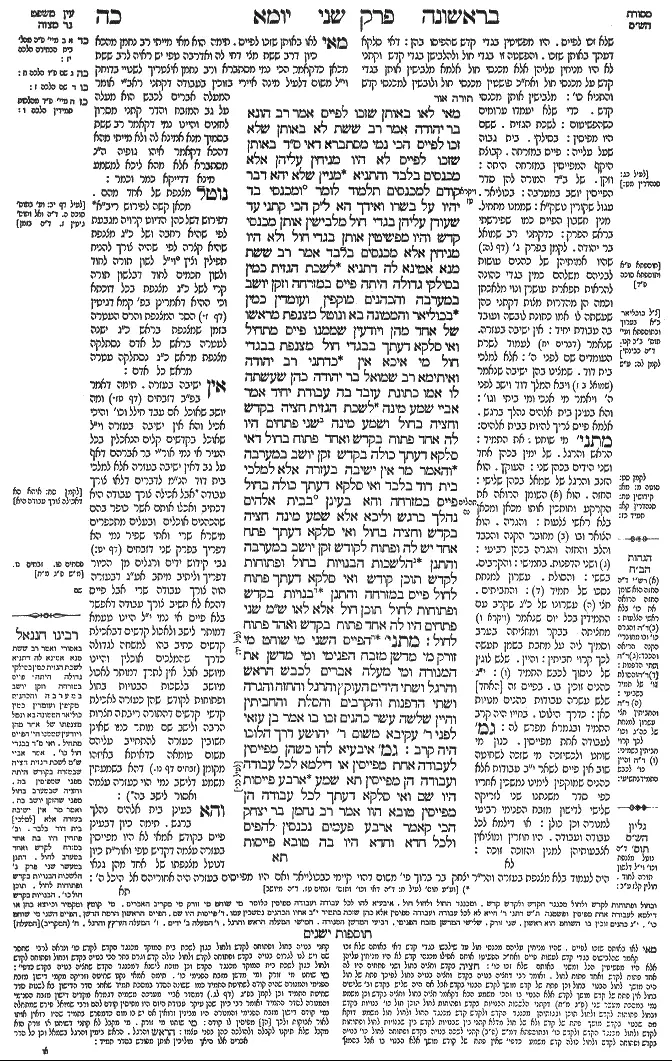
מאי לאו באותן שזכו לפייס אמר רב הונא בר יהודה אמר רב ששת לא באותן שלא זכו לפייס הכי נמי מסתברא דאי ס"ד באותן שזכו לפייס לא היו מניחין עליהן אלא מכנסים בלבד והתניא מניין שלא יהא דבר קודם למכנסים תלמוד לומר (ויקרא טז, ד) ומכנסי בד יהיו על בשרו ואידך הא ל"ק הכי קתני עד שעודן עליהן בגדי חול מלבישין אותן מכנסי קדש והיו מפשיטין אותן בגדי חול ולא היו מניחין אלא מכנסים בלבד אמר רב ששת מנא אמינא לה דתניא לשכת הגזית כמין בסילקי גדולה היתה פייס במזרחה וזקן יושב במערבה והכהנים מוקפין ועומדין כמין בכוליאר והממונה בא ונוטל מצנפת מראשו של אחד מהן ויודעין שממנו פייס מתחיל ואי סלקא דעתך בבגדי חול מצנפת בבגדי חול מי איכא אין כדתני רב יהודה ואיתימא רב שמואל בר יהודה כהן שעשתה לו אמו כתונת עובד בה עבודת יחיד אמר אביי שמע מינה לשכת הגזית חציה בקדש וחציה בחול ושמע מינה שני פתחים היו לה אחד פתוח בקדש ואחד פתוח בחול דאי סלקא דעתך כולה בקדש זקן יושב במערבה והאמר מר אין ישיבה בעזרה אלא למלכי בית דוד בלבד ואי סלקא דעתך כולה בחול פייס במזרחה והא בעינן (תהלים נה, טו) בבית אלהים נהלך ברגש וליכא אלא שמע מינה חציה בקדש וחציה בחול ואי סלקא דעתך פתח אחד יש לה ופתוח לקודש זקן יושב במערבה והתנן הלשכות הבנויות בחול ופתוחות לקדש תוכן קודש ואי סלקא דעתך פתוח לחול פייס במזרחה והתנן בנויות בקדש ופתוחות לחול תוכן חול אלא לאו ש"מ שני פתחים היו לה אחד פתוח בקדש ואחד פתוח לחול מתני׳ הפייס השני מי שוחט מי זורק מי מדשן מזבח הפנימי ומי מדשן את המנורה ומי מעלה אברים לכבש הראש והרגל ושתי הידים העוקץ והרגל והחזה והגרה ושתי הדפנות והקרבים והסלת והחביתין והיין שלשה עשר כהנים זכו בו אמר בן עזאי לפני ר' עקיבא משום ר' יהושע דרך הלוכו היה קרב גמ׳ איבעיא להו כשהן מפייסין לעבודה אחת מפייסין או דילמא לכל עבודה ועבודה הן מפייסין תא שמע ארבע פייסות היו שם ואי סלקא דעתך לכל עבודה הן מפייסין טובא הוו אמר רב נחמן בר יצחק הכי קאמר ארבע פעמים נכנסין להפיס ולכל חדא וחדא היו בה טובא פייסות
Comments from Rashi on Masechet Yoma Page 25a
באותם שלא זכו לפייס . היו מפשיטין בגדי קדש שהפיסו בהן: דאי סלקא דעתך באותן שזכו . והפשטה זו בגדי חול ולהלבישן בגדי קדש וקתני לא היו מניחין עליהן אלא מכנסי חול אלמא מלבישין אותן בגדי קדש על מכנסי חול ואח"כ פושטין מכנסי חול ולובשין למכנסי קדש והתניא כו': מלבישין אותן מכנסי קדש . כדי שלא יעמדו ערומים כשהפשיטום: לשכת הגזית . ששם היו מפיסין: בסילקי . בית גבוה שעל עלייה: פייס במזרחה . קבוצת היקף המפייסין במזרחה היתה: וזקן . של ב"ד המורה להן סדר הפייסין יושב במערבה: בכוליאר . עגול שקורין נושק"א: שממנו מתחיל . מנין חשבון הפייס כמו שפירשתי בראש הפרק: כדקתני רב שמואל בר יהודה . לקמן בפרק ג' (יומא דף לה:) שהיו אמותיהן של כהנים עושות לבניהם משלהם כמין בגדי כהונה להראות תפארת עושרן ונוי מלאכתן וכמה הן מהדרות מצות דקתני כהן שעשתה לו אמו כתונת לובשה ועובד בה עבודת יחיד: אין ישיבה בעזרה . שנאמר (דברים יח) לעמוד לשרת העומדים שם לפני ה': אלא למלכי בית דוד . שמצינו בהן ישיבה שנאמר (שמואל ב ז) ויבא המלך דוד וישב לפני ה' ויאמר מי אנכי ומי ביתי וגו': והא בעינן בית אלהים נהלך ברגש . אלמא פייס צריך להיות בבית אלהים: מתני' מי שוחט . את התמיד: הראש והרגל . של ימין בכהן אחד ושני הידים בכהן שני: העוקץ . הוא הזנב והרגל של שמאל בכהן שלישי: החזה . הוא השומן הרואה את הקרקע וחותכין אותו מכאן ומכאן בלא ראשי צלעות: והגרה . הוא הצואר ובו מחובר הקנה והכבד והלב והחזה והגרה בכהן רביעי: ושני הדפנות . בחמישי: והקרבים . בששי: והסולת . עשרון למנחת נסכו של תמיד: והחביתים . חצי עשרונו של כ"ג שקרב עם התמידין בכל יום שנאמר (ויקרא ו) מחציתה בבקר ומחציתה בערב וסמיך ליה על מחבת בשמן תעשה לכך קרוי חביתין: והיין . שלש לוגין של ניסוך לכבש התמיד: י"ג כהנים זוכין בו . בפייס זה [האחד] שלש עשרה עבודות כהנים מנויות כאן: כדרך הילוכו . בחייו היה קרב התמיד ובגמרא מפרש לה: גמ' לעבודה אחת מפייסין . כגון מי שוחט ולכשיזכה מי שזכה לשחיטה שוב אין פייס לשאר י"ב עבודות אלא כהנים שמוקפין לימינו נמשכין אחריו כפי סדר משנתנו שני לזריקה שלישי לדישון מזבח הפנימי רביעי למנורה וכן כולן: או דילמא לכל עבודה ועבודה . היו חוזרין ומוציאין אצבעותיהן למנין והזוכה זוכה:
Comments from Tosafot - Yoma 25a
מאי לאו באותן שזכו לפייס . תימה הוא מאי מייתי רב נחמן מהכא כיון דרב ששת מצי דחי לה ואדרבה טפי יש ראיה לרב ששת מכאן כדקאמר הכי נמי מסתברא ורב נחמן איצטריך לשנויי בדוחק וי"ל משום דלעיל מינה איירי בזוכין בעבודה דקתני ראב"י אומר המעלה אברים לכבש הוא מעלה על גב המזבח והדר קתני מסרון לחזנים והיינו נמי דקאמר רב ששת בסמוך מנא אמינא לה ולא מייתי מהא דהכא דקאמר איהו גופיה ה"נ מסתברא אלא מהא ליכא למשמע מינא דדייקא כמר וכמר: נוטל מצנפת של אחד מהם . מכאן קשה לפירוש ריב"א דפירוש דשל כהן הדיוט קרויה מגבעת לפי שהיא רחבה ושל כ"ג מצנפת שהיא קצרה לפי שהיה צורך להניח תפילין וציץ וי"ל לשון תורה לחוד ולשון חכמים לחוד דבלשון תורה קרי לשל כ"ג מצנפת בכל דוכתא וכי ההיא דאמרינן בפ' קמא דגיטין (דף ז.) הסר המצנפת והרם העטרה בזמן שמצנפת בראש כ"ג ישנה לעטרה בראש כל אדם נסתלקה מצנפת מראש כ"ג נסתלקה עטרה מראש כל אדם: אין ישיבה בעזרה . תימה דאמר בפ"ב דזבחים (דף טז.) ומה יושב שאוכל אם עבד חילל וכו' והיכי אכיל והא אין ישיבה בעזרה וי"ל שאוכל בקדשים קלים הנאכלין בכל העיר אי נמי אור"י בר אברהם דאף על גב דאין ישיבה בעזרה אלא למלכי בית דוד הנ"מ לדברים דלאו צורך עבודה אבל אכילה צורך עבודה היא דכתיב ואכלו אותם אשר כופר בהם שהכהנים אוכלים ובעלים מתכפרים מישרא שרי ואתי שפיר נמי הא דפריך בפרק שני דזבחים (דף יט:) גבי קידוש ידים ורגלים מן הכיור דפריך וליתיב מיתב אע"ג דבעזרה הוה צורך עבודה שרי אבל פייס דהכא לא חשיב צורך עבודה דאפשר בלא פייס אי נמי י"ל היינו טעמא דמותר לישב ולאכול קדשים דבאכילת קדשים כתיב בהו למשחה לגדולה כדרך שהמלכים אוכלין והיינו מיושב אבל אין לתרץ דמותר לאכול מיושב בלשכות הבנויות בחול ופתוחות לקודש שהן כעזרה לאכילת קדשי קדשים דהתורה ריבתה חצרות הרבה ולישב שם מותר כמו שאינן חשובין כעזרה להתחייב עליהם משום טומאה כדאיתא באיזהו מקומן (זבחים דף נו.) דהא בשמעתין משמע דלישב נמי הוי כעזרה עצמה ואסור לישב בה: והא בעינן בית אלהים נהלך ברגש . תימה כיון דבעינן פייס בקודש אמאי לא היו מפייסין בעזרה עצמה דקדיש טפי ואור"ת כיון דנוטל מצנפתו של אחד מהן גנאי היה לעמוד בלא מצנפת בעזרה והר"ר יצחק בר ברוך פי' משום דהוי קיימי כבכולייאר ואם היו מפייסים בעזרה היה אחוריהם אל היכל ה':
Yoma 25a - Mishnah translated into english
What, is this not talking about those priests who won the lottery, describing how their non-sacred garments were removed from them before they were dressed in the priestly garments? Rav Huna bar Yehuda said that Rav Sheshet said, rejecting that interpretation: No, it is possible to explain that all the priests at the lottery were wearing sacred garments and that, on the contrary, the mishna speaks about those priests who did not win the lottery. The text describes how the sacred garments they wore during the lottery were removed from them.
The Gemara supports this latter interpretation: So too, it is reasonable to follow Rav Sheshet’s interpretation of the mishna. As, if it were to enter your mind to say that the mishna is dealing with those who won the lottery and describes how their non-sacred garments were removed and sacred garments put on, how would one understand the statement: They would leave only their trousers on them? One would have to explain that the priests subsequently donned the sacred clothes on top of the non-sacred trousers; then they would remove the non-sacred trousers and replace them with the sacred trousers. But wasn’t it taught in a baraita: From where is it derived that nothing should precede the trousers when the priest dresses? The verse states: “And he shall have linen trousers upon his flesh” (Leviticus 16:4)? However, according to the proposed interpretation of the mishna, the priests donned the other sacred garments and put on the trousers after them.
The Gemara asks: And how would the other one, Rav Naḥman, resolve this difficulty? He would respond that this is not difficult, as this is what the mishna is teaching: While the non-sacred garments are still on them they put the sacred trousers on them, and then they remove from them the non-sacred clothes, and they left them wearing only the sacred trousers. Therefore, it is possible to interpret the mishna either way.
Rav Sheshet said: From where do I say that the priests wore sacred garments when the lottery was held? As it was taught in a baraita: The Chamber of Hewn Stone was built in the style of a large basilica [basileki]; the lottery is held in the east of the chamber, and an Elder of the court sits in its west to provide instruction and adjudicate any doubtful cases. And the priests stand in a circle in the shape of a bracelet [bekholyar], and the appointed priest comes and removes the mitre from the head of one of them, and everyone thereby knew that the count began from him. And if it were to enter your mind to say that the priests wore non-sacred garments during the lottery, is there such a thing as a mitre among one’s non-sacred garments? This shows that the priests were wearing their sacred garments when the lottery took place.
The Gemara rejects this reasoning: Yes, indeed, there is such a thing as a mitre that one wears as non-sacred apparel, as Rav Yehuda, and some say it was Rav Shmuel bar Yehuda, taught: A priest whose mother made a tunic for him, to show her love for her son and her love for mitzvot, may perform an individual service with it on, but not communal services. Therefore, it is possible that the priests had non-sacred mitres in the style of the sacred mitres, just as they sometimes had non-sacred tunics.
Apropos the baraita that was just cited, Abaye said: Conclude from this baraita that the Chamber of Hewn Stone was built half in the sacred area, within the consecrated Temple grounds, and half in the non-sacred part of the Temple grounds. And conclude from it as well that the chamber had two doorways, one that opened to the sacred area of the Temple and one that opened to the non-sacred area. Abaye explains these inferences: As, were it to enter your mind that the Chamber of Hewn Stone stood entirely in the sacred area, how could one say that an Elder sat in its west? Didn’t the Master say: There is no sitting allowed in the Temple courtyard except for kings of the house of David alone? The Elder must therefore have been sitting in an area external to the Temple courtyard area.
And if it were to enter your mind to say the opposite, that the chamber stood entirely in the non-sacred area, how could the lottery be held in the east? Aren’t we required to fulfill the verse: “In the House of God we walked with the throng” (Psalms 55:15), from where it was derived earlier that it is desirable that the lotteries cause a commotion in the House of God, i.e., in the sacred area of the Temple? If the lottery were held in a non-sacred area, there would not be a fulfillment of this verse. Rather, one must conclude from this baraita that the chamber was situated half in the sacred area of the Temple and half in the non-sacred area.
Abaye continues: And were it to enter your mind that the chamber had just one doorway, which opened to the sacred area, how could the Elder sit in its west? Didn’t we learn in a mishna: Chambers that are built in the non-sacred area of the Temple Mount, but that open up into the sacred area, their interior is considered entirely sacred, despite the fact that they also occupy land outside the sacred area? And if, on the other hand, it were to enter your mind that the chamber had just one doorway, which opened to the non-sacred area, how could the lottery be held in its east? Didn’t we learn in a mishna: With regard to chambers that are built in the sacred area but which open up into the non-sacred area, the space within them is considered entirely non-sacred, despite the chambers’ location on sacred territory. Rather, isn’t it correct to conclude from this that the Chamber of Hewn Stone had two doorways, one that opened up into the sacred area and one that opened into the non-sacred area?
MISHNA: The second lottery conducted daily among the priests determines the following: Who slaughters the daily morning offering, who sprinkles its blood, who removes the ashes from the inner altar, and who removes the ashes and burnt wicks from the candelabrum, and who takes the limbs of the daily offering up to the ramp to be burned later.
This is how the limbs were divided before taking them up to the altar: The head and the right leg were carried by one priest, and the two forelegs were carried by a second priest. The tail, including the lower vertebrae of the spinal column and the fat tail, and the left leg were carried by a third priest. And the breast and the throat and some of the inner organs attached to it were carried by a fourth priest. And the two flanks were taken by a fifth priest, and the intestines by a sixth priest. And the fine flour of the meal-offering accompanying the daily offering was carried by a seventh priest. And the High Priest’s daily griddle-cake offering was carried by an eighth priest, and the wine for libation was carried by a ninth priest. Altogether thirteen priests prevailed in this lottery: Nine priests who carried the daily offering and its accompanying elements, and four who performed the slaughter, sprinkling, and removal of ashes from the inner altar and the candelabrum.
Ben Azzai said before Rabbi Akiva in the name of Rabbi Yehoshua: That was not the sequence of taking the limbs up to the ramp; rather, the order in which it was sacrificed was according to the way it walks when alive, as will be explained in the Gemara.
GEMARA: A dilemma was raised before the Sages: When the priests performed the lottery, did they perform a lottery for just one service, such as the slaughtering, and the other twelve tasks were divided among the priests adjacent to the chosen one; or perhaps they performed a separate lottery for each and every service of the thirteen acts listed? The Gemara answers: Come and hear a proof from that which was taught in the mishna: There were four lotteries there. And if it were to enter your mind that they performed a lottery for each and every service separately, there would be many more than four lotteries. Rav Naḥman bar Yitzḥak said: That is not a conclusive proof, because one could argue that this is what the mishna is saying: The priests gathered four times for a lottery, but each gathering involved many lotteries for many individual services.
Traduction : The William Davidson digital edition of the Koren Noé Talmud, with commentary by Rabbi Adin Even-Israel Steinsaltz.