 Talmud Bavli
The learning on the whole site is dedicated : L'ilui Nishmat Reuven ben Rivka SEBBAG
The learning on the whole site is dedicated : L'ilui Nishmat Amram ben Itshak Loubaton
The learning on the whole site is dedicated : L'ilui Nishmat Yechayahou ben Moche
Yoma 33b : Youtube
Daf TubeYoutube
3 video classes :
Yoma Page 33b
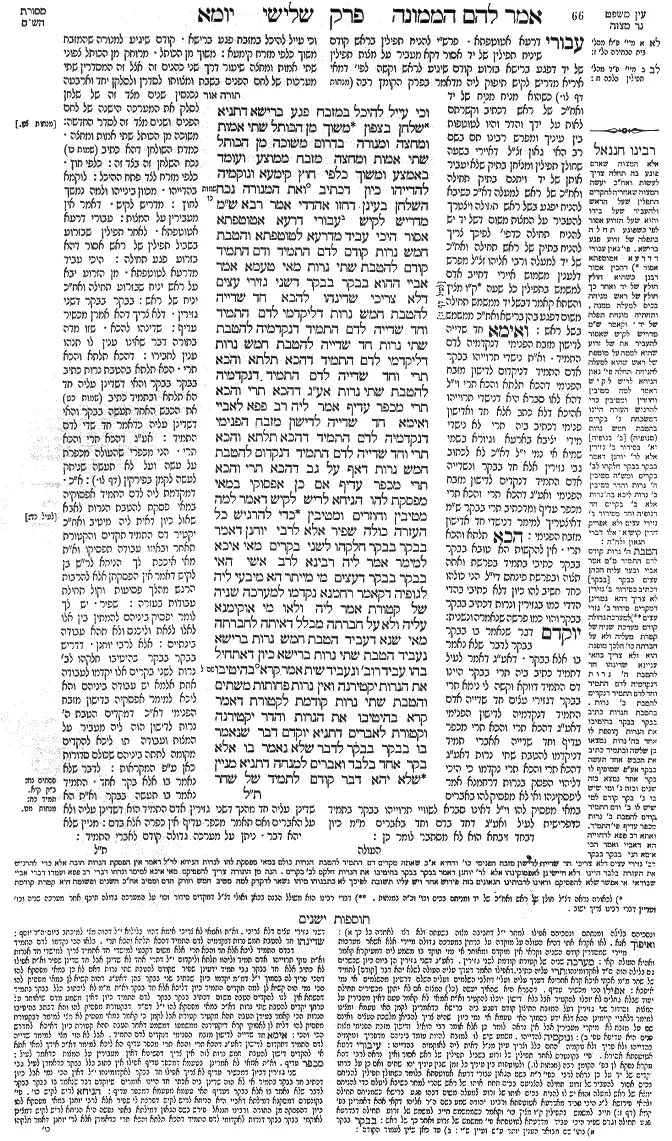
Yoma 33b - Guemara
וכי עייל להיכל במזבח פגע ברישא דתניא שלחן בצפון משוך מן הכותל שתי אמות ומחצה ומנורה בדרום משוכה מן הכותל שתי אמות ומחצה מזבח ממוצע ועומד באמצע ומשוך כלפי חוץ קימעא ונוקמיה להדייהו כיון דכתיב (שמות כו, לה) ואת המנורה נכח השלחן בעינן דחזו אהדדי אמר רבא ש"מ מדריש לקיש עבורי דרעא אטוטפתא אסור היכי עביד מדרעא לטוטפתא והטבת חמש נרות קודם לדם התמיד ודם התמיד קודם להטבת שתי נרות מאי טעמא אמר אביי ההוא בבקר בבקר דשני גזירי עצים דלא צריכי שדינהו להכא חד שדייה להטבת חמש נרות דליקדמי לדם התמיד וחד שדייה לדם התמיד דנקדמיה להטבת שתי נרות חד שדייה להטבת חמש נרות דליקדמי לדם התמיד דהכא תלתא והכא תרי וחד שדייה לדם התמיד דנקדמיה להטבת שתי נרות אע"ג דהכא תרי והכא תרי מכפר עדיף אמר ליה רב פפא לאביי ואימא חד שדייה לדישון מזבח הפנימי דנקדמיה לדם התמיד דהכא תלתא והכא תרי וחד שדייה לדם התמיד דנקדום להטבת חמש נרות דאף על גב דהכא תרי והכא תרי מכפר עדיף אם כן אפסוקי במאי מפסקת להו הניחא לריש לקיש דאמר למה מטיבין וחוזרים ומטיבין כדי להרגיש כל העזרה כולה שפיר אלא לרבי יוחנן דאמר בבקר בבקר חלקהו לשני בקרים מאי איכא למימר אמר ליה רבינא לרב אשי האי בבקר בבקר דעצים מי מייתר הא מיבעי ליה לגופיה דקאמר רחמנא נקדמו למערכה שניה של קטורת אמר ליה ולאו מי אוקימנא עליה ולא על חברתה מכלל דאיתה לחברתה מאי שנא דעביד הטבת חמש נרות ברישא נעביד הטבת שתי נרות ברישא כיון דאתחיל בהו עביד רוב' ונעביד שית אמר קרא (שמות ל, ז) בהיטיבו את הנרות יקטירנה ואין נרות פחותות משתים והטבת שתי נרות קודמת לקטורת דאמר קרא בהיטיבו את הנרות והדר יקטירנה וקטורת לאברים דתניא יוקדם דבר שנאמר בו בבקר בבקר לדבר שלא נאמר בו אלא בקר אחד בלבד ואברים למנחה דתניא מניין שלא יהא דבר קודם לתמיד של שחר
Comments from Rashi on Masechet Yoma Page 33b
וכי עייל להיכל במזבח פגע ברישא . קודם שיגיע למנורה שהמזבח משוך כלפי מזרח קימעא: משוך מן הכותל . מרוחק מן הכותל צפוני שתי אמות ומחצה שיעור דרך שני כהנים זה אצל זה המסדרין שתי מערכות של לחם הפנים בשבת ומצוותו לסדרן ולסלקן יחד וארבעה נכנסין שנים מצד זה של שלחן לסלק את המערכה הישנה של לחם הפנים ושנים מצד זה לסדר החדשה: משוכה מן הכותל שתי אמות ומחצה . כמדת השולחן דהא כתיב (שמות כו) נכח השלחן זה בצד זה: כלפי חוץ . כלפי מזרח לצד פתח ההיכל: לוקמא בהדייהו . מכוון בינייהו ולמה נמשך לחוץ: מדריש לקיש . דאמר אין מעבירין על המצות: עבורי דרעא אטוטפתא . לאחר תפילין שבזרוע בשביל תפילין של ראש אסור דהא בזרוע פגע תחילה: היכי עביד מדרעא לטוטפתא . מן הזרוע יבא על ראש יניח שבזרוע תחילה ואח"כ יניח של ראש: א"כ . דמקדמת ליה לדם התמיד אפסוקיה במאי פסקת להטבת הנרות לאבא שאול כיון דאית ליה מיטיב ואח"כ יקטיר דם התמיד תקדים והקטורת תאחר ובאיזו עבודה תפסיקו וא"ת מאי איכפת לך הניחא לר"ש בן לקיש דאמר אין הפסקתן אלא להרבות הרגש מהלך פסיעות וקול תחילת עבודות בעזרה: שפיר . יש לך לומר יפסיק ביניהם להמתין בין אלו לאלו לצאת וליכנס ולא תהא עבודה בינתיים: אלא לרבי יוחנן . דדריש בבקר בבקר בהיטיבו חלקהו לב' נרות לשני בקרים אלו יקדמו לעבודה אחת אלמא יש עבודה ביניהם והא ליכא למימר אפסקיה בדישון מזבח הפנימי דאם כן דמקדים הטבת ה' נרות לדישון הוה ליה מעביר על המצות ועבודה תו ליכא להקדים מקומה לתתה ביניהם שכולם סדורות כאן ע"פ המקראות: לדבר שלא נאמר בו אלא בקר אחד . התמיד נאמר בו תעשה בבקר וא"ת הא שדינן עליה חד מהנך דשני גזירין אדם התמיד הוא דשדינן עליה ולא על האברים ואם תאמר מכפר עדיף אין כפרה אלא בדם: מניין שלא יהא דבר . ניתן על מערכה גדולה קודם לאברי התמיד:
Comments from Tosafot - Yoma 33b
עבורי דרעא אטוטפתא . פרש"י להניח תפילין בראש קודם שיניח תפילין של יד אסור דקא מעביר על מצות תפילין של יד דפגע ברישא בזרוע קודם שיגיע לראש וקשה לפי' דמאי איריא מדריש לקיש תיפוק ליה מדאמר בפרק הקומץ רבה (מנחות דף לו.) כשהוא מניח מניח של יד ואח"כ של ראש דכתיב וקשרתם לאות על ידך והדר והיו לטוטפות בין עיניך ומפרש רבינו תם בשם רב האי גאון זצ"ל דאיירי בשעה שחולץ תפילין ומניחן בתיק שלא יעביר אותן של יד ויתנם בתיק תחילה ואח"כ של ראש למעלה דא"כ כשיבא להניח יפגע בשל ראש תחילה ויצטרך להעביר על המצות משום דשל יד יש להניח תחילה כדפי' לפיכך צריך להניח בתיק של ראש תחילה ואח"כ של יד למעלה ורבי אליהו זצ"ל מפרש דלענין משמוש איירי דחייב אדם למשמש בתפילין כל שעה ק"ו מציץ והשתא קאמר דבשל יד ממשמש תחילה משום דפגע בהן ברישא ואח"כ ממשמש בשל ראש: הכא תלתא והכא תרי . אין להקשות הא טובא בבקר בבקר כתיבי בתמיד בפרשת ואתה תצוה ובפרשת פינחס די"ל הני כולהו כחד חשיב להו כיון דלא כתיבי בהדי הדדי כמו בגזירין ונרות דכתיב בבקר בבקר והוי כמו פרשה שנאמרה ונשנית: ואימא חד שדייה לדישון מזבח הפנימי דנקדמיה לדם התמיד . וא"ת נישדי תרוייהו בבקר אדם התמיד דניקדום לדישון מזבח הפנימי דהכא תלתא והכא תרי וי"ל דהא לאו סברא היא דנישדי תרוייהו אהיכא דלא כתב אלא חד ואדישון פנימי דכתיב ביה תרי לא נישדי מידי יציבא בארעא וגיורא בשמי שמיא אי נמי י"ל דא"כ לא לכתוב גבי גזירין אלא חד בבקר ונשדייה אדם התמיד דנקדים לדישון מזבח הפנימי ואע"ג דהכא תרי והכא תרי מכפר עדיף ומדכתיב תרי בבקר ש"מ דאיצטריך למימר דנישדי חד אדישון מזבח הפנימי: יוקדם דבר שנאמר בו בבקר בבקר לדבר שלא נאמר בו אלא בבקר . דאע"ג דאמר לעיל דתמיד כתיב ביה תרי בבקר היינו דם התמיד דווקא וקשה לי נימא תרי בבקר דגזירי עצים חד שדייה אדם התמיד דנקדמיה לדישון הפנימי דאע"ג דהכא תרי והכא תרי מכפר עדיף וחד שדייה אאברי תמיד דניקדמו להטבת שתי נרות דאע"ג דהכא תרי והכא תרי נקדמו כי היכי דליהוי הפסק בנרות דרחמנא אמר ליפסקינהו ואי לא מפסיק להו באברים במאי מפסיק להו וי"ל דאינו סברא לשוויי תרוייהו בבקר בתמיד כדפרישית לעיל ואע"ג דחד בדם וחד באברים מ"מ כיון דבחד זיבחא הוא לא מסתבר לומר כן:
Yoma 33b - Mishnah translated into english
And when he enters the Sanctuary it is the altar that he encounters first, before reaching the candelabrum; therefore, he performs the service of the altar before removing the ashes from the lamps, as it was taught in a baraita: The table stood in the north of the Sanctuary, removed two and a half cubits from the wall. And the candelabrum stood in the south of the Sanctuary, removed two and a half cubits from the wall. The altar was centered and standing in the middle of the Sanctuary, removed a bit outward. Therefore, one encounters the altar first. The Gemara questions the essence of the matter: And let us stand the altar alongside the table and the candelabrum; why was it removed outward? The Gemara answers: It is because it is written: “And the candelabrum opposite the table” (Exodus 26:35); we require that they are visible to each other. Were the altar aligned with the table and the candelabrum, it would interpose between them.
Rava said: Conclude from the statement of Reish Lakish that one may not forego performance of any of the mitzvot, that it is prohibited to forego donning the phylacteries of the arm in order to don the phylacteries of the head, as when donning phylacteries, one encounters the arm first. How does he conduct himself? He proceeds from the phylacteries of the arm to the phylacteries of the head.
§ Abaye continued: And removal of ashes from five lamps precedes the slaughter and the receiving and sprinkling of the blood of the daily morning offering. The sprinkling of the blood of the daily offering precedes the removal of ashes from the two remaining lamps of the candelabrum. The Gemara asks: What is the reason for this? Abaye said: Take that phrase: In the morning, in the morning, written with regard to the two logs, which is unnecessary to establish the time for performance of that service, as its precedence was explained due to its association with the arrangement of wood. And cast that extraneous phrase to here, and apply it to other elements of the morning service. If the phrase is superfluous in its context, apply it elsewhere where a halakha can be derived. Cast one term: In the morning, and apply it to removal of ashes from five lamps so that it will precede the blood of the daily offering. And cast one term: In the morning, and apply it to the blood of the daily offering, so that it will precede the removal of ashes from the two additional lamps.
The Gemara elaborates: Cast one term: In the morning, and apply it to removal of ashes from five lamps so that it will precede the blood of the daily offering, as here, there are three instances of: In the morning; two instances are written explicitly with regard to removal of ashes from the lamps (see Exodus 30:7) and one is written with regard to the two logs. And here, with regard to the blood of the daily offering, there are two instances of the phrase; one explicit mention in the text (see Exodus 29:39) and one written with regard to the two logs.
And cast one term: In the morning, to the blood of the daily offering so that it will precede the removal of ashes from the two additional lamps. Although here, with regard to removal of ashes from the lamps, there are two instances of the phrase: In the morning, and here, with regard to the blood of the daily offering, there are two instances of the phrase: In the morning, one written and one cast from the portion of two logs, the blood of the daily offering takes precedence because an act that effects atonement, the sprinkling of blood, takes precedence.
Rav Pappa said to Abaye: And say instead, cast one of the extraneous phrases: In the morning, and apply it to the removal of ashes from the inner altar, so that it will precede the blood of the daily offering, as here there are three instances of the phrase and there there are two. And cast one of the extraneous phrases: In the morning, and apply it to the blood of the daily offering so that it will precede the removal of ashes from five lamps, and say that although here there are two instances of the phrase: In the morning, and here there are two instances of the phrase: In the morning, still an act that effects atonement, the sprinkling of blood, takes precedence. Abaye dismisses this question by saying: If the blood of the daily offering precedes the removal of ashes from five lamps, with what will you demarcate between the removal of ashes from five lamps and the removal of ashes from two lamps?
That works out well according to the opinion of Reish Lakish, who said: Why does the priest remove the ashes from five lamps of the candelabrum and then return and remove the ashes from two lamps of the candelabrum rather than arrange all seven lamps at once? It is in order to enliven those present in the entire Temple courtyard, since people are coming and going to fulfill this mitzva with great ceremony. It works out well according to the opinion of Reish Lakish, because he says there is no need for any other service to demarcate between removal of ashes from five lamps and removal of ashes from two.
However, according to Rabbi Yoḥanan, who said the following based on the verse: “And Aaron shall burn upon it incense of sweet spices; in the morning, in the morning, when he removes the ashes from the lamps” (Exodus 30:7); take the term in the morning, in the morning, and divide the service of removal of ashes from the lamps into two mornings, i.e., into two parts, by performing a service in between, what can be said? According to Rabbi Yoḥanan, since the result would be that there is no service demarcating between the five lamps and the two lamps, there is no alternative to interpreting the matter in accordance with the explanation of Abaye.
Ravina said to Rav Ashi with regard to the basis for Abaye’s argument: Is this term: In the morning, in the morning, written with regard to the two logs actually superfluous and therefore available to have other matters derived from it? Isn’t it necessary to teach its own basic halakha, as the Merciful One states in the Torah: Have it precede the second arrangement of wood, from which coals are taken for the incense? Rav Ashi said to him: And did we not establish that it is written: Upon it, underscoring the fact that wood is placed only on the large arrangement and not on the other arrangement from which coals are taken for the incense? From the fact that this exclusionary term is necessary, it can be derived by inference that there is another pile on the altar, meaning that when the new logs are placed on the altar, the two arrangements are already there.
The Gemara asks with regard to the sequence in which the priest removes the ashes from the lamps: What is different that he performs the removal of ashes from five lamps first? Let us perform the removal of ashes from two lamps first. The Gemara answers: Since he begins the service with them, he performs the service on a majority of the lamps. The Gemara asks: If so, let him perform the service on six lamps. The Gemara responds that the verse states: “When he removes the ashes from the lamps, he shall burn it” (Exodus 30:7), and lamps is plural, meaning no fewer than two. Apparently, removal of ashes from lamps must be performed on a minimum of two lamps.
Abaye continued: And the removal of ashes from two lamps precedes the burning of the incense, as the verse first states: “When he removes the ashes from the lamps,” and then states: “He shall burn it.” The removal of the ashes precedes the burning of the incense.
Abaye continued: And the burning of the incense on the inner altar precedes the burning of the limbs of the daily offering on the outer altar, as it was taught in a baraita: Let the matter with regard to which it is stated: In the morning, in the morning, i.e., the burning of the incense, precede the matter with regard to which only one: In the morning, is stated, i.e., the daily morning offering, in the verse: “You shall offer one lamb in the morning” (Exodus 29:39).
Abaye continued: The burning of the limbs precedes the sacrifice of the meal-offering that accompanies the daily offering, as it was taught in a baraita: From where is it derived that there may be no item placed on the arrangement of wood prior to the daily morning offering?
Traduction : The William Davidson digital edition of the Koren Noé Talmud, with commentary by Rabbi Adin Even-Israel Steinsaltz.