 Talmud Bavli
Yoma 55a : Youtube
Daf TubeYoutube
3 video classes :
Yoma Page 55a
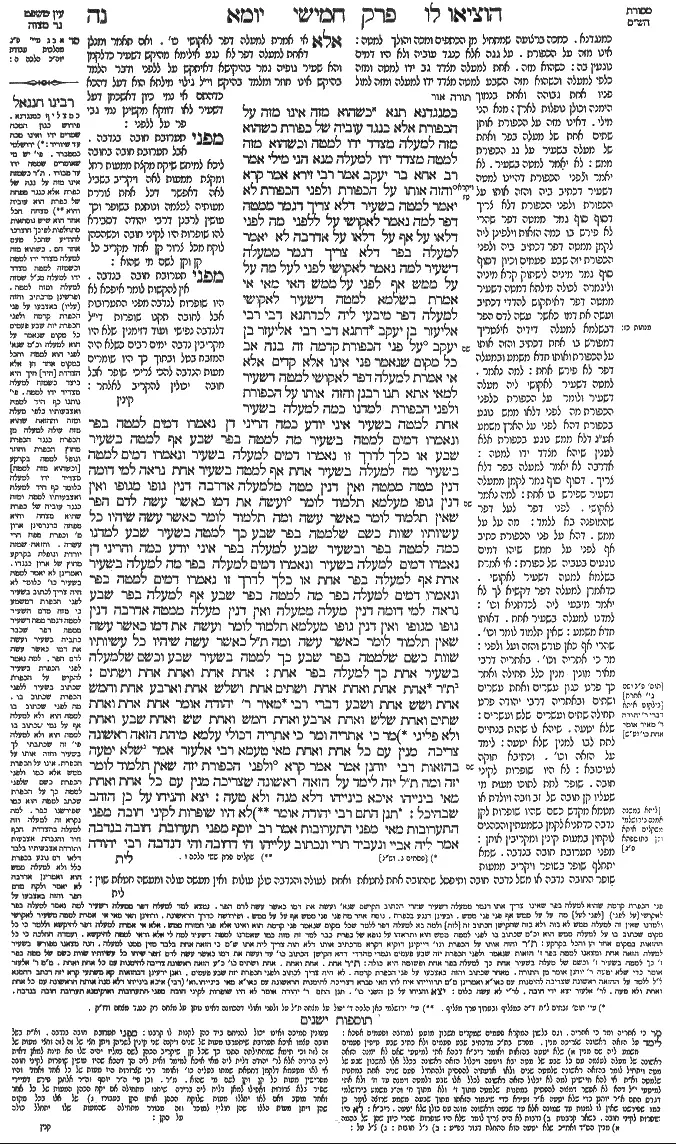
Yoma 55a - Guemara
כמנגדנא תנא כשהוא מזה אינו מזה על הכפורת אלא כנגד עוביה של כפורת כשהוא מזה למעלה מצדד ידו למטה וכשהוא מזה למטה מצדד ידו למעלה מנא הני מילי אמר רב אחא בר יעקב אמר רבי זירא אמר קרא (ויקרא טז, טו) והזה אותו על הכפורת ולפני הכפורת לא יאמר למטה בשעיר דלא צריך דגמר ממטה דפר למה נאמר לאקושי על ללפני מה לפני דלאו על אף על דלאו על אדרבה לא יאמר למעלה בפר דלא צריך דגמר ממעלה דשעיר למה נאמר לאקושי לפני לעל מה על על ממש אף לפני על ממש האי מאי אי אמרת בשלמא למטה דשעיר לאקושי למעלה דפר מיבעי ליה לכדתנא דבי רבי אליעזר בן יעקב דתנא דבי רבי אליעזר בן יעקב (ויקרא טז, יד) על פני הכפורת קדמה זה בנה אב כל מקום שנאמר פני אינו אלא קדים אלא אי אמרת למעלה דפר לאקושי למטה דשעיר למאי אתא תנו רבנן והזה אותו על הכפורת ולפני הכפורת למדנו כמה למעלה בשעיר אחת למטה בשעיר איני יודע כמה הריני דן נאמרו דמים למטה בפר ונאמרו דמים למטה בשעיר מה למטה בפר שבע אף למטה בשעיר שבע או כלך לדרך זו נאמרו דמים למעלה בשעיר ונאמרו דמים למטה בשעיר מה למעלה בשעיר אחת אף למטה בשעיר אחת נראה למי דומה דנין מטה ממטה ואין דנין מטה מלמעלה אדרבה דנין גופו מגופו ואין דנין גופו מעלמא תלמוד לומר (ויקרא טז, טו) ועשה את דמו כאשר עשה לדם הפר שאין תלמוד לומר כאשר עשה ומה תלמוד לומר כאשר עשה שיהיו כל עשיותיו שוות כשם שלמטה בפר שבע כך למטה בשעיר שבע למדנו כמה למטה בפר ובשעיר שבע למעלה בפר איני יודע כמה והריני דן נאמרו דמים למעלה בשעיר ונאמרו דמים למעלה בפר מה למעלה בשעיר אחת אף למעלה בפר אחת או כלך לדרך זו נאמרו דמים למטה בפר ונאמרו דמים למעלה בפר מה למטה בפר שבע אף למעלה בפר שבע נראה למי דומה דנין מעלה ממעלה ואין דנין מעלה ממטה אדרבה דנין גופו מגופו ואין דנין גופו מעלמא תלמוד לומר ועשה את דמו כאשר עשה שאין תלמוד לומר כאשר עשה ומה ת"ל כאשר עשה שיהיו כל עשיותיו שוות כשם. שלמטה בפר שבע כך למטה בשעיר שבע וכשם שלמעלה בשעיר אחת כך למעלה בפר אחת אחת אחת ואחת אחת ושתים ת"ר אחת אחת ואחת אחת ושתים אחת ושלש אחת וארבע אחת וחמש אחת ושש אחת ושבע דברי רבי מאיר ר' יהודה אומר אחת אחת ואחת שתים ואחת שלש ואחת ארבע ואחת חמש ואחת שש ואחת שבע ואחת ולא פליגי מר כי אתריה ומר כי אתריה דכולי עלמא מיהת הזאה ראשונה צריכה מנין עם כל אחת ואחת מאי טעמא רבי אלעזר אמר שלא יטעה בהזאות רבי יוחנן אמר אמר קרא (ויקרא טז, יד) ולפני הכפורת יזה שאין תלמוד לומר יזה ומה ת"ל יזה לימד על הזאה ראשונה שצריכה מנין עם כל אחת ואחת מאי בינייהו איכא בינייהו דלא מנה ולא טעה יצא והניחו על כן הזהב שבהיכל תנן התם רבי יהודה אומר לא היו שופרות לקיני חובה מפני התערובות מאי מפני התערובות אמר רב יוסף מפני תערובת חובה בנדבה אמר ליה אביי ונעביד תרי ונכתוב עלייהו הי דחובה והי דנדבה רבי יהודה
Comments from Rashi on Masechet Yoma Page 55a
כמנגדנא . כמכה ברצועה שמתחיל מן הכתפים ומכה והולך למטה: אינו מזה על הכפורת . על גגה אלא כנגד עוביה ולא היו דמים נוגעין בה: כשהוא מזה . אחת למעלה מצדד גב ידו למטה ומזה כלפי למעלה וכשהוא מזה השבע למטה מצדד ידו למעלה ומזה למול פניו אחת גבוהה ואחת בנמוך הימנה וכולן נופלות לארץ: מנא הני מילי . דאינו מזה על הכפורת אותן שתים אחת של מעלה בפר ואחת של מעלה בשעיר על גג הכפורת ממש: לא יאמר למטה בשעיר . לא יאמר ולפני הכפורת דהיינו למטה דשעיר דכתיב ביה והזה אותו על הכפורת ולפני הכפורת דלא צריך דסוף סוף גמר ממטה דפר שהרי לא פירש בו כמה הזאות וילפינן ליה לקמן ממטה דפר דכתיב ביה ולפני הכפורת יזה שבע פעמים וכיון דסוף סוף גמר מיניה לישתוק קרא מיניה וליגמרה לכולה מילתא דמטה דשעיר ממטה דפר דאיתקוש להדדי דכתיב ועשה את דמו כאשר עשה לדם הפר דבשלמא למעלה דידיה איצטריך דמפורש בו אחת דכתיב והזה אותו על הכפורת ואותו חדא משמע ובמעלה דפר לא פירש אחת: למה נאמר . למטה דשעיר לאקושי ליה מעלה דשעיר ולומר על הכפורת כלפני הכפורת מה לפני דלאו ממש נוגע בכפורת דהא לפני על הארץ משמע אף על דלא ממש נוגע בכפורת אלא לענין שיהא מצדד ידו למטה: אדרבה לא יאמר למעלה בפר דלא צריך . דסוף סוף גמר לקמן ממעלה דשעיר שפירש בו אחת: למה נאמר לאקושי . לפני דפר לעל דפר שהמופנה בא ללמד: מה על על ממש . דהא על פני הכפורת כתיב אף לפני על ממש שיהו דמים נוגעים בעביה של כפורת: אי אמרת בשלמא למטה דשעיר לאקושי . כדאמרן למעלה דפר דקשיא לך לא יאמר מיבעי ליה לכדתניא וכו': למדנו למעלה בשעיר אחת . דאותו חדא משמע: שאין תלמוד לומר וכו' . שהרי אף כאן פורש והזה ועל ולפני: מר כי אתריה וכו' . באתריה דרבי מאיר מונין מנין כלל תחילה ואחר כך פרט כגון עשרים ואחת עשרים ושתים ובאתריה דרבי יהודה פרט תחילה שתים ועשרים שלש ועשרים: שלא יטעה . שיהא לו שהות בנתיים לתת לבו למנין שלא יטעה: לימד על הזאה וכו' . וכתיבא חוקה לעיכובא: לא היו שופרות לקיני חובה . שופר לתת לתוכו מעות מי שעליו קן חובה של זב וזבה ויולדת או מטמא מקדש כשם שהיו שופרות לקן נדבה כדתניא לקמן בשמעתין והכהנים לוקחין במעות קינין ומקריבין אותן: מפני תערובת חובה בנדבה . שמא יתחלף שופר בשופר ויקריב ממעות שופר החובה נדבה או משל נדבה חובה ותיפסל שהחובה אחת לחטאת ואחת לעולה והנדבה כולן עולות ואין מעשה עולה ומעשה חטאת שוין:
Comments from Tosafot - Yoma 55a
אלא אי אמרת למעלה דפר לאקושי כו' . ואם תאמר ומנלן דאחת למעלה דפר לא נגע אילימא מהיקש דשעיר כדלקמן והא שעיר גופיה גמר בהיקישא דאיתקש על ללפני ודבר הלמד בהיקש אינו חוזר ומלמד בהיקש וי"ל גילוי מילתא הוא דעל דהכא כדהתם אי נמי כיון דאשכחן דעל דשעיר לאו דווקא מקשינן נמי גבי פר על ללפני: מפני תערובת חובה בנדבה . אבל תערובת חובה בחובה ליכא למיחש שיקח מקצת ממעות רחל ומקצת ממעות לאה ויקריב בשביל לאה דאפשר דכל אחת צוררת מעותיה לעצמה ונותנת בשופר וכך עושין לרבנן דרבי יהודה דסבירא להו שופרות היו לקיני חובה וכשהכהן לוקח מכל צרור קן אחד מקריב כל קן וקן לשם מי שהוא: מפני תערובת חובה בנדבה . אין להקשות לומר איפכא לא היו שופרות לנדבה מפני התערובות אבל לחובה תקנו שופרות די"ל דלנדבה נפישי ועוד דזימנין שלא היו מקריבין נדבה ימים רבים כשלא היה המזבח בטל ובתוך כך היו שומרים מעות הנדבה להכי צריכי שופר אבל חובה יכולין להקריב לאלתר:
Yoma 55a - Mishnah translated into english
like one who lashes with a whip on the back of another and who occasionally strikes lower down. A Sage taught in the Tosefta: When the High Priest sprinkles the blood, he does not sprinkle on the top of the Ark cover; rather, he does so against the thickness of the Ark cover. When he sprinkles once upward, he turns his hand so that the back of his hand faces downward, and he then sprinkles upward. And when he sprinkles seven times downward, he turns his hand so its back is upward. However, he does not sprinkle on the Ark cover or below it, so that the blood does not actually come into contact with it.
The Gemara asks: From where are these matters, that the sprinklings do not actually touch the Ark cover, derived? Rav Aḥa bar Ya’akov said that Rabbi Zeira said: The verse states with regard to the goat sacrificed as a sin-offering: “And he shall do with its blood as he did with the blood of the bull, and sprinkle it upon the Ark cover and before the Ark cover” (Leviticus 16:15). The verse should not say downward, i.e., “before the Ark cover,” with regard to the goat, as this is unnecessary; this requirement is derived from the term downward in connection with the bull.
Since the rite performed with the blood of the goat is compared to the rite of the blood of the bull, why is the requirement that the High Priest must sprinkle downward stated twice? It is to juxtapose the phrase “upon the Ark cover” to “before the Ark cover”; just as “before” means that it is not actually on the Ark cover but merely in front of it, so too, “upon” means that it is not actually on the Ark cover but in front of it, and the High Priest simply turns his hand upward.
The Gemara raises a difficulty: On the contrary, the verse should not say upward, i.e., “before the Ark cover,” with regard to the bull, as this is unnecessary; it is derived from the term upward stated in connection to the goat. Since the verse equates the two rituals, why does it state the upward sprinkling of the blood of the bull? It is to juxtapose the phrase “before the Ark cover,” stated with regard to the bull, to “upon the Ark cover,” stated with regard to the goat; just as “upon” stated by the goat means actually upon, as indicated by the literal meaning of the verse, so too, “before” means actually upon it, i.e., the blood of the goat should touch the thickness of the Ark cover.
The Gemara expresses surprise at this suggestion: What is this comparison? Granted, if you say that downward stated with regard to the goat is mentioned to juxtapose it to upward stated with regard to the bull, one needs the phrase “upon the Ark cover,” which deals with the blood of the bull, for that which the school of Rabbi Eliezer ben Ya’akov taught. As the school of Rabbi Eliezer ben Ya’akov taught: “Upon [al penei] the Ark cover to the east” (Leviticus 16:14); this forms an analogy that applies to the entire Torah: Any place where it is stated “face [penei],” it is referring to nothing other than the eastern side. However, if you say, as suggested by the question, that upward with regard to the bull is mentioned to juxtapose it to “upward” stated with regard to the goat, for what purpose does downward stated with regard to the goat come; what do we learn from this phrase? Rather, the first interpretation of the verse must be correct.
§ The Sages taught: “And sprinkle it upon the Ark cover and before the Ark cover” (Leviticus 16:15). We have thereby learned how many times the High Priest must sprinkle upward for the goat, that is, one sprinkling, as it states: “And sprinkle.” However, with regard to the sprinkling downward for the goat, before the Ark cover, I do not know how many times he must sprinkle.
I therefore derive the halakha from the verses. It states that blood is sprinkled downward in the case of the bull, and it states that blood is sprinkled downward in the case of the goat. Just as the blood that he sprinkles downward in the case of the bull consists of seven sprinklings, as the verse explicitly states: “And before the Ark cover he shall sprinkle seven times” (Leviticus 16:14), so too, the sprinkling of the blood downward in the case of the goat is performed seven times.
The Gemara raises a difficulty: Or one can go and reason this way: It states that blood is sprinkled upward in the case of the goat, and likewise it states that blood is sprinkled downward in the case of the goat. Just as with regard to sprinkling upward in the case of the goat there is one sprinkling, so too, with regard to sprinkling downward in the case of the goat there is only one sprinkling. The Gemara comments: Let us see what case this resembles: One derives an act performed downward from another act that is downward, and one does not derive an act performed downward from an upward act.
The Gemara retorts: On the contrary, one derives one aspect of a matter from another aspect of that same matter, i.e., one should infer the halakha with regard to the blood of the goat from another halakha involving that same blood, and one does not derive the halakha of that matter from an external matter. Therefore, the verse states: “And he shall do with its blood as he did with the blood of the bull” (Leviticus 16:15). As there is no need for the verse to state: “As he did,” because the whole process is explicitly stated a second time, what then is the meaning when the verse states: “As he did”? It comes to teach that all his actions should be alike, down to every detail. Consequently, just as the sprinklings downward in the case of the bull are seven, so too, the sprinklings downward in the case of the goat are seven.
We have thereby learned how many sprinklings are performed downward in the case of the bull and by the goat: Seven. However, I do not know how many times the High Priest must sprinkle upward in the case of the bull. And I therefore derive the halakha as follows: It states that blood is sprinkled upward in the case of the goat, and it states that blood is sprinkled upward in the case of the bull. Just as with regard to the sprinkling upward in the case of the goat he sprinkles one time, as stated explicitly, so too, in the case of the bull he sprinkles upward one time.
The Gemara raises a difficulty: Or one can go and reason this way: It is stated that blood is sprinkled downward in the case of the bull, and likewise it is stated that blood is sprinkled upward in the case of the bull. Just as with regard to sprinkling downward in the case of the bull there are seven sprinklings, so too, with regard to sprinkling upward in the case of the bull there should be seven sprinklings. The Gemara comments: Let us see what case this resembles: One derives an act performed upward from another act that is performed upward, and one does not derive an act performed upward from a downward act.
The Gemara retorts: On the contrary, one derives one aspect of a matter from another aspect of that same matter, and one does not derive the halakha of that matter from an external matter. Therefore, the verse states: “And he shall do with its blood as he did.” As there is no need for the verse to state: “As he did,” because the whole process is explicitly stated a second time, what then is the meaning when the verse states: “As he did”? It comes to teach that all his actions should be alike: Just as the sprinklings downward in the case of the bull are seven, so too, the sprinklings downward in the case of the goat are seven; and just as the sprinkling upward in the case of the goat is one, so too, the sprinkling upward in the case of the bull is one.
§ The mishna states that the High Priest counted: One; one and one; one and two. The Sages taught in a baraita that when sprinkling, the High Priest counted: One; one and one; one and two; one and three; one and four; one and five; one and six; one and seven. This is the statement of Rabbi Meir. Rabbi Yehuda says that he counted: One; one and one; two and one; three and one; four and one; five and one; six and one; seven and one.
The Gemara comments: They do not disagree about the matter itself that the High Priest sprinkles once upward and seven times downward. Rather, this Sage rules in accordance with the norm in his place, and this Sage rules in accordance with the norm in his place. In one place they counted the smaller number first, while in the other place they would count the larger number first.
The Gemara asks: In any case, everyone, both Rabbi Meir and Rabbi Yehuda, agrees that the first sprinkling upward must be counted together with each and every one of the subsequent sprinklings. What is the reason for this? Why can’t the High Priest count the downward sprinklings separately? The Sages debated this matter. Rabbi Elazar said: The reason is so that he does not err in the sprinklings. If the High Priest were to count downward without including the first upward sprinkling, he might mistakenly think that his calculation includes the first sprinkling, which would lead him to add another one.
Rabbi Yoḥanan said that the reason is that the verse states: “And he shall sprinkle it with his finger upon the Ark cover, and before the Ark cover he shall sprinkle” (Leviticus 16:14). As there is no need for the verse to state: He shall sprinkle” again, what is the meaning when the verse states: “He shall sprinkle”? This teaches with regard to the first sprinkling that it must be counted with each and every subsequent one, i.e., he must mention the first sprinkling every time.
The Gemara asks: What is the practical difference between these two explanations? The Gemara answers: The practical difference between them concerns a case where he did not count the first sprinkling and did not err. That is acceptable according to the opinion of Rabbi Elazar, whereas according to Rabbi Yoḥanan the High Priest acted incorrectly, as it is a mitzva to count the first one.
§ The mishna taught that the High Priest emerged and placed the bowl with the remaining blood of the bull on the golden pedestal in the Sanctuary, and later he placed the goat’s blood on a second pedestal, whereas according to Rabbi Yehuda there was only one pedestal. The Gemara comments: We learned in a mishna there (Shekalim 6:6) that Rabbi Yehuda says: There were no collection horns for obligatory nests, i.e., the pairs of pigeons or turtledoves brought as sin- and burnt-offerings by women after childbirth or other individuals, due to the concern of mixtures.
The Gemara asks: What is the meaning of the phrase: Due to a mixture? Rav Yosef said: It means due to the possible mixture of obligatory nests with free-will ones. There was concern lest the priests mix the money given for obligatory nests, which are sacrificed as a sin-offering and a burnt-offering, with the money for free-will nests, which are sacrificed as a pair of burnt-offerings. Mixing the funds in this way would disqualify the birds. Abaye said to him: And let us prepare two collection horns and write on them which is the container for obligatory offerings and which is the one for free-will offerings. The Gemara answers: Rabbi Yehuda
Traduction : The William Davidson digital edition of the Koren Noé Talmud, with commentary by Rabbi Adin Even-Israel Steinsaltz.