 Talmud Bavli
The learning on the whole site is dedicated : L'ilui Nishmat Nissim ben Barukh Malka
The learning on the whole site is dedicated : L'ilui Nishmat Margalit bat Ledicia
The learning on the whole site is dedicated : L'ilui Nishmat Yechayahou ben Moche
Yoma 72a : Youtube
Daf TubeYoutube
3 video classes :
Yoma Page 72a
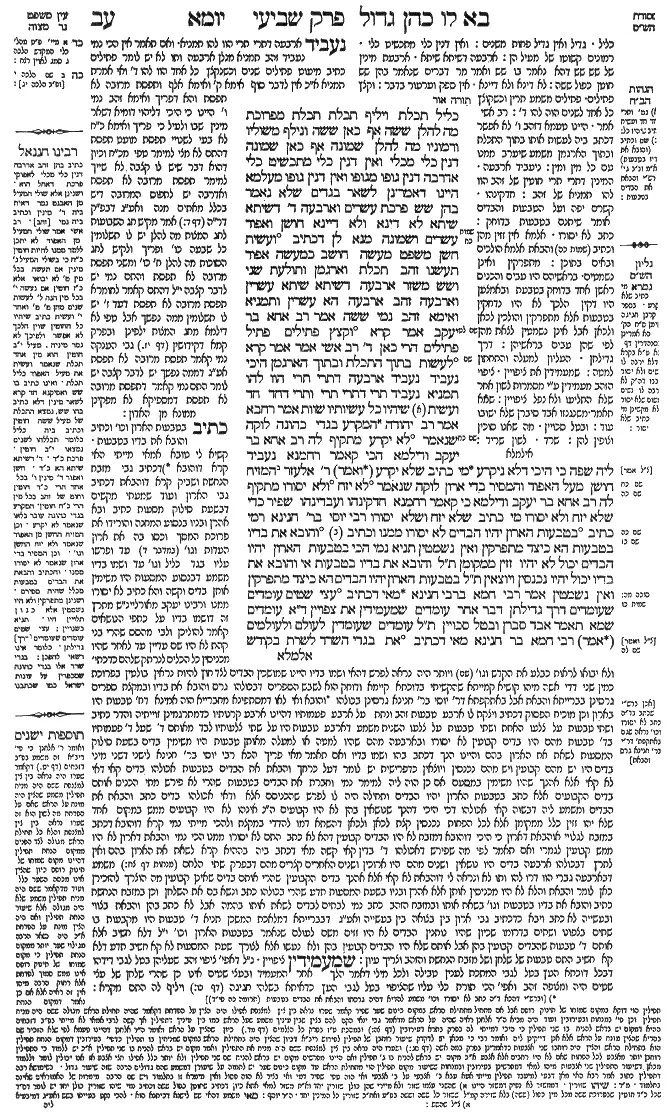
Yoma 72a - Guemara
כליל תכלת ויליף תכלת תכלת מפרוכת מה להלן ששה אף כאן ששה ונילף משוליו ורמוניו מה להלן שמונה אף כאן שמונה דנין כלי מכלי ואין דנין כלי מתכשיט כלי אדרבה דנין גופו מגופו ואין דנין גופו מעלמא היינו דאמרינן לשאר בגדים שלא נאמר בהן שש פרכת עשרים וארבעה ד' דשיתא שיתא לא דינא ולא דיינא חושן ואפוד עשרים ושמונה מנא לן דכתיב (שמות כח, טו) ועשית חשן משפט מעשה חושב כמעשה אפוד תעשנו זהב תכלת וארגמן ותולעת שני ושש משזר ארבעה דשיתא שיתא עשרין וארבעה זהב ארבעה הא עשרין ותמניא ואימא זהב נמי ששה אמר רב אחא בר יעקב אמר קרא (שמות לט, ג) וקצץ פתילים פתיל פתילים הרי כאן ד' רב אשי אמר אמר קרא (שמות לט, ג) לעשות בתוך התכלת ובתוך הארגמן היכי נעביד נעביד ארבעה דתרי תרי הוו להו תמניא נעביד תרי דתרי תרי ותרי דחד חד ועשית שיהיו כל עשיותיו שוות אמר רחבא אמר רב יהודה המקרע בגדי כהונה לוקה שנאמר (שמות כח, לב) לא יקרע מתקיף לה רב אחא בר יעקב ודילמא הכי קאמר רחמנא נעביד ליה שפה כי היכי דלא ניקרע מי כתיב שלא יקרע (ואמר) ר' אלעזר המזיח חושן מעל האפוד והמסיר בדי ארון לוקה שנאמר (שמות כח, כח) לא יזח (שמות כה, טו) ולא יסורו מתקיף לה רב אחא בר יעקב ודילמא כי קאמר רחמנא חדקינהו ועבדינהו שפיר כדי שלא יזח ולא יסורו מי כתיב שלא יזח ושלא יסורו רבי יוסי בר' חנינא רמי כתיב (שמות כה, טו) בטבעות הארון יהיו הבדים לא יסורו ממנו וכתיב (שמות כז, ז) והובא את בדיו בטבעות הא כיצד מתפרקין ואין נשמטין תניא נמי הכי בטבעות הארון יהיו הבדים יכול לא יהיו זזין ממקומן ת"ל והובא את בדיו בטבעות אי והובא את בדיו יכול יהיו נכנסין ויוצאין ת"ל בטבעות הארון יהיו הבדים הא כיצד מתפרקין ואין נשמטין אמר רבי חמא ברבי חנינא מאי דכתיב (שמות כו, טו) עצי שטים עומדים שעומדים דרך גדילתן דבר אחר עומדים שמעמידין את צפויין ד"א עומדים שמא תאמר אבד סברן ובטל סכויין ת"ל עומדים שעומדין לעולם ולעולמים אמר חמא בר חנינא מאי דכתיב (שמות לה, יט) את בגדי השרד לשרת בקודש
Comments from Rashi on Masechet Yoma Page 72a
כליל . גדיל ואין גדיל פחות משנים: ואין דנין כלי מתכשיט כלי . רמונים קשוטו של מעיל הן: ארבעה דשיתא שיתא . ארבעת מינין של שש שש דהא נאמר בו שש ואמר מר דברים שנאמר בהן שש חוטן כפול ששה: לא דינא ולא דיינא . אין ספק וערעור בדבר: וקצץ פתילים . פתילים משמע תרין וכשקוצץ כל אחד לשנים הוה להו ד': רב אשי אמר . היינו טעמא דזהב ו' לא אפשר דכתב ביה לעשות אותו בתוך התכלת ובתוך הארגמן משמע שיערב ממנו עם כל מין ומין: ניעביד ארבעה . המינין דתרי תרי חוטין של זהב הוו להו תמניא של זהב: חדקינהו . קשרם יפה ועל הטבעות והבדים אומר שיתנם בטבעות בדוחק: כתב לא יסורו . אלמא אין זזין מהן וכתיב (שמות כה) והבאת אלמא הולכים ובאים בתוכן: מתפרקין ואינן נשמטים . בראשיהם היו עבים והכניס ראשן אחד בדוחק בטבעת ובאמצען היו דקין הלכך לא היו נדחקין בטבעות אלא מתפרקין והולכין לכאן ולכאן אבל אינן נשמטין לצאת מהן לפי שהן עבים בראשיהן: דרך גדילתן . העליון למעלה והתחתון למטה: שמעמידין את ציפויין . ציפוי הזהב מעמידין ע"י מסמרות לשון אחר שלא התליעו ולא נפל ציפויין: שמא תאמר . משנגנזו אבד סיברן שלא ישובו עוד: ובטל סכויין . מה שאנו סוכין וצופין להן: שרד . לשון שריד:
Comments from Tosafot - Yoma 72a
נעביד ארבעה דתרי תרי הוו להו תמניא . ואם תאמר אין הכי נמי נעביד זהב תמניא מנלן ארבעה ותו לא יש לומר פתילים כתיב מיעוט פתילים שנים וכשנקצץ כל אחד הוו להו ד' ואי אמרת תמניא א"כ אין לדבר סוף אימא ק' ואימא אלף ותפסת מרובה לא תפסת והא דפריך ואימא זהב נמי ו' היינו כי היכי דליהוי דומיא דשאר מינין שבו ולעיל כי פריך ואימא כ"ח לא בעי לשנויי תפסת מועט תפסת דהתם לא מצי למימר טפי מכ"ח וכיון דהוא דבר שיש לו קצבה לא שייך למימר תפסת מרובה לא תפסת ואדרבה יש לתפוס המרובה דיש בכלל מאתים מנה ואע"ג דבפ"ק דר"ה (דף ד:) אמר מקיש חג השבועות לחג המצות מה להלן יש לו תשלומין כל שבעה כו' ופריך ולקיש לחג הסוכות מה להלן ח' כו' ומשני תפסת מרובה לא תפסת והתם נמי יש לדבר קצבה י"ל דהתם קאמר לחומרא תפסת מרובה לא תפסת דעד ז' יש לו תשלומין ממה נפשך אבל טפי לא דילמא מחג המצות ילפינן ובפרק קמא דקידושין (דף יז.) גבי הענקה נמי קאמר תפסת מרובה לא תפסת אע"ג דממה נפשך יש לדבר קצבה יש לומר התם נמי קאמר דתפסת מרובה לא תפסת דמספיקא לא מפקינן ממונא מן האדון: כתיב בטבעות הארון וכו' וכתיב והובא את בדיו בטבעות . קשיא לי טובא אמאי מייתי האי קרא דוהובא) דכתיב גבי מזבח הנחשת ושביק קרא דוהבאת דכתיב גבי הארון ועוד שמעתי מקשים דבשעת סילוק מסעות כתיב ובא אהרן ובניו בנסוע המחנה והורידו את פרוכת המסך וכסו בה את ארון העדות וגו' (במדבר ד) עד ופרשו עליו בגד כליל וגו' עד ושמו בדיו משמע דבנסוע המסעות היו משימין אותן בדים וקשה והא כתיב לא יסורו ממנו ורבינו יעקב מאורליינ"ש מתרץ זה דושמו בדיו על כתפי הנושאים קאמר להוליכן ולבי מהסס שהרי בני קהת לא היו שם עדיין עד לאחר שהיו מכניסין כל הכלים לנרתק שלהם כדכתי' ולא יבואו לראות כבלע את הקדש וגו' (שם) ויותר היה נראה לפרש דהאי ושמו בדיו היינו שמושכין הבדים לצד חוץ להיות נראין בולטין בפרוכת כמין שני דדי אשה מיהו קושיא קמייתא שהקשיתי בדוכתא קיימא ודוחק הוא לשבש הספרים דבכולהו גרס והובא את בדיו ובמקצת ספרים גרסינן בברייתא והבאת אבל באתקפתא דר' יוסי בר' חנינא גרסינן בכולהו והובא ואי לאו דמסתפינא מחברייא הוה אמינא דח' טבעות היו בארון וכן מוכיח הפסוק דכתיב ויצקת לו ארבע טבעות זהב ונתת על ארבע פעמותיו דהיינו ארבע קרנותיו כדמתרגמינן זוייתיה והדר כתיב ושתי טבעות על צלעו האחת ושתי טבעות על צלעו השנית משמע דארבע טבעות היו על שתי צלעותיו לבד מאותם ד' שעל ד' פעמותיו בד' טבעות מהם היו בדים קבועין לא יסורו ובארבעה מהם שהיו למטה או למעלה מאותן טבעות היו משימין בדים בשעת סילוק המסעות לשאת את הארון בהם והיינו הנך דכתב בהו ושמו בדיו ואם תאמר מאי פריך הכא רבי יוסי בר' חנינא לישני דשני מיני בדים היו יש מהם קבועין ויש מהם נכנסין ויוצאין כדפרישית יש לומר דעל כרחך והבאת את הבדים בטבעות אכולהו בדים קאי דאי לא קאי אלא אהנך שהיו משימין במסעם אם כן הוה ליה למימר נמי וחברת את הבדים בטבעות שהרי לא פירש מתי הכניס אותם בדים הקבועים אלא כתב בטבעות הארון יהיו הבדים ותחילה היה לו לפרש שהכניסם אלא ודאי אכולהו בדים כתב והבאת את הבדים ומשמע ליה דבשוה קאי אכולהו דכי היכי דהנך שנושאין בהן לא היו קבועים ה"נ אינהו לא היו קבועים ממש במקום אחד שלא יהו זזין כלל ממקומן אלא לכל הפחות נכנסין קצת לכאן ולכאן דהשתא דמו להדדי במקצת ולהכי מייתי נמי קרא דוהובא דכתב במזבח לגלויי אוהבאת דארון כי היכי דוהובא דמזבח לא היו הבדים קבועין דהא לא כתב התם לא יסורו ממנו הכי נמי והבאת דארון לא היו ממש קבועין לגמרי ואם תאמר לפי מה שפירש דאכולהו ד' בדין קאי קשה מאי דכתב ביה בההיא קרא לשאת את הארון בהם ואין לתרץ דבכולהו ארבעה בדים היו נושאין ושנים מהם היו ארוכין ושנים האחרים קצרים מהם דבפרק שתי הלחם (מנחות דף צח:) משמע דבארבעה גברי הוו דרו להו ותו לא ונראה לי דוהבאת לא קאי אלא אהנך בדים הקבועין שהרי אותם בדים שאינן קבועין מה הוצרך להזכירן כאן לומר והבאת והלא לא היו מכניסין אותן אלא אהרן ובניו בשעת המסעות תדע שהרי בכולהו כתב ונשא בם את השלחן וכן במזבח הנחשת כתיב והובא את בדיו בטבעות וגו' בשאת אותו ובמזבח הזהב כתב נמי לבתים לבדים לשאת אותו בהמה אבל לא כתב בהן והבאת בצווי ובעשייה לא כתב ויבא כדכתיב גבי ארון בין בצואה בין בעשייה ואע"ג דבברייתא דמלאכת המשכן תניא ד' טבעות היו מקבעות בו שתים בצפונו ושתים בדרומו שכיון שהיו נותנין הבדים לא היו זזים משם לעולם שנאמר בטבעות הארון וכו' י"ל דלא חשיב אלא אותם ד' טבעות שהבדים קבועין בהן אבל אותם שלא היו הבדים קבועין בהן ולא נעשו אלא לצורך שעת המסעות לא קא חשיב תדע דלא קא חשיב התם טבעות של שלחן ושל מזבח הנחשת והזהב וצריך עיון: שמעמידין ציפויין . נ"ל דאפי' ציפוי זהב שעליהן בטל לגבי דידהו דבכל דוכתא העץ בטל לגבי המתכת לענין טבילה ולכל מילי דאמר הלך אחר המעמיד ובעצי שטים אינו כן שהרי שלחן של עצי שטים היה ומצופה זהב ואפי' הכי תורת כלי עליו שהציפוי בטל לגבי העץ כדאיתא בשלהי חגיגה (דף כו:) ויליף לה התם מקרא:
Yoma 72a - Mishnah translated into english
spun of sky-blue” (Exodus 28:31). And derive a verbal analogy from the term “sky-blue” used here and the same term “sky-blue” from the verse about the curtain: Just as there, with regard to the curtain, there are six strands, so too here, there are six strands. Then, since the Torah also says the threads are spun, i.e., each strand is made of two thinner strands spun together, each thread must contain twelve strands.
The Gemara suggests: Let us derive the number of strands in the robe from its hem and pomegranates: Just as there, each thread is spun from eight strands, so too here, the threads should be spun from eight strands. The Gemara rejects this: It is preferable to derive the halakhot of a utensil, i.e., the robe, from the halakhot of another utensil, i.e., the curtain, and one should not derive the halakhot of a utensil from the halakhot of something that is merely an ornament of a utensil, i.e., the pomegranates of the robe.
The Gemara asks: On the contrary, it is preferable to derive the halakhot of an object from that object itself, i.e., to assume that the halakhot of the robe and its pomegranates are similar; and one should not derive the halakhot of an object from elsewhere. The Gemara explains: This is precisely what we said in the baraita: One of the five mentions of shesh in the verse is to teach that the requirement that threads be made from six strands applies also to other garments about which shesh is not explicitly stated, such as the robe.
The baraita further states: Each thread of the curtain was made of twenty-four strands. The Gemara explains: With regard to each thread being composed of four colored threads: White, purple, scarlet, and sky-blue, and each one of them being composed of six strands, there is neither judgment nor judge, i.e., it is absolutely clear that this is how the threads of the curtain are produced.
The baraita further states: Each thread of the breastplate and ephod was made of twenty-eight strands. From where do we derive this? As it is written: “And you shall make a breastplate of judgment, the work of the skilled craftsman; like the work of the ephod you shall make it: Of gold, sky-blue, and purple, and scarlet, and fine twined linen” (Exodus 28:15). There are four colored threads, each composed of six strands, which makes twenty-four. In addition, gold is spun together with each of the four colors, giving the total of twenty-eight.
But couldn’t one say the gold should be made as a thread of six strands, like the other colors? Rav Aḥa bar Ya’akov said that the verse states: “And they beat the gold into thin plates, and cut it into cords, to work it into the sky-blue, and into the purple, and into the scarlet, and into the fine linen, the work of a skilled craftsman” (Exodus 39:3). “Cord” implies a strand that is doubled over and can be twisted into a cord; “cords” is in the plural, meaning at least two of these. Accordingly, there are four strands here.
Rav Ashi said: This can be seen from that fact that the verse states with regard to the gold strands: “To work it into the sky-blue, and into the purple” (Exodus 39:3), indicating that the gold strands should be combined with the other colors. What should we do? If we make four gold threads of two strands each and combine each one with each of the colors, then there would be eight. If we make two gold threads of two strands each, and two gold threads of one strand each, it says: “And you shall make,” indicating that all its makings should be the same. Perforce, one strand of gold should be combined with each of the colors, producing a total of twenty-eight strands.
§ The Gemara discusses various halakhot concerning the priestly vestments and other sacred vessels: Raḥava said that Rav Yehuda said: One who intentionally tears any of the priestly vestments transgresses a prohibition and is flogged, as it is stated concerning the robe: “It shall have a hem of woven work around the opening of it, like the opening of a coat of mail, and it shall not be torn” (Exodus 28:32). Just as it is prohibited to tear the opening of the robe, so too, it is prohibited to tear any of the priestly vestments. Rav Aḥa bar Ya’akov strongly objects to this: But perhaps this is what the Merciful One is saying in the Torah: An opening should be made in order that it not tear. In other words, the Torah was giving an explanation, not a prohibition. The Gemara rejects this: Is it written: In order that it not be torn? Clearly, the intention of the verse is to state a prohibition.
Rabbi Elazar said: One who detaches the breastplate from upon the ephod or one who removes the staves of the Ark from their rings transgresses a Torah prohibition and is flogged, as it is stated: “And the breastplate shall not be detached from the ephod” (Exodus 28:28),and it is also stated: “The staves shall be in the rings of the Ark; they shall not be removed from it” (Exodus 25:15). Rav Aḥa bar Ya’akov strongly objects to this: But perhaps when the Merciful One said this in the Torah, the intention was to strengthen them and make them fast so that the breastplate not become detached from the ephod and the staves not be removed. He suggests that the Torah was giving an explanation, not a prohibition. The Gemara rejects this: Is it written: In order that it not become detached, and: In order that they not be removed? Clearly, the intention of the verse is to state a prohibition.
Rabbi Yosei, son of Rabbi Ḥanina, raised a contradiction. In one verse it is written: “The staves shall be in the rings of the Ark; they shall not be removed from it” (Exodus 25:15), implying the staves should remain there permanently. But in another verse it is written: “And its staves shall be put into the rings” (Exodus 27:7), implying that when the Ark is used the staves are inserted, which suggests that they do not remain there permanently. How is this contradiction resolved? The staves could be removed from their position, i.e., they were loosened, but did not come out. The staves were wider at their ends and thinner in the middle. Therefore, once they had been forced into the rings, although they could be shifted, they would not be removed entirely.
That was also taught in a baraita. The verse states: “The staves shall be in the rings of the Ark; they shall not be removed from it” (Exodus 25:15). One might have thought that they should not move from their place at all; therefore; the verse states: “And its staves shall be put into the rings” (Exodus 27:7). If it had stated: And its staves shall be put, one might have thought that they are inserted and removed entirely; therefore, the verse states: “The staves shall be in the rings of the Ark; they shall not be removed from it” (Exodus 25:15). How is this? They could be removed from their position, but did not come out.
The Gemara cites other statements concerning the ark. Rabbi Ḥama, son of Rabbi Ḥanina, said: What is the meaning of that which is written: “And you shall make the boards for the Tabernacle of acacia wood, standing” (Exodus 26:15)? This verse teaches that the boards of wood used for the Tabernacle should stand in the same direction in which they grew from the ground as a tree. Alternatively, “standing” means that they supported their gold plating and prevented it from falling. Alternatively, “standing” is written to hint at the following: Perhaps you will say that now that the Tabernacle is no longer in use, their hope is lost and their chance is abandoned, and after being stored away the boards will no longer return to use. Therefore, the verse states “standing” to indicate that they stand forever and ever.
§ The Gemara returns to its discussion of the priestly vestments: Rabbi Ḥama bar Ḥanina said: What is the meaning of that which is written: “The plaited [serad] garments, for serving in the Sanctuary” (Exodus 35:19)? Why does the verse refer to the priestly vestments as “serad garments”?
Traduction : The William Davidson digital edition of the Koren Noé Talmud, with commentary by Rabbi Adin Even-Israel Steinsaltz.