 Talmud Bavli
The learning on the whole site is dedicated : L'ilui Nishmat Yaakov ben Myriam
The learning on the whole site is dedicated : L'ilui Nishmat אליעזר בן רחל
The learning on the whole site is dedicated : L'ilui Nishmat Chemouel Eliezer ben Batcheva
Yoma 33a : Youtube
Daf TubeYoutube
3 video classes :
Yoma Page 33a
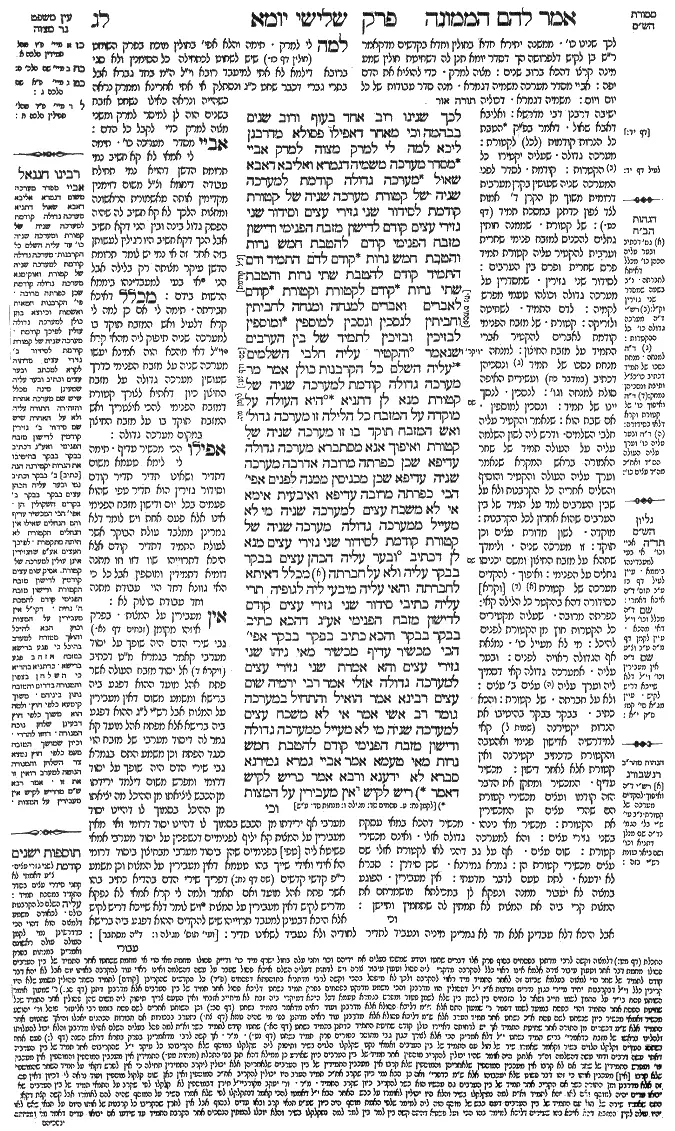
Yoma 33a - Guemara
לכך שנינו רוב אחד בעוף ורוב שנים בבהמה וכי מאחר דאפילו פסולא מדרבנן ליכא למה לי למרק מצוה למרק אביי מסדר מערכה משמיה דגמרא ואליבא דאבא שאול מערכה גדולה קודמת למערכה שניה של קטורת מערכה שניה של קטורת קודמת לסידור שני גזירי עצים וסידור שני גזירי עצים קודם לדישון מזבח הפנימי ודישון מזבח הפנימי קודם להטבת חמש נרות והטבת חמש נרות קודם לדם התמיד ודם התמיד קודם להטבת שתי נרות והטבת שתי נרות קודם לקטורת וקטורת קודם לאברים ואברים למנחה ומנחה לחביתין וחביתין לנסכין ונסכין למוספין ומוספין לבזיכין ובזיכין לתמיד של בין הערבים שנאמר (ויקרא ו, ה) והקטיר עליה חלבי השלמים עליה השלם כל הקרבנות כולן אמר מר מערכה גדולה קודמת למערכה שניה של קטורת מנא לן דתניא (ויקרא ו, ב) היא העולה על מוקדה על המזבח כל הלילה זו מערכה גדול' ואש המזבח תוקד בו זו מערכה שניה של קטורת ואיפוך אנא מסתברא מערכה גדולה עדיפא שכן כפרתה מרובה אדרבה מערכה שניה עדיפא שכן מכניסין ממנה לפנים אפי' הכי כפרתה מרובה עדיפא ואיבעית אימא אי לא משכח עצים למערכה שניה מי לא מעייל ממערכה גדולה מערכה שניה של קטורת קודמת לסידור שני גזירי עצים מנא לן דכתיב (ויקרא ו, ה) ובער עליה הכהן עצים בבקר בבקר עליה ולא על חברתה מכלל דאיתא לחברתה והאי עליה מיבעי ליה לגופיה תרי עליה כתיבי סידור שני גזירי עצים קודם לדישון מזבח הפנימי אע"ג דהכא כתיב בבקר בבקר והכא כתיב בבקר בבקר אפי' הכי מכשיר עדיף מכשיר מאי ניהו שני גזירי עצים והא אמרת שני גזירי עצים למערכה גדולה אזלי אמר רבי ירמיה שום עצים רבינא אמר הואיל והתחיל במערכה גומר רב אשי אמר אי לא משכח עצים למערכה שניה מי לא מעייל ממערכה גדולה ודישון מזבח הפנימי קודם להטבת חמש נרות מאי טעמא אמר אביי גמרא גמירנא סברא לא ידענא ורבא אמר כריש לקיש דאמר ריש לקיש אין מעבירין על המצות
Comments from Rashi on Masechet Yoma Page 33a
לכך שנינו כו' . ממשנה יתירא חדא בחולין וחדא בקדשים מדקאמר ר"ש בן לקיש דלפרושה הך דסדר יומא תנן לה דשחיטת חולין שמע מינה קרצו דהכא ברוב שנים: מצוה למרק . כדי להוציא את הדם יפה: אביי מסדר מערכה משמיה דגמרא . מנה סדר עבודות של כל יום ויום: משמיה דגמרא . דכוליה ישיבה דרבנן דבי מדרשא: ואליבא דאבא שאול . דאמר בפ"ק הטבת כל הנרות קודמות (לכל) לקטורת: מערכה גדולה . שעליה יקטירו כל הקטרות: קודמת . לסדר לפני המערכה שניה שעושין בקרן מערבית דרומית משוך מן הקרן ד' אמות לצד צפון כדתנן במסכת תמיד (דף כט.): של קטורת . שממנה חותין גחלים להכניס למזבח פנימי שחרית וערבית להקטיר עליה קטורת תמיד פרס שחרית ופרס בין הערבים: לסידור שני גזירין . שמסדרין על מערכה גדולה וכולהו טעמי מפרש לקמיה: לדם התמיד . לשחיטה ולזריקה: קטורת . של מזבח הפנימי קודמת לאברים להקטיר אברי התמיד על מזבח החיצון: למנחה . מנחת נסכו של תמיד ונסכיהן דכתיב (במדבר כח) ועשירית האיפה סולת למנחה וגו': לנסכין . לנסך יינו של תמיד: ונסכין למוספין . אם שבת הוא: שנאמר והקטיר עליה חלבי השלמים . ודרש ליה לשון השלמה עליה על העולה תמיד של שחר האמורה בראש המקרא שנאמר וערך עליה העולה והקטיר והוסיף והשלים אחריה כל הקרבנות ולא על שבין הערבים למד על תמיד של בין הערבים שהוא אחרון לכל הקרבנות: מוקדה לשון מדורת עצים וכן תוקד: זו מערכה שניה . ולימדך שתהא על מזבח החיצון ומשם יכניסו גחלים על הפנימי: ואיפוך . להקדים מערכה של קטורת [וקרא] כסידורה דהא בהקטר כל הלילה קאי: כפרתה מרובה . שעליה מקטירים כל הקטרות חוץ מן הקטורת לפנים להיכל: מי לא מעייל כו' . נמצאת אף הגדולה ראויה לפנים: ובער עליה . אמערכה גדולה קאי דסמיך ליה וערך עליה עצים ב' עצים: ולא על חברתה . של קטורת: והכא כתיב . בבקר בבקר בהיטיבו את הנרות יקטירנה (שמות ל) קאי למידרשיה אדישון פנימי ואהטבה והקטורת כדכתיב יקטירנה ואין קטורת אלא לאחר דישון: מכשיר עדיף . המכשיר ומתקן את הדבר הזה קודמו ועצים מכשירי קטורת הם שהרי עצים הן המכשירין את הקטורת: מכשיר מאי נינהו . מכשיר דהכא במאי עסקת בשני גזירי עצים: והא למערכה גדולה אזלי . ואינם מכשירי קטורת: שום עצים . אף על גב דהני לאו לקטורת אזלי שם עצים מכשירי קטורת הן: גמרא גמירנא . שכן סידרן: סברא לא ידענא . לתת טעם לדבר מדעתי: אין מעבירין . הפוגע במצוה לא יעבור ממנה ונפקא לן במכילתא מושמרתם את המצות קרי ביה את המצות לא תמתין לה שתחמיץ ותיישן:
Comments from Tosafot - Yoma 33a
למה לי למרק . תימה והלא אפי' בחולין מוכח בפרק השוחט (חולין דף כז.) שיש לשחוט לכתחילה כל הסימנין ולא סגי ברובא דילמא לא אתי למיעבד רובא וי"ל ה"מ בחד גברא אבל בתרי גברי דכבר שחט כ"ג ונסתלק אי אתי אחרינא וממרק נראה כשהייה ונראה כאילו נשחט אזבח בשנים הוה לן למיסר למרק ומשני מצוה למרק כדי לקבל כל הדם: אביי מסדר מערכה כו' . תימה לי אמאי לא קא חשיב נמי תרומת הדשן דהויא נמי תחילת עבודה דיממא וצ"ל משום דזימנין מקדימין אותה מאשמורת הראשונה ומחצות הלכך לא קא חשיב לה שהיה הפסק גדול בינה ובין הני דקא חשיב אבל הנך דקא חשיב היו רגילין לעשותן בזה אחר זה אי נמי יש לומר תרומת הדשן עיקר מצותה רק בלילה אבל הני אי בעי למעבדינהו ביממא הרשות בידם: מכלל דאיכא חבירתה . תימה לי אם כן למה לי קרא דלעיל ואש המזבח תוקד בו למערכה שניה תיפוק ליה מהאי קרא וי"ל דאי מהכא הוה אמינא יעשו מערכה שניה על מזבח הפנימי כדרך שעושין מערכה גדולה על מזבח החיצון כיון דאתיא לצורך קטורת דמזבח הפנימי להכי איצטריך ואש המזבח תוקד בו על מזבח החיצון במקום מערכה גדולה: אפילו הכי מכשיר עדיף . תימה לי לימא טעמא משום דתדיר ושאינו תדיר תדיר קודם וסידור גזירין הוא תדיר טפי שהוא פעמים בכל יום ודישון מזבח הפנימי אינו אלא פעם אחת ויש לומר דלא גמרינן ממלבד עולת הבוקר אשר לעולת התמיד דתדיר קודם אלא היכא דתרוייהו שוו דזו וזו מתנה דומיא דתמידין ומוספין אבל כל כי האי גוונא דחד הוי עבודת מתנה וחד עבודת סילוק לא: אין מעבירין על המצות . בפרק איזהו מקומן (זבחים דף נא.) גבי שירי הדם היה שופך על יסוד מערבי קאמר בגמרא מ"ט דכתיב (ויקרא ד) אל יסוד מזבח העולה אשר פתח אהל מועד ההוא דפגע ביה ברישא ומשמע משום דאין מעבירין על המצות אבל רש"י ל"ג ההוא דפגע ביה ברישא אלא מפתח אהל מועד קא גמר לה דיסוד מערבי של מזבח הוי כנגד הפתח וכן משמע התם בגמרא גבי שירי הדם היה שופך על יסוד דרומי ומפרש משום דילמד ירידתו מן הכבש ליציאתו מן ההיכל מה יציאתו מן ההיכל בסמוך לו דהיינו יסוד מערבי אף ירידתו מן הכבש בסמוך לו דהיינו יסוד דרומי ואי מאין מעבירין על המצות קא יליף לפנימיים דנשפכין על יסוד מערבי אמאי פשיטא ליה [טפי] בפנימיים שהן ביסוד מערבי מבחיצון ביסוד דרומי הא אידי ואידי שייך בהו טעמא דאין מעבירין על המצות וכן משמע ר"פ קדשי קדשים (שם דף נח:) דפריך שירי הדם בהדיא כתיב בהו אשר פתח אהל מועד ואם תאמר ולמה לי קרא אמאי לא נפקא מדריש לקיש דאין מעבירין על המצות ויש לומר דלא שייכא דריש לקיש אלא היכא דבעינן למעבד תרוייהו שיש להקדים ההוא דפגע ביה ברישא אבל היכא דלא עבדינן אלא חד לא גמרינן מיניה ונעביד לתדיר לחודיה ולא נעביד לשאינו תדיר:
Yoma 33a - Mishnah translated into english
therefore, we learned again: The majority of one organ in a bird and the majority of each of two organs in an animal, to teach that slaughtering the majority of each of the signs is sufficient. The Gemara asks: And since there is not even an invalidation by rabbinic law, why do I need another priest to finish cutting the organs? Why not suffice with the High Priest’s slaughter of the majority of each of the two organs? The Gemara answers: It is nevertheless a mitzva to complete the slaughter ab initio to cause the blood to flow more freely.
§ Abaye arranged the sequence of the daily services in the Temple based on tradition and in accordance with the opinion of Abba Shaul: Setting up the large arrangement of wood on the altar on which the offerings were burned precedes the second arrangement of wood. This second arrangement was arranged separately near the southwest corner of the altar, and twice every day priests raked coals from it and placed them on the inner altar in order to burn the incense. The second arrangement for the incense precedes setting up the two logs of wood above the large arrangement to fulfill the mitzva of bringing wood. And the setting up of the two logs of wood precedes the removal of ashes from the inner altar. And the removal of ashes from the inner altar precedes the removal of ashes from five of the seven lamps of the candelabrum.
And removal of ashes from five lamps precedes the slaughter and the receiving and sprinkling of the blood of the daily morning offering. The sprinkling of the blood of the daily offering precedes the removal of ashes from the two remaining lamps of the candelabrum. And the removal of ashes from two lamps precedes the burning of the incense. The burning of the incense on the inner altar precedes the burning of the limbs of the daily offering on the outer altar. The burning of the limbs precedes the sacrifice of the meal-offering which accompanies the daily offering. The sacrifice of the meal-offering precedes the sacrifice of the High Priest’s daily griddle-cake offering, half of which he sacrificed in the morning and half in the afternoon. And the griddle-cake offering precedes the pouring of the libations of the daily offering.
And the libations precede the sacrifice of the additional offerings on days when the additional offerings are sacrificed. And the additional offerings precede the vessels of frankincense that are offered on Shabbat. And the vessels precede the sacrifice of the daily afternoon offering, as it is stated: “And he shall lay out the burnt-offering on it, and burn on it the fat parts of the peace-offerings” (Leviticus 6:5). The term on it, means complete sacrifice of all other offerings, i.e., after the daily morning offering rather than after the daily afternoon offering. In all cases, the daily afternoon offering is the final offering sacrificed.
The Gemara proceeds to analyze the items listed by Abaye and seeks biblical or logical sources for each. The Master said: Setting up the large arrangement of wood on the altar on which the offerings were burned precedes the second arrangement of wood for incense. The Gemara asks: From where do we derive this? The Gemara answers: As it was taught in a baraita: The verse states: “The burnt-offering itself shall go up on its bonfire upon the altar all night” (Leviticus 6:2); this is referring to the large arrangement of wood. “And the fire of the altar shall be kept burning on it” (Leviticus 6:2); this is referring to the second arrangement of wood near the corner of the altar, from which coals are taken for the incense.
The Gemara asks: And perhaps I should reverse them and say that the first verse refers to the arrangement of wood for the incense, and the second verse refers to the large arrangement of wood. The Gemara answers: It is reasonable that the large arrangement of wood takes precedence, as the atonement that it effects is extensive. All of the offerings are sacrificed on the large pile, not just the incense.
The Gemara rejects this: On the contrary, the second arrangement takes precedence, as unlike the large arrangement in which offerings are burned exclusively on the outer altar, coals from it are taken inside the Sanctuary. The Gemara answers: Even so, the contention that the atonement that it effects is extensive takes precedence. And if you wish, say instead: If one does not find wood for the second arrangement, wouldn’t he take coals from the large arrangement into the Sanctuary to burn the incense? There is no fundamental obligation to bring coals from a special arrangement, and the second arrangement is only an addition to the large arrangement on which all the offerings are burned.
Abaye continued and said that the second arrangement for incense precedes the setting up of the two logs. The Gemara asks: From where do we derive this? As it is written: “And the priest shall burn wood upon it in the morning, in the morning” (Leviticus 6:5); there is an obligation to place new logs upon the large arrangement. The term upon it underscores that the wood is placed only on the large arrangement, and not on the other arrangement from which coals are taken for the incense. From the fact that this exclusionary term is necessary, it can be derived by inference that there is another pile on the altar, meaning that when the new logs are placed on the altar, the two arrangements are already there.
The Gemara asks: But this term: Upon it, is needed for its own sake, to teach the obligation to place the logs on the altar; therefore, how can the timing of their placement be derived from that term? The Gemara answers: The term: Upon it, is written twice in that verse: “And the priest shall burn wood upon it in the morning, in the morning, and he shall place the burnt-offering upon it.” From one instance of this term the fundamental obligation to place the logs is derived, and from the other instance the order of their placement is derived.
Abaye continued: The setting up of the two logs precedes the removal of ashes from the inner altar. Although here, with regard to the two logs, it is written: In the morning, in the morning, meaning that the priest must arise early in the morning to perform this act, and here, with regard to removal of the ashes from the inner altar, it is also written: “In the morning, in the morning” (Exodus 30:7), even so, an action that facilitates another service takes precedence. Therefore, setting up the logs, from which coals are taken, facilitating the burning of the incense, precedes removal of ashes from the inner altar. The Gemara asks: What is the act that facilitates? It is the placement of the two logs. But didn’t you say that the two logs go to the large arrangement of wood and not to the arrangement of wood from which the coals are taken for the incense? These logs in no way facilitate the burning of the incense.
Rabbi Yirmeya said: The reference is to the category of wood. Although these logs do not facilitate the burning of the incense, wood facilitates its burning, and the two logs are wood. Therefore, they take precedence. Ravina said a different reason: Since he began with the service of setting up the arrangement, he completes it by placing two logs. Only then he moves on to perform a different service. Rav Ashi said: If one does not find wood for the second arrangement, won’t he take coals from the large arrangement into the Sanctuary to burn the incense? This demonstrates that there are circumstances in which placing the logs facilitates the burning of the incense. Therefore, it takes precedence.
Abaye continued: And removal of ashes from the inner altar precedes the removal of ashes from five of the seven lamps of the candelabrum. What is the reason for this? Abaye said: I learned this through tradition; however, I do not know the rationale behind it. And Rava said: The reason is in accordance with the statement of Reish Lakish, as Reish Lakish said: One may not forego performance of any of the mitzvot in order to perform another mitzva.
Traduction : The William Davidson digital edition of the Koren Noé Talmud, with commentary by Rabbi Adin Even-Israel Steinsaltz.