 Talmud Bavli
The learning on the whole site is dedicated : L'ilui Nishmat Reuven ben Rivka SEBBAG
The learning on the whole site is dedicated : L'ilui Nishmat Yaakov ben Myriam
The learning on the whole site is dedicated : L'ilui Nishmat יוסף בן מושה
Yoma 36a : Youtube
Daf TubeYoutube
3 video classes :
Yoma Page 36a
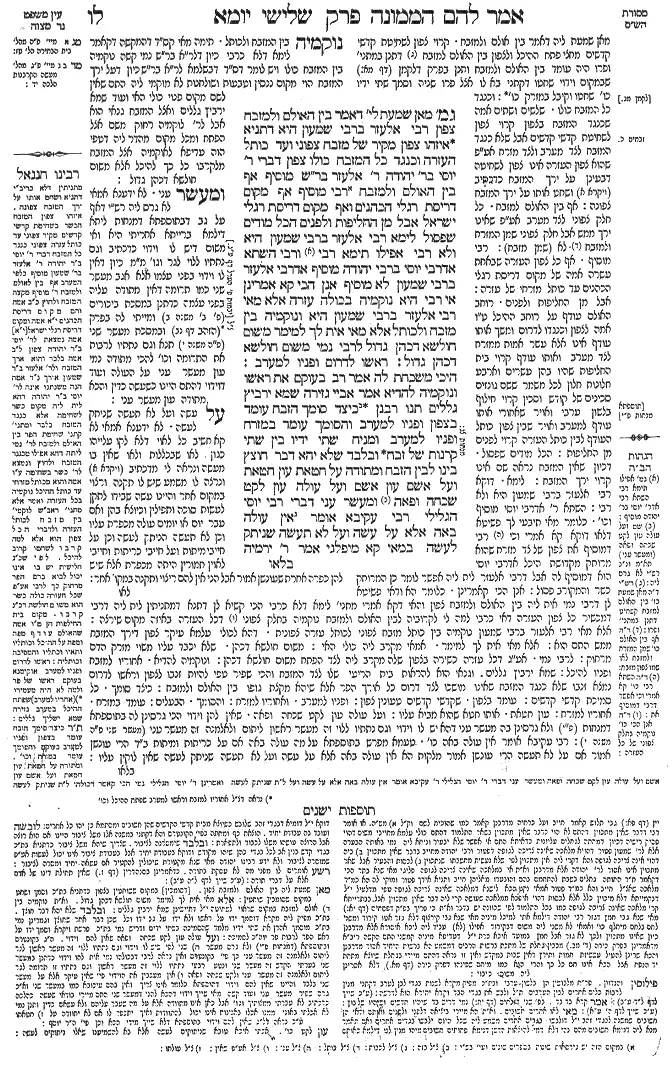
Yoma 36a - Guemara
גמ׳ מאן שמעת לי' דאמר בין האולם ולמזבח צפון רבי אלעזר ברבי שמעון היא דתניא איזהו צפון מקיר של מזבח צפוני ועד כותל העזרה וכנגד כל המזבח כולו צפון דברי ר' יוסי בר' יהודה ר' אלעזר בר"ש מוסיף אף בין האולם ולמזבח רבי מוסיף אף מקום דריסת רגלי הכהנים ואף מקום דריסת רגלי ישראל אבל מן החליפות ולפנים הכל מודים שפסול לימא רבי אלעזר ברבי שמעון היא ולא רבי אפילו תימא רבי ורבי השתא אדרבי יוסי ברבי יהודה מוסיף אדרבי אלעזר ברבי שמעון לא מוסיף אנן הכי קא אמרינן אי רבי היא נוקמיה בכולה עזרה אלא מאי רבי אלעזר ברבי שמעון היא ונוקמיה בין מזבח ולכותל אלא מאי אית לך למימר משום חולשא דכהן גדול לרבי נמי משום חולשא דכהן גדול ראשו לדרום ופניו למערב היכי משכחת לה אמר רב בעוקם את ראשו ונוקמיה להדיא אמר אביי גזירה שמא ירביץ גללים תנו רבנן כיצד סומך הזבח עומד בצפון ופניו למערב והסומך עומד במזרח ופניו למערב ומניח שתי ידיו בין שתי קרנות של זבח ובלבד שלא יהא דבר חוצץ בינו לבין הזבח ומתודה על חטאת עון חטאת ועל אשם עון אשם ועל עולה עון לקט שכחה ופאה ומעשר עני דברי רבי יוסי הגלילי רבי עקיבא אומר אין עולה באה אלא על עשה ועל לא תעשה שניתק לעשה במאי קא מיפלגי אמר ר' ירמיה
Comments from Rashi on Masechet Yoma Page 36a
מאן שמעת ליה דאמר בין אולם ולמזבח . קרוי צפון לשחיטת קדשי קדשים מחצי פתח ההיכל ולצפון בין האולם למזבח דתנן במתני' ופרו היה עומד בין האולם ולמזבח ותנן בפרק דלקמן (יומא דף מא:) שבמקום וידוי שחטו דקתני בא לו אצל פרו שניה וסמך שתי ידיו כו' שחטו וקיבל במזרק כו': וכנגד כל המזבח כולו . שלשים ושתים אמה שכנגד המזבח בצפון קרוי צפון לשחיטת קדשי קדשים אבל שלא כנגד המזבח לצד מערב ולצד מזרח אע"פ שהוא צפון העזרה אינו צפון לשחיטה דבעינן על ירך המזבח כדכתיב (ויקרא א) ושחט אותו על ירך המזבח צפונה: אף בין האולם למזבח . כל חלק צפוני לצד מערב אע"פ שאינו ירך ממש אבל חלק צפוני שמן המזרח ולמזבח לא (שמן מזבח): רבי מוסיף . אף כל צפון העזרה שבאחת עשרה אמה של מקום דריסת רגלי הכהנים עד כותל מזרחי של עזרה: אבל מן החליפות ולפנים . רוחב האולם עודף על רוחב ההיכל ט"ו אמה לצפון וכנגדו לדרום ומשך אותו עודף אינו אלא עשר אמות ממזרח לצד מערב ואותו עודף קרוי בית החליפות שהיו בהן עשרים וארבע חלונות חלון לכל משמר ששם גונזים סכינים של קודש וסכין קרוי חילוף בלשון ערבי ואויר שאחורי אותו עודף למערב ואויר שבין צפון כותל העודף לבין כותל העזרה קרוי לפנים מן החליפות: הכל מודים שפסול . דכיון שאין המזבח נראה שם אינו קרוי ירך המזבח: לימא . דוקא רבי אלעזר ברבי שמעון היא ולא רבי: השתא ר' אדרבי יוסי מוסיף וכו' . כלומר מאי תיבעי לך פשיטא דלאו דוקא קא אמרי וכי רבי דמוסיף את צפון של צד מזרח שהוא מרוחק מקדושת היכל אדרבי יוסי הוא דמוסיף לה אבל דרבי אלעזר לית ליה אפשר לומר כן המרוחק כשר והמקורב פסול: אנן הכי קאמרינן . כלומר הא ודאי פשיטא לן דרבי נמי אית ליה בין האולם ולמזבח צפון והאי דקא אמרי מתני' לימא דלא כרבי הכי קשיא לן דתנא דמתניתין לית ליה דרבי דמכשיר כל צפון העזרה דאי כרבי למה לי לקרוביה לבין האולם ולמזבח נוקמיה בחלק צפוני דכל העזרה באיזה מקום שירצה: אלא מאי רבי אלעזר ברבי שמעון נוקמיה בין כותל מזבח צפוני לכותל עזרה צפונית . דהא לכולי עלמא עיקר צפון דירך המזבח ממש התם הוא: אלא מאי אית לך למימר . אמאי מקרב ליה כולי האי: משום חולשא דכהן . שלא יכבד עליו משוי מזרק הדם מרחוק: לרבי נמי . אע"ג דכל עזרה כשירה בצפון שלה מקרב ליה לצד הפתח משום חולשא דכהן: ונוקמיה להדיא . אחוריו למזבח ופניו להיכל: שמא ירביץ גללים . וגנאי הוא להראות בית הריעי שלו לצד המזבח והכי שפיר טפי להיות זנבו לצפון וראשו לדרום נמצא זנבו שלא כנגד המזבח שאינו מושכו לצד דרום כל אורך הפר אלא שיהא מקצת גופו בין האולם ולמזבח: כיצד סומך . כל סמיכת קדשי קדשים: עומד בצפון . שקדשי קדשים טעונין צפון: ופניו למערב . ואחוריו למזרח: והסומך . הבעלים: עומד במזרח . אחוריו למזרח: עון חטאת . אותו חטא שהוא מביא עליו: ועל עולה עון לקט שכחה ופאה . שאין להן וידוי הכי גרסינן לה בתוספתא דמנחות (פ"י) ולא גרסינן בה מעשר עני דהא יש לו וידוי וגם נתתיו ללוי זה מעשר ראשון ליתום ולאלמנה זה מעשר עני (מעשר שני פ"ה): רבי עקיבא אומר אין עולה באה כו' . טעמא מפרש בתוספתא על מה עולה באה אם על כריתות ומיתות ב"ד הרי עונשן אמור אם על לא תעשה הרי עונשן אמור מלקות הא אין עולה באה אלא על עשה ועל לא תעשה שניתק לעשה שאין לוקין עליו:
Comments from Tosafot - Yoma 36a
נוקמיה בין המזבח ולכותל . תימה מאי קס"ד דהמקשה דקאמר לימא דלא כרבי כיון דלר"א בר"ש נמי קשה נוקמיה בין המזבח כולו ויש לומר דס"ד דבשלמא לר"א בר"ש כיון דעל ירך המזבח הוי מקום ננסין וטבעות ושולחנות לא מוקמי ליה התם שאין לשם מקום פנוי כולי האי ועוד שמא ירביץ גללים ואצל המזבח גנאי הוא אבל לר' לוקמיה רחוק משם אצל הפתח ומכל מקום מהדר ליה דטפי הוה עדיפא לאוקמיה אצל המזבח מלקרבו כל כך להיכל אלא משום חולשא דכהן גדול: ומעשר עני . לא ידענא אמאי לא גרס ליה רש"י דאף על גב דבתוספתא דמנחות ליתא דילמא ברייתא אחריתי היא ואי משום דיש לו וידוי כדכתיב וגם נתתיו ללוי לגר וגו' מ"מ כיון דאין לו וידוי בפני עצמו אלא אגב מעשר שני כמו תרומה דאין מתודה עליה בפני עצמה כדתנן במסכת ביכורים (פ' ב' משנה ב) ומייתי לה בפרק (הזהב דף נב) ובמסכת מעשר שני (פ"ה משנה י) תנא וגם נתתיו לרבות את התרומה וכו' להכי מתודה נמי עון מעשר עני על העולה ועוד דוידוי דהתם היינו כשעשה כדין והכא מתודה עון מעשר עני: על עשה ועל לא תעשה שניתק לעשה . לא ידענא אמאי לא קא חשיב כל לאוי דלא לקו עלייהו כגון לאו שבכללות ולאו שאין בו מעשה ונראה לי מדכתיב (ויקרא א) ונרצה לו משמע שיש לו תקנה ורצוי במקום אחר והיינו עשה שבידו לתקן לעשות סוכה ותפילין וכיוצא בהן ואם עבר יום או יומים עולה מכפרת עליו וכן לא תעשה הניתק לעשה וכן על חייבי מיתות ועל חייבי כריתות וחייבי לאוין חמורין היתה מכפרת אלא שיש להן כפרה אחרת שעונשן אמור אבל הני אין להם ריצוי ותקנה במקו' אחר:
Yoma 36a - Mishnah translated into english
GEMARA: The mishna states that when the High Priest recites his confession, the bull stands between the Entrance Hall to the Sanctuary and the altar, and elsewhere (41b) it is stated that the bull is slaughtered at the place where the confession is recited. Apparently, the place where the confession is recited must be considered north. The Gemara clarifies: About whom did you learn that he said that the area between the Entrance Hall and the altar is considered north and is therefore a valid location for slaughtering offerings of the most sacred order, based on the verse written with regard to the burnt-offering: “On the side of the altar northward” (Leviticus 1:11)?
It is Rabbi Elazar, son of Rabbi Shimon, as it was taught in a baraita: What is the north? It is the area from the northern wall of the altar until the wall of the Temple courtyard. And opposite the entire altar is also considered north; this is the statement of Rabbi Yosei, son of Rabbi Yehuda. And Rabbi Elazar, son of Rabbi Shimon, adds even the area between the Entrance Hall and the altar to the area that is considered north. Rabbi Yehuda HaNasi adds that even the areas to the north in the place where the priests walk, and even areas to the north in the place where the Israelites walk, are considered north in terms of the halakha of slaughtering offerings. However, everyone agrees that the area from the chamber of the knives and inward, which is an area off to the side, is unfit for slaughtering offerings of the most sacred order, as it is not visible from the altar.
The Gemara suggests: Let us say that the mishna is in accordance with the opinion of Rabbi Elazar, son of Rabbi Shimon, and not in accordance with the opinion of Rabbi Yehuda HaNasi. The Gemara rejects this: Even if you say that the mishna is in accordance with the opinion of Rabbi Yehuda HaNasi, now, does Rabbi Yehuda HaNasi add only to the statement of Rabbi Yosei, son of Rabbi Yehuda, but does not add to the statement of Rabbi Elazar, son of Rabbi Shimon? After all, the area deemed north according to Rabbi Elazar, son of Rabbi Shimon, is included in the area deemed north by Rabbi Yehuda HaNasi. Therefore, the mishna could be in accordance with the opinion of Rabbi Yehuda HaNasi as well.
The Gemara reformulates its suggestion: This is what we are saying: If the mishna were in accordance with the opinion of Rabbi Yehuda HaNasi, who holds that the entire courtyard is considered north, let us stand the bull anywhere in the entire courtyard and not necessarily between the Entrance Hall and the altar. The Gemara rejects this: Rather, what do you suggest? The mishna is only in accordance with the opinion of Rabbi Elazar, son of Rabbi Shimon? According to his opinion one could suggest: And let us stand the bull between the altar and the wall, as everyone agrees that this area is considered north.
Rather, what have you to say to explain why the bull is positioned specifically between the Entrance Hall and the altar? It is due to the weakness of the High Priest, so that he need not exert himself and walk long distances on Yom Kippur. According to Rabbi Yehuda HaNasi as well, it is due to the weakness of the High Priest that the bull is positioned specifically there, although it is permitted to position the bull anywhere in the courtyard.
§ The mishna continues: The head of the bull was facing to the south and its face was facing to the west. The Gemara asks: Under what circumstances can a case be found where its head is toward one direction and its face is toward another? Rav said: It is a case where the animal is standing north-south and it turns its head and faces west. The Gemara asks: And let us stand it straight east-west with its back to the altar and its head facing the Sanctuary. Abaye said: It is prohibited due to a decree lest the bull defecate opposite the altar, which is a display of contempt for the altar.
The Sages taught: How does the priest place his hands on the offering? In the offerings of the most sacred order, the animal stands in the north of the courtyard and its face is to the west, and the one who is placing his hands stands to the east of the offering and his face is to the west, and he places his two hands between the two horns of the offering, provided that nothing interposes between his hands and the offering. And he confesses his sins. If the confession is over a sin-offering, he confesses the transgression for which he is bringing the sin-offering, i.e., unwitting violation of a prohibition punishable by karet. And over a guilt-offering he confesses the transgression for which he is bringing the guilt-offering, e.g., theft or misuse of consecrated property. And over a burnt-offering, with regard to which the Torah does not specify for which transgressions it is brought, he confesses the sin of not leaving gleanings, forgotten sheaves, and produce of the corners [pe’a], as well as not separating poor man’s tithe. This is the statement of Rabbi Yosei HaGelili.
Rabbi Akiva says: A burnt-offering is brought only over the failure to fulfill a positive mitzva and over violation of a prohibition that after violation is transformed into a positive mitzva. This refers to all prohibitions followed by positive mitzvot intended to rectify them; e.g., the prohibition against robbery is followed in the Torah by a positive mitzva for the robber to return the object that he stole. These transgressions are not punishable by lashes nor does a human court administer any other form of penalty. However, a burnt-offering is required in order to gain divine atonement for the sinner.
The Gemara asks: With regard to what principle do they disagree? Rabbi Yirmeya said:
Traduction : The William Davidson digital edition of the Koren Noé Talmud, with commentary by Rabbi Adin Even-Israel Steinsaltz.