 Talmud Bavli
The learning on the whole site is dedicated : L'ilui Nishmat Rav Chlomo Ben Jamilla
The learning on the whole site is dedicated : L'ilui Nishmat Yaakov ben Myriam
The learning on the whole site is dedicated : L'ilui Nishmat Margalit bat Ledicia
Yoma 36b : Youtube
Daf TubeYoutube
3 video classes :
Yoma Page 36b
Yoma 36b - Guemara
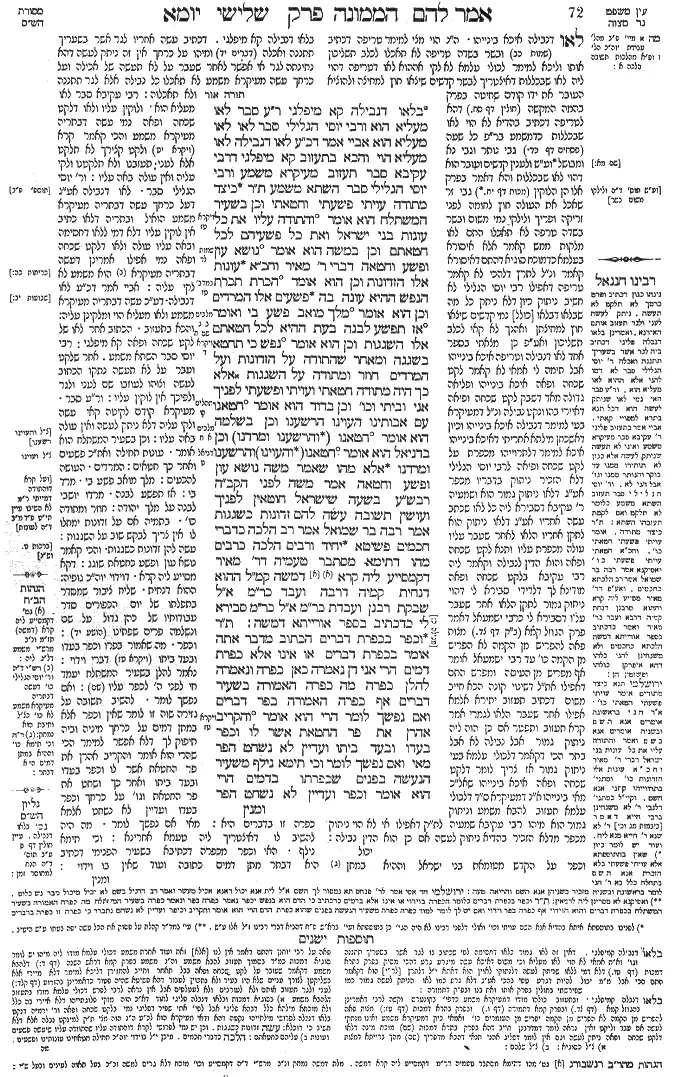
בלאו דנבילה קא מיפלגי ר"ע סבר לאו מעליא הוא ורבי יוסי הגלילי סבר לאו לאו מעליא הוא אביי אמר דכ"ע לאו דנבילה לאו מעליא הוי והכא בתעזוב קא מיפלגי דרבי עקיבא סבר תעזוב מעיקרא משמע ורבי יוסי הגלילי סבר השתא משמע ת"ר כיצד מתודה עויתי פשעתי וחטאתי וכן בשעיר המשתלח הוא אומר (ויקרא טז, כא) והתודה עליו את כל עונות בני ישראל ואת כל פשעיהם לכל חטאתם וכן במשה הוא אומר (שמות לד, ז) נושא עון ופשע וחטאה דברי ר' מאיר וחכ"א עונות אלו הזדונות וכן הוא אומר (במדבר טו, לא) הכרת תכרת הנפש ההיא עונה בה פשעים אלו המרדים וכן הוא אומר (מלכים ב ג, ז) מלך מואב פשע בי ואומר (מלכים ב ח, כב) אז תפשע לבנה בעת ההיא לכל חטאתם אלו השגגות וכן הוא אומר (ויקרא ד, ב) נפש כי תחטא בשגגה ומאחר שהתודה על הזדונות ועל המרדים חוזר ומתודה על השגגות אלא כך היה מתודה חטאתי ועויתי ופשעתי לפניך אני וביתי וכו' וכן בדוד הוא אומר (תהלים קו, ו) חטאנו עם אבותינו העוינו הרשענו וכן בשלמה הוא אומר (מלכים א ח, מז) חטאנו (והרשענו ומרדנו) וכן בדניאל הוא אומר (דניאל ט, ה) חטאנו (והעוינו) והרשענו ומרדנו אלא מהו שאמר משה נושא עון ופשע וחטאה אמר משה לפני הקב"ה רבש"ע בשעה שישראל חוטאין לפניך ועושין תשובה עשה להם זדונות כשגגות אמר רבה בר שמואל אמר רב הלכה כדברי חכמים פשיטא יחיד ורבים הלכה כרבים מהו דתימא מסתבר טעמיה דר' מאיר דקמסייע ליה קרא דמשה קמ"ל ההוא דנחית קמיה דרבה ועבד כר"מ א"ל שבקת רבנן ועבדת כר"מ א"ל כר"מ סבירא לי כדכתיב בספר אורייתא דמשה ת"ר וכפר בכפרת דברים הכתוב מדבר אתה אומר בכפרת דברים או אינו אלא כפרת דמים הרי אני דן נאמרה כאן כפרה ונאמרה להלן כפרה מה כפרה האמורה בשעיר דברים אף כפרה האמורה בפר דברים ואם נפשך לומר הרי הוא אומר (ויקרא טז, ו) והקריב אהרן את פר החטאת אשר לו וכפר בעדו ובעד ביתו ועדיין לא נשחט הפר מאי ואם נפשך לומר וכי תימא נילף משעיר הנעשה בפנים שכפרתו בדמים הרי הוא אומר וכפר ועדיין לא נשחט הפר
Comments from Rashi on Masechet Yoma Page 36b
בלאו דנבילה קא מיפלגי . דכתיב עשה אחריו לגר אשר בשעריך תתננה ואכלה (דברים יד) ומיהו על כרחך אין זה ניתק לעשה דהא נתינתה לגר אי אפשר לאחר שעבר על לא תעשה של אכילה ועל כרחך עשה מעיקרא משמע לא תאכלו כל נבילה אלא לגר תתננה ולא תאכלוה: רבי עקיבא סבר לאו מעליא הוא . ולוקין עליו ולאו דלקט שכחה ופאה נמי עשה דבתריה מעיקרא משמע והכי קאמר קרא (ויקרא יט) ולקט קצירך לא תלקט אלא לעני תעזבנו ולא תלקטנו ולקי עליה ואין עולה באה עליו: ור' יוסי הגלילי סבר . לאו דנבילה אע"ג דעל כרחך עשה דבתריה מעיקרא משמע הואיל ובתריה דלאו כתיב. אין לוקין עליו דלא דמי ללאו דחסימה ובאה עליו עולה ולאו דלקט שכחה ופאה נמי אפילו אמרינן דעשה דבתריה מעיקרא הוא משמע לא לקי עליה: אביי אמר דכ"ע לאו דנבילה . דע"כ עשה דבתריה מעיקרא משמע ולאו מעליא הוי ומלקינן עליה: והכא בתעזוב . הכתוב אחר לאו של לקט שכחה ופאה קא מיפלגי: ור"ע סבר . מעיקרא קודם לקיטה קאי עשה ולקי עליה דלא ניתק לעשה ואין עולה באה עליו: רבי יוסי סבר השתא משמע . אחר שלקט ועבר על לא תעשה נתקו הכתוב לעשה וצוהו לעוזבו שם לעני ולגר ולפיכך אין לוקין עליו: וכן בשעיר המשתלח הוא אומר . עונות תחילה ואח"כ פשעים ואחר כך חטאים: המרדים . העושה להכעיס: מלך מואב פשע בי . מרד בי: אז תפשע לבנה . מרדו יושבי לבנה על מלך יהודה: חוזר ומתודה כו' . בתמיה אם על זדונות ימחלו לו אין צריך לבקש שוב על השגגות: עשה להן זדונות כשגגות . והכי קאמר נושא עון ופשע כחטאת שוגג: דקא מסייע ליה קרא . דוידוי יוה"כ גופיה: ההוא דנחית . שליח צבור שמסדר בתפלתו של יום הכפורים סדר עבודותיו של כהן גדול על שם ונשלמה פרים שפתינו (הושע יד): וכפר . מה שאמור בפרו וכפר בעדו ובעד ביתו (ויקרא טז) דברי וידוי: נאמר להלן בשעיר המשתלח יעמד חי לפני ה' לכפר עליו (שם): ואם נפשך לומר . להשיב תשובה על גזירה שוה זו לומר שאין וכפר אלא במתן דמים על כרחך מיניה וביה תיפוק לך דלא אפשר למימר הכי שהרי הוא אומר והקריב אהרן את פר החטאת אשר לו וכפר בעדו ובעד ביתו ואחר כך ושחט את פר החטאת וגו' על כרחך וכפר בעדו ועדיין לא נשחט אלמא כפרה זו בדברים היא: מאי אם נפשך לומר . מה היה להשיב לו דאיצטריך ליה טעמא אחרינא: וכי תימא נילף . האי וכפר מכפרה דכתיבא בשעיר הפנימי דכתיב וכפר על הקדש מטומאת בני ישראל וההיא במתן היא דבתר מתן דמים כתובה ועוד שאין בו וידוי:
Comments from Tosafot - Yoma 36b
לאו דנבילה איכא בינייהו . ה"נ הוי מצי למימר טריפה דכתיב (שמות כב) ובשר בשדה טריפה לא תאכלו לכלב תשליכון אותו וליכא למימר לכולי עלמא לא לקי אההוא לאו דטריפה דהוי ליה לאו שבכללות דאיצטריך לבשר קדשים שיצאו חוץ למחיצה ולהוציא העובר את ידו קודם שחיטה בפרק בהמה המקשה (חולין דף סח.) דהא לטריפה דכתיב בהדיא לא הוי לאו שבכללות כדמשמע בר"פ כל שעה (פסחים דף כד.) גבי נותר וגבי נא ומבושל וע"ש ולענין קדשים ועובר הוא דהוי לאו שבכללות והא דאמר בפרק אלו הן הלוקין (מכות דף יח.) גבי זר שאכל את העולה חוץ לחומה לפני זריקה ופריך ולילקי נמי משום ובשר בשדה טרפה לא תאכלו התם לאו מלקות ממש קאמר אלא איסורא בעלמא כדמוכח סוגיא דהתם דאיסורא קאמר ונ"ל לתרץ דלהכי לא קאמר טריפה דאפילו רבי יוסי הגלילי לא חשיב ניתוק כיון דלא ניתק כל מה שבלאו דבלאו [כולל] נמי קדשים שיצאו חוץ למחיצתן ואהנך לא קאי לכלב תשליכון ואע"פ כן מצאתי בספר אחד לאו דנבילה וטריפה איכא בינייהו אבל תימה לי אמאי לא קאמר לקט שכחה ופאה איכא בינייהו ופליאה גדולה מאד דשבק לקט שכחה ופיאה דאיירי בהו ונקט נבילה ונ"ל דמעיקרא בעי למימר דנבילה איכא בינייהו וכיון דאשכחן מילתא אחריתי דאיכא בינייהו איכא למימר דלתרוייהו מכפרת על לקט שכחה ופיאה לרבי יוסי הגלילי דלא הזכיר ניתוק בדבריו מכפר אע"ג דלאו ניתוק גמור הוא ושמעיה ר' עקיבא דסבירא ליה כל לאו שכתב עשה אחריו אע"ג דלאו ניתוק הוא לתקן אחריו הלאו לאחר שעבר עליו עולה מכפרת עליו ותנא לקט שכחה ופאה והוא הדין לנבילה וקאמר ליה רבי עקיבא בלקט שכחה ופאה מודינא לך דלדידי סבירא לי דהוי ניתוק גמור לתקן הלאו אחר שעבר עליו דסבירא לי כרבי ישמעאל דאמר פרק הגוזל קמא (ב"ק דף צד.) מצות פאה להפריש מן הקמה לא הפריש מן הקמה כו' עד רבי ישמעאל אומר אף מפריש מן העיסה ומפרש התם דאפילו את"ל דשינוי קונה הכא חייב משום דכתיב תעזוב יתירא אלמא אפילו אחר שעבר הלאו לגמרי אמר קרא תעזוב ותפטר אם כן הוה ליה ניתוק גמור אבל נבילה לא אבל בתר הכי דקאמר דלכולי עלמא בעי ניתוק גמור אז צריך לומר דלקט שכחה ופאה איכא בינייהו שאל"כ מאי בינייהו א"נ דמעיקרא ס"ד דלכולי עלמא תעזוב להבא משמע וניתוק גמור הוא מיהו רבי עקיבא שמעיה לת"ק דאפילו אי לא הוי ניתוק מכפר מדלא הזכיר בהדיא ניתוק לעשה אם כן הוא הדין נבילה:
Yoma 36b - Mishnah translated into english
It is with regard to the prohibition against eating an unslaughtered animal carcass, and similar prohibitions, that they disagree. The Torah says: “You shall not eat any unslaughtered animal carcass; give it to the stranger in your community to eat” (Deuteronomy 14:21). The dispute is whether this is a prohibition that after violation is transformed into a positive mitzva or whether it is a standard prohibition punishable by lashes.
Rabbi Akiva holds: It is a full-fledged prohibition, violators of which are flogged, as is the case with regard to violators of standard Torah prohibitions. In his opinion, this is not a case of a prohibition that after violation is transformed into a positive mitzva, as the positive mitzva: “Give it to the stranger in your community to eat,” in no way rectifies the prohibition that was violated. If the carcass was eaten, obviously it cannot then be given to the stranger. Apparently, the verse means that due to the prohibition against eating it, one should give it to the stranger. And Rabbi Yosei HaGelili holds: It is not a full-fledged prohibition; rather, it is a prohibition that after violation is transformed into a positive mitzva. Because the positive command appears after the prohibition, it is tantamount to a prohibition that can be rectified.
Abaye said that everyone agrees that the prohibition of eating an unslaughtered animal carcass is a full-fledged prohibition, and it is not a prohibition that after violation is transformed into a positive mitzva, and here, it is with regard to the positive mitzva written after the prohibitions with regard to gleanings, forgotten sheaves, and pe’a that they disagree. The verse states: “And when you reap the harvest of your land, you shall not wholly reap the corner of your field, neither shall you gather the gleaning of your harvest. And you shall not glean your vineyard, neither shall you gather the fallen fruit of your vineyard; you shall leave them for the poor and for the stranger, I am the Lord your God (Leviticus 19:9–10). After listing the prohibitions: You shall not wholly reap, you shall not glean, and you shall not gather, the Torah commands: You shall leave them.
Rabbi Akiva holds that the positive mitzva: You shall leave, indicates that one leaves gleanings, forgotten sheaves, and pe’a in the field from the outset, and is not in effect after he violates the prohibition of: You shall not wholly reap. If one fails to fulfill that mitzva, he violates full-fledged prohibitions punishable by lashes. However, Rabbi Yosei HaGelili holds that the positive mitzva: You shall leave, indicates now, after one violated the prohibition. Even if the individual violated the prohibitions and harvested those crops, there is an obligation to rectify his actions by leaving the produce he harvested for the poor. This is not a full-fledged prohibition; rather, it is a prohibition that after violation is transformed into a positive mitzva that rectifies the transgression.
§ The Sages taught in the Tosefta: How does he confess? What is the formula of the confession? It is: I have done wrong, I have rebelled, and I have sinned. And likewise, with regard to the scapegoat, it says that the confession is in that order: “And he shall confess over it all of the children of Israel’s wrongdoings and all their rebellions and all their sins” (Leviticus 16:21). And likewise, when God revealed Himself to Moses it says: “Forgiving wrongdoing and rebellion and sin” (Exodus 34:7). This is the statement of Rabbi Meir. And the Rabbis say that the meaning of these terms is: Wrongdoings are intentional transgressions, and likewise it says: “That soul shall be cut off, it bears its guilt” (Numbers 15:31). This refers to sins committed intentionally.
Rebellions are rebellious transgressions, when one not only intends to violate a prohibition but does so as an act of defiance against God. And likewise, it says: “The king of Moab rebelled [pasha] against me” (II Kings 3:7). And it is said: “Then Livna rebelled at that time” (II Kings 8:22). With regard to the phrase: All of their sins, these are unwitting sins. And it says: “If a soul should sin unwittingly” (Leviticus 4:2). In light of these definitions the sequence suggested by Rabbi Meir is unlikely, as once he confessed the wrongdoings and rebellions, does he then confess the unwitting sins?
Rather, this is the manner in which he confesses: I have sinned, I have done wrong, and I have rebelled before You, I and my household. And likewise, with regard to David it says in this sequence: “We have sinned along with our forefathers, we have done wrong, we have performed evil” (Psalms 106:6). And likewise, with regard to Solomon it says: “We have sinned, and we have done wrong, we have done evil” (I Kings 8:47). And likewise, with regard to Daniel it says: “We have sinned, and we have done wrong, and we have done evil, and we have rebelled” (Daniel 9:5). However, according to this interpretation, what is the rationale for the sequence of that which Moses said: Forgiving wrongdoing and rebellion and sin, where sin appears last? Moses said before the Holy One, Blessed be He: Master of the Universe, when the Jewish people sin before you and repent, render their intentional sins like unwitting ones, forgive wrongdoing and rebellion as if they were sin.
Rabba bar Shmuel said that Rav said: The halakha is in accordance with the statement of the Rabbis. The confession begins with the unwitting sins and concludes with the severe rebellions. The Gemara expresses surprise concerning the need for this ruling: It is obvious that the halakha is in accordance with the opinion of the Rabbis, based on the principle: In a dispute between an individual and the many, the halakha is in accordance with the opinion of the many. The Gemara answers: Lest you say in this case that the rationale for the opinion of Rabbi Meir is reasonable, as the verse with regard to Moses is written in the order stated by Rabbi Meir and supports his opinion, therefore Rabba bar Shmuel teaches us that the halakha is nevertheless in accordance with the opinion of the Rabbis.
The Gemara relates that there was a certain person who descended to lead the prayers before Rabba, and he performed the confession sequence in accordance with the opinion of Rabbi Meir. Rabba said to him: Have you forsaken the opinion of the Rabbis, who are the many, and performed the confession sequence in accordance with the opinion of Rabbi Meir? That person said to Rabba: I hold in accordance with the opinion of Rabbi Meir, as it is written explicitly in the Torah of Moses.
§ The Sages taught in a halakhic midrash that it is written: “And Aaron is to offer his own bull as a sin-offering and atone for himself and for his household” (Leviticus 16:6). Apparently, the verse is speaking of atonement achieved through words of confession. Do you say it is atonement achieved through words, or perhaps it is only atonement achieved through sprinkling blood, as each mention of atonement associated with an offering involves the sprinkling of blood on the altar?
I will infer via a verbal analogy: Atonement is stated here, with regard to the bull of the sin-offering, and atonement is stated there, with regard to the scapegoat: “And the goat designated by the lottery for Azazel shall be left standing alive before God, to atone with it” (Leviticus 16:10). Just as the atonement that is stated with regard to the goat is atonement achieved through words, as neither is the goat slaughtered nor is its blood sprinkled on the altar, so too, the atonement stated with regard to the bull refers to atonement achieved through words.
And if it is your wish to state a claim rejecting that proof, there is a different proof. It says: “And Aaron shall then offer his bull of sin-offering and atone for himself and his household. And he shall slaughter his bull of sin-offering” (Leviticus 16:11). Here, the term atonement is used despite the fact that the bull has not yet been slaughtered. Apparently, the atonement of the bull is achieved through confession and not through sprinkling the blood.
The Gemara seeks to clarify the midrash: What is the meaning of: And if it is your wish to say, which indicates that there is room to undermine the first source? Why is a second source required? The Gemara answers: And if you say that instead of deriving the atonement of the bull from the atonement of the scapegoat, let us derive it from the goat that is offered within, whose atonement is achieved through sprinkling its blood in the innermost sanctum; therefore, it was taught in the baraita that it says: And atone, and the bull has not yet been slaughtered.
Traduction : The William Davidson digital edition of the Koren Noé Talmud, with commentary by Rabbi Adin Even-Israel Steinsaltz.