 Talmud Bavli
The learning on the whole site is dedicated : L'ilui Nishmat Margalit bat Ledicia
The learning on the whole site is dedicated : L'ilui Nishmat Reuven ben Rivka SEBBAG
The learning on the whole site is dedicated : L'ilui Nishmat רינה בת לדיסיה
Yoma 67a : Youtube
Daf TubeYoutube
3 video classes :
Yoma Page 67a
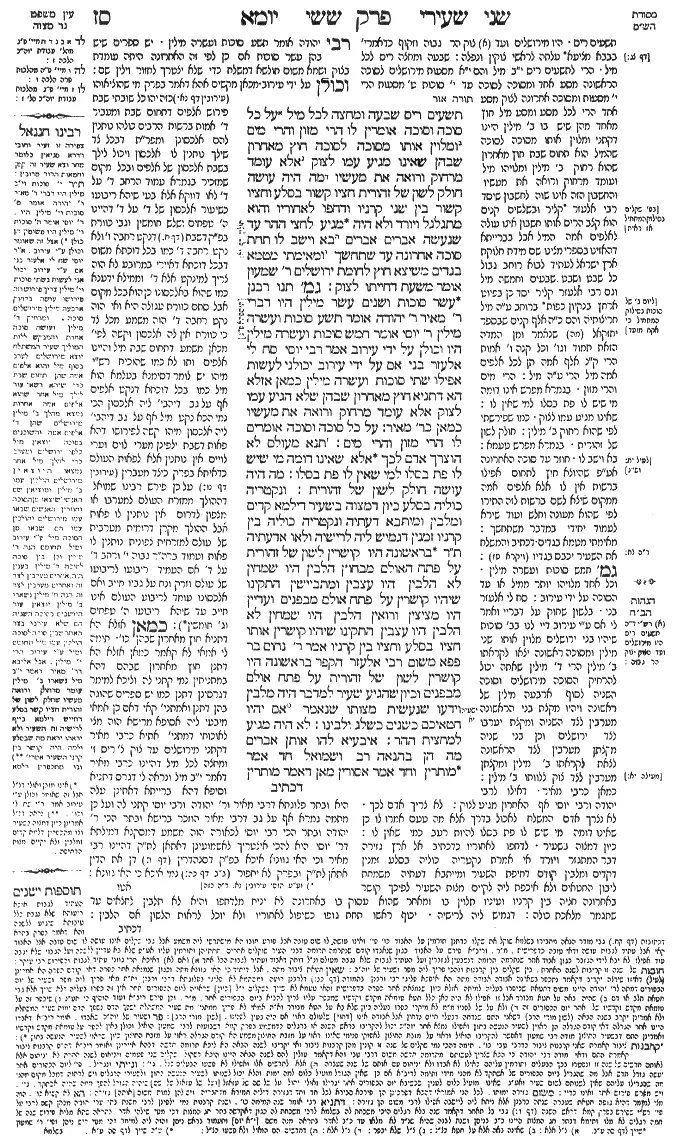
Yoma 67a - Guemara
תשעים ריס שבעה ומחצה לכל מיל על כל סוכה וסוכה אומרין לו הרי מזון והרי מים ומלוין אותו מסוכה לסוכה חוץ מאחרון שבהן שאינו מגיע עמו לצוק אלא עומד מרחוק ורואה את מעשיו מה היה עושה חולק לשון של זהורית חציו קשור בסלע וחציו קשור בין שני קרניו ודחפו לאחוריו והוא מתגלגל ויורד ולא היה מגיע לחצי ההר עד שנעשה אברים אברים בא וישב לו תחת סוכה אחרונה עד שתחשך ומאימתי מטמא בגדים משיצא חוץ לחומת ירושלים ר' שמעון אומר משעת דחייתו לצוק גמ׳ תנו רבנן עשר סוכות ושנים עשר מילין היו דברי ר' מאיר ר' יהודה אומר תשע סוכות ועשרה מילין ר' יוסי אומר חמש סוכות ועשרה מילין היו וכולן על ידי עירוב אמר רבי יוסי סח לי אלעזר בני אם על ידי עירוב יכולני לעשות אפילו שתי סוכות ועשרה מילין כמאן אזלא הא דתניא חוץ מאחרון שבהן שלא הגיע עמו לצוק אלא עומד מרחוק ורואה את מעשיו כמאן כר' מאיר על כל סוכה וסוכה אומרים לו הרי מזון והרי מים תנא מעולם לא הוצרך אדם לכך אלא שאינו דומה מי שיש לו פת בסלו למי שאין לו פת בסלו מה היה עושה חולק לשון של זהורית ונקטריה כוליה בסלע כיון דמצוה בשעיר דילמא קדים ומלבין ומיתבא דעתיה ונקטריה כוליה בין קרניו זמנין דגמיש ליה לרישיה ולאו אדעתיה ת"ר בראשונה היו קושרין לשון של זהורית על פתח האולם מבחוץ הלבין היו שמחין לא הלבין היו עצבין ומתביישין התקינו שיהיו קושרין על פתח אולם מבפנים ועדיין היו מציצין ורואין הלבין היו שמחין לא הלבין היו עצבין התקינו שיהיו קושרין אותו חציו בסלע וחציו בין קרניו אמר ר' נחום בר פפא משום רבי אלעזר הקפר בראשונה היו קושרין לשון של זהורית על פתח אולם מבפנים וכיון שהגיע שעיר למדבר היה מלבין וידעו שנעשית מצותו שנאמר (ישעיהו א, יח) אם יהיו חטאיכם כשנים כשלג ילבינו לא היה מגיע למחצית ההר איבעיא להו אותן אברים מה הן בהנאה רב ושמואל חד אמר מותרין וחד אמר אסורין מאן דאמר מותרין
Comments from Rashi on Masechet Yoma Page 67a
תשעים ריס . היו מירושלים ועד צוק הר גבוה וזקוף כדאמרי' בבבא מציעא עלתה לראשי צוקין ונפלה: שבעה ומחצה ריס לכל מיל . הרי לתשעים ריס י"ב מיל והם י"א מסעות מירושלים לסוכה הראשונה מסע אחד ומסוכה לסוכה עד י' סוכות ט' מסעות הרי י' מסעות ומסוכה אחרונה לצוק מסע אחד הרי לכל מסע ומסע מיל חוץ מאחד מהן שיש בו ב' מילין היינו דקתני ומלוין אותו מסוכה לסוכה שהמיל הוא תחום שבת חוץ מאחרון שהוא רחוק ב' מילין ומלויהו מיל ועומד מרחוק ורואה את מעשיו והחשבון הזה אינו שוה לחשבון שיסד רבי אלעזר קליר ובשלשים קנים הוא קצב הריס אותו חשבון אינו עולה לאלפים אמה המיל אבל בברייתא דהאזינו בספרי מצינו שם מידת חלוקת ארץ ישראל לעתיד לבוא רוחב גבול כל שבט ושבט שבעים וחמשה מיל וגם רבי אלעזר קליר יסד כן בפיוט ארחץ בנקיון כפות ברוחב ע"ה מיל חריצותיה והם כ"ה אלף קנים שבספר יחזקאל (מה) שנאמר ומן המדה הזאת תמוד וגו' וכל קנה ו' אמות הרי ק"נ אלף אמה תן לכל אלפים אמה מיל הרי ע"ה מיל: הרי מים והרי מזון . בגמרא מפרש אינו דומה מי שיש לו פת בסלו למי שאין לו: שאינו מגיע עמו לצוק . כמו שפירשתי לפי שהוא רחוק ב' מילין: חולק לשון של זהורית . בגמרא מפרש טעמא: בא וישב לו . חוזר עד סוכה האחרונה אע"פ שהיוצא חוץ לתחום אפילו ברשות אין לו אלא אלפים אמה ממקום שיצא לשם ברשות לזה התירו לפי שהוא מעונה וחלש ועוד שירא לעמוד יחידי במדבר משתחשך: מאימתי מטמא בגדים . דכתיב והמשלח את השעיר יכבס בגדיו (ויקרא טז): גמ' חמש סוכות ועשרה מילין . וכל אחד מלויהו יותר ממיל או עד הסוכה על יד עירוב: סח לי אלעזר בני . בלשון שחוק על דבריי ואמר לי אם ע"י עירוב דיי לנו בב' סוכות שיהיו בני ירושלים מלוין אותו שני מילין ומסוכה ראשונה יצאו לקראתו ב' מילין הרי ד' מילין שאתה יכול להרחיק הסוכה מירושלים וסוכה השניה לסוף ארבעה מילין של ראשונה ויהיו מקצת בני הראשונה מערבין לצד השניה ומקצת יערבו לצד ירושלים וכן בני שניה מקצתן מערבין לצד הראשונה לצאת לקראתו ב' מילין ומקצתן מערבין לצד צוק ללוותו ב' מילין: כמאן כרבי מאיר . דאילו לרבי יהודה ורבי יוסי אף האחרון מגיע לצוק: לא צריך אדם לכך . לא נצרך אדם המשלח לאכול בדרך אלא מה טעם אמרו לו כן שאינו דומה מי שיש לו פת בסלו להיות רעב כמי שאין לו: כיון דמצוה בשעיר . לדחפו לאחוריו כדכתיב אל ארץ גזירה דבר המתגזר ויורד אי אמרת נקטריה כוליה בסלע זמנין דקדים ומלבין קודם דחיפת השעיר ומייתבא דעתיה משמחת ליבון החטאים ולא איכפת ליה לקיים מצות השעיר לפיכך קושר באחרונה חציה בין קרניו ועיניו תלוין בו ומאחר שהוא עסוק בו באחרונה לא יניח מלדחפו והיא לא תלבין לחצאים עד שתגמר מלאכת כולה: דגמיש ליה לרישיה . יכוף ראשו תחת גופו כשיפול לאחוריו ולא יוכל לראות הלשון אם הלבין:
Comments from Tosafot - Yoma 67a
רבי יהודה אומר תשע סוכות ועשרה מילין . יש ספרים שיש בהן עשר סוכות אם כן לפי זה האחרונה היתה עומדת בצוק ושמא משום חולשא דמשלח כדי שלא יצטרך לחזור וילין שם: וכולן על ידי עירוב . מכאן מקשים אהא דאמר בפרק מי שהוציאוהו (עירובין דף נא.) כזה יהו כל שובתי שבת פירוש אלפים דתחום שבת ומעביר ד' אמות ברשות הרבים כולהו נותנין להם אלכסונן ומפר"ת דבכל צד שילך נותנין לו אלכסון ויכול לילך בשבת אלכסון של אלפים ובכל מקום שמזכיר בגמרא עמוד הרחב ד' על ד' לאו דווקא אלא בעי שיהא ריבועו כשיעור אלכסון של ד' על ד' דהיינו ה' טפחים ושלש חומשין וגבי כוורת בפ"ק דשבת (דף ח.) דנקט רחבה ו' ולא נקט רחבה ד' כמו בכל דוכתא משום דבכל דוכתא דאיירי במרובע לא הוה צריך למינקט אלא ד' וממילא ידענא כמו שהוא באלכסונו כן הוא בכל מקום אבל סתם כוורת עגולה היא ואי הוה נקט רחבה ד' הוה משמע מכל צד כי כוורת אין לה אלכסון וקשה לפי' מכאן משמע דתחום שבת מיל והיינו אלפים ותו לא כמו שהוכיח רש"י מיהו יש לומר דסימנא בעלמא הוא מיל כמו בכל דוכתא דנקט אלפים אף על גב דיהבי' ליה אלכסון הכי נמי הכא נקט מיל אף על גב דיהבי' ליה אלכסון מיהו קשה לפירושו דהא פאות דשבת ילפינן מערי לוים וערי לויים אין נותנין אלא לפאות העולם כדאיתא בפרק כיצד מעברין (עירובין דף נו.) על כן פירש רבינו שמואל דההולך ממזרח העולם למערבו או מצפון לדרום אין נותנין לו פאות אבל ההולך מקרן דרומית מערבית של עולם למזרחית צפונית נותנין לו פאות ועמוד ברה"ר גבוה י' ורחב ד' על ד' אם העמיד ריבועו לריבועו של עולם וזרק ונח על גביו חייב ואם אלכסונו עומד לריבוע העולם אינו חייב עד שיהא ריבועו ה' טפחים וג' חומשין: כמאן אזלא הא דתניא חוץ מאחרון שבהן כו' . תימה לי אמאי לא קאמר כמאן אזלא הא דתנן חוץ מאחרון שבהם דהא במתניתין נמי קתני לה וליכא למימר דגרסינן דתנן כמו יש ספרים שהוגה בהן דתנן ואמתני' קאי דאם כן אמאי מיבעי ליה אסיפא מרישא הוה מצי לאוכוחי דמתני' אתיא כרבי מאיר דקתני מירושלים עד צוק צ' ריס ז' ומחצה לכל מיל דהיינו כרבי מאיר דאמר י"ב מיל ונראה לי דגרס דתניא וסיפא דהא ברייתא דאתינן עלה היא ובתר פלוגתא דרבי מאיר ור' יהודה ורבי יוסי קתני לה ועל כן מתמה גמרא אף על גב דרבי מאיר הוזכר ברישא ובתר הכי ר' יהודה ובתר הכי רבי יוסי לכאורה הוה משמע דמסקנא דמילתא דר' יוסי היא להכי איצטריך לאשמועינן דאתאן לת"ק דהיינו רבי מאיר וכי האי גוונא איכא בפ"ק דסנהדרין (דף ו:) דן את הדין אתאן לת"ק ובפרק לא יחפור (ב"ב דף כה:) נמי איכא כי האי גוונא:
Yoma 67a - Mishnah translated into english
with a distance of ninety ris between them. As there are seven and a half ris for each mil, the total distance was twelve mil. At each and every booth, people there say to him: Here is food; here is water, if you need it. And they escort him from booth to booth, except for the last person at the last booth, who does not reach the cliff with him. Rather, he stands from a distance and observes his actions to ensure that he fulfills the mitzva properly.
What did the one designated to dispatch the goat do there? He divided a strip of crimson into two parts, half of the strip tied to the rock, and half of it tied between the two horns of the goat. And he pushed the goat backward, and it rolls and descends. And it would not reach halfway down the mountain until it was torn limb from limb. The one designated to dispatch the goat came and sat under the roofing of last booth until it grows dark and only then went home. And from what point are the garments of the man rendered impure, as it is stated that he is impure and his clothes requires immersion? From the moment he emerges outside the wall of Jerusalem. Rabbi Shimon says: His clothes are rendered impure only from the moment that he pushes the goat from the cliff.
GEMARA: The Sages taught: There were ten booths, and the distance between Jerusalem and the cliff was twelve mil; this is the statement of Rabbi Meir. Rabbi Yehuda says: There were nine booths and the distance was ten mil. Rabbi Yosei says: There were five booths and the distance was ten mil, and all of them were able to escort the one leading the goat by establishing a joining of boundaries [eiruv teḥumin] before Yom Kippur, allowing those at each booth to walk to the next booth.
Rabbi Yosei said: Elazar my son told me: If they were able to walk to the next booth by establishing an eiruv, I could even make two booths suffice for the distance of ten mil. With the proper placement of an eiruv, an individual is permitted to walk a distance of two mil, which is four thousand cubits. Consequently, the people of Jerusalem could escort the one leading the goat a distance of two mil, and the people of the first booth could walk two mil from the booth toward Jerusalem to meet him, and escort him back to their booth. Others at that booth, who had established their eiruv in the direction of the second booth, could then escort the one leading the goat two mil toward the second booth, where he would be met by people from the second booth, who would escort him the remaining two mil to the booth. This booth would be located only two mil from the cliff.
The Gemara comments: In accordance with whose opinion is that which was taught in the baraita: People from all the booths would escort the one leading the goat, except for the last person in the last booth, who did not reach the cliff with him; rather, he stands from a distance and observes his actions? In accordance with whose opinion is this statement? It is in accordance with the opinion of Rabbi Meir, as he holds that the last booth was too far from the cliff for the people there to escort the one leading the goat the entire way.
It was taught in the mishna: At each and every booth people there say to him: Here is food; here is water, if you need it. It was taught: No man who escorted the goat ever needed this food and water. However, they would offer it to him anyway, because one who has bread in his basket is not similar to one who does not have bread in his basket. One who does not have food available to him is concerned that he will not be able to find any if he really needs it, and he therefore feels his hunger and thirst more acutely.
§ It was taught in the mishna: What did the person designated to dispatch the goat do there? He divided a strip of crimson into two parts, half of the strip tied to the rock, and half of it tied between the two horns of the goat. The Gemara asks: Let him tie the whole strip to the rock. The Gemara answers: Since it is a mitzva to push the goat from the cliff. If he tied the whole strip to the rock, perhaps it would turn white quickly, and his mind would be eased with the knowledge that the sins of the Jewish people had been forgiven. He would then not fulfill the mitzva of pushing the goat off the cliff. He therefore tied part of it between the horns of the goat and looked to see if it became white. Once he was actively involved with the goat, he would remember to push it off the cliff.
The Gemara asks: If so, let him tie the whole strip between the goat’s horns. The Gemara answers: Sometimes the goat turns its head and he will not know if the strip turns white or not.
The Sages taught: At first they would tie this strip of crimson to the opening of the Entrance Hall of the Temple on the outside. If the strip turned white they would rejoice, as this indicated that their sins had been atoned for. If it did not turn white they would be sad and ashamed. When the Sages saw that people were overly distressed on Yom Kippur, they established that they should tie the strip of crimson to the opening of the Entrance Hall on the inside, since only a few could actually go in to see it. And they would still peek and see: If it turned white, they would rejoice, and if it did not turn white they would be sad. Therefore, the Sages established that they should tie half of the strip to the rock and half of it between the goat’s horns, so that the people would not know what happened to the strip until after the conclusion of Yom Kippur.
Rabbi Naḥum bar Pappa said in the name of Rabbi Elazar HaKappar: At first they would tie the strip of crimson to the opening of the Entrance Hall of the Temple on the inside, and when the goat reached the wilderness, the strip of crimson would turn white, and they knew that the mitzva was fulfilled. The verse alludes to the use of the strip of crimson, as it is stated: “Though your sins be as scarlet, they will become white as snow; though they be red like crimson, they will be as wool” (Isaiah 1:18). This verse indicates that when something scarlet turns white, it is a sign of atonement and forgiveness for the sins of the Jewish people.
§ It was taught in the mishna that the goat would not reach halfway down the mountain before it was torn limb from limb. A dilemma was raised before the Sages: What is the status of those limbs? Is it permitted to derive pleasure from them? Rav and Shmuel disagreed with regard to this issue. One said they are permitted for benefit, and one said they are prohibited.
The Gemara explains their reasoning: The one who said they are permitted for benefit
Traduction : The William Davidson digital edition of the Koren Noé Talmud, with commentary by Rabbi Adin Even-Israel Steinsaltz.