 Talmud Bavli
The learning on the whole site is dedicated : L'ilui Nishmat Margalit bat Ledicia
The learning on the whole site is dedicated : L'ilui Nishmat Yaakov ben Myriam
The learning on the whole site is dedicated : L'ilui Nishmat Nissim ben Barukh Malka
Yoma 88a : Youtube
Daf TubeYoutube
3 video classes :
Yoma Page 88a
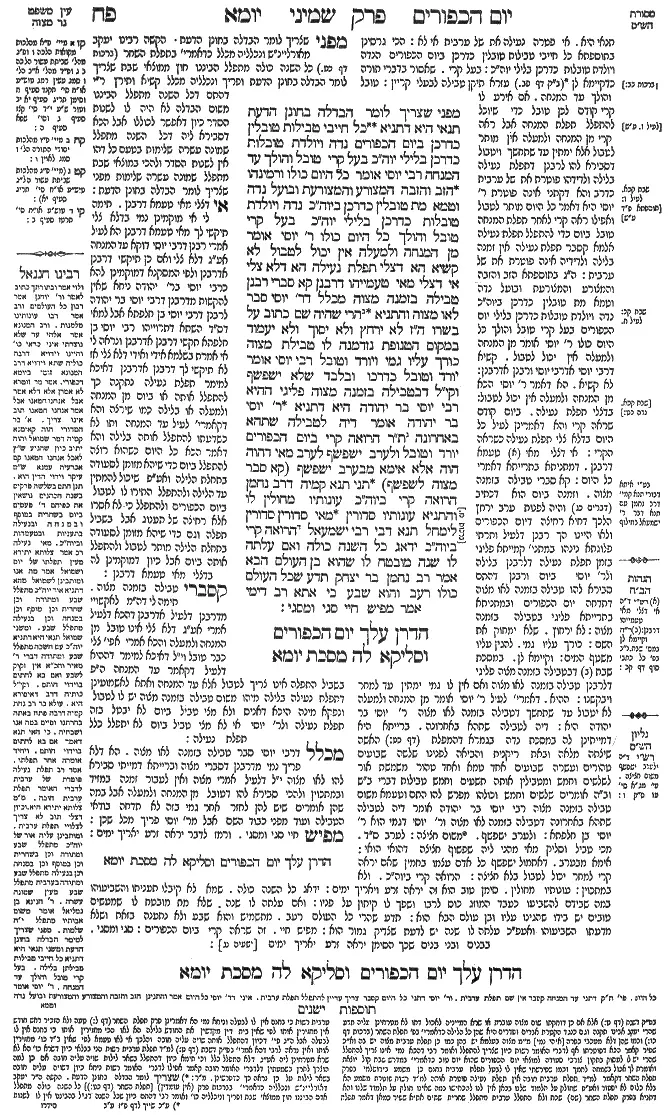
Yoma 88a - Guemara
מפני שצריך לומר הבדלה בחונן הדעת תנאי היא דתניא כל חייבי טבילות טובלין כדרכן ביום הכפורים נדה ויולדת טובלות כדרכן בלילי יוה"כ בעל קרי טובל והולך עד המנחה רבי יוסי אומר כל היום כולו ורמינהו הזב והזבה המצורע והמצורעת ובועל נדה וטמא מת טובלין כדרכן ביוה"כ נדה ויולדת טובלות כדרכן בלילי יוה"כ בעל קרי טובל והולך כל היום כולו ר' יוסי אומר מן המנחה ולמעלה אין יכול לטבול לא קשיא הא דצלי תפלת נעילה הא דלא צלי אי דצלי מאי טעמייהו דרבנן קא סברי רבנן טבילה בזמנה מצוה מכלל דר' יוסי סבר לאו מצוה והתניא הרי שהיה שם כתוב על בשרו ה"ז לא ירחץ ולא יסוך ולא יעמוד במקום הטנופת נזדמנה לו טבילת מצוה כורך עליו גמי ויורד וטובל רבי יוסי אומר יורד וטובל כדרכו ובלבד שלא ישפשף וקי"ל דבטבילה בזמנה מצוה פליגי ההיא רבי יוסי בר יהודה היא דתניא ר' יוסי בר יהודה אומר דיה לטבילה שתהא באחרונה ת"ר הרואה קרי ביום הכפורים יורד וטובל ולערב ישפשף לערב מאי דהוה הוה אלא אימא מבערב ישפשף (קא סבר מצוה לשפשף) תני תנא קמיה דרב נחמן הרואה קרי ביוה"כ עונותיו מחולין לו והתניא עונותיו סדורין מאי סדורין סדורין לימחל תנא דבי רבי ישמעאל הרואה קרי ביוה"כ ידאג כל השנה כולה ואם עלתה לו שנה מובטח לו שהוא בן העולם הבא אמר רב נחמן בר יצחק תדע שכל העולם כולו רעב והוא שבע כי אתא רב דימי אמר מפיש חיי סגי ומסגי
הדרן עלך יום הכפורים וסליקא לה מסכת יומא
Comments from Rashi on Masechet Yoma Page 88a
תנאי היא . אי פטרה נעילה את של ערבית אי לא: הכי גרסינן בתוספתא כל חייבי טבילות טובלין כדרכן ביום הכפורים הנדה ויולדת טובלות כדרכן בלילי יוה"כ: בעל קרי . שאסור בדברי תורה כדקיימא לן (ב"ק דף פב.) עזרא תיקן טבילה לבעלי קריין: טובל והולך עד המנחה . אם אירע לו קרי קודם לכן טובל כדי שיוכל להתפלל תפלת המנחה אבל ראה קרי מן המנחה ולמעלה אין מותר לטבול אלא ימתין עד שתחשך ויטבול דסבירא להו לרבנן דתפלת נעילה בלילה ולדידהו פוטרת את של ערבית כדרב והא דקתני אינה פוטרת ר' יוסי היא דאמר כל היום מותר לטבול ואפילו ראה קרי לאחר תפלת המנחה טובל ביום כדי להתפלל תפלת נעילה אלמא קסבר תפלת נעילה אין זמנה בלילה ולדידיה אינה פוטרת את של ערבית: ה"ג בתוספתא הזב והזבה והמצורע והמצורעת ובועל נדה וטמא מת טובלין כדרכן ביוה"כ נדה ויולדת טובלות כדרכן בלילי יום הכפורים בעל קרי טובל והולך כל היום כולו ר' יוסי אומר מן המנחה ולמעלה אין יכול לטבול . קשיא דרבי יוסי אדרבי יוסי ורבנן אדרבנן: לא קשיא . הא דאמר ר' יוסי הכא מן המנחה ולמעלה אין יכול לטבול: בדצלי תפלת נעילה . ביום קודם שראה קרי והא דאמרינן לעיל כל היום בדלא צלי תפלת נעילה כשראה הקרי: אי דצלי מאי טעמא דרבנן . דמתניתא בתרייתא דאמרי כל היום: קא סברי טבילה בזמנה מצוה . וזמנה ביום הוא דכתיב (דברים כג) והיה לפנות ערב ירחץ הלכך דחיא רחיצה דיום הכפורים ולאו היינו הך רבנן דלעיל ותרתי פלוגתא נינהו במתני' קמייתא פליגי בזמן תפלת נעילה דלרבנן בלילה ולר' יוסי ביום ורבנן דהתם סבירא להו טבילה בזמנה לאו מצוה דתדחה יום הכפורים ובמתניתא בתרייתא פליגי בטבילה בזמנה מצוה: לא ירחוץ . שלא ימחוק את השם: כורך עליו גמי . להגין עליו משטף המים: וקיימא לן . במסכת שבת דבטבילה בזמנה מצוה פליגי דלרבנן טבילה בזמנה לאו מצוה ואם אין לו גמי ימתין עד למחר ויבקשנו: ההיא . דאמרי' לעיל ר' יוסי אומר מן המנחה ולמעלה לא יטבול עד שתחשך דטבילה בזמנה לאו מצוה ר' יוסי בר יהודה היא: דיה לטבילה שתהא באחרונה . ברייתא היא דמייתינן לה במסכת נדה בגמרא דהמפלת (דף כט:) האשה שיצתה מלאה ובאת ריקנית והביאה לפנינו שלשה שבועים טהורים ועשרה שבועים אחד טמא ואחד טהור משמשת אור לשלשים וחמש ומטבילין אותה תשעים וחמש טבילות דברי ב"ש וב"ה אומרים שלשים וחמש וכולהו מפרש להו התם וטעמא משום טבילה בזמנה מצוה רבי יוסי בר יהודה אומר דיה לטבילה שתהא באחרונה דטבילה בזמנה לאו מצוה ור' יוסי דגמי הוא ר' יוסי בן חלפתא: ולערב ישפשף . משום חציצה: לערב ס"ד . מכי טביל וסליק מאי מהני ליה שפשוף חציצה דהואי הואי: אימא מבערב . דאתמול ישפשף כל אדם עצמו בחמין שאם יראה קרי למחר יכול לטבול בלא חציצה: הרואה קרי ביוה"כ . ולא במתכוין: עונותיו מחולין . סימן טוב הוא זה יראה זרע ויאריך ימים: ידאג כל השנה כולה . שמא לא קיבלו תעניתו והשביעוהו במה שבידם להשביעו כעבד המוזג כוס לרבו ושפך לו קיתון על פניו: ואם עלתה לו שנה . שלא מת מובטח לו שמעשים טובים יש בידו שהגינו עליו ובן עולם הבא הוא: תדע שהרי כל העולם רעב . מתשמיש והוא שבע ולא נתענה בזאת ושלא מדעתו השביעוהו ואעפ"כ עלתה לו שנה יש לדעת שצדיק גמור הוא: מפיש חיי . זה שראה קרי ביום הכפורים: סגי ומסגי . בבנים ובני בנים שכך הסימן יראה זרע יאריך ימים [ישעיה נג]:
Comments from Tosafot - Yoma 88a
מפני שצריך לומר הבדלה בחונן הדעת . הקשה רבינו יעקב מאורליינ"ש ונכלליה מכלל כדאמרי' בתפלת השחר (ברכות דף כט.) כל השנה כולה מתפלל הביננו חוץ ממוצאי שבת שצריך לומר הבדלה בחונן הדעת ופריך ונכלליה מכלל קשיא ותירץ ר"י דהתם דכל השנה מתפלל הביננו משום הבדלה לא היה לו לשנות הסדר כיון דאפשר לכוללו אבל הכא דסבירא ליה דכל השנה מתפלל שמונה עשרה שלימות בטעם כל דהו אין לשנות הסדר ולהכי במוצאי שבת מתפלל שמונה עשרה שלימות מפני שצריך לומר הבדלה בחונן הדעת: אי דצלי מאי טעמא דרבנן . תימה לי אי מוקמינן נמי בדלא צלי תיקשי לך מאי טעמא דרבנן הא לעיל אמרי רבנן דרבי יוסי דוקא עד המנחה אע"ג דלא צלי ואם כן תיקשי דרבנן אדרבנן ולפי המסקנא דמוקמינן להא כרבי יוסי בר' יהודה ניחא שאין להקשות מדרבנן דרבי יוסי בר יהודה לרבנן דרבי יוסי בן חלפתא אבל למאי דס"ד השתא דתרוייהו רבי יוסי בן חלפתא תקשי דרבנן אדרבנן ונראה לי אי אמרת בשלמא אידי ואידי דלא צלי אז לא תיקשי לך דרבנן אדרבנן דאיכא למימר תפלת נעילה נתקנה כך להתפלל אותה או ביום מן המנחה ולמעלה או בלילה כמו שירצה והא דקאמרי' לעיל עד המנחה ותו לא כשדעתו להתפלל אותה בלילה והא דאמר הכא כל היום כשהוא רוצה להתפלל ביום כדי שיהא מזומן לסעודה בתחלת הלילה ואע"פ שיכול להמתין עד הלילה ולהתפלל התירו לו לטבול ביום הכפורים ולהתפלל כי לא אסרו אלא רחיצה של תענוג אבל בשביל תפלה וגם כדי שיהא מזומן לסעודה בתחלת הלילה מותר לטבול ולהתפלל אותה ביום אבל כיון דמוקמינן לה בדצלי מאי טעמא דרבנן: קסברי טבילה בזמנה מצוה . תימה לי דה"מ לאקשויי מדרבנן דלעיל אדרבנן דהכא דלעיל אמרי אע"ג דלא צלי אינו טובל מן המנחה ולמעלה והכא אמרי אפי' צלי כבר טובל וי"ל דאיכא למימר דההיא דלעיל דקאמר עד המנחה ה"פ בשביל התפלה אינו צריך לטבול אלא עד המנחה ואתא לאשמועינן דתפלת נעילה בלילה מיהו משום טבילה בזמנה מצוה יש לו לטבול ונפקא מינה היכא דאניס ולא מצי טביל ביום לא יבטל בזה תפלת נעילה ולר' יוסי אי לא מצי טביל ביום לא יתפלל כלל תפלת נעילה: מכלל דרבי יוסי סבר טבילה בזמנה לאו מצוה . הא דלא פריך נמי מדרבנן דסברי מצוה וברייתא דמייתי סבירא להו לאו מצוה י"ל דלעיל אמרי מצוה ואין לעבור זמנה במזיד ובמתכוין ולהכי סבירא להו דטובל מן המנחה ולמעלה אבל במה שהן אומרים שיש להן לחזר אחר גמי בזה לא תדחה בודאי הטבילה ועוד מפני כבוד השם אבל מר' יוסי פריך מכל שכן: מפיש חיי סגי ומסגי . ורמז לדבר יראה זרע יאריך ימים:
Yoma 88a - Mishnah translated into english
because he must recite havdala in the blessing: Who graciously grants knowledge, and there is nowhere to insert this prayer in the abridged Amida. This indicates that these tanna’im maintained that ne’ila does not exempt one from the evening prayer. The Gemara answers: It is a dispute between tanna’im, as it was taught in a baraita: Anyone who requires immersion immerses in his usual manner on Yom Kippur, as this act does not violate the prohibition against washing. A menstruating woman and a new mother, who immerse at night, immerse in their usual manner on the night of Yom Kippur.
The baraita continues: One who had a seminal emission during Yom Kippur before the afternoon prayer may immerse at any point in the day until the afternoon prayer, in order to be able to recite it. Ezra decreed that a man who has had a seminal emission must immerse in order to pray and study Torah. If the emission occurred after the afternoon prayer, he should not immerse then but should wait until darkness falls. Since the time for ne’ila is at night, this individual should wait and immerse after the fast has concluded, so as to avoid violation of the prohibition of washing on Yom Kippur, and then pray afterward. This indicates that ne’ila is a nighttime prayer, and therefore its recitation exempts one from the weekday evening prayer. Rabbi Yosei says: He may immerse at any point in the day. According to his opinion, the ne’ila prayer is recited while it is still daytime, and therefore the individual must immerse in the daytime in order to be able to recite it. Consequently, Rabbi Yosei holds that ne’ila does not exempt one from the evening prayer.
The Gemara raises a contradiction with regard to this baraita from that which was taught: In the case of the zav, and the zava, the male and female leper, and one who had relations with a menstruating woman, and one who is ritually impure through contact with a corpse, if their time has come for purification, they immerse in their usual manner on Yom Kippur. A menstruating woman and a woman after childbirth immerse in their usual manner on the night of Yom Kippur. One who had a seminal emission immerses at any point in the day. Rabbi Yosei says: From the time of the afternoon prayer onward he is not able to immerse. This contradicts Rabbi Yosei’s statement in the previous baraita.
The Gemara answers: This is not difficult. This statement, in which Rabbi Yosei says that one may not immerse during the day, is referring to a case where he had already prayed the ne’ila prayer before he noticed his seminal emission. That statement, in which Rabbi Yosei says that one may immerse during the day, is referring to a case where he had not yet prayed the ne’ila prayer when he noticed his seminal emission, and he therefore immerses in order to pray ne’ila.
The Gemara asks: If he had already prayed ne’ila before he noticed his seminal emission, what is the reasoning of the Rabbis, who permit him to immerse on Yom Kippur? The immersion seems to have no purpose. The Gemara answers: The Rabbis hold that immersion at its proper time is a mitzva, even when one does not need to immerse to pray. Therefore, if the time for immersion falls on Yom Kippur, the individual should immerse as usual.
The Gemara asks: By inference, Rabbi Yosei holds that immersion at its proper time is not a mitzva. But wasn’t it taught in a baraita: If God’s name is written in ink on one’s flesh, he may not wash and he may not smear it with oil lest he erase the name, and he may not stand in a filthy place out of respect for the name. If his time came for an immersion that is a mitzva, he must try to ensure that the name not be erased. He therefore wraps a reed around it and descends and immerses. Rabbi Yosei says: He descends and immerses in his usual manner and need not worry about erasing the name, provided he does not rub the place where the name is written.
And we maintain that they disagree as to whether or not immersion at its proper time is a mitzva. According to the Rabbis, immersion at its proper time is not a mitzva. Therefore, if the individual has no reed, he should wait even until the following day rather than immerse without it. However, Rabbi Yosei maintains that immersion at its proper time is a mitzva. Therefore, it must be done at its proper time, even if that requires immersion without covering God’s name.
The Gemara answers: This Rabbi Yosei mentioned in the baraita is actually Rabbi Yosei bar Yehuda, and this resolves the contradiction, as it was taught in a baraita that Rabbi Yosei bar Yehuda says: It is sufficient for the immersion to be at the end. According to one opinion, if a menstruating woman is uncertain on which day to immerse, she immerses multiple times to ensure that the required immersion is at its proper time. However, according to Rabbi Yosei bar Yehuda, it is sufficient for her to immerse once at a point when she is certainly pure. Consequently, according to his opinion, there is no mitzva to immerse at the proper time.
The Sages taught: One who sees an emission of semen on Yom Kippur descends and immerses. And in the evening, he should rub his skin to remove anything that might obstruct the immersion. The Gemara is surprised at this: Why should he do that in the evening? What was, was. Since he has already immersed, how will removing interpositions afterward benefit the immersion? Rather, say that he should rub his skin from the evening before Yom Kippur to remove any obstructions, in case it becomes necessary to immerse on Yom Kippur. The Gemara comments: This Master holds that it is a mitzva to rub.
§ Apropos the halakhot of immersion for one who has had a seminal emission on Yom Kippur, the Gemara relates: A tanna taught a baraita before Rav Naḥman: With regard to one who sees an emission of semen on Yom Kippur, his sins are forgiven. The Gemara asks: But wasn’t it taught in a baraita: His sins are arranged before him? The Gemara answers: What is the meaning of arranged? They are arranged to be forgiven.
The school of Rabbi Yishmael taught: One who sees an emission of semen on Yom Kippur should worry the whole year that perhaps he was given a sign that he and his fast were rejected. But if he survives the year, he can be assured that his good deeds protected him and ensured for him a share in the World-to-Come. Rav Naḥman bar Yitzḥak said: Know that it is so, as the whole world is hungry due to refraining from conjugal relations, and he is satiated since he emitted semen and his lust was subdued. Since the issue was involuntary and not intentional, it is a sign that he has merited divine compassion. When Rav Dimi came from Eretz Yisrael to Babylonia he said: Seeing semen on Yom Kippur is a sign that one will live a long life, grow, and raise others. An allusion to that is the verse: “That he might see his seed and prolong his days” (Isaiah 53:10).
Traduction : The William Davidson digital edition of the Koren Noé Talmud, with commentary by Rabbi Adin Even-Israel Steinsaltz.