 Talmud Bavli
The learning on the whole site is dedicated : L'ilui Nishmat Nissim ben Barukh Malka
The learning on the whole site is dedicated : L'ilui Nishmat Reuven ben Rivka SEBBAG
The learning on the whole site is dedicated : L'ilui Nishmat Rav Chlomo Ben Jamilla
Yoma 62a : Youtube
Daf TubeYoutube
3 video classes :
Yoma Page 62a
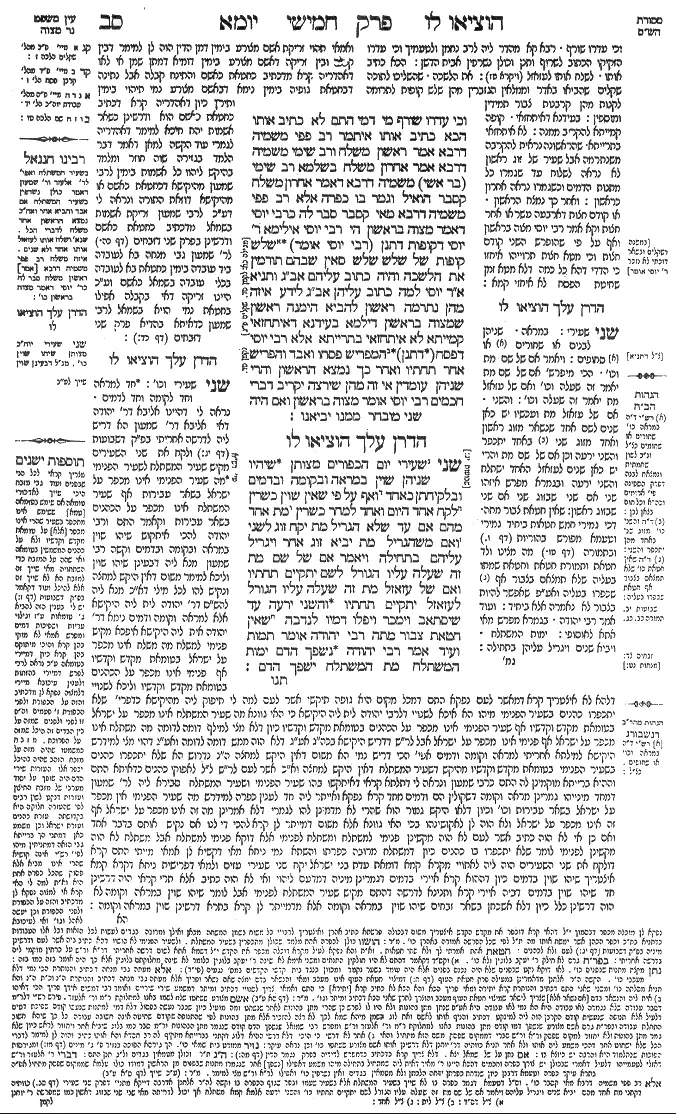
Yoma 62a - Guemara
וכי עדרו שורף מי דמי התם לא כתיב אותו הכא כתיב אותו איתמר רב פפי משמיה דרבא אמר ראשון משלח ורב שימי משמיה דרבא אמר אחרון משלח בשלמא רב שימי (בר אשי) משמיה דרבא דאמר אחרון משלח קסבר הואיל וגמר בו כפרה אלא רב פפי משמיה דרבא מאי קסבר סבר לה כרבי יוסי דאמר מצוה בראשון הי רבי יוסי אילימא ר' יוסי דקופות דתנן (רבי יוסי אומר) שלש קופות של שלש שלש סאין שבהם תורמין את הלשכה והיה כתוב עליהם אב"ג ותניא א"ר יוסי למה כתוב עליהן אב"ג לידע איזה מהן נתרמה ראשון להביא הימנה ראשון שמצוה בראשון דילמא בעידנא דאיתחזאי קמייתא לא איתחזאי בתרייתא אלא רבי יוסי דפסח (דתנן) המפריש פסחו ואבד והפריש אחר תחתיו ואחר כך נמצא הראשון והרי שניהן עומדין אי זה מהן שירצה יקריב דברי חכמים רבי יוסי אומר מצוה בראשון ואם היה שני מובחר ממנו יביאנו
הדרן עלך הוציאו לו
מתני׳ שני שעירי יום הכפורים מצותן שיהיו שניהן שוין במראה ובקומה ובדמים ובלקיחתן כאחד ואף על פי שאין שוין כשרין לקח אחד היום ואחד למחר כשרין מת אחד מהם אם עד שלא הגריל מת יקח זוג לשני ואם משהגריל מת יביא זוג אחר ויגריל עליהם בתחילה ויאמר אם של שם מת זה שעלה עליו הגורל לשם יתקיים תחתיו ואם של עזאזל מת זה שעלה עליו הגורל לעזאזל יתקיים תחתיו והשני ירעה עד שיסתאב וימכר ויפלו דמיו לנדבה שאין חטאת צבור מתה רבי יהודה אומר תמות ועוד אמר רבי יהודה נשפך הדם ימות המשתלח מת המשתלח ישפך הדם
Comments from Rashi on Masechet Yoma Page 62a
וכי עדרו שורף . רבא קא מהדר ליה לרב נחמן ולטעמיך וכי עדרו הזקיקו הכתוב לשרוף ותנן וכולן נשרפין אבית הדשן: הכא כתיב אותו . לשלח אותו לעזאזל (ויקרא טז): את הלשכה . שהשליכו לתוכה שקלים שהביאו באדר וממלאין הגזברין מהן שלש קופות לתרומה לקנות מהן קרבנות צבור תמידין ומוספין: בעידנא דאיתחזאי . קופה קמייתא להקריב ממנה: לא איתחזאי בתרייתא . שהראשונה נראית להקרבה משנתרמה אבל שעיר של זוג ראשון לא נראה לשלוח עד שגמרו כל מתנות הדמים וכשגמרו נראה אחרון כראשון: ואחר כך נמצא הראשון . או קודם חצות דארבעה עשר או אחר חצות וקא אמר רבי יוסי מצוה בראשון ואף על פי שהופרש השני קודם חצות וכי מטא חצות תרוייהו איחזו כי הדדי דהא כל כמה דלא מטא זמן שחיטת הפסח לא איחזי קמא פרק שישי . שני שעירי. במראה . שניהן לבנים או שחורים או סחופים: והשני . אם של עזאזל מת ועכשיו יש כאן שנים לשם אחד שנשאר מזוג ראשון ואחד מזוג שני באחד יתכפר והשני ירעה וכן אם של שם מת והרי יש כאן שנים לעזאזל האחד ישתלח והשני ירעה ובגמרא מפרש איזהו שני אם שני שבזוג שני אם שני שבזוג ראשון: ויאמר אם של שם מת וכו' . הכי מיפרש' אם של שם מת יאמר זה שעלה וכו' ואם של עזאזל מת יאמר זה שעלה וכו': שאין חטאת צבור מתה . דכי גמירי חמש חטאות ביחיד גמירי וטעמא מפורש בהוריות (דף ו.) ובתמורה (דף טו.) מה מצינו ולד חטאת ותמורת חטאת וחטאת שמתו בעליה שלא תמצאם בצבור אף שכפרו בעליה ואע"פ שאפשר להיות בצבור לא נאמרה אלא ביחיד: ועוד אמר רבי יהודה . בגמרא מפרש מאי אתא לאוסופי: ימות המשתלח . ויביא שנים ויגריל עליהן בתחילה:
Comments from Tosafot - Yoma 62a
פרק שישי . שני שעירי
Yoma 62a - Mishnah translated into english
And does he burn his flock? The Torah obligated him to burn only one goat, and yet there are times when he must burn several, as stated in the mishna. Rabbi Naḥman retorts: Is it comparable? There, with respect to burning the goats, it is not written: “It,” which would restrict the burning to only one animal, whereas here, with regard to the scapegoat, it is written: “It,” which indicates that one animal alone is sent away. The objection has been refuted and indeed only one scapegoat is used.
§ It was stated that amora’im disagreed about the following issue. Rav Pappi said in the name of Rava: He sends the first goat; and Rav Shimi said in the name of Rava: He sends the last of them. The Gemara analyzes the matter: Granted, according to the opinion of Rav Shimi bar Ashi in the name of Rava, who said that he sends the last of them, it works out well, as he probably holds as stated above, that the last goat is used, since the atonement is completed with it. However, with regard to Rav Pappi in the name of Rava, what does he hold? The Gemara answers: He holds in accordance with the opinion of Rabbi Yosei, who said that when several identical items are available for a mitzva, the mitzva is performed with the first of them.
The Gemara asks: To which of the halakhot of Rabbi Yosei is this referring? From which of Rabbi Yosei’s statements is this conclusion derived? If we say it is the statement of Rabbi Yosei with regard to containers, this is problematic. As we learned in a mishna that Rabbi Yosei says: There were three containers of three se’a each, with which they collect the donation from the chamber. Every year the money donated to the Temple by the people in the month of Adar was placed in a special chamber. The treasurers subsequently filled three containers with these coins and used the funds to purchase the communal offerings, e.g., the daily offerings and the additional offerings for Festivals. And the letters alef, beit, gimmel were written on the containers.
And it was taught in a baraita that Rabbi Yosei said: Why were the letters alef, beit, gimmel written on them? It was to ascertain from which of them the donation was collected first, so that they could bring the money from it first, as the mitzva is to use the coins of the first container. This apparently proves that according to the opinion of Rabbi Yosei, it is a mitzva to use the first item.
The Gemara responds: This is no proof, as perhaps at the time when the first container was fit to be used, the last was not yet fit to be used. When the first container was brought it was fit and designated for the offerings, whereas the coins in the second container had not yet been collected, and therefore the coins in the first container must be used first as they were sanctified first. Here, however, the scapegoat is consecrated only when its pair is sacrificed, and therefore the two cases are dissimilar.
Rather, the principle that one uses the first item is derived from the statement of Rabbi Yosei with regard to the Paschal offering, as it was taught in a baraita: With regard to one who separated a sheep for his Paschal offering and the sheep was lost, and he separated another sheep in its stead, and afterward the first sheep was found, and they both stand before him, he sacrifices whichever of them he wants; this is the statement of the Rabbis. Rabbi Yosei says: The mitzva is performed with the first sheep. And if the second was of superior quality to it, he brings the second sheep. This proves that according to Rabbi Yosei, if there are two animals equally fit for an offering, one brings the animal that was chosen first.
MISHNA: The mitzva of the two Yom Kippur goats, the goat sacrificed to God and the goat sent to Azazel that are brought as a pair, is as follows, ab initio: That they will both be identical in appearance, i.e., color, and in height, and in monetary value, and their acquisition must be as one, i.e., they must be purchased together. And even if they are not identical, nevertheless, they are valid. And similarly, if he acquired one today and one tomorrow, they are valid.
If one of the goats died, if it died before the High Priest drew the lots, he immediately takes a counterpart for the second, since neither has yet been designated. And if it died after the High Priest drew the lots, he brings another pair of goats and draws lots over them from the start.
After that lottery he utters a stipulation: If the one to be sacrificed to God died, that goat upon which the lot for God was drawn in the second lottery shall stand in its stead; and if the one to be sent to Azazel died, that goat upon which the lot for Azazel was drawn shall stand in its stead. And the second, superfluous goat, i.e., in the case where a new pair of goats was brought, should graze until it becomes unfit, at which point it will be sold, and the money received from its sale will go toward the purchase of a public gift-offering. Although for individual sin-offerings in similar circumstances there is no remedy and it is left to die, that is not the case here, as a communal sin-offering is not left to die. On the other hand, Rabbi Yehuda says: In this it should be left to die.
And furthermore, Rabbi Yehuda said: If the blood of the goat sacrificed to God spilled before it was sprinkled, the scapegoat is left to die. Similarly, if the scapegoat dies, the blood of the goat sacrificed to God should be spilled, and two other goats are brought and lots are drawn.
Traduction : The William Davidson digital edition of the Koren Noé Talmud, with commentary by Rabbi Adin Even-Israel Steinsaltz.