 Talmud Bavli
The learning on the whole site is dedicated : L'ilui Nishmat Jamila bat Chlomo Abensour
The learning on the whole site is dedicated : L'ilui Nishmat Chemouel Eliezer ben Batcheva
The learning on the whole site is dedicated : L'ilui Nishmat Amram ben Itshak Loubaton
Yoma 15a : Youtube
Daf TubeYoutube
3 video classes :
Yoma Page 15a
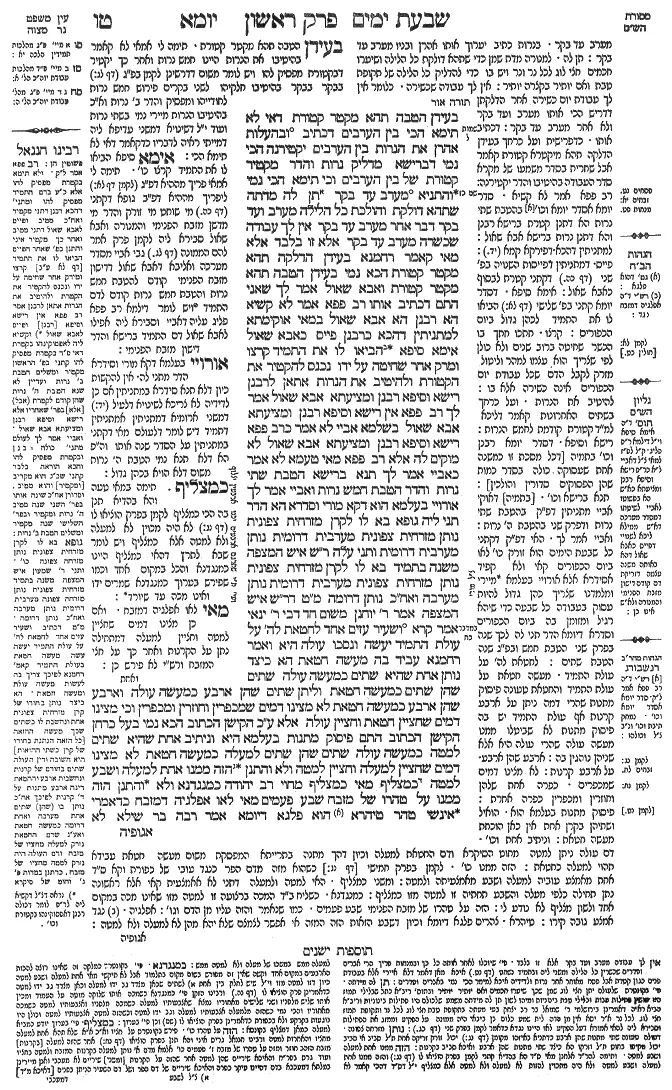
Yoma 15a - Guemara
בעידן הטבה תהא מקטר קטורת דאי לא תימא הכי בין הערבים דכתיב (שמות ל, ח) ובהעלות אהרן את הנרות בין הערבים יקטירנה הכי נמי דברישא מדליק נרות והדר מקטיר קטורת של בין הערבים וכי תימא הכי נמי והתניא (שמות כז, כא) מערב עד בקר תן לה מדתה שתהא דולקת והולכת כל הלילה מערב ועד בקר דבר אחר מערב עד בקר אין לך עבודה שכשרה מערב עד בקר אלא זו בלבד אלא מאי קאמר רחמנא בעידן הדלקה תהא מקטר קטורת הכא נמי בעידן הטבה תהא מקטר קטורת ואבא שאול אמר לך שאני התם דכתיב אותו רב פפא אמר לא קשיא הא רבנן הא אבא שאול במאי אוקימתא למתניתין דהכא כרבנן פייס כאבא שאול אימא סיפא הביאו לו את התמיד קרצו ומרק אחר שחיטה על ידו נכנס להקטיר את הקטורת ולהיטיב את הנרות אתאן לרבנן רישא וסיפא רבנן ומציעתא אבא שאול אמר לך רב פפא אין רישא וסיפא רבנן ומציעתא אבא שאול בשלמא אביי לא אמר כרב פפא רישא וסיפא רבנן ומציעתא אבא שאול לא מוקים לה אלא רב פפא מאי טעמא לא אמר כאביי אמר לך תנא ברישא הטבת שתי נרות והדר הטבת חמש נרות ואביי אמר לך אורויי בעלמא הוא דקא מורי וסדרא הא הדר תני ליה גופא בא לו לקרן מזרחית צפונית נותן מזרחית צפונית מערבית דרומית נותן מערבית דרומית ותני עלה ר"ש איש המצפה משנה בתמיד בא לו לקרן מזרחית צפונית נותן מזרחית צפונית מערבית דרומית נותן מערבה ואח"כ נותן דרומה מ"ט דר"ש איש המצפה אמר ר' יוחנן משום חד דבי ר' ינאי אמר קרא (במדבר כח, טו) ושעיר עזים אחד לחטאת לה' על עולת התמיד יעשה ונסכו עולה היא ואמר רחמנא עביד בה מעשה חטאת הא כיצד נותן אחת שהיא שתים כמעשה עולה שתים שהן שתים כמעשה חטאת וליתן שתים שהן ארבע כמעשה עולה וארבע שהן ארבע כמעשה חטאת לא מצינו דמים שמכפרין וחוזרין ומכפרין וכי מצינו דמים שחציין חטאת וחציין עולה אלא ע"כ הקישן הכתוב הכא נמי בעל כרחן הקישן הכתוב התם פיסוק מתנות בעלמא היא וניתיב אחת שהיא שתים למטה כמעשה עולה שתים שהן שתים למעלה כמעשה חטאת לא מצינו דמים שחציין למעלה וחציין למטה ולא והתנן הזה ממנו אחת למעלה ושבע למטה כמצליף מאי כמצליף מחוי רב יהודה כמנגדנא ולא והתנן הזה ממנו על טהרו של מזבח שבע פעמים מאי לאו אפלגיה דמזבח כדאמרי אינשי טהר טיהרא הוא פלגא דיומא אמר רבה בר שילא לא
Comments from Rashi on Masechet Yoma Page 15a
מערב עד בקר . בנרות כתיב יערוך אותו אהרן ובניו מערב עד בקר: תן לה . למנורה מדת שמן כדי שתהא דולקת כל הלילה ושיערו חכמים חצי לוג לכל נר ונר ויש בו כדי להדליק כל הלילה של תקופת טבת ואם יותיר בקצרה יותיר: אין לך עבודה שכשירה . כלומר אין לך עבודת יום כשירה אחר הדלקתן דדריש הכי אותו מערב ועד בקר ולא אחר מערב עד בקר: דכתיב אותו . כדפרישית ועל כרחך בעידן הדלקה תהא מיקטרא קטורת קאמר אבל שחרית בסדר משמעו של מקרא סדר העבודה בהיטיבו והדר יקטירנה: רב פפא אמר לא קשיא . סדר יומא אסדר יומא וכו' בהטבת שתי נרות הא דתנן קטרת ברישא רבנן והא דתנן נרות ברישא אבא שאול: למתניתין דהכא . דפירקא קמא (יד.): פייס . דמתניתין דפייסות השנויה בפ' שני (דף כה.) דקתני קטרת לבסוף כאבא שאול: אימא סיפא . דסדר יומא קתני בפ' שלישי (דף לא:) הביאו לו את התמיד לכהן גדול ביום הכפורים: קרצו . חתכו חתך בו הכשר שחיטה ברוב שנים ולא כולן לפי שצריך הוא עצמו למהר וליטול מזרק לקבל הדם שכל עבודת יום הכפורים אינה כשירה אלא בו: להיטיב את הנרות . ועל כרחך בשתים האחרונות קאמר דליכא למ"ד קטורת קודמת לחמש הנרות: רישא וסיפא . דסדר יומא רבנן וכו' בתמיה [דכל מסכת זו כמשנה אחת שעסוקה כולה בסדר כמות שהן הפסוקים סדורין והולכין]: תנא ברישא וכו' . [בתמיה] דאוקי אביי מתניתין דפ"ק בהטבת שתי נרות ודפרק שני בהטבת ה' נרות: ואביי אמר לך . האי דפ"ק דקתני כל שבעת הימים הוא זורק כו' לאו ביום הכפורים קאי ולא קפיד אסידרא אלא אורויי בעלמא מיירי ומלמדנו שצריך כהן גדול להיות עסוק בעבודה כל שבעה כדי שיהא רגיל ומזומן בה ביום הכפורים וסדרא דיומא הדר תני לה לכך שנה בפרק שני הטבת חמש ובפ"ג שנה הטבת שתים: לחטאת לה' על עולת התמיד . מעשה חטאת על עולת התמיד והחטאת טעונה פיסוק מתנות שהרי דמה ניתן על ארבע קרנות אף עולת התמיד יש בה פיסוק מתנות לא שביטלו ממנו מעשה עולה שהרי עולה היא אלא שניהן נוהגין בה: ארבע שהן ארבע . על ארבע קרנות: לא מצינו דמים שמכפרים . כפרה אחת שלהן וחוזרין ומכפרין כפרה אחרת: פיסוק מתנות בעלמא הוא . הואיל ושתיהן בקרן אחת אין כאן הוכחת מעשה חטאת: וניתיב אחת וכו' . דם עולה ניתן למטה מחוט הסיקרא ודם החטאת למעלה וכיון דהך מתנה בתרייתא המפסקת משום מעשה חטאת עבידא תהוי למעלה כחטאת: הזה ממנו כו' . לקמן בפרק חמישי [יומא דף נג:] כשהוא מזה מדם הפר כנגד עובי של כפורת וקא ס"ד אחת מאמצע עוביה למעלה ושבע מאמצעיתה ולמטה: ומשני כמצליף . האי למטה ולמעלה דתני לא אאמצעית קאי אלא ראשונה נתן תחילה כלפי מעלה והשבע תחתיה זו למטה מזו כמצליף: כמנגדנא . כשליח ב"ד המכה ברצועה זו למטה מזו שאינו מכה במקום אחד ולשון מצליף לא נודע לי: הזה על טהרו של מזבח הפנימי שבע פעמים . כמו שנאמר והזה עליו מן הדם וגו': אפלגיה . נגד אמצע גובה קירו: טיהרא . צהרים פלגא דיומא וכיון דשבע הזאות הזה המזה אי אפשר לצמצם שלא יהא מהן לא למעלה ולא למטה:
Comments from Tosafot - Yoma 15a
בעידן הטבה תהא מקטר קטורת . תימה לי אמאי לא קאמר בהיטיבו את הנרות היינו חמש נרות ואחר כך יקטיר דבקטורת מפסיק להו ויש לומר משום דדרשינן לקמן בפ"ג (יומא דף לג:) בבקר בבקר בהיטיבו חלקיהו לשני בקרים פירוש חמש נרות לחודייהו ומפסיק והדר ב' נרות וא"כ בהיטיבו הנרות מיירי נמי בשתי נרות ועוד י"ל דשינויא דמשני עדיפא ליה דמייתי ראיה לדבריו כדקאמר דאי לא תימא הכי: אימא סיפא הביאו לו את התמיד קרצו כו' . תימה לי אמאי פריך מההיא דפ"ג (לקמן יומא דף לא:) ליפריך מההיא דפ"ב גופא דקתני (דף כה.) מי שוחט מי זורק והדר מי מדשן מזבח הפנימי והמנורה ואבא שאול סבירא ליה לקמן פרק אמר להם הממונה (יומא דף לג.) גבי אביי מסדר מערכה ואליבא דאבא שאול דדישון מזבח הפנימי קודם להטבת חמש נרות והטבת חמש נרות קודם לדם התמיד ויש לומר דילמא רב פפא פליג עליה דאביי וסבירא ליה אפילו לאבא שאול דם התמיד ברישא והדר דישון מזבח הפנימי: אורויי בעלמא דקא מורי וסידרא הדר מתני לה . אין להקשות כיון דלא תנא סידרא במתניתין אם כן לדידיה לא צריכא לשינויא דלעיל (יומא יד:) דמשני ארומיא דמתניתין אמתניתין דתמיד דיש לומר דלעולם מאי דקתני במתניתין על הסדר שנה אותו וה"פ הא דלא תנא נמי הטבת ה' נרות משום דלא הויא בכהן גדול: כמצליף . תימה במאי טעה והא בהדיא תנן בה הכי כמצליף לקמן בפרק הוציאו לו (יומא דף נג:) לא היה מכוין לא למעלה ולא למטה אלא כמצליף ויש לומר שבא לתרץ דהאי כמצליף היינו כמנגדנא והכל במקום אחד וכמו שפירש בערוך כמנגדנא שמרים ידו ואינו מכה עד שיורד: מאי לאו אפלגיה דמזבח . ואם כן מצינו דמים שחציין למטה וחציין למעלה דמתחילה נתן על הקרנות ואחר כך על חצי המזבח ורש"י לא פירש כן:
Yoma 15a - Mishnah translated into english
It means: At the time of the removal of the ashes you shall burn the incense, and no later. As, if you do not say so but explain that the phrase: He shall burn the incense, at the end of the verse means after cleaning the lamps, then with regard to the burning of the afternoon incense, with regard to which it is written: “And when Aaron lights the lamps in the afternoon he shall burn it” (Exodus 30:8), in this case too, does it mean that initially the priest lights the lamps and only then burns the afternoon incense? And if you say indeed, that is so, wasn’t the following taught in a baraita with regard to the verse: “Aaron and his sons will set it in order to burn from evening until morning before the Lord; it shall be a statute forever throughout their generations on behalf of the children of Israel” (Exodus 27:21)?
And the baraita explains: Give the candelabrum its measure of oil so that it will continue to burn all night from evening until morning. Alternatively, the phrase: From evening to morning, teaches that you have only this service that is valid when performed from evening to morning. Apparently, lighting the candelabrum is the final daily Temple service and the incense is not burned after the lamps are lit. Rather, what is the Merciful One saying in the phrase: “And when Aaron lights the lamps in the afternoon he shall burn it.” This teaches that at the time of the lighting of the lamps you shall burn the incense, and no later. If so, here too, in the morning, at the time of the removal of the ashes you shall burn the incense, and no later. This is the rationale for the opinion of the Rabbis.
And Abba Shaul could have said to you in response: It is different there, with regard to the burning of the afternoon incense, as it is written: “Aaron and his sons will set it [oto] in order.” The term oto is exclusionary: Only in the afternoon is it critical that the lighting of the lamps be the last service performed and that it follow the burning of the incense. However, in the morning, where there is no exclusionary term, the sequence of the verse is observed: First attending to the candelabrum and then burning the incense.
Rav Pappa said a different resolution to the contradiction between the mishnayot. This is not difficult, because each mishna is in accordance with the opinion of a different tanna. This mishna, in which the burning of the incense is first, is in accordance with the opinion of the Rabbis; and that mishna, in which the lighting of the lamps is first, is in accordance with the opinion of Abba Shaul. The Gemara questions Rav Pappa’s resolution: In accordance with the opinion of which tanna is the mishna here established? It is in accordance with the opinion of the Rabbis. The sequence in the mishna where the lottery is discussed is in accordance with the opinion of Abba Shaul.
Say the latter clause of that mishna as follows: They brought him the sheep for the daily morning offering that he slaughtered by cutting most of the way through the gullet and the windpipe. And a different priest completed the slaughter on his behalf. And then he entered the Sanctuary to burn the morning incense and to remove the ashes from the lamps of the candelabrum. If so, we have again arrived at the opinion of the Rabbis that burning the incense precedes attending to the lamps, which leads to the difficult conclusion: The first clause and the last clause of the mishna in tractate Yoma are in accordance with the opinion of the Rabbis, and the middle clause is in accordance with the opinion of Abba Shaul. Rav Pappa could have said to you: Indeed, the first clause and the last clause are in accordance with the opinion of the Rabbis, and the middle clause is in accordance with the opinion of Abba Shaul. Although this is not common, because these mishnayot are not directly juxtaposed, it is possible.
The Gemara asks: Granted, Abaye does not say in accordance with the opinion of Rav Pappa, as he is not willing to establish the first clause and the last clause in accordance with the opinion of the Rabbis and the middle clause in accordance with the opinion of Abba Shaul. However, with regard to Rav Pappa, what is the reason that he did not say in accordance with the opinion of Abaye and instead prefers an uncommon and difficult resolution? Rav Pappa could have said to you that the resolution proposed by Abaye is difficult as well, as according to Abaye in the first clause of the mishna it was taught with regard to the removal of the ashes from two lamps, which is performed later, and only then taught the removal of the ashes from five lamps, which is performed before the ashes of the two lamps are cleared. Therefore, Rav Pappa prefers to establish that the mishnayot reflect a tannaitic dispute rather than to accept this reversal of the order.
And Abaye holds that this is not difficult and could have said to you that the first mishna, which describes the routine of the High Priest during his seven days of separation, teaches a general directive describing the services with which the High Priest must be familiarized prior to Yom Kippur, without concern for the sequence. And in terms of the sequence, the mishna then teaches it in the context of the actual performance of the services.
§ The Gemara cites a dispute between the Rabbis and Rabbi Shimon Ish HaMitzpa. The Gemara proceeds to analyze the matter itself: The priest comes to the northeast corner of the altar and sprinkles once on the northeast corner. From there he proceeds to the southwest corner and sprinkles once on the southwest corner. And it was taught in the Tosefta concerning this mishna: Rabbi Shimon Ish HaMitzpa changes the sprinkling of the blood of the daily offering vis-à-vis the sprinkling of blood of all other burnt-offerings. The priest comes to the northeast corner and sprinkles once on the northeast corner. However, when he proceeds to the southwest corner, he sprinkles on the west side of the altar and then sprinkles on the south side. The Gemara asks: What is the rationale for the opinion of Rabbi Shimon Ish HaMitzpa, who changes the sprinkling of the blood of the daily offering vis-à-vis the sprinkling of blood of all other burnt-offerings?
Rabbi Yoḥanan said in the name of one of the Sages of the school of Rabbi Yannai that the verse states: “And one goat as a sin-offering to the Lord; it shall be offered aside from the daily burnt-offering and its libation” (Numbers 28:15). From the phrase: Beside the daily burnt-offering, it is derived that the daily offering is a burnt-offering, and from the juxtaposition of the sacrifice of the sin-offering to the daily offering, the Merciful One said: Perform with it the procedure of a sin-offering.
And how can this be accomplished? It can be accomplished by performing half of the sprinklings according to the procedure of a burnt-offering, and half according to the procedure of a sin-offering. One sprinkles one sprinkling that is two, i.e., one sprinkles the blood on the corner of the altar so that the blood is divided between the two sides, in accordance with the procedure of a standard burnt-offering. Then he sprinkles two sprinklings that are two, in accordance with the procedure of a sin-offering. The blood of a sin-offering is sprinkled in four separate actions, one on each of the four corners of the altar. The Gemara asks: And if the objective is to have the daily offering sacrificed like a sin-offering, let him sprinkle the blood in a manner that will accomplish both: First, two sprinklings that are four in accordance with the procedure of a standard burnt-offering, and then four sprinklings that are four in accordance with the procedure of a sin-offering.
The Gemara rejects that proposal: We did not find a case of blood that atones and then again atones. Once the blood was sprinkled and brought atonement by following the procedure of the burnt-offering, one cannot then begin the rite of atonement of a sin-offering. The Gemara asks: And did we find the blood of an offering, half of which is sprinkled as a sin-offering and half of which is sprinkled as a burnt-offering? Rather, perforce, say that the verse juxtaposes them and commands that the blood of the daily offering be offered half as a burnt-offering and half as a sin-offering. Here too, perforce, say that the verse juxtaposes them and commands two separate sprinklings: The sprinkling of a burnt-offering followed by the sprinkling of a sin-offering.
The Gemara responds: The two suggestions are different. There, in the statement of Rabbi Shimon Ish HaMitzpa, there is no radical divergence from the standard burnt-offering; it is merely dividing the sprinklings. Instead of sprinkling the blood on the corner so that it falls on two sides of the altar, one sprinkles the blood on each of the two sides separately. In contrast, performing two independent acts of sprinkling is a radical divergence. And the Gemara suggests an alternative manner in which the daily offering could be offered like a sin-offering. Let us sprinkle one sprinkling that is two below the red line painted halfway up the altar, in accordance with the procedure of a standard burnt-offering, and sprinkle another two sprinklings that are two above the red line on the upper half of the altar in accordance with the procedure of a sin-offering.
The Gemara rejects this: We did not find a case of blood half of which is sprinkled above the red line and half of which is sprinkled below the red line. One either sprinkles all the blood on the lower half of the altar, as in the case of most offerings, or entirely on the upper half of the altar, as in the case of sin-offerings. The Gemara asks: And is there really no case of that sort? Didn’t we learn in a mishna: The High Priest took the blood of the bull into the Holy of Holies and sprinkled from the blood one time upward and then seven times downward? Apparently, the blood of an offering can be sprinkled part upward, toward the upper part of the thickness of the Ark cover, and part downward, toward the lower part of the thickness of the Ark cover.
The Gemara rejects this: That is not a case of half the blood sprinkled upward and half sprinkled downward. Instead, that sprinkling was like a matzlif; the sprinklings were not performed one above the other, but rather one beneath the other, and all were sprinkled in a row on the Ark cover. The Gemara explains: What is the meaning of like a matzlif? Rav Yehuda demonstrated with his hand; it means like one who whips. One who whips another does not strike in one place but directs one lash beneath another.
The Gemara asks: And is there really no case of that sort? Didn’t we learn in a mishna with regard to the sprinkling of blood on the incense altar: He sprinkled seven times from the blood on tohoro of the altar. What, is it not referring to the middle of the side of the altar, as people say: Clear noon [tihara], that is the middle of the day? In other words, tohoro refers to halfway up the altar. Now, since the blood was sprinkled on the altar seven times, inevitably some of the blood landed above the midpoint and some of it landed below the midpoint.
Rabba bar Sheila said: No, that is not the meaning of tohoro.
Traduction : The William Davidson digital edition of the Koren Noé Talmud, with commentary by Rabbi Adin Even-Israel Steinsaltz.