 Talmud Bavli
The learning on the whole site is dedicated : L'ilui Nishmat אליעזר בן רחל
The learning on the whole site is dedicated : L'ilui Nishmat Chemouel Eliezer ben Batcheva
The learning on the whole site is dedicated : L'ilui Nishmat אסתר בת חיים
Yoma 16a : Youtube
Daf TubeYoutube
3 video classes :
Yoma Page 16a
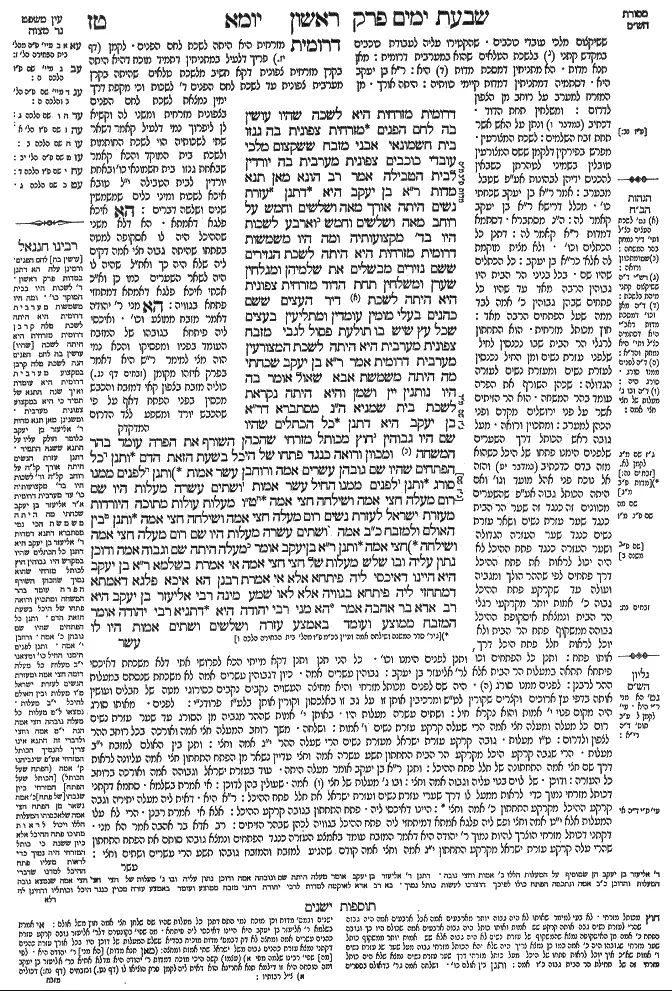
Yoma 16a - Guemara
דרומית מזרחית היא לשכה שהיו עושין בה לחם הפנים מזרחית צפונית בה גנזו בית חשמונאי אבני מזבח ששקצום מלכי עובדי כוכבים צפונית מערבית בה יורדין לבית הטבילה אמר רב הונא מאן תנא מדות ר"א בן יעקב היא דתנן עזרת נשים היתה אורך מאה ושלשים וחמש על רוחב מאה ושלשים וחמש וארבע לשכות היו בד' מקצועותיה ומה היו משמשות דרומית מזרחית היא היתה לשכת הנזירים ששם נזירים מבשלים את שלמיהן ומגלחין שערן ומשלחין תחת הדוד מזרחית צפונית היא היתה לשכת דיר העצים ששם כהנים בעלי מומין עומדין ומתליעין בעצים שכל עץ שיש בו תולעת פסול לגבי מזבח צפונית מערבית היא היתה לשכת המצורעין מערבית דרומית אמר ר"א בן יעקב שכחתי מה היתה משמשת אבא שאול אומר בה היו נותנין יין ושמן והיא היתה נקראת לשכת בית שמניא ה"נ מסתברא דר"א בן יעקב היא דתנן כל הכתלים שהיו שם היו גבוהין חוץ מכותל מזרחי שהכהן השורף את הפרה עומד בהר המשחה ומכוון ורואה כנגד פתחו של היכל בשעת הזאת הדם ותנן כל הפתחים שהיו שם גובהן עשרים אמה ורוחבן עשר אמות) ותנן לפנים ממנו סורג ותנן לפנים ממנו החיל עשר אמות ושתים עשרה מעלות היו שם רום מעלה חצי אמה ושילחה חצי אמה ט"ו מעלות עולות מתוכה היורדות מעזרת ישראל לעזרת נשים רום מעלה חצי אמה ושילחה חצי אמה ותנן בין האולם ולמזבח כ"ב אמה ושתים עשרה מעלות היו שם רום מעלה חצי אמה ושילחה חצי אמה ותנן ר"א בן יעקב אומר מעלה היתה שם וגבוה אמה ודוכן נתון עליה ובו שלש מעלות של חצי חצי אמה אי אמרת בשלמא ר"א בן יעקב היא היינו דאיכסי ליה פיתחא אלא אי אמרת רבנן הא איכא פלגא דאמתא דמתחזי ליה פיתחא בגוויה אלא לאו שמע מינה רבי אליעזר בן יעקב היא רב אדא בר אהבה אמר הא מני רבי יהודה היא דתניא רבי יהודה אומר המזבח ממוצע ועומד באמצע עזרה ושלשים ושתים אמות היו לו
Comments from Rashi on Masechet Yoma Page 16a
ששיקצום מלכי עובדי כוכבים . שהקטירו עליה לעבודת כוכבים במקדש קתני בלשכת הטלאים שהוא במערבית דרומית: מאן תנא מדות . הא מתניתין דמסכת מדות היא: ר"א בן יעקב היא . דסתמיה דמתניתין דמדות קיימי כוותיה: היתה אורך . מן המזרח למערב על רוחב מן הצפון לדרום: ומשלחין תחת הדוד . דכתיב (במדבר ו) ונתן על האש אשר תחת זבח השלמים: לשכת המצורעין . מפרש בפירקין דלקמן ששם המצורעין טובלין בשמיני לטהרתן כשבאין להכניס ידיהן לבהונות אע"פ שטבל מבערב: אמר ר"א בן יעקב שכחתי כו' . מכלל דרישא ר"א בן יעקב קאמר לה: ה"נ מסתברא . דסתמא דמדות ר"א קאמר לה: דתנן כל הכתלים וכו' . ולא מצית מוקמת לה אלא כר"א בן יעקב: כל הכתלים שהיו שם . בכל בניני הר הבית היו גבוהין הרבה מאד עד שהיו כל פתחים שבהן גבוהין כ' אמה לבד ממה שעל הפתחים הרבה מאד: חוץ מכותל מזרחית . הוא התחתון לרגלי הר הבית שבו נכנסין לחיל שלפני עזרת נשים ומן החיל נכנסין לעזרת נשים ומעזרת נשים לעזרה הגדולה: שכהן השורף את הפרה עומד בהר המשחה . הוא הר הזיתים אשר על פני ירושלים מקדם ופני הכהן למערב: ומתכוין ורואה . מעל גובה ראש הכותל דרך השערים שלפנים הימנו פתחו של היכל כשהוא מזה בדם כדכתיב (במדבר יט) והזה אל נוכח פני אהל מועד וגו' ואם היתה הכותל גבוה אע"פ שהשערים מכוונים זה כנגד זה שער הר הבית כנגד שער עזרת נשים ושער עזרת נשים כנגד שער העזרה הגדולה ושער העזרה כנגד פתח ההיכל לא היה יכול לראות את פתח ההיכל דרך פתחים לפי שההר הולך ומגביה ועולה עד שקרקע פתח ההיכל גבוה כ' אמות יותר מקרקעי רגלי הר הבית ונמצאת איסקופת ההיכל גבוהה ממשקוף פתח הר הבית ולא יוכל לראות חלל פתח היכל דרך אותו פתח: ותנן כל הפתחים וכו' ותנן לפנים הימנו וכו' . כל הני תנן ותנן דקא מייתי הכא לפרושי אתי דלא משכחת דאיכסי פיתחא תתאה במעלות הר הבית אלא לר' אליעזר בן יעקב: גבוהין עשרים אמה . כיון דגבוהין עשרים אמה לא משכחת שנסתם במעלות ההר לרבנן: לפנים ממנו סורג . היה שם לפנים מכותל מזרחי והיא מחיצה העשויה נקבים נקבים כסירוגי מטה של חבלים ועושין אותה בדפי עץ ארוכים וקצרים שקורין לט"ש ומרכיבין אותן זו על גב זו באלכסון וקורין אותן בלע"ז פרודנ"י: לפנים . מאותו סורג היה מקום פנוי י' אמות והוא נקרא חיל: ושתים עשרה מעלות היו . באותן י' אמות שההר מגביה מן הסורג עד שער עזרת נשים רום כל מעלה ומעלה חצי אמה הרי שעלה קרקע עזרת נשים ו' אמות: ושלחה . משך רוחב המעלה חצי אמה ואורכה בכל רוחב ההר לצפון ולדרום: ט"ו מעלות . גובה קרקע עזרת ישראל מעזרת נשים הרי שעלה ההר י"ג אמה וחצי: ותנן בין האולם למזבח י"ב מעלות . הרי שגבה קרקע היכל מקרקע הר הבית התחתון תשע עשרה אמה וחצי עדיין נשאר מן הפתח התחתון חצי אמה עליונה לראות דרך שם חצי אמה התחתונה של חלל פתח ההיכל: ותנן ר"א בן יעקב אומר מעלה היתה . עוד בעזרת ישראל וגבוהה אמה ואורכה ברוחב כל העזרה: ודוכן . של לוים בנוי עליה וגבוה אמה וחצי: ובו ג' מעלות של חצי אמה . שעולין בהן לדוכן: רב אדא בר אהבה אמר הא מני . דקתני דכותל מזרחי הוצרך להיות נמוך ר' יהודה היא דאמר המזבח עומד באמצע העזרה כנגד הפתחים ונמצא גובהו סותם את הפתח התחתון שהרי עלה קרקע עזרת ישראל מקרקע התחתון י"ג אמה וחצי אמה קודם שהגיע למזבח והמזבח גובהו תשע הרי עשרים ושתים וחצי:
Comments from Tosafot - Yoma 16a
דרומית מזרחית היא היתה לשכת לחם הפנים . לקמן (יומא דף יז.) פריך דלעיל במתניתין דתמיד מוכח דהיא היתה בקרן מזרחית צפונית דקא חשיב מלשכת טלאים שהיתה בקרן מערבית צפונית עד לשכת לחם הפנים ד' לשכות וכי מקפת דרך ימין נמצאת לשכת לחם הפנים בצפונית מזרחית ומשני לה וקשיא לן ליפרוך נמי דלעיל קאמר דשאר שתי לשכותיה הוי לשכת החותמות ולשכת בית המוקד והכא קאמר שבאחת גנזו בית חשמונאי כו' ובאחת יורדין לבית הטבילה י"ל טובא איכא לשכות ומיני כלים שמשמשין שנים ושלשה דברים: הא איכא פלגא דאמתא . הא דלא משני שההיכל היה לו אסקופה למטה בפתחו שהיתה גבוה חצי אמה דקים ליה שלא היה כך ואת"ל שהיה לו היה לשאר השערים כמו כן וא"כ אכתי איכא פלגא דאמתא דמתחזי פתחא בגוויה: הא מני ר' יהודה דאמר מזבח ממוצע וכו' . ואיכסי ליה פיתחא בגובהו של המזבח העומד בפניו ומפסיקו והכא נמי הוה מצי למימר ר"ש היא דאמר בפרק איזהו מקומן (זבחים דף נג.) כוליה מזבח בצפון קאי דמזבח והכבש מכסין בפני הפתח דאף על פי שהכבש יורד ומשפע לצד הדרום המדקדק יבין שקודם שירד גובהו שני אמות ומחצה נפקא ליה שיפועו מכנגד הפתח וא"כ הוי מצי לאוקומי כר"ש או כרבי יוסי דאית ליה נמי מזבח ממוצע בפרק קדשי קדשים אלא משום דר' יהודה שמעינן ליה בהדיא וכי האי גוונא איכא בפרק קדשי קדשים (זבחים דף נח:) דאמר רב אדא בר אהבה הא מני רבי יהודה היא דאמר מזבח ממוצע וכו' ופריך ונוקמא כרבי יוסי ובממוצע ומשני משום דרבי יהודה שמעינן ליה בהדיא ומהתם קשיא לן על פירוש רבותיו של רש"י שפי' הא מני רבי יהודה היא ההיא דמדות דא"כ תיקשי ליה דרב אדא בר אהבה גופיה אוקי התם סתמא דתמיד דתנן ביררו משם עצי תאנה וכו' כר' יהודה ואיהו מוקי הכא סתמי דמדות כוותיה והאמר לעיל דסתמי דתמיד פליגי אדמדות וא"כ ליכא למימר דסתמי תמיד ומדות כרבי יהודה וי"ל דבלאו הכי מקשה ליה שפיר מסתמי דמדות גופייהו וממזבח גופיה דפריך ומי מצית מוקמי לה כרבי יהודה וכו':
Yoma 16a - Mishnah translated into english
the southeast chamber in the Hall of the Hearth was the chamber in which the shewbread was prepared. The northeast chamber was the chamber in which the Hasmoneans sequestered the altar stones that were desecrated by the gentile kings when they sacrificed idolatrous offerings. The northwest chamber was the chamber in which the priests descended through tunnels to the Hall of Immersion. There is a contradiction between the sources with regard to the location of the Chamber of the Lambs. Rav Huna said: Who is the tanna who taught the mishnayot in tractate Middot? It is Rabbi Eliezer ben Ya’akov, who has a different opinion with regard to this matter.
As we learned in a mishna in tractate Middot: The dimensions of the women’s courtyard were a length of 135 cubits by a width of 135 cubits, and there were four chambers in its four corners. And what purpose did these chambers serve? The southeast chamber was the Chamber of the Nazirites, as there the nazirites cook their peace-offerings and shave their hair and cast it in the fire to burn beneath the pot in which the peace-offering was cooked, as the Torah instructs (see Numbers 6:18). The northeast chamber was the Chamber of the Woodshed, where blemished priests, who are disqualified for any other service, stand and examine the logs to determine if they were infested by worms, as any log in which there are worms is disqualified for use on the altar.
The northwest chamber was the Chamber of the Lepers, where lepers would immerse for purification. With regard to the southwest chamber, Rabbi Eliezer ben Ya’akov said: I forgot what purpose it would serve. Abba Shaul says: They would place wine and oil there for the meal-offerings and libations, and it was called the Chamber of the House of Oils. From this mishna it may be inferred that the tanna who taught the mishnayot in tractate Middot is Rabbi Eliezer ben Ya’akov, as that is why the mishna finds it necessary to mention that he forgot the purpose of one of the chambers.
So too, it is reasonable to conclude that the mishnayot in tractate Middot are in accordance with the opinion of Rabbi Eliezer ben Ya’akov, as we learned in a mishna there: All the walls that were there surrounding the Temple Mount were high except for the Eastern Wall, as the priest who burns the red heifer stands on the Mount of Olives, where the red heifer was slaughtered and burned, and directs his attention and looks toward the entrance of the Sanctuary when he sprinkles the blood.
The Gemara seeks the opinion according to which this would be feasible. And we learned in a mishna: All the entrances that were there in the Temple were twenty cubits high and ten cubits wide. And we learned in a different mishna describing the layout of the Temple: Inside the eastern wall of the Temple Mount was a latticed gate. And we learned in a different mishna: Inside the latticed gate was the rampart, which was an elevated area ten cubits wide. In that area there were twelve stairs; each stair was half a cubit high and half a cubit deep, for a total ascent of six cubits.
In addition, fifteen stairs ascend from within the women’s courtyard and descend from the Israelite courtyard to the women’s courtyard. Each stair was half a cubit high and half a cubit deep, for an additional ascent of seven and a half cubits. The total height of both staircases together was thirteen and a half cubits. And we learned in that mishna: The area between the Entrance Hall and the altar was twenty-two cubits wide, and there were twelve stairs in that area. Each stair was half a cubit high and half a cubit deep, for an additional ascent of six cubits and a total height of nineteen and a half cubits.
And we learned in that mishna that Rabbi Eliezer ben Ya’akov says: There was an additional stair there between the Israelite courtyard and the priests’ courtyard. That stair was one cubit high, and the platform on which the Levites stood was placed upon it and on it were three stairs, each with a height and depth of half a cubit, for a total of twenty-two cubits.
Granted, if you say that the mishnayot in tractate Middot are in accordance with the opinion of Rabbi Eliezer ben Ya’akov, that is how it can be understood that the entrance was concealed. The threshold of the entrance to the Sanctuary was more than twenty cubits higher than the threshold of the eastern gate of the Temple Mount. One looking through the Eastern Gate would be unable to see the entrance of the Sanctuary, because the gate was only twenty cubits high. In order to provide the priest performing the red heifer ritual on the Mount of Olives with a view of the entrance to the Sanctuary, the eastern wall had to be lowered.
However, if you say that the mishnayot in tractate Middot are in accordance with the opinion of the Rabbis, who do not add the two and a half cubits of the stair and the platform added by Rabbi Eliezer ben Ya’akov, isn’t there half a cubit through which the entrance can be seen? Since the threshold of the Sanctuary is only nineteen and a half cubits higher than the threshold of the gate, the priest on the Mount of Olives could look through the eastern gate of the Temple Mount and see the bottom of the Temple entrance. There would be no need to lower the eastern wall.
Rather, must one not conclude from it that that the mishnayot in tractate Middot are taught by Rabbi Eliezer ben Ya’akov? Rav Adda bar Ahava said: This is not a definitive proof, and it is still possible to interpret halakhot of this tractate in a different manner. Rather, whose is that opinion that the Eastern Wall was lowered? It is the opinion of Rabbi Yehuda, as it was taught in a baraita that Rabbi Yehuda says: The altar is centered and stands in the middle of the Temple courtyard, directly aligned with the entrances of the courtyards and the Sanctuary, and it was thirty-two cubits long and thirty-two cubits wide.
Traduction : The William Davidson digital edition of the Koren Noé Talmud, with commentary by Rabbi Adin Even-Israel Steinsaltz.