 Talmud Bavli
The learning on the whole site is dedicated : L'ilui Nishmat Margalit bat Ledicia
The learning on the whole site is dedicated : L'ilui Nishmat Avraham Ben Simha
The learning on the whole site is dedicated : For the success of Elyahou ben H'anna & family
Yoma 22a : Youtube
Daf TubeYoutube
3 video classes :
Yoma Page 22a
Yoma 22a - Guemara
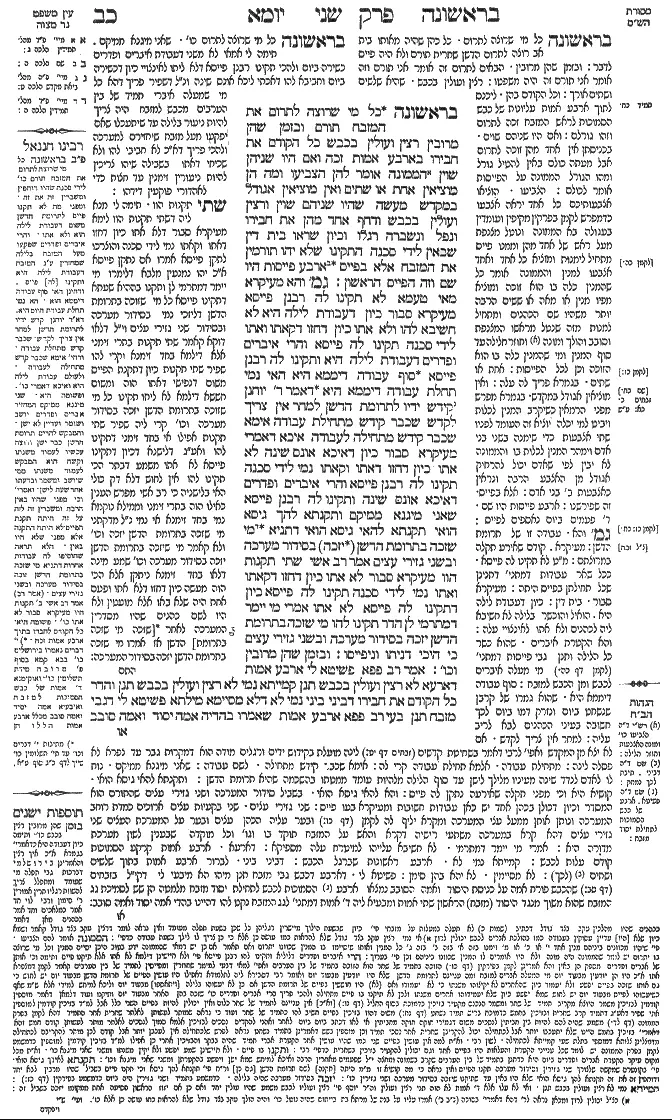
מתני׳ בראשונה כל מי שרוצה לתרום את המזבח תורם ובזמן שהן מרובין רצין ועולין בכבש כל הקודם את חבירו בארבע אמות זכה ואם היו שניהן שוין הממונה אומר להן הצביעו ומה הן מוציאין אחת או שתים ואין מוציאין אגודל במקדש מעשה שהיו שניהם שוין ורצין ועולין בכבש ודחף אחד מהן את חבירו ונפל ונשברה רגלו וכיון שראו בית דין שבאין לידי סכנה התקינו שלא יהו תורמין את המזבח אלא בפייס ארבע פייסות היו שם וזה הפייס הראשון גמ׳ והא מעיקרא מאי טעמא לא תקינו לה רבנן פייסא מעיקרא סבור כיון דעבודת לילה היא לא חשיבא להו ולא אתו כיון דחזו דקאתו ואתו לידי סכנה תקינו לה פייסא והרי איברים ופדרים דעבודת לילה היא ותקינו לה רבנן פייסא סוף עבודה דיממא היא האי נמי תחלת עבודה דיממא היא דאמר ר' יוחנן קידש ידיו לתרומת הדשן למחר אין צריך לקדש שכבר קידש מתחילת עבודה אימא שכבר קידש מתחילה לעבודה איכא דאמרי מעיקרא סבור כיון דאיכא אונס שינה לא אתו כיון דחזו דאתו וקאתו נמי לידי סכנה תקינו לה רבנן פייסא והרי איברים ופדרים דאיכא אונס שינה ותקינו לה רבנן פייסא שאני מיגנא ממיקם ותקנתא להך גיסא הואי תקנתא להאי גיסא הואי דתניא מי שזכה בתרומת הדשן (יזכה) בסידור מערכה ובשני גזירי עצים אמר רב אשי שתי תקנות הוו מעיקרא סבור לא אתו כיון דחזו דקאתו ואתו נמי לידי סכנה תקינו לה פייסא כיון דתקינו לה פייסא לא אתו אמרי מי יימר דמתרמי לן הדר תקינו להו מי שזכה בתרומת הדשן יזכה בסידור מערכה ובשני גזירי עצים כי היכי דניתו וניפייסו ובזמן שהן מרובין וכו' אמר רב פפא פשיטא לי ארבע אמות דארעא לא רצין ועולין בכבש תנן קמייתא נמי לא רצין ועולין בכבש תנן והדר כל הקודם את חבירו דביני ביני נמי לא דלא מסיימא מילתא פשיטא לי דגבי מזבח תנן בעי רב פפא ארבע אמות שאמרו בהדיה אמה יסוד ואמה סובב
Comments from Rashi on Masechet Yoma Page 22a
מתני' בראשונה כל מי שרוצה לתרום . כל כהן שהיה מאותו בית אב רוצה לתרום הדשן שחרית תורם ולא היה פייס לדבר: ובזמן שהן מרובין . הבאים לתרום זה אומר אני תורם וזה אומר אני תורם זה היה משפטו: רצין ועולין בכבש . שהוא שלשים ושתים אורך: וכל הקודם בהן . ליכנס לתוך ארבע אמות עליונות של כבש הסמוכות לראש המזבח זכה לתרום וזהו גורלם: ואם היו שניהם שוים . בכניסתן אין אחד מהן זוכה לתרום אבל מעתה כולם באין להטיל גורל ומהו הגורל הממונה על הפייסות אומר לכולם: הצביעו . הוציאו אצבעותיכם כל אחד יראה אצבעו כדמפרש לקמן בפירקין מקיפין ועומדין בעגולה בא הממונה ונוטל מצנפת מעל ראש של אחד מהן וממנו פייס מתחיל לימנות ומוציא כל אחד ואחד אצבעו למנין והממונה אומר כל שהמנין כלה בו הוא זוכה ומוציא מפיו מנין או מאה או ששים הרבה יותר משהיו שם הכהנים ומתחיל למנות מזה שנטל מראשו המצנפת וסובב והולך ומונה וחוזר חלילה עד סוף המנין ומי שהמנין כלה בו הוא הזוכה וכן לכל הפייסות: אחת או שתים . בגמרא פריך לה עלה: ואין מוציאין אגודל במקדש . בגמרא מפרש מפני הרמאין כשיקרב המנין לכלות ויביט למי יכלה יוציא זה העומד לפניו שתי אצבעות כדי שימנה בשני בני אדם וימהר המנין לכלות בו והממונה לא יבין לפי שאדם יכול להרחיק אגודל מן האצבע הרבה ונראין כאצבעות ב' בני אדם: אלא בפייס . זה שפירשנו: ארבע פייסות היו שם . ד' פעמים ביום נאספים לפיס: גמ' והא . עבודה זו של תרומת הדשן: מעיקרא . קודם שאירע תקלה במרוצתם: מ"ט לא תקינו לה פייסא . ככל שאר עבודות דמתני' דתנינן שכל תחילתן בפייס היתה: מעיקרא סבור . בית דין: כיון דעבודת לילה היא . הואיל והוכשר בלילה לא חשיבא ליה לכהנים ולא אתו לאינצויי עלה: והא הקטרת איברים . שהוא כשר כל הלילה ותנן גבי פייסות דמתני' (לקמן יומא דף כה.) מי מעלה איברים לכבש ומן הכבש למזבח: סוף עבודה דיממא היא . שהוא גמרו של קרבן שנשחט ביום ונזרק דמו ביום לכך חשובה בעיני הכהנים לבא לריב עליה: למחר אין צריך לקדש . אם לא יצא מן המקדש ואפי' לרבי דאמר בשחיטת קדשים (זבחים דף יט:) לינה מועלת בקידוש ידים ורגלים מודה הוא דמקרות גבר עד צפרא לא פסלה לינה: מתחילת עבודה . אלמא תחילת עבודה קרי לה: אימא שכבר קידש מתחילה . לשם עבודה: שאני מיגנא ממיקם . נוח לו לאדם לנדד שינה מעיניו מלילך לישן עד סוף הלילה מלהיות עומד ממטתו בהשכמה שהיא תרומת הדשן: ותקנתא להאי גיסא הואי . קושיא היא וכי מפני תקלה שאירעה נתקן לה פייס: והא להאי גיסא הואי . בשביל סידור המערכה ושני גזירי עצים שהתורם הוא המסדר וכיון דכולן בכהן אחד יש כאן עבודות חשובות ומעיקרא בעו פייס: שני גזירי עצים . שני בקעיות עצים ארוכים כמדת רוחב המערכה ונותן אותן ממעל עצי המערכה ומקרא יליף לה לקמן (יומא דף כו:) ובער עליה הכהן עצים ובער על המערכת העצים שני גזירי עצים דהא קרא במערכה משתעי רישיה דקרא והאש על המזבח תוקד בו וגו' וכל מוקדה שבענין לשון מערכת מדורה היא: אמרי מי יימר דמתרמי . לא חשיבא עלייהו למיטרח עלה מספיקא: דארעא . ארבע אמות קרקע הסמוכות קודם עלות לכבש: קמייתא נמי לא . ארבע ראשונות שברגל הכבש: דביני ביני . לברור ארבע אמות בתוך שלשים ושתים (לכך): לא מסיימין . לא יהא בהן סימן: פשיטא לי . דארבע דכבש גבי מזבח תנן מיהו הא מיבעי לי דקי"ל בזבחים (דף סב:) שהכבש פורח אמה על כניסת היסוד ואמה הסובב נמצאו ארבע הסמוכות לכבש לתחילת יסוד מזבח מלמטה הן שש לסמיכת גג המזבח שהוא משוך מנגד היסוד (מזבח) הראשון שתי אמות ומבעיא ליה ד' אמות דמתני' לגג המזבח נקט להו דהיינו בהדי אמה יסוד ואמה סובב:
Comments from Tosafot - Yoma 22a
בראשונה כל מי שרוצה לתרום כו'. שאני מיגנא ממיקם . תימה לי אמאי לא משני דעבודת איברים ופדרים כשירה ביום ולהכי תקינו רבנן פייסא דלא ליתו לאינצויי כיון דכשירה ביום וחביבא להו דאכתי ליכא אונס שינה ונ"ל דשפיר פריך דהא כל מי שמעלה איברי תמיד של בין הערבים מכבש למזבח היה צריך להיות ניעור בלילה עד שיתעכלו שאם יפקעו מעל מזבח שיחזירם למערכה ולהכי פריך דא"כ לא חביבי להו ולא שכיחי דאתו בשבילה שיהו צריכין להיות ניעורין זימנין עד חצות כדי לאהדורי פוקעין דידהו: שתי תקנות הוו . תימה לי מנא ליה דשתי תקנות הוו לימא מעיקרא סבור דלא אתו כיון דחזו דאתו וקאתו נמי לידי סכנה והוצרכו לתקן פייסא אמרו אם נתקן פייסא א"כ יהו נמנעין מלבא דלימרו מי יימר דמתרמי לן ותקנו בההיא שעתא דתקינו פייסא כל מי שזוכה בתרומת הדשן דליזכי נמי בסידור מערכה ובסידור שני גזירי עצים וי"ל דלאו דוקא קאמר שתי תקנות בתרי זימני אלא דילמא בחד זימנא וקרי להו שפיר שתי תקנות כיון דתקנת הפייס משום דנפישי דאתו הוה ומשום חששא דילמא לא ליתו תקינו כל מי שזוכה בתרומת הדשן יזכה בסידור מערכה וכו' קרי ליה שפיר שתי תקנות אפילו אי בחד זימני דתקינו להו ואע"ג דלישנא דכיון דתקינו פייסא לא אתו משמע דבתר הכי תקינו להו אין לחוש דלא דק כולי האי בלישניה כי רב אשי מפרש הענין כאילו הוה בתרי זימני וממילא נוקמא נמי בחד זימנא אי נמי נ"ל מדקתני מי שזכה בתרומת הדשן יזכה וכו' ולא קאמר מי שיזכה בתרומת הדשן יזכה בסידור מערכה וכו' שמע מינה דלאו בחד זימנא ניתקן אלא הכי הוה מעשה כיון דחזו דלא אתו ופעם אחת היה שלא באו אלא מועטין ולא היו לשם כהנים שהיו מסדרין המערכה לאחר [שזכה מי שזכה בתרומת] הדשן אז אמרו מי שזכה בתרומת הדשן יזכה בסידור המערכה:
Yoma 22a - Mishnah translated into english
MISHNA: Initially, the practice among the priests was that whoever wishes to remove the ashes from the altar removes them. And when there are many priests who wish to perform that task, the privilege to do so is determined by a race: The priests run and ascend on the ramp leading to the top of the altar. Any priest who precedes another and reaches within four cubits of the top of the altar first is privileged to remove the ashes. And if both of them were equal and neither preceded the other, the appointed priest says to all the priests: Extend your fingers, and a lottery was performed, as will be explained.
And what fingers do they extend for the lottery? They may extend one or two fingers, and the priests do not extend a thumb in the Temple. The reason is that the lottery was conducted by the appointee choosing a number and counting the extended fingers of the priests standing in a circle. As the count progressed, a priest could calculate and manipulate the result in his favor by surreptitiously extending his thumb and an additional finger. Since there is separation between the thumb and the forefinger it could appear as though they belonged to two different priests, skewing the results of the lottery.
Initially, that was the procedure; however, an incident occurred where both of them were equal as they were running and ascending on the ramp, and one of them shoved another and he fell and his leg was broken. And once the court saw that people were coming to potential danger, they instituted that priests would remove ashes from the altar only by means of a lottery. There were four lotteries there, in the Temple, on a daily basis to determine the priests privileged to perform the various services, and this, determining which priest would remove the ashes, was the first lottery.
GEMARA: The Gemara questions the original practice of holding a race to determine which priest would remove the ashes: And what is the reason that the Sages did not initially institute a lottery for the removal of the ashes as they did for other parts of the service? The Gemara answers: Initially they thought: Since it is a service performed at night it would not be important to the priests, and not many of them would come to perform it, so a lottery would be unnecessary. Then, when they saw that many priests did indeed come and that they were coming to danger by racing up the altar’s ramp, they instituted a lottery.
The Gemara poses a question against the assertion that nighttime Temple services did not normally require a lottery: But there is the burning of the limbs of burnt-offerings and the fats of other offerings, which is a service that is performed at night, and nevertheless the Sages instituted a lottery for that from the outset. The Gemara answers: The burning of those parts is not considered a nighttime service but the end of a daytime service, as the main part of the sacrificial service, the slaughtering and the sprinkling of blood, took place during the day.
The Gemara asks: If so, it could be argued that this service of removing the ashes is also not a nighttime service but the start of a daytime service, as Rabbi Yoḥanan said: If a priest has sanctified his hands at night by washing them for the removal of the ashes, the next day, i.e., after daybreak, if he remained in the confines of the Temple, he need not sanctify his hands again, because he already sanctified them at the start of the service. Apparently, the removal of the ashes, though performed at night, is considered the start of the next day’s service.
The Gemara responds by emending Rabbi Yoḥanan’s statement: Say the following version of the end of Rabbi Yoḥanan’s statement: Because he had already sanctified them at the outset for service. According to this formulation, Rabbi Yoḥanan did not say that the removal of the ashes is considered the start of the following day’s service. Rather, he said that although the removal of the ashes is a nighttime service, since the priest sanctified his hands before performing that service, the sanctification remains in effect for the services performed after daybreak as well, since there is no interruption between the two activities.
Some say that the original practice should be explained as follows: Initially, the Sages thought that since there is a likelihood of being overcome by sleep at that time of night, not many priests would come. When they saw that they did indeed come and that they were also coming to danger, the Sages instituted a lottery for this task. The Gemara asks: But there is the burning of the limbs of burnt-offerings and the fats of other offerings, a service for which there is the same likelihood of being overcome by sleep, and nevertheless the Sages instituted a lottery for that from the outset. The Gemara answers: Lying down to go to sleep late is different from rising in the middle of the night. It is not as difficult to stay up late in order to burn limbs on the altar as it is to rise before dawn to remove the ashes from the altar.
The Gemara addresses the substance of the mishna’s claim: But was the ordinance to assign the removal of ashes by means of a lottery due to that reason cited in the mishna, the matter of the dangerous incident? The ordinance was instituted due to this reason: There were other important tasks associated with the removal of the ashes that required a lottery in their own right, as it was taught in a baraita: The priest who was privileged to perform the removal of the ashes was also privileged with laying out the arrangement of wood on the altar and with placing the two logs that were placed on the altar each morning. Since these were inherently important tasks, the only way to assign them was through a lottery, which would also determine who removed the ashes.
The Gemara answers: Rav Ashi said: There were two separate ordinances instituted. Initially, the Sages thought that priests would not come forward to perform the task of removing the ashes. Once they saw that many priests did come and that they were also coming to danger, the Sages instituted a lottery for this task. Once they established a lottery for removing the ashes, the priests did not come anymore. They said: Who says the lottery will fall in our favor? Therefore, they did not bother to come. Then the Sages instituted for the priests that whoever was privileged with performing the removal of the ashes would also be privileged with laying out the arrangement of wood on the altar and with placing the two logs, so that the importance of all these tasks combined would ensure that the priests would come and participate in the lottery.
§ It was taught in the mishna that before the lottery was instituted, when there were many priests who sought to perform the removal of the ashes, the first priest to reach within four cubits of the top of the altar was privileged with performing the removal of the ashes. Rav Pappa said: It is obvious to me that the four cubits the mishna is referring to are not the four cubits adjacent to the ramp on the ground, because we learned in the mishna that the priests run and ascend on the ramp, and not adjacent to the ramp. It is also not referring to the first four cubits from the foot of the ramp, because we learned that the priests run and ascend on the ramp, and only afterward it says: Any priest who precedes another and reaches within four cubits of the altar first, indicating that the competition begins only once they have ascended the ramp to some extent.
It is also not referring to four cubits somewhere in the middle, between the four on the bottom and the top of the altar, because the matter is not defined and there is no clear indication which four cubits on the ramp are the determining cubits. In light of all this, it is obvious to me that the four cubits we learned in the mishna are referring to the four cubits that are adjacent to the altar itself. The priest who reaches those four cubits first is the one privileged to remove the ashes.
Rav Pappa raised a dilemma based on the above clarification: Are the four cubits that they stated, which are the four cubits adjacent to the altar, calculated including the cubit of the base of the altar and the cubit of its ledge, as the ramp continues and overlaps these two cubits at the top of the altar,
Traduction : The William Davidson digital edition of the Koren Noé Talmud, with commentary by Rabbi Adin Even-Israel Steinsaltz.