 Talmud Bavli
The learning on the whole site is dedicated : L'ilui Nishmat Nissim ben Barukh Malka
The learning on the whole site is dedicated : L'ilui Nishmat רינה בת לדיסיה
The learning on the whole site is dedicated : L'ilui Nishmat אליעזר בן רחל
Yoma 78a : Youtube
Daf TubeYoutube
3 video classes :
Yoma Page 78a
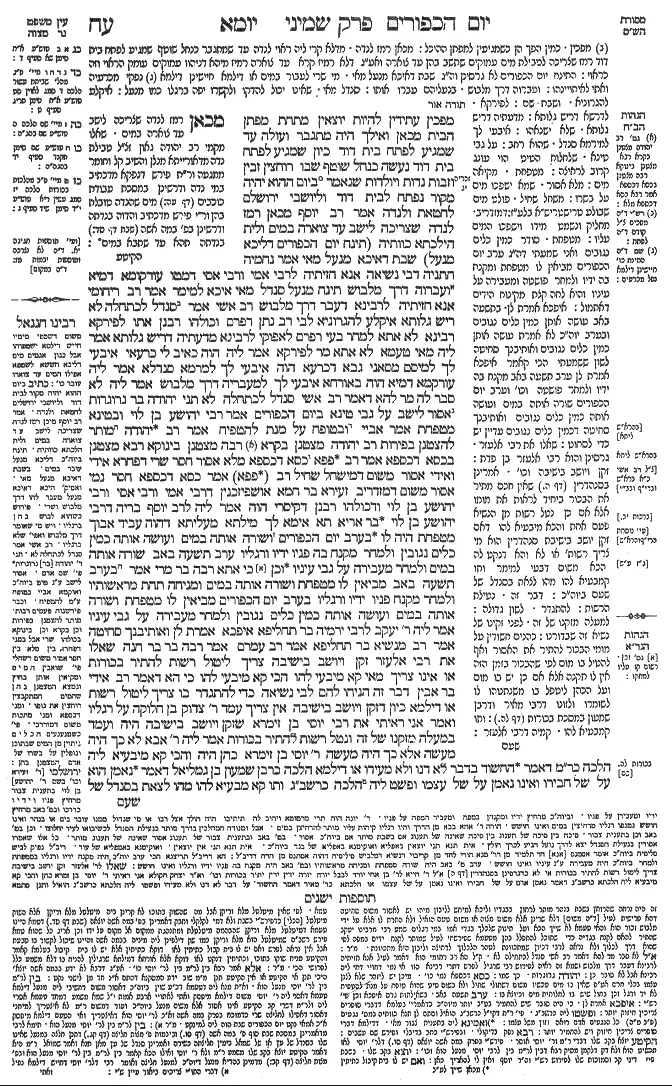
Yoma 78a - Guemara
מפכין עתידין להיות יוצאין מתחת מפתן הבית מכאן ואילך היה מתגבר ועולה עד שמגיע לפתח בית דוד כיון שמגיע לפתח בית דוד נעשה כנחל שוטף שבו רוחצין זבין וזבות נדות ויולדות שנאמר (זכריה יג, א) ביום ההוא יהיה מקור נפתח לבית דוד וליושבי ירושלם לחטאת ולנדה אמר רב יוסף מכאן רמז לנדה שצריכה לישב עד צוארה במים ולית הילכתא כוותיה (תינח יום הכפורים דליכא מנעל) שבת דאיכא מנעל מאי אמר נחמיה חתניה דבי נשיאה אנא חזיתיה לרבי אמי ורבי אסי דמטו עורקומא דמיא ועברוה דרך מלבוש תינח מנעל סנדל מאי איכא למימר אמר רב ריחומי אנא חזיתיה לרבינא דעבר דרך מלבוש רב אשי אמר סנדל לכתחלה לא ריש גלותא איקלע להגרוניא לבי רב נתן רפרם וכולהו רבנן אתו לפירקא רבינא לא אתא למחר בעי רפרם לאפוקי לרבינא מדעתיה דריש גלותא אמר ליה מאי טעמא לא אתא מר לפירקא אמר ליה הוה כאיב לי כרעאי איבעי לך למיסם מסאני גבא דכרעא הוה איבעי לך למרמא סנדלא אמר ליה עורקמא דמיא הוה באורחא איבעי לך למעבריה דרך מלבוש אמר ליה לא סבר לה מר להא דאמר רב אשי סנדל לכתחלה לא תני יהודה בר גרוגרות אסור לישב על גבי טינא ביום הכפורים אמר רבי יהושע בן לוי ובטינא מטפחת אמר אביי ובטופח על מנת להטפיח אמר רב יהודה מותר להצטנן בפירות רב יהודה מצטנן בקרא רבה מצטנן בינוקא רבא מצטנן בכסא דכספא אמר רב פפא כסא דכספא מלא אסור חסר שרי דפחרא אידי ואידי אסור משום דמישחל שחיל רב (פפא) אמר כסא דכספא חסר נמי אסור משום דמזדריב זעירא בר חמא אושפיזכנין דרבי אמי ורבי אסי ורבי יהושע בן לוי ודכולהו רבנן דקיסרי הוה אמר ליה לרב יוסף בריה דרבי יהושע בן לוי בר אריא תא אימא לך מילתא מעליתא דהוה עביד אבוך מטפחת היה לו בערב יום הכפורים ושורה אותה במים ועושה אותה כמין כלים נגובין ולמחר מקנח בה פניו ידיו ורגליו ערב תשעה באב שורה אותה במים ולמחר מעבירה על גבי עיניו וכן כי אתא רבה בר מרי אמר בערב תשעה באב מביאין לו מטפחת ושורה אותה במים ומניחה תחת מראשותיו ולמחר מקנח פניו ידיו ורגליו בערב יום הכפורים מביאין לו מטפחת ושורה אותה במים ועושה אותה כמין כלים נגובין ולמחר מעבירה על גבי עיניו אמר ליה ר' יעקב לרבי ירמיה בר תחליפא איפכא אמרת לן ואותיבנך סחיטה אמר רב מנשיא בר תחליפא אמר רב עמרם אמר רבה בר בר חנה שאלו את רבי אלעזר זקן ויושב בישיבה צריך ליטול רשות להתיר בכורות או אינו צריך מאי קא מיבעי להו הכי קא מיבעי להו כי הא דאמר רב אידי בר אבין דבר זה הניחו להם לבי נשיאה כדי להתגדר בו צריך ליטול רשות או דילמא כיון דזקן ויושב בישיבה אין צריך עמד ר' צדוק בן חלוקה על רגליו ואמר אני ראיתי את רבי יוסי בן זימרא שזקן ויושב בישיבה היה ועמד במעלה מזקנו של זה ונטל רשות להתיר בכורות אמר ליה ר' אבא לא כך היה מעשה אלא כך היה מעשה ר' יוסי בן זימרא כהן היה והכי קא מיבעיא ליה הלכה כר"מ דאמר החשוד בדבר לא דנו ולא מעידו או דילמא הלכה כרבן שמעון בן גמליאל דאמר נאמן הוא על של חבירו ואינו נאמן על של עצמו ופשט ליה הלכה כרשב"ג ותו קא מבעיא להו מהו לצאת בסנדל של
Comments from Rashi on Masechet Yoma Page 78a
מפכין . כמין הפך הן כשמגיעין למפתן ההיכל: לפתח בית דוד . היא ציון חוץ לירושלים: מכאן רמז לנדה . מדלא קרי ליה ראוי לנדה עד שמתגבר כנחל שוטף שמגיע לפתח בית דוד רמז שצריכה לטבילת מים עמוקים שתשב בהן עד צוארה ואע"ג דלא רמיז קרא עד צוארה רמיז מיהא דניהוו עמוקים עומק הראוי וזה כראוי: התינח יום הכפורים לא גרסינן וה"ג שבת דאיכא מנעל מאי . מי שרי לעבור במים או דילמא חיישינן דילמא נפקי מכרעיה ואתי לאיתויינהו: ועברוה דרך מלבוש . בנעליהם עברו אותו: סנדל מאי . שאינו יכול להדקו ולקשרו יפה ברגלו כמו מנעל: איקלע להגרוניא . ושבת שם: לפירקא . לדרשא דריש גלותא: מדעתיה דריש גלותא . שלא ישנאהו: איבעי לך למירמא סנדל . שהוא רחב: על גבי טינא . שלחלוח הטיט הוי עונג קרוב לרחיצה: מטפחת . מקיאה מים: מלא אסור . שמא ישפכו מים על בשרו: משחל שחיל . פולט מים שבולע טרישטריש"א בלע"ז: דמזדריב . מחליק ונשמט מידו וישפכו המים עליו: מטפחת . סודר כמין כלים נגובים ואני שמעתי דה"ג ערב יום הכפורים מביאין לו מטפחת ומקנח בה ידיו ולמחר פושטה ומעבירה על עיניו והיא לחה קצת מקינוח הידים דאתמול: איפכא אמרת לן . בתשעה באב עושה אותן כמין כלים נגובים ובערב יוה"כ לא אמרת עושה אותן כמין כלים נגובים ואותיבנך סחיטה לשון ששמעתי הכי קאמר איפכא אמרת לן ערב תשעה באב מקנח בה ידיו ולמחר פושטה וכו' וערב יום הכפורים שורה אותה במים ועושה אותה כמין כלים נגובים ואותיבנך סחיטה דכמין כלים נגובים עדיין יש כדי לסחוט: שאלו את רבי אלעזר . גרסינן והוא רבי אלעזר בן פדת: זקן ויושב בישיבה וכו' . אמרינן בסנהדרין (דף ה.) שאין חכם מתיר את הבכור ביחיד לראות את מומו אלא אם כן נטל רשות מן הנשיא פעם אחת והכא מיבעיא להו דאם זקן יושב בישיבת סנהדרין הוא מי צריך רשות' או לא והא דנקט לה הכא משום דבעי למימר ותו קמבעיא להו מהו לצאת בסנדל של שעם ביוה"כ: דבר זה . נטילת הרשות: להתגדר . לשון גדולה: למעלה מזקנו של זה . לפני זקינו של נשיא זה שבדורנו: כהנים חשודין על מומי הבכור להתיר את האסור ואף להטיל בו מום לפי שהבכור בזמן הזה אין לו תקנה אלא אם כן יש בו מום ועל הכהן ליטפל בו משנתנוהו לו לשומרו ולזונו דרבי מאיר ודרבן שמעון במסכת בכורות (דף לה.): ותו קמבעיא להו . קמיה דרבי אלעזר:
Comments from Tosafot - Yoma 78a
מכאן רמז לנדה שצריכה לישב עד צוארה במים . שאלו מקמי רב יהודה גאון זצ"ל טבילת נדה מדאורייתא מנלן והשיב קל וחומר ממגעה ור"ת פירש דנפקא מדכתיב במי נדה ודרשינן במסכת עבודת כוכבים (דף עה:) מים שהנדה טובלת בהן ור"י פירש מדכתיב והדוה בנדתה ודרשינן בפ' במה אשה (שבת דף סד:) בנדתה תהא עד שתבא במים:
Yoma 78a - Mishnah translated into english
in the future, will bubble from under the threshold of the Temple. From this point forward, the spring will grow in strength and rise until it reaches the opening of David’s house, i.e., his grave, which is outside of Jerusalem. When it reaches the opening of David’s house, it will become a flowing river in which zavim and zavot, menstruating women, and women after childbirth will bathe to purify themselves. As it is stated: “On that day there shall be a fountain opened for the house of David and to the inhabitants of Jerusalem for purification and for sprinkling” (Zechariah 13:1).
Rav Yosef said: From here, there is an allusion that a menstruating woman must be able to sit up to her neck in water, i.e., that this is the appropriate depth for waters of a ritual bath to purify. The Gemara comments: But the halakha is not in accordance with his opinion. Rather, the depth of the water is irrelevant. As long as the water can cover an entire adult body, the ritual bath is kosher.
§ The Gemara investigates the permissibility of crossing water in order to fulfill a mitzva: It works out well that on Yom Kippur it is permitted because there are no shoes, and there is no problem going through water barefoot. However, on Shabbat, when there are shoes, what is the halakha? Is one permitted to cross water wearing shoes? Is there a concern that his shoe might come off and he may pick it up, thereby violating the prohibition of carrying out? Neḥemya, the son-in-law of the Nasi, said: I saw Rabbi Ami and Rabbi Asi come to a pool of water that they had to cross on Shabbat, and they crossed it while wearing their shoes without removing them first.
The Gemara asks: It works out well that shoes are permitted, since one can tie them tightly, but what is there to say about sandals? Since they do not fit tightly on the foot, they might come off in the water. Rav Riḥumi said: I saw Ravina cross a river while wearing sandals on his feet. Rav Ashi said: If he is wearing sandals, he should not cross the water ab initio, lest the sandal fall off his foot and he violate the prohibition of carrying on Shabbat by picking it up.
Incidental to this, the Gemara reports: The Exilarch came to deliver a lecture in Rav Natan’s study hall in Hagronya. Rafram and all the Sages came to the lecture, but Ravina did not come. The next day, when he came, Rafram wanted to remove any anger towards Ravina from the mind of the Exilarch, for missing the lecture. Rafram therefore asked Ravina: What is the reason that the Master did not come to the lecture? He said to him: My foot hurt. He said to him: You should have put shoes on. Ravina answered him: It was the back of the foot that hurt, so wearing shoes would have been hard for me.
Rafram said to Ravina: You should have worn sandals, which leave the heel exposed. He said to him: There was a pool of water on the way that I would have had to cross. He said to him: You should have crossed it wearing the sandals. He said to him: Does the Master not hold with that which Rav Ashi said: One should not wear sandals when crossing a river on Shabbat, ab initio? From this conversation, the Exilarch understood that Ravina meant no disrespect in not attending the lecture.
§ The Gemara continues to discuss the laws of Yom Kippur: Yehuda bar Gerogarot taught: It is prohibited to sit on damp clay on Yom Kippur. Rabbi Yehoshua ben Levi said: This prohibition applies only when the clay is dripping wet, when one feels its wetness when touching it. Abaye said in clarification: It must be dripping wet enough to make something else wet. Rav Yehuda said: One is permitted to cool off with fruit on Yom Kippur, and it is not considered bathing. Similarly, when Rav Yehuda suffered from the heat on Yom Kippur he cooled off by putting a squash on himself.
Rabba cooled off by placing a baby [yanuka] next to him, because a baby’s body is cold. Rava cooled off with a silver cup. Rav Pappa said: If the silver cup is full, it is prohibited; however, if it is not full, it is permitted. With regard to a ceramic cup, both this and that are prohibited, since the water seeps through the cup, causing a violation of the prohibition of bathing. Rav Ashi said: A silver cup that is not full is also prohibited because it can slip [mizderiv] from his hand and spill.
Ze’eira bar Ḥama, the host of the home where Rabbi Ami, and Rabbi Asi, and Rabbi Yehoshua ben Levi, and all the Sages of Caesarea stayed, said to Rav Yosef, son of Rabbi Yehoshua ben Levi: Son of a lion, come, I will tell you about a wonderful custom that your father used to perform. He had a cloth that he would prepare on the day before Yom Kippur by soaking it in water and wringing it out, making it almost like a dried cloth. And the next day he wiped his face, hands, and feet with it. On the day before the Ninth of Av, on which the prohibition of bathing is by rabbinic law and not Torah law, he would soak the cloth in water and the next day pass it over his eyes.
Similarly, when Rabba bar Mari came from Eretz Yisrael he said: The day before the Ninth of Av they bring one a cloth, and he may soak it in water and place it under his head. The next day, when only some moisture remains, he may wipe his face, hands, and feet with it. On the day before Yom Kippur, they bring one a cloth, and he may soak it in water and wring it out to make it like a dried cloth. The next day, he may pass it over his eyes. Rabbi Ya’akov said to Rabbi Yirmeya bar Taḥlifa: You told us the opposite. What you told us about Yom Kippur was really what he did on the Ninth of Av, and we objected to you with regard to the prohibition of wringing, since Yom Kippur has the same prohibition of wringing that Shabbat has.
§ Rav Menashya bar Taḥalifa said that Rav Amram said that Rabba bar bar Ḥana said: They asked Rabbi Elazar ben Pedat: Must an Elder who sits and studies Torah in a yeshiva receive permission from the Nasi to permit him to render firstborn animals permitted, like others who must get permission from the Nasi to render firstborn animals permitted, or not? A firstborn animal may not be eaten until it has a blemish. Knowing which blemishes are permanent and permit the animal to be eaten and which are temporary is specialized knowledge.
The Gemara asks: What are they asking? What is the basis of the question? The Gemara explains: This is what they are asking, like this statement of Rav Idi bar Avin, who said: This matter, the authority of the Nasi to grant permission, was given to the house of the Nasi to raise its stature. Therefore, must permission be received, since the request itself honors the Nasi? Or, perhaps because the individual in question is an Elder who sits and studies Torah in a yeshiva, there is no need. Rav Tzadok ben Ḥaluka rose to his feet and said: I saw Rabbi Yosei ben Zimra, who was an Elder who sat in the yeshiva and who stood before the grandfather of this current Nasi, ask permission from him to permit firstborn animals.
Rabbi Abba said to him: The way you described it was not how the incident was. Rather this was the incident: Rabbi Yosei ben Zimra was a priest, and he raised the following dilemma: Is the halakha in accordance with the opinion of Rabbi Meir, who said: One who is suspect in a certain area may not judge it and may not testify about it? Priests are suspected of inflicting blemishes on firstborn animals because after the destruction of the Temple, even priests may not benefit from a firstborn animal until it becomes blemished. The question was not one of seeking permission from the Nasi, but it was a question of halakha. Are priests who are Torah scholars also suspected of inflicting blemishes? Or perhaps the halakha is in accordance with the opinion of Rabban Shimon ben Gamliel, who said: One who is suspect is believed about his fellow but is not believed about himself. He resolved the question for him: The halakha is in accordance with the opinion of Rabban Shimon ben Gamliel.
§ They raised another dilemma before them, the same Sages mentioned: What is the halakha with regard to going out in sandals made of
Traduction : The William Davidson digital edition of the Koren Noé Talmud, with commentary by Rabbi Adin Even-Israel Steinsaltz.