 Talmud Bavli
The learning on the whole site is dedicated : L'ilui Nishmat רינה בת לדיסיה
The learning on the whole site is dedicated : L'ilui Nishmat Yechayahou ben Moche
The learning on the whole site is dedicated : L'ilui Nishmat Jamila bat Chlomo Abensour
Yoma 76a : Youtube
Daf TubeYoutube
3 video classes :
Yoma Page 76a
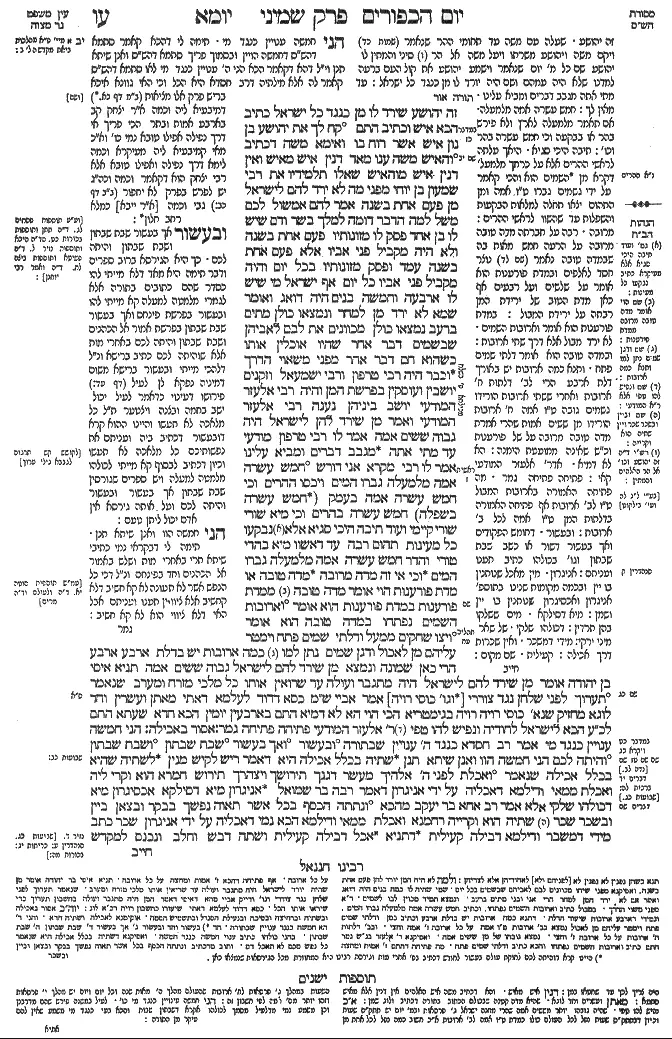
Yoma 76a - Guemara
זה יהושע שירד לו מן כנגד כל ישראל כתיב הכא איש וכתיב התם (במדבר כז, יח) קח לך את יהושע בן נון איש אשר רוח בו ואימא משה דכתיב (במדבר יב, ג) והאיש משה ענו מאד דנין איש מאיש ואין דנין איש מוהאיש שאלו תלמידיו את רבי שמעון בן יוחי מפני מה לא ירד להם לישראל מן פעם אחת בשנה אמר להם אמשול לכם משל למה הדבר דומה למלך בשר ודם שיש לו בן אחד פסק לו מזונותיו פעם אחת בשנה ולא היה מקביל פני אביו אלא פעם אחת בשנה עמד ופסק מזונותיו בכל יום והיה מקביל פני אביו כל יום אף ישראל מי שיש לו ארבעה וחמשה בנים היה דואג ואומר שמא לא ירד מן למחר ונמצאו כולן מתים ברעב נמצאו כולן מכוונים את לבם לאביהן שבשמים דבר אחר שהיו אוכלין אותו כשהוא חם דבר אחר מפני משאוי הדרך וכבר היה רבי טרפון ורבי ישמעאל וזקנים יושבין ועוסקין בפרשת המן והיה רבי אלעזר המודעי יושב ביניהן נענה רבי אלעזר המודעי ואמר מן שירד להן לישראל היה גבוה ששים אמה אמר לו רבי טרפון מודעי עד מתי אתה מגבב דברים ומביא עלינו אמר לו רבי מקרא אני דורש (בראשית ז, כ) חמש עשרה אמה מלמעלה גברו המים ויכסו ההרים וכי חמש עשרה אמה בעמק (חמש עשרה בשפלה) חמש עשרה בהרים וכי מיא שורי שורי קיימי ועוד תיבה היכי סגיא אלא נבקעו כל מעינות תהום רבה עד דאשוו מיא בהדי טורי והדר חמש עשרה אמה מלמעלה גברו המים וכי אי זה מדה מרובה מדה טובה או מדת פורענות הוי אומר מדה טובה ממדת פורענות במדת פורענות הוא אומר (בראשית ז, יא) וארובות השמים נפתחו במדה טובה הוא אומר (תהלים עח, כג) ויצו שחקים ממעל ודלתי שמים פתח וימטר עליהם מן לאכול ודגן שמים נתן למו כמה ארובות יש בדלת ארבע ארבע הרי כאן שמונה ונמצא מן שירד להם לישראל גבוה ששים אמה תניא איסי בן יהודה אומר מן שירד להם לישראל היה מתגבר ועולה עד שרואין אותו כל מלכי מזרח ומערב שנאמר (תהלים כג, ה) תערוך לפני שלחן נגד צוררי [וגו' כוסי רויה] אמר אביי ש"מ כסא דדוד לעלמא דאתי מאתן ועשרין וחד לוגא מחזיק שנא' כוסי רויה רויה בגימטריא הכי הוי הא לא דמיא התם בארבעין יומין הכא חדא שעתא התם לכ"ע הכא לישראל לחודיה ונפיש להו טפי ר' אלעזר המודעי פתיחה פתיחה גמר אסור באכילה הני חמשה ענויין כנגד מי אמר רב חסדא כנגד ה' ענויין שבתורה (במדבר כט, ז) ובעשור (ויקרא כג, כז) ואך בעשור (ויקרא כג, ג) שבת שבתון (ויקרא טז, לא) ושבת שבתון (ויקרא טז, כט) והיתה לכם הני חמשה הוו ואנן שיתא תנן שתיה בכלל אכילה היא דאמר ריש לקיש מנין לשתיה שהיא בכלל אכילה שנאמר (דברים יד, כג) ואכלת לפני ה' אלהיך מעשר דגנך תירושך ויצהרך תירוש חמרא הוא וקרי ליה ואכלת ממאי ודילמא דאכליה על ידי אניגרון דאמר רבה בר שמואל אניגרון מיא דסילקא אכסיגרון מיא דכולהו שלקי אלא אמר רב אחא בר יעקב מהכא (דברים יד, כו) ונתתה הכסף בכל אשר תאוה נפשך בבקר ובצאן ביין ובשכר שכר שתיה הוא וקרייה רחמנא ואכלת ממאי ודילמא הכא נמי דאכליה על ידי אניגרון שכר כתב מידי דמשכר ודילמא דבילה קעילית דתניא אכל דבילה קעילית ושתה דבש וחלב ונכנס למקדש
Comments from Rashi on Masechet Yoma Page 76a
זה יהושע . שעלה עם משה עד תחומי ההר שנאמר (שמות כד) ויקם משה ויהושע משרתו ויעל משה אל הר סיני והמתין לו יהושע שם כל מ' יום שנאמר וישמע יהושע את קול העם ברעה למדנו שלא היה עמהם ושם היה יורד לו מן כנגד כל ישראל: עד מתי אתה מגבב דברים ומביא עלינו . מאין לך: חמש עשרה אמה מלמעלה . אם תאמר מלמעלה לארץ ולא פירש בהר או בבקעה וכי חמש עשרה בהר וכו': תיבה היכי סגיא . היאך עלתה לראשי ההרים אלא על כרחך מלמעל' דקרא מן השמים הוא והכי קאמר על ידי גשמים גברו ט"ו אמה ומן התהום יצאו תחלה למלאות הבקעות והשפלות עד שהשוו לראשי ההרים: מרובה . רבה על חברתה מדה טובה מרובה על הרעה חמש מאות בה שבמדה טובה נאמר (שם לד) נוצר חסד לאלפים ובמדת פורענות הוא אומר על שלשים ועל רבעים אף כאן מדת הטוב של ירידת המן רבתה על ירידת המבול: במדת פורענות הוא אומר וארובות השמים .לא ירד מבול אלא דרך שתי ארובות: ובמדה טובה הוא אומר דלתי שמים פתח . ותנא כמה ארובות יש באורך דלת ארבע הרי לב' דלתות ח' ארובות ואחרי ששתי ארובות הורידו גשמים גובה ט"ו אמה ח' ארובות הורידו מן ששים אמות שהרי אמרת מדה טובה מרובה על של פורענות וכ"ש שאינה ממועטת הימנה: הא לא דמיא . אדר' אלעזר המודעי קאי: פתיחה פתיחה גמר . מה פתיחה האמורה בארובות המבול ט"ו לב' ארובות אף פתיחה האמורה בדלתות המן ט"ו אמה לכל ב' ארובות: ובעשור . דחומש הפקודים ואך בעשור דשור או כשב שבת שבתון וגו' בכולהו כתיב תענו ועניתם: אניגרון . מין מאכל שנותנין בו יין ובכמה מקומות שנינו בתוספ' אניגרון ואכסיגרון שנותנין בו יין ושמן: מיא דסילקא . מים ששלקו בהן תרדין: דכולהו שלקי . של שאר מיני ירקי: מידי דמשכר . ואין שכרות דרך אכילה: קעילית . שם מקום:
Comments from Tosafot - Yoma 76a
הני חמשה ענויין כנגד מי . תימה לי דהכא קאמר סתמא דהש"ס דחמשה הויין ובסמוך פריך סתמא דהש"ס ואנן שיתא תנן וי"ל דהא דקאמר הכא הני ה' ענויין כנגד מי לאו סתמא דהש"ס קאמר לה אלא מילתיה דרב חסדא היא הכל וכי האי גוונא איכא בריש פרק אלו מציאות (ב"מ דף כא.) דמיבעיא ליה וכמה א"ר יצחק קב בארבע אמות ובתר הכי פריך אי דרך נפילה אפילו טובא נמי כו' וא"כ מאי קמיבעיא ליה מעיקרא וכמה לימא דרך נפילה ואפילו טובא אלא רבי יצחק הוא דקאמר וכמה וכה"ג יש לפרש בפרק לא יחפור (ב"ב דף בב:) גבי וכמה [א"ר ייבא] כמלא רחב חלון: ובעשור אך בעשור שבת שבתון ושבת שבתון והיתה לכם . כך היא הגירסא ברוב ספרים ודבר תימה היא מאד דלא מייתי להו כסדר שהם כתובים בתורה אלא לגמרי מלמטה למעלה קא מייתי להו ובעשור בפרשת פינחס ואך בעשור שבת שבתון בפרשת אמור אל הכהנים ושבת שבתון והיתה לכם באחרי מות אלא שוהיתה לכם כתיב ברישא ונ"ל דלהכי מייתי ובעשור ברישא משום דמיניה נפקא לן לעיל (יומא דף עד:) פירושו דעינוי כדאמר לעיל יכול ישב בחמה ובצנה ויצטער ת"ל כל מלאכה לא תעשו והיינו ההוא קרא דובעשור דכתיב ביה ועניתם את נפשותיכם כל מלאכה לא תעשו וכיון דכתיב לבסוף קא מייתי לכולהו מלמטה למעלה ויש ספרים שגורסין שבת שבתון אך בעשור ובעשור והיתה לכם ועל אותה גירסא אין אדם יכול ליתן טעם: הני חמשה הוו ואנן שיתא תנן . תימה לי דבקראי נמי כתיבי שיתא תרי באחרי מות ושלש באמור אל הכהנים וחד בפינחס ונ"ל דכי כל הנפש אשר לא תעונה לא קא חשיב דלא קחשיב אלא ציוויין תענו ועניתם אבל האי דלא ציווי הוא לא קא חשיב:
Yoma 76a - Mishnah translated into english
the verse is referring to Joshua, for whom manna fell corresponding to all the rest of the Jewish people, when he waited for Moses at Mount Sinai during the forty days Moses was on the mountain. The verses allude to this: “Man” is written here, and “man” is written there: “Take to you Joshua, the son of Nun, a man in whom there is spirit, and lay your hand upon him” (Numbers 27:18). From here, the Gemara learns that the “man” is Joshua. The Gemara asks: Say that the verse is referring to Moses, about whom it is written: “Now the man Moses was very humble” (Numbers 12:3). The Gemara answers: We can learn a verbal analogy to the word “man” from the word “man,” but we cannot learn a verbal analogy to the word “man” from the phrase “the man,” which is used to refer to Moses.
Furthermore, with regard to the manna: The students of Rabbi Shimon ben Yoḥai asked him: Why didn’t the manna fall for the Jewish people just once a year to take care of all their needs, instead of coming down every day? He said to them: I will give you a parable: To what does this matter compare? To a king of flesh and blood who has only one son. He granted him an allowance for food once a year and the son greeted his father only once a year, when it was time for him to receive his allowance. So he arose and granted him his food every day, and his son visited him every day.
So too, in the case of the Jewish people, someone who had four or five children would be worried and say: Perhaps the manna will not fall tomorrow and we will all die of starvation. Consequently, everyone directed their hearts to their Father in heaven every day. The manna that fell each day was sufficient only for that day, so that all of the Jewish people would pray to God for food for the next day.
Alternatively, they received manna daily so that they would be able to eat it while it was hot and fresh. Alternatively, they received manna daily due to the hardship of carrying on the journey. They did not stay in the same place all those years, and it would have been difficult for them to carry the manna from one place to another. Therefore, the manna fell wherever they went.
§ It is told: Rabbi Tarfon, and Rabbi Yishmael, and the Elders were sitting and discussing the passage about the manna and Rabbi Elazar HaModa’i was sitting among them. Rabbi Elazar HaModa’i responded and said: The manna that fell for the Jewish people was sixty cubits high. Rabbi Tarfon said to him: Moda’i, how long will you collect words and bring upon us teachings that have no basis?
He said to him: Rabbi, I am interpreting a verse. How so? It states about the Flood: “Fifteen cubits above did the waters prevail; and the mountains were covered” (Genesis 7:20). Is it possible that it would be fifteen cubits high from a valley, fifteen cubits from the plain, and fifteen cubits from the mountains? Did the water stand as though in layers, conforming to the height of the land below it? Furthermore, how could the Ark travel over water that was at different levels? Rather: “On the same day were all the fountains of the great deep broken up” (Genesis 7:11), until the water rose and was level with the mountains. Afterward, the verse states that “fifteen cubits above did the waters prevail.”
Rabbi Elazar HaModa’i continues: But which attribute is greater, the attribute of goodness or the attribute of retribution? One must say the attribute of goodness is greater than the attribute of retribution. With regard to the attribute of retribution, in the case of the Flood, the verse states: “And the windows of heaven were opened” (Genesis 7:11), which indicates that there were only windows. Whereas, with regard to the attribute of goodness, in the case of the manna, the verse states: “He commanded the skies above, and opened the doors of heaven, and rained down manna upon them to eat and gave them heavenly grain” (Psalms 78:23–24).
Based on this, the Gemara calculates: The area of how many windows are in a door? Four. A door is equivalent to four windows in size. One adds another four for the second door, as the verse uses the plural “doors,” which implies that there were two doors. This equals the area of eight windows. If the depth of water in the Flood is based on the phrase “windows of heaven,” implying two windows, then the manna fell at a rate four times that of the water of the Flood. Since the water of the Flood reached a depth of fifteen cubits, it turns out that the manna that fell for the Jewish people was sixty cubits high, i.e., four times as high.
Similarly, it was taught in a baraita that Isi ben Yehuda said: The manna that fell for the Jewish people would accumulate and ascend until all the kings of the East and West could see it, as it is stated: “You prepared a table before me in the presence of my enemies; you anointed my head with oil; my cup runs over” (Psalms 23:5). God prepared food for the Jewish people, so that their enemies would see their greatness over the world. “My cup runs over [revaya]”; Abaye said: We learn from this that the cup of David in the next world holds 221 log, since it is stated: “My cup runs over,” and the word revaya has that numerical value.
The Gemara asks how Rabbi Elazar HaModa’i can compare the depth of the Flood waters with the amount of manna that fell in the desert: This is not similar, and the calculation is inaccurate. There, in the case of the Flood, the water rose fifteen cubits in forty days; but here, in the case of the manna, it took only one hour every day to fall. Conversely, there the Flood was for everyone and covered the whole world; whereas here the manna was for the Jewish people alone. And there would be much more manna for them than sixty cubits, which is the measurement put forth by Rabbi Elazar HaModa’i. The Gemara answers: Rabbi Elazar HaModa’i derived “opening” in the verse: “He commanded the skies above, and opened the doors of heaven” (Psalms 78:23), from “opening” in the verse: “And the windows of heaven were opened” (Genesis 7:11). He used a verbal analogy that teaches that the skies opened in both instances in the same way.
§ The mishna taught that as per the five prohibited activities on Yom Kippur it is prohibited to engage in eating and in drinking, and in bathing, and in smearing the body with oil, and in wearing shoes, and in conjugal relations. The Gemara asks: These five afflictions of Yom Kippur, to what do they correspond? Where is the Torah source or allusion to them? Rav Ḥisda said: They are based on the five times that the afflictions of Yom Kippur are mentioned in the Torah. It is stated: (1) “And on the tenth of this seventh month you shall have a holy convocation, and you shall afflict your souls” (Numbers 29:7); (2) “But on the tenth of this seventh month is the day of atonement, it shall be a holy convocation for you and you shall afflict your souls” (Leviticus 23:27); (3) “It shall be for you a Shabbat of solemn rest, and you shall afflict your souls (Leviticus 23:32); (4) “It is a Shabbat of solemn rest [shabbaton] for you, and you shall afflict your souls” (Leviticus 16:31); (5) “And it shall be a statute for you forever, in the seventh month on the tenth of the month, you shall afflict your souls” (Leviticus 16:29).
The Gemara asks: Are these five the only afflictions? We learn in the mishna that there are six: Eating, drinking, bathing, smearing oil, conjugal relations, and wearing shoes. The Gemara answers: Drinking is included in the prohibition of eating; both together are considered a single affliction. As Reish Lakish said: From where do we derive that drinking is included in the concept of eating? As it is stated: “And you shall eat before the Lord your God, in the place where He shall choose to cause His name to dwell there, the tithe of your grain, of your wine [tirosh], and of your oil” (Deuteronomy 14:23). Tirosh is wine, yet the verse calls the drinking of wine eating with the phrase “and you shall eat,” meaning that eating also refers to drinking.
The Gemara rejects this answer: From where do you draw this conclusion? Perhaps the wine was eaten as anigron, a sauce made of oil, beet juice, and garum mixed with wine. As Rabba bar Shmuel said: Anigron is beet juice and wine mixed together. Akhsigron is water that comes from boiled vegetables that have wine mixed into them. The vegetables are mixed with the wine and eaten. It is possible for wine to literally be eaten. Therefore, the verse does not prove that drinking is included in eating.
Rather, Rav Aḥa bar Ya’akov said: From here there is a proof as the verse states: “And you shall spend that money on all that your soul desires, on oxen, or on sheep, or on wine, or on strong drink [sheikhar] or whatever your soul desires, and you shall eat” (Deuteronomy 14:26). Strong drink is a drink, but the Merciful One calls its consumption eating, in the phrase “and you shall eat.”
The Gemara rejects this proof: From where do you draw this conclusion? Perhaps here too it was eaten as anigron? The Gemara rejects this: Here that answer is insufficient because the verse writes “strong drink [sheikhar],” meaning something that intoxicates. Beverages that generally intoxicate do not do so when they are in a mixture. The Gemara asks: Perhaps sheikhar does not refer to wine but to a food that causes intoxication, such as a sweet dried fig from Keilah. As it was taught in a baraita: A priest who ate a sweet dried fig from Keilah or drank honey or milk, thereby becoming intoxicated, and entered the Temple to serve
Traduction : The William Davidson digital edition of the Koren Noé Talmud, with commentary by Rabbi Adin Even-Israel Steinsaltz.