 Talmud Bavli
The learning on the whole site is dedicated : L'ilui Nishmat Margalit bat Ledicia
The learning on the whole site is dedicated : For the success of Elyahou ben H'anna & family
The learning on the whole site is dedicated : L'ilui Nishmat רינה בת לדיסיה
Yoma 41a : Youtube
Daf TubeYoutube
3 video classes :
Yoma Page 41a
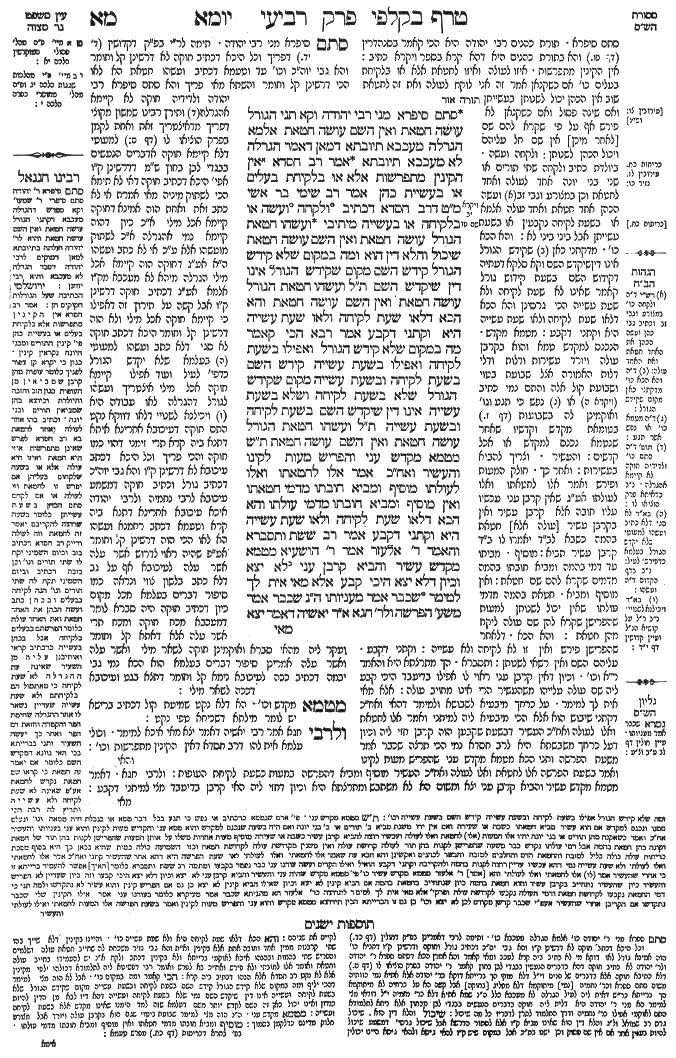
Yoma 41a - Guemara
סתם סיפרא מני רבי יהודה וקא תני הגורל עושה חטאת ואין השם עושה חטאת אלמא הגרלה מעכבא תיובתא דמאן דאמר הגרלה לא מעכבא תיובתא אמר רב חסדא אין הקינין מתפרשות אלא או בלקיחת בעלים או בעשיית כהן אמר רב שימי בר אשי מ"ט דרב חסדא דכתיב (ויקרא יב, ח) ולקחה (ויקרא טו, טו) ועשה או בלקיחה או בעשייה מיתיבי ועשהו חטאת הגורל עושה חטאת ואין השם עושה חטאת שיכול והלא דין הוא ומה במקום שלא קידש הגורל קידש השם מקום שקידש הגורל אינו דין שיקדש השם ת"ל ועשהו חטאת הגורל עושה חטאת ואין השם עושה חטאת והא הכא דלאו שעת לקיחה ולאו שעת עשייה היא וקתני דקבע אמר רבא הכי קאמר מה במקום שלא קידש הגורל ואפילו בשעת לקיחה ואפילו בשעת עשייה קידש השם בשעת לקיחה ובשעת עשייה מקום שקידש הגורל שלא בשעת לקיחה ושלא בשעת עשייה אינו דין שיקדש השם בשעת לקיחה ובשעת עשייה ת"ל ועשהו חטאת הגורל עושה חטאת ואין השם עושה חטאת ת"ש מטמא מקדש עני והפריש מעות לקינו והעשיר ואח"כ אמר אלו לחטאתו ואלו לעולתו מוסיף ומביא חובתו מדמי חטאתו ואין מוסיף ומביא חובתו מדמי עולתו והא הכא דלאו שעת לקיחה ולאו שעת עשייה היא וקתני דקבע אמר רב ששת ותסברא והאמר ר' אלעזר אמר ר' הושעיא מטמא מקדש עשיר והביא קרבן עני לא יצא וכיון דלא יצא היכי קבע אלא מאי אית לך למימר שכבר אמר מעניותו ה"נ שכבר אמר משע' הפרשה ולר' חגא א"ר יאשיה דאמר יצא
Comments from Rashi on Masechet Yoma Page 41a
סתם סיפרא . תורת כהנים רבי יהודה היא הכי קאמר בסנהדרין (דף פו.) והא בתורת כהנים היא דהא קרא בספר ויקרא כתיב: אין הקינין מתפרשות . איזו לעולה ואיזו לחטאת אלא או בלקיחת בעלים כו' אם כשקנאן אמר זה אני לוקח לעולה ואת זה לחטאת שוב אין הכהן יכול לשנותן בעשייתן ואם שינה פסול ואם כשקנאן לא פירש אף על פי שקרא להם שם [לאחר מיכן] אין שם חל עליהם ויכול הכהן לשנותן: ולקחה ועשה . ביולדת כתיב ולקחה שתי תורים או שני בני יונה אחד לעולה ואחד לחטאת וכן במצורע וגבי זב ועשה הכהן אחד חטאת ואחד עולה אלמא או בשעת לקיחה נקבעין או בשעת עשייתן אבל ביני ביני לא: והא הכא כו' . מדקתני כאן שקידש הגורל אינו דין שיקדש השם וקא סלקא דעתיה דקידוש השם בשעת קידוש גורל קאמר שאינו לא שעת לקיחה ולא שעת עשייה הכי גרסינן והא הכא דלאו שעת לקיחה ולאו שעת עשייה היא וקתני דקבע: מטמא מקדש . הנכנס למקדש טמא והוא בקרבן עולה ויורד עשירות ודלות ודלי דלות האמורה אצל שבועת בטוי ושבועת קול אלה והתם נמי כתיב (ויקרא ה) או נפש כי תגע וגו' ואוקמינן לה בשבועות (דף ז.) בטומאת מקדש וקדשיו שאחר שנטמא נכנס למקדש או אכל קדשים: והעשיר . וצריך להביא בעשירות: ואחר כך . חולק המעות ופירש ואמר אלו לחטאתו ואלו לעולתו אע"ג שאין קרבן עני עכשיו עליו חובה אלא קרבן עשיר ואין בקרבן עשיר [עולה אלא] חטאת בהמה כשבא לב"ד יאמרו לו ב"ד קרבן עשיר תביא: מוסיף . מביתו עד דמי בהמה ומביא חובתו בהמה מדמים שקרא להם שם חטאת: ואין מוסיף ומביא . חטאת בהמה מדמי עולתו שאין יכול לשנותן למעות שהפרישן שקרא להן שם עולה ליקח מהן חטאת: והא הכא . דלאחר שהפרישן פירש ואין זו לא לקיחה ולא עשייה: וקתני דקבע . עליהם השם ואין רשאי לשנותן: ותסברא . הך מתרצתא היא והאמר ר"א וכו'. וכיון דאין קרבן עני ראוי לו אפילו בדיעבד היכי קבע ליה שם עולה עלייהו משהעשיר הרי אינו מחויב עולה: אלא מאי אית לך למימר . על כרחך מיבעיא לשבושא ולמימר דהאי ואח"כ דקתני שיבוש הוא אלא הכי מיבעיא ליה למיתני ואמר אלו לחטאת ואלו לעולה ואח"כ העשיר דבשעת שקבען הוה קרבן חזי ליה וכיון דעל כרחך משבשתא היא לרב חסדא נמי הכי תרצה שכבר אמר משעת הפרשה ותני הכא מטמא מקדש עני שהפריש מעות לקינו ואמר בשעת הפרשה אלו לחטאת ואלו לעולה ואח"כ העשיר מוסיף ומביא דהפרשה במעות כשעת לקיחת העופות: ולרבי חגא . דאמר מטמא מקדש עשיר והביא קרבן עני יצא ומשום הא לא משתבש ומתרצתא היא וכיון דחזי ליה האי קרבן בדיעבד מצי למיתני דקבע:
Comments from Tosafot - Yoma 41a
סתם סיפרא מני רבי יהודה . תימה לר"י בפ"ק דקדושין (ד' יד.) דפריך וכל היכא דכתיב חוקה לא דרשינן קל וחומר והא גבי יוה"כ וכו' עד וטעמא דכתיב ועשהו חטאת הא לאו הכי דרשינן קל וחומר והשתא מאי פריך והא סתם סיפרא רבי יהודה ולדידיה חוקה לא קיימא אהגרלה ותירץ רבינו שמשון מקוצי דפריך מדאיצטריך זאת ואחת לקמן בפרק הוציאו לו (יומא דף ס:) למעוטי דלא קיימא חוקה אדברים הנעשים בבגדי לבן בחוץ ש"מ דדרשינן ק"ו אפי' היכא דכתיב חוקה דאי לא תימא הכי לשתוק מיניה מאי אמרת אי לא כתב זאת ואחת הוה אמינא דחוקה קיימא אכל מילי א"כ כיון דהוה קיימא נמי אהגרלה א"כ לשתוק מועשהו אלא ע"כ אי לא כתב ועשהו ה"א אע"ג דחוקה הוה קיימא אכל מילי הגרלה מיהא לא מעכבא מק"ו אלמא אע"ג דכתיב חוקה דרשינן ק"ו אבל קשה על תירוץ זה דאפילו כי קיימא חוקה אכל מילי ולא הוה דרשינן קל וחומר היכא דכתב חוקה לא סגי דלא כתב ועשהו למעוטי בעלמא שלא יקדש הגורל כדפי' לעיל ועוד אפילו קיימא חוקה אכל מילי איצטריך ועשהו לגורל דהגרלה לאו עבודה היא ויכילנא לשנויי דלאו דווקא נקט התם חוקה דעיכובא אחרינא איתא דתנא ביה קרא תרי זימני דהוי כמו חוקה והכי פריך וכל היכא דכתב עיכובא לא דרשינן ק"ו והא גבי יוה"כ דכתיב גורל וכתיב חוקה דמשמע עיכובא לרבי נחמיה ולרבי יהודה איכא עיכובא אחרינא דתנא ביה קרא וטעמא דכתב רחמנא ועשהו הא לאו הכי הוה דרשינן קל וחומר אע"פ שהיה ראוי לדרוש אשר עלה אשר עלה לעיכובא אף על גב דלא כתב בלשון צווי ונראה כמו סיפור דברים בעלמא מכל מקום כיון דכתיב חוקה היה סברא לומר דמעכבא מכח חוקה ומכח תרי אשר עלה אלא דאתא קל וחומר ועקר ליה מהאי סברא ואוקמינן חוקה לשאר מילי ואשר עלה ואשר עלה אמרינן סיפור דברים בעלמא הוא הכא נמי גבי יבמה דכתיב ככה לעיכובא נימא קל וחומר דתצא בגט ועיכובא דככה לשאר מילי: מטמא מקדש וכו' . הא דלא נקט שמיעת קול דכתיב ברישא יש לומר מילתא דשכיחא טפי נקט: ולרבי חגא אמר רבי יאשיה דאמר יצא מאי איכא למימר . וכולי עלמא אית להו דרב חסדא דאין הקינין מתפרשות וכו':
Yoma 41a - Mishnah translated into english
The Gemara now formulates the proof: Who is the author of anonymous halakhic statements made in the Sifra? Rabbi Yehuda. And this baraita from the Sifra teaches: The lottery makes it a sin-offering, but verbally designating the goat with the status of a sin-offering does not make it a sin-offering. Apparently, according to Rabbi Yehuda, the lottery is indispensable. This refutation of the opinion of the one who says that the lottery is not indispensable, i.e., Rabbi Yannai, according to the second version of his dispute, is indeed a conclusive refutation.
§ The Gemara addresses a similar case of designating offerings: Rav Ḥisda said: Nests, a pair of birds of which one bird must be sacrificed as a sin-offering and the other as a burnt-offering become designated for the specific type of offering only at one of two distinct points: Either upon the owner’s taking of them, when he initially purchases and consecrates them for his offering, or upon the priest’s actual performance of the sacrificial rite upon them.
Rav Shimi bar Ashi said: What is the reason of Rav Ḥisda? As it is written in one verse: “And she shall take two turtledoves or two young pigeons, the one for a burnt-offering and the other for a sin-offering” (Leviticus 12:8). In another verse, it is also written: “And the priest shall offer them, the one for a sin-offering and the other for a burnt-offering” (Leviticus 15:15). The verses mention only the possibility of designating the offering either upon taking them or upon the performance of the sacrificial rite.
The Gemara raises an objection to Rav Ḥisda’s ruling from the baraita cited above: The verse states, with regard to the goat of Yom Kippur: “And Aaron shall…offer it for a sin-offering” (Leviticus 16:9). This indicates that the lottery makes it a sin-offering, but verbally designating the goat with the status of a sin-offering does not make it a sin-offering.
A verse is needed to teach this halakha, as I might have come to the opposite conclusion: Is there not an a fortiori inference: Just as in a case in which the use of a lottery does not consecrate the animals with a specific designation, nevertheless verbally designating the animals with the required status does consecrate them, so too, in a case in which the use of a lottery does consecrate the animals, is it not logically right that verbally designating the animals with the required status should consecrate them?
To counter this reasoning, the verse states: “He shall make it a sin-offering” to indicate that the lottery makes it a sin-offering, but verbally designating the goat with the status of a sin-offering does not make it a sin-offering.
The Gemara explains the challenge to Rav Ḥisda’s ruling: But here, in the case of designating the goats, the baraita is focusing on the moment at which the lottery is held, which is neither the time of taking the goats nor the time of performing the sacrificial rite. Yet the baraita teaches that were it not for a verse that teaches otherwise, it would be possible to permanently establish the animals’ designation through a verbal designation at that time. This contradicts Rav Ḥisda’s ruling.
The Gemara rejects the challenge: Rava said: The baraita does not contradict Rav Ḥisda’s ruling. This is what the baraita is saying: Just as in a case in which the use of a lottery does not consecrate the animals with a specific designation, even if it is held at the time of taking the animals or at the time of performing the sacrificial rite, nevertheless verbally designating the animals with the required status does consecrate them if that is done at the time of taking the animals or at the time of performing the sacrificial rite; so too, in a case in which the use of a lottery does consecrate the animals, although it is held neither at the time of taking the animals nor at the time of performing the sacrificial rite, is it not logically right that verbally designating the animals with the required status should consecrate them, if it is done at the time of taking the animals or at the time of performing the sacrificial rite?
To counter this reasoning, the verse states: “He shall make it a sin-offering” to indicate that the lottery makes it a sin-offering, but verbally designating the goat with the status of a sin-offering does not make it a sin-offering. Rava has thereby explained the reasoning of the baraita in accordance with Rav Ḥisda’s ruling.
Come and hear another challenge to Rav Ḥisda’s ruling: One who inadvertently enters the Temple while ritually impure is required to bring a sliding-scale offering to achieve atonement. This offering is unique in that the specific offering one is required to bring depends upon his financial situation. With regard to this offering, a baraita teaches about the case of a poor person who ritually impurified the Temple, i.e., entered the Temple while ritually impure; and he set aside money for his nests, his bird pair, as he is required, as a poor person, to bring one bird as a sin-offering and one bird as a burnt-offering for atonement; and then he became wealthy, and he is consequently required to bring an animal sin-offering; and afterward, unaware of the halakha that he is no longer required to bring a bird pair, he separates his money into two portions and said that these coins are for his sin-offering and those coins are for his burnt-offering.
Then, in such a case, he adds more money and brings his obligation of an animal sin-offering from the money set aside for his sin-offering, but he may not add more money and bring his obligation of an animal offering from the money set aside for his burnt-offering.
The Gemara explains the challenge to Rav Ḥisda’s ruling: But here, in the case of designating the money, the baraita is focusing on a moment which is neither the time of taking the money nor the time of performing the sacrificial rite with the birds. And yet the baraita teaches that through a verbal designation one can permanently establish the status of the money, as is apparent from the fact that the money set aside for the burnt-offering may not be used toward the sin-offering. This contradicts Rav Ḥisda’s ruling.
Rav Sheshet said: But how can you understand the baraita that way? Didn’t Rabbi Elazar say that Rabbi Hoshaya said: A wealthy person who ritually impurifies the Temple and brings the offering that a poor person is required to bring does not fulfill his obligation. Since he does not and cannot fulfill his obligation with that offering, how can that designation permanently establish the status of the money?
Rather, what have you to say in order for the baraita to make sense? That he had already said his designation of the money while in his impoverished state. Here also, in order for the baraita not to contradict Rav Ḥisda’s ruling, it may be explained in a similar vein, that he had already said at the time of taking and setting aside his money, which monies were for his sin-offering and which were for his burnt-offering.
The Gemara asks: But according to Rabbi Ḥaga, who said that Rabbi Yoshiya said that a wealthy person who brings the offering that a poor person is required to bring does fulfill his obligation,
Traduction : The William Davidson digital edition of the Koren Noé Talmud, with commentary by Rabbi Adin Even-Israel Steinsaltz.