 Talmud Bavli
The learning on the whole site is dedicated : L'ilui Nishmat Avraham Ben Simha
The learning on the whole site is dedicated : L'ilui Nishmat אסתר בת חיים
The learning on the whole site is dedicated : L'ilui Nishmat Ledicia bat David Banoun
Yoma 43a : Youtube
Daf TubeYoutube
3 video classes :
Yoma Page 43a
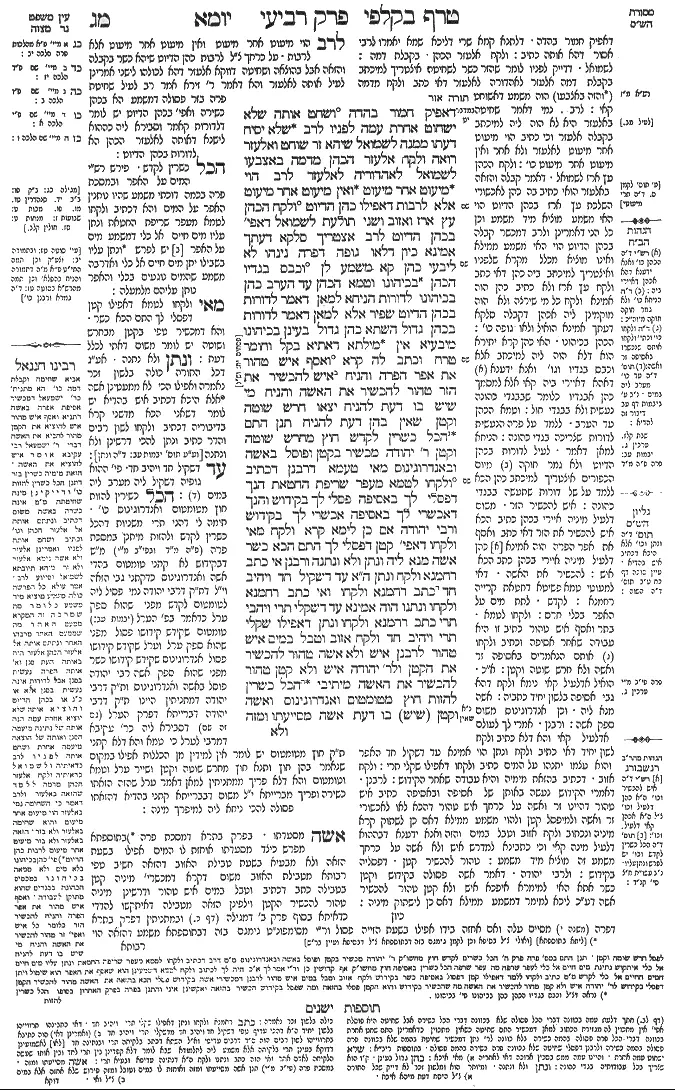
Yoma 43a - Guemara
דאפיק חמור בהדה (במדבר יט, ג) ושחט אותה שלא ישחוט אחרת עמה לפניו לרב שלא יסיח דעתו ממנה לשמואל שיהא זר שוחט ואלעזר רואה ולקח אלעזר הכהן מדמה באצבעו לשמואל לאהדוריה לאלעזר לרב הוי מיעוט אחר מיעוט ואין מיעוט אחר מיעוט אלא לרבות דאפילו כהן הדיוט (במדבר יט, ו) ולקח הכהן עץ ארז ואזוב ושני תולעת לשמואל דאפי' בכהן הדיוט לרב אצטריך סלקא דעתך אמינא כיון דלאו גופה דפרה נינהו לא ליבעי כהן קא משמע לן (במדבר יט, ז) וכבס בגדיו הכהן בכיהונו וטמא הכהן עד הערב כהן בכיהונו לדורות הניחא למאן דאמר לדורות בכהן הדיוט שפיר אלא למאן דאמר לדורות בכהן גדול השתא כהן גדול בעינן בכיהונו מיבעיא אין מילתא דאתיא בקל וחומר טרח וכתב לה קרא (במדבר יט, ט) ואסף איש טהור את אפר הפרה והניח איש להכשיר את הזר טהור להכשיר את האשה והניח מי שיש בו דעת להניח יצאו חרש שוטה וקטן שאין בהן דעת להניח תנן התם הכל כשרין לקדש חוץ מחרש שוטה וקטן ר' יהודה מכשיר בקטן ופוסל באשה ובאנדרוגינוס מאי טעמא דרבנן דכתיב (במדבר יט, יז) ולקחו לטמא מעפר שריפת החטאת הנך דפסלי לך באסיפה פסלי לך בקידוש והנך דאכשרי לך באסיפה אכשרי לך בקידוש ורבי יהודה אם כן לימא קרא ולקח מאי ולקחו דאפי' קטן דפסלי לך התם הכא כשר אשה מנא ליה ונתן ולא ונתנה ורבנן אי כתב רחמנא ולקח ונתן ה"א עד דשקיל חד ויהיב חד כתב רחמנא ולקחו ואי כתב רחמנא ולקחו ונתנו הוה אמינא עד דשקלי תרי ויהבי תרי כתב רחמנא ולקחו ונתן דאפילו שקלי תרי ויהיב חד ולקח אזוב וטבל במים איש טהור לרבנן איש ולא אשה טהור להכשיר את הקטן ולר' יהודה איש ולא קטן טהור להכשיר את האשה מיתיבי הכל כשרין להזות חוץ מטומטום ואנדרוגינוס ואשה וקטן (שיש) בו דעת אשה מסייעתו ומזה
Comments from Rashi on Masechet Yoma Page 43a
דאפיק חמור בהדה . דלתנא קמא שרי דליכא שמא יאמרו לרבי אסור דהא אותה כתיב: ולקח אלעזר הכהן . בקבלת דמה: לשמואל . דדייק לפניו לומר שהזר כשר לשחיטה איצטריך למיכתב בקבלת דמה אלעזר לאהדורה לאלעזר דאי כתב ולקח מדמה (והזה באצבעו) הוה משמע דאשוחט קאי: לרב . נמי דאמר שחיטה באלעזר היא לא הוה ליה למיכתב בקבלה אלעזר וכי כתיב הוי מיעוט אחר מיעוט לאלעזר ולא אחר ואין מיעוט אחר מיעוט כו': ולקח הכהן עץ ארז לשמואל . דאמר קבלה והזאה באלעזר הואי כתיב בה כהן לאכשורי השלכת עץ ארז בכהן הדיוט הוי האי משמע מוציא מיד משמע וכן כל הני דאמרינן ולרב דמכשר קבלה בכהן הדיוט הוי האי משמע ממילא ואינו מוציא מכלל מקרא שלפניו ואיצטריך למיכתב ביה כהן דאי כתב ולקח עץ ארז ולא כתיב כהן הוה אמינא ולקח כל מי שירצה ולא הוה מוקמינן ליה אכהן דקבלה סלקא דעתך אמינא הואיל ולאו גופה כו': הכהן בכיהונו . האי כהן קרא יתירא הוא דלא הוה ליה למיכתב אלא וכבס בגדיו וגו' ואנא ידענא דאהא דאיירי ביה קאי אלא למסמך כהן אבגדיו כלומר שבבגדי כהונה נעשית ולא בבגדי חול: וטמא הכהן עד הערב . ללמד על פרה הנעשית לדורות שצריכה בגדי כהונה: הניחא למאן דאמר . לעיל לדורות בכהן הדיוט ולא גמר חוקה מיום הכפורים איצטריך למיכתב כהן הכא ללמד על של דורות שתעשה בבגדי כהונה: איש להכשיר הזר . משום דלעיל מיניה איירי בכהן כתיב הכא איש להכשיר את הזר דאי כתב ואסף את אפר הפרה הוה אמינא כהן דלעיל מיניה איירי בכהן כתב הכא איש: להכשיר את האשה . דאי למעוטי טמא פשיטא דחטאת קרייה רחמנא: לקדש . לתת מים על האפר בכלי חרס: ולקחו לטמא . בתר ואסף איש טהור כתיב זו היא עבודה שאחר אסיפה וכתיב ולקחו אותם הנאמרים באסיפה זר ואשה ולא חרש שוטה וקטן: א"כ . הואיל אדלעיל קאי נימא ולקח דהא גבי אסיפה בלשון יחיד כתביה: אשה מנא ליה . וכן אנדרוגינוס משום ספק אשה: ורבנן . אמרי לך לעולם אדלעיל קאי והא דלא כתיב ולקח לשון יחיד דאי כתיב ולקח ונתן הוי אמינא עד דשקיל חד האפר והוא עצמו יתנהו על המים כתיב ולקחו דאפילו שקלי תרי: ולקח אזוב . דכתיב בהזאת מימיה והיא עבודה שאחר הקידוש: לרבנן . דאמרי הקידוש נעשה באותן של אסיפה ובאסיפה כתיב איש טהור דהיינו זר ואשה על כרחך איש טהור דהכא לאו לאכשורי זר ואשה ולמיפסל קטן ולהוי משמע ממילא דאם כן לשתוק קרא מיניה ונכתוב ולקח אזוב וטבל במים והזה ואנא ידענא דבההוא דלעיל מינה קאי וכי כתבינא למדרש איש ולא אשה על כרחך משמע זה מוציא מיד משמע: טהור להכשיר קטן . דפסליה בקידוש: ולרבי יהודה . דאמר אשה פסולה בקידוש וקטן כשר אתא האי למימרא איפכא איש ולא קטן טהור להכשיר אשה דע"כ ליכא למימר דמשמע ממילא דאם כן לישתוק מיניה:
Comments from Tosafot - Yoma 43a
לרב הוי מיעוט אחר מיעוט ואין מיעוט אחר מיעוט אלא לרבות . על כרחך צ"ל לרבות כהן הדיוט שיהא כשר בקבלה והזאה אבל בהוצאה ושחיטה דווקא אלעזר דהא לכולהו לישני אמרינן לעיל אותה לאלעזר והא דאמר ר' זירא אמר רב לעיל שחיטת פרה בזר פסולה דמשמע הא בכהן כשירה ואפי' בכהן הדיוט יש לומר דלדורות קאמר וסבירא ליה כההוא לישנא דאותה לאלעזר הכהן הא לדורות בכהן הדיוט: הכל כשרין לקדש . פירש רש"י המים על האפר ובמסכת פרה בכמה דוכתי משמע שהיו נותנין האפר על המים והא דכתיב ולקחו לטמא מעפר שריפת החטאת ונתן עליו מים חיים אל כלי דמשמע מים על האפר [ב] יש לפרש ונתן עליו בשבילו יתן מים חיים אל כלי ואדרבה משמע שהמים נוגעים בכלי והאפר נותן עליהם מלמעלה: מאי ולקחו לטמא דאפילו קטן דפסלי לך התם הכא כשר . והא דמכשיר טפי בקטן מבחרש ושוטה יש לומר משום דאתי לכלל דעת: ונתן ולא נתנה . אע"ג דכל התורה כולה בלשון זכר נאמרה ואפילו הכי לא ממעטינן אשה אלא היכא דכתיב איש בהדיא יש לומר דשאני הכא מדשני קרא בדיבוריה דכתיב ולקחו לשון רבים והדר כתיב ונתן להכי דרשינן ולא ונתנה [וע"ע תוס' יבמות עב: ד"ה ונתן]: עד דשקיל חד ויהיב חד . פי' ההוא גופיה דשקיל ליה מערב ליה במים: הכל כשירין להזות חוץ מטומטום ואנדרוגינוס כו' . תימה לי דהני תרי משניות דהכל כשרין לקדש ולהזות מיתנן במסכת פרה (פ"ה מ"ד ובפי"ב מ"י) מ"ש דבקידוש לא קתני טומטום בהדי אשה ואנדרוגינוס כדקתני גבי הזאה וי"ל דת"ק דרבי יהודה נמי פסיל ליה לטומטום לקדש מפני שהוא ספק ערל כדאמר בפ' הערל (יבמות עב:) טומטום שקידש קידושו פסול מפני שהוא ספק ערל וערל שקידש קידושו פסול אנדרוגינוס שקידש קידושו כשר מפני שהוא ספק אשה רבי יהודה פוסל באשה ואנדרוגינוס ות"ק דרבי יהודה דמתניתין היינו ת"ק דרבי יהודה דברייתא דפרק הערל (גם זה שם) דסבירא ליה כר' עקיבא דמרבי לערל כי טמא והא דלא קתני ת"ק חוץ מטומטום יש לומר אין למידין מן הכללות אפילו במקום שנאמר בהן חוץ ותנא חוץ מחרש שוטה וקטן ושייר ערל וטמא וטומטום והא דלא פריך ממתניתין למאן דאמר ערל שהזה הזאתו . כשירה ופריך מברייתא י"ל משום דבברייתא קתני בהדיא דהזאתו פסולה להכי ניחא ליה למיפרך מינה: אשה מסעדתו . בפרק בתרא דמסכת פרה בתוספתא מפרש כיצד מסעדתו אוחזת לו המים אפילו בשעת הזאה ולא מבעיא בשעת טבילת האזוב הזאה חשיב טפי רבותא מטבילת האזוב משום דקרא דמכשרי' מיניה קטן בטבילה כתב דכתיב וטבל במים איש טהור ודרשינן מיניה טהור להכשיר הקטן וילפינן הזאה מטבילה דאיתקשו להדדי כדאיתא בסוף פרק ב' דמגילה (דף כ.) ובמתניתין דפרק בתרא דפרה (משנה י) מסיים עלה ואם אחזה בידו אפילו בשעת הזייה פסול ור"י מסימפונ"ט גימגם בזה דבתוספתא משמע דהזאה הוי רבותא טפי להכשיר ואם כן במתניתין גבי פסול הוה ליה למיתני אפי' בשעת טבילה ונראה לי דלא קשיא דהא דפסלינן היכא דהאשה אחזה בידו היינו משום דהוי כאילו האשה עשתה אותו והא ודאי הוי פשוט טפי לפסול אשה בטבילה מבהזאה דקרא דממעטינן מיניה אשה בטבילה כתיב ולגבי הכשר קטן הויא רבותא טפי בהזאה משום דקרא דמכשרינן מיניה קטן בטבילה כתיב:
Yoma 43a - Mishnah translated into english
where one took out a donkey with it. According to the first tanna, this would be permitted, since there is no concern that people would think that the wrong cow or cows were slaughtered. However, according to Rabbi Yehuda HaNasi, who maintains that this rationale is irrelevant, even this case would be excluded by the word “it.”
The Gemara expounds the next phrase in the verse: “And he shall slaughter it,” means that “it,” the red heifer, should be slaughtered and that no other should be slaughtered with it. And the next phrase: “Before him”; according to Rav, it means that he should not divert his attention from it. According to Shmuel, it indicates that a non-priest can slaughter it and Elazar the priest observes.
The Gemara proceeds to expound the next verse: “And Elazar the priest shall take some of its blood with his finger” (Numbers 19:4). What is indicated by specifying Elazar? According to Shmuel, since the phrase “before him” in the previous verse indicates that Elazar himself did not need to slaughter the red heifer but that rather a non-priest could, it is necessary in this stage to return it to Elazar, to indicate that he must himself take the blood with his finger. According to Rav, this is an example of a restrictive expression following a restrictive expression, as both verses indicate that the rite may be performed only by a priest. And there is a hermeneutical principle that a restrictive expression following a restrictive expression comes only to amplify the halakha and include additional cases. In this case, it serves to teach that even a common priest may perform the rite.
The Gemara expounds another verse in the same passage: “And the priest shall take cedar wood, and hyssop, and a strip of crimson” (Numbers 19:6). What is indicated by specifying that this is done by the priest? According to Shmuel, who holds that in the previous stage the verse stated: “And Elazar the priest” to indicate that Elazar, i.e., a deputy High Priest, was required to perform that stage, the use of the term “the priest” in this stage indicates that a deputy High Priest is no longer required for this stage; rather, even a common priest may perform this stage. According to Rav, who holds that even in the previous stage a common priest may perform the rite, the term “and the priest” is necessary here, as it could enter your mind to say that since these stages do not involve the heifer itself, they do not require a priest at all. Therefore, the verse teaches us that this is not correct.
The Gemara expounds the next verse: “Then the priest shall wash his clothes” (Numbers 19:7). Why is there a need to restate the involvement of the priest? To teach that he should be in his priestly state, i.e., wearing his priestly garments and fit for service. In the next phrase of the verse, the involvement of the priest is restated: “And the priest shall be impure until evening” (Numbers 19:7). This repetition is to teach that even in future generations the rite is to be performed only by a priest in his priestly state.
The Gemara analyzes this derivation according to the two sides of the dispute the Gemara cited previously: It works out well according to the one who said that for future generations the rite of the red heifer may be performed by a common priest. It is therefore understandable that the verse emphasizes that the priest has to perform the rite in his priestly state. But according to the one who said that for future generations it must be performed by a High Priest, now that we require the High Priest, is it necessary to mention that he must be in his priestly state? Yes, sometimes there is a matter that could be derived by means of an a fortiori inference, and the verse nevertheless unnecessarily writes it explicitly.
The Gemara expounds another verse in the passage: “And a man who is pure shall gather up the ashes of the heifer and place them” (Numbers 19:9). The verse states “a man” to qualify a non-priest to perform this stage of the rite. The verse states “pure” to qualify even a woman to perform this stage. The verse states “and place” to indicate that only one who has the basic level of intelligence to be able to intentionally place the ashes in their place is qualified to do so, thereby excluding a deaf-mute, an imbecile, and a minor, since they do not have the basic level of intelligence to be able to intentionally place the ashes in their place.
The Gemara prefaces its exposition of another verse in the passage, which details the sanctification of the ashes of the red heifer, by citing a dispute concerning that stage: We learned in a mishna there, in tractate Para: Everyone is qualified to sanctify the ashes of the red heifer, i.e., to pour the water over them, except for a deaf-mute, an imbecile, and a minor. Rabbi Yehuda qualifies a minor, but disqualifies a woman and a hermaphrodite.
What is the reason of the Rabbis, i.e., the first tanna? As it is written: “And they shall take for the impure of the ashes of the burning of the purification from sin, and he shall put running water thereto in a vessel” (Numbers 19:17). The word “they” is understood as referring to those who perform the previous stage of gathering the ashes. The verse therefore indicates: Those whom I disqualified for you for gathering the ashes, I have disqualified for you also for sanctification; and those whom I have qualified for you for gathering the ashes, I have qualified for you for sanctification.
And why does Rabbi Yehuda not accept this reasoning? If so, let the verse say: And he shall take. What is the meaning of “and they shall take”? The use of the plural serves to qualify additional people who were excluded from the previous stage. It means that with regard to even a minor, who I disqualified there with regard to collecting the ash, here, with regard to sanctification, he is qualified.
From where does Rabbi Yehuda derive that a woman is unfit? The verse states “and he shall put” and not: And she shall put. How do the Rabbis interpret this verse? They assume that if the Merciful One had written: And he shall take…and he shall put, I would have said the rite is not valid unless one person takes and the same one puts the ashes in the water. Therefore, the Merciful One writes “and they shall take” to indicate that the taking and the putting need not necessarily be executed by the same individual.
And if the Merciful One had written two plural forms such as: And they shall take…and they shall put, I would have said the rite is not valid unless two people take and two people put. Therefore, the Merciful One writes “and they shall take” and “and he shall put” (Numbers 19:17), to indicate that even if two take and one puts the rite is nevertheless valid.
The Gemara continues to expound the verses: “And a man who is pure shall take hyssop and dip it into the water” (Numbers 19:18). According to the Rabbis, who hold that the sanctification of the ashes in the previous stage may be performed by woman but not a minor, the word “man” indicates that for this stage, the taking and dipping of hyssop, only a man is qualified but not a woman, and the word “pure” is written to qualify even a minor for this stage. And according to Rabbi Yehuda, who holds the previous stage may be performed by a minor but not by a woman, the word man indicates that for this stage only an adult is qualified but not a minor, and the word pure is written to qualify even a woman for this stage.
The Gemara raises an objection from a mishna in tractate Para: Everyone is qualified to sprinkle the purification waters, except for a person whose sexual organs are concealed [tumtum], and a hermaphrodite [androginus], and a woman. And concerning a minor who has a basic level of intelligence, a woman may assist him and he sprinkles the purification waters. The mishna disqualifies a woman for the sprinkling but qualifies a minor.
Traduction : The William Davidson digital edition of the Koren Noé Talmud, with commentary by Rabbi Adin Even-Israel Steinsaltz.