 Talmud Bavli
Yoma 63a : Youtube
Daf TubeYoutube
3 video classes :
Yoma Page 63a
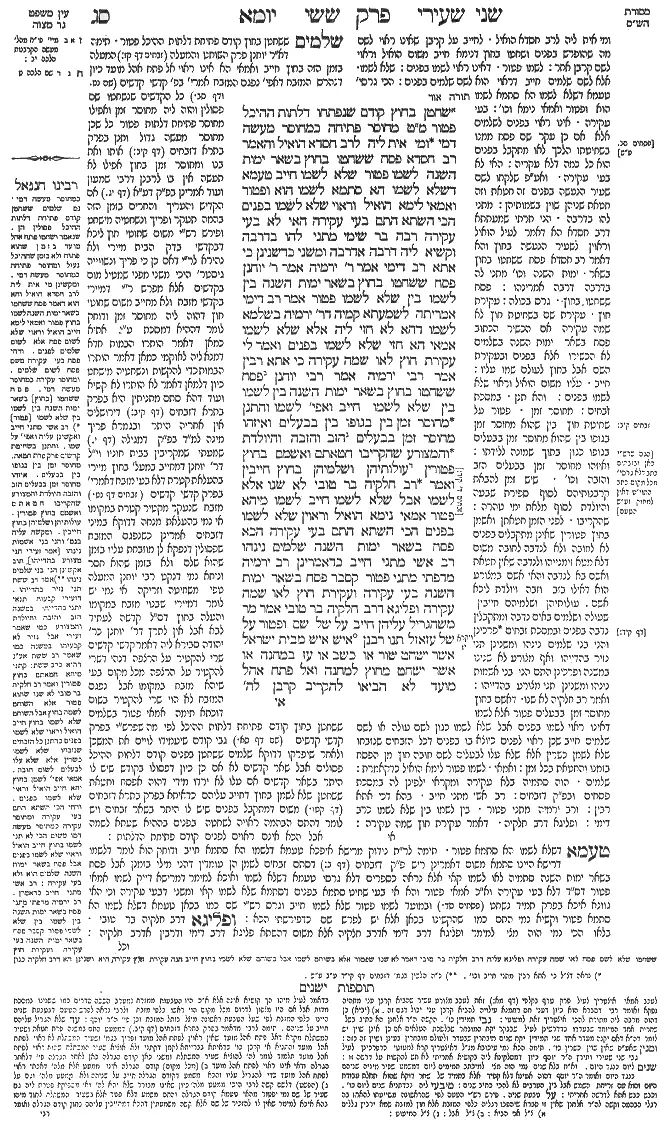
Yoma 63a - Guemara
שחטן בחוץ קודם שנפתחו דלתות ההיכל פטור מ"ט מחוסר פתיחה כמחוסר מעשה דמי ומי אית ליה לרב חסדא הואיל והאמר רב חסדא פסח ששחטו בחוץ בשאר ימות השנה לשמו פטור שלא לשמו חייב טעמא דשלא לשמו הא סתמא לשמו הוא ופטור ואמאי לימא הואיל וראוי שלא לשמו בפנים הכי השתא התם בעי עקירה האי לא בעי עקירה רבה בר שימי מתני להו בדרבה וקשיא ליה דרבה אדרבה ומשני כדשנינן כי אתא רב דימי אמר ר' ירמיה אמר ר' יוחנן פסח ששחטו בחוץ בשאר ימות השנה בין לשמו בין שלא לשמו פטור אמר רב דימי אמריתה לשמעתא קמיה דר' ירמיה בשלמא לשמו דהא לא חזי ליה אלא שלא לשמו אמאי הא חזי שלא לשמו בפנים ואמר לי עקירת חוץ לאו שמה עקירה כי אתא רבין אמר רבי ירמיה אמר רבי יוחנן פסח ששחטו בחוץ בשאר ימות השנה בין לשמו בין שלא לשמו חייב ואפי' לשמו והתנן מחוסר זמן בין בגופו בין בבעלים ואיזהו מחוסר זמן בבעלים הזב והזבה והיולדת והמצורע שהקריבו חטאתם ואשמם בחוץ פטורין עולותיהן ושלמיהן בחוץ חייבין ואמר רב חלקיה בר טובי לא שנו אלא לשמו אבל שלא לשמו חייב לשמו מיהא פטור אמאי נימא הואיל וראוין שלא לשמו בפנים הכי השתא התם בעי עקירה הכא פסח בשאר ימות השנה שלמים נינהו רב אשי מתני חייב כדאמרינן רב ירמיה מדפתי מתני פטור קסבר פסח בשאר ימות השנה בעי עקירה ועקירת חוץ לאו שמה עקירה ופליגא דרב חלקיה בר טובי אמר מר משהגריל עליהן חייב על של שם ופטור על של עזאזל תנו רבנן (ויקרא יז, ג) איש איש מבית ישראל אשר ישחט שור או כשב או עז במחנה או אשר ישחט מחוץ למחנה ואל פתח אהל מועד לא הביאו להקריב קרבן לה'
Comments from Rashi on Masechet Yoma Page 63a
ומי אית ליה לרב חסדא הואיל . לחייב על קרבן שאינו ראוי לשם מה שהופרש בפנים ושחטו בחוץ דנימא חייב משום הואיל וראוי לשם קרבן אחר: לשמו פטור . דאינו ראוי לשמו בפנים: שלא לשמו . אלא לשם שלמים חייב דראוי הוא לשם שלמים בפנים: הכי גרסי' טעמא דשלא לשמו הא סתמא לשמו הוא ופטור ואמאי נימא וכו': ואמאי . לשמו פטור לימא הואיל כדקאמרת: בעי עקירה . אינו ראוי בפנים לשלמים אלא אם כן עקר שם פסח ממנו בשחיטתו הלכך לאו מתקבל בפנים הוא כל כמה דלא עקריה: האי לא בעי עקירה . ואע"פ שלקחו לשם שעיר הנעשה בפנים זה חטאת וזה חטאת שניהן שוין בשמותיהן: מתני להו בדרבה . הני תרתי שמעתתא דרב חסדא הא דאמר לעיל הואיל וראוין לשעיר הנעשה בחוץ והא דאמר רב חסדא פסח ששחטו בחוץ בשאר ימות השנה וכו' מתני לה בדרבה דרבה אמרינהו: פסח ששחטו בחוץ . גרס בכולה: עקירת חוץ . עקירת שם בשחיטת חוץ לא שמה עקירה אם הכשיר הכתוב פסח בשאר ימות השנה בשלמים לא הכשירו אלא בפנים ובעקירת השם אבל בחוץ לעולם שמו עליו: חייב . עליו משום הואיל וראוי שלא לשמו בפנים: והא תנן . במסכת זבחים: מחוסר זמן . פטור על שחיטת חוץ בין שהוא מחוסר זמן בגופו בין שהוא מחוסר זמן בבעלים בגופו כגון בתוך שמונה ללידתו: ואיזהו מחוסר זמן בבעלים הזב והזבה וכו' . שיש זמן להבאת קרבנותיהם לסוף ספירת שבעה והיולדת לסוף מלאת ימי טהרה: שהקריבו . לפני הזמן חטאתן ואשמן בחוץ פטורין שאינן מתקבלים בפנים לא לחובה ולא לנדבה לחובה משום דלא מטא זימנייהו ולנדבה שאין חטאת ואשם בא לנדבה והאי אשם במצורע הוא דאילו בזב וזבה ויולדת ליכא אשם: עולותיהן ושלמיהם חייבין . שעולה ושלמים באים נדבה ומתקבלין נדבה בפנים ובמסכת זבחים פרכינן והני בני שלמים נינהו ומשנינן תני נזיר בהדייהו ואף מצורע לא שנינו במשנה ופרכינן התם הני בני אשמות נינהו ומשנינן תני מצורע בהדייהו: ואמר רב חלקיה לא שנו . דאשם בחוץ מחוסר זמן בבעלים פטור אלא לשמו דאינו ראוי לשמו בפנים אבל שלא לשמו כגון לשם עולה או לשם שלמים חייב שכן ראוי לפנים כיוצא בו בפנים דכל הזבחים שנזבחו שלא לשמן כשרין אלא שלא עלו לבעלים לשם חובה חוץ מן הפסח בזמנו והחטאת בכל זמן: ואמאי . לשמו פטור לימא הואיל כדקאמרת: שלמים . הוה סתמיה בלא עקירה ומקראי ילפינן לה במסכת פסחים ובפ"ק דזבחים: רב אשי מתני חייב . בהא דכי אתא רבין: ורב ירמיה מתני פטור . בין לשמו בין שלא לשמו כרב דימי: ופליגא דרב חלקיה . דאמר עקירת חוץ שמה עקירה:
Comments from Tosafot - Yoma 63a
שלמים ששחטן בחוץ קודם פתיחת דלתות ההיכל פטור . תימה דא"ר יוחנן פרק השוחט והמעלה (זבחים דף קז:) המעלה בזמן הזה בחוץ חייב ואמאי הא אינו ראוי. אל פתח אהל מועד כיון דנהרס המזבח דאפי' נפגם המזבח אמרי' בפ' קדשי קדשים (שם נט. ודף סב.) כל הקדשים שנשחטו שם פסולין והוה ליה מחוסר זמן ואפילו מחוסר פתיחת דלתות פטור כל שכן מחוסר מעשה גדול ותנן בפרק בתרא דזבחים (דף קיב:) אותו ואת בנו ומחוסר זמן בחוץ אפילו לא תעשה אין בו לרבנן דרבי שמעון ועוד אמרינן בפ"ק דע"א (דף יג.) אם הקדיש והעריך והחרים בזמן הזה בהמה תעקר ופריך ונשחטיה מישחט ופירש רש"י משום שחוטי חוץ ליכא דבקדשי בדק הבית מיירי ולא נהירא לר"י דאם כן כי פריך ונשווייה גיסטר' היכי משני מפני שמטיל מום בקדשים. אלא מפרש ר"י דמיירי בקדשי מזבח ולא מחייב משום שחוטי חוץ דהוה ליה מחוסר זמן ודוחק לומר דההיא דמסכת ע"ג אתיא כמאן דאמר הותרו הבמות חדא דמנא ליה לאוקמי כמאן דאמר הותרו הבמות כדי להקשות ונשחטיה מישחט כיון דלמאן דאמר לא הותרו לא קשיא ועוד דהא סתם מתניתין היא בפרק בתרא דזבחים (דף קיב:) דירושלים אין אחריה היתר ובגמרא פריך מינה למ"ד בפ"ק דמגילה (דף י.) שמעתי שמקריבין בבית חוניו וי"ל דר' יוחנן דמחייב במעל' בחוץ מיירי בהעלאת קטרת דלא בעי מזבח דאמרי ' בפרק קדשי קדשים (זבחים דף נט.) מזבח שנעקר מקטיר קטרת במקומו אי נמי בהעלאת מנחה דדוקא במיני דזבחים אמרינן כשנפגם המזבח שפסולין דנפקא לן מוזבחת עליו בזמן שהוא שלם ולא בזמן שהוא חסר וניחא נמי דנקט רבי יוחנן המעלה טפי משחיטה וזריקה אי נמי יש לומר דמיירי שבנוי מזבח במקומו והעלה בחוץ דס"ל קדשה לעתיד לבא אבל אין לתרץ דר' יוחנן כר' יהודה סבירא ליה דאמר קדשי קדשים שרי להקטיר על הרצפה דנהי דשרי להקטיר על הרצפה מכל מקום בעי שיהא מזבח במקומו אבל נפגם המזבח לא הוי שרי להקטיר בשום דוכתא תימה אמאי פטור בשלמים ששחטן בחוץ קודם פתיחת דלתות ההיכל לפי מה שפרש"י בפרק קדשי קדשים (שם דף סא.) גבי קודם שיעמידו לויים את המשכן ולאחר שיפרקו דדוקא שלמים ששחטן בפנים קודם דלתות ההיכל פסולים אבל שאר קדשים לא אם כן כיון דפסולו בקודש שיש לו היתר בשאר קדשים אם עלו לא ירדו מידי דהוה אפסח וחטאת ששחטן שלא לשמן בחוץ דחייב עליהם כדאיתא בפרק בתרא דזבחים (דף קטו.) משום דמתקבל בפנים שיש לו היתר בשאר זבחים ויש לומר דהתם הבהמה ראויה לשחטה בפנים בההיא שעתא לשמה אבל הכא אינם ראוים לפנים קודם פתיחת הדלתות: טעמא דשלא לשמו הא סתמא פטור . תימה לר"ת נידוק מרישא איפכא טעמא דלשמו הא סתמא חייב ודוחק הוא לומר דלשמו דרישא היינו סתמא משום דאמרינן ריש פ"ק דזבחים (דף ב:) דסתם זבחים לשמן הן עומדין דהני מילי בזמנן אבל פסח בשאר ימות השנה סתמיה לאו לשמו קאי אלא נראה כספרים דלא גרסי טעמא דשלא לשמו ואיכא למימר דמרישא דייק לשמו אמאי פטור דס"ד דלא בעי עקירה וא"כ אמאי פטור והא אי בעי שחיט סתמא בפנים דסתמא שלא לשמו קאי ומשני דבעי עקירה וכי האי גוונא איכא בפרק תמיד נשחט (פסחים סד.) ובמועד לשמו פטור שלא לשמו חייב וגרס רש"י שם כמו בכאן טעמא דשלא לשמו הא סתמא פטור וקשיא נמי התם כמו שהקשינו בכאן אלא יש לפרש שם כדפירשתי הכא: ופליגא דרב חלקיה בר טובי . בלאו הכי נמי הוה מצי למימר ופליגא דרב דימי אדרב חלקיה אלא משום דהשתא פליגא דרב דימי ודרבין אדרב חלקיה:
Yoma 63a - Mishnah translated into english
Based on Rav Ḥisda’s statement, if he slaughtered them outside the Temple before the doors of the Sanctuary were opened he is exempt. What is the reason? Lacking the opening of the doors is comparable to lacking an action. Therefore, the offering was not yet fit to be sacrificed in the Temple, and when he slaughtered it outside, despite doing so with the intention that it is a sacrificial offering, he is not considered to have violated the prohibition against sacrificing an offering outside the Temple.
Rav Ḥisda stated above that since the Yom Kippur goats could be used for the additional offerings, one is liable for slaughtering them outside the Temple. The Gemara asks: Does Rav Ḥisda accept the principle: Since a particular situation could come to be in the future, it is viewed as though it existed already in the present?
And didn’t Rav Ḥisda say: If one slaughtered a Paschal lamb outside the Temple during the rest of the days of the year other than Passover eve, if he slaughtered it for its own sake, i.e., as a Paschal lamb, he is exempt, since at that time it is not fit to be sacrificed as a Paschal lamb. If he sacrificed it not for its own sake but rather as a peace-offering, he is liable. A Paschal lamb that is slaughtered as a peace-offering on any day of the year other than Passover eve is considered a valid peace-offering. Therefore, it has the status of an offering that is fit to be sacrificed in the Temple, and he is liable for slaughtering it outside the Temple.
The Gemara comments: The reason he is liable is because he specifically slaughtered it not for its own sake. However, if he slaughtered it without specifying what offering he had in mind, it is considered to have been slaughtered for its own sake and he is exempt. But why is he exempt? Let us say: Since it is fit to be sacrificed within the Temple not for its own sake, i.e., as a peace-offering, it should be considered as though he slaughtered it as a peace-offering outside the Temple, and he should be liable.
The Gemara responds: How can these cases be compared? There, with regard to the Paschal lamb, it requires explicit uprooting from the status of a Paschal lamb in order to be considered a peace-offering. Therefore, if he did not specify his intent, it is still considered a Paschal lamb, which is not fit to be sacrificed. These Yom Kippur goats do not require uprooting from their previous status. The Yom Kippur goats have the status of a sin-offering and the goats sacrificed as part of the additional offerings of the day are also considered sin-offerings. Therefore, one who slaughters them outside the Temple is liable, as they are fit to be sacrificed at that time as sin-offerings, even without the principle: Since, etc.
Rabba bar Shimi taught these two halakhot, cited above in the name of Rav Ḥisda, in the name of Rabba, and he found a difficulty between one statement of Rabba and another statement of Rabba. And he resolved the apparent contradiction as we resolved it.
§ When Rav Dimi came from Eretz Yisrael to Babylonia, he said that Rabbi Yirmeya said that Rabbi Yoḥanan said: If one slaughtered a Paschal lamb outside the Temple during the rest of the days of the year, whether he slaughtered it for its own sake, as a Paschal lamb, or not for its own sake, as a peace-offering, he is exempt.
Rav Dimi said: I said this halakha before Rabbi Yirmeya and asked him: Granted, when he slaughters it outside the Temple for its own sake he is exempt, because it is not fit to be brought as a Paschal lamb at that time, and one is liable for slaughtering an offering outside the Temple only if it was fit to be sacrificed in the Temple. However, if he slaughters it not for its own sake, why is he exempt? Isn’t it fit to be sacrificed not for its own sake as a peace-offering inside the Temple?
And Rabbi Yirmeya said to me in response: Uprooting an offering’s designation outside the Temple is not called uprooting. Since he slaughtered it outside, the status of the offering does not change from that of a Paschal lamb to that of a peace-offering, despite his intention to this effect.
When Ravin came from Eretz Yisrael to Babylonia, he said a different version of the statement that Rabbi Yirmeya said that Rabbi Yoḥanan said: If one slaughtered a Paschal lamb outside the Temple during the rest of the days of the year, whether he slaughtered it for its own sake or not for its own sake, he is liable.
The Gemara expresses surprise: Is he liable even if he slaughtered it for its own sake? Didn’t we learn in a mishna in tractate Zevaḥim that one is exempt for sacrificing an offering that was not yet fit for sacrifice because it was lacking time? This is so whether it itself was lacking time, such as if it was less than eight days old, or it was lacking time due to its owners.
The Gemara explains: And what is an offering that is lacking time due to its owners? A zav, a zava, a woman after childbirth, and a leper, who sacrificed their offerings before the appropriate time. A zav, a zava, and a leper bring their offerings after counting seven days; a woman after childbirth brings hers when her purification period is complete.
Any of these people who sacrificed their sin-offering and, in the case of lepers, their guilt-offering outside the Temple are exempt. Since they would not fulfill their obligations to bring these offerings if they would sacrifice them in the Temple, and the offerings are unfit to be brought as voluntary offerings, because sin-offerings and guilt-offerings are not brought as voluntary offerings, one who slaughters them outside the Temple is not liable. However, if they sacrifice their burnt-offerings and peace-offerings outside the Temple, they are liable. This is because these offerings could be valid as voluntary offerings if they were sacrificed in the Temple.
And Rav Ḥilkiya bar Tovi said: They only taught that one is exempt for the guilt-offering when it is slaughtered for its own sake, but if it is slaughtered not for its own sake, he is liable, because a guilt-offering slaughtered in the Temple not for its own sake is valid.
The Gemara considers this: If he slaughtered it for its own sake, in any event he is exempt. Why? Let us say: Since they are fit to be sacrificed inside the Temple not for their own sake, he should be liable for sacrificing them outside. The Gemara responds: How can these cases be compared? There, the guilt-offering requires explicit uprooting of its designation in order to be valid. Here, a Paschal lamb during the rest of the days of the year is considered a peace-offering, even if its status is not explicitly uprooted.
The Gemara continues to discuss the case of a Paschal lamb that was slaughtered outside the Temple during the rest of the year, and not for its own sake. Rav Ashi taught: He is liable, as we stated. Rav Yirmeya of Difti taught: He is exempt. Rav Yirmeya held that a Paschal lamb during the rest of the days of the year requires uprooting of its previous designation, and uprooting an offering’s designation outside the Temple is not called uprooting. And this halakha disagrees with the statement of Rav Ḥilkiya bar Tovi, who held that uprooting an offering’s designation outside the Temple is considered an effective uprooting of that designation.
§ The Master said: If he slaughtered the two Yom Kippur goats outside the Temple after he drew lots to determine which of them is to be sacrificed to God and which is sent to Azazel, he is liable for slaughtering the one designated for God, and exempt for the one designated to be sent to Azazel.
The Sages taught in a baraita based upon the verses: “Any man of the house of Israel who shall slaughter a bull, or a lamb, or a goat in the camp, or who slaughters it outside the camp, and has not brought it to the entrance to the Tent of Meeting to present it as an offering to the Lord before the tabernacle of the Lord, blood shall be imputed to that man; he has shed blood; and that man shall be cut off from among his people” (Leviticus 17:3–4).
Traduction : The William Davidson digital edition of the Koren Noé Talmud, with commentary by Rabbi Adin Even-Israel Steinsaltz.
Yoma 63a : Significance
Next step
Finished studying Yoma 63a? Carry on with the rest of the tractate.
Study Yoma 63bFrequently asked questions: Yoma 63a
Where is Yoma 63a in tractate Yoma?
Yoma 63a is page 123 of 173 in tractate Yoma (Seder Moed).
When is daf 63 of Yoma studied in Daf Yomi?
Daf Yomi covers one daf a day, both sides. Daf 63 of Yoma will be studied on November 14, 2028.
Is there a video class on Yoma 63a?
Yes, by Daf Tube, Rabi Yitzchok Lobenstein, Rabbi Dr. Moshe Weisblum. These classes were published on YouTube by their authors and are gathered on this site.
What is tractate Yoma about?
The Masechet Yoma is the fifth treatise of the Seder Moed. The Yoma gemara is the study of the work of the Kohen Gadol on Yom Kippur, as well as the laws related to fasting. The Yoma tractate bears this name which means in Aramaic Today that is to say the special day. In other words: Yom Kippur.
Your study is also dedicated to them
- L'ilui Nishmat Chemouel Eliezer ben Batcheva
- L'ilui Nishmat Yaakov ben Myriam
- L'ilui Nishmat Amram ben Itshak Loubaton