 Talmud Bavli
The learning on the whole site is dedicated : L'ilui Nishmat Yechayahou ben Moche
The learning on the whole site is dedicated : L'ilui Nishmat יוסף בן מושה
The learning on the whole site is dedicated : L'ilui Nishmat Jacques Isaac Ben Amram Loubaton
Yoma 31b : Youtube
Daf TubeYoutube
3 video classes :
Yoma Page 31b
Yoma 31b - Guemara
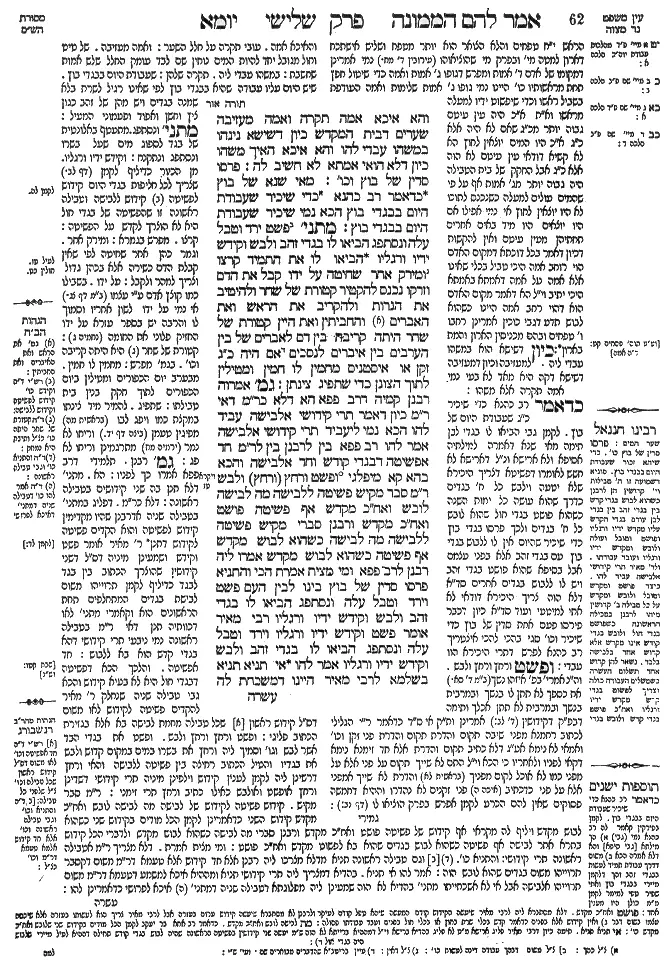
והא איכא אמה תקרה ואמה מעזיבה שערים דבית המקדש כיון דשישא נינהו במשהו עבדי להו והא איכא האיך משהו כיון דלא הואי אמתא לא חשיב לה פרסו סדין של בוץ וכו' מאי שנא של בוץ כדאמר רב כהנא כדי שיכיר שעבודת היום בבגדי בוץ הכא נמי שיכיר שעבודת היום בבגדי בוץ מתני׳ פשט ירד וטבל עלה ונסתפג הביאו לו בגדי זהב ולבש וקידש ידיו ורגליו הביאו לו את התמיד קרצו ומירק אחר שחיטה על ידו קבל את הדם וזרקו נכנס להקטיר קטורת של שחר ולהיטיב את הנרות ולהקריב את הראש ואת האברים והחביתין ואת היין קטורת של שחר היתה קריבה בין דם לאברים של בין הערבים בין איברים לנסכים אם היה כ"ג זקן או איסטניס מחמין לו חמין ומטילין לתוך הצונן כדי שתפיג צינתן גמ׳ אמרוה רבנן קמיה דרב פפא הא דלא כר"מ דאי ר"מ כיון דאמר תרי קידושי אלבישה עביד להו הכא נמי ליעביד תרי קידושי אלבישה אמר להו רב פפא בין לרבנן בין לר"מ חד אפשיטה דבגדי קודש וחד אלבישה והכא בהא קא מיפלגי (ויקרא טז, כג) ופשט ורחץ (ורחץ) ולבש ר"מ סבר מקיש פשיטה ללבישה מה לבישה לובש ואח"כ מקדש אף פשיטה פושט ואח"כ מקדש ורבנן סברי מקיש פשיטה ללבישה מה לבישה כשהוא לבוש מקדש אף פשיטה כשהוא לבוש מקדש אמרו ליה רבנן לרב פפא ומי מצית אמרת הכי והתניא פרסו סדין של בוץ בינו לבין העם פשט וירד וטבל עלה ונסתפג הביאו לו בגדי זהב ולבש וקידש ידיו ורגליו רבי מאיר אומר פשט וקידש ידיו ורגליו וירד וטבל עלה ונסתפג הביאו לו בגדי זהב ולבש וקידש ידיו ורגליו אמר להו אי תניא תניא בשלמא לרבי מאיר היינו דמשכחת לה
Comments from Rashi on Masechet Yoma Page 31b
והאיכא אמה . עובי תקרה על חלל השער: ואמה מעזיבה . של טיט וחול מגובל יחד להיות המים נוחין שם לבד עומק החלל שלש אמות שחשבת: במשהו עביד ליה . תקרה שלהן: שעבודת היום בבגדי בוץ . שיש היום עליו עבודה שהיא בבגדי בוץ לפי שאינו רגיל לשרת בלא שמנה בגדים ויש מהן של זהב כגון ציץ וחשן ואפוד ופעמוני המעיל: מתני' ונסתפג . מתעטף באלונטית של בגד לספוג מים שעל בשרו ונסתפג ונתקנח: וקידש ידיו ורגליו . מן הכיור כדיליף לקמן (יומא דף לב.) שצריך לכל חליפות בגדי היום קידוש לפשיטה קידוש ללבישה וטבילה ראשונה זו שהפשיטה של בגדי חול היא לא הוצרך לקדש על הפשיטה: קרצו . מפרש בגמרא: ומירק אחר . וגמר כהן אחר שחיטה לפי שאין קבלת הדם כשירה אלא בכהן גדול וצריך למהר ולקבל: על ידו . בשבילו כמו קוצץ אדם ע"י עצמו (ב"מ דף צג.) אי נמי על ידו לשון אחריו וסמוך לו והרבה יש בספר עזרא על ידו החזיק פלוני את החומה (נחמיה ג): קטורת של שחר היא היתה קריבה וכו' . בגמ' מפרש: מחמין לו חמין . מבערב יום הכפורים ומטילין ביום הכפורים לתוך חקק בנין בית טבילתו: שתפיג . להמיר מיד צינתו במקצת כמו ויפג לבו (בראשית מה) מפיגין טעמן (ביצה דף יד.) וריחו לא נמר (ירמיהו מח) מתרגמינן וריחו לא פג: גמ' רבנן . תלמידי דרב פפא אמרו כך לפניו: הא . מתני' דלא תנן בה שני קידושים בטבילה ראשונה: דלא כר"מ . דפליג במתני' בטבילה שניה אדרבנן שהיו מקדימין קידוש לפשיטה והוא הקדים פשיטה לקידוש דתנן ר' מאיר אומר פשט וקידש ושמעינן מיניה דס"ל דשני קידושין שהוצרך הכתוב בין בגד לבגד כדיליף לקמן תרוייהו משום לבישת בגדים המתחלפים תחת הראשונים הוא וקאמרי מתני' לאו דכוותיה תנן דאי ר"מ בטבילה ראשונה נמי ניבעי תרי קידושי דהא בגדי קדש הוא בא ללבוש: חד אפשיטה . והלכך הכא דפשיטה דבגדי חול היא לא בעיא קידוש והכא גבי טבילה שניה שנחלק ר' מאיר להקדים פשיטה לקידוש לאו משום דס"ל קידוש ראשון שכל טבילה מחמת לבישה בא אלא בגזירת הכתוב פליגי: ופשט ורחץ ורחץ ולבש . ופשט את בגדי הבד אשר לבש וגו' וסמיך ליה ורחץ את בשרו במים במקום קדוש ולבש את בגדיו והטיל הכתוב רחיצה בין פשיטה ללבישה והאי ורחץ דרשינן ליה לקמן לענין קידוש וילפינן מיניה תרי קידושי דשדינן ורחץ אופשט ואולבש כאילו כתיב ורחץ תרי זימני: ר"מ סבר מקיש . קידוש פשיטה לקידוש של לבישה מה לבישה לובש ואח"כ מקדש קידוש השני כדאמרינן לקמן הכל מודים בקידוש שני כשהוא לבוש מקדש ויליף לה מקראי אף קידוש של פשיטה פושט ואח"כ מקדש ורבנן סברי מה לבישה כשהוא לבוש מקדש ולדברי הכל קידוש בתרא אחר לבישה אף פשיטה כשהוא לבוש בגדים שהוא בא לפשוט מקדש ואח"כ פושט: ומי מצית אמרת . דלא מצריך ר"מ אטבילה ראשונה תרי קידושי: והתניא כו' . וגם טבילה ראשונה תניא מדלא מצרכו ליה רבנן אלא חד קידוש אלא טעמא דר"מ משום דקסבר תרוייהו משום בגדים שהוא לובש הוה: אמר להו אי תניא . בהדיא דמצריך ליה תרי קידושי תניא ומההיא איכא למשמע דטעמא דר"מ משום תרוייהו אלבישה אבל אי לא אשכחייתו מתני' בהדיא לא הוה שמעינן ליה מפלוגתא דטבילה שניה דמתני' איכא לפרושי כדאמרינן להו:
Comments from Tosafot - Yoma 31b
כיון דשישא הוא במשהו עבדי ליה . למעזיבה וכיון דמעזיבה דשישא דקה היא מאד לא בעי נמי אמה תקרה אלא משהו: כדאמר רב כהנא כדי שיכיר כ"ג שעבודת היום של בוץ . לקמן גבי הביאו לו בגדי לבן תימה מאי שנא דאמרה למילתיה אסיפא ולא ארישא ונ"ל דארישא לא חשש לאומרו דפשיטא דצריך היכירא שלא יטעה וילבש כל ח' בגדים כדרך שהוא עושה כל ימות השנה כשהוא פושט בגדי חול שהוא לובש כל ח' בגדים ולכך פרסו בגדי בוץ כדי שיכיר שהיום אין לו ללבוש בגדי בוץ עם בגדי זהב אלא בפני עצמם אבל בסיפא שהוא פושט בגדי זהב ויש לו ללבוש בגדים אחרים סד"א דלא הוה צריך היכירא דודאי לא אתי למיטעי ועוד סד"א כיון דכבר פירסו פעם אחת סדין של בוץ כדי שיכיר וכו' סגי בהכי להכי איצטריך רב כהנא לפרש דתרי היכירא הוו עבדי: ופשט ורחץ ורחץ ולבש . וה"נ אמרי' בפ' איזהו נשך (ב"מ ד' סא.) את כספך לא תתן לו בנשך ובמרבית בנשך ובמרבית לא תתן אכלך ותימה דבפ"ק דקידושין (ד' לב:) אמרינן ות"ק אי ס"ד כדאמר ר"י הגלילי לכתוב רחמנא מפני שיבה תקום והדרת תקום והדרת פני זקן וכו' ואמאי לא נימא אע"ג דלא כתיב תקום והדרת אלא חד זימנא נימא דקאי לפניו ולאחריו כי הכא וי"ל התם לא שייך תקום על פני אלא על מפני כמו לא אוכל לקום מפניך (בראשית לא) והדרת לא שייך אמפני אלא על פני כדכתיב (איכה ה) פני זקנים לא נהדרו וההיא דחמשה פסוקים שאין להם הכרע לקמן אפרש בפרק הוציאו לו (דף נב:):
Yoma 31b - Mishnah translated into english
As the gate is twenty cubits high, and the immersion chamber above it is at least three additional cubits high, the water was twenty-three cubits above the ground of the courtyard. The Gemara asks: How could it be only twenty-three cubits higher? Isn’t there the cubit of the thickness of the ceiling over the gate and the cubit of the thickness of the plaster sealing of the ritual bath floor for a total of at least twenty-five cubits? The Gemara answers: With regard to the Temple gates, since they were constructed of marble, they constructed them with minimal thickness. Neither the thickness of the ceiling nor the thickness of the plaster was a cubit. The Gemara asks: But isn’t there that minimal thickness of the ceiling and the plaster that would nevertheless total more than twenty-three cubits? The Gemara answers: Indeed; however, since the ceiling was not a whole cubit he does not consider it in his calculation.
§ We learned in the mishna: They spread a sheet of fine linen between the High Priest and the people in the interest of modesty. The Gemara asks: What is different that they specifically used a sheet of fine linen? The Gemara answers: It is as Rav Kahana said with regard to a related issue: So that he will be aware that the service of the day of Yom Kippur is performed in fine linen garments. Here, too, a linen sheet was used so that he will be aware that the service of the day of Yom Kippur is performed in fine linen garments.
MISHNA: The High Priest removed the white garments that he was wearing, descended to the ritual bath, and immersed. He ascended and dried himself with a towel. Then they brought him the golden garments of the High Priest, and he dressed in the garments, and he sanctified his hands and his feet. They brought him the sheep for the daily morning offering, which he slaughtered by cutting most of the way through the gullet and the windpipe. And a different priest completed the slaughter on his behalf so that the High Priest could receive the blood in a vessel and proceed with the order of the Yom Kippur service. As soon as the slaughter was completed, the High Priest received the blood in a vessel and sprinkled it on the altar.
He entered the Sanctuary to burn the morning incense and to remove the ashes from the lamps of the candelabrum; and he left the Sanctuary and returned to the courtyard to sacrifice the head and the limbs of the sheep sacrificed for the daily offering and the High Priest’s daily griddle-cake offering, and the wine libation of the daily offering. The Mishna comments: The morning incense was burned between the receiving and sprinkling of the blood and the burning of the limbs; and the afternoon incense was burned between the taking of the limbs up to the altar and the pouring of the libations that accompanied the offering.
With regard to the immersion, if the High Priest was old and found it difficult to immerse in cold water, or if he was delicate [istenis], they would heat hot water for him on Yom Kippur eve and place it into the cold water of the ritual bath in order to temper its chill so the High Priest could immerse without discomfort.
GEMARA: The Sages said this matter before Rav Pappa: This mishna is not in accordance with the opinion of Rabbi Meir, as, if it were in accordance with the opinion of Rabbi Meir, since he said: The High Priest performs two sanctifications of his hands and his feet upon each change of garments, once before donning the garments and once after donning them, here too, in the mishna, let him perform two sanctifications upon the change of garments. However, the description in the mishna indicates that he removes his garments and does not sanctify his hands and feet.
Rav Pappa said to them: Both according to the opinion of the Rabbis and according to the opinion of Rabbi Meir, there is one sanctification upon removal of sacred garments, and one sanctification upon donning other sacred garments. And here, it is with regard to this issue that they disagree. It is written: “And he shall remove the linen garments that he put on when he entered the Sanctuary and leave them there. And he shall wash his flesh in water in a sacred place and he shall put on his garments” (Leviticus 16:23–24). Rabbi Meir holds: The Torah juxtaposes removal of garments to donning of garments for the following reason: Just as when donning the garments, he dons the garments and afterward sanctifies his hands and feet, so too, with regard to removal of the garments, he removes the garments and afterward sanctifies his hands and feet.
And the Rabbis hold that the Torah juxtaposes removal of garments to donning of garments for the following reason: Just as when donning the garments, when he is dressed, he sanctifies his hands and feet; so too, for removal of the garments, he sanctifies his hands and feet when he is dressed. Therefore, when he completes the service he sanctifies his hands and feet and only then removes the garments. However, the first time that the High Priest dons the priestly vestments on Yom Kippur he certainly does not require two sanctifications, since at that point he does not remove any other garments.
The Sages said to Rav Pappa: And how can you say that according to Rabbi Meir the first time that the High Priest dons the garments he does not require two sanctifications? Wasn’t it taught in a baraita as follows? They spread a sheet of fine linen between him and the people, and he removed his garments and descended and immersed, and he ascended and dried himself. They brought him golden garments, and he donned them, and he sanctified his hands and his feet. Rabbi Meir says: He removed his garments and sanctified his hands and his feet and descended and immersed. He ascended and dried himself. They brought him golden garments and he donned them and sanctified his hands and his feet. Apparently, Rabbi Meir maintains that there is a special sanctification prior to donning the garments. He said to them: If it was taught, it was taught. I will retract my opinion, which was based on logical analysis, in favor of an explicit baraita that contradicts that opinion.
The Gemara asks: Granted, according to the approach of Rabbi Meir, that is how you find that possibility of
Traduction : The William Davidson digital edition of the Koren Noé Talmud, with commentary by Rabbi Adin Even-Israel Steinsaltz.