 Talmud Bavli
Zevahim 10a : Youtube
Daf TubeYoutube
2 video classes :
Zevahim Page 10a
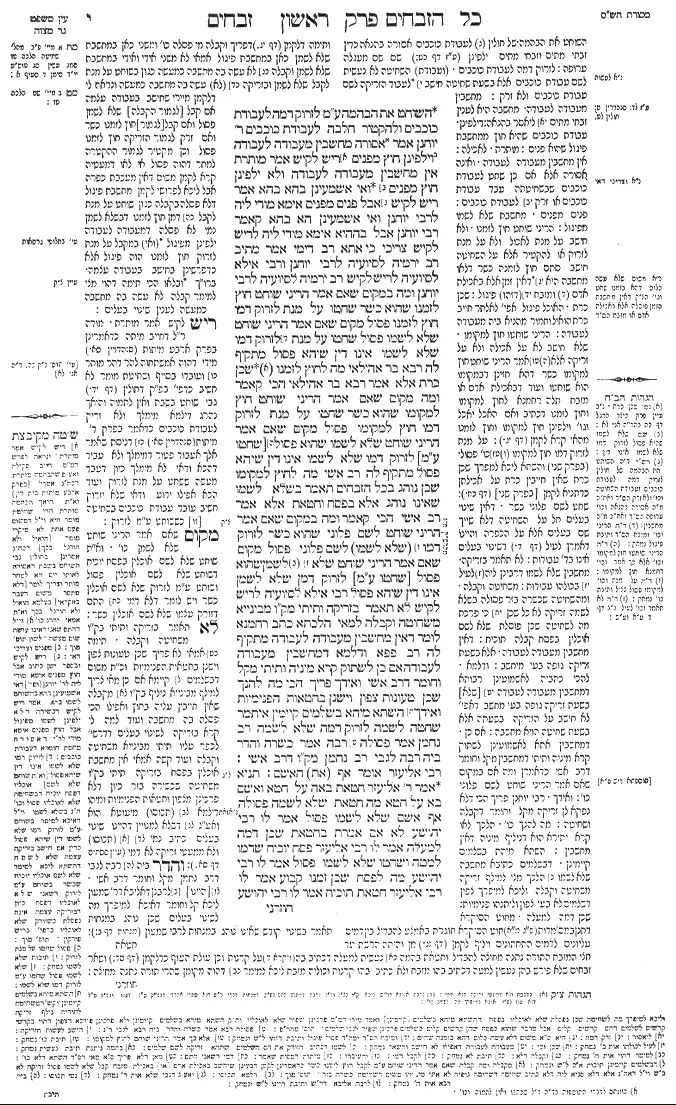
Zevahim 10a - Guemara
השוחט את הבהמה ע"מ לזרוק דמה לעבודת כוכבים ולהקטיר חלבה לעבודת כוכבים ר' יוחנן אמר אסורה מחשבין מעבודה לעבודה וילפינן חוץ מפנים ריש לקיש אמר מותרת אין מחשבין מעבודה לעבודה ולא ילפינן חוץ מפנים ואי אשמעינן בהא בהא אמר ריש לקיש אבל פנים מפנים אימא מודי ליה לרבי יוחנן ואי אשמעינן הא בהא קאמר רבי יוחנן אבל בההיא אימא מודי ליה לריש לקיש צריכי כי אתא רב דימי אמר מתיב רב ירמיה לסיועיה לרבי יוחנן ורבי אילא לסיועיה לריש לקיש רב ירמיה לסיועיה לרבי יוחנן ומה במקום שאם אמר הריני שוחט חוץ לזמנו שהוא כשר שחטו על מנת לזרוק דמו חוץ לזמנו פסול מקום שאם אמר הריני שוחט שלא לשמו פסול שחטו על מנת לזרוק דמו שלא לשמו אינו דין שיהא פסול מתקיף לה רבא בר אהילאי מה לחוץ לזמנו שכן כרת אלא אמר רבא בר אהילאי הכי קאמר ומה מקום שאם אמר הריני שוחט חוץ למקומו שהוא כשר שחטו על מנת לזרוק דמו חוץ למקומו פסול מקום שאם אמר הריני שוחט שלא לשמו שהוא פסול [שחטו ע"מ] לזרוק דמו שלא לשמו אינו דין שיהא פסול מתקיף לה רב אשי מה לחוץ למקומו שכן נוהג בכל הזבחים תאמר בשלא לשמו שאינו נוהג אלא בפסח וחטאת אלא אמר רב אשי הכי קאמר ומה במקום שאם אמר הריני שוחט לשם פלוני שהוא כשר לזרוק דמו (שלא לשמו) לשם פלוני פסול מקום שאם אמר הריני שוחט שלא לשמן שהוא פסול [שחטו ע"מ] לזרוק דמן שלא לשמן אינו דין שיהא פסול רבי אילא לסיועיה לריש לקיש לא תאמר בזריקה ותיתי מק"ו מבינייא משחיטה וקבלה למאי הלכתא כתב רחמנא לומר דאין מחשבין מעבודה לעבודה מתקיף לה רב פפא ודלמא דמחשבין מעבודה לעבודה אם כן לשתוק קרא מיניה ותיתי מקל וחומר דרב אשי ואידך פריך הכי מה להנך שכן טעונות צפון וישנן בחטאות הפנימיות ואידך השתא מיהא בשלמים קיימין איתמר שחטה לשמה לזרוק דמה שלא לשמה רב נחמן אמר פסולה רבה אמר כשרה והדר ביה רבה לגבי רב נחמן מק"ו דרב אשי:
רבי אליעזר אומר אף (את) האשם:
תניא אומר ר' אליעזר חטאת באה על חטא ואשם בא על חטא מה חטאת שלא לשמה פסולה אף אשם שלא לשמו פסול אמר לו רבי יהושע לא אם אמרת בחטאת שכן דמה למעלה אמר לו רבי אליעזר פסח יוכיח שדמו למטה ושחטו שלא לשמו פסול אמר לו רבי יהושע מה לפסח שכן זמנו קבוע אמר לו רבי אליעזר חטאת תוכיח אמר לו רבי יהושע
Comments from Rashi on Masechet Zevahim Page 10a
השוחט את הבהמה . של חולין לעבודת כוכבים אסורה בהנאה כדין זבחי מתים וזבחי מתים ילפינן (ע"ז דף כט:) שם שם מעגלה ערופה: לזרוק דמה לעבודת כוכבים . (ועבודת) השחיטה לא נעשית לשם עבודת כוכבים אלא בשעת שחיטה חישב לעבוד הזריקה לשם עבודת כוכבים ולא זרק: מחשבין מעבודה לעבודה . מחשבה היא לענין זבחי מתים ליאסר בהנאה: דילפינן . עבודת כוכבים שהיא חוץ ממחשבת פיגול שהוא פנים: מותרת . לאכילה: אין מחשבין מעבודה לעבודה . ואינה אסורה אלא אם כן שחט לעבודת כוכבים שבשחיטתה עבד עבודת כוכבים או זרק לעבודת כוכבים: פנים מפנים . מחשבת שלא לשמו מפיגול: הריני שוחט חוץ לזמנו . ולא חישב על מנת לאכול ולא על מנת לזרוק או להקטיר אלא על השחיטה חישב סתם חוץ לזמנה כשר דלאו מחשבה היא דאין זמן אלא באכילת אדם ומזבח (דזהו) פיגול: שכן כרת . האוכל פיגול אפי' לאלתר חייב כרת הואיל וחמור מהניא ביה מעבודה לעבודה: הריני שוחטו חוץ למקומו . שלא חישב לא על אכילה ולא על זריקה אלא אמר הריני שוחט חוץ למקומו כשר דהא חזינן דבמקומו הוא שוחטו ועוד דבאכילת אדם או מזבח תלה רחמנא לחוץ למקומו וחוץ לזמנו דכתיב ואם האכל יאכל וגו' וילפינן חוץ למקומו וחוץ לזמנו מהאי קרא לקמן (זבחים דף יג.): על מנת לזרוק דמו חוץ למקומו כו' פסול . (בפרק שני) והשתא ליכא למפרך שכן כרת שאין חייבין כרת על אכילתן כדתניא לקמן [בפרק שני] (דף כח.): שחט לשם פלוני כשר . דאין שינוי בעלים חל על השחיטה דלא שייך שם בעלים אלא על הכפרה והיינו דאמרן לעיל (זבחים דף ד.) דשינוי בעלים אינו בד' עבודות: לא תאמר בזריקה . מחשבין שלא לשמו דרבינן ליה לעיל בכולהו עבודות: משחיטה וקבלה . ומה שחיטה שכשרה בזר פסולה בשלא לשמה זריקה לא כל שכן כי פרכת מה לשחיטה שכן פוסלת שלא לשם אוכלין בפסח קבלה תוכיח: דאין מחשבין מעבודה לעבודה . אלא בשעת זריקה גופה בעי מיחשב: ודלמא . להכי כתביה לאשמועינן רבותא דמחשבין מעבודה לעבודה [שלא] בשעת זריקה גופה בעי מחשב דאפי' לא חישב על הזריקה בשעתה אלא בשעת שחיטה הויא מחשבה: אם כן . דמחשבין אתא לאשמועינן לשתוק קרא מיניה ותיתי דמחשבין מקל וחומר דרב אשי כדאמרן ומה אם במקום שאם אמר הריני שוחט לשם פלוני כו': ואידך . רבי יוחנן פריך הכי דלא נפקא לן זריקה מקל וחומר דקבלה ושחיטה: מה להנך כו' . הלכך לאו קרא יתירא הוא דניליף מיניה דאין מחשבין: השתא מיהת בשלמים קיימינן . דבשלמים כתיבא מחשבה שלא לשמו הלכך מצי למילף זריקה משחיטה וקבלה וליכא למיפרך צפון דשלמים לא בעי צפון וליתנהו פנימיות: שכן דמה למעלה . מחוט הסיקרא דתנן במס' מדות (פ"ג מ"א) חוט הסיקרא חוגרת באמצע להבדיל בין דמים עליונים לדמים התחתונים ויליף לקמן (זבחים דף נג.) מן והיתה הרשת עד חצי המזבח התורה נתנה מחיצה להבדיל וחטאת בהמה נעשית למעלה דכתיב בה (ויקרא ד) על קרנות וכן עולת העוף כדלקמן (זבחים דף סד:) ושאר זבחים שלא פירש בהן נעשין למטה דכתיב בהו מזבח ולא כתיב בהו קרנות וכוליה מזבח ליכא למימר דהוה מקומן שהרי תורה נתנה מחיצה:
Comments from Tosafot - Zevahim 10a
ריש לקיש אמר מותרת . מודה ר"ל דחייב מיתה כדאמרינן בפרק ארבע מיתות (סנהדרין סא.) מידי דהוה אמשתחוה להר דהר מותר ועובדו בסייף ושחיטת מומר לא חשיב כדפי' בפ"ק דחולין (דף יד.) גבי שוחט בשבת ואין לתמוה והיאך נהרג דילמא מימלך ולא זריק לעבודת כוכבים כדאמר בפרק ד' מיתות (סנהדרין סא.) דניסת שאמר אלך אעבוד פטור דמימלך ולא עביד דהכא ודאי לא מימלך כיון דעבד מעשה ששחט על מנת לזרוק ועוד הכא אפילו ידוע ודאי שלא יזרוק חשיב עובד עבודת כוכבים בשחיטה [[זו] כששוחט ע"מ לזרוק: מקום שאם אמר הריני שוחט שלא לשמן כו' . וא"ת שוחט שלא לשם אוכלין בפסח יוכיח דשוחט שלא לשם אוכלין פסול ושוחט ע"מ לזרוק שלא לשם אוכלין כשר ויש לומר דלא דמי התם דזורק עצמו שלא לשם אוכלין כשר: לא תאמר בזריקה ותיתי בק"ו משחיטה וקבלה . תימה אמאי לא פריך שכן טעונות צפון וישנן בחטאות הפנימיות וכ"ת משום דבשלמים קיימא אם כן מאי צריך למילף מבינייא ניליף בק"ו מקבלה שאין חייבין עליה בחוץ ואפילו הכי פסלה בה מחשבה ועוד למה לי קרא בזריקה לשינוי בעלים דדרשי' לכפר עליו תיתי מבינייא משחיטה וקבלה ועוד קשה אמאי אין מחשבת אוכלין בפסח בזריקה תיתי בק"ו משחיטה שכשירה בזר כיון דלא פרכינן מצפון וחטאות הפנימיות ומיהו דילמא (תכוסו) מיעוטא הוא ואע"ג דשלא למנויין דהיינו שינוי בעלים כתיב נמי (תכוסו) ולא ממעטי זריקה לא דמי (עיין פסחים דף סא.): והדר ביה רבה לגבי דרב נחמן מקל וחומר דרב אשי . [היינו] לרבנן דאליבא דר' שמעון ליכא קל וחומר דאיכא למיפרך מה לשינוי בעלים שכן נוהג במנחות תאמר בשינוי קודש שאינו נוהג במנחות לרבי שמעון (מנחות דף ב:):
Zevahim 10a - Mishnah translated into english
With regard to one who slaughters an animal in order to sprinkle its blood for idol worship, or in order to burn its forbidden fat for idol worship, Rabbi Yoḥanan says: Deriving benefit from the animal is prohibited, as it is considered an offering to idol worship, even if ultimately its blood was not sprinkled or its fat burned to that effect. This is because one can have intention from one rite to affect another rite; idolatrous intent while slaughtering the animal renders it forbidden, even if the intention pertains not to the slaughter itself but to the sprinkling of the blood or the burning of the forbidden fat. And this halakha is derived from the halakhot of piggul, as we derive halakhot of idol worship, which are applicable even outside the Temple, from halakhot concerning intent that apply inside the Temple.
Reish Lakish says: Deriving benefit from the animal is permitted. One cannot have intention from one rite to affect another rite, and we do not derive halakhot applicable outside the Temple from halakhot that apply inside the Temple.
Although both disputes are essentially the same, each is necessary. And if the Sages had taught us the dispute only with regard to that issue, namely, an animal slaughtered with idolatrous intent, one would have reasoned that Reish Lakish says his opinion only with regard to that issue, as he maintains that halakhot applicable outside the Temple are not derived from halakhot applicable only inside the Temple. But with regard to an offering that was slaughtered with the intention of sprinkling its blood not for its sake, one might say that he concedes to Rabbi Yoḥanan that it is disqualified, as halakhot applicable inside the Temple can be derived from other halakhot applicable inside the Temple.
And if the Sages had taught us the dispute only with regard to this issue, namely, an offering that was slaughtered with the intention of sprinkling its blood not for its sake, one might claim that Rabbi Yoḥanan says his opinion only with regard to this issue, which concerns halakhot applicable inside the Temple. But with regard to that issue, an animal that was slaughtered with idolatrous intent, one would say that he concedes to the opinion of Reish Lakish that halakhot applicable outside the Temple are not derived from halakhot applicable only inside the Temple. Therefore, both statements are necessary.
When Rav Dimi came from Eretz Yisrael, he said: Rav Yirmeya responds to this dispute by eliciting evidence to support the opinion of Rabbi Yoḥanan; and Rabbi Ila elicits evidence to support the opinion of Reish Lakish.
Rav Dimi elaborated: Rav Yirmeya elicits evidence to support the opinion of Rabbi Yoḥanan by an a fortiori inference: Just as in the case of improper intent with regard to the offering’s time, where if the one slaughtering the offering said: I am hereby slaughtering it beyond its designated time, it is fit, and nevertheless, if he slaughtered it in order to sprinkle its blood beyond its designated time, it is unfit, so too, in the case of deviation from the type of offering, where even if he said: I am hereby slaughtering it not for its sake, it is unfit, isn’t it logical that if he slaughtered it in order to sprinkle its blood not for its sake, it should be unfit?
Rava bar Ahilai objects to this inference: One cannot claim that deviation from the type of offering is a more severe transgression than intent to consume it or sprinkle its blood beyond its designated time, since the latter has its own element of stringency. What is notable about intent beyond its designated time? It is notable in that one who eats the meat of such an offering is liable to be punished with karet, whereas one who eats the meat of an offering disqualified due to deviation from the type of offering is not.
Rather, Rava bar Ahilai says: Rav Yirmeya was actually referring to improper intent with regard to the offering’s designated area, since consumption of an offering thereby disqualified is not punishable by karet. And this is what he is saying: Just as in the case of improper intent with regard to the offering’s designated area, where if the one slaughtering the offering said: I am hereby slaughtering it outside its designated area, it is fit, and nevertheless, if he slaughtered it in order to sprinkle its blood outside its designated area, it is unfit, so too, in the case of deviation from the type of offering, where even if he said: I am hereby slaughtering it not for its sake, it is unfit, isn’t it logical that if he slaughtered it in order to sprinkle its blood not for its sake, it should be unfit?
Rav Ashi objects to this inference: What is notable about intent to sprinkle the blood outside its designated area? It is notable in that the disqualification applies to all slaughtered offerings. Can you say that the same halakhot govern the disqualification of an offering sacrificed not for its sake, which applies only to a Paschal offering and a sin offering?
Rather, Rav Ashi says: This is what Rav Yirmeya is saying: Just as in the case of deviation with regard to the owner, where, if the one slaughtering the offering said: I am hereby slaughtering it for the sake of so-and-so, it is fit, and nevertheless, if he slaughtered it in order to sprinkle its blood for the sake of so-and-so, it is unfit, so too, in the case of deviation from the type of offering, where even if he said: I am hereby slaughtering it not for its sake, it is unfit, isn’t it logical that if he slaughtered it in order to sprinkle its blood not for its sake, it should be unfit? The opinion of Rabbi Yoḥanan is supported by this logical line of reasoning.
Rabbi Ila elicits evidence to support the opinion of Reish Lakish, that performance of one rite with improper intent with regard to another rite is of no consequence: The Torah should not have stated the requirement of sacrificing an offering for its own sake with regard to sprinkling of the blood, and rather should have let one derive it by an a fortiori inference from the common element of two other rites, from slaughter and collection of the blood. If so, for what halakha does the Merciful One write this redundant requirement? It is in order to say that one cannot have intention from one rite to affect another rite.
Rav Pappa objects to this derivation: But perhaps the requirement is written to teach the opposite, that one can have intention from one rite to affect another rite. A redundant requirement should expand, not reduce, the scope of actions that can disqualify the offering.
The Gemara answers: If that were so, let the verse remain silent with regard to sprinkling the blood for the sake of the offering, and one could derive that one can have intention from one rite to affect another rite from Rav Ashi’s aforementioned a fortiori inference. The verse must be meant to counteract that inference and teach that one cannot have intention from one rite to affect another rite.
And the other amora, Rabbi Yoḥanan, would refute Rabbi Ila’s proof like this: It is necessary for the Torah to state the requirement with regard to sprinkling. It cannot be derived from the cases of slaughter and collection of the blood, since these two share an element of stringency that sprinkling lacks. What is notable about these? They are notable in that in offerings of the most sacred order they must be performed in the north of the Temple courtyard. And furthermore, they are performed in the sacrifice of inner sin offerings as well as external sin offerings, unlike the sprinkling of the blood on the external altar.
And the other amora, Reish Lakish, would respond that now, in any event, we stand in a discussion with regard to peace offerings, since the requirement of sacrifice for the offering’s sake is derived from the verses concerning peace offerings. Peace offerings are neither offerings of the most sacred order nor inner sin offerings, and therefore the elements of stringency mentioned above are irrelevant.
A parallel dispute was stated: If one slaughtered a sin offering for its sake but with intent to sprinkle its blood not for its sake, Rav Naḥman says that the offering is unfit, and Rabba says that it is fit. And Rabba retracted his opinion, and conceded to Rav Naḥman, due to Rav Ashi’s a fortiori inference.
§ The mishna teaches: Rabbi Eliezer says: The guilt offering, too, is unfit when sacrificed not for its sake. With regard to this it is taught in a baraita: Rabbi Eliezer said: A sin offering is brought for committing a transgression and a guilt offering is brought for committing a transgression. Just as a sin offering sacrificed not for its sake is unfit, so too, a guilt offering sacrificed not for its sake is unfit.
Rabbi Yehoshua said to him: The inference is not valid. If you say this with regard to a sin offering, whose blood is sprinkled above the red line that encircles the altar, should you necessarily say the same with regard to a guilt offering, whose blood is sprinkled below that line, like most animal offerings?
Rabbi Eliezer said to him: A Paschal offering can prove the point, as its blood is sprinkled below the red line, and nevertheless, if one slaughtered it not for its sake it is unfit.
Rabbi Yehoshua said to him: A Paschal offering cannot serve as the source either, since it possesses a unique element of stringency. What is notable about a Paschal offering? It is notable in that its designated time is fixed. A guilt offering does not have a fixed time.
Rabbi Eliezer said to him: A sin offering can prove the point, as it does not have a fixed time, and nevertheless, it is disqualified if sacrificed not for its sake.
Rabbi Yehoshua said to him:
Traduction : The William Davidson digital edition of the Koren Noé Talmud, with commentary by Rabbi Adin Even-Israel Steinsaltz.