 Talmud Bavli
The learning on the whole site is dedicated : L'ilui Nishmat Reuven ben Rivka SEBBAG
The learning on the whole site is dedicated : L'ilui Nishmat Amram ben Itshak Loubaton
The learning on the whole site is dedicated : L'ilui Nishmat Avraham Ben Simha
Zevahim 19a : Youtube
Daf TubeYoutube
2 video classes :
Zevahim Page 19a
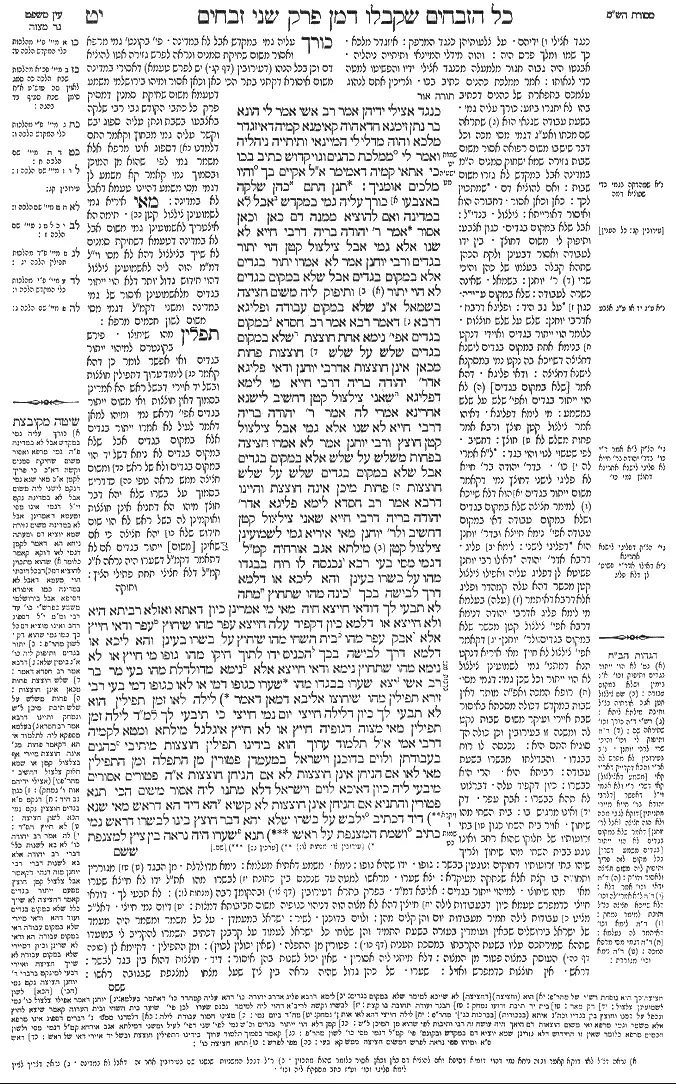
Zevahim 19a - Guemara
כנגד אצילי ידיהן אמר רב אשי אמר לי הונא בר נתן זימנא חדא הוה קאימנא קמיה דאיזגדר מלכא והוה מדלי לי המיינאי ותיתייה ניהליה ואמר לי (שמות יט, ו) ממלכת כהנים וגוי קדוש כתיב בכו כי אתאי קמיה דאמימר א"ל אקיים בך (ישעיהו מט, כג) והיו מלכים אומניך:
תנן התם כהן שלקה באצבעו כורך עליה גמי במקדש אבל לא במדינה ואם להוציא ממנה דם כאן וכאן אסור אמר ר' יהודה בריה דרבי חייא לא שנו אלא גמי אבל צילצול קטן הוי יתור בגדים ורבי יוחנן אמר לא אמרו יתור בגדים אלא במקום בגדים אבל שלא במקום בגדים לא הוי יתור ותיפוק ליה משום חציצה בשמאל א"נ שלא במקום עבודה ופליגא דרבא דאמר רבא אמר רב חסדא במקום בגדים אפי' נימא אחת חוצצת שלא במקום בגדים שלש על שלש חוצצות פחות מכאן אינן חוצצות אדרבי יוחנן ודאי פליגא אדר' יהודה בריה דרבי חייא מי לימא דפליגא שאני צילצול קטן דחשיב לישנא אחרינא אמרי לה אמר ר' יהודה בריה דרבי חייא לא שנו אלא גמי אבל צילצול קטן חוצץ ורבי יוחנן אמר לא אמרו חציצה בפחות משלש על שלש אלא במקום בגדים אבל שלא במקום בגדים שלש על שלש חוצצות פחות מיכן אינה חוצצת והיינו דרבא אמר רב חסדא לימא פליגא אדר' יהודה בריה דרבי חייא שאני צילצול קטן דחשיב ולר' יוחנן מאי איריא גמי לשמועינן צילצול קטן מילתא אגב אורחיה קמ"ל דגמי מסי בעי רבא נכנסה לו רוח בבגדו מהו על בשרו בעינן והא ליכא או דלמא דרך לבישה בכך כינה מהו שתחוץ מתה לא תבעי לך דודאי חייצא חיה מאי מי אמרינן כיון דאתא ואזלא רביתא היא ולא חייצא או דלמא כיון דקפיד עלה חייצא עפר מהו שיחוץ עפר ודאי חייץ אלא אבק עפר מהו בית השחי מהו שיחוץ על בשרו בעינן והא ליכא או דלמא דרך לבישה בכך הכניס ידו לתוך חיקו מהו גופו מי חייץ או לא נימא מהו שתחוץ נימא ודאי חייצא אלא נימא מדולדלת מהו בעי מר בר רב אשי יצא שערו בבגדו מהו שערו כגופו דמי או לאו כגופו דמי בעי רבי זירא תפילין מהו שיחוצו אליבא דמאן דאמר לילה לאו זמן תפילין הוא לא תבעי לך כיון דלילה חייצי יום נמי חייצי כי תיבעי לך למ"ד לילה זמן תפילין מאי מצוה דגופיה חייץ או לא חייץ איגלגל מילתא ומטא לקמיה דרבי אמי א"ל תלמוד ערוך הוא בידינו תפילין חוצצות מיתיבי כהנים בעבודתן ולוים בדוכנן וישראל במעמדן פטורין מן התפלה ומן התפילין מאי לאו אם הניחן אינן חוצצות לא אם הניחן חוצצות א"ה פטורים אסורים מיבעי ליה כיון דאיכא לוים וישראל דלא מתנו ליה אסור משום הכי תנא פטורין והתניא אם הניחן אינן חוצצות לא קשיא הא דיד הא דראש מאי שנא דיד דכתיב (ויקרא ו, ג) ילבש על בשרו שלא יהא דבר חוצץ בינו לבשרו דראש נמי כתיב (שמות כט, ו) ושמת המצנפת על ראשו תנא שערו היה נראה בין ציץ למצנפת
Comments from Rashi on Masechet Zevahim Page 19a
כנגד אצילי ידיהם . על צלעותיהן כנגד המרפק: איזגדר מלכא . כך שמו ומלך פרס היה: והוה מידלי המיינאי ותיתייה ניהליה . אבנטו היה גבוה חגור מלמעלה מכנגד אצילי ידיו והפשיטו למטה כדי לנאותו: אמר ממלכת כהנים כתיב בכו . וצריכין אתם לנהוג עצמכם בתפארת של כהנים דכתיב בהו לא יחגרו ביזע: כורך עליה גמי . בשעת עבודה שגנאי הוא שתראה שם מכתו ואע"ג דגמי מסי מכה וכל דבר שיש בו משום רפואה אסור משום שבות גזירה שמא ישחוק סמנים ה"מ במדינה אבל במקדש לא גזרו משום שבות: ואם להוציא דם . שמתכוין לכך: כאן וכאן אסור . דחבורה הוא ואיסור דאורייתא: צילצול . בנדי"ל: אבל שלא במקום בגדים . כגון אצבע: ותיפוק לי משום דחוצץ . בין ידו לעבודה ואסור דבעינן ולקח הכהן שתהא קבלה בעצמו של כהן והיכי שרי ר' יוחנן: בשמאל . שאינה כשרה לעבודה: שלא במקום עבודה . כגון על גב היד: ופליגא דרבא . אדרבי יוחנן: שלש על שלש חוצצות . כלומר הוי ייתור בגדים ואיידי דנקט בנימא אחת במקום בגדים לישנא דחציצה דשייכא בה נקט נמי במסקנא לישנא דחציצה: ודאי פליגא . דהא אמר [שלא במקום בגדים] לא הוי ייתור בגדים ואפי' שלש על שלש במשמע: מי לימא דפליגא . דאיהו אמר צילצול קטן חוצץ ורבא אמר פחות משלש לא חוצץ: דחשיב . לפי שעשוי לנוי והוי בגד: ל"א אמרי לה כו' . בדר' יהודה בר' חייא לא פליגי לישני דחוצץ נמי דקאמר משום ייתור בגדים הוא דלא שייכא למימר חציצה שלא במקום בגדים ושלא במקום עבודה דאי במקום עבודה אפי' נימא חייצא ובדר' יוחנן הוא דפליגי לישני: לימא פליג . דרבא אדר' יהודה דאילו רבי יוחנן פשיטא לן דפליג עליה ואפילו צילצול קטן מכשר דהא עלה קמהדר ופליג אלא דרבא דאיתמר (עלה) בעלמא מי לימא פליג אדרבי יהודה דנימא דרבא אפי' צילצול קטן מכשר שלא במקום בגדים: ולר' יוחנן . דקאמר אפי' צילצול לא חייץ מאי איריא דנקט תנא דמתני' גמי לשמועינן צילצול לא הוי ייתור וכל שכן גמי: דגמי מסי . רופא המכה ואפ"ה מותר דאין שבות במקדש דכולה מסכתא באיסור שבת איירי ועיקר משום שבות נקט לה ומשנה זו בעירובין וכן כולה הך סוגיא התם היא: נכנסה לו רוח בבגדו . והבדילתו מבשרו בשעת עבודה: רביתא היא . הרי היא כבשרו: כיון דקפיד עלה . דברצונו לא תהא בבשרו: אבק עפר . דק ואינו מרגיש בו: בית השחי מהו שיחוץ . אויר בית השחי כגון בתי זרועותיו של חלוקו שהוא רחב ואינו נוגע בבית השחי מהו שיחוץ וצריך שיהו בתי זרועותיו דחוקים ונוגעין בבשר: גופו . ידו שהיא גופו: נימא . משמע דאתיא מעלמא: נימא מדולדלת . מן הבגד מגוררין ותחובה בו קצת אלא שנתקה מעיקרא: יצא שערו . מראשו למטה עד שנכנס בין כתונת לבשרו מהו את"ל ידו לא חייצא שערו מאי: מהו שיחוצו . למיהוי ייתור בגדים: אליבא דמ"ד . בפרק בתרא דעירובין (דף צו.) ובהקומץ רבה (מנחות לו:): דיום נמי חייצי . דאל"כ מצינו עבודות לילה חמיר מעבודות יום והן קלים מהן: לא תבעי לך . דודאי חייצי כדמפרש טעמא כיון דבעבודות לילה חייצין דהא לא מצוה הוה דניהוי כגופיה משום חביבותא דמצות: ולוים בדוכנן . לשיר: ישראל במעמדן . על כל משמר ומשמר היה מעמד של ישראל בירושלים שבאין ועומדין בעזרה בשעת התמיד והן שלוחי כל ישראל לעמוד על קרבנן דכתיב תשמרו להקריב לי במועדו שתהא שמירתכם עליו בשעת הקרבתו במסכת תענית (דף כו.): פטורין מן התפלה . (שאין יכולין לכוין): ומן התפילין . דקיימא לן (סוכה דף כה.) העוסק במצוה פטור מן המצוה: דלא מיתני ליה אסורין . שאין יכול לשנות בהן איסור: דיד . חוצצות דהוא בין בגד לבשר: אמר ממלכת כהנים כתיב בכו . וצריכין אתם לנהוג עצמכם בתפארת של כהנים דכתיב בהו לא יחגרו ביזע: דראש . אין חוצצות כדמפרש ואזיל: שערו . של כהן גדול שהיה נראה בין ציץ שעל מצחו למצנפת שבגובה ראשו:
Comments from Tosafot - Zevahim 19a
כורך עליה גמי במקדש אבל לא במדינה . פי' בקונט' גמי מרפא ואסור משום שחיקת סמנים ונראה לפרש גזירה אטו להוציא דם וכן בכל הנהו (דעירובין (דף קג.) יש לפרש טעמא) דאסירי במדינה משום איסורא דקתני בתר הכי כאן וכאן אסור ומיהו בירושלמי משמע דטעמא משום שחיקת סמנין דמסיק פרק כל כתבי הקודש גבי רבי שלקה באצבעו בשבת ונתן עליה ספוג יבש וקשר עליה גמי מבחוץ וקאמר התם דלמדנו דספוג אינו מרפא אלא משמר גמי לפי שהוא מן המוכן ובסמוך נמי קאמר קא משמע לן דגמי מסי משמע דהיינו טעמא דאבל לא במדינה: מאי איריא גמי לשמועינן צילצול קטן . תימה הא איצטריך לאשמועינן גמי משום אבל לא במדינה דטעמא דשחיקת סמנים לא שייך בצילצול דהא לא מסי וי"ל דמ"מ הוה ליה לאשמועינן צילצול דהוי חידוש גדול יותר דלא הוי ייתור בגדים מלאשמועינן איסור של גמי במדינה ומשני דקמ"ל דגמי מסי משום לשון חכמים מרפא: תפלין מהו שיחוצו . פירש בקונטרס למיהוי ייתור בגדים ואי אפשר לומר כן דהא קאמר לימוד ערוך דתפילין חוצצות ובשל יד איירי דבשל ראש הא אמרינן בסמוך דאין חוצצות ואי משום ייתור בגדים אפי' דראש נמי ומיהו למאן דאמר לעיל לא אמרו ייתור בגדים אלא במקום בגדים אבל שלא במקום בגדים לא ניחא דשל יד הוי במקום בגדים ולא של ראש ומשום חציצה ממש נראה טפי כדדריש בסמוך על בשרו שלא יהא דבר חוצץ מיהו הא דתניא אינן חוצצות ואוקמינן לה בשל ראש לא הוי שום חידוש שלא יהא חציצה כי אם שאינן [משום] ייתור בגדים אם לא דתאמר דקמ"ל דשערו היה נראה א"נ קמ"ל דלא חציצי תחת פתילי הציץ:
Zevahim 19a - Mishnah translated into english
at the level of their elbows.
Rav Ashi says: Huna bar Natan said to me: Once, I was standing before Izgadar, king of Persia, and my belt was raised above its appropriate height, and he lowered it into place and said to me: “A kingdom of priests, and a holy nation” (Exodus 19:6), is written about you; therefore, you should always look dignified. When I came before Ameimar and recounted this incident, he said to me: With regard to you, God’s promise to Israel: “And kings shall be your foster fathers” (Isaiah 49:23), was fulfilled.
§ With regard to the priestly vestments, we learned in a mishna elsewhere (Eiruvin 103b): A priest who was injured on his finger on Shabbat may temporarily wrap it with a reed so that his wound is not visible while he is serving in the Temple. This leniency applies in the Temple, but not in the rest of the country, as the reed also heals the wound, and medical treatment is prohibited on Shabbat by rabbinic decree. But if his intention is to draw blood from the wound, it is prohibited both here and there.
Rabbi Yehuda, son of Rabbi Ḥiyya, says: They taught only that a reed is permitted. But a small sash [tziltzul] as a bandage is considered an extra garment and is therefore forbidden, since it is prohibited for a priest to add to the priestly vestments prescribed by the Torah. And Rabbi Yoḥanan says: They said that wearing extra garments is prohibited only if the extra garment is worn in a place on the priest’s body where the requisite vestments are worn. But if the sash is in a place on his body where the vestments are not worn, e.g., on his hand, it is not considered an extra garment.
The Gemara challenges: And let Rabbi Yoḥanan derive that a sash is prohibited because it acts as an interposition between the priest’s hand and the sacred vessel he grips, which disqualifies the service. The Gemara rejects this: Rabbi Yoḥanan is referring to a case where the wound is on the priest’s left hand. Since the entire service is performed exclusively with his right hand, a bandage on his left hand is not an interposition. Alternatively, the wound is on the priest’s right hand, but not in a place used for the service, such that the bandage does not interpose between his hand and the sacred vessel.
And Rabbi Yoḥanan disagrees with the opinion of Rava, as Rava says that Rav Ḥisda says: In a place on the priest’s body where the vestments are worn, even one extra thread interposes and is prohibited, whereas in a place on his body where the vestments are not worn, if the fabric is three fingerbreadths by three fingerbreadths it interposes, but if it is less than that it does not interpose.
The Gemara notes: Rava certainly disagrees with the opinion of Rabbi Yoḥanan, who holds that fabric of any size that is in a place on his body where the vestments are not worn is not considered an interposition. Shall we say that he also disagrees with the opinion of Rabbi Yehuda, son of Rabbi Ḥiyya, who deems any sash an interposition, even one smaller than three by three fingerbreadths?
The Gemara responds: Even according to Rava, a small sash is different, as it is significant, and it is therefore considered a garment even if it is less than three by three fingerbreadths.
Some say that there is another version of the dispute: Rabbi Yehuda, son of Rabbi Ḥiyya, says that they taught only that a reed is permitted, but a small sash interposes. And Rabbi Yoḥanan says: They said that an item acts as an interposition when it is less than three by three fingerbreadths only in a place on the priest’s body where the vestments are worn. But in a place on his body where the vestments are not worn, the following distinction applies: If the fabric is three fingerbreadths by three fingerbreadths, it interposes, but if it is less than this, it does not interpose. And this is the same ruling that Rava says that Rav Ḥisda says.
The Gemara suggests: Let us say that Rava disagrees with the opinion of Rabbi Yehuda, son of Rabbi Ḥiyya, who deems any sash an interposition, even one smaller than three fingerbreadths by three fingerbreadths. The Gemara rejects this: This is not necessarily so, as a small sash is different, since it is significant. It is therefore like a vestment, even if it is smaller than three fingerbreadths by three fingerbreadths.
The Gemara raises a question: And according to the opinion of Rabbi Yoḥanan, why does the mishna teach the halakha specifically with regard to a reed? Let the mishna teach us that a priest may wrap his wounded finger with a small sash, since this would teach the greater novelty that although a sash is significant, it does not constitute an interposition. The Gemara responds: It teaches us a matter in passing, that a reed heals.
§ Rava raises a dilemma: If a gust of wind entered the priest’s vestment, raising it slightly off his body, what is the halakha? Do we require that the vestment be: “Upon his body” (Leviticus 6:3), in a literal sense, and this is not the case when the wind raises his vestment? Or perhaps the service is valid because this is the normal manner of wearing clothes.
Furthermore, what is the halakha with regard to a louse found under the priest’s vestments? Does it interpose between the vestments and his body, disqualifying the service?
The Gemara clarifies: Do not raise a dilemma with regard to a dead louse, as it certainly interposes, like any other item. Rather, what is the halakha with regard to a live louse? Do we say that since it comes and goes, i.e., it moves around on his body, it is like a growth and does not interpose? Or perhaps, since he objects to its presence, it interposes?
Furthermore, what is the halakha with regard to dirt found under the priest’s vestments? Does it interpose? The Gemara objects: But dirt certainly interposes. The Gemara clarifies: Rather, the question is: What is the halakha with regard to dust of dirt, i.e., a minute amount of dust?
Furthermore, what is the halakha with regard to the gap between the underarm of the vestment and the priest’s armpit? Does it interpose? Do we require that the vestment is “upon his body” in a literal sense, and this is not the case? Or perhaps the service is valid since this is the normal manner of wearing clothes.
Furthermore, if the priest inserted his hand into his vestments and touched his chest, what is the halakha? Does his body interpose or not?
Furthermore, what is the halakha with regard to a thread [nima]? Does it interpose? The Gemara interjects: But a thread certainly interposes. Rather, the question is: What is the halakha with regard to a thread that hangs off the vestment itself and will soon fall off? Is such a thread considered as though it has already detached from the vestment, in which case it interposes?
Mar bar Rav Ashi raises a dilemma: If his hair emerged from his head and extended into his vestment and separated it from his skin, what is the halakha? Is his hair considered like his body, in which case it does not interpose, or is it not considered like his body?
Rabbi Zeira raises a dilemma: What is the halakha with regard to phylacteries? Do they interpose? The Gemara clarifies: According to the opinion of one who says that night is not an appropriate time to don phylacteries, do not raise the dilemma. Since they interpose at night, they also interpose during the day. Rather, when you raise the dilemma, do so according to the one who says that night is an appropriate time to don phylacteries. According to this opinion, what is the halakha? Does a mitzva that one fulfills with his body interpose, or does it not interpose?
This matter circulated and eventually came before Rabbi Ami, who said to him: It is a settled tradition in our possession that phylacteries interpose.
The Gemara raises an objection from a baraita: Priests in their service; and Levites on their platform in the Temple, where they recite songs; and Israelites at their watches, where they observe the sacrifice of the daily offering, are all exempt from prayer and from donning phylacteries. What, is it not that the term: Exempt, indicates that if they donned phylacteries anyway, they do not interpose? Apparently, priests may wear phylacteries while performing the Temple service. The Gemara responds: No, if they donned phylacteries, they interpose.
The Gemara asks: If so, why does the baraita use the word: Exempt? It should have used the word: Prohibited, since wearing phylacteries disqualifies the priests’ service. The Gemara responds: Since there are also Levites and Israelites mentioned in the baraita, concerning whom the baraita could not teach the word: Prohibited, as it is permitted for them to don phylacteries, due to that reason the baraita taught the word: Exempt, which is applicable to all.
The Gemara challenges: But isn’t it taught in a baraita: If a priest donned phylacteries they do not interpose? The Gemara responds: That is not difficult. This baraita, which teaches that phylacteries interpose is referring to the phylacteries of the hand, whereas that baraita, which teaches that they do not is referring to the phylacteries of the head.
The Gemara asks: What is different about the phylacteries of the hand that only they interpose? The verse indicates the difference, as it is written with regard to the vestments covering the body: “Shall he put upon his body” (Leviticus 6:3), indicating that nothing may interpose between the vestment and his body. The Gemara challenges: But there is also a verse written with regard to the head: “And you shall set the mitre upon his head” (Exodus 29:6), indicating that there must be no interposition between the mitre and the head. If so, the phylacteries of the head should be considered an interposition as well.
The Gemara responds: The Sages taught: The hair of the High Priest was visible between the frontplate and the mitre. The frontplate was set on the forehead, below the hairline, while the mitre was set above it;
Traduction : The William Davidson digital edition of the Koren Noé Talmud, with commentary by Rabbi Adin Even-Israel Steinsaltz.