 Talmud Bavli
Zevahim 66a : Youtube
Daf TubeYoutube
2 video classes :
Zevahim Page 66a
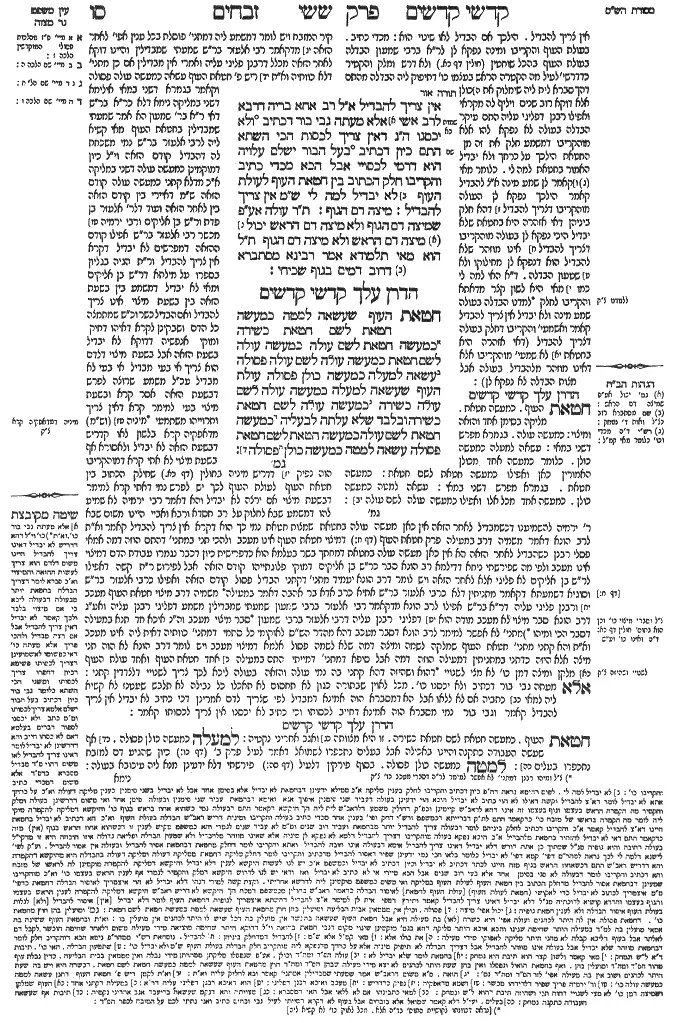
Zevahim 66a - Guemara
אין צריך להבדיל א"ל רב אחא בריה דרבא לרב אשי אלא מעתה גבי בור דכתיב (שמות כא, לג) "ולא יכסנו" ה"נ דאין צריך לכסות הכי השתא התם כיון דכתיב (שמות כא, לד) בעל הבור ישלם עלויה הוא דרמי לכסויי אבל הכא מכדי כתיב (ויקרא א, טו) והקריבו חלק הכתוב בין חטאת העוף לעולת העוף לא יבדיל למה לי ש"מ אין צריך להבדיל:
מיצה דם הגוף:
ת"ר עולה אע"פ שמיצה דם הגוף ולא מיצה דם הראש יכול מיצה דם הראש ולא מיצה דם הגוף ת"ל הוא מאי תלמודא אמר רבינא מסתברא דרוב דמים בגוף שכיחי:
הדרן עלך קדשי קדשים
מתני' חטאת העוף שעשאה למטה כמעשה חטאת לשם חטאת כשירה כמעשה חטאת לשם עולה כמעשה עולה לשם חטאת כמעשה עולה לשם עולה פסולה עשאה למעלה כמעשה כולן פסולה עולת העוף שעשאה למעלה כמעשה עולה לשם עולה כשירה כמעשה עולה לשם חטאת כשירה ובלבד שלא עלתה לבעליה כמעשה חטאת לשם עולה כמעשה חטאת לשם חטאת פסולה עשאה למטה כמעשה כולן פסולה:
Comments from Rashi on Masechet Zevahim Page 66a
אין צריך להבדיל . הילכך אם הבדיל לאו שינוי הוא: מכדי כתיב . בעולת העוף והקריבו ומינה נפקא לן לר"א ברבי שמעון הבדלה בעולת העוף בהכל שוחטין (חולין דף כא.) ולא דרש ומלק והקטיר כדדרשי' לעיל מה הקטרה הראש בעצמו כו' דתיפוק ליה הבדלה מהתם דהך סברא לית ליה שימלוק את כולן אלא דוקא רוב שנים ויליף לה מקראי ואפילו רבנן דפליגי עליה התם עיקר הבדלה בעולה לא נפקא להו אלא מוהקריבו דמשמע חלק את זה מן החטאת הילכך על כרחך ולא יבדיל האמור בחטאת למה לי כלומר מאי קאמר לן שמע מינה א"צ להבדיל קאמר הילכך נפקא לן העולה מוהקריבו דצריך להבדיל דהא חלק ביניהן דאי אזהרה היא בחטאת שלא יבדיל היכי נפקא לן בעולה מוהקריבו דצריך להבדיל אינו מוזהר שלא להבדיל הוא דנפקא לן מחילוקו ולא שטעון הבדלה. ד"א האי למה לי כמו מאי היא לשון קצר מדאתא והקריבו לחלק למדנו הבדלה בעולה שמע מינה ולא יבדיל אין צריך להבדיל קאמר ואשמעי' והקריבו דחלק בעולה דצריך להבדיל (דאי אזהרה היא בחטאת לא שמעי' מוהקריבו אלא דאינו מוזהר מלהבדיל בעולה אבל מצות הבדלה לא נפקא לן): מתני' חטאת העוף. כמעשה חטאת . מליקה בסימן אחד והזאה ומיצוי: כמעשה עולה . בגמרא מפרש דשני במאי: עשאה למעלה כמעשה כולן . כלומר כמעשה אחד מכולן האמורין כאן ואפילו כמעשה חטאת לשם חטאת: כמעשה חטאת . בגמרא מפרש דשני במאי: עשאה למטה כמעשה כולן . כמעשה אחד מכל אלו ואפילו כמעשה עולה לשם עולה:
Comments from Tosafot - Zevahim 66a
אלא מעתה גבי בור דכתיב ולא יכסנו כו' . מכל לאוין שבתורה כגון לא תחסום לא תאכלו כל נבילה לא תלבש שעטנז לא קשיא ליה למאי כתביה אם לא ללאו אבל הא דמסברא הוה אמינא דמבדיל לפי שצריך לדם אמרינן דכי כתיב לא יבדיל אין צריך להבדיל קאמר וגבי בור נמי מסברא הוה אמינא דחייב לכסותו וכי כתיב לא יכסנו אין צריך לכסותו קאמר: מתני' חטאת העוף. כמעשה חטאת לשם חטאת כשירה . זו היא מצוותה ואגב אחריני נקטיה: למעלה כמעשה כולן פסולה . אף שעשה העבודה כתקנה והיינו באכילה אבל בעלים נתכפרו לשמואל דאמר לעיל פרק ב' (זבחים דף כו:) כיון שהגיע דם למזבח נתכפרו בעלים: למטה כמעשה כולן פסולה . בסוף פירקין דלעיל (זבחים דף סה:) פירשתי דלא ידעינן מנא ליה עיכובא בעולה:
Zevahim 66a - Mishnah translated into english
It means that the priest does not have to separate it, but not that it is prohibited to do so. Rav Aḥa, son of Rava, said to Rav Ashi: If that is so, then with regard to a pit in the public domain, where it is written: “And if a man shall open a pit…and does not cover it” (Exodus 21:33), can one claim that this verse also means that he does not have to cover it?
The Gemara responds: How can these cases be compared? There, with regard to a pit, since it is written in the following verse: “The owner of the pit shall pay” (Exodus 21:34), it is evident that it is incumbent upon him to cover the pit. But here, since it is written with regard to a bird burnt offering: “And the priest shall bring it to the altar” (Leviticus 1:15), the term “it” indicates that the verse is referring only to a burnt offering, and the verse has thereby differentiated between a bird sin offering and a bird burnt offering.
Consequently, it is obvious that whereas the priest must completely separate the head of a bird burnt offering, this is not the halakha with regard to a sin offering. Why do I need the verse to state with regard to a bird sin offering: “But shall not separate it” (Leviticus 5:8)? Conclude from this verse that it is not forbidden to separate the head of a bird sin offering from the body, but rather one does not have to separate it.
§ The mishna teaches that if the priest squeezed out the blood of the head and did not squeeze out the blood of the body, it is disqualified. If he squeezed out the blood of the body and did not squeeze out the blood of the head, the offering is valid. The Sages taught in a baraita: In reference to a bird burnt offering, the verse states, seemingly unnecessarily: “It is a burnt offering” (Leviticus 1:17). This teaches that even though the priest squeezed out the blood of the body and did not squeeze out the blood of the head, it is valid. One might have thought that if the priest squeezed out the blood of the head and did not squeeze out the blood of the body the offering is still valid. Therefore, the verse states: “It is.”
The Gemara asks: What is the biblical derivation for the opinion that the offering is valid if the priest squeezed out only the blood of the body but not if he squeezed out only the blood of the head? Ravina said: There is no conclusive proof from the language of the verse itself, but it stands to reason that this is the case, as most of the blood is found in the body, not the head.
MISHNA: If the priest sacrificed a bird sin offering in its designated place below the red line, and he sacrificed it according to the procedure of a sin offering with pinching, i.e., cutting from the nape with a fingernail, and sprinkling, and he sacrificed it for the sake of a sin offering, the offering is fit. This is the manner in which a priest is to sacrifice a sin offering ab initio.
If the priest sacrificed the bird sin offering below the red line in the middle of the altar and according to the procedure of a sin offering, but he sacrificed it for the sake of a burnt offering; or if he sacrificed it according to the procedure of a burnt offering, even if he sacrificed it for the sake of a sin offering; or if he sacrificed it according to the procedure of a burnt offering for the sake of a burnt offering; in all these cases the sin offering is disqualified. If one sacrificed a bird sin offering above the red line according to the procedure of any of the offerings, it is disqualified, because he did not sacrifice it in its designated place.
A bird burnt offering that one sacrificed in its designated place above the red line according to the procedure of a burnt offering and for the sake of a burnt offering is fit. This is the manner in which a priest is to sacrifice a burnt offering ab initio. If he sacrificed a bird burnt offering above the red line according to the procedure of the burnt offering but for the sake of a sin offering, the offering is fit, but it did not satisfy the obligation of its owner.
If the priest sacrificed a bird burnt offering according to the procedure of a sin offering for the sake of a burnt offering, or according to the procedure of a sin offering for the sake of a sin offering, the offering is disqualified. If he sacrificed it below the red line according to the procedure of any of the offerings, it is disqualified, because he did not sacrifice it in its designated place.
Traduction : The William Davidson digital edition of the Koren Noé Talmud, with commentary by Rabbi Adin Even-Israel Steinsaltz.