 Talmud Bavli
Zevahim 91a : Youtube
Daf TubeYoutube
2 video classes :
Zevahim Page 91a
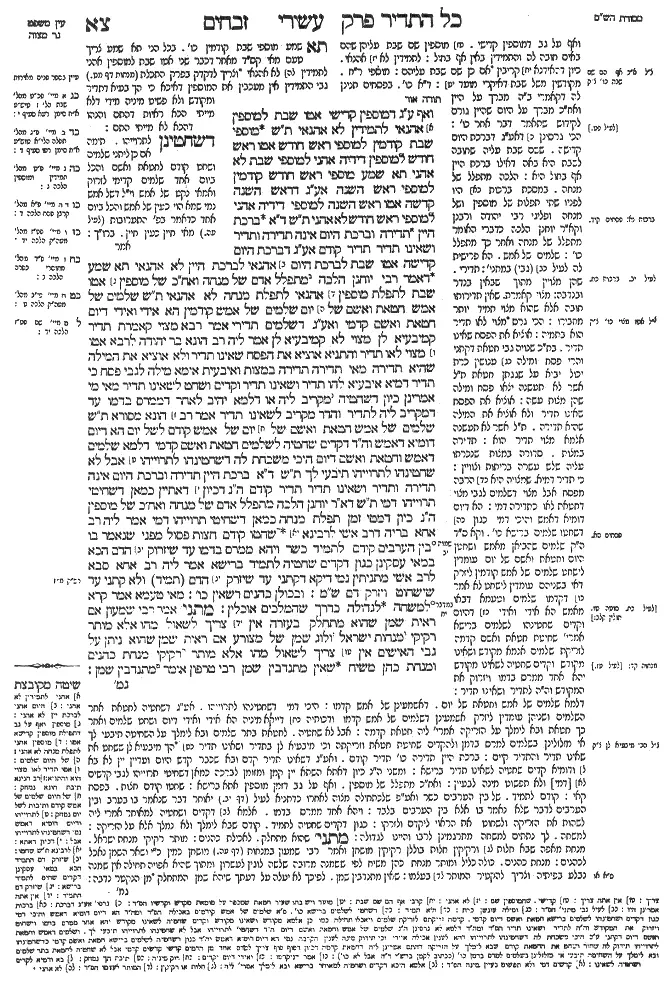
Zevahim 91a - Guemara
ואף ע"ג דמוספין קדישי אטו שבת למוספין אהנאי לתמידין לא אהנאי ת"ש מוספי שבת קודמין למוספי ראש חודש אטו ראש חודש למוספין דידיה אהני למוספי שבת לא אהני תא שמע מוספי ראש חודש קודמין למוספי ראש השנה אע"ג דראש השנה קדשה אטו ראש השנה למוספי דידיה אהני למוספי ראש חודש לא אהני ת"ש ד"א ברכת היין תדירה וברכת היום אינה תדירה ותדיר ושאינו תדיר תדיר קודם אע"ג דברכת היום קדישה אטו שבת לברכת היום אהנאי לברכת היין לא אהנאי תא שמע דאמר רבי יוחנן הלכה מתפלל אדם של מנחה ואח"כ של מוספין אטו שבת לתפלת מוספין אהנאי לתפלת מנחה לא אהנאי ת"ש שלמים של אמש חטאת ואשם של יום שלמים של אמש קודמין הא אידי ואידי דיום חטאת ואשם קדמי ואע"ג דשלמים תדירי אמר רבא מצוי קאמרת תדיר קמיבעיא לן מצוי לא קמיבעיא לן אמר ליה רב הונא בר יהודה לרבא אטו מצוי לאו תדיר והתניא אוציא את הפסח שאינו תדיר ולא אוציא את המילה שהיא תדירה מאי תדירה תדירה במצות ואיבעית אימא מילה לגבי פסח כי תדיר דמיא איבעיא להו תדיר ושאינו תדיר וקדים ושחט לשאינו תדיר מאי מי אמרינן כיון דשחטיה מקריב ליה או דלמא יהיב לאחר דממרס בדמו עד דמקריב ליה לתדיר והדר מקריב לשאינו תדיר אמר רב הונא מסורא ת"ש שלמים של אמש חטאת ואשם של יום של אמש קודם לשל יום הא דיום דומיא דאמש וה"ד דקדים שחטיה לשלמים חטאת ואשם קדמי דלמא שלמים דאמש וחטאת ואשם דיום היכי משכחת לה דשחטינהו לתרוייהו אבל לא שחטינהו לתרוייהו תיבעי לך ת"ש ד"א ברכת היין תדירה וברכת היום אינה תדירה ותדיר ושאינו תדיר תדיר קודם ה"נ דכיון דאתיין כמאן דשחיטי תרוייהו דמי ת"ש דא"ר יוחנן הלכה מתפלל אדם של מנחה ואח"כ של מוספין ה"נ כיון דמטי זמן תפלת מנחה כמאן דשחיטי תרוייהו דמי אמר ליה רב אחא בריה דרב אשי לרבינא שחטו קודם חצות פסול מפני שנאמר בו (שמות יב, ו) בין הערבים קודם לתמיד כשר ויהא ממרס בדמו עד שיזרוק הדם הכא במאי עסקינן כגון דקדים שחטיה לתמיד ברישא אמר ליה רב אחא סבא לרב אשי מתניתין נמי דיקא דקתני עד שיזרק הדם (תמיד) ולא קתני עד שישחוט ויזרק דם ש"מ:
ובכולן כהנים רשאין כו':
מאי טעמא אמר קרא (במדבר יח, ח) למשחה לגדולה כדרך שהמלכים אוכלין:
מתני׳ אמר רבי שמעון אם ראית שמן שהוא מתחלק בעזרה אין צריך לשאול מהו אלא מותר רקיקי מנחות ישראל ולוג שמן של מצורע אם ראית שמן שהוא ניתן על גבי האישים אין צריך לשאול מהו אלא מותר רקיקי מנחת כהנים ומנחת כהן משיח שאין מתנדבין שמן רבי טרפון אומר מתנדבין שמן:
Comments from Rashi on Masechet Zevahim Page 91a
ואף על גב דמוספין קדישי . מוספין שם שבת עליהן שהם באים חובה לה והתמידין באין אף בחול: לתמידין לא אהנאי . כיון דהאידנא קריבין אם כן שם שבת עליהם: מוספי ר"ח . מקודשין משל שבת דאיקרי מועד: ד"א כו' . בפסחים תנינן לה דקאמרי ב"ה מברך על היין ואח"כ מברך על היום שהיין גורם לקידוש שתאמר דבר אחר כו': הכי גרסינן דאע"ג דברכת היום קדישה . ששם שבת עליה שחובה לשבת היא באה דאילו ברכת היין אף בחול היא: הלכה מתפלל של מנחה . במסכת ברכות היו לפניו שתי תפלות של מוספין ושל מנחה ופליגי רבי יהודה ורבנן וקא"ר יוחנן הלכה כדברי האומר מתפלל של מנחה ואחר כך מתפלל כו': שלמים של אמש . הא פרישית לה לעיל (גבי) במתני': תדירי . שהן מצויין מתוך שבאין בנדר ובנדבה: מצוי קאמרת . שאין תדירותו חובה אלא שהוא מצוי תמיד יותר מחבירו: הכי גרס מצוי לאו תדיר הוא בתמיה: אוציא את הפסח שאינו תדיר . בת"כ שנויה גבי חטאת דקתני והרי פסח ומילה ענושין כרת יכול יביא על שגגתן חטאת ת"ל אשר לא תעשנה יצאו פסח ומילה שהן מצות עשה: אוציא את הפסח שאינו תדיר ולא אוציא את המילה שהיא תדירה . ת"ל אשר לא תעשנה אלמא מצוי תדיר הוא: תדירה במצות . סדורה במצות שנכרתו עליה שלש עשרה בריתות וצוויין: כי תדיר דמיא . שמצויה היא הרבה מפסח אבל מצוי דשלמים לגבי מצוי דחטאת לאו כתדירה דמי: הא דיום דומיא דאמש והיכי דמי כגון דשחטו שלמים ברישא כו' . וקא ס"ד ה"ק שלמים שהביאן מאמש ושחטן היום וחטאת ואשם של יום עומדין לישחט שלמים של אמש קודמין ליזרק דאי בשניהם עומדין לישחט לא אמר דקדמו שלמים וטעמא דבאו מאמש הא אידי ואידי דהיום וקדים שחטינהו לשלמים ברישא אמרי' שחיטת חטאת ואשם קדמה לזריקת שלמים אלמא מקודש ושאינו מקודש וקדים שחטיה לשאינו מקודש יהא אחד ממרס בדמו ויזרוק את המקודש וה"ה לתדיר ושאינו תדיר: דלמא שלמים של אמש וחטאת של יום . דאשמעינן של אמש קדמו: היכי דמי דשחטינהו לתרוייהו . אע"ג דשחטיה לחטאת אחר השלמים ושניהן עומדין ליזרק אשמעינן דשלמים של אמש קדמו ודכותיה דייקא מיניה הא אידי ואידי דיום ושחט שלמים ואחר כך חטאת ובא לימלך על הזריקה אמרי' ליה חטאת קדמה: אבל לא שחטיה . לחטאת בתר שלמים ובא לימלך על השחיטה תיבעי לך אי מזלזלינן בשלמים למרס בדמן ולהקדים שחיטת חטאת וזריקתה וכי מיבעיא לן בתדיר ושאינו תדיר הך מיבעיא לן ששחט את שאינו תדיר והתדיר קיים: ברכת היין תדירה כו' תדיר קודם . ואע"ג דשאינו תדיר קדם ובא שכבר קדש היום ועדיין יין לא בא ודומיא קדים שחטיה לשאינו תדיר ברישא: ומשני ה"נ כיון דאתא השתא יין קמן ומזומן לברכה כמאן דשחיטי תרוייהו לגבי קדשים [דמי] ולא תפשוט מינה לבעיין: ואח"כ מתפלל של מוספין . ואף על גב דזמן מוספין אתא ברישא: שחטו קודם חצות . בפסח קאי: קודם לתמיד . של בין הערבים כשר ואע"פ שלכתחילה מצוה לאחרו כדתניא לעיל (זבחים דף יב.) יאוחר דבר שנאמר בו בערב ובין הערבים לדבר שלא נאמר בו אלא בין הערבים בלבד: ויהא אחד ממרס בדמו . אלמא דקדים ושחטיה למאוחר אמרי ליה לשהות את הזריקה ולשחוט את הראוי ליקדם ולזרקו: כגון דקדים שחטיה לתמיד . קודם שבא לימלך ולא נמלך אלא על הזריקה: למשחה . לך נתתים למשחה מתרגמינן לרבו והיינו לגדולה: מתני' שהוא מתחלק . לאכילת כהנים: מותר רקיקי מנחת ישראל . מנחת מאפה שבא חלות ורקיקין חלות בוללן רקיקין מושחן ואמר רבי שמעון במנחות (דף עה.) מושחן כמין כ"י ושאר השמן נאכל לכהנים: מנחת כהנים . כולה כליל ומותר מנחת כהן משיח לפי ששמנה מרובה שלשה לוגין לעשרון ומתוך שהיא אפויה תחילה אין שמנה נבלע בפיתיה וצריך להקטיר המותר בעצמו: שאין מתנדבין שמן . לפיכך לא יעלה על דעתך שיהא שמן המתחלק מן הנקטר נדבה:
Comments from Tosafot - Zevahim 91a
תא שמע מוספי שבת קודמין כו' . בכל הני תא שמע צריך טעם מאי קס"ד מאחר דכבר שני אטו שבת למוספין אהני לתמידין לא אהנאי וצריך לדקדק בפרק התכלת (מנחות דף מט.) גבי התמידין אין מעכבין את המוספין דאיכא כי הך בעיא דתדיר ומקודש ולא פשיט מיניה מידי דלא מייתי הכא ראיות דהתם והנהו דהכא לא מייתי התם: דשחטינן לתרוייהו . תימה אם כן ליתני שלמים ושחט קודם לחטאת ואשם והכל ביום אחד שלמים קדימי לזרוק ואמאי נקט של אמש וי"ל דשל אמש נמי שמא הוי כעין של אמש והכל ביום אחד כדאמר בפ' התערובות (לעיל זבחים עה.) מאי חיין כעין חיין. ברו"ך:
Zevahim 91a - Mishnah translated into english
And even though the additional offerings are of greater sanctity, as they are sacrificed due to the sanctity of Shabbat, the frequent offering precedes the offering of greater sanctity. The Gemara rejects this proof: Is that to say that the sanctity of Shabbat affects the sanctity of the additional offerings but does not affect the daily offerings brought on Shabbat? Rather, the sanctity of Shabbat elevates the sanctity of the daily offerings as well, and as both are of equal sanctity, the frequent daily offering precedes the additional offerings.
The Gemara cites another proof: Come and hear the continuation of this mishna: The additional Shabbat offerings precede the additional New Moon offerings because they are more frequent, despite the fact that the New Moon elevates the sanctity of its additional offerings. The Gemara rejects this proof in a similar manner: Is that to say that the sanctity of the New Moon affects the sanctity of its additional offerings but does not affect the additional offerings of Shabbat? These additional offerings are also imbued with the sanctity of the New Moon.
The Gemara cites another proof: Come and hear the continuation of this mishna: The additional New Moon offerings precede the additional New Year offerings because they are more frequent, even though the New Year is of greater sanctity. The Gemara rejects this proof as well: Is that to say that the sanctity of the New Year affects the sanctity of its additional offerings but does not affect the additional offerings of the New Moon?
The Gemara cites another proof: Come and hear a baraita (Tosefta, Berakhot 5:25) that discusses the dispute between Beit Shammai and Beit Hillel with regard to the order of blessings in kiddush. After stating one reason for the opinion of Beit Hillel that one recites the blessing on the wine before the blessing of the sanctity of the day, the Tosefta adds: Alternatively, Beit Hillel say: The blessing over wine is recited frequently, and the blessing over the day is not recited frequently, and there is a principle: When a frequent practice and an infrequent practice clash, the frequent practice takes precedence over the infrequent practice. This applies even though the blessing of the day is of greater sanctity, as it is recited due to the sanctity of Shabbat. The Gemara rejects this proof as well: Is that to say that the sanctity of Shabbat affects the sanctity of the blessing of the day but does not affect the sanctity of the blessing on the wine?
The Gemara cites another proof: Come and hear, as Rabbi Yoḥanan says: If one did not recite the additional prayer on Shabbat until the time of the afternoon prayer arrived, the halakha is that a person prays the afternoon prayer and afterward the additional prayer, as the afternoon prayer is more frequent. This ruling applies despite the fact that the additional prayer is of greater sanctity. Once again the Gemara rejects the proof: Is that to say that the sanctity of Shabbat affects the sanctity of the additional prayer but does not affect the sanctity of the afternoon prayer?
The Gemara cites yet another proof. Come and hear the mishna: If one has a peace offering from yesterday and a sin offering or a guilt offering from today, the peace offering from yesterday precedes the others; this is the statement of Rabbi Meir. One can infer from this that if both this offering and that offering are from today, the sin offering or guilt offering takes precedence, and this is the halakha even though the peace offering is more frequent, as people sacrifice voluntary peace offerings more often than sin offerings or guilt offerings.
Rava said in response: Are you speaking of a common offering? Although peace offerings are sacrificed more often than sin offerings, there is no obligation to sacrifice them at any particular frequency. We raise the dilemma only with regard to a clash between a frequent offering and one of greater sanctity, but we do not raise the dilemma with regard to a common offering.
Rav Huna bar Yehuda said to Rava: Is that to say that a common obligation is not considered tantamount to a frequent obligation? But isn’t it taught in a baraita with regard to positive mitzvot whose intentional neglect results in the punishment of karet but whose unwitting transgression does not entail the sacrifice of a sin offering: I should exclude the neglect of the Paschal offering from the obligation to sacrifice a sin offering, as it is not frequent, and I should not exclude the neglect of the mitzva of circumcision, as it is frequent? Circumcision is considered a frequent mitzva, as it is performed more often than the Paschal offering, despite the fact that there is no obligation to perform circumcisions at any particular frequency.
Rava answers: What is the meaning of frequent in that context? It means that circumcision is frequent in terms of the numerous mitzvot commanded with regard to its fulfillment. And if you wish, say instead that circumcision in relation to the Paschal offering is considered like a frequent obligation, as it occurs far more often, whereas peace offerings are brought only somewhat more often than sin offerings. In sum, one cannot infer from the mishna that an offering of greater sanctity precedes a frequent offering.
§ An additional dilemma with regard to precedence was raised before the Sages: If the priest had two offerings to sacrifice, a frequent offering and an infrequent offering, and although he should have initially sacrificed the frequent offering he slaughtered the infrequent offering first, what is the halakha? Do we say that since he already slaughtered the infrequent offering he also proceeds to sacrifice it? Or perhaps he does not yet sacrifice it but gives it to another priest, who stirs its blood to prevent it from congealing, until he sacrifices the frequent offering; and then he sacrifices the infrequent offering.
Rav Huna from Sura said: Come and hear an answer from the mishna: If one has a peace offering from yesterday and a sin offering or a guilt offering from today, the peace offering from yesterday precedes the sin offering from today. It can be assumed that the mishna is not discussing a case where none of the offerings have been slaughtered, as the peace offering would not take precedence in this situation. Rather, it is discussing a peace offering from yesterday that was slaughtered but its blood has not yet been presented. One can infer from this that only a peace offering from yesterday takes precedence in this situation, but in the case of a peace offering from today that is similar in other aspects to a peace offering from yesterday, the peace offering does not take precedence.
The Gemara explains: And what are the circumstances of this case? This is a situation where one first slaughtered the peace offering from today. In this case the sin offering or guilt offering takes precedence, although the peace offering is already slaughtered, as both of them are of greater sanctity. The same should apply to an infrequent offering that was slaughtered before a frequent offering: The frequent offering is slaughtered before the blood of the infrequent offering is presented.
The Gemara rejects this answer: Perhaps when the mishna makes reference to a peace offering from yesterday and a sin offering or a guilt offering from today, the circumstances should be understood differently. How can you find these other circumstances? The mishna discusses a case where the priest already slaughtered both of them, the peace offering and the sin or guilt offering, and the blood of both awaits presentation on the altar. But had he not yet slaughtered both of them, but only the peace offering, you can still raise the dilemma of whether the priest should set aside the blood of the peace offering in order to slaughter the sin offering first, due to its greater sanctity.
The Gemara cites another proof: Come and hear the aforementioned baraita: Alternatively, Beit Hillel say: With regard to the order of blessings in kiddush, the blessing on wine is recited frequently and the blessing of the day is not recited frequently, and there is a principle: When a frequent practice and an infrequent practice clash, the frequent practice takes precedence over the infrequent practice. The obligation to recite the blessing of the day is due to the sanctity of Shabbat and applies at the start of Shabbat, before wine is placed on the table. Nevertheless, the blessing on the wine takes precedence due to its frequency. So too, the slaughtering of the frequent offering should take precedence, even if the priest had already commenced the sacrificial rites of the infrequent offering.
The Gemara rejects this proof: Here too, with regard to kiddush, the circumstances are different, since wine is available when one recites kiddush, and therefore the obligation of both blessings come together. This means that it is comparable to a situation where one already slaughtered both animals.
The Gemara cites yet another proof: Come and hear, as Rabbi Yoḥanan says: The halakha is that a person prays the afternoon prayer and afterward the additional prayer, despite the fact that the obligation of the additional prayer applies first, which is similar to an offering slaughtered first. The Gemara rejects this proof: Here too, since the time of the afternoon prayer has now arrived, one is obligated in both prayers, and again this is comparable to a situation where one already slaughtered both animals.
Rav Aḥa, son of Rav Ashi, said to Ravina that an answer to this dilemma can be found in a mishna (Pesaḥim 61a): If one slaughtered the Paschal offering before midday it is disqualified, because it is stated in its regard: “In the afternoon” (Exodus 12:6). If he slaughtered it before the daily afternoon offering was slaughtered it is valid, even though the daily offering should be sacrificed first, but someone should stir its blood to prevent it from congealing until he slaughters and sprinkles the blood of the daily offering. Although the infrequent Paschal offering is already slaughtered, the priest first slaughters the frequent daily offering and then sprinkles the blood of the Paschal offering.
The Gemara rejects this proof as well: Here we are dealing with a case where he gave precedence to the daily offering and slaughtered it first, and then slaughtered the Paschal offering before sprinkling the blood of the daily offering. Since the blood of both offerings requires sprinkling on the altar, the blood of the daily offering takes precedence. Rav Aḥa the Elder said to Rav Ashi that the wording of the mishna is also precise, as it teaches: Until the blood of the daily offering is sprinkled, and does not teach: Until he slaughters and sprinkles the blood. This indicates that the daily afternoon offering has already been slaughtered. The Gemara affirms: Conclude from its wording that this is the meaning of the mishna.
§ The mishna teaches: And with regard to all of the offerings that are eaten, the priests are permitted to alter the manner of their consumption and eat them as they choose. The Gemara asks: What is the reason for this halakha? The Gemara answers: The verse states, with regard to the gifts of the priesthood: “Of all the consecrated items of the children of Israel to you have I given them lemoshḥa” (Numbers 18:8). Targum Onkelos renders this term as: For greatness, indicating that the flesh of the offerings should be eaten in the manner that kings eat their food, i.e., prepared in any way they want.
MISHNA: Rabbi Shimon said: If you saw oil that is being distributed in the Temple courtyard for consumption by the priests and you seek to ascertain its nature, you do not need to ask what it is. Rather, it is left over from the oil of the wafers of the meal offerings of Israelites after they smeared a bit of oil on them, or it is left over from the log of oil of a leper after a small amount of the oil was placed on him.
If you saw oil that is placed on the flames of the altar in the manner of an offering, you do not need to ask what it is. Rather, it is left over from the oil of the wafers of the meal offering of priests, or it is the leftover oil from the meal offering of the anointed priest, which requires a great deal of oil and which is burned in its entirety on the altar. The mishna adds: One cannot say that the oil distributed to priests or burned on the altar was brought as a gift offering, as one may not contribute oil as a gift offering. Rabbi Tarfon says: One may contribute oil as a gift offering.
Traduction : The William Davidson digital edition of the Koren Noé Talmud, with commentary by Rabbi Adin Even-Israel Steinsaltz.