 Talmud Bavli
Zevahim 31a : Youtube
Daf TubeYoutube
2 video classes :
Zevahim Page 31a
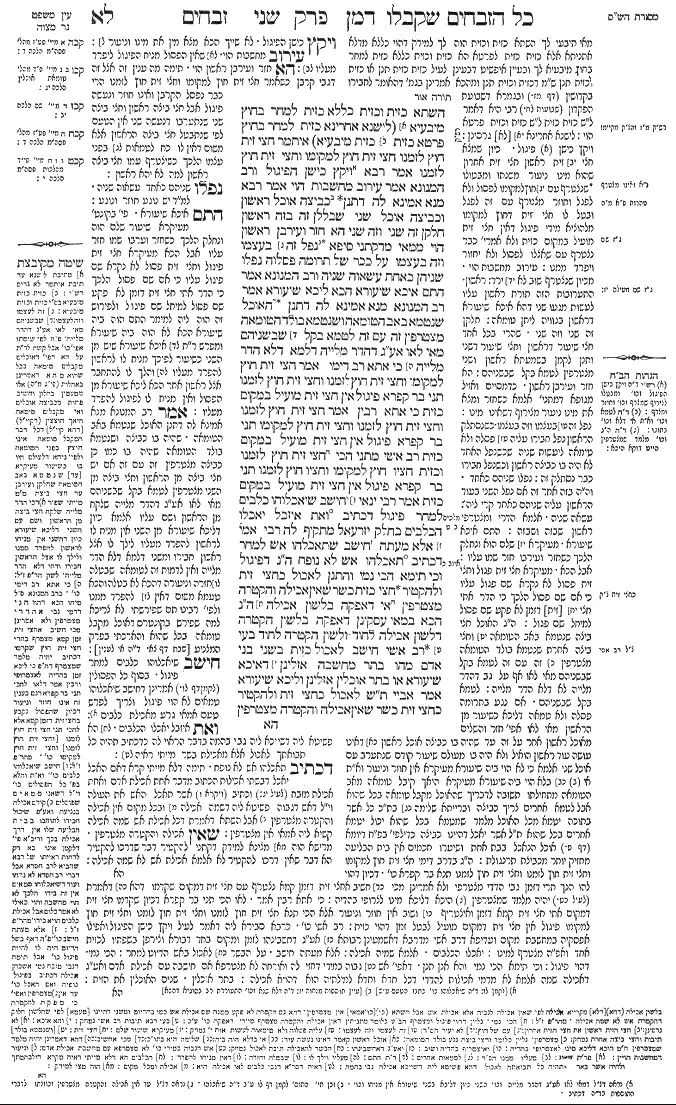
Zevahim 31a - Guemara
השתא כזית וכזית כללא כזית למחר בחוץ מיבעיא (לישנא אחרינא כזית למחר בחוץ פרטא כזית כזית מיבעיא) איתמר חצי זית חוץ לזמנו חצי זית חוץ למקומו וחצי זית חוץ לזמנו אמר רבא ויקץ כישן הפיגול ורב המנונא אמר עירוב מחשבות הוי אמר רבא מנא אמינא לה דתנן כביצה אוכל ראשון וכביצה אוכל שני שבללן זה בזה ראשון חלקן זה שני וזה שני הא חזר ועירבן ראשון הוי ממאי מדקתני סיפא נפל זה בעצמו וזה בעצמו על ככר של תרומה פסלוה נפלו שניהן כאחת עשאוה שניה ורב המנונא אמר התם איכא שיעורא הכא ליכא שיעורא אמר רב המנונא מנא אמינא לה דתנן האוכל שנטמא באב הטומאה ושנטמא בולד הטומאה מצטרפין זה עם זה לטמא בקל שבשניהם מאי לאו אע"ג דהדר מלייה דלמא דלא הדר מלייה כי אתא רב דימי אמר חצי זית חוץ למקומו וחצי זית חוץ לזמנו וחצי זית חוץ לזמנו תני בר קפרא פיגול אין חצי זית מועיל במקום כזית כי אתא רבין אמר חצי זית חוץ לזמנו וחצי זית חוץ לזמנו וחצי זית חוץ למקומו תני בר קפרא פיגול אין חצי זית מועיל במקום כזית רב אשי מתני הכי חצי זית חוץ לזמנו וכזית חציו חוץ למקומו וחציו חוץ לזמנו תני בר קפרא פיגול אין חצי זית מועיל במקום כזית אמר רבי ינאי חישב שיאכלוהו כלבים למחר פיגול דכתיב (מלכים ב ט, י) ואת איזבל יאכלו הכלבים בחלק יזרעאל מתקיף לה רבי אמי אלא מעתה חישב שתאכלהו אש למחר דכתיב (איוב כ, כו) תאכלהו אש לא נופח ה"נ דפיגול וכי תימא הכי נמי והתנן לאכול כחצי זית ולהקטיר חצי כזית כשר שאין אכילה והקטרה מצטרפין אי דאפקה בלשון אכילה ה"נ הכא במאי עסקינן דאפקה בלשון הקטרה דלשון אכילה לחוד ולשון הקטרה לחוד בעי רב אשי חישב לאכול כזית בשני בני אדם מהו בתר מחשבה אזלינן דאיכא שיעורא או בתר אוכלין אזלינן וליכא שיעורא אמר אביי ת"ש לאכול כחצי זית ולהקטיר כחצי זית כשר שאין אכילה והקטרה מצטרפין
Comments from Rashi on Masechet Zevahim Page 31a
לישנא אחרינא גרסינן: ויקץ כישן פיגול . כיון שמצא חצי זית ראשון חצי זית אחרון שהוא מינו ניעור משנתו ומבטולו שנצטרף עם חוץ למקומו לפסול ולא לפגל וחוזר מצטרף עם זה לפגל ובטל לו חצי זית דחוץ למקומו מלהוציא מידי פיגול דאין חצי זית מועיל במקום כזית ולא אמרי' כבר נצטרף עם שאצלו לפסול ולא יחזור ויפרד ממנו: עירוב מחשבות הוי . מכיון שנצטרף שוב לא ירד: ראשון . התערובות הזה תורת ראשון עליו לעשות מגעו שני דהא איכא שיעורא דראשון בגוויה ליתן טומאה: חלקן זה שני וזה שני . שהרי בכל אחד חצי שיעור דראשון וחצי שיעור דשני ותנן לקמן בשמעתא ראשון ושני מצטרפין לטמא בקל שבשניהם: הא חזר ועירבן ראשון . כדמסיים ואזיל מגופא דמתני' אלמא כשחזר ומצא את מינו ניעור מצירוף דשאינו מינו: נפל זה בעצמו וזה בעצמו . כשנסתלק הראשון נפל חבירו עליה פסלה ולא טימאה ליעשות שניה שכשנפל האחד לא היה בו כביצה ראשון וכשנפל חבירו כבר נסתלק זה: נפלו שניהם כאחד . וה"ה בזה אחר זה אם נפל השני בעוד הראשון עליה שניהם כאחד קרי ליה: עשאה שניה . אלמא הדרי ומצטרפי ראשון שבזה ושבזה: התם איכא שיעורא . מעיקרא שלם הוא ונחלק הלכך כשחזר ועירבו חזר שמו עליו: אבל הכא . מעיקרא חצי זית פגול וחצי זית פסול לא נקרא שם פגול עליו כי אם שם פסול הלכך כי הדר אתי חצי [זית] דזמן לא פקע שם פסול למיחל שם פגול: ה"ג האוכל חצי ביצה שנטמא באב הטומאה וחצי ביצה אחרת שנטמא בולד הטומאה מצטרפין זה עם זה לטמא בקל שבשניהם מאי לאו אף על גב דהדר מלייה לא דלא הדר מלייה: לטמא בקל שבשניהם . אם נגע בתרומה פסלה ולא טמאה דליכא כשיעור מן הראשון מאי לאו אפי' חזר והשלים מאוכל ראשון אחר על זה עד שהיה בו כביצה אוכל ראשון דאינו עושה עוד ראשון הואיל ולא היה בו מעולם שיעור קודם שנתערב עם אוכל שני אלמא כי לא הוי ביה שיעורא מעיקרא אין חוזר וניעור וא"ת אי בלא הוי ביה שיעורא מעיקרא היאך קיבל טומאה מאב הטומאה מתחילתו תשובה לדבריך שהאוכל מקבל טומאה בכל שהוא אבל לטמא אחרים צריך כביצה וברייתא שלימה בת"כ כל אשר בתוכה יטמא מכל האוכל מלמד שמטמא בכל שהוא יכול יטמא אחרים בכל שהוא ת"ל אשר יאכל דהיינו כביצה כדילפי' בפ"ח דיומא (דף פ.) אוכל הנאכל בבת אחת ושיערו חכמים אין בית הבליעה מחזיק יותר מכביצת תרנגולת: ה"ג בדרב דימי חצי זית חוץ למקומו וחצי זית חוץ לזמנו וחצי זית חוץ לזמנו תנא בר קפרא כו' . דכיון דהוי להו הנך תרי דזמן גבי הדדי מצטרפין ולא אמרינן מכי חשיב אחצי זית דזמן קמא נצטרף עם חצי זית דמקום שקדמו דהא דאמרת (לעיל זבחים כט.) יהיה מלמד שמצטרפין היכא דליכא מינו לצרופי בהדיה: כי אתא רבין אמר . לאו הכי תני בר קפרא דכיון שקדמו חצי זית דמקום אתי חצי זית קמא דזמן ואיצטריף ושוב אין חוזר וניעור אלא הכי תנא חצי זית חוץ לזמנו וחצי זית חוץ לזמנו וחצי זית חוץ למקומו פיגול אין חצי זית דמקום מועיל לבטל זמן דהוי כזית: רב אשי כו' . כרבא סבירא ליה דאמר לעיל ויקץ כישן הפיגול ואפילו אפסקיה במחשבת מקום ועדיפא דרב אשי מדרבא דאשמעינן רבותא אע"ג דחשבינהו לזמן ומקום בחד דבורא וצירפן בשפתיו לכזית אחד ואפ"ה מצטרף למינו: יאכלו הכלבים . אלמא שמיה אכילה: אלא מעתה חישב . על הבשר לאכול באש הדיוט למחר: הכי נמי . דהוי פיגול: וכי תימא הכי נמי והא אנן תנן . דאפי' אש גבוה במידי דחזי לה ואורחה לא מצטרפא אם חישבה עם אכילת אדם ואע"ג דאכילה שמה אלמא לא מדמי אכילות להדדי דכל חדא וחדא למילתיה הוא דהויא אכילה: בתר אוכלין . שנים האוכלין את הזית:
Comments from Tosafot - Zevahim 31a
ויקץ כישן הפיגול . לא שייך הכא מצא מין את מינו וניעור: עירוב מחשבות הוי . שאין הפסול מניח הפיגול ליפרד מעליו: הא חזר ועירבן ראשון הוי. תימה מה ענין זה אצל זה דגבי קרבן כשאמר חצי זית חוץ למקומו וחצי זית חוץ לזמנו הרי כבר נפסל הקרבן ואינו חוזר ונעשה פיגול אבל חצי ביצה ראשון וחצי ביצה שני שנתערבו דנעשה שני אין הטעם לפי שנתבטל חצי ביצה הראשון אלא משום דאין לו כח לטמאות בפני עצמו הלכך כשיצטרף עמו חצי ביצה ראשון למה לא יהא ראשון: נפלו שניהם כאחד עשאוה שניה . למ"ד יש נוגע חוזר ונוגע: התם איכא שיעורא . פי' בקונט' מעיקרא שיעור שלם הוה ונחלק הלכך כשחזר וערבו שמו חזר עליו אבל הכא מעיקרא חצי זית פיגול וחצי זית פסול לא נקרא שם פיגול עליו כי אם שם פסול הלכך כי הדר אתי חצי זית דזמן לא פקע שם פסול למיחל שם פיגול ולפירוש זה הוה ליה למימר התם הוה ביה שיעורא הכא לא הוה ביה שיעורא ומפרש ר"ת איכא שיעורא שיש מן השני כשיעור לפיכך מניח לו לראשון להפרד מעליו והלך לו להתחבר אצל ראשון אחר הכא ליכא שיעורא מן הפסול ואין מניח לו לפיגול להפרד מעליו: אמר רב המנונא מנא אמינא לה דתנן האוכל שנטמא באב הטומאה . שהיה בו כביצה ושנטמא בולד הטומאה שהיה בו כמו כן כביצה מצטרפין זה עם זה אם יש חצי ביצה מן הראשון וחצי ביצה מן השני מצטרפין לטמא בקל שבשניהם מאי לאו אע"ג דהדר מלייה שלקח מן הראשון ושם עליו אלמא כיון דליכא שיעורא מן השני אין מניח לו לראשון להפרד מעליו לילך לו אצל ראשון חבירו ומשני דלמא דלא הדר מלייה ואין לדמות זה לטומאה שבטלה חזרה וניעורה דהכא לא בטלה והכא טעמא משום דאין להפרד ממנו ולפי' רבינו תם שפירשתי לא צריכא למה שפירש בקונטרס דאוכל מקבל טומאה בכל שהוא והארכתי בפרק המצניע [שבת דף צא. ד"ה אי לענין]: חישב שיאכלוהו כלבים למחר פיגול . בסוף כל הפסולין (לקמן זבחים דף לו.) אמרינן דחישב שיאכלוהו טמאים לא הוי פיגול וצריך לפרש טעם אמאי גרע מאכילת כלבים: ואת איזבל יאכלו הכלבים . הא פשיטא ליה דשייכא ליה גבי בהמה בדבר הראוי לה כדכתיב תהיה כל תבואתך לאכול אלא מאכילת בשר מייתי ראיה: דכתיב תאכלהו אש לא נופח . תימה דלא מייתי קרא דאם האכל יאכל דבשתי אכילות הכתוב מדבר אחת אכילת אדם ואחת אכילת מזבח (לעיל זבחים יג:) וכתיב (ויקרא ו) אשר תאכל האש את העולה וי"ל דאש דגבוה פשיטא ליה דשמה אכילה ובכל מקום אין אכילה והקטרה מצטרפין אבל השתא דאמרת דכל אכילת אש שמה אכילה קשיא ליה אמאי אין מצטרפין: שאין אכילה והקטרה מצטרפין . מרישא הוה מצינא למידק דקתני להקטיר דבר שדרכו להקטיר הא דבר שאין דרכו להקטיר לא אלמא אכילת אש לא שמה אכילה:
Zevahim 31a - Mishnah translated into english
Now that Rabbi Yehuda concedes that even: An olive-bulk and an olive-bulk, is one general term, is it necessary to inquire with regard to: An olive-bulk the next day outside?
The Gemara presents another version of this discussion: Rabbi Yehuda HaNasi might say that if Rabbi Yehuda maintains that even when one says: An olive-bulk the next day outside, each term is considered separate, is it necessary to inquire with regard to: An olive-bulk, an olive-bulk?
§ It was stated: If one had intent to eat half an olive-bulk beyond its designated time, half an olive-bulk outside its designated area, and another half an olive-bulk beyond its designated time, Rava says: In such a case, the piggul: “Awaked as one asleep” (Psalms 78:65), i.e., since one had intent to consume two halves of an olive-bulk beyond their designated time, these intentions are joined together. The middle thought is disregarded, since it constitutes only half the requisite measure, and the offering is rendered piggul. And Rav Hamnuna says: It constitutes a combination of improper intentions. The middle thought, although itself insufficient to disqualify the offering, is sufficient to interfere with the intention to consume it beyond its time, and the offering is not rendered piggul.
Rava said: From where, i.e., based on what, do I state my ruling? As we learned in a mishna (Teharot 1:5): An egg-bulk of food with first-degree impurity and an egg-bulk of food with second-degree impurity that one mixed together are collectively considered to have first-degree impurity. If one separated them into two portions, each containing a homogenous mixture, this portion is considered to have second-degree impurity and that portion is considered to have second-degree impurity. Since neither of them contains the requisite amount of food with first-degree impurity, each mixture settles to the lower level of impurity between the two foods. Rava reasoned: But if one mixed them again, they revert to be of first-degree impurity.
From where do I know this? From the fact that the latter clause of that mishna teaches: If this portion fell by itself and that portion fell by itself onto a loaf of teruma, it disqualifies it, as would any food with second-degree impurity. But it does not render it impure, since only foods with first-degree impurity impart impurity to other foods. But if they both fell simultaneously onto the loaf, they render it a food with second-degree impurity. Evidently, although the first-degree impurity lay dormant for lack of a requisite measure, it resurfaces when the rest of the measure is added, despite the fact that each portion was previously considered to have second-degree impurity. The halakha would be the same in the case of intent to consume the offering beyond its designated time, i.e., the intent to consume half an olive-bulk outside its area does not interfere with the intent of piggul.
And Rav Hamnuna says: The cases are different. There, in the case of ritual impurity, there is a requisite measure present at the outset, which is divided and then recombined. Here, in the case of the offering, there is no requisite measure present at the outset to render it piggul.
Rav Hamnuna said: From where do I say my opinion? As we learned in another mishna (Me’ila 17b): The food that became ritually impure through contact with a primary source of ritual impurity, thereby assuming first-degree impurity, and the food that became ritually impure through contact with a derivative source of ritual impurity, thereby assuming second-degree impurity, join together to constitute the requisite measure of an egg-bulk to impart impurity in accordance with the more lenient of the two, i.e., as a food of second-degree impurity. What, is it not that they retain second-degree impurity even if one makes up the requisite measure again? If so, it can be inferred that the first-degree impurity is lost, and it does not lie dormant or resurface. Here as well, the latter intent of piggul cannot restore the initial intent of piggul, as the intent to consume half an olive-bulk outside its area interfered.
The Gemara responds: Perhaps the mishna is referring specifically to a case where one does not complete the requisite measure again.
The Gemara presents similar cases: When Rav Dimi came from Eretz Yisrael, he said: If one had intent to eat half an olive-bulk outside its designated area, and half an olive-bulk beyond its designated time, and then another half an olive-bulk beyond its designated time, bar Kappara teaches that the offering is rendered piggul, since the half an olive-bulk with regard to the area is not effective to interfere where the intent with regard to the time concerns a whole olive-bulk.
When Ravin came from Eretz Yisrael, he stated a different formulation: If one had intent to eat half an olive-bulk beyond its designated time, and then another half an olive-bulk beyond its designated time, and then half an olive-bulk outside its designated area, bar Kappara teaches that the offering is rendered piggul, since the half an olive-bulk is not effective to interfere where the intent of piggul concerns a whole olive-bulk.
Rav Ashi teaches the halakha in this manner: If one had intent to eat half an olive-bulk beyond its designated time, and then intended with regard to a whole olive-bulk to eat half of it outside its designated area and half of it beyond its designated time, bar Kappara teaches that the offering is rendered piggul, because the half an olive-bulk is not effective to interfere where the intent of piggul concerns a whole olive-bulk.
§ Rabbi Yannai says: If one had intent that dogs would eat the offering the next day, it is rendered piggul, as it is written: “And the dogs shall eat Jezebel in the portion of Jezreel” (II Kings 9:10). The verse indicates that consumption by dogs is considered eating.
Rabbi Ami objects to this: If that is so, then if one had intent that non-sacred fire would consume it the next day, as it is written: “A fire not blown shall consume him” (Job 20:26), this too should be piggul. And if you would say that this is indeed so, that is difficult: But didn’t we learn in the mishna: If his intent was to eat half an olive-bulk and to burn half an olive-bulk not at the appropriate time or in the appropriate area, the offering is fit because eating and burning do not join together?
The Gemara responds: If one expressed his intention to burn the offering in terms of consumption, it would indeed join together with intention to eat. But in the mishna here we are dealing with a case where he expressed it in terms of burning. The two intentions do not join together since terms of consumption and terms of burning are discrete entities.
§ Rav Ashi raises a dilemma: If one had intent that two people would collectively eat an olive-bulk, what is the halakha? Do we follow the intent, in which case there is the requisite measure of an olive-bulk? Or do we follow those who eat, and neither eats the requisite measure?
Abaye said: Come and hear a proof from the mishna: If his intent was to eat half an olive-bulk and to burn half an olive-bulk beyond the designated time or outside the designated area, the offering is fit because eating and burning do not join together.
Traduction : The William Davidson digital edition of the Koren Noé Talmud, with commentary by Rabbi Adin Even-Israel Steinsaltz.