 Talmud Bavli
Zevahim 52a : Youtube
Daf TubeYoutube
2 video classes :
Zevahim Page 52a
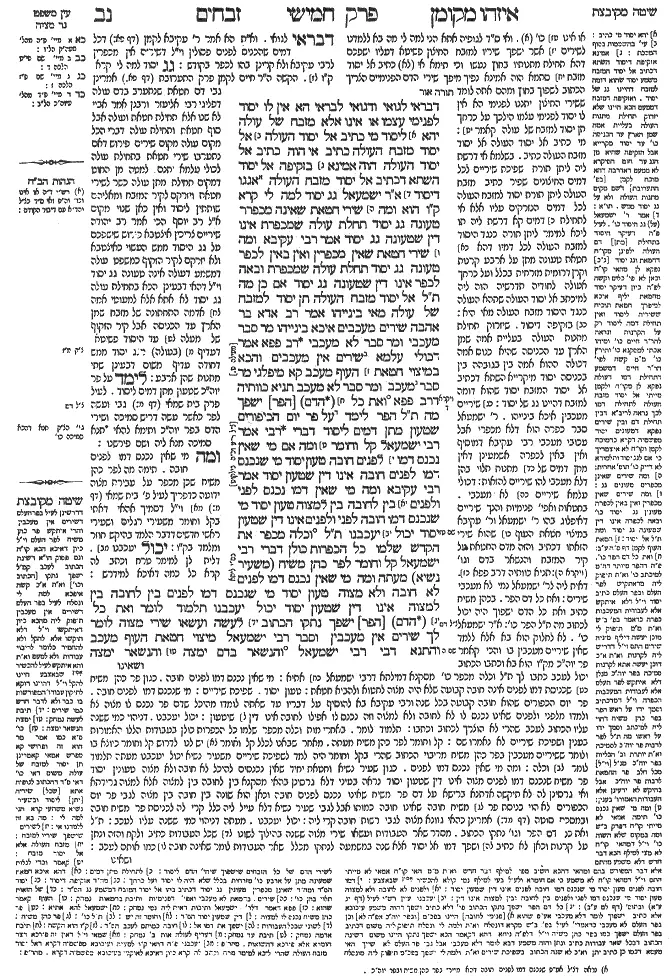
Zevahim 52a - Guemara
דבראי לגואי ודגואי לבראי הא אין לו יסוד לפנימי עצמו או אינו אלא מזבח של עולה יהא ליסוד מי כתיב אל יסוד העולה אל יסוד מזבח העולה כתיב אי הוה כתיב אל יסוד העולה הוה אמינא בזקיפה אל יסוד השתא דכתיב אל יסוד מזבח העולה אגגו דיסוד א"ר ישמעאל גג יסוד למה לי קרא ק"ו הוא ומה שירי חטאת שאינה מכפרת טעונה גג יסוד תחלת עולה שמכפרת אינו דין שטעונה גג יסוד אמר רבי עקיבא ומה שירי חטאת שאין מכפרין ואין באין לכפר טעונה גג יסוד תחלת עולה שמכפרת ובאה לכפר אינו דין שטעונה גג יסוד אם כן מה ת"ל אל יסוד מזבח העולה תן יסוד למזבח של עולה מאי בינייהו אמר רב אדא בר אהבה שירים מעכבים איכא בינייהו מר סבר מעכבי ומר סבר לא מעכבי רב פפא אמר דכולי עלמא שירים אין מעכבים והכא במיצוי חטאת העוף מעכב קא מיפלגי מר סבר מעכב ומר סבר לא מעכב תניא כוותיה דרב פפא (ויקרא ד, ז) ואת כל (הדם) [הפר] ישפך מה ת"ל הפר לימד על פר יום הכיפורים שטעון מתן דמים ליסוד דברי רבי אמר רבי ישמעאל קל וחומר ומה אם מי שאין נכנס דמו לפנים חובה טעון יסוד מי שנכנס דמו לפנים חובה אינו דין שטעון יסוד אמר רבי עקיבא ומה מי שאין דמו נכנס לפני ולפנים בין לחובה בין למצוה טעון יסוד מי שנכנס דמו חובה לפני ולפנים אינו דין שטעון יסוד יכול יעכבנו ת"ל (ויקרא טז, כ) וכלה מכפר את הקדש שלמו כל הכפרות כולן דברי רבי ישמעאל קל וחומר לפר כהן משיח (משעיר נשיא) מעתה ומה מי שאין נכנס דמו לפנים לא חובה ולא מצוה טעון יסוד מי שנכנס דמו לפנים בין לחובה בין למצוה אינו דין שטעון יסוד יכול יעכבנו תלמוד לומר ואת כל (הדם) [הפר] ישפך נתקו הכתוב לעשה ועשאו שירי מצוה לומר לך שירים אין מעכבין וסבר רבי ישמעאל מיצוי חטאת העוף מעכב והתנא דבי רבי ישמעאל (ויקרא ה, ט) והנשאר בדם ימצה והנשאר ימצה
Comments from Rashi on Masechet Zevahim Page 52a
או אינו כו' . ואי ס"ד לגופיה אתא הני למה לי מה בא ללמדנו לשירים אשר ישפך שיריו למזבח החיצון פשיטא דעליו ישפכם דהא תחילת מתנותיו בחוץ נעשו וכי תימא אי (לא) כתיב אל יסוד מזבח סתמא הוה אמינא נפיך מיפך שירי הדם הפנימיים הצריך הכתוב לשפוך בחוץ ומהם אתה לומד ששירי החיצון יתננו לפנימי הא אין לו יסוד לפנימי עצמו הילכך על כרחך תן יסוד למזבח של עולה קאמר: מי כתיב אל יסוד העולה אל יסוד מזבח העולה כתיב . בשלמא אי דרשת ליה ליתן תורת שפיכת שיריים לכל דמים החיצונים שפיר כתיב מזבח העולה ליתן תורת יסוד למזבח העולה לכל דמים הנזרקים עליו אלא אי לתחילת דמים קא דרשת ליה תו ליכא למימר ליתן תורה כנגד היסוד למזבח העולה לכל דמיו דהא חטאת טעונה מתן על ארבע קרנות וקרן דרומית מזרחית בכלל ועל כרחך אעולה לחודיה תדרשיה הוה ליה למיכתב אל יסוד העולה שתהא העולה כנגד היסוד מזבח העולה מאי היא: בזקיפה דיסוד . שיזרוק תחילת מתנות העולה בעליית אמה שמן הארץ עד הכניסה שהיא כנוס אמה דכולה ההוא אמה בין בגובהה בין בכניסה יסוד מיקרייא השתא דכתיב אל יסוד המזבח יסוד שהוא דומה למזבח דהיינו גג של יסוד: א"ר ישמעאל כו' . לא לחלוק הוא בא אלא ללמד שאין שיריים מעכבין בו והכי קאמר פר יוה"כ מק"ו הוא בא וכתבו הכתוב יכול לעכב כתבו לך ת"ל וכלה מכפר כו' מסקנא דמילתא דרבי ישמעאל אתיא: שיריים מעכבין איכא בינייהו . ר' ישמעאל סבר כפרה הוא דלא מכפרי אבל עכובי מעכבי רבי עקיבא דמוסיף ואין באין לכפרה אשמעינן דאין מתן דמים של מתנות תלוי בהן דלא מעכבי להו שיריים להזאות: דכולי עלמא שיריים לא מעכבי . בחטאות ואפי' פנימיות והנך שיריים דאיפלוג בהו ר' ישמעאל ור' עקיבא במיצוי חטאת העוף שהוא שירי הזאתו דכתיב והזה מדם החטאת על קיר המזבח והנשאר בדם וגו' (ויקרא ה): תניא כוותיה דרב פפא . דאית ליה לר' ישמעאל נמי לא מעכבי שירים: ואת כל דם הפר . בכהן משיח כתיב ואת כל הדם ישפוך היה יכול לכתוב מה ת"ל הפר כו': מי שאין נכנס דמו לפנים חובה . כגון פר כהן משיח שכניסת דמו לפנים אינה חובה קבועה שלא היה מצוה לחטוא ולהביא חטאת: טעון יסוד . שפיכת שיריים: מי שנכנס דמו לפנים חובה . פר יום הכפורים שהוא חובה קבועה בכל שנה ורבי עקיבא בא להוסיף על דבריו עד שאתה לומדו מהיכל שדם פר נכנס לו למצוה צא ולמדו מלפני ולפנים שאינו נכנס לו לא לחובה ולא למצוה וזה נכנס לו אפילו לחובה אינו דין שיטעון: יכול יעכבנו . דניהוי כמי ששנה עליו הכתוב לעכב שהרי לא הוצרך לכתוב וכתבו: תלמוד לומר . באחרי מות וכלה מכפר שלמו כל הכפרות כולן בעבודות הללו האמורות בענין ושפיכת שיריים לא נאמרו שם: קל וחומר לפר כהן משיח מעתה . מאחר שבאנו לכלל קל וחומר יש לנו לדרוש קל וחומר כיוצא בו ולומר ששיריים מעכבין בפר כהן משיח מריבוי הכתוב שהרי בקל וחומר היה למד לשפיכת שיריים משעיר נשיא יכול יעכבנו מעתה תלמוד לומר וכלה: ומה מי שאין נכנס דמו לפנים . כגון שעיר נשיא וחטאת יחיד שאין נכנסים להיכל לא חובה ולא מצוה טעונין יסוד פר משיח שנכנס דמו לפנים מצוה אינו דין שטעון יסוד נראה בעיני דלא גרסינן בהאי מסקנא בין לחובה בין למצוה אלא למצוה גרידתא ואי גרסינן לה לא תיקשה אדתנא ברישא על דם פר משיח שאינו נכנס לפנים חובה וכאן הוא שונה בין חובה בין מצוה לגבי פר יום הכפורים לא הוי כניסת פר משיח חובה שאינו חובה כמותו אבל לגבי שעיר נשיא דלא עייל ליה כלל קרי לה לכניסת פר משיח חובה ובמסכת סוטה (דף מד:) אמרינן כהאי גוונא מצוה לגבי רשות חובה קרי ליה: יכול יעכבנו . מעתה דניהוי כמי ששנה עליו לעכב: ת"ל ואת כל דם הפר וגו' נתקו הכתוב . מסדר שאר העבודות ועשאו שירי מצוה ששנה בהילוך לשונו שכל העבודות כתיב ולקח והזה ונתן על קרנות וכאן לא כתיב ושפך דמו אל יסוד אלא שנה במשמעה לנתקו מכלל שאר העבודות לומר שאינה חובה כמו אותם לעכב:
Comments from Tosafot - Zevahim 52a
דבראי לגואי . וא"ת הא אמר ר' עקיבא לקמן (זבחים דף פא:) דכל דמים שהכניס לפנים פסולין וי"ל דשירים אין מכפרין לרבי עקיבא ולא קרינן בהו לכפר בקודש: גג יסוד למה לי קרא ק"ו . הקשה ה"ר חיים לקמן פרק התערובת (זבחים דף פא.) אמרינן גבי דם חטאת שנתערב בדם עולה דפליגי רבי אליעזר ורבנן אמר אביי לא שנו אלא תחילת חטאת ועולה אבל סוף חטאת ותחילת עולה דברי הכל מקום עולה מקום שירים פירוש דאם נתערבו שירי חטאת בתחילת עולה לכולי עלמא יתנם למטה מן החוט דמקום תחילת מתן עולה כשר לשירי חטאת ויזרקם לקיר המזבח ומאליהם שותתין ליסוד ואין כאן שנוי מקום א"ל רב יוסף הכי אמר רב יהודה שיריים צריכין איצטבא פירוש שישפכם על גג היסוד ממש העשוי כאיצטבא ולא יזרקם לקיר הזקוף כמשפט עולה דמשמע דעולה אינה טעונה גג יסוד וי"ל דהאי דבעינן הכא בתחילת עולה גג יסוד לא אתא אלא למעוטי אמה אדמה התחתונה של מזבח שמן הארץ עד הכניסה אבל קיר הזקוף של מעלה עד היסוד פשיטא דעדיף (בעולה) מגג יסוד ממש דחודה עדיף משום דבעינן שתי מתנות שהן ארבע: לימד על פר יוה"כ שטעון מתן דמים ליסוד . לעיל פרק בית שמאי (זבחים דף מ:) גבי ועשה לפר כאשר עשה דריש סמיכה ושירי הדם בפר יוה"כ ותימא להאי תנא סמיכה מנא ליה ושם פירשנו: ומה מי שאין נכנס דמו לפנים חובה . תימה מה לפר כהן משיח שכן מכפר על עבירת מצוה ידועה כדפריך לעיל פ' בית שמאי (זבחים דף מ:) וי"ל דסמיך אהאי דאתי בקל וחומר משעירי רגלים ושעירי ראשי חדשים דדבר הלמד בהיקש חוזר ומלמד בק"ו: יכול יעכבנו . דלית לן למימר טרח וכתב לה קרא כל כמה דאיכא למידרש:
Zevahim 52a - Mishnah translated into english
such that with regard to an offering for which he sprinkles the blood on the external altar he should pour the remainder of the blood on the inner altar, and this is analogous to the halakha that he pours the remainder of the blood sprinkled on the inner altar on the base of the external altar, this is not possible. But the inner altar itself does not have a base, and therefore it is not possible to pour the remainder of the blood on the base of the inner altar. Therefore, the verse must teach that the remainder of the blood of the burnt offering is poured on the base of the external altar.
The Gemara analyzes the next clause of the baraita: Or perhaps it is not so, but rather the verse serves to teach that any sprinkling of blood on the corners of the altar of the burnt offering will be done on a part of the altar where there is a base. The Gemara asks: How can the verse mean that? Is it written: At the base of the burnt offering? This would indicate that the blood of the burnt offering must be placed where there is a base. It is written in the verse: “At the base of the altar of burnt offering” (Leviticus 4:25).
The Gemara answers: Even if the verse were to be speaking about sprinkling the blood of the burnt offering and is not referring to pouring the remainder of the blood, the term “altar of” is necessary, because if it were written: At the base of the burnt offering, I would say that the priest must sprinkle the blood on the upright wall of the base of the altar, i.e., the side of the base, rather than on the upper surface of the base. Now that it is written: “At the base of the altar of the burnt offering,” it means that the blood must be sprinkled on the upper surface of the base.
The Gemara explains the next clause of the baraita based on this understanding: Rabbi Yishmael said: Why do I need a verse to teach that the blood must be sprinkled on the upper surface of the base of the altar? It can be derived via an a fortiori inference: Just as the remainder of the blood of a sin offering, which does not effect atonement, nevertheless requires that it must be poured on the upper surface of the base of the altar, with regard to the initial sprinkling of the blood of a burnt offering, which effects atonement, is it not logical that it requires the upper surface of the base of the altar?
Rabbi Akiva explained similarly and said: And just as the remainder of the blood of a sin offering, which does not effect atonement and does not come for atonement, nevertheless requires that it must be poured on the upper surface of the base, with regard to the initial sprinkling of the blood of a burnt offering, which effects atonement and comes for atonement, is it not logical that it requires the upper surface of the base of the altar? The baraita concludes: If so, why must the verse state: “At the base of the altar of burnt offering” (Leviticus 4:25)? It is to teach that you must give a base to the altar of the burnt offering, i.e., that the remainder of any blood sprinkled on the altar must be poured on the base.
The Gemara asks: What is the difference between the explanations of Rabbi Yishmael and Rabbi Akiva? Rav Adda bar Ahava says: The difference between them is whether failure to pour the remainder of the blood disqualifies the offering, so that all the sprinklings must be done again. One Sage, Rabbi Yishmael, holds that failure to pour the remainder of the blood does disqualify the offering. And one Sage, Rabbi Akiva, who adds the words: Which does not come for atonement, holds that failure to pour the remainder of the blood does not disqualify the offering.
Rav Pappa says: Everyone agrees that failure to pour the remainder of the blood on the base does not disqualify the offering. But here they disagree with regard to the issue of whether failure to squeeze the blood from a bird sin offering after sprinkling the blood disqualifies the offering or not. One Sage, Rabbi Yishmael, holds that it does disqualify the offering, and one Sage, Rabbi Akiva, holds that it does not disqualify the offering.
It is taught in a baraita in accordance with the opinion of Rav Pappa that even Rabbi Yishmael agrees that failure to pour the remainder of the blood on the base does not disqualify the offering. The verse states: “And the priest shall sprinkle the blood upon the corners of the altar of sweet incense before the Lord, which is in the Tent of Meeting; and all the remaining blood of the bull he shall pour out at the base of the altar of burnt offering, which is at the entrance of the Tent of Meeting” (Leviticus 4:7). What is the meaning when the verse states “of the bull”? This seems superfluous, as the entire passage is referring to the bull. This serves to teach the halakha of another bull, i.e., the bull of Yom Kippur, which also requires placement of blood on the base of the external altar. This is the statement of Rabbi Yehuda HaNasi.
The baraita continues: Rabbi Yishmael said: It is not necessary for the Torah to write that the blood of the bull of Yom Kippur requires placement of blood on the base of the external altar. This is because it can be derived via an a fortiori inference: And just as if the bull of the anointed priest, i.e., the sin offering of a High Priest, with regard to which it is not obligatory to bring its blood inside the Sanctuary, i.e., it is not an obligatory offering, as he brings it only if he sins, nevertheless requires sprinkling blood on the base of the altar; with regard to the bull of Yom Kippur, with regard to which it is obligatory to bring its blood inside the Sanctuary, i.e., it must be brought every year, is it not logical that it requires sprinkling of its blood on the base of the altar?
Rabbi Akiva said: Just as the bull of a High Priest, with regard to which its blood does not enter the innermost sanctum, whether as a fixed obligation or as a mitzva, nevertheless requires pouring of blood on the base of the altar, concerning the bull of Yom Kippur, with regard to which its blood enters the innermost sanctum as an obligation, is it not logical that it requires pouring of blood on the base of the altar?
The baraita continues: One might have thought that the reason the Torah writes the phrase “of the bull” is to teach that failure to place the blood on the base of the external altar disqualifies the offering. Therefore, the verse states with regard to the service of Yom Kippur, after sprinkling the blood in the Sanctuary: “And when he has made an end of atoning for the Sanctuary, and the Tent of Meeting, and the altar, he shall present the live goat” (Leviticus 16:20). This teaches that once he has sprinkled the blood in the innermost sanctum all the atonements are completed. This is the statement of Rabbi Yishmael.
The baraita continues: From now, i.e., based on this, one can state an a fortiori inference to derive the halakha of the bull of the anointed priest from the halakha of the goat of the king. Just as the goat sin offering of a king, with regard to which its blood does not enter inside the Sanctuary, whether as a fixed obligation or as a mitzva, but is sprinkled, like other individual sin offerings, on the external altar, requires that the blood be poured on the base of the altar (see Leviticus 4:25); with regard to the sin offering of a High Priest, the blood of which enters inside the Sanctuary, whether as a fixed obligation or as a mitzva, is it not logical that it should require pouring on the base of the altar?
If so, the verse that states that there is a requirement that the blood of the sin offering of a High Priest is poured on the base of the altar is apparently superfluous. One might have thought that the reason the Torah writes it is to teach that failure to pour the blood there disqualifies the offering. Therefore, the verse states: “And the priest shall sprinkle of the blood upon the corners of the altar of sweet incense before the Lord, which is in the Tent of Meeting, and all the remaining blood of the bull he shall pour out at the base of the altar of burnt offering, which is at the entrance of the Tent of Meeting” (Leviticus 4:7).
The baraita explains: Since the verse inverted the terms in the clause, writing: “And all the remaining blood of the bull he shall pour out,” and not: He shall pour out all the remaining blood of the bull, the verse detaches this positive mitzva of pouring the remaining blood from the other mitzvot in the verse. And the verse thereby made this a non-essential mitzva, to tell you that failure to pour the remainder of the blood on the base of the altar does not disqualify the offering. This baraita supports Rav Pappa’s interpretation, that Rabbi Yishmael agrees that failure to pour the remainder of the blood on the base of the altar does not disqualify the offering.
The Gemara asks: But does Rabbi Yishmael hold that failure to squeeze out the blood of a bird sin offering disqualifies the offering, as Rav Pappa explained? But the school of Rabbi Yishmael taught: The verse states: “And he shall sprinkle of the blood of the sin offering upon the side of the altar; and the remainder of the blood shall be squeezed out at the base of the altar; it is a sin offering” (Leviticus 5:9). This means: And the remainder shall be squeezed out, i.e., it needs to be squeezed out only if some blood remains.
Traduction : The William Davidson digital edition of the Koren Noé Talmud, with commentary by Rabbi Adin Even-Israel Steinsaltz.