 Talmud Bavli
Zevahim 60a : Youtube
Daf TubeYoutube
2 video classes :
Zevahim Page 60a
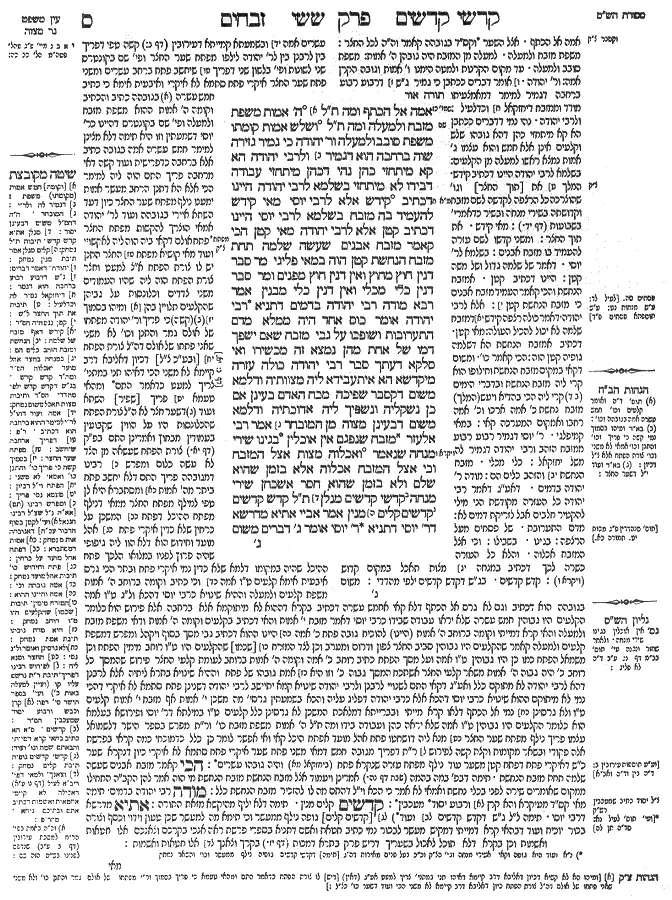
Zevahim 60a - Guemara
אמה אל הכתף ומה ת"ל (שמות כז, א) ה' אמות משפת מזבח ולמעלה ומה ת"ל (שמות כז, א) ושלש אמות קומתו משפת סובב ולמעלה ור' יהודה כי גמיר גזירת שוה ברחבה הוא דגמיר ולרבי יהודה הא קא מיתחזי כהן נהי דכהן מיתחזי עבודה דבידו לא מיתחזי בשלמא לרבי יהודה היינו דכתיב (מלכים א ח, סד) קידש אלא לרבי יוסי מאי קידש להעמיד בה מזבח בשלמא לרבי יוסי היינו דכתיב קטן אלא לרבי יהודה מאי קטן הכי קאמר מזבח אבנים שעשה שלמה תחת מזבח הנחשת קטן הוה במאי פליגי מר סבר דנין חוץ מחוץ ואין דנין חוץ מפנים ומר סבר דנין כלי מכלי ואין דנין כלי מבנין אמר רבא מודה רבי יהודה בדמים דתניא רבי יהודה אומר כוס אחד היה ממלא מדם התערובות ושופכו על גבי מזבח שאם ישפך דמו של אחת מהן נמצא זה מכשירו ואי סלקא דעתך סבר רבי יהודה כולה עזרה מיקדשא הא איתעבידא ליה מצוותיה ודלמא משום דקסבר שפיכה מכח האדם בעינן אם כן נשקליה ונשפיך ליה אדוכתיה ודלמא משום דבעינן מצוה מן המובחר אמר רבי אלעזר מזבח שנפגם אין אוכלין בגינו שירי מנחה שנאמר (ויקרא י, יב) ואכלוה מצות אצל המזבח וכי אצל המזבח אכלוה אלא בזמן שהוא שלם ולא בזמן שהוא חסר אשכחן שירי מנחה קדשי קדשים מנלן ת"ל קדש קדשים קדשים קלים מנין אמר אביי אתיא מדרשא דר' יוסי דתניא ר' יוסי אומר ג' דברים משום
Comments from Rashi on Masechet Zevahim Page 60a
משפת מזבח ולמעלה . למעלה מן המזבח היה גובהן ה' אמות: משפת סובב ולמעלה . עד מקום הקרנות ולמטה הימנו ו' אמות וגובה הקרן אמה: ור' יהודה . אומר דברים ככתבן כי גמיר ג"ש דרבוע רבוע ברחבה דגמיר למימר דמאמצעיתו מודד וממזבח דיחזקאל וכדלעיל: ולרבי יהודה . נהי נמי דדברים ככתבן הא קא מיתחזי כהן דהא גובהו שלש וקלעים אינן אלא חמש והוא עצמו ג' אמות נמצא ראשו למעלה מן הקלעים: בשלמא לרבי יהודה היינו דכתיב קידש . המלך את [תוך החצר] וגו' שהוצרכה כל הרצפה לקדשה לשם מזבח וקדושתה בשירי מנחה ובשיר כדאמרי' בשבועות (דף יד.): מאי קידש . את תוך החצר: ומשני קדשו לשם עזרה להעמיד בו מזבח אבנים: בשלמא לר' יוסי . דאמר של שלמה גדול ושל משה קטן: היינו דכתיב קטן . אמזבח הנחשת והכי קאמר העמיד מזבח אבנים כי מזבח הנחשת קטן: אלא לרבי יהודה . דאמר כולה רצפה קידש דמזבח שלמה לא יכול להכיל העולה: מאי קטן . דכתיב אמזבח הנחשת הא דשלמה גופיה קטן הוה: הכי קאמר כו' . ומשום דקאי במקום מזבח הנחשת וחילופו הוא קרי ליה מזבח הנחשת ובדברי הימים (ב ד) קרי ליה הכי בהדיא ויעש (המלך) מזבח נחשת כ' אמה ארכו וכ' אמה רחבו ואמקום המערכה קאי: במאי קמיפלגי . ר' יוסי דגמיר רבוע רבוע ממזבח הזהב ורבי יהודה דגמיר לה משל יחזקאל: כלי מכלי . מזבח הנחשת והזהב כלים הם: מודה ר' יהודה בדמים . דאע"ג דאמר רבי יהודה כל העזרה מקודשת הני מילי להקטיר חלבים אבל לזריקת דמים לא: מדם התערובת . של פסחים מעל הרצפה: בגינו . בשבילו: וכי אצל המזבח אכלוה . והלא כל העזרה כשרה לכך דכתיב במנחה מצות תאכל במקום קדוש (ויקרא ו): קדש קדשים . בג"ש דקדש קדשים ילפי מהדדי: משום ג' זקנים . דבר אחד מפי כל זקן וזקן:
Comments from Tosafot - Zevahim 60a
הכי קאמר מזבח אבנים שעשה שלמה תחת מזבח הנחשת . תימה דבפ' במה בהמה (שבת דף נה.) אמרינן ויעמוד אצל מזבח הנחשת מזבח הנחשת מי הוה אמר להן הקב"ה התחילו ממקום שאומרים שירה לפני בכלי נחשת ואמאי לא אמר כי הכא וי"ל דהתם מה לו להזכיר מזבח הנחשת כלל: מודה רבי יהודה בדמים . תימה מאי קס"ד מעיקרא והא קרן ורבוע יסוד מעכבין: קדשים קלים מנין . תימה דלא יליף מהיקשא מזאת התורה: אתיא מדרשא דרבי יוסי . תימה ל"ל ג"ש דקדש קדשים ועוד [קדשים קלים] גופה נילף ממעשר וכי תימא מה למעשר שכן טעון וידוי וכסף וצורה בכור יוכיח ועוד דבהאי קרא דמייתי דמקיש מעשר לבכור נמי כתיב חטאת ואשם דתניא בספרי פרשת ראה אנכי בקרכם וצאנכם אלו חטאות ואשמות וכן בקרא דלא תוכל לאכול בשעריך דריש פרק בתרא דמכות (דף יז.) בקרך וצאנך אלו חטאות ואשמות:
Zevahim 60a - Mishnah translated into english
cubits for the one side” (Exodus 38:14), which indicates that the height of the curtains surrounding the courtyard of the Tabernacle was fifteen cubits. And what is the meaning when the verse states: “And the height five cubits” (Exodus 27:18)? It is referring to the height of the curtains from the upper edge of the altar and above; the curtains surrounding the courtyard were five cubits higher than the altar.
Rabbi Yosei continues: And what is the meaning when the verse states: “And you shall make the altar…and its height shall be three cubits” (Exodus 27:1)? The verse means that the altar measures three cubits from the edge of the surrounding ledge and above.
The Gemara asks: And how does Rabbi Yehuda, who understands that the copper altar built in the time of Moses was actually three cubits high, interpret the verbal analogy based upon the word “square,” from which Rabbi Yosei derived that the height of the copper altar was ten cubits? The Gemara answers: When he learns the verbal analogy, he learns it with regard to the altar’s width, not its height. This is based on the verse in Ezekiel (see 59b). Accordingly, it teaches that the altar built in the time of Moses was ten cubits by ten cubits.
The Gemara asks: And according to Rabbi Yehuda, who maintains that the altar was three cubits high and the curtains surrounding the courtyard of the Tabernacle were five cubits high, isn’t the priest visible while performing the service atop the altar? The Gemara answers: Granted, the priest is visible, but the items with which he performs the sacrificial service that are in his hand are not visible.
The Gemara returns to the original dispute between Rabbi Yehuda and Rabbi Yosei with regard to whether or not Solomon consecrated the floor of the Temple courtyard. Granted, according to Rabbi Yehuda, who maintains that the floor of the Temple courtyard was consecrated so that it could serve as an altar, this is the meaning of that which is written: “The king sanctified the middle of the court” (I Kings 8:64). But according to Rabbi Yosei, what is the meaning of the phrase “the king sanctified”? The Gemara answers: It means that Solomon sanctified the courtyard in order to stand the altar in it.
The Gemara continues: Granted, according to Rabbi Yosei, who maintains that the surface of the altar built in the time of Moses was five cubits by five cubits, this is the meaning of that which is written in the continuation of that verse: “Because the copper altar that was before the Lord was too small to receive.” But according to Rabbi Yehuda, who maintains that its surface area was ten cubits by ten cubits, what is the meaning of the phrase “too small”? The Gemara answers: The verse is referring to the altar built by Solomon, and this is what it is saying: The stone altar that Solomon built in place of the copper altar built in the time of Moses was too small to accommodate the large quantity of offerings.
The Gemara asks: With regard to what principle do Rabbi Yehuda and Rabbi Yosei disagree that causes them to interpret differently the verbal analogy based on the word “square”? The Gemara answers: One Sage, Rabbi Yehuda, holds that we derive the dimensions of the external altar built in the time of Moses from the external altar described in Ezekiel; but we do not derive the dimensions of the external altar from the dimensions of the inner altar, used for burning the incense.
And one Sage, Rabbi Yosei, holds that we derive the dimensions of a portable vessel, i.e., the copper altar built in the time of Moses, from the dimensions of another portable vessel, i.e., the golden incense altar built at that time; but we do not derive the dimensions of a portable vessel from the dimensions of an edifice, i.e., the stone altar in the Temple.
§ Rava says: Although Rabbi Yehuda maintains that the entire Temple courtyard is fit for burning the sacrificial portions of offerings, he concedes with regard to the blood and holds that it must be presented on the altar, as it is taught in a baraita: Rabbi Yehuda says: On Passover eve, a priest would fill one cup with the blood of the many offerings brought that day and that was now mixed together on the floor. And then he would pour it on the altar, so that if all of the blood of one of the offerings had been spilled and was never presented on the altar, this cup would contain a small amount of that blood and pouring it on the altar would render the offering fit.
Rava explains his proof: And if it enters your mind that Rabbi Yehuda maintains the entire Temple courtyard was consecrated so that it had the status of the altar, then the mitzva of sacrificing the Paschal offering was performed even if the blood spilled on the ground of the courtyard and was never presented on the altar.
The Gemara attempts to reject this proof: Perhaps Rabbi Yehuda requires pouring a cup of the mixture of blood on the altar due to the fact that he holds we require pouring of the blood of the Paschal offering by human force. Since the blood on the floor of the courtyard was not poured there by a person, the mitzva has not yet been fulfilled despite the fact that the floor has the same status as the altar. The Gemara responds: If so, let the priest take the cup of the mixture of blood and pour it in its place on the floor rather than on the altar.
The Gemara rejects Rava’s proof: But perhaps Rabbi Yehuda requires the blood to be poured on the altar only due to the fact that we require the mitzva to be performed in the optimal manner. Even if Rabbi Yehuda holds that the floor of the courtyard has the same status as the altar, he would agree that it is preferable for the blood to be poured on the altar itself.
§ Rabbi Elazar says: In the case of an altar that was damaged, one may not eat the remainder of a meal offering on its account, as it is stated: “Take the meal offering…and eat it without leaven beside the altar; for it is most holy” (Leviticus 10:12). The verse is difficult: But did the priests have to eat the meal offering beside the altar? A priest may eat sacrificial items even of the most sacred order anywhere in the Temple courtyard. Rather, the verse means that one may eat the meal offering only at a time when the altar is complete, but not at a time when it is lacking.
The Gemara continues: We found a source for this halakha with regard to the remainder of a meal offering; from where do we derive that this halakha applies to all offerings of the most sacred order? The Gemara answers: The end of the verse states: “For it is most holy.” Since this term is also used with regard to the other offerings of the most sacred order, it is derived through verbal analogy that these offerings may not be eaten if the altar is damaged.
The Gemara continues: From where is it derived that this halakha also applies to offerings of lesser sanctity? Abaye said: It is derived from the exposition of Rabbi Yosei, as it is taught in a baraita: Rabbi Yosei says three halakhic matters in the name of
Traduction : The William Davidson digital edition of the Koren Noé Talmud, with commentary by Rabbi Adin Even-Israel Steinsaltz.