 Talmud Bavli
Zevahim 15a : Youtube
Daf TubeYoutube
2 video classes :
Zevahim Page 15a
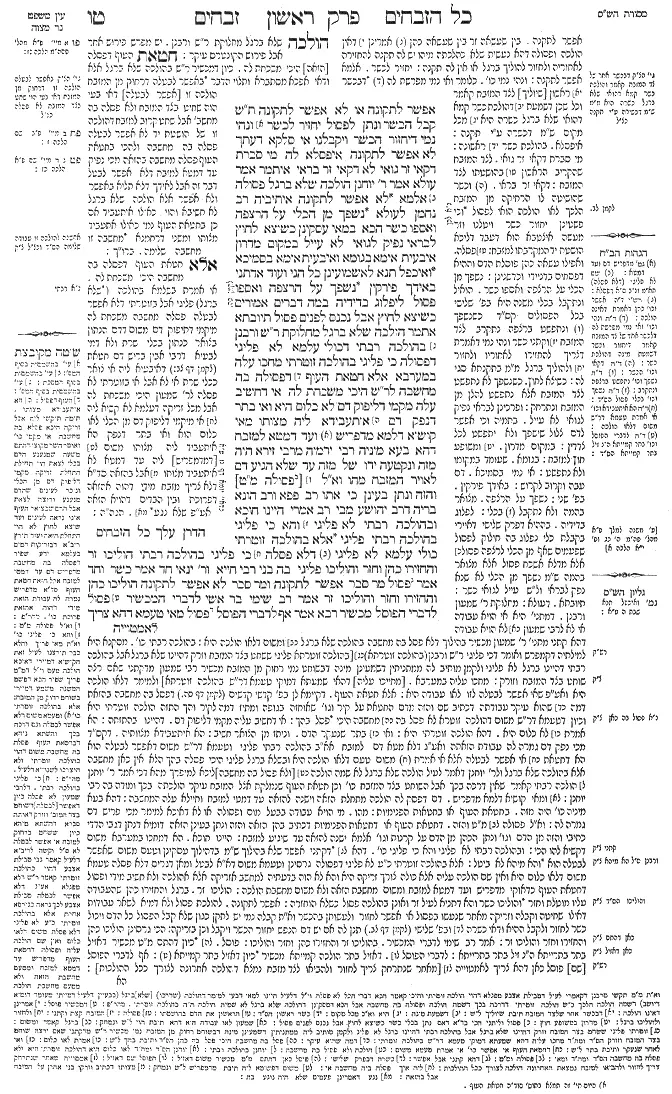
Zevahim 15a - Guemara
אפשר לתקונה או לא אפשר לתקונה ת"ש קבל הכשר ונתן לפסול יחזיר לכשר ונהי נמי דיחזור הכשר ויקבלנו אי סלקא דעתך לא אפשר לתקונה איפסלא לה מי סברת דקאי זר גואי לא דקאי זר בראי איתמר אמר עולא אמר ר' יוחנן הולכה שלא ברגל פסולה אלמא לא אפשר לתקונה איתיביה רב נחמן לעולא נשפך מן הכלי על הרצפה ואספו כשר הכא במאי עסקינן כשיצא לחוץ לבראי נפיק לגואי לא עייל במקום מדרון איבעית אימא בגומא ואיבעית אימא בסמיכא ואיכפל תנא לאשמועינן כל הני ועוד אדתני באידך פירקין נשפך על הרצפה ואספו פסול ליפלוג בדידיה במה דברים אמורים כשיצא לחוץ אבל נכנס לפנים פסול תיובתא אתמר הולכה שלא ברגל מחלוקת ר"ש ורבנן בהולכה רבתי דכולי עלמא לא פליגי דפסולה כי פליגי בהולכה זוטרתי מחכו עלה במערבא אלא חטאת העוף דפסולה בה מחשבה לר"ש היכי משכחת לה אי דחשיב עלה מקמי דליפוק דם לא כלום היא ואי בתר דנפק דם איתעבידא ליה מצותו מאי קושיא דלמא מדפריש ועד דמטא למזבח דהא בעא מיניה רבי ירמיה מרבי זירא היה מזה ונקטעה ידו של מזה עד שלא הגיע דם לאויר המזבח מהו וא"ל [פסולה מ"ט] והזה ונתן בעינן כי אתו רב פפא ורב הונא בריה דרב יהושע מבי רב אמרי היינו חוכא ובהולכה רבתי לא פליגי והא כי פליגי בהולכה רבתי פליגי אלא בהולכה זוטרתי כולי עלמא לא פליגי דלא פסלה כי פליגי בהולכה רבתי הוליכו זר והחזירו כהן וחזר והוליכו פליגי בה בני רבי חייא ור' ינאי חד אמר כשר וחד אמר פסול מר סבר אפשר לתקונה ומר סבר לא אפשר לתקונה הוליכו כהן והחזירו וחזר והוליכו זר אמר רב שימי בר אשי לדברי המכשיר פסול לדברי הפוסל מכשיר רבא אמר אף לדברי הפוסל פסול מאי טעמא דהא צריך
Comments from Rashi on Masechet Zevahim Page 15a
אפשר לתקנה . בין שעשאה זר בין שעשאה כהן אמרינן דאין הולכה ופסולה דהא נעשית שלא כהלכתה מיהו יש לה תקנה להחזירה לאחוריה ולחזור להוליך ברגל או אין לה תקנה: יחזיר לכשר . אלמא אפשר לתקנה: ונהי נמי כו' . כלומר ואי נמי מפרשת לה דבכשר ראשון [שיוליך] לצד המזבח קאמר וכל שכן דשמעת דהולכת כשר קמא דהואי שלא ברגל כשרה היא מכל מקום ש"מ דכשרה ע"י תקנה: איפסלא . בהולכת כשר ראשונה: מי סברת דקאי זר גואי . לצד המזבח שהקריב הראשון בהושטתו לצד המזבח: דקאי זר בראי . וכשר שהושיטה לו הרחיקה מן המזבח הלכך לאו הולכה הואי לפסול וכי פשטינן יחזור כשר ויטלנו וזר מעשה איצטבא הוא דעבד דליכא הושטת יד המקרבתו למזבח: פסלה . ואפילו עשאה כהן פוסלת הדם וההיא דפסחים בדניידי וכדשנינן: נשפך מן הכלי על הרצפה ואספו כשר . הואיל ונתקבל בכלי משנה היא בפ' שלישי בכל הפסולים קס"ד כשנשפך ונתפשט ברצפה נתקרב לצד המזבח וקתני כשר ונהי נמי דאמרת דצריך להחזירו לאחוריו ולחזור ולהוליך ברגל מ"מ בתקנתא סגי לה: כשיצא לחוץ . כשנשפך לא נתפשט לצד המזבח אלא נתפשט להלן מן המזבח ונתרחק: ופרכינן לבראי נפיק לגואי לא עייל . בתמיה וכי אפשר לדם צלול שישפך ולא יתפשט לכל צדדין: במקום מדרון . ומשופע חוץ למזבח: בגומא . שעומד במקומו ולא נתפשט: אי נמי בסמיכא . דם עבה וקרוב לקרוש: באידך פירקין . בפ' שני: נשפך על הרצפה . מצואר בהמה ולא נתקבל בכלי: לפלוג בדידיה . בההיא דפרק שלישי דאיירי בקבלת כלי נפלוג בה חילוק לפסול שפעמים שאף מן הכלי לרצפה פסול אלא מדלא אשכח פסול אלא מצואר בהמה ש"מ נשפך מן הכלי לא שנא נפק לבראי ול"ש עייל לגואי כשר: תיובתא . דעולא: מחלוקת ר' שמעון ורבנן . דמתני' היא אי הויא עבודה אי לא לרבי שמעון לא הויא עבודה דהא קתני מתני' ר' שמעון מכשיר בהילוך דלא פסל בה מחשבה בהולכה שלא ברגל ומשום דלאו הולכה היא: בהולכה רבתי כו' . מסקנא היא למילתיה דקמפרש ואומר דכי פליגי ר"ש ורבנן (בהולכה זוטרתא) [בהולכה זוטרתא פליגי ששחט בצד המזבח וזרק דהיינו שלא ברגל אבל בהולכה רבתי דהיינו ברגל לא פליגי ולקמן מותיב לה ממתניתין דשמעינן מינה דבשוחט נמי רחוק מן המזבח מכשיר רבי שמעון מדקתני שאם רצה שוחט בצד המזבח וזורק: מחכו עליה במערבא . [מחייכו עליה] דהאי שמעתא דמוקי טעמא דר"ש בהולכה זוטרתא] ולמימר דלאו הולכה היא ואע"פ שאי אפשר לבטלה לזו לאו עבודה היא: אלא חטאת העוף . דקיימא לן בפ' קדשי קדשים (לקמן זבחים דף סה.) דפסל בה מחשבה בהזאת דמה שהוא עיקר עבודתה דכתיב שם והזה מדם החטאת על קיר וגו' שאוחזה בגופה ומתיז דמה לקיר והך התזה הולכה זוטרתי היא וכיון דטעמא דר"ש משום דהולכה זוטרא לא פסל בה מחשבה היכי פסל בהך: אי דחשיב עליה מקמי דליפוק דם . דהיינו בהתזתה: הא אמרת לא כלום היא . דהא הולכה זוטרתי היא: ואי בתר שנעקר הדם . וניתז מן הצואר חשיב: הא איתעבידא מצוותיה . דקס"ד מכי נפק דם גמרה לה עבודת הזאתה ואע"ג דלא מטא דם למזבח אא"ב בהולכה רבתי פליגי וטעמא דר"ש משום דאפשר לבטלה הוא הא דחטאת אי אפשר לבטלה אלא אי אמרת משום טעם דלאו הולכה היא ובשלא ברגל פליגי היכי פסלה בהך הלא אין כאן מחשבה אלא בהולכה שלא ברגל ולר' יוחנן דאמר לעיל הולכה שלא ברגל לא שמה הולכה [ולא פסיל בה מחשבה] ליכא למיפרך מהא דכי אמר ר' יוחנן הולכה רבתי קאמר שאין דרכה בכך אבל השוחט בצד המזבח כו' וכן חטאת העוף שנמלקת אצל המזבח עיקר הולכתה בכך ומודה בה רבי יוחנן: ומאי קושיא דלמא מדפריש . דם דפסק לה הולכה מתחלת הזאה וישנה להזאה עד דמטי למזבח וחיילא עלה המחשבה: דהא בעא מיניה כו' היה מזה . בחטאת העוף או בחטאות הפנימיות: מהו . מי הויא עבודה בבעל מום ופסולה או לא דאיכא למימר מכי פריש דם גמרה לה: וא"ל פסולה מ"ט והזה . דחטאת העוף או דחטאות הפנימיות דכתיב בהן הזאה והזה ונתן בעינן הזאה דומיא דנתן דגבי הדדי כתיבי והזה מן הדם וגו' ונתן הכהן מן הדם על קרנות וגו' אלמא ישנה להזאה עד שיגיע למזבח: היינו חוכא . הא דמחכו במערבא משום דקשיא להו הכי: ובהולכה רבתי לא פליגי והא כי פליגי כו' . דהא דקתני אפשר שלא בהילוך ש"מ בדהילוך עסקינן וטעם משום שאפשר לבטלה הוא והא מיהא לא ביטל: אלא בהולכה זוטרתי כ"ע לא פליגי דפסולה גרסינן . וטעמא משום דא"א לבטל ומאן דגריס דלא פסלה טעמא משום דלאו כלום היא ואין שם הולכה עליה אלא כולה צורך זריקה היא והא לא הוה בדעתיה למחשב אזריקה אלא אהולכה ולא חשיב מידי ופסול דחטאת העוף כדאוקי מדפריש ועד דמטא למזבח ומשום מחשבת הזאה ולא משום מחשבת הולכה: הוליכו זר . ברגל והחזירו כהן שהעבודה עליו מוטלת וחזר והוליכו כשר והא דתניא לעיל זר ואונן בהולכה פסול כשלא הוחזרה: אפשר לתקונה . להולכת פסול ולא דמיא לשאר עבודות דאילו שחיטה וקבלה וזריקה מאחר שנעשו בפסול אי אפשר לחזור ולעשותן בהכשר וא"ת קבלה נמי יש לתקן כגון שלא קבל הפסול כל הדם ויכול כשר לחזור ולקבל ההיא ודאי כשרה ובפ' שלישי (לקמן זבחים דף לב.) תנן לה אם יש דם הנפש יחזור הכשר ויקבל וכן בזריקה: הכי גרסינן הוליכו כהן והחזירו וחזר והוליכו זר: אמר רב שימי לדברי המכשיר . בהוליכו זר והחזירו כהן וחזר והוליכו: פוסל . כיון דהתם מ"ט מכשיר דאזיל בתר בתרייתא ה"נ זיל בתר בתרייתא: לדברי הפוסל . דאזיל בתר הולכה קמייתא מכשיר כיון דאזיל בתר קמייתא: אף לדברי הפוסל פוסל כאן דהא צריך לאמטוייה [מאחר שנתרחק צריך לחזור ולהביאו לצד מזבח נמצא דהולכה אחרונה לצורך ככל ההולכות]:
Comments from Tosafot - Zevahim 15a
הולכה שלא ברגל מחלוקת ר"ש ורבנן . יש מפרש פירוש אחר אבל פירוש הקונטרס עיקר: חטאת העוף דפסלה [הזאה] היכי משכחת לה . כיון דמכשיר ר"ש בהולכה שלא ברגל אלא ודאי אפכא מסתברא ותלוי הדבר באפשר לבטלה דרחוק מן המזבח הולכה זו [אפשר לבטלה] דאי בעי הוה שחיט בצד המזבח ולא פסלה בה מחשב' אבל שחט קרוב למזבח דהולכה זו של הושטת יד לא אפשר לבטלה פסלה בה מחשבה ולהכי בחטאת העוף פסלה מחשבה בהזאה מכי נפיק עד דמטא למזבח דלא אפשר לבטל דבר זה אבל לאידך דלא תליא באפשר ולא אפשר אלא הולכה שלא ברגל לא חשיבא והוי כאילו איתעביד אם כן בחטאת העוף נמי כאילו אתעביד מצותו ומשני דרחמנא מחשבה זו מחשבה שלימה ברו"ך: אלא חטאת העוף דפסלה בה מחשבה היכי משכחת לה . אי אמרת בשלמא בהולכה (שלא ברגל) פליגי אבל בזוטרתי דלא אפשר לבטלה פסלה מחשבה משכחת לה מיקמי דתיפוק דם משום דדם הנתון בצואר כנתון בכלי שרת ולא דמי לבעיא דרבי אבין בריש דם חטאת (לקמן זבחים דף צב:) דאיבעיא ליה אי צואר ככלי שרת אי לא אבל אי בזוטרתי לא פסלה לר' שמעון היכי משכחת לה אבל מכל זריקה דעלמא לא קשיא ליה אי מיקמי דליפוק דם מן הכלי לאו כלום הוא ואי בתר דנפק הא איתעביד ליה מצותו משום [דמדמפריש] ליה עד דמטא לא איתעביד מצותו אבל בהזאה סד"א דלא צריך מזבח מידי דהוה אהזאה דפרוכת ובין הבדים דהויא הזאה אע"פ שלא נגע. הגה"ה:
Zevahim 15a - Mishnah translated into english
The Gemara asks: If the blood was conveyed by hand, is it possible to correct it by conveying it again properly, or is it not possible to correct it, and the offering is disqualified permanently?
The Gemara suggests: Come and hear proof from the aforementioned mishna: If a priest fit for Temple service collected the blood in a vessel and gave the vessel to an unfit person standing next to the altar, the latter should return it to the fit priest. Apparently, even after the blood is conveyed in an inappropriate manner, it can be corrected.
And though one can indeed explain that the fit priest should then receive it from him, as posited above, if it enters your mind that if the blood is conveyed incorrectly it is not possible to correct it, the offering was already disqualified when the priest gave the blood to the unfit person. Taking it back is of no consequence.
The Gemara rejects this inference: Do you maintain that this is referring to a case where the non-priest is standing inside, between the fit priest and the altar? No, it is a case where the non-priest is standing outside, farther away from the altar than the priest. Therefore, when the priest gave him the blood, he was not conveying it toward the altar at all; he was moving it farther away from the altar.
It was stated: Ulla says that Rabbi Yoḥanan says: Conveying the blood not by foot renders the offering unfit. Apparently, it is not possible to correct it, as otherwise Rabbi Yoḥanan would have merely stated that it is not considered conveying, as in his earlier statement (14b).
Rav Naḥman raised an objection to Ulla from a mishna (32a): If the blood spilled from the vessel onto the floor and one collected it from the floor, it is fit for sacrifice. Apparently, although spilling the blood on the floor constitutes a not valid conveying toward the altar, it can still be corrected after the fact.
The Gemara explains: Here we are dealing with a case where the blood that spilled went outward, i.e., away from the altar, so it did not constitute conveying at all.
The Gemara asks: Can spilled blood go outward and not come inward? Clearly, spilled blood spreads to all sides. The Gemara answers: It is a case where the blood spilled on an inclined plane, and it therefore spilled only outward, away from the altar. And if you wish, say instead that it spilled into a hole in the ground, so it did not spread in any direction. And if you wish, say instead that it is a case where the blood is thick, so it did not spread in all directions.
The Gemara asks: But did the tanna go to all that trouble [ikhpal] just to teach us all these unlikely cases? And furthermore, rather than teaching in another chapter (see 25a) that if the blood spilled from the animal’s neck onto the floor and one collected it in a vessel from the floor it is unfit, let the mishna teach a distinction within the case where the blood spilled from the vessel itself: In what case is this statement, that the blood is fit, said? In a case where the spilled blood went outward, away from the altar, but if it came inward it is unfit. The Gemara concludes: This is a conclusive refutation; if the blood is conveyed in a not valid manner, it can be corrected.
§ It was stated: The dispute in the mishna (13a) between Rabbi Shimon and the Rabbis as to whether improper intent while conveying the blood disqualifies the offering is only with regard to conveying the blood not by foot. With regard to greater conveying, i.e., conveying the blood by moving the feet, everyone agrees that if one performs it with prohibited intent, the offering is unfit. When they disagree, it is with regard to lesser conveying, i.e., conveying the blood by hand without moving the feet, in a case where the offering was slaughtered next to the altar.
They laughed at this statement in the West, Eretz Yisrael, saying: But if so, one encounters difficulty with regard to a bird sin offering, which is killed through pinching its nape on the altar and whose blood is sprinkled directly from its neck. It is known that if one sprinkled its blood with prohibited intent, the offering is unfit. And according to Rabbi Shimon, who holds that prohibited intent while conveying the blood by hand does not disqualify the offering, how can you find these circumstances? If the priest has prohibited intent with regard to the offering before the blood comes out of the bird, this intent is nothing, since his waving it is like conveying by hand. And if he has such intent after the blood came out, its mitzva was already performed, as the blood already reached the altar.
The Gemara asks: What is the difficulty? Perhaps the offering is disqualified due to prohibited intent from the moment the blood leaves the bird until the moment it reaches the altar.
This is as Rabbi Yirmeya asked Rabbi Zeira: If the priest was sprinkling the blood, and the hand of the one sprinkling was severed before the blood reached the airspace of the altar, what is the halakha? Is the sprinkling not valid since it was performed by a blemished priest, or is it valid because the blood left the bird before he was blemished? And Rabbi Zeira said to him: It is not valid. What is the reason? We require that the verse: “And sprinkle of the blood” (Leviticus 4:6), be fulfilled in the same manner as the verse that follows it: “And the priest shall place of the blood upon the corners of the altar” (Leviticus 4:7), namely, that the blood reach the altar. Therefore, the blood can be disqualified anytime until it reaches the altar, whether through the priest becoming blemished or through prohibited intent.
When Rav Pappa and Rav Huna, son of Rav Yehoshua, came from the study hall, they said: This is the reason for the laughter of the scholars of Eretz Yisrael: With regard to greater conveying, i.e., conveying by foot, can one say Rabbi Shimon and the Rabbis do not disagree? Clearly, when they disagree in the mishna, they disagree with regard to greater conveying, as Rabbi Shimon reasons that conveying is a dispensable rite. Only conveying by foot is dispensable, since even if the offering is slaughtered next to the altar, the priest will need to move its blood somewhat with his hand.
Rather, the statement under discussion should be emended to say: With regard to lesser conveying, i.e., conveying the blood by hand, everyone agrees that it does not disqualify the offering due to prohibited intent. When they disagree, it is with regard to greater conveying, i.e., conveying the blood for a distance by foot. Rabbi Shimon holds that improper intent even then does not disqualify the offering, as the rite is dispensable, and the Rabbis maintain that it does disqualify it.
§ If a non-priest conveyed the blood to the altar, and a priest returned it to its original location, and a priest then conveyed it again to the altar, the sons of Rabbi Ḥiyya and Rabbi Yannai disagree with regard to the halakha. One says that the offering is fit, and one says it is unfit. This is because one Sage holds that if the blood is conveyed improperly, it is possible to correct it, and one Sage holds that it is not possible to correct it.
If a priest conveyed it to the altar, and then returned it, and a non-priest then conveyed it again, Rav Shimi bar Ashi says: According to the statement of the one who deems the offering fit in the previous case, where a non-priest conveyed it the first time and a priest conveyed it the second time, in this case the offering is unfit, as a non-priest conveyed it the second time. According to the statement of the one who deems the offering unfit in the previous case, as a non-priest conveyed it the first time, in this case, where a priest conveyed it the first time, he deems the offering fit.
Rava says: Even according to the statement of the one who deems the offering unfit in a case where a non-priest conveyed it the first time, it is unfit in this case as well, where a priest conveyed it the first time and a non-priest conveyed it the second time. What is the reason? Because after the blood is returned to its original location, it is necessary
Traduction : The William Davidson digital edition of the Koren Noé Talmud, with commentary by Rabbi Adin Even-Israel Steinsaltz.