 Talmud Bavli
Zevahim 3a : Youtube
Daf TubeYoutube
2 video classes :
Zevahim Page 3a
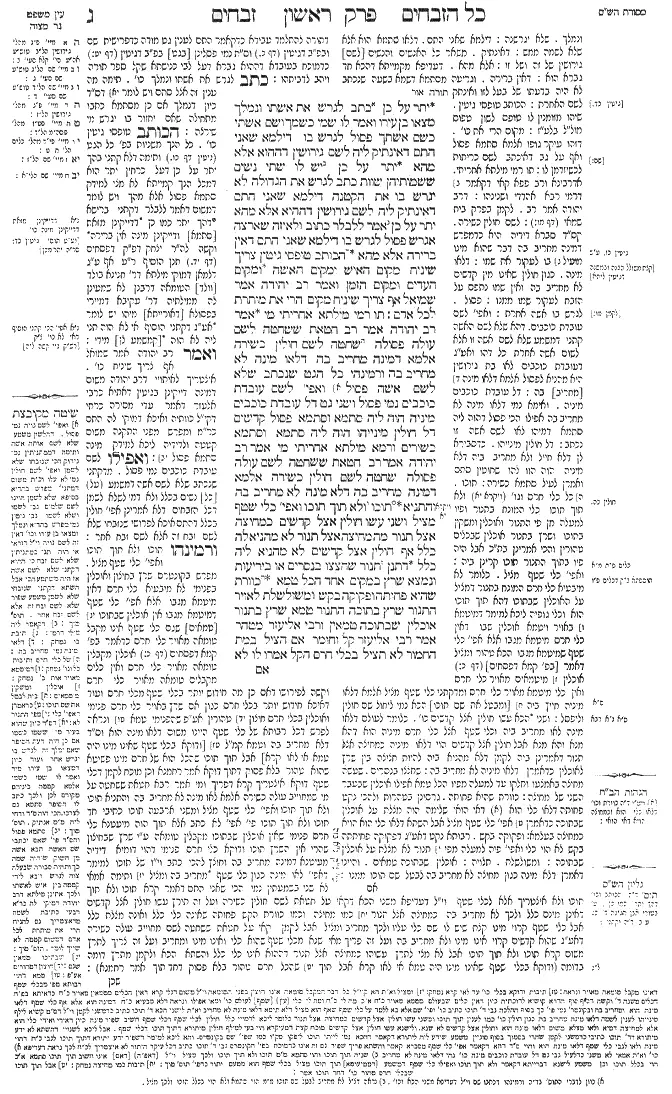
Zevahim 3a - Guemara
יתר על כן כתב לגרש את אשתו ונמלך מצאו בן עירו ואמר לו שמי כשמך ושם אשתי כשם אשתך פסול לגרש בו דילמא שאני התם דאינתיק ליה לשם גירושין דההוא אלא מהא יתר על כן יש לו שתי נשים ששמותיהן שוות כתב לגרש את הגדולה לא יגרש בו את הקטנה דילמא שאני התם דאינתיק ליה לשם גירושין דההיא אלא מהא יתר על כן אמר ללבלר כתוב ולאיזה שארצה אגרש פסול לגרש בו דילמא שאני התם דאין ברירה אלא מהא הכותב טופסי גיטין צריך שיניח מקום האיש ומקום האשה ומקום העדים ומקום הזמן ואמר רב יהודה אמר שמואל אף צריך שיניח מקום הרי את מותרת לכל אדם:
תו רמי מילתא אחריתי מי אמר רב יהודה אמר רב חטאת ששחטה לשם עולה פסולה שחטה לשם חולין כשירה אלמא דמינה מחריב בה דלאו מינה לא מחריב בה ורמינהי כל הגט שנכתב שלא לשם אשה פסול ואפי' לשם גויה נמי פסול ושני גט דל גויה מיניה הוה ליה סתמא וסתמא פסול קדשים דל חולין מינייהו הוה ליה סתמא וסתמא כשירים ורמא מילתא אחריתי מי אמר רב יהודה אמר רב חטאת ששחטה לשם עולה פסולה שחטה לשם חולין כשירה אלמא דמינה מחריב בה דלא מינה לא מחריב בה והתניא (ויקרא יא, לג) תוכו ולא תוך תוכו ואפי' כלי שטף מציל ושני עשו חולין אצל קדשים כמחיצה אצל תנור מה מחיצה אצל תנור לא מהניא לה כלל אף חולין אצל קדשים לא מהניא ליה כלל דתנן תנור שחצצו בנסרים או ביריעות ונמצא שרץ במקום אחד הכל טמא כוורת שהיא פחותה ופקוקה בקש ומשולשלת לאויר התנור שרץ בתוכה התנור טמא שרץ בתנור אוכלין שבתוכה טמאין ורבי אליעזר מטהר אמר רבי אליעזר קל וחומר אם הציל במת החמור לא תציל בכלי חרס הקל אמרו לו לא
Comments from Rashi on Masechet Zevahim Page 3a
ונמלך . שלא יגרשנה: דילמא שאני התם . דלאו סתמא הוא אלא שלא לשמה ממש: דאינתיק . משאר כל האנשים והנשים [לשם] גירושין של זה ושל זו: אלא מהא . דעדיפא מקמייתא דהכא חד גברא הוא: דאין ברירה . וגריעה מסתמא דשמא בשעה שנכתב לא היה בדעתו של בעל לזו ואינתק לשם האחרת: הכותב טופסי גיטין . שיהו מזומנין לו טופס לשון טפוס מול"ל בלע"ז: מקום הרי את כו' . דזהו עיקר גופו אלמא סתמא פסול ואף על גב דאיכתב לשם כריתות לכשיזדמן לו: תו רמי מילתא אחריתי . אדרבינא ורב פפא קאי דקאמר דרמי רבא אהדדי ושנינהו: דרב יהודה אמר רב . לקמן בפרק בית שמאי (זבחים דף מו:): לשם חולין כשירה . קס"ד סברא דידיה היא כדמפרש דמינה מחריב בה דבר שהוא מינו מועיל בו לעקור את שמו: דלאו מינה . כגון חולין שאינו מין קדשים לא מחריב בה ואין שמו נתפס על הזבח לעקור שמו ממנו: ואפי' לשם עובדת כוכבים . דהא שלא לשם האשה קתני דמשמע שלא לשם אשה זו אלא לשום אשה אחרת כל דהו ואע"ג דעובדת כוכבים לאו בת גירושין היא מהניא לפסול אלמא דלאו מינה [מחריב] בה: דל עובדת כוכבים מיניה . ואימא נמי דלאו מינה לא מחריב בה אפילו הכי פסול דהוה ליה סתמא דמיהו לאו לשם אשה זו נכתב: דל חולין מינייהו . כדסבירא לן דלא חייל ולא מחריב ביה דלא מיניה הוה הוו להו שחוטין סתם ואמרן לעיל סתמא כשירה: תוכו . כל כלי חרס וגו' (ויקרא יא) ולא תוך תוכו כלי המונח בתנור ופיו למעלה מן פי התנור ואוכלין ומשקין בתוכו ושרץ בתנור אוכלין שבכלים טהורין והכי אמרינן בת"כ אבל היה פיו בתוך התנור תוכו קרינן ביה: ואפי' כלי שטף מציל . כלומר לא מיבעיא כלי חרס המונח בתנור דמציל על האוכלין שבתוכו דהא תוך תוכו הוא וכלי גופיה ליכא למימר דמיטמא באויר ויטמא אוכלין שבו דאין כלי חרס מיטמא מגבו אלא אפי' כלי שטף שמיטמא מגבו הכא טהור ומציל דאמר [בפ' קמא דפסחים] (דף כ:) אוכלין מיטמאים מאויר כלי חרס ואין כלי מיטמא מאויר כלי חרס ומדקתני כלי שטף מציל אלמא דלאו מיניה חייץ ביה [ומבטל את שם תוכו] הכא נמי ליחול שם חולין וליפסל: ושני הכא עשו חולין אצל קדשים כו' . כלומר לעולם דלאו מינה לאו מחריב ביה וכלי שטף אצל כלי חרס מיניה הוא דהא מנא והא מנא אבל חולין אצל קדשים הוי דלאו מיניה כמחיצה אצל תנור דאמרינן ביה לקמן דלא מהניא ביה להיות חציצה בין שרץ לאוכלין כדאמרן דלאו מיניה לא מחריב בה: שחצצו בנסרים . שעשה מחיצה באמצעו וחלקו עד למעלה מפיו הכל טמא אפילו אוכלין שבעבר השני של מחיצה: כוורת שהיא פחותה . גרסינן בטהרות ולהכי נקט פחותה דלאו כלי הוא דאי הואי שלימה הוה מצלת על אוכלין שבתוכה כדאמרן אפי' כלי שטף מציל אבל השתא דלאו כלי הוא הויא כמחיצה בעלמא: ופקוקה בקש . רבותא נקט דאע"ג דפקוקה פחיתתה בקש לא הוי כלי ואפי' פיה למעלה מפי תנור לא מצלת על אוכלין שבתוכה: ומשולשלת . תלויה: אוכלין שבתוכה טמאים . והיינו דאמרן דלא מינה כגון מחיצה לא מחריב בה לבטל שם תוכו ממנו:
Comments from Tosafot - Zevahim 3a
כתב לגרש את אשתו ונמלך כו' . תימה מה ענין זה אצל סתם ויש לומר דס"ד כיון דנמלך אם כן מסתמא כתבו מתחילה שאם יחזור בו יגרש מי שירצה: הכותב טופסי גיטין כו' . כל הנך משניות בפ' כל הגט (גיטין דף כו.) ותימה דלא קתני בהך יתר על כן דעל כרחין יתר הוא דמכל הנך קמייתא לא מצי למידק סתמא פסול אלא מהך ויש לומר דמשום דאמר ללבלר דקתני ברישא דהך יתר כמו כן דדייקינן מזאת [סתמא] ודייקינן מינה אין ברירה וקשה לה"ר יצחק דפ"ק דפסחים (דף יד.) תנן הוסיף ר"ע אף ע"ג דלמאן דמוקי מילתא דר' חנינא בולד [וולד] הטומאה דרבנן לא שמעינן לה ממילתיה דר' עקיבא דמיירי בפסולא [דאורייתא] מיהו יש לומר אע"ג דקתני הוסיף אי לא הוה תני ליה לא הוה [קמשמע לן] מידי: ואמר רב יהודה אמר שמואל אף צריך שיניח כו' . איצטריך לאיתויי דרב יהודה משום דמינה דייקינן בגיטין דאתיא כרבי אלעזר דאמר עדי מסירה כרתי דקי"ל כוותיה ואיכא דמוקי לה התם כר"מ ומפרש מפני התקנה משום קטטה ולדידיה ליכא למידק מינה סתמא פסול: ואפילו לשם עובדת כוכבים נמי פסול . מדקתני שנכתב שלא לשם אשה דמשמע (על) [כל] נשים בכלל ולא דמי לשלא לשמן דכל הזבחים דלא אמרינן אפי' חולין בכלל דהתם איכא לפרושי שנזבחו שלא לשם זבח זה אלא לשם זבח אחר: ורמינהו תוכו ולא תוך תוכו ואפי' כלי שטף מציל . מפרש בקונטרס שרץ בחיצון ואוכלין בפנימי לא מיבעיא כלי חרס דאין מיטמא מגבו אלא אפי' כלי שטף דמיטמא מגבו אין אוכלין שבתוכו [טמאים] שגם כלי שטף אינו מקבל טומאה מאויר כלי חרס כדאמר בפ' קמא דפסחים (דף כ) אוכלין מקבלין טומאה מאויר כלי חרס ואין כלים מקבלים טומאה מאויר כלי חרס וקשה לפירושו דאם כן מה חידוש יותר בכלי שטף מכלי חרס ועוד דאיכא חידוש יותר בכלי חרס כגון אם שרץ באויר כלי חרס פנימי ואוכלין בכלי חרס חיצון טהורין אע"פ שהפנימי טמא ונראה לפרש דכל רבותא של כלי שטף היינו משום דלאו מינה הוא וס"ד דלא מחריב בה וטמא קמ"ל [ודוקא בכלי שטף שאינו מינו היה טמא אי לאו קרא] אבל תוך תוכו שהכל הוא של חרס מינו פשיטא שהוא טהור בלא פסוק דתוך דוקא אמר רחמנא וכן מוכח לקמן דכלי שטף דוקא איצטריך קרא דפריך ומי אמר רבא חטאת ששחטה על מי שמחוייב עולה כשירה אלמא לאו מינה לא מחריב בה והתניא תוכו ולא תוך תוכו ואפי' כלי שטף מציל ומשני ארבעה תוכו כתיבי חד תוכו ולא תוך תוכו פי' אפי' לא כתב אלא תוך הוה מיעטנא כלי חרס פנימי שאין אוכלין שבתוכו מקבלין טומאה ע"י שרץ שבחיצון שהרי אין השרץ תוכו ודוקא כלי חרס פנימי דהוי דומיא דידיה מעיטנא דמינה מחריב בה וחוצץ להכי כתב וי"ו של תוכו למימר דאפי' לאו מינה כגון כלי שטף מחריב בה ומציל ותימה אמאי לא שני בשמעתין נמי הכי שאני התם דאמר קרא תוכו ולא תוך תוכו ולא איצטריך אלא לכלי שטף וי"ל דעדיפא משני הכא דקאי על חטאת לשם חולין כשירה ועל זה תירץ עשו חולין אצל קדשים דאינן מינם כלל ולכך לא מחריב בה כמחיצה אצל תנור כמו מחיצה וכמו כוורת הקש פחותה שאינה כלי כלל ואינה מצלת כלל אבל כלי שטף קרוי מינו קצת שיש לו שם כלי עליו ולכך מחריב ומציל אבל לקמן קאי על חטאת ששחטה לשם מחוייב עולה כשירה דאע"ג שהוא קדשים קרוי אינו מינו ולא מחריב בה ועל זה פריך מאי שנא מכלי שטף שהוא כלי ואינו מינו ומחריב ועל זה צריך לתרץ משום קרא תוכו ולא תוך תוכו אבל לא מצי לתרץ עשוהו כמחיצה אצל תנור דההוא אינו כלי כלל והשתא הכא ולקמן מתרץ דומה בדומה (ודוקא בכלי שטף שאינו מינו היה טמא אי לאו קרא אבל תוך שהכל חרס טהור בלא פסוק דחד תוך אמר רחמנא):
Zevahim 3a - Mishnah translated into english
Moreover, if a husband wrote a bill of divorce with which to divorce his wife but later reconsidered, and a resident of his town found him and said to him: My name is the same as your name, and my wife’s name is the same as your wife’s name, and we reside in the same town; give me the bill of divorce and I will use it, the bill of divorce is unfit for the second man to divorce his wife with it. Evidently, even if the bill of divorce was written to be used for divorce, if it was not written specifically for the given woman it is not valid.
The Gemara responds: Perhaps there it is different, as the bill of divorce was specifically designated for the sake of that man’s divorce, and therefore it is not valid for the second man’s divorce. But a bill of divorce that was written without specification might be valid if written for the sake of divorce.
Rather, derive it from the subsequent clause in that mishna: Moreover, if he has two wives whose names are identical, and he wrote a bill of divorce to divorce the older one, and then reconsidered, he may not divorce the younger one with it. Evidently, a bill of divorce must be written specifically to divorce a specific wife.
The Gemara responds: Perhaps there it is different, as the bill of divorce was specifically designated for the sake of the divorce of that other wife.
Rather, derive it from the subsequent clause in that mishna: Moreover, if he said to the scribe [lalavlar]: Write a bill of divorce for one of my two wives who have identical names, and I will use it to divorce whichever one of them that I want, this bill of divorce is unfit to divorce either wife with it. Evidently, it must be written for the divorce of a specific woman.
The Gemara responds: Perhaps there it is different, as there is no retroactive designation. The designation of the bill of divorce cannot be determined retroactively. It cannot be used for either wife because it was possibly written for the sake of the other wife. But a bill of divorce written without specification may be valid.
Rather, derive it from that mishna (Gittin 26a): With regard to a scribe who writes the standard part of [tofesei] bills of divorce in advance, so that when one requests a bill of divorce, he will have to add only the details unique to the case, he must leave empty the place of the name of the man, and the place of the name of the woman, and the place of the names of the witnesses, and the place of the date. And in addition, Rav Yehuda says that Shmuel says: A scribe must also leave the place of the essential phrase: You are hereby permitted to marry any man, since it must be written for the sake of that specific woman. Evidently, a bill of divorce must be written for a specific husband and wife, and if not it is not valid, even if it was written for the sake of divorce.
§ Ravina continued to inform Rav Pappa of Rava’s statements: Rava further raises another contradiction: Did Rav Yehuda say that Rav says that a sin offering that one slaughtered for the sake of a burnt offering is unfit, whereas if one slaughtered the animal for the sake of consumption of non-sacred meat, it is fit? Apparently, only improper intent that is of its type, i.e., for the sake of another offering, ruins the offering and renders it unfit, whereas wrong intent that is not of its type, i.e., for the sake of consumption of non-sacred meat, is disregarded and does not ruin it.
And Rava raises a contradiction from the aforementioned mishna (Gittin 24a): Any bill of divorce that was written not for the sake of the woman who is being divorced with it is not valid; and by inference, even if it was written for the sake of a gentile woman, it is not valid. With regard to the matter of divorce, a gentile woman is not of the same type as a Jewish woman, as the halakhot of bills of divorce are irrelevant to her.
And Rava resolves the contradiction: If a bill of divorce is written for the sake of a gentile woman it is not valid, because if you remove the intent for the sake of a gentile woman from it, it is considered to be without specification of the woman who is divorced with it, and a bill of divorce written without specification is not valid. But if sacrificial animals are slaughtered for the sake of consumption of non-sacred meat, they remain fit, since if you remove the non-sacred intent from them, they are considered to be without specification, and offerings slaughtered without specification are fit.
§ And Rava raised another contradiction: Did Rav Yehuda say that Rav says that a sin offering that one slaughtered for the sake of a burnt offering is unfit, whereas if one slaughtered it for the sake of consumption of non-sacred meat it is fit? Apparently, he holds that only improper intent that is of its type ruins it, whereas wrong intent that is not of its type does not ruin it.
But isn’t it taught in a baraita: The Torah states with regard to ritually impure carcasses of creeping animals: “And every earthen vessel into whose interior any of them falls, anything that is in its interior shall be impure” (Leviticus 11:33). From the word “interior” it is derived that only food in its interior is rendered impure, but not any food that is in the interior of its interior, i.e., in another vessel within the earthenware vessel. And this is the halakha not only if the inner vessel is an earthenware vessel; even if it is a metal or wooden vessel, which is purified though rinsing in a ritual bath and is therefore susceptible to impurity from its exterior, it nevertheless protects food that is inside it from being rendered impure. Evidently, even a vessel that is not of the same type serves to nullify the status of the interior of an earthenware vessel.
And Rava resolves the contradiction as follows: A vessel purified through rinsing is actually considered of the same type as an earthenware vessel, since they are both vessels. Concerning the halakhot of impurity, the equivalent of intent with regard to the consumption of non-sacred meat is an item that is not a vessel at all; the Sages rendered non-sacred meat with regard to sacrificial animals like a partition with regard to an earthenware oven: Just as a partition in an oven is not effective at all in preventing the transmission of impurity from one side to the other since it is not a vessel, so too, slaughtering an offering for the consumption of non-sacred meat is not effective at all with regard to rendering sacrificial animals unfit.
This is as we learned in a mishna (Kelim 8:1): In the case of an oven that one divided with boards or with curtains, and the carcass of a creeping animal was found in one place, all of the food in the oven, including that on the other side of the partition, is rendered impure.
The mishna continues: In the case of a round barrel that is broken and plugged up with straw and lowered into the airspace of the oven, if the carcass of a creeping animal is inside the barrel, the oven is rendered impure. And if the carcass of a creeping animal is in the oven, the food that is inside the barrel is rendered impure. The broken barrel is not considered a vessel despite its being plugged up with straw, and therefore it does not prevent the transmission of impurity between the creeping animal and the oven. And Rabbi Eliezer deems the food in the barrel pure.
The mishna continues: Rabbi Eliezer said: My opinion can be inferred a fortiori: If a barrel or any other partition between some item and a corpse under the same roof protects the item from becoming impure, even though impurity imparted by a corpse is severe in that it lasts seven days, shouldn’t a partition protect food in the airspace of an earthenware vessel from impurity imparted by the carcass of a creeping animal, which is mild by comparison?
The mishna continues: The Rabbis said to him: Your inference is not correct.
Traduction : The William Davidson digital edition of the Koren Noé Talmud, with commentary by Rabbi Adin Even-Israel Steinsaltz.