 Talmud Bavli
Zevahim 22a : Youtube
Daf TubeYoutube
2 video classes :
Zevahim Page 22a
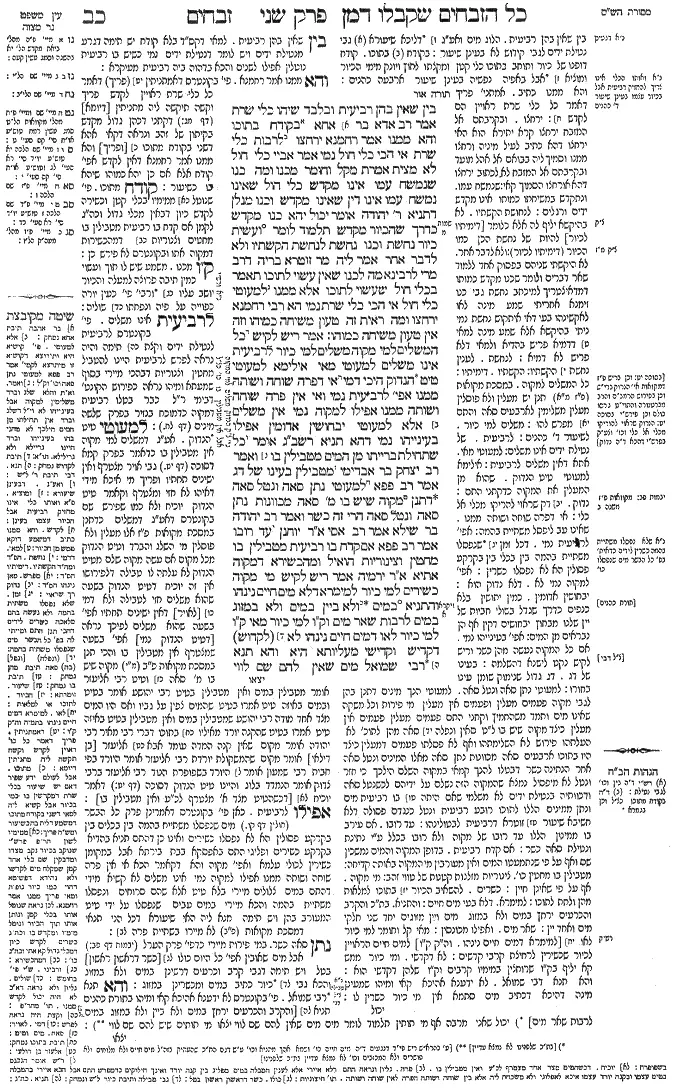
Zevahim 22a - Guemara
בין שאין בהן רביעית ובלבד שיהו כלי שרת אמר רב אדא בר אחא בקודח בתוכו והא ממנו אמר רחמנא ירחצו לרבות כלי שרת אי הכי כלי חול נמי אמר אביי כלי חול לא מצית אמרת מקל וחומר מכנו ומה כנו שנמשח עמו אינו מקדש כלי חול שאינו נמשח עמו אינו דין שאינו מקדש וכנו מנלן דתניא ר' יהודה אומר יכול יהא כנו מקדש כדרך שהכיור מקדש תלמוד לומר (שמות ל, יח) ועשית כיור נחשת וכנו נחשת לנחשת הקשתיו ולא לדבר אחר אמר ליה מר זוטרא בריה דרב מרי לרבינא מה לכנו שאין עשוי לתוכו תאמר בכלי חול שעשוי לתוכו אלא ממנו למעוטי כלי חול אי הכי כלי שרת נמי הא רבי רחמנא ירחצו ומה ראית זה טעון משיחה כמוהו וזה אין טעון משיחה כמוהו:
אמר ריש לקיש כל המשלים למי מקוה משלים למי כיור לרביעית אינו משלים למעוטי מאי אילימא למעוטי טיט הנדוק היכי דמי אי דפרה שוחה ושותה ממנו אפי' לרביעית נמי ואי אין פרה שוחה ושותה ממנו אפילו למקוה נמי אין משלים אלא למעוטי יבחושין אדומין אפילו בעינייהו נמי דהא תניא רשב"ג אומר כל שתחילת ברייתו מן המים מטבילין בו ואמר רב יצחק בר אבדימי מטבילין בעינו של דג אמר רב פפא למעוטי נתן סאה ונטל סאה דתנן מקוה שיש בו מ' סאה מכוונות נתן סאה ונטל סאה הרי זה כשר ואמר רב יהודה בר שילא אמר רב אסי א"ר יוחנן עד רובו אמר רב פפא אם קדח בו רביעית מטבילין בו מחטין וצינוריות הואיל ומהכשירא דמקוה אתיא א"ר ירמיה אמר ריש לקיש מי מקוה כשירים למי כיור למימרא דלא מים חיים נינהו והתניא (ויקרא א, ט) במים ולא ביין במים ולא במזוג במים לרבות שאר מים וק"ו למי כיור מאי ק"ו למי כיור לאו דמים חיים נינהו לא (לקדוש) דקדיש וקדישי מעליותא היא והא תנא רבי שמואל מים שאין להם שם לווי
Comments from Rashi on Masechet Zevahim Page 22a
בין שאין בהן רביעית . הלוג מים ואע"ג דליכא שיעורא גבי נטילת ידים לגבי קידוש לא בעינן שיעור: בקודח בתוכו . קודח דופנו של כיור ותוחב בתוכו כלי קטן ומקצתו לחוץ ויונק מימי הכיור ומוציא אבל באפיה נפשיה בעינן שיעור ארבעה כהנים: והא ממנו כתיב . אמתני' פריך דאמר כל כלי שרת ראויין הם לקדש: ירחצו . ובקרבתם אל המזבח ירחצו קרא יתירא הוא האי ירחצו דהא כתיב לעיל מיניה ורחצו ממנו וסמיך ליה בבואם אל אהל מועד ובקרבתם אל המזבח לא לכתוב ירחצו דהא אורחצו הסמוך קאי: שנמשח עמו . ונתקדש במשיחתו כמותו אינו מקדש ידים ורגלים: לנחושת הקשתיו . לא בהיקשא יליף לה אלא כלומר [דימיתיו לכיור] להיות של נחשת הכן כמו הכיור (דימיתיו לכיור): ולא לדבר אחר . לא היקשתי שניהם בפסוק אחד ללמוד שאר דברים ולומר שכנו מקדש כמותו דמדאיצטריך למיכתב נחשת גבי כנו זימנא אחריתי שמע מינה לאו לאקשינהו בעי דאי איתקוש נחשת נמי ניתי בהיקשא אלא שמע מינה למאי דדמיא פריש בהדיא ולמאי דלא פריש לא דמיא: לנחשת . לענין נחשת הקשתיו: הקשתיו . דימיתיו: כל המשלים למקוה . במסכת מקואות (פ"ז מ"א) תנן יש מעלין ולא פוסלין מעלין משלימין לארבעים סאה והתם מפרש להו: משלים למי כיור . לשיעור ד' כהנים: לרביעית . של נטילת ידים אינו משלים: למעוטי מאי . אתא דאין משלים לרביעית: אילימא למעוטי טיט הנדוק . שהוא מן המעלין את המקוה כדקתני התם: נדוק . דק שראוי להריקו מכלי אל כלי: אי דפרה שוחה ושותה ממנו . שאינו עב ליפסל משתיית בהמה: אפי' לרביעית נמי . דכל זמן שנפסלו משתיית בהמה בין בכלי בין בקרקע פסולין הא לא נפסלו כשרין: אפי' למקוה נמי לא . דלא נדוק הוא: יבחושין אדומין . כמין יתושין בלא כנפים כדרך שגדל בשולי חביות של יין שלנו מבחוץ יבחושים דקין אף הן נבראים מן המים: אפי' בעינייהו נמי . אם כל המקוה נעשה מהן כשר וריש לקיש נקט לישנא דהשלמה: בעינו של דג . דג גדול שנימוק שומן עינו בחורו: למעוטי נתן סאה ונטל סאה . למעוטי הנך מינים דתנן בהן לגבי מקוה פעמים מעלין ופעמים אין מעלין מי פירות וכל משקה שאינו מים ותמד משהחמיץ וקתני התם פעמים מעלין פעמים אין מעלין כיצד מקוה שיש בו ל"ט סאין ונפלה סאה מהן לתוכ' לא העלתהו פירוש לא השלימתהו ואף לא פסלתו פעמים דמעלין כיצד היו בתוכו ארבעים סאה מכוונות נתן סאה מאלו המינים ונטל סאה אחר הנתינה כשר דבטלו להנך קמאי במקוה השלם הילכך כי חזר ונטל לא מיפסיל נמצא שהמקוה הזה נשלם על ידיהם לכשנטל סאה ודכוותיה בנטילת ידים לא משלמי שאם היתה בו רביעית מים ונתן ממינים הללו לתוכו רובע רביעית ונטל כנגדם פסולה דלא חשיבא שיעור זוטרא דרביעית לבטולינהו: עד רובו . אם עירב בו ממינין הללו עד רובו של מקוה ולא רובו בכלל ע"י נתינת ונטילת סאה כשר: אם קדח רביעית . בדופן המקוה והמים נמשכין שם ואף על פי שנתמעטו המים ואין מעורבין מי המקוה באותה קדיחה: מטבילין בו מחטין כו' . צינוריות מזלגות קטנות של טווי זהב: מי מקוה . אף על פי שאינן חיין: כשרים . להשאיב הכיור בתוכו למלאות מהן ולתת לתוכו: למימרא . דלא בעי מים חיים: והתניא . בת"כ והקרב והכרעים ירחץ במים ולא במזוג מים ויין מזוגים יחד שני חלקי מים ואחד יין: שאר מים . ואפילו מכונסין: מאי קל וחומר למי כיור לאו [למימרא דמים חיים נינהו . וה"ק ק"ו] למים חיים הראויין לכיור שכשירין לרחיצת קרבי קדשים: לא דקדשי . ומי כיור ממש קא יליף בק"ו שרוחצין במימיו קרבים וק"ו שלהן דקדשי הוא: והא תנא דבי שמואל . לא ידענא אהיכא קאי ומיהו שמעינן מינה דהיכא דכתיב מים סתמא אין מי כיור כשרין לו:
Comments from Tosafot - Zevahim 22a
בין שאין בהן רביעית . למאי דקס"ד בלא קודח יש תימה דגרע מנטילת ידים ויש לומר דנטילת ידים נמי כשיש בו רביעית נוטלין אפילו לשנים והכא בדהוה ביה רביעית מעיקרא: קודח מתוכו. פי' שנוטל ממימיו בכלי קטן וכשירה לקדש כיון דבאין מכלי גדול וכה"ג לקמן אם קדח בו רביעית מטבילין בו מחטים וצנוריות דמהכשירות דמקוה אתו ובקונטרס לא פירש כן: והא ממנו אמר רחמנא . פי' בקונטרס דאמתניתין (פריך) דאמר כל כלי שרת ראויין לקדש פריך וקשה תיקשה ליה מתניתין [דיומא] (דף מג:) דקתני דכהן גדול מקדש בקיתון של זהב ונראה דקאי אהא דשני בקודח מתוכו [ופריך] והא ממנו אמר רחמנא דאין לקדש אפי' קודח אלא אם כן יהא כמוהו שיהא בו כשיעור: ק"ו מכנו . משמע שיש לו תוך ועשוי כמין תיבה פרוצה למעלה והכיור יושב עליו ורבי' פי' כעין יורה כפוייה על פיה ונפחתו שוליה: לרביעית אינו משלים . פי' בקונטרס לרביעית לנטילת ידים וקצת תימה והיה נראה לפרש לרביעית היינו להטביל מחטין וצנוריות דבהכי מיירי בסוף שמעתא ומיהו נראה כפירוש הקונט' דבימי ר"ל כבר בטלו רביעית דמקוה כדמוכח בנזיר בפרק שלשה מינים (דף לח.): למעוטי טיט הנדוק . אע"ג דמשלים למי מקוה אין מטבילין בו כדאמר בפרק קמא דסוכה (דף יט.) גבי אויר מצטרף ואין ישינים תחתיו ופריך מי איכא מידי דאיהו לא חזי ומצטרף וקאמר טיט הנדוק יוכיח ולא כמו שפירש שם בקונטרס דאע"ג דמשלים כדתנן במסכת מקואות פ"ז אלו מעלין ולא פוסלין מי השלג והברד וטיט הנדוק מכל מקום אם עשה מקוה שלם מטיט הנדוק לא עלתה לו טבילה דלפירושו אין זה יוכיח דטיט הנדוק בשעה שהוא משלים חזי לטבילה ולא דמי [לאויר] דאין ישינים תחתיו אפי' בשעה שהוא משלים לפיכך נראה [דטיט הנדוק נמי] אפי' בשעה שמצטרף אין מטבילין בו והכי תנן במסכת מקואות פ"ב (מ"י) מקוה שיש בו מ' סאה וטיט רבי אליעזר אומר מטבילין במים ואין מטבילין בטיט רבי יהושע אומר בטיט ובמים באיזה טיט אמרו בטיט שהמים צפין על גביו ואם היו המים מצד אחד מודה רבי יהושע שמטבילין במים ואין מטבילין בטיט באיזה טיט אמרו בטיט שהקנה יורד מאיליו בתוכו דברי רבי מאיר רבי יהודה אומר מקום שאין קנה המדה עומד אבא אליעזר [בן דילאי] אומר מקום שהמשקולת יורדת רבי אליעזר אומר היורד בפי חבית רבי שמעון אומר היורד בשפופרת הנוד רבי אליעזר ברבי צדוק אומר הנמדד בלוג והיינו טיט הנדוק דסוכה (דף יט:) דאמר יוכיח [דכשהטיט מצד א' מצטרף לכ"ע ואין מטבילין בו]: אפילו לרביעית . כאן פי' בקונטרס דאמרינן פרק כל הבשר (חולין דף קו.) מים שנפסלו משתיית בהמה בין בכלים בין בקרקע פסולין הא לא נפסלו כשירים ואינו כן דהתם תניא בהדיא בקרקע כשירים ופליגי התם באפסקא בבת בירתא אבל במקומן כשירין לכולי עלמא ואפי' מקוה והא דקאמר הכא אי אין פרה שוחה ושותה ממנו אפילו למקוה נמי אינו משלים לא קשיא מידי דהתם במים צלולים מיירי בלא טיט אלא שהם סרוחים ונפסלו משתיית בהמה והכא מיירי במים עבים שנפסלו על ידי טיט המעורב בהן ויש תימה מנא ליה האי שיעורא דכל הני תנאי דמסכת מקואות (פ"ב) לא מיירו בשתיית פרה: נתן סאה כשר . במי פירות מיירי כדפי' פרק הערל (יבמות דף פב:) אבל מים שאובין אפי' כל היום כולו [כשר דראשון ראשון] בטל ויש תימה דגבי קרב וכרעים דרשינן במים ולא במזוג והכא גבי כיור כתיב במים ומכשרינן במזוג: והא תנא רבי שמואל . פי' בקונטרס לא ידענא אהיכא קאי ומיהו בתורת כהנים תניא [והקרב והכרעים ירחץ במים ולא ביין ולא במזוג במים לרבות שאר מים] יכול שאני מרבה אף מי תותין תלמוד לומר מים מים שאין להם שם לווי יצאו מי תותים שיש להם שם לווי:
Zevahim 22a - Mishnah translated into english
or they cannot hold a quarter-log of water, provided that they are service vessels. Apparently, the Basin need not hold so much water.
Rav Adda bar Aḥa says: The baraita is referring to a case where one drills a hole in the Basin and places a much smaller vessel at the hole as a conduit for the water. Even if that vessel is very small, the priest may sanctify his hands and feet from it, provided that there is enough water in the Basin for four priests.
The Gemara asks: But doesn’t the Merciful One state that the priests must wash their hands and feet “from it,” i.e., from the Basin and not from another vessel? The Gemara responds: The following verse repeats the phrase “they should wash,” to include any service vessel.
The Gemara challenges: If so, then it should be permitted for a priest to use a non-sacred vessel as well. Abaye says: You cannot say that a priest may sanctify his hands and feet from a non-sacred vessel, since the matter may be derived by a fortiori inference from the halakha concerning the base of the Basin: And just as its base, which was anointed along with it (see Exodus 40:11), is still not fit for a priest to sanctify his hands and feet with water from it, then with regard to a non-sacred vessel, which was not anointed along with the Basin, is it not right that it is not fit for a priest to sanctify his hands and feet with water from it?
The Gemara clarifies: And from where do we derive that water from the base of the Basin is unfit? As it is taught in a baraita that Rabbi Yehuda says: One might have thought that water from its base should be fit for priests to sanctify their hands and feet just as water from the Basin itself is fit to sanctify their hands and feet. Therefore, the verse states: “You shall also make a Basin of copper, and the base thereof of copper” (Exodus 30:18). The verse indicates that I have equated the base and the Basin only with regard to the requirement that they both be made of copper, but not for another matter. Rather, the base, unlike the Basin, is unfit for sanctification.
Mar Zutra, son of Rav Mari, said to Ravina: The a fortiori inference can be refuted: What is notable about its base? It is notable in that its inside is not made for use, as it is to be used only as a stand. Will you say that the halakha is the same for a non-sacred vessel, concerning which its inside is made for use? Rather, one must say that the term “from it” serves to exclude a non-sacred vessel.
The Gemara challenges: If so, “from it” should exclude a service vessel as well. The Gemara responds: But the Merciful One amplifies the halakha with the term “they should wash,” to include a service vessel.
The Gemara asks: And what did you see that led you to include a service vessel and exclude a non-sacred vessel, rather than the reverse? The Gemara responds: This, a service vessel, requires anointing like the Basin when the Tabernacle is raised (see Exodus, chapter 40), and that, a non-sacred vessel, does not require anointing like the Basin.
§ Reish Lakish says: Any liquid that may be used to complete the requisite measure of water for a ritual bath may complete the requisite measure of water for the Basin. But it may not complete the quarter-log required for ritual washing of the hands.
The Gemara asks: This statement means to exclude what as unfit for completing the requisite measure for ritual washing of the hands? If we say that it means to exclude liquefied clay, there is a difficulty, as what is this clay like? If it is such that a cow can kneel and drink from it, it is considered water and should be fit even to complete the measure of a quarter-log for ritual washing of the hands. And if a cow cannot kneel and drink from it, it should not even be fit to complete the requisite measure for a ritual bath.
Rather, say that it means to exclude red gnats that originate and grow in water. This, too, is difficult, as even by themselves they may constitute the entire measure of the ritual bath, not only to complete a deficient measure of water; as it is taught in a baraita: Rabban Shimon ben Gamliel says: With regard to anything that originates in the water, one may immerse in it, since it is considered as though it were water. And Rav Yitzḥak bar Avdimi says: One may immerse even in liquefied fish eye of sufficient volume.
Rav Pappa says: The statement of Reish Lakish means to exclude a case where one added a se’a and removed a se’a, as we learned in a mishna (Mikvaot 7:2): In the case of a ritual bath that contains the minimum measure of exactly forty se’a of water, and one added a se’a of liquid other than water, and then removed a se’a of the mixture, the ritual bath remains fit. The added liquid is considered nullified in the forty se’a of water, so that when one se’a of the mixture is removed, there still remain the requisite forty se’a of fit water. And Rav Yehuda bar Sheila says that Rav Asi says that Rabbi Yoḥanan says that this halakha applies up to the greater part of the measure of the ritual bath. Adding and removing such a liquid to the requisite measure for washing of the hands renders the water unfit.
Rav Pappa says: If one drilled in the wall of a ritual bath, and the sides of the hole can hold a quarter-log of liquid, one may immerse small vessels such as needles and hooks in the hole, even though it constitutes a space separate from the ritual bath, since the fitness of the water in the hole derives from the fitness of the water in the ritual bath. This halakha is parallel to the one discussed with regard to the Basin.
§ Rabbi Yirmeya says that Reish Lakish says: Water of a ritual bath is fit to be used as water of the Basin.
The Gemara asks: Is this to say that the water in the Basin does not need to be flowing water, i.e., spring water? But isn’t it taught in a baraita: The verse indicates that the innards of an offering must be washed: “With water” (Leviticus 1:9), and not with wine; “with water,” and not with wine mixed with water; “with water,” to include other types of water, even those that are not spring water. And it can be inferred a fortiori that the water used for the Basin may be used to wash the innards. What is the basis of the a fortiori inference that the water used for the Basin may also be used? Is it not that it is from a source of flowing water and therefore obviously fit for washing the innards?
The Gemara responds: No, the a fortiori inference is based on the fact that the water used for the Basin is sanctified for the service. The Gemara asks: But is sanctified water preferable, given that the Torah stipulates simply “water”? But didn’t Rabbi Shmuel teach: The word “water” used in the verse denotes specifically water whose name has no modifier;
Traduction : The William Davidson digital edition of the Koren Noé Talmud, with commentary by Rabbi Adin Even-Israel Steinsaltz.
Zevahim 22a : Significance
Next step
Finished studying Zevahim 22a? Carry on with the rest of the tractate.
Study Zevahim 22bFrequently asked questions: Zevahim 22a
Where is Zevahim 22a in tractate Zevahim?
Zevahim 22a is page 41 of 238 in tractate Zevahim (Seder Kodashim).
When is daf 22 of Zevahim studied in Daf Yomi?
Daf Yomi covers one daf a day, both sides. Daf 22 of Zevahim will be studied on March 9, 2033.
Is there a video class on Zevahim 22a?
Yes, by Daf Tube, Rabbi Dr. Moshe Weisblum. These classes were published on YouTube by their authors and are gathered on this site.
What is tractate Zevahim about?
The Masechet Zevahim is the first tractate of the Seder Kodashim. The Gemara Zevahim is the study of the laws regarding animal offerings. The Zevahim tractate has 14 chapters.
Your study is also dedicated to them
- L'ilui Nishmat Reuven ben Rivka SEBBAG
- L'ilui Nishmat אסתר בת חיים
- L'ilui Nishmat Nissim ben Barukh Malka