 Talmud Bavli
Zevahim 24a : Youtube
Daf TubeYoutube
2 video classes :
Zevahim Page 24a
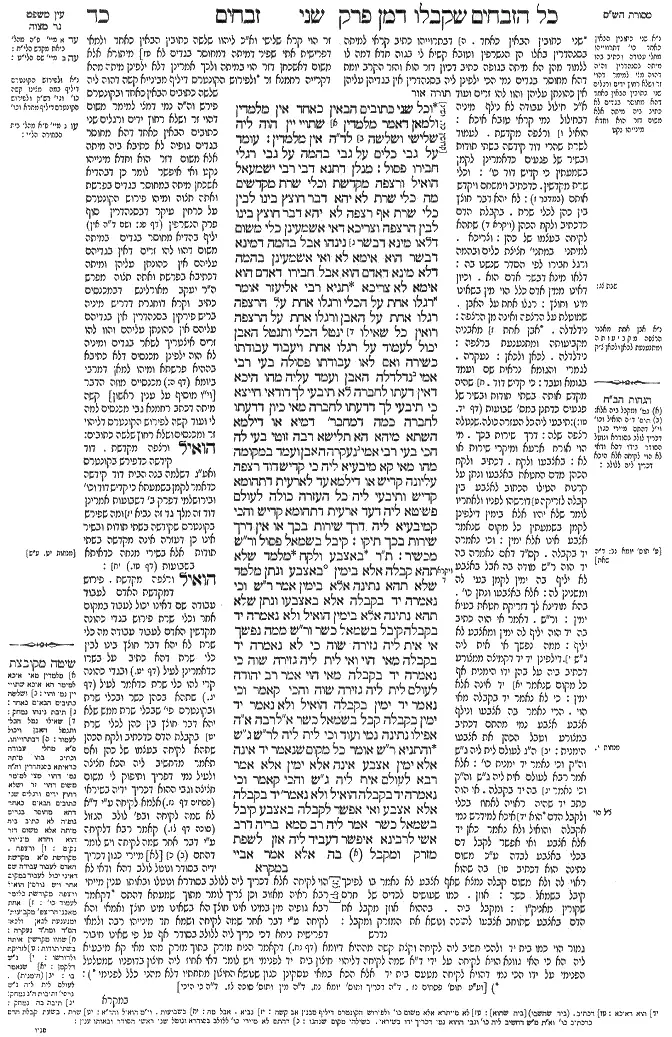
Zevahim 24a - Guemara
וכל שני כתובים הבאין כאחד אין מלמדין ולמאן דאמר מלמדין שתויי יין הוה ליה שלישי ושלשה לד"ה אין מלמדין:
עומד על גבי כלים על גבי בהמה על גבי רגלי חבירו פסול:
מנלן דתנא דבי רבי ישמעאל הואיל ורצפה מקדשת וכלי שרת מקדשים מה כלי שרת לא יהא דבר חוצץ בינו לבין כלי שרת אף רצפה לא יהא דבר חוצץ בינו לבין הרצפה וצריכא דאי אשמעינן כלי משום דלאו מינא דבשר נינהו אבל בהמה דמינא דבשר הוא אימא לא ואי אשמעינן בהמה דלא מינא דאדם הוא אבל חבירו דאדם הוא אימא לא צריכא תניא רבי אליעזר אומר רגלו אחת על הכלי ורגלו אחת על הרצפה רגלו אחת על האבן ורגלו אחת על הרצפה רואין כל שאילו ינטל הכלי ותנטל האבן יכול לעמוד על רגלו אחת ויעבוד עבודתו כשירה ואם לאו עבודתו פסולה בעי רבי אמי נדלדלה האבן ועמד עליה מהו היכא דאין דעתו לחברה לא תיבעי לך דודאי חייצא כי תיבעי לך דדעתו לחברה מאי כיון דדעתו לחברה כמה דמחבר' דמיא או דילמא השתא מיהא הא תלישא רבה זוטי בעי לה הכי בעי רבי אמי נעקרה האבן ועמד במקומה מהו מאי קא מיבעיא ליה כי קדיש דוד רצפה עליונה קדיש או דילמא עד לארעית דתהומא קדיש ותיבעי ליה כל העזרה כולה לעולם פשיטא ליה דעד ארעית דתהומא קדיש והכי קמיבעיא ליה דרך שירות בכך או אין דרך שירות בכך תיקו:
קיבל בשמאל פסול ור"ש מכשיר:
ת"ר באצבע ולקח מלמד שלא תהא קבלה אלא בימין (ויקרא ד, כה) באצבע ונתן מלמד שלא תהא נתינה אלא בימין אמר ר"ש וכי נאמרה יד בקבלה אלא באצבעו ונתן שלא תהא נתינה אלא בימין הואיל ולא נאמרה יד בקבלה קיבל בשמאל כשר ור"ש ממה נפשך אי אית ליה גזירה שוה כי לא נאמרה יד בקבלה מאי הוי ואי לית ליה גזירה שוה כי נאמרה יד בקבלה מאי הוי אמר רב יהודה לעולם לית ליה גזירה שוה והכי קאמר וכי נאמר יד ימין בקבלה הואיל ולא נאמר יד ימין בקבלה קבל בשמאל כשר א"ל רבה א"ה אפילו נתינה נמי ועוד וכי לית ליה לר"ש ג"ש והתניא ר"ש אומר כל מקום שנאמר יד אינה אלא ימין אצבע אינה אלא ימין אלא אמר רבא לעולם אית ליה ג"ש והכי קאמר וכי נאמרה יד בקבלה הואיל ולא נאמר' יד בקבלה אלא אצבע ואי אפשר לקבלה באצבע קיבל בשמאל כשר אמר ליה רב סמא בריה דרב אשי לרבינא איפשר דעביד ליה אזן לשפת מזרק ומקבל בה אלא אמר אביי
Comments from Rashi on Masechet Zevahim Page 24a
שני כתובין הבאין כאחד . דבתרוייהו כתיב קראי למיתה בסנהדרין באלו הן הנשרפין וטובא קשיא לי בגוה חדא דמה לו ללמוד מהן הא מיתה בגופה כתיב דכיון דזר הוא והזר הקרב יומת דהא מחוסר בגדים נמי הכי ילפינן ליה בסנהדרין אין בגדיהן עליהן אין כהונתן עליהן והוו להו זרים ועוד א"כ חילול עבודה לא נילף מיניה דבחילול נמי קראי טובא איכא: הואיל ורצפה מקדשת . לעמוד לשרת שהרי דוד קידשה בשתי תודות ובשיר של פגעים כדאמרינן לקמן בשמעתין כי קדיש דוד כו': וכלי שרת מקדשין . כדכתיב וימשחם ויקדש אותם (במדבר ז): לא יהא דבר חוצץ בין כהן לכלי שרת . בקבלת הדם כדכתיב ולקח הכהן (ויקרא ד) שתהא לקיחה בעצמו של כהן: וצריכא . למיתני במתני' חציצת כלים ובהמה ורגל חבירו לפי הסדר שנשנו בה: דלאו מינא דבשר אדם הוא . וכיון דאינו ממין אדם כלל הוי מין בשאינו מינו וחוצץ: רגלו אחת על האבן . שמוטלת על הרצפה ואינה מן הרצפה: נידלדלה . אבן אחת מאבניה מקביעותה ומתנענעת ברצפה: נידלדלה . לכאן ולכאן: נעקרה . לגמרי והגומא נראית שם ועמד בגומא ועבד: כי קדיש דוד . שהיה מקדש אותה בשתי תודות ובשיר של פגעים כדתנן במס' שבועות (דף יד. טו:): תיבעי ליה כל העזרה כולה . שנטלה רצפה שלה: דרך שירות בכך . מי הוי אורח ארעא ומיקרי שירות או לא: באצבעו ולקח . דכתיב ולקח הכהן מדם החטאת באצבעו ונתן על קרנות הטילו הכתוב לאצבע בין קבלה לזריקה דורשהו לפניו ולאחריו לומר שלא יהיו אלא בימין דילפינן לקמן בשמעתין כל מקום שנאמר אצבע אינו אלא ימין: וכי נאמרה יד בקבלה . קס"ד דאם נאמרה בה יד הוה ר"ש מודה בה אבל באצבע לא יליף בה ימין לקמן בעי לה ומשנינן לה: אלא באצבעו ונתן כו' . בהא מודינא לך דזריקת חטאת בעיא ימין: ור"ש . דאמר אי הוה כתיב בה יד הוה יליף לה ימין ומאצבע לא יליף: ממה נפשך אי אית ליה ג"ש . דילפינן יד יד דקמיצה ממצורע דכתיב ביה על בהן ידו הימנית אף כל מקום שנאמר יד אינה אלא ימין: כי לא נאמר יד בקבלה מאי הוי . הרי נאמר בה אצבעו ונילף אצבע אצבע נמי מהתם דכתיב במצורע וטבל הכהן את אצבעו הימנית: ה"ג לעולם לית ליה ג"ש וה"ק וכי נאמר יד ימנית כו': אלא אמר רבא לעולם אית ליה ג"ש וה"ק וכי נאמר בה יד בקבלה . אי הוה כתב יד שהיה ראויה לאחוז בכלי ולקבל הדם הוא איכא למידרש נמי אקבלה והואיל ולא נאמר כאן יד אלא אצבע ואי אפשר לקבל דם בכלי באצבע לבדה ע"כ משום נתינה הוא דכתיב בה שהוא ראוי לה ולא משום קבלה נמצא שאף אצבע לא נאמר בו לפיכך קיבל בשמאל כשר: אוזן . כמו שעושים לכדים של חרס שקורין מאניק"ו: ומקבל ביה . בההוא אוזן מקבל את הדם באצבע שתוחב אצבעו לתוכה ונושא את המזרק ומקבל:
Comments from Tosafot - Zevahim 24a
הואיל ורצפה מקדשת . דוד קידשה כדפירש בקונטרס ואע"ג דשלמה בנה הבית דוד קידשה כדאמר לקמן בשמעתא כי קדיש דוד וכו' ובירושלמי דפרק ב' דשבועות אמרינן דוד זה מלך גד זה נביא ומה שפירש בקונטרס שקידשה בשתי תודות ובשיר אינו כן דעזרה אינה מקדשה בשתי תודות אלא בשירי מנחה כדאיתא בשבועות (דף טו.): הואיל ורצפה מקדשת . פירוש דמקדשת האדם לעבוד עבודה שם דאינו יכול לעבוד במקום אחר וכלי שרת פירוש בגדי כהונה מקדשין האדם לעבוד עבודה מה כלי שרת לא יהא דבר חוצץ בינו לבין כלי שרת דהא כתיב על בשרו כדאמרינן לעיל (זבחים דף יט.) ובגדי כהונה קרי להו כלי שרת כדאמר לעיל (זבחים דף יג.) שתהא בכהן כשר ובכלי שרת ובקונטרס פי' שבכלי שרת ממש שלא יהא דבר חוצץ בין כהן לכלי שרת בקבלת הדם כדכתיב ולקח הכהן שתהא לקיחה בעצמו של כהן ואם תאמר מדחשיב ליה הכא חציצה ולעיל נמי דפריך ותיפוק לי משום חציצה וגבי ההוא דכריך ידיה בשיראי (פסחים דף נז.) אלמא לקיחה ע"י ד"א לא שמה לקיחה ובפ' לולב הגזול (סוכה דף לז.) קאמר רבא דלקיחה ע"י דבר אחר שמה לקיחה ויש לומר דהתם [לא] מיירי כגון דכריך ידיה בסודר ונוטל לולב דהא ודאי לא הוי לקיחה אלא דכריך ליה ללולב בסודרא ונוטלו ובאותו ענין מייתי רבא ראיה מאזוב וכן צריך לומר מתוך שמעתא דהתם דקאמר רבא גופיה מין במינו אינו חוצץ הא בשאינו מינו חוצץ ואמאי והא לקיחה ע"י דבר אחר שמה לקיחה ושמא חד מינייהו רבה ולמאי דפרישית ניחא דכי כריך ליה ללולב בסודר אף על פי שאינו חיבור גמור הוי כמו בית יד ולהכי חשיב ליה לקיחה וקצת קשה מההיא דיומא (דף נח.) דקאמר הניח מזרק בתוך מזרק מהו מאי קא מיבעיא ליה הא כי האי גוונא הויא לקיחה על ידי ד"א שמה לקיחה דליהוי חיצון בית יד לפנימי ויש לומר דאי אחיז ליה חיצון בדופניו שמטלטל הפנימי על ידו הכי נמי דהויא לקיחה מטעם בית יד אלא הכא במאי עסקינן כגון שנושא החיצון מתחתיו דלא מהני כלל לפנימי:
Zevahim 24a - Mishnah translated into english
And any two verses that come as one do not teach their common aspect to similar cases. Therefore, one cannot assume that analogous prohibitions carry penalty of death at the hand of Heaven as well.
And even according to the one who says that they do teach their common aspect, the prohibition against service by those who drank wine also contains explicit mention of death at the hand of Heaven and constitutes a third verse. And all agree that three verses that come as one do not teach their common aspect.
§ The mishna teaches that one who is standing upon vessels, or upon an animal, or upon the feet of another, is unfit to perform rites. The Gemara elaborates: From where do we derive this? This is derived as the Sage from the school of Rabbi Yishmael taught: Since the floor of the Temple courtyard sanctifies the priest to perform the service, and service vessels, i.e., priestly vestments, also sanctify him, one may draw a comparison between the two: Just as with regard to service vessels, nothing may interpose between the priest and the service vessel, so too with regard to the floor, nothing may interpose between the priest and the floor.
The Gemara adds: And each of the three cases mentioned in the mishna is necessary. As, had the mishna taught us only that a vessel interposes between the priest’s feet and the floor, one might have thought that this is only because it is not a type of flesh, but with regard to an animal, which is a type of flesh, I will say that it does not constitute an interposition. And had it taught us only that an animal interposes, one might have thought that this is only because it is not of the human species, but another person, who is human, I will say that he does not interpose. Therefore, each is necessary.
It is taught in a baraita that Rabbi Eliezer says: If one of the priest’s feet was on a vessel and one of his feet was on the floor, or if one of his feet was on a stone and one of his feet was on the floor, one sees: Any case where, were the vessel to be removed or the stone removed, he would still be able to stand on one foot and perform rites, his service is valid. But if he would not be able to stand on one foot, his service is disqualified.
Rabbi Ami raises a dilemma: If one of the stone tiles of the Temple floor came loose and began to wobble, and the priest stood on it, what is the halakha? The Gemara elaborates: Do not raise the dilemma with regard to a case where he does not intend to attach the stone to the floor again, as it certainly interposes in such a case, since it is considered an item separate from the Temple. Rather, when you raise this dilemma, do so with regard to a case where he intends to attach it again. In such a case, what is the halakha? Does one say that since he intends to attach it, it is considered like that which is already attached? Or perhaps now, at least, it is disconnected, and it is considered a separate item.
Rabba Zuti raises this dilemma like this: Rabbi Ami raises a dilemma: If one of the stone tiles was uprooted and the priest stood in its empty place, what is the halakha?
The Gemara interjects: What is the dilemma he is raising? Perhaps this is the dilemma: When King David sanctified the site of the Temple, did he sanctify the upper level of the floor but nothing underneath it, or perhaps he sanctified it to the depths of the earth? But if this is the dilemma, let him raise the dilemma with regard to the entire Temple courtyard, i.e., what is the halakha if the entire floor is removed?
The Gemara responds: Actually, it is obvious to him that King David sanctified the site of the Temple to the depths of the earth, and this is the dilemma that he raised: When a priest stands on an unfinished part of the Temple floor, is this a normal manner of ministration, or is this not a normal manner of ministration? Concerning the dilemma itself, the Gemara responds: The dilemma shall stand unresolved.
§ The mishna teaches: If the priest collected the blood with his left hand, the service is disqualified, and Rabbi Shimon deems it fit. The Sages taught: The verse states: “And the priest shall take of the blood of the sin offering with his finger and put it upon the corners of the altar” (Leviticus 4:25). The conjunction of the term “with his finger” and the term “and the priest shall take” teaches that the collection of the blood may be performed only with the right hand, since the word “finger” in the context of priesthood is always referring to the right hand. Likewise, the phrase “with his finger and put it” teaches that the placing of the blood may be performed only with the right hand.
Rabbi Shimon said: But is the word: Hand, stated with regard to the collection of the blood? Rather, the verse states only: “With his finger and put it,” teaching that the placing of the blood may be performed only with the right hand. Since the word: Hand, is not stated with regard to the collection of the blood, even if one collected the blood with his left hand, the offering is fit.
The Gemara asks: But as for Rabbi Shimon, whichever way you look at it, his opinion is difficult. If he holds that one derives a verbal analogy from the passage discussing a leper (Leviticus, chapter 14), which indicates that all references to hands and fingers mean specifically the right hand, then even if the word: Hand, is not stated with regard to the collection of the blood, what of it? In any event, the word “finger” is stated. And if he does not hold that one derives this verbal analogy, then even if the word: Hand, were stated with regard to the collection of the blood, what of it? The word would have no significance.
Rav Yehuda says: Actually, he does not hold that one derives this verbal analogy. And this is what Rabbi Shimon is saying: But is the phrase: Right hand, stated with regard to the collection of the blood? Rather, since the phrase: Right hand, is not stated with regard to the collection of the blood, even if one collected the blood with his left hand, the offering is fit.
Rabba said to him: If so, then even the rite of placing the blood should be valid when performed with the left hand, since the phrase: Right hand, does not appear with regard to it as well. And furthermore, does Rabbi Shimon really not hold that one derives this verbal analogy? But isn’t it taught in a baraita that Rabbi Shimon says: In every instance in the Torah that the word “hand” is stated, the verse is referring only to the right hand, and whenever the verse mentions “finger,” it is referring only to a finger of the right hand?
Rather, Rava says: Actually, Rabbi Shimon holds that one derives this verbal analogy, and this is what he is saying: But is the word: Hand, stated with regard to the collection of the blood? Since the word: Hand, is not stated with regard to the collection of the blood, but the word “finger” is stated, and collection cannot be performed with a finger alone, one must conclude that the word “finger” must actually be referring to the placing of the blood. Therefore, while the placing of the blood must be performed with the right hand, if one collected the blood with his left hand, the offering is fit.
Rav Samma, son of Rav Ashi, said to Ravina: But it is possible to fashion a small handle for the rim of the bowl, and one could then hold the bowl with his finger and collect the blood in it. If so, it is possible for one to collect the blood with only his finger.
Rather, Abaye says:
Traduction : The William Davidson digital edition of the Koren Noé Talmud, with commentary by Rabbi Adin Even-Israel Steinsaltz.