 Talmud Bavli
Zevahim 4a : Youtube
Daf TubeYoutube
2 video classes :
Zevahim Page 4a
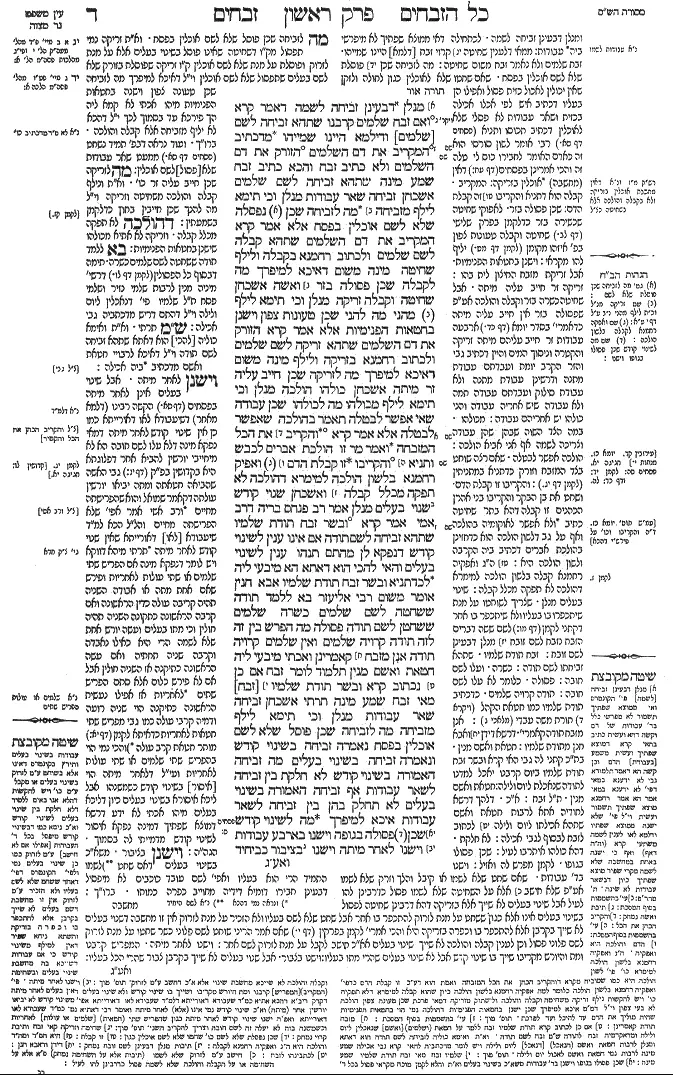
Zevahim 4a - Guemara
מנלן דבעינן זביחה לשמה דאמר קרא (ויקרא ג, א) ואם זבח שלמים קרבנו שתהא זביחה לשם [שלמים] ודילמא היינו שמייהו מדכתיב (ויקרא ז, לג) המקריב את דם השלמים (ויקרא ז, יד) הזורק את דם השלמים ולא כתיב זבח והכא כתיב זבח שמע מינה שתהא זביחה לשם שלמים אשכחן זביחה שאר עבודות מנלן וכי תימא לילף מזביחה מה לזביחה שכן נפסלה שלא לשם אוכלין בפסח אלא אמר קרא המקריב את דם השלמים שתהא קבלה לשם שלמים ולכתוב רחמנא בקבלה ולילף שחיטה מינה משום דאיכא למיפרך מה לקבלה שכן פסולה בזר ואשה אשכחן שחיטה וקבלה זריקה מנלן וכי תימא לילף מהני מה להני שכן טעונות צפון וישנן בחטאות הפנימיות אלא אמר קרא הזורק את דם השלמים שתהא זריקה לשם שלמים ולכתוב רחמנא בזריקה ולילף מינה משום דאיכא למיפרך מה לזריקה שכן חייב עליה זר מיתה אשכחן כולהו הולכה מנלן וכי תימא לילף מכולהו מה לכולהו שכן עבודה שאי אפשר לבטלה תאמר בהולכה שאפשר לבטלה אלא אמר קרא (ויקרא א, ה) והקריב את הכל המזבחה ואמר מר זו הולכת אברים לכבש ותניא (ויקרא א, ה) והקריבו זו קבלת הדם ואפיק רחמנא בלשון הולכה למימרא דהולכה לא תפקה מכלל קבלה' ואשכחן שנוי קודש שנוי בעלים מנלן אמר רב פנחס בריה דרב אמי אמר קרא (ויקרא ז, טו) ובשר זבח תודה שלמיו שתהא זביחה לשם תודה אם אינו ענין לשינוי קודש דנפקא לן מהתם תנהו ענין לשינוי בעלים והאי להכי הוא דאתא הא מיבעי ליה לכדתניא ובשר זבח תודת שלמיו אבא חנין אומר משום רבי אליעזר בא ללמד תודה ששחטה לשם שלמים כשרה שלמים ששחטן לשם תודה פסולה מה הפרש בין זה לזה תודה קרויה שלמים ואין שלמים קרויה תודה אנן מזבח קאמרינן ואכתי מיבעי ליה חטאת ואשם מנין תלמוד לומר זבח אם כן נכתוב קרא ובשר תודת שלמיו [זבח] מאי זבח שמע מינה תרתי אשכחן זביחה שאר עבודות מנלן וכי תימא לילף מזביחה מה לזביחה שכן פוסל שלא לשם אוכלין בפסח נאמרה זביחה בשינוי קודש ונאמרה זביחה בשינוי בעלים מה זביחה האמורה בשינוי קודש לא חלקת בין זביחה לשאר עבודות אף זביחה האמורה בשינוי בעלים לא תחלק בהן בין זביחה לשאר עבודות איכא למיפרך מה לשינוי קודש שכן פסולה בגופה וישנו בארבע עבודות וישנו לאחר מיתה וישנו בציבור כביחיד
Comments from Rashi on Masechet Zevahim Page 4a
ומנלן דבעינן זביחה לשמה . לכתחילה דאי ממוצא שפתיך לא מיפרשי ביה עבודות: ממאי דלענין שחיטה קרוי זבח [דלמא] היינו שמייהו . זבח שלמים ולא נאמר זבח משום שחיטה: מה לזביחה שכן פוסלת שלא לשם אוכלין בפסח . שאם שחטו שלא לאוכלין כגון לחולה ולזקן שאין יכולין לאכול כזית פסול ואפילו הן בעליו דכתיב איש לפי אכלו אכילה בכזית ושאר עבודות לא פסלי שלא לאוכלין דכתיב תכוסו ותניא (פסחים דף סא.) רבי אומר לשון סורסי הוא זה כאדם האומר לחבירו כוס לי טלה זה והכי אמרינן בפסחים (דף עח:) דאין (מחשבה) אוכלין בזריקה: המקריב . קבלה הוא דתניא והקריבו זה קבלת הדם: שכן פסולה בזר . לאפוקי שחיטה שכשירה בזר כדלקמן בפרק שלישי (זבחים דף לב.) שחיטה וקבלה טעונות צפון בפ' איזהו מקומן (לקמן זבחים דף מט.) יליף להו מקראי: וישנן בחטאות הפנימיות . אבל זריקת מזבח החיצון לית בהו: זריקה זר חייב עליה מיתה . אבל שחיטה כשרה בזר וקבלה והולכה אע"פ שפסולה בזר אין חייב עליה מיתה כדאמרי' בסדר יומא (דף כד.) ארבעה עבודות זר חייב עליהם מיתה זריקה והקטרה וניסוך המים והיין דכתיב גבי והזר הקרב יומת ועבדתם עבודת מתנה ודרשינן עבודת מתנה ולא עבודת סילוק ועבדתם עבודה תמה ולא עבודה שיש אחריה עבודה והני כולהו יש אחריהם עבודה: מכולהו . במה הצד השוה שבהן שהן עבודה וצריכה לשמה אף אני אביא הולכה: הולכה אפשר לבטלה . שאם רצה שוחט בצד המזבח וזורק כדתניא במתניתין (לקמן זבחים דף יג.): והקריבו זו קבלת הדם . ושחט את בן הבקר והקריבו בני אהרן הכהנים זו קבלה דהא בתר שחיטה כתיב ולא אפשר לאוקומיה בהולכה ואף על גב דלשון הולכה הוא כדחזינן בהולכת אברים דכתיב ביה הקרבה ולשון הולכה היא: ה"ג ואפקיה רחמנא קבלה בלשון הולכה למימרא דהולכה לא תפקה מכלל קבלה: שינוי בעלים מנלן . שצריך לשוחטו על מנת שיתכפרו בו בעליו לא שיתכפר בו אחר דקתני לקמן (זבחים דף מו:) לשם ששה דברים הזבח נזבח לשם זובח מנלן דבעינן לשם זובח: זבח תודת שלמיו . שתהא זביחתו לשם תודה: כשרה . ועלו לשם חובה: פסולה . כלומר לא עלו לשם חובה: תודה קרויה שלמים . כדכתיב תודת שלמיו כמו חטאת הקהל (ויקרא ד) תורת משה עבדי (מלאכי ג): אנן מזבח תודה קאמרי' . דרשא דידן ואבא חנן מתודת שלמיו: חטאת ואשם מנין . בת"כ קתני לה גבי האי קרא ובשר זבח תודת שלמיו ביום קרבנו יאכל למדנו לתודה שנאכלת ליום ולילה: חטאת ואשם מנין . ת"ל זבח: לא חלקת . דהא כולהו איתרבו לעיל: שכן פסולו בגופו . לקמן מפרש לה ואזיל: וישנו בד' עבודות . שאם שחט שלא לשמו או קיבל והלך וזרק שלא לשמו אע"פ שלא חישב אלא על השחיטה שלא לשמו פסול כדרבינן להו לעיל אבל שינוי בעלים לא שייך אלא בזריקה דהא דרבינן שחיטה לפסול בשינוי בעלים אינו אלא כגון ששחט על מנת לזרוק להתכפר בו אחר אבל שחט שלא לשם בעליו ולא הזכיר על מנת לזרוק אין זו מחשבה דשנוי בעלים לא שייך בקרבן אלא להתכפר בו וכפרה בזריקה היא והכי אמרי' לקמן בפרקין (זבחים דף י.) שאם אמר הריני שוחט לשם פלוני כשר שחטו על מנת לזרוק לשם פלוני פסול וכן לענין קבלה והולכה לא שייך שינוי בעלים אא"כ חישב לקבל על מנת לזרוק לשם אחר: וישנו לאחר מיתה . המפריש קרבנו ומת והיורש מקריבו שייך בו שינוי קדש אבל לא שינוי בעלים שהרי מתו בעליו: וישנו בצבור . אבל שנוי בעלים לא שייך בקרבן צבור שהרי הכל בעליו:
Comments from Tosafot - Zevahim 4a
מה לזביחה שכן פוסל שלא לשם אוכלין בפסח . וא"ת זריקה נמי תפסול מק"ו דשחיטה שאינו פוסל בשינוי בעלים אלא על מנת לזרוק ופוסלת על מנת שלא לשם אוכלין ק"ו זריקה שפוסלת בזורק שלא לשם בעלים שתפסול שלא לשם אוכלין וי"ל דאיכא למיפרך מה לזביחה שכן טעונה צפון וישנה בחטאות הפנימיות מיהו אכתי לא קמא ליה הך פירכא עד בסמוך לכך י"ל דהכא לא יליף מזביחה אלא קבלה והולכה. ברו"ך. ועוד נראה דבפ' תמיד נשחט (פסחים דף סא.) ממעט שאר עבודות שלא [פסול] לשם אוכלין: מה לזריקה שכן חייב עליה זר כו' . וא"ת ונילף קבלה והולכה משחיטה וזריקה וי"ל מה להנך שכן חייבין בחוץ כדלקמן בשמעתין: דהולכה לא תפקה מכלל קבלה . וזריקה לא אתיא מכולהו שישנן בחטאות הפנימיות: בא ללמד תודה ששחטה לשם שלמים כשרה . תימה דבסוף כל הפסולין (לקמן זבחים דף לו.) דרשי' מיניה מנין לרבות שלמי נזיר ושלמי פסח ת"ל שלמיו פי' דנאכלין ליום ולילה וי"ל דהתם דריש מדכתביה גבי אכילה: ש"מ תרתי . וא"ת ואימא כוליה [להכי] הוא דאתא שתהא זביחה לשם תודה וי"ל דאיכא לרבויי חטאת ואשם מדכתיב ביה אכילה: וישנן לאחר מיתה . אבל שינוי בעלים אינן לאחר מיתה בפסחים (דף סא.) הקשה רבינו (דלמא מאחר) דשיעבודא לאו דאורייתא כמו כן אין שינוי קודש לאחר מיתה דמאי נפקא מינה דלא עלו לשם חובה הא לא מיחייבי יורשין להביא אחר דפלוגתא היא בקדושין בפ"ק (דף יג:) גבי האשה שהביאה חטאתה ומתה יביאו יורשין עולתה דקאמר שמואל והוא שהפרישתה מחיים ורב אשי אמר אפי' שלא הפרישתה מחיים והל"ל הכא למ"ד שיעבודא [לאו] דאורייתא שאין שנוי קודש לאחר מיתה תרתי מיהא דווקא ויש לומר דנפקא מינה אם הפריש שתי שלמים או שתי עולות לאחריות ופירש שאם אחת מתה או אבודה השניה תהיה קריבה עולה כדין הראשונה ואם קרבה הראשונה כתקונה השניה תהיה חולין וכי מתו בעלים ועשה יורש אחת שלא לשמה הרי היא כאילו נאבדה וקרבה שניה תחתיה ואם עשה הראשונה כתיקנה אז השניה חולין אבל אם לא פירש כלום אלא סתם הפריש שתים לאחריות אז אפילו נעשית הראשונה כתיקנה הוי שניה רועה ודמיה קרבי עולה כמו גבי מפריש שתי חטאות לאחריות כדאיתא לקמן (זבחים דף יא:) מותר חטאת קרב עולה והכי נמי הוי בהפריש שתי שלמים או שתי עולות לאחריות ועי"ל דלאחר מיתה הוי [איסור] בשינוי קודש כשמשנהו אבל ליכא איסורא בשינוי בעלים כיון דליכא בעלים מיהו אכתי לא ידע דרשא דמוצא שפתיך דמינה נפקא איסור לשינוי קודש מדמייתי לה בסמוך . הגה"ה: וישנן בציבור . משא"כ בשינוי בעלים דאם שחט לשמו התמיד הרי הוא בעליו ואפי' לשם עובד כוכבים לא מיפסיל דבעינן חבירו דומיא דידיה מחוייב כפרה כמותו. ברו"ך:
Zevahim 4a - Mishnah translated into english
§ The Gemara asks: From where do we derive that we require that an offering’s slaughter be performed for its own sake? It is derived from a verse, as the verse states: “And if his offering is a sacrifice [zevaḥ] of peace offerings” (Leviticus 3:1), teaching that slaughter [zeviḥa] must be performed for the sake of a peace offering.
The Gemara challenges: But perhaps when the verse states: “A sacrifice of peace offerings,” “a sacrifice of peace offerings” is simply the name of this type of offering, and is not referring to intent of the one slaughtering it.
The Gemara answers: From the fact that it is written in other verses: “Who offers the blood of the peace offering” (Leviticus 7:33), and: “Who sprinkles the blood of the peace offering” (Leviticus 7:14), and the term: A sacrifice [zevaḥ], is not written, whereas here, in this verse, the term: “A sacrifice [zevaḥ] of peace offerings,” is written, learn from it that the slaughter [zeviḥa] must be performed for the sake of a peace offering.
The Gemara asks: We found a source for the halakha that slaughter must be performed for the sake of the offering being sacrificed. From where do we derive that the other sacrificial rites, i.e., collecting the blood, conveying it to the altar, and sprinkling it on the altar, must also be performed for the sake of the offering?
And if you would say: Let us derive from the fact that slaughter must be performed for the sake of the offering that the other sacrificial rites must be performed for the sake of the offering as well, this derivation can be refuted, as slaughter has a unique element of stringency: What is unique about slaughter? It is unique in that with regard to a Paschal offering, the offering is disqualified if it is slaughtered not for the sake of those who eat it. If the Paschal offering is slaughtered for the sake of people who are incapable of eating it, such as one who is too ill to eat, it is disqualified. By contrast, performing other rites with this intent does not disqualify the offering. Therefore, one cannot assume that a halakha that applies to slaughter applies to other rites as well.
The Gemara answers: Rather, the verse states: “Who sacrifices [hamakriv] the blood of the peace offering” (Leviticus 7:33), referring to the one who collects the blood of the offering, as the Gemara will explain. This phrase indicates that the collection of the blood must be performed for the sake of a peace offering.
The Gemara challenges: And let the Merciful One write this halakha in the Torah only with regard to the collection of the blood, and we would derive from it that slaughter must also be performed for the sake of the offering.
The Gemara answers: Because such a derivation can be refuted as follows: What is unique about collection of the blood? It is unique in that it is not valid if performed by a non-priest or a woman, whereas slaughter can be performed by any competent Jew. Therefore, one cannot assume that a halakha that applies to collection applies to slaughter as well.
The Gemara asks: We found a source for the halakha that slaughter and collection of the blood must be performed for the sake of the offering. From where do we derive that this halakha applies to the sprinkling of the blood as well?
And if you would say: Let us derive from these rites, i.e., slaughter and collection, that this halakha applies to the sprinkling of the blood as well, this derivation can be refuted: What is unique about these rites? They are unique in that for offerings of the most sacred order, it is required that they be performed in the north of the Temple courtyard. And furthermore, these rites are performed in the sacrifice of inner sin offerings as well as standard sin offerings. The sprinkling of the blood on the external altar, by contrast, is performed in all portions of the Temple courtyard, and it is not performed in the sacrifice of inner sin offerings, whose blood is sprinkled only in the Sanctuary.
The Gemara answers: Rather, the verse states: “Who sprinkles the blood of the peace offering” (Leviticus 7:14), indicating that the sprinkling of the blood must be performed for the sake of a peace offering.
The Gemara challenges: And let the Merciful One write this halakha only with regard to sprinkling, and we would derive from it that it applies to slaughter and collection as well.
The Gemara answers: That would not be sufficient, because such a derivation can be refuted, as sprinkling has a unique element of stringency. What is unique about sprinkling? It is unique in that a non-priest is liable to be punished with death at the hand of Heaven for performing it.
The Gemara asks: We found a source for this halakha with regard to all four rites save conveying the blood to the altar. From where do we derive that this latter rite must also be performed for the sake of the offering?
And if you would say: Let us derive from all the other rites that conveying the blood must also be performed for the sake of the offering, this derivation can also be refuted: What is unique about all of the other rites? They are unique in that each of them is an indispensable rite. Would you say that any requirement that applies to those rites necessarily applies also with regard to conveying the blood, which is dispensable? If an offering is slaughtered by the side of the altar, it is unnecessary to convey its blood to the altar.
The Gemara answers: Rather, the verse states: “And the priest shall sacrifice [vehikriv] the whole, and make it smoke upon the altar” (Leviticus 1:13), and the Master said that this is referring to conveying the limbs of the offering to the ramp of the altar. And it is taught in a baraita with regard to the verse: “And Aaron’s sons, the priests, shall present [vehikrivu] the blood” (Leviticus 1:5), that this is referring to the collection of the blood. And one can infer that the Merciful One expresses collection of the blood in the same language used for conveying, to say that you should not exclude conveying from the category of collection of the blood. Therefore, the halakhot of collection apply to conveying.
The Gemara asks further: And we found a source for the halakha concerning deviation with regard to the type of offering, i.e., that an offering may not be slaughtered for the sake of a different type of offering. From where do we derive the halakha concerning deviation with regard to the owner, i.e., that an offering may not be slaughtered for the sake of one who is not the owner?
Rav Pinḥas, son of Rav Ami, says: The verse states with regard to a thanks offering: “And the meat of the sacrifice [zevaḥ] of his thanksgiving peace offering shall be eaten on the day of his offering” (Leviticus 7:15), apparently indicating that its slaughter [zeviḥa] must be performed for the sake of a thanks offering. And if this language is not needed for the matter of deviation with regard to the type of offering, and in fact it is not, as we already derived this halakha from there, i.e., the verse cited concerning peace offerings, apply it to the matter of deviation with regard to the owner. It is thereby derived that an offering must be slaughtered for the sake of its owner.
The Gemara asks: But does this verse come to teach this halakha? Isn’t it necessary for that which is taught in a baraita: Concerning the phrase “and the meat of the sacrifice of his thanksgiving peace offering,” Abba Ḥanin says in the name of Rabbi Eliezer: It comes to teach that a thanks offering that one slaughtered for the sake of a peace offering is fit; whereas a peace offering that one slaughtered for the sake of a thanks offering is unfit. What is the difference between this offering and that offering? A thanks offering is called a peace offering in that verse, but a peace offering is not called a thanks offering.
The Gemara answers: We are saying that it is derived from the superfluous term: “Sacrifice [zevaḥ],” that the slaughter [zeviḥa] must be performed for the sake of the owner. The term “peace offering” teaches Abba Ḥanin’s ruling.
The Gemara disputes this: But the term “sacrifice [zevaḥ]” is still necessary to serve as the source for another halakhic midrash: From where is it derived that the meat of a sin offering and a guilt offering may be eaten only on the day the animal is sacrificed and the following night, like a thanks offering? The verse states: “And the meat of the sacrifice [zevaḥ] of his thanksgiving peace offering shall be eaten on the day of his offering.” The phrase teaches that not only thanks offerings, but any slaughtered offering [zevaḥ] is subject to this time limit unless the Torah specifies otherwise.
The Gemara answers: If that were so, i.e., if the term “sacrifice” indicated only that a sin offering and a guilt offering may be eaten only for the period of time for which a thanks offering may be eaten, let the verse write: And the meat of his thanksgiving peace offering sacrifice. What is indicated by the mention of the word sacrifice before the phrase “his thanksgiving peace offering”? Rather, conclude two conclusions from it.
The Gemara asks: We found a source for the halakha that slaughter must be performed for the sake of the owner. From where do we derive that the other sacrificial rites must also be performed for the sake of the owner?
And if you would say: Let us derive from slaughter that the other rites must be performed for the sake of the owner as well, this derivation can be refuted: What is unique about slaughter? It is unique in that with regard to a Paschal offering, slaughter not for the sake of those who eat it disqualifies the offering, whereas performing the other rites not for the sake of the owner does not.
The Gemara answers: A term of slaughter is stated with regard to deviation from the type of offering, and a term of slaughter is stated with regard to deviation with regard to the owner. Just as concerning the term slaughter stated with regard to deviation from the type of offering, you did not differentiate between slaughter and the other sacrificial rites, and all four rites must be performed for the sake of the offering, so too, concerning the term slaughter stated with regard to deviation in the context of the owner, you should not differentiate between slaughter and the other sacrificial rites.
The Gemara counters: This derivation can be refuted: What is unique about deviation from the type of offering, as opposed to deviation with regard to the owner? It is unique with regard to four matters: First, it is unique in that its disqualification concerns the essence of the offering itself. And second, it is unique in that deviation from the type of offering applies to the four sacrificial rites, whereas performing a rite for the sake of the owner is relevant only to the sprinkling of the blood, which atones for the owner.
And third, it is unique in that deviation from the type of offering applies even after the death of the owner, when the owner’s heir brings the offering, whereas intent for the sake of the owner is irrelevant after the owner has died. And fourth, it is unique in that deviation from the type of offering applies with regard to communal offerings as well as with regard to individual offerings, whereas employing the term owner is irrelevant with regard to communal offerings, which are owned by the public.
Traduction : The William Davidson digital edition of the Koren Noé Talmud, with commentary by Rabbi Adin Even-Israel Steinsaltz.