 Talmud Bavli
Zevahim 70a : Youtube
Daf TubeYoutube
2 video classes :
Zevahim Page 70a
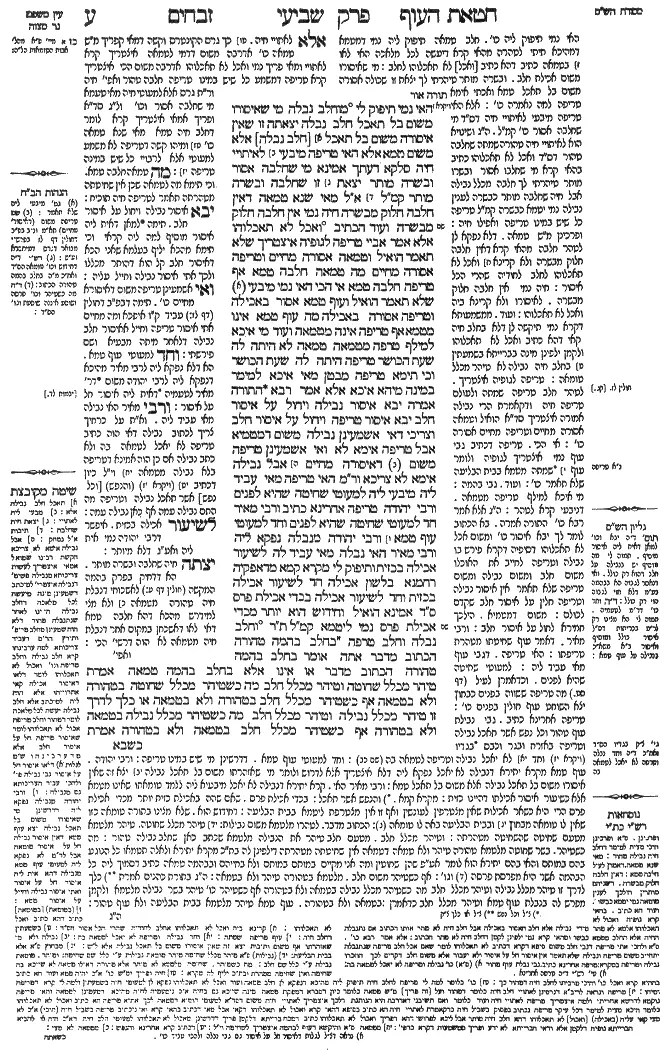
Zevahim 70a - Guemara
האי נמי תיפוק לי (ויקרא ז, כד) מוחלב נבלה מי שאיסורו משום בל תאכל חלב נבלה יצאתה זו שאין איסורה משום בל תאכל [חלב נבלה] אלא משום טמא אלא האי טריפה מיבעי לאיתויי חיה סלקא דעתך אמינא מי שחלבה אסור ובשרה מותר יצאת זו שחלבה ובשרה מותר קמ"ל א"ל מאי שנא טמאה דאין חלבה חלוק מבשרה חיה נמי אין חלבה חלוק מבשרה ועוד הכתיב (ויקרא ז, כד) ואכל לא תאכלוהו אלא אמר אביי טריפה לגופיה איצטריך שלא תאמר הואיל וטמאה אסורה מחיים וטריפה אסורה מחיים מה טמאה חלבה טמא אף טריפה חלבה טמא אי הכי האי נמי מיבעי שלא תאמר הואיל ועוף טמא אסור באכילה וטריפה אסורה באכילה מה עוף טמא אינו מטמא אף טריפה אינה מטמאה ועוד מי איכא למילף טרפה מטמאה טמאה לא היתה לה שעת הכושר טריפה היתה לה שעת הכושר וכי תימא טריפה מבטן מאי איכא למימר במינה מיהא איכא אלא אמר רבא התורה אמרה יבא איסור נבילה ויחול על איסור חלב יבא איסור טריפה ויחול על איסור חלב וצריכי דאי אשמעינן נבילה משום דמטמיא אבל טריפה אימא לא ואי אשמעינן טריפה משום דאיסורה מחיים אבל נבילה אימא לא צריכא ור"מ האי טריפה מאי עביד ליה מיבעי ליה למעוטי שחיטה שהיא לפנים ורבי יהודה טריפה אחרינא כתיב ורבי מאיר חד למעוטי שחיטה שהיא לפנים וחד למעוטי עוף טמא ורבי יהודה מנבלה נפקא ליה ורבי מאיר האי נבלה מאי עביד לה לשיעור אכילה בכזית ותיפוק לי מקרא קמא מדאפקיה רחמנא בלשון אכילה חד לשיעור אכילה בכזית וחד לשיעור אכילה בכדי אכילת פרס ס"ד אמינא הואיל וחידוש הוא יותר מכדי אכילת פרס נמי ליטמא קמ"ל תנו רבנן (ויקרא ז, כד) "וחלב נבלה וחלב טרפה" -- בחלב בהמה טהורה הכתוב מדבר אתה אומר בחלב בהמה טהורה הכתוב מדבר או אינו אלא בחלב בהמה טמאה אמרת טיהר מכלל שחוטה וטיהר מכלל חלב. מה כשטיהר מכלל שחוטה בטהורה ולא בטמאה אף כשטיהר מכלל חלב בטהורה ולא בטמאה או כלך לדרך זו טיהר מכלל נבילה וטיהר מכלל חלב. מה כשטיהר מכלל נבילה בטמאה ולא בטהורה, אף כשטיהר מכלל חלב בטמאה ולא בטהורה אמרת
Comments from Rashi on Masechet Zevahim Page 70a
האי נמי תיפוק ליה כו' . חלב טמאה תיפוק ליה נמי דמטמא דמהיכא תיתי לטהרה מהאי קרא דיעשה לכל מלאכה האי לאו בטמאה כתיב דהא כתיב [ואכל] לא תאכלוהו לחלב: מי שאיסורו משום אכילת חלב . ובשרה מותר טיהרתי לך יצאת זו שכולה אסורה משום בל תאכל טמא ואכתי אימא טריפה למה נאמרה כו': אלא האי טריפה מיבעי לאיתויי חיה דס"ד מי שחלבה אסור כו' קמ"ל . ה"ג ושינויא הוא לאיתויי חיה טהורה שמתה שחלבה טהור דס"ד ואכל לא תאכלוהו כתיב בהאי קרא מי שחלבו אסור ובשרו מותר טיהרתי לך חלבה מכלל נבילה אבל חיה שחלבה מותר כבשרה לענין נבילה נמי יטמא כבשרה קמ"ל טריפה כל שיש במינו טריפה ואפילו חיה: ופרכינן מ"ש טמאה . דלא נפקא לן לטהר חלבה מהאי קרא דאין חלבה חלוק מבשרה ולא קרינא ואכל לא תאכלוהו לחלב לחודיה שהרי הכל איסור: חיה נמי אין חלבה חלוק מבשרה . לאיסורו ולא קרינא ביה ואכל לא תאכלוהו: ועוד . ממשמעותא דקרא נמי תיקשה לן דלא בחלב חיה קאי דהא כתיב ואכל לא תאכלוהו ולקמן ילפינן מינה בברייתא בשמעתין בחלב חיה נבילה לא טיהר מכלל טומאה: טריפה לגופיה איצטריך . לטהר חלב טריפה שמתה ולעולם טריפה חיה ודקאמרת הרי נבילה אמורה איצטריך סד"א הואיל וטמאה אסורה מחיים וטריפה מחיים אסורה כו': אי הכי . טריפה דכתיב גבי עוף נמי איצטריך לגופיה ולומר עוף שמתה מטמא בבית הבליעה שלא תאמר כו': ועוד . גבי בהמה: מי איכא למילף טריפה מטמאה . דניבעי קרא לטהר: ה"ג אלא אמר רבא כו' התורה אמרה . בא הכתוב לומר לך יבא איסור כו' ומשום אכל לא תאכלוהו דסיפיה דקרא פירש בו נבילה וטריפה לחייב את האוכלו משום חלב ומשום נבילה ומשום טריפה שלא תאמר אין איסור נבילה וטריפה חלין על איסור חלב שקדם לכולם: משום דמטמיא . הילכך חמירא לחול על איסור חלב: ורבי מאיר . דאמר עוף שחיטתו מטהרת טריפתו: האי טריפה . דגבי עוף מאי עביד ליה: למעוטי שחיטה שהיא לפנים . וכדאמרן לעיל (זבחים דף סט.) מה טריפה שווה בפנים כבחוץ יצא השוחט עוף חולין בפנים כו': טריפה אחרינא כתיב . גבי נבילת עוף טהור וכל נפש אשר תאכל נבילה וטריפה באזרח ובגר וכבס בגדיו (ויקרא יז) וחד לא יאכל נבילה וטריפה לטמאה בה (שם כב): וחד למעוטי עוף טמא . דדרשינן מי שיש במינו טריפה: ורבי יהודה . עוף טמא מקרא יתירא דנבילה לא יאכל נפקא ליה דלא איצטריך אלא לדרוש ולומר מי שאזהרתו משום בל תאכל נבילה יצא זה שאין איסורו משום בל תאכל נבילה אלא משום בל תאכל טמא: ורבי מאיר האי . קרא יתירא דנבילה לא יאכל מיבעיא ליה ללמד טומאתו שאינו מטמא אלא כשיעור איסור אכילתו דהיינו כזית: מקרא קמא . והנפש אשר תאכל: בכדי אכילת פרס . שאם שהה באכילת כזית יותר מכדי אכילת פרס הרי היא כשאר אכילות שאין מצטרפין לעונשין ואף זו אין מצטרפת ליטמא בבית הבליעה: דחידוש הוא . שלא מצינו בתורה טומאה כזו שאין לו טומאה מבחוץ ובבית הבליעה באה לו טומאה: הכתוב מדבר . לטהרו מלטמא משום נבילות: טיהר מכלל שחוטה . טיהר מלטמא מטעם שחיטה שהשחיטה מטהרתה: וטיהר מכלל חלב . מטעם חלב טיהר את הנבילה מלטמא שכתב כאן שחלב נבילה טהור: מה כשטיהר . בשר שחוטה מלטמא טהורה טיהר ולא טמאה דטמאה אין שחיטתה מטהרתה דילפינן לה בת"כ מקרא יתירא ולאלה תטמאו כל הנוגע בהם במותם והאי בהם יתירא הוא לומר אע"פ שהן שחוטין ומה אני מקיים במותם במותם ולא בחייהם ובבהמה טמאה כתיב דסמוך ליה כל הבהמה אשר היא מפרסת פרסה וגו': אף כשטיהר משום חלב . מלטמא בטהורה טיהר ולא בטמאה: ה"ג בתורת כהנים אמרת כלך לדרך זו טיהר מכלל נבילה וטיהר מכלל חלב מה כשטיהר מכלל נבילה בטמאה ולא בטהורה אף כשטיהר כו' . טיהר בשר נבילה מלטמא ולקמן מפרש לה בנבלת עוף טמא וטיהר מכלל חלב כדאמרן: בטמאה ולא בטהורה . עוף טמא טיהר מלטמא בבית הבליעה ולא עוף טהור:
Comments from Tosafot - Zevahim 70a
אלא לאתויי חיה . כך גרס הקונטרס וקשה דמאי קפריך מ"ש טמאה כו' אדרבה משום דדמי לטמאה איצטריך קרא לאתויי ומאי פריך נמי ואכל לא תאכלוהו אדרבה משום הכי איצטריך קרא טריפה דמשמע כל שיש במינו טריפה חלבה טהור ואפי' חיה ור"ת גרס אלא למעוטי חיה מאי טעמא מי שחלבה אסור וכו' ול"ג סד"א ופריך אמאי איצטריך קרא לומר דחלב חיה טמא מאי שנא טמאה כו' ומיהו קשה דטריפה לא משמע למעוטי אלא לרבויי כל שיש במינה טריפה: יצתה חיה שחלבה ובשרה מותר . הא דדחיק בפרק בהמה המקשה (חולין דף ע:) לאשכוחי דנבלת חיה טהורה מטמאה ולא מצי למידרש מהכא דהא חלבה טמא דאי לאו דאשכחן במקום אחר דנבלת חיה מטמאה לא הוה דרשי' הכי: מה טמאה חלבה טמא . וכי תימא מה לטמאה שכן אין שחיטתה מטהרתה תאמר לטריפה חיה תוכיח: יבא איסור נבילה ויחול על איסור חלב . תימה למאן דאית ליה איסור מוסיף למה ליה קראי וכי תימא מהכא יליף בעלמא שאני הכא דאיסור חלב קל הוא דהותר מכללו ולכך אתי איסור נבילה וחייל עליה: ואי אשמעינן טריפה משום דאיסורא מחיים כו' . תימה דבפ"ב דחולין (דף לז:) עביד ק"ו איפכא ומה מחיים אתי איסור טריפה וחייל אאיסור חלב נבילה דלאחר מיתה מבעיא ושם פירשתי: ורבי מאיר האי נבילה מאי עביד ליה . וא"ת על כרחיך צריך לכתוב נבילה דאי הוה כתיב טריפה לא יאכל לטמאה בה ולא כתב נבילה אם כן הוה אמינא דטריפה בלא נבילה מטמאה וי"ל כיון דכתיב (ויקרא יז) (והנפש) [וכל נפש] אשר תאכל נבילה וטריפה מה התם נבילה עמה אף כאן נבילה עמה: וחד למעוטי עוף טמא . הא דלא נפקא ליה לרבי מאיר מהיכא דנפקא ליה לרבי יהודה משום דר' מאיר לטעמיה דאית ליה איסור חל על איסור: לשיעור אכילה בכזית . איפשר דרבי יהודה נמי אית ליה ואע"ג דלא מיותר:
Zevahim 70a - Mishnah translated into english
The Gemara challenges: According to this logic, one can also derive the halakha that the forbidden fat of the carcass of a non-kosher animal is impure from the verse: “And the fat of a carcass, and the fat of a tereifa, may be used for any other service” (Leviticus 7:24), which teaches that such forbidden fat is ritually pure.
The continuation of the verse: “But you shall in no way eat of it,” indicates that the verse renders pure only fat that is forbidden specifically due to the prohibition: You shall not eat the forbidden fat of a carcass, i.e., the forbidden fat of kosher animals. This serves to exclude this forbidden fat of a non-kosher animal, which is not forbidden due to the prohibition: You shall not eat the forbidden fat of a carcass, but rather due to the prohibition against eating a non-kosher animal. Since the verse that states that fats are ritually pure is referring only to kosher animals, the forbidden fat of a carcass of a non-kosher animal must be impure. Rav Sheizevi’s derivation of this halakha from the word tereifa is therefore superfluous.
Rather, this word “tereifa” is necessary to include the forbidden fat of a carcass of a kosher undomesticated animal, to teach that it is ritually pure; as it might enter your mind to say that only the forbidden fat of carcasses of those animals whose fat is forbidden and whose meat is permitted if slaughtered, i.e., kosher domesticated animals, is ritually pure, and this serves to exclude this forbidden fat of carcasses of those animals whose fat and meat are both permitted if slaughtered, i.e., kosher undomesticated animals, whose fat is impure. To counter this possibility, the word “tereifa” teaches us that the fat of a carcass of any animal that can become a tereifa is ritually pure, including the fat of kosher undomesticated animals.
He said to him: If it is derived from the verse that the forbidden fat of a carcass of a kosher undomesticated animal is pure, what is different about a non-kosher animal that would cause its forbidden fat to be impure? If the difference is that its fat is not distinct from its meat, as both are forbidden for consumption, the fat of a kosher undomesticated animal is also not distinct from its meat, as both are permitted. And furthermore, isn’t it written later in the verse: “But you shall in no way eat of it” (Leviticus 7:24)? This phrase is interpreted (70b) as excluding the fat of undomesticated animals, teaching that it is impure.
Rather, Abaye said: The word “tereifa” in this verse was necessary for its own sake, to teach that the forbidden fat of a carcass of a tereifa of a kosher domesticated animal is pure. The inclusion of the word teaches that you should not say that since a non-kosher animal is forbidden while still alive, and a tereifa is forbidden while still alive, therefore just as the forbidden fat of a non-kosher animal is impure, so too the forbidden fat of a tereifa is impure. The word “tereifa” therefore teaches that it is pure.
The Gemara asks: But if so, i.e., if one could have learned the halakha of the forbidden fat of a tereifa from the halakha of the forbidden fat of a non-kosher animal, then this word “tereifa” in the verse concerning the impurity of a kosher bird carcass (Leviticus 17:15) is also necessary for its own sake, to teach that the carcass of a kosher bird that is a tereifa is impure. It is necessary for this to be written with regard to the carcass of a kosher bird so that you should not say as follows: Since a non-kosher bird is forbidden for consumption, and a tereifa is forbidden for consumption, therefore just as a non-kosher bird does not impart impurity, so too a tereifa does not impart impurity. According to Rabbi Yehuda, the word is necessary to include the slaughtered kosher bird that is a tereifa, not a carcass.
And furthermore, is it possible to derive the halakha concerning a tereifa from that concerning a non-kosher animal, as suggested? The two cases are incomparable, as a non-kosher animal never had a kosher period before being forbidden, whereas a tereifa had a kosher period before becoming a tereifa. And if you would say: What can be said with regard to an animal that is a tereifa from the womb, which never had a kosher period? In any event, there are kosher animals among its species, i.e., the tereifa is a member of a kosher species, which cannot be said of a non-kosher animal.
Rather, Rava said: The word tereifa in the verse concerning forbidden fat (Leviticus 7:24) teaches a different halakha. By stating: “But you shall in no way eat of it,” referring to the forbidden fat of a carcass, the Torah states: Let the prohibition of eating a carcass come and take effect where the prohibition of eating forbidden fat already exists. One who eats the forbidden fat of a carcass is liable both for eating forbidden fat and for eating from a carcass. Likewise, the word “tereifa” in the verse teaches: Let the prohibition of eating a tereifa come and take effect where the prohibition of eating forbidden fat already exists, so that one who eats the forbidden fat of a tereifa is liable for transgressing two prohibitions.
And both the word “carcass” and the word “tereifa” are necessary, even though they teach similar halakhot. As, had the verse taught us about additional liability only with regard to the forbidden fat of a carcass, one might have thought that it applies to only a carcass, as it imparts ritual impurity, but with regard to a tereifa, which does not, one might say that the additional liability does not apply. And had the verse taught us this halakha only with regard to a tereifa, one might have thought that it applies only to a tereifa, as its prohibition takes effect while it is still alive, but with regard to a carcass, which becomes forbidden only when it dies, one might say that it does not apply. Both words are therefore necessary.
§ The Gemara has established that according to Rabbi Yehuda, the word “tereifa” in the verse concerning the impurity of a kosher bird carcass (Leviticus 17:15) teaches that a slaughtered bird that is a tereifa imparts ritual impurity. The Gemara asks: And what does Rabbi Meir, who holds that a slaughtered bird that is a tereifa does not impart ritual impurity, do with this word “tereifa”? The Gemara answers: It is necessary to exclude the slaughter of non-sacred birds that occurs inside the Temple courtyard, teaching that it does not cause them to impart ritual impurity as would a carcass, even though they are forbidden for consumption.
And how does Rabbi Yehuda derive this halakha? The Gemara answers: Another instance of the word tereifa is written concerning the ritual impurity of birds: “A carcass, or a tereifa, he shall not eat to become impure with it” (Leviticus 22:8). Rabbi Yehuda derives the halakha from this verse.
And how does Rabbi Meir interpret the appearance of the word tereifa in both verses? The Gemara answers: One is necessary to exclude the slaughter that occurs inside the Temple courtyard as mentioned above, and one is necessary to exclude a non-kosher bird, to teach that the carcass of a non-kosher bird does not impart ritual impurity.
And how does Rabbi Yehuda derive that the carcass of a non-kosher bird does not impart ritual impurity? The Gemara answers: He derives it from the word “carcass” in the verse: “A carcass, or a tereifa, he shall not eat to become impure with it” (Leviticus 22:8), which indicates that only carcasses of birds that are forbidden for consumption due to their status as a carcass are impure. Non-kosher birds are forbidden due to their non-kosher status, not due to their status as a carcass.
The Gemara asks: And what does Rabbi Meir do with this word “carcass”? The Gemara answers: Since the verse mentions eating, Rabbi Meir holds that the word “carcass” is written to teach that the minimum measure of consumption of the meat of a bird carcass that renders one impure is an olive-bulk, which is the standard legal measure of consumption for Torah laws in general.
The Gemara challenges: But let him derive this measure from the first verse: “And every soul that eats a carcass…shall be impure” (Leviticus 17:15), from the fact that the Merciful One expresses this halakha using the language of consumption.
The Gemara responds: Both verses are necessary, one to indicate that the measure of consumption that renders one impure is an olive-bulk, and one to indicate that the maximum measure of time for consumption of the olive-bulk is the time it takes to eat a half-loaf of bread. One who takes longer than this standard measure of time will not contract impurity.
It is necessary for the Torah to indicate this latter halakha as well, as otherwise it might enter your mind to say: Since the impurity of carcasses of birds is a novelty, as one contracts it by eating rather than by touching or carrying, perhaps its halakhot are unusually stringent and even one who eats an olive-bulk in more than the time it takes to eat a half-loaf of bread should also contract impurity. Therefore, the verse teaches us otherwise.
§ The Gemara cites a baraita concerning the impurity of the forbidden fat of a carcass. The Sages taught: When the verse: “And the fat of a carcass, and the fat of a tereifa, may be used for any other service” (Leviticus 7:24) teaches that such fat is pure, the verse speaks of the forbidden fat of a kosher animal.
The baraita challenges: Do you say that the verse speaks of the forbidden fat of a kosher animal, or perhaps does it only speak of the forbidden fat of a non-kosher animal?
You may say in response: The Torah renders a slaughtered animal pure of the impurity of a carcass due to the fact that it was ritually slaughtered. And likewise the Torah renders the forbidden fat of a carcass pure, due to the fact that it is forbidden fat. Therefore, the two cases are comparable: Just as when the Torah renders a slaughtered animal pure due to the fact that it was slaughtered, it is referring only to a kosher animal and not to a non-kosher animal, which is impure even when ritually slaughtered, so too, when the Torah renders forbidden fat pure due to the fact that it is forbidden fat, it is referring only to a kosher animal and not to a non-kosher animal.
The baraita challenges: Or perhaps go this way and maintain that since the Torah renders the carcass of a non-kosher animal ritually pure, removing it from the category of a carcass, and likewise the Torah renders the forbidden fat of a carcass pure, due to the fact that it is forbidden fat; therefore, the two cases are comparable: Just as when the Torah renders the carcass of a non-kosher animal pure, removing it from the category of a carcass, it is referring only to a non-kosher animal and not to a kosher animal, the carcass of which imparts impurity, so too, when the Torah renders forbidden fat pure due to the fact that it is forbidden fat, it is referring only to a non-kosher animal and not to a kosher animal.
You may say in response:
Traduction : The William Davidson digital edition of the Koren Noé Talmud, with commentary by Rabbi Adin Even-Israel Steinsaltz.