 Talmud Bavli
Zevahim 103a : Youtube
Daf TubeYoutube
2 video classes :
Zevahim Page 103a
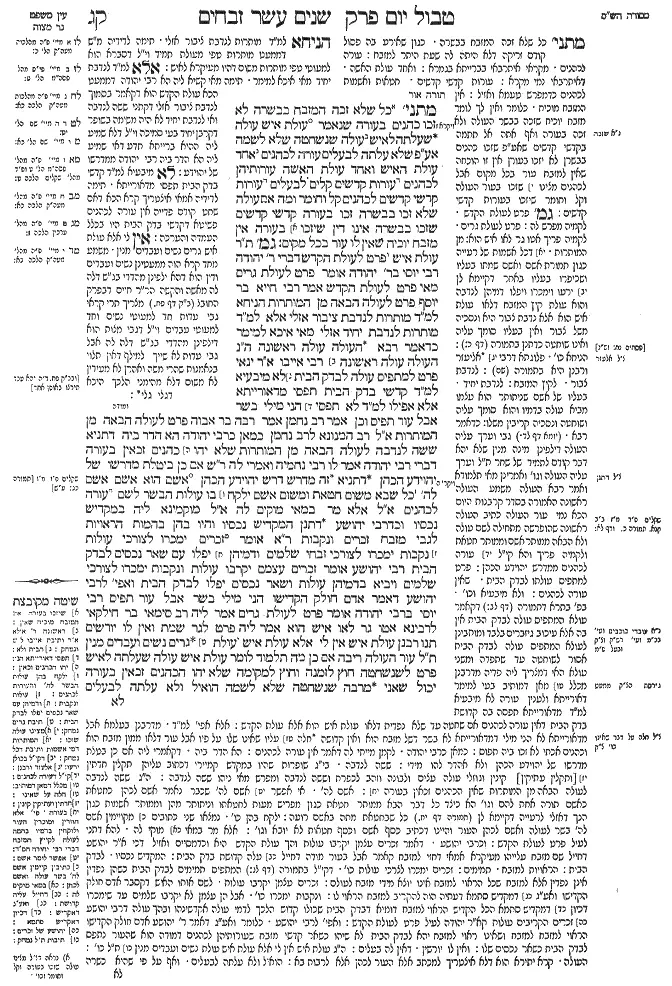
Zevahim 103a - Guemara
מתני׳ כל שלא זכה המזבח בבשרה לא זכו כהנים בעורה שנאמר (ויקרא ז, ח) עולת איש עולה שעלתה לאיש עולה שנשחטה שלא לשמה אע"פ שלא עלתה לבעלים עורה לכהנים אחד עולת האיש ואחד עולת האשה עורותיהן לכהנים עורות קדשים קלים לבעלים עורות קדשי קדשים לכהנים קל וחומר ומה אם עולה שלא זכו בבשרה זכו בעורה קדשי קדשים שזכו בבשרה אינו דין שיזכו בעורה אין מזבח יוכיח שאין לו עור בכל מקום:
גמ׳ ת"ר עולת איש פרט לעולת הקדש דברי ר' יהודה רבי יוסי בר' יהודה אומר פרט לעולת גרים מאי פרט לעולת הקדש אמר רבי חייא בר יוסף פרט לעולה הבאה מן המותרות הניחא למ"ד מותרות לנדבת ציבור אזלי אלא למ"ד מותרות לנדבת יחיד אזלי מאי איכא למימר כדאמר רבא העולה עולה ראשונה ה"נ העולה עולה ראשונה רבי אייבו א"ר ינאי פרט למתפיס עולה לבדק הבית לא מיבעיא למ"ד קדשי בדק הבית תפסי מדאורייתא אלא אפילו למ"ד לא תפסי הני מילי בשר אבל עור תפיס וכן אמר רב נחמן אמר רבה בר אבוה פרט לעולה הבאה מן המותרות א"ל רב המנונא לרב נחמן כמאן כרבי יהודה הא הדר ביה דתניא ששה לנדבה לעולה הבאה מן המותרות שלא יהו כהנים זכאין בעורה דברי רבי יהודה אמר לו רבי נחמיה ואמרי לה ר"ש אם כן ביטלת מדרשו של יהוידע הכהן דתניא זה מדרש דרש יהוידע הכהן (ויקרא ה, יט) אשם הוא אשם אשם לה' כל שבא משום חטאת ומשום אשם ילקח בו עולות הבשר לשם עורה לכהנים א"ל אלא מר במאי מוקים לה א"ל מוקמינא ליה במקדיש נכסיו וכדרבי יהושע דתנן המקדיש נכסיו והיו בהן בהמות הראויות לגבי מזבח זכרים ונקבות ר"א אומר זכרים ימכרו לצורכי עולות נקבות ימכרו לצורכי זבחי שלמים ודמיהן יפלו עם שאר נכסים לבדק הבית רבי יהושע אומר זכרים עצמם יקרבו עולות ונקבות ימכרו לצורכי שלמים ויביא בדמיהן עולות ושאר נכסים יפלו לבדק הבית ואפי' לרבי יהושע דאמר אדם חולק הקדישו הני מילי בשר אבל עור תפיס רבי יוסי ברבי יהודה אומר פרט לעולת גרים אמר ליה רב סימאי בר חילקאי לרבינא אטו גר לאו איש הוא אמר ליה פרט לגר שמת ואין לו יורשים תנו רבנן עולת איש אין לי אלא עולת איש עולת גרים נשים ועבדים מנין ת"ל עור העולה ריבה אם כן מה תלמוד לומר עולת איש עולה שעלתה לאיש פרט לשנשחטה חוץ לזמנה וחוץ למקומה שלא יהו הכהנים זכאין בעורה יכול שאני מרבה שנשחטה שלא לשמה הואיל ולא עלתה לבעלים
Comments from Rashi on Masechet Zevahim Page 103a
מתני' כל שלא זכה המזבח בבשרה . כגון שאירע בה פסול קודם זריקה דלא היתה לה שעת היתר למזבח: עורה לכהנים . מקראי איתרבאי בברייתא בגמרא: ואחד עולת האשה . דאיתרבאי נמי מקרא: עורות קדשי קדשים . חטאות ואשמות לכהנים כדמפרש טעמא ואזיל: אין המזבח מוכיח . כלומר ואין לך לומר מזבח יוכיח שזכה בבשר העולה ולא זכה בעורה ואף אתה אל תתמה בקדשי קדשים שאע"פ שזכו כהנים בבשרן לא יזכו בעורן אין זו הוכחה שאין למזבח עור בכל מקום אבל לכהנים מצינו שזכו בעור העולה וקל וחומר שיזכו בעורות קדשי קדשים: גמ' פרט לעולת הקדש . לקמיה מפרש לה: פרט לעולת גרים . לקמיה פריך אטו גר לאו איש הוא: מן המותרות . דכל אשמות של רעייה כגון תמורת אשם ואשם שמתו בעליו ושכיפרו בעליו באחר דקיימא לן ירעו וימכרו ויפלו דמיהן לנדבה והוא עולת קיץ המזבח דלאו עולת איש הוא אלא נדבת צבור היא ונסכיה משל צבור ואין בעליו סומך עליה ואינו שוחטה כדתנן בתמורה (דף כ:): הניחא כו' . פלוגתא דרבי אליעזר ורבנן היא בתמורה (שם): לנדבת צבור . לקיץ המזבח: לנדבת יחיד . בעליו של אשם שניתותר הוא עצמו מביא עולה בדמיו והוא סומך עליה ושוחטה ונסכיה קריבין משלו: כדאמר רבא . (יומא דף לד.) גבי וערך עליה העולה דילפינן מינה מנין שלא יהא דבר קודם לתמיד של שחר ת"ל וערך עליה העולה וגו' ואמרינן מאי תלמודא ואמר רבא העולה משמע העולה ראשונה האמורה בסדר קרבנות היום הכא נמי עור העולה כתיב העולה ראשונה שהופרשה מתחילה לשם עולה ולא הבאה ממותר אשם וממותר חטאת ולקמיה פריך והא קי"ל עורה לכהנים ממדרש יהוידע הכהן: פרט למתפיס עולתו לבדק הבית . שאין עורה לכהנים: ולא מיבעיא וכו' . בפ' בתרא דתמורה (דף לב:) דקאמר עולא המתפיס עולה לבדק הבית אין בה אלא עיכוב גיזברים בלבד ומותבינן לעולא המתפיס עולה לבדק הבית אסור לשוחטה עד שתפדה ומשני עולא האי דמצריך ליה פדיה מדרבנן מכלל מאן דמותיב בעי למימר דאורייתא ולענין עורה לא מיבעיא למ"ד מדאורייתא תפסה בה קדושת בדק הבית דאין עורה לכהנים אם שחטה עד שלא נפדית דלאו עולת איש הוא אלא עולת הקדש: אלא אפי' למ"ד . מדרבנן בעלמא אבל מדאורייתא לא הני מילי דמדאורייתא לא בשר דשל מזבח הוא ואין קדושה חלה עליו שאינו שלו על פיו אבל עור דלאו ממון מזבח הוא וכהנים אכתי לא זכו ביה תפוס: כמאן כרבי יהודה . לקמן מייתי לה דאמר אין עורה לכהנים: הא הדר ביה . דקאמרי ליה אם כן בטלת מדרשו של יהוידע הכהן ולא אהדר להו מידי: ששה לנדבה . בי"ג שופרות שהיו במקדש קמיירי דכתוב עליהן תקלין חדתין [ותקלין עתיקין] קינין וגוזלי עולה עצים ולבונה וזהב לכפרת וששה לנדבה ומפרש מאי ניהו ששה לנדבה: ה"ג ששה לנדבה לעולה הבאה מן המותרות שאין הכהנים זכאין בעורה: אשם לה' . אי אפשר אשם לה' שכבר נאמר אשם לכהן כחטאת כאשם תורה אחת להם וגו' הא כיצד כל דבר הבא ממותר חטאת כגון מפריש מעות לחטאתו וניתותר מהן וממותר אשמות כגון הנך דאזלי לראייה דקיימא לן (תמורה דף יח.) כל שבחטאת מתה באשם רועה: ילקח בהן כו' . נמצאו שני כתובים מקויימין אשם לה' בשר לעולה ואשם לכהן העור והיינו דכתיב כסף אשם וכסף חטאות לא יובא וגו': אלא מר במאי מוקי לה . להא דתני לעיל פרט לעולת הקדש: וכרבי יהושע . דאמר זכרים עצמן יקרבו עולות והך עולת הקדש היא וכדמסיים ואזיל דכי א"ר יהושע דחייל שם מזבח עלייהו מעיקרא אמאי דחזי למזבח קאמר אבל בעור מודה דחייל עלה קדושת בדק הבית: המקדיש נכסיו . לבדק הבית: הראויות למזבח . תמימים: זכרים ימכרו לצרכי עולות כו' . דקי"ל בתמורה (דף לג:) המתפיס תמימים לבדק הבית כשהן נפדין אינן נפדין אלא למזבח שכל הראוי למזבח אינו יוצא מידי מזבח לעולם: זכרים עצמן יקרבו עולות . לשם אותו האיש דקסבר אדם חולק הקדישו ואע"ג דמקדיש סתמא דעתיה הוה להקריב למזבח הראוי לו: ונקבות ימכרו כו' . אבל הן עצמן לא יקרבו שלמים עד שימכרו דכיון דמקדיש סתמא הכל הקדיש הראוי למזבח דומיא דבדק הבית שכולו קדוש הלכך לדמי עולה אקדשינהו ובהך עולה דרבי יהושע זכרים הקריבים עולות קא"ר יהודה לעיל פרט לעולת הקדש: ואפי' לרבי יהושע . כלומר ואע"ג דאמר ר' יהושע אדם חולק הקדישו הראוי למזבח למזבח ושאינו ראוי למזבח יהא לבדק הבית לא שיהו כשאר קדשי מזבח שעורותיהן לכהנים דמודה הוא שהעור נתפס לבדק הבית כשאר נכסים שלו: ואין לו יורשין . דאין לה בעלים: ה"ג עולת איש אין לי אלא עולת איש עולת נשים ועבדים מנין ת"ל כו': העולה . קרא יתירא הוא דלא איצטריך למכתב אלא העור לכהן אלא לרבות בא: הואיל ולא עלתה לבעלים . ואף על פי שהיא כשרה לא יזכו בעורה:
Comments from Tosafot - Zevahim 103a
הניחא למ"ד מותרות לנדבת ציבור אזלי . תימה לדידיה מ"ש דממעט מותרות טפי מעולת תמיד וי"ל דסברא הוא למעוטי טפי מותרות משום דהיו מעיקרא לאיש: אלא למ"ד לנדבת יחיד מאי איכא למימר . תימה מאי קשיא ליה הא רבי יהודה דממעט הכא עולת הקדש הוא דקאמר בסמוך לנדבת ציבור אזלי דקתני ששה לנדבה ואי לנדבת יחיד לא היה משימה בשופר דקרבן יחיד בעי סמיכה וי"ל דלא שמיע ליה ההיא ברייתא תדע דאי שמיע ליה הא הדר ביה רבי יהודה ממדרשו של יהוידע: לא מיבעיא למ"ד קדשי בדק הבית תפסי מדאורייתא . תימה לדידיה אמאי איצטריך קרא הכא דאם שחט קודם פדייה אין עורה לכהנים פשיטא דקדשי בדק הבית היו בכלל העמדה והערכה: אין לי אלא עולת איש גרים נשים ועבדים מנין . משמע מחד קרא הוה ממעטינן נשים ועבדים ודין הוא דהא ילפינן מהדדי בג"ש דלה לה מאשה והקשה הר"ר חיים דבפרק החובל (ב"ק דף פח.) מצריך תרי קראי גבי עדות חד למעוטי נשים וחד למעוטי עבדים וי"ל דגבי מצות הוא דילפינן מהדדי בג"ש דלה לה אבל גבי עדות לא שייך למילף דאין תלוי בנאמנות שהרי משה ואהרן לא מעידין לא משום דלא מהימני הלכך היכא דגלי גלי:
Zevahim 103a - Mishnah translated into english
MISHNA: In the case of any burnt offering for which the altar did not acquire its flesh, e.g., if it was disqualified prior to the sprinkling of its blood, the priests did not acquire its hide, as it is stated with regard to the burnt offering: “And the priest that sacrifices a man’s burnt offering, the priest shall have to himself the hide of the burnt offering that he has sacrificed” (Leviticus 7:8), indicating that the priest acquires only the hide of a burnt offering that satisfied the obligation of a man.
Nevertheless, in a case of a burnt offering that was slaughtered not for its sake but for the sake of another offering, although it did not satisfy the obligation of the owner, its hide goes to the priests. In addition, although the verse states: “A man’s burnt offering,” in the case of both the burnt offering of a man and the burnt offering of a woman, their hides go to the priests.
The hides of offerings of lesser sanctity belong to the owners; the hides of offerings of the most sacred order belong to the priests. The right of priests to hides of offerings of the most sacred order is derived via an a fortiori inference: If for a burnt offering, for which the priests do not acquire its flesh, as it is burned in its entirety, they acquire its hide, then for other offerings of the most sacred order, for which the priests acquire its flesh, is it not right that they should acquire its hide? And there is no room to contend that the altar will prove that this is not a valid inference, as it acquires the flesh of a burnt offering but not its hide, since it does not have the right to the hide of an offering in any place.
GEMARA: The Sages taught in a baraita: The phrase “a man’s burnt offering” in the verse mentioned above serves to exclude the burnt offering of consecrated property, meaning that the priests do not acquire the hides of such offerings. This is the statement of Rabbi Yehuda. Rabbi Yosei, son of Rabbi Yehuda, says: The phrase serves to exclude the burnt offering of converts.
The Gemara clarifies: What does Rabbi Yehuda mean when he says that the phrase serves to exclude the burnt offering of consecrated property? Rabbi Ḥiyya bar Yosef says: He means it serves to exclude a burnt offering that comes from property that was left over. For example, if an animal consecrated as a guilt offering remains alive after its owner has achieved atonement by sacrificing another animal, the owner must wait until it acquires a blemish and then sell it. The proceeds are used to purchase a communal gift offering, which is sacrificed when there are no other offerings to be burned on the altar (see Temura 20b). Because it is a communal offering, it is not considered a man’s burnt offering, and the priests therefore have no right to the hide.
The Gemara asks: This works out well according to the one who says: Leftover consecrated property goes toward communal gift offerings. But according to the one who says: Leftover consecrated property goes toward an individual’s gift offering, what can be said? As this is a man’s burnt offering, the priests should have a right to the hides.
The Gemara answers: According to that opinion, the halakha is as Rava says: The verse states: “And the priest shall kindle wood on it every morning; and he shall lay the burnt offering in order upon it” (Leviticus 6:5). The verse states: “The burnt offering,” with the definite article, to teach that the daily burnt offering is the first burnt offering sacrificed each day in the Temple. Here too, the verse states: “The priest shall have to himself the hide of the burnt offering which he has offered,” to teach that the priest acquires the hide of a first burnt offering, i.e., an animal that was initially designated as a burnt offering, but not of a burnt offering purchased from proceeds left over from another offering.
Rabbi Aivu says that Rabbi Yannai says: Rabbi Yehuda’s statement can be interpreted differently. The phrase “a man’s burnt offering” serves to exclude a case of one who consecrates a burnt offering for Temple maintenance. Since the owner seeks to shift its ownership to the Temple, the priests have no right to its hides.
The Gemara comments: It is not necessary to teach this halakha according to the one who says that consecration for Temple maintenance applies by Torah law to offerings already consecrated to the altar, as the animal in fact ceases to belong to the individual, and the priests clearly have no claim to its hide. Rather, even according to the one who says that it does not apply by Torah law, because the offering is already consecrated for the altar, this matter applies only to the meat; but as for the hide, the consecration for Temple maintenance applies and nullifies the priests’ claim to it.
The Gemara returns to the explanation of Rabbi Ḥiyya bar Yosef and comments: And so says Rav Naḥman that Rabba bar Avuh says: The phrase “a man’s burnt offering” serves to exclude a burnt offering that comes from property that was left over.
Rav Hamnuna said to Rav Naḥman: In accordance with whose statement is your opinion? It is in accordance with the opinion of Rabbi Yehuda. But didn’t Rabbi Yehuda retract this statement? As it is taught in a baraita: The mishna in tractate Shekalim (6:5) states that the Temple had six collection boxes shaped like horns, for communal gift offerings. These funds would go toward burnt offerings that come from money that was left over. For example, if someone dedicated money to purchasing an offering, and after his purchase some of the sum remained, he would put it in these boxes. The halakha is that the priests have no right to the hide of such an offering. This is the statement of Rabbi Yehuda.
Rabbi Neḥemya said to Rabbi Yehuda, and some say that Rabbi Shimon said to him: If so, you have nullified the interpretation of Jehoiada the priest. As it is taught in a mishna (Shekalim 6:6) that Jehoiada the priest taught this interpretation: The verse states: “It is a guilt offering; he is certainly guilty before the Lord” (Leviticus 5:19). The phrase “before the Lord” teaches that if any money comes on account of a sin offering or on account of a guilt offering, i.e., it is left over after their purchase, burnt offerings must be purchased with it, and their flesh must be burned on the altar to the Lord. But its hide shall go to the priests. Rabbi Yehuda did not respond, indicating that he conceded that the hides of such offerings go to the priests.
Rav Naḥman said to Rav Hamnuna: But how does the Master interpret the phrase: “A man’s burnt offering,” as meaning? Rav Hamnuna said to him: I interpret it as referring to one who consecrates all his property, including animals fit for burnt offerings. If these animals are later sacrificed as burnt offerings, the priests do not acquire the hides, since the offerings are consecrated property.
And this is in accordance with the opinion of Rabbi Yehoshua, as we learned in a mishna (Shekalim 4:7): If one consecrates his property without specifying the purpose, generally speaking, it goes toward Temple maintenance. But if among it were animals fit to be sacrificed on the altar, either male or female, then Rabbi Eliezer says: Animals that are fit for offerings must be sacrificed. Therefore, the male animals shall be sold for the purpose of burnt offerings to those who need to bring such offerings, and the female animals, which cannot be brought as burnt offerings, shall be sold for the purpose of peace offerings to those who need to bring such offerings. And because they were consecrated for Temple maintenance, their proceeds shall be allocated with the rest of the person’s property for Temple maintenance.
Rabbi Yehoshua says: The donor intended that all animals fit for sacrifice be brought as burnt offerings, and the rest of his property be given for Temple maintenance. Therefore, the males shall be sacrificed themselves as burnt offerings; and the females shall be sold for the purpose of being sacrificed as peace offerings, and he shall bring burnt offerings with their proceeds; and the rest of his property shall be allocated for Temple maintenance.
Rav Hamnuna explains: And even according to the opinion of Rabbi Yehoshua, who says that a person divides his consecrated property, as he rules that the animals are themselves sacrificed while the other property is given for Temple maintenance, this statement applies specifically to the flesh, which is fit to be burned on the altar; but as for the hide, which is not, the fund for Temple maintenance acquires it from the outset, and the priests therefore have no right to it. This is the halakha that Rabbi Yehuda derives from the phrase “a man’s burnt offering.”
The baraita states: Rabbi Yosei, son of Rabbi Yehuda, says: The phrase “a man’s burnt offering” serves to exclude the burnt offering of converts. The priests do not acquire the hides of such offerings. Rav Simai bar Ḥilkai said to Ravina: Is that to say that a convert is not included in the category of a man? Ravina said to him: Rabbi Yosei, son of Rabbi Yehuda, meant that the verse serves to exclude the burnt offering of a convert who died and has no heirs. The offering has no owner, and therefore the priests do not acquire its hide.
§ The Sages taught in a baraita: The verse states: “And the priest that offers a man’s burnt offering, the priest shall have to himself the hide of the burnt offering that he has sacrificed” (Leviticus 7:8). From this verse I have derived the halakha only with regard to a man’s burnt offering, i.e., that of a born-Jewish male. From where is the same derived with regard to the burnt offering of converts, women, or Canaanite slaves? The verse states: “The hide of the burnt offering,” and it thereby included these as well.
And if so, why must the verse state: “A man’s burnt offering”? It serves to teach that the priests acquire the hide only of a burnt offering that satisfied the obligation of a man, i.e., to exclude a burnt offering that was slaughtered with the intention of consuming it beyond its designated time or outside its designated area and was thereby disqualified. The verse teaches that the priests have no right to the hide of such an offering.
One might have thought that I include a burnt offering that was not slaughtered for its own sake but for the sake of another offering. Since it does not satisfy the obligation of the owner,
Traduction : The William Davidson digital edition of the Koren Noé Talmud, with commentary by Rabbi Adin Even-Israel Steinsaltz.