 Talmud Bavli
Zevahim 92a : Youtube
Daf TubeYoutube
2 video classes :
Zevahim Page 92a
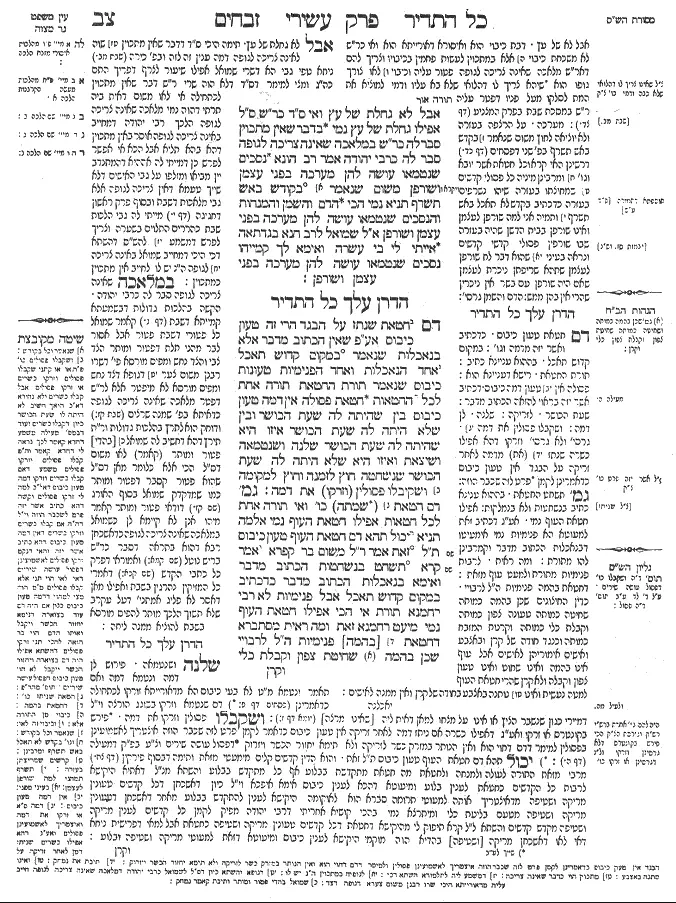
Zevahim 92a - Guemara
אבל לא גחלת של עץ ואי ס"ד כר"ש ס"ל אפילו גחלת של עץ נמי בדבר שאין מתכוין סבר לה כר"ש במלאכה שאינה צריכה לגופה סבר לה כרבי יהודה אמר רב הונא נסכים שנטמאו עושה להן מערכה בפני עצמן ושורפן משום שנאמר (ויקרא ו, כג) בקודש באש תשרף תניא נמי הכי הדם והשמן והמנחות והנסכים שנטמאו עושה להן מערכה בפני עצמן ושורפן א"ל שמואל לרב חנא בגדתאה אייתי לי בי עשרה ואימא לך קמייהו נסכים שנטמאו עושה להן מערכה בפני עצמן ושורפן:
הדרן עלך כל התדיר
מתני׳ דם חטאת שנתז על הבגד הרי זה טעון כיבוס אע"פ שאין הכתוב מדבר אלא בנאכלות שנאמר (ויקרא ו, יט) במקום קדוש תאכל אחד הנאכלות ואחד הפנימיות טעונות כיבוס שנאמר תורת החטאת תורה אחת לכל החטאות חטאת פסולה אין דמה טעון כיבוס בין שהיתה לה שעת הכושר ובין שלא היתה לה שעת הכושר איזו היא שהיתה לה שעת הכושר שלנה ושנטמאה ושיצאת ואיזו היא שלא היתה לה שעת הכושר שנשחטה חוץ לזמנה וחוץ למקומה ושקיבלו פסולין (וזרקו) את דמה:
גמ׳ דם חטאת (שמתה) כו' ואי תורה אחת לכל חטאות אפילו חטאת העוף נמי אלמה תניא יכול תהא דם חטאת העוף טעון כיבוס ת"ל (ויקרא ו, יח) זאת אמר ר"ל משום בר קפרא אמר קרא (ויקרא ו, יח) תשחט בנשחטות הכתוב מדבר ואימא בנאכלות הכתוב מדבר כדכתיב במקום קדוש תאכל אבל פנימיות לא רבי רחמנא תורת אי הכי אפילו חטאת העוף נמי מיעט רחמנא זאת ומה ראית מסתברא דחטאת [בהמה] פנימיות ה"ל לרבויי שכן בהמה שחיטת צפון וקבלת כלי
Comments from Rashi on Masechet Zevahim Page 92a
אבל לא של עץ . דבת כיבוי הוא ואיסורא דאורייתא הוא ואי כר"ש לא משכחת כיבוי אלא במתכוין לעשות פחמין בכיבויו וצריך להם דאר"ש מלאכה שאינה צריכה לגופה פטור עליה וכיבוי לאו צורך גופו הוא שיהא צריך לו דהלואי שלא בא עליו ודמי למוציא את המת לסלקו מעל פניו דפטר עליה ר"ש במסכת שבת בפרק המצניע (דף צד.): מערכה . על הרצפה בעזרה ולא יוציאה לחוץ משום שנאמר בקדש באש תשרף בפ' שני דפסחים (דף כד.) דרשינן האי קרא וכל חטאת אשר יובא וגו' ומרבינן מיניה כל פסולי קדשים שמחיצתו בעזרה שיהו נשרפים בעזרה כדכתיב בקדש לא תאכל באש תשרף ותמיה אני למה שורפן לעצמן ואינו שורפן בבית הדשן שהיה בעזרה שבו שורפין פסולי קדשי קדשים ונראה בעיני שהוא דבר לח שורפן לעצמן שתהא שריפתן ניכרת לעצמן שאם היה שורפן עם בשר אין ניכרין שהרי אין בהן ממש: הדם והשמן גרסי': מתני' דם חטאת טעון כיבוס . כדכתיב ואשר יזה מדמה וגו': במקום קדוש תאכל . בההוא עניינא כתיב: תורת החטאת . רישא דעניינא הוא: פסולה אין טעון דמה כיבוס . דכתיב אשר יזה בראוי להזאה הכתוב מדבר: שעת הכושר . לזריקה: שלנה . לן דמה: ושקבלו פסולין את דמה . גרסי' ולא גרסי' וזרקו דהא אפילו כשרה שנתז (את) מדמה לאחר זריקה על הבגד אין טעון כיבוס כדאמרינן לקמן פרט לזה שכבר הוזה: גמ' תשחט החטאת . בההוא ענינא כתיב בנשחטות ולא בנמלקות: אפילו חטאת העוף נמי . אע"ג דכתיב זאת למעוטא הא פנימיות נמי אימעיטו דבנאכלות הכתוב מדבר וקמרבינן להו מתורת: ומה ראית . לרבות פנימיות מתורת ולמעט עוף מזאת: דחטאת בהמה פנימיות ה"ל לרבויי . כדין החיצונים שכן בהמה כמותה שחיטה כמותה טעונה צפון כמותה וקבלת כלי כמותה וקרנות המזבח כמותה וכנגד חודה של קרן ובאצבע ואישים אימוריהן לאישים אבל עוף אינו בהמה ואינו שחוט ואינו טעון צפון וקבלה ולא קרן שהרי חטאת העוף למטה נעשית ואינו נותנה באצבע בחודה של קרן ואין ממנה לאישים:
Comments from Tosafot - Zevahim 92a
אבל לא גחלת של עץ . תימה היכי ס"ד דדבר שאין מתכוין שוה לאינה צריכה לגופה דמה ענין זה לזה ובפ' כירה (שבת מב.) ניחא טפי גבי הא דשרי שמואל אפילו שיעור לצרף דפריך התם כה"ג ומצי למימר דס"ד דלא הוה שרי ר"ש דבר שאין מתכוין לכתחילה אי לאו משום דאית ביה תרתי דהוה נמי מלאכה שאינה צריכה לגופה הלכך רבי יהודה דמחייב באינה צריכה לגופה אוסר באין מתכוין דהא בהא תליא אבל הכא אי אפשר לפרש כן דמייתי לה אההיא דהמתנדב יין מביאו ומזלפו על גבי האישים דלא שייך טעמא דאין צריכה לגופה אלא גבי מלאכות דשבת ובסוף פרק ראשון דחגיגה (דף י.) מייתי לה גבי הלכות שבת כהררים התלוים בשערה וצריך לפרש דמשמע להש"ס דהשתא דכי היכי דמחייב שמואל באינה צריכה לגופה ה"נ יש לו לחייב אין מתכוין כמתכוין: במלאכה שאינה צריכה לגופה סבר לה כרבי יהודה . הקשה בהלכות גדולות דבשמעתא קמייתא דשבת (דף ג.) קאמר שמואל כל פטורי דשבת פטור אבל אסור לבר מהני תלת דפטור ומותר הצד צבי והצד נחש ומפיס מורסא פי' דשרו רבנן משום צער דגופא דצד נחש ומפיס מורסא לא מיפטר אלא לר"ש דפטר מלאכה שאינה צריכה לגופה כדאיתא בפ' שמנה שרצים (שבת קז:) ודוחק הוא לתרץ בהלכות גדולות ור"ת תירץ דהא דחשיב לה שמואל [בהדי] פטור ומותר (קאמר) לאו משום דס"ל הכי. אלא כלומר מאן דס"ל שהוא פטור קסבר דפטור ומותר כמו שמדקדק שמואל בסוף האורג (שם קז.) דודאי פטור ומותר קאמר מיהו אנן לא קיימא לן כשמואל במלאכה שאינה צריכה לגופה כדאשכחן רבא דהוא בתראה דסבר כר"ש בריש נוטל (שם קמא:) ואמוראי דפרק כל כתבי הקדש (שם קכא:) דאמרי כל המזיקין נהרגין בשבת ואפילו מאן דאסר לא פליג אמתני' דעל עקרב שלא תשוך הלכך מותר להפיס מורסא בשבת להוציא ממנה ליחה: מתני' שלנה ושנטמאה . פירוש לן דמה ונטמא דמה ואם תאמר ונטמא מ"ט לא בעי כיבוס הא מדאורייתא זורקו לכתחילה כדאמרינן (פסחים דף פ:) דם שנטמא וזרקו בשוגג הורצה וי"ל דמיירי כגון שנשבר הציץ או אינו על מצחו למאן דאית ליה [שאינו מרצה] (יומא דף ז:): ושקבלו פסולין וזרקו את דמה . פירש בקונטרס או זרקו ואע"ג דאפילו כשרה אם ניתז דמה לאחר זריקה אין טעון כיבוס כדאמר לקמן פרט לזה שכבר הוזה איצטריך לאשמועינן בפסולין למימר דדם דחוי הוא ואין הנותר במזרק כשר לזריקה ולא תימא יחזור הכשר ויזרוק דפסול עושה שירים וצ"ע בפ"ק דמעילה (דף ה.): יכול תהא דם חטאת העוף טעון כיבוס ת"ל זאת . והוא הדין קדשים קלים מימעטי מזאת ותימה דבסוף פירקין (דף צח.) מרבי מזאת התורה לעולה ולמנחה ולחטאת מה חטאת מתקדשת בבלוע אף כל מתקדש בבלוע והשתא מנ"ל דאתיא היקישא לרבות כל הקדשים כחטאת לענין בלוע ומיעוטא דהכא לענין כיבוס אימא איפכא וי"ל כיון דאשכחן דכל קדשים טעונין מריקה ושטיפה מדאיצטריך אותה למעוטי תרומה סברא הוא לאוקומה היקישא לענין להתקדש בבלוע מאחר דאשכחן דטעונין מריקה ושטיפה מטעם בליעת כלי ומיתרצא נמי בהכי קושיא אחריתי דרבי יהודה מפיק לקמן כל קדשים לענין מריקה ושטיפה מקדש קדשים והשתא ל"ל קרא תיפוק לי מהיקישא דחטאת דכל קדשים טעונין מריקה ושטיפה כחטאת אבל למאי דפרישית ניחא דאי לאו דאשכחן מריקה [ושטיפה] בהדיא הוה מוקמי היקישא לענין כיבוס ומיעוטא דזאת למעוטי מריקה ושטיפה ובלוע:
Zevahim 92a - Mishnah translated into english
but one may not extinguish a wood coal, because extinguishing it is prohibited by Torah law? And if it enters your mind that Shmuel holds in accordance with the opinion of Rabbi Shimon, it should be permitted to extinguish even a wood coal. Rabbi Shimon maintains that extinguishing a coal is prohibited by Torah law only when one intends to use the extinguished coal. Otherwise, this constitutes a labor performed on Shabbat which is not necessary for its own sake, which is not prohibited by Torah law.
The Gemara answers: Shmuel’s statements are not contradictory, as with regard to an unintentional act, he holds in accordance with the opinion of Rabbi Shimon. But with regard to labor not necessary for its own sake, he holds that it is prohibited by Torah law, in accordance with the opinion of Rabbi Yehuda.
§ Rav Huna says: With regard to wine libations that became ritually impure, one prepares for them an arrangement of wood by themselves and burns them there, without removing them from the Temple courtyard. This is due to the fact that it is stated with regard to a disqualified sin offering: “In the sacred place…it shall be burned with fire” (Leviticus 6:23). This requirement of burning in the sacred place applies to all offerings that are meant to be sacrificed on an altar and became disqualified. This is also taught in a baraita: With regard to the blood, the oil, the meal offerings, and the libations that became ritually impure, one prepares for them an arrangement of wood by themselves and burns them there.
The Gemara relates: Shmuel said to Rav Ḥana of Baghdad: Bring me an assembly of ten men and I will tell you in their presence this halakha that I wish to disseminate: With regard to libations that became ritually impure, one prepares for them an arrangement of wood by themselves and burns them there.
MISHNA: In the case of the blood of a sin offering designated for presentation that was sprayed on a garment, that garment requires laundering, as is stated with regard to a sin offering: “And when any of its blood shall be sprinkled on a garment, you shall launder that on which it shall be sprinkled in a sacred place” (Leviticus 6:20). Although the verse is speaking only of sin offerings that are eaten and whose blood is presented on the outer altar, as it is stated: “In a sacred place shall it be eaten” (Leviticus 6:19), the principle is not exclusive to eaten sin offerings. With regard to the blood of both the sin offerings that are eaten and the sin offerings that are wholly burned and not eaten and whose blood is presented on the inner altar, garments sprayed with blood from each of these offerings require laundering. As it is stated at the start of that passage: “This is the law of the sin offering” (Leviticus 6:18), it is understood: There is one law for all the sin offerings.
That is the halakha with regard to sin offerings fit for sacrifice. With regard to a disqualified sin offering, its blood does not cause a garment to require laundering whether the offering had a period of fitness when its blood was fit for presentation or whether it did not have a period of fitness. Which offering is the disqualified sin offering that had a period of fitness? It is one that was left overnight and then became disqualified; or it is one that became ritually impure; or it is one that emerged from the Temple courtyard. Which offering is the disqualified sin offering that did not have a period of fitness? It is one that was slaughtered with the intent to eat it or present its blood beyond its designated time or outside its designated area; or it is one whose blood was collected by people disqualified for Temple service and they sprinkled its blood.
GEMARA: The mishna teaches: In the case of the blood of a sin offering that was sprayed on a garment, the garment must be laundered, and this is the halakha concerning the blood of sin offerings that are eaten and sin offerings that are wholly burned, as it is stated: “This is the law of the sin offering”; there is one law for all sin offerings. The Gemara asks: And if there is one law for all sin offerings, even the blood of a bird sin offering should also require laundering. If so, why is it taught in a baraita: One might have thought that the blood of a bird sin offering requires laundering. To counter this, the verse states: “This is the law of the sin offering.” The word “this” teaches that the halakha is to be restricted to the blood of an animal sin offering and it does not apply to the bird sin offering.
Reish Lakish said in the name of bar Kappara: The verse states: “This is the law of the sin offering…shall the sin offering be slaughtered” (Leviticus 6:18). The verse is speaking specifically of sin offerings that are slaughtered and not of bird offerings, which are killed by pinching the nape of the neck, rather than slaughtering with a knife.
The Gemara challenges: And I might say that the halakha is to be learned in another manner, and the verse is speaking specifically of sin offerings that are eaten, as it is written: “In a sacred place shall it be eaten” (Leviticus 6:19); but internal sin offerings, which are not eaten, should not be included. The Gemara explains: The Merciful One amplifies the halakha by stating: “This is the law of the sin offering,” which includes all sin offerings, even those that are not eaten.
The Gemara suggests: If so, then even the blood of the bird sin offering should be included. The Gemara explains: The Merciful One restricts the halakha by stating: “This is the law,” which excludes bird offerings.
The Gemara asks: And what did you see that indicated that the verse is to be understood as including internal sin offerings and excluding bird offerings, and not the opposite? The Gemara answers: It stands to reason that internal animal sin offerings should have been included by the inclusive language of the verse, as internal sin offerings resemble eaten animal sin offerings in several ways: Each variety is a large animal and not a bird; each variety is subject to slaughter on the north side of the Temple courtyard; and the blood of each requires collection in a vessel;
Traduction : The William Davidson digital edition of the Koren Noé Talmud, with commentary by Rabbi Adin Even-Israel Steinsaltz.