 Talmud Bavli
Zevahim 104b : Youtube
Daf TubeYoutube
2 video classes :
Zevahim Page 104b
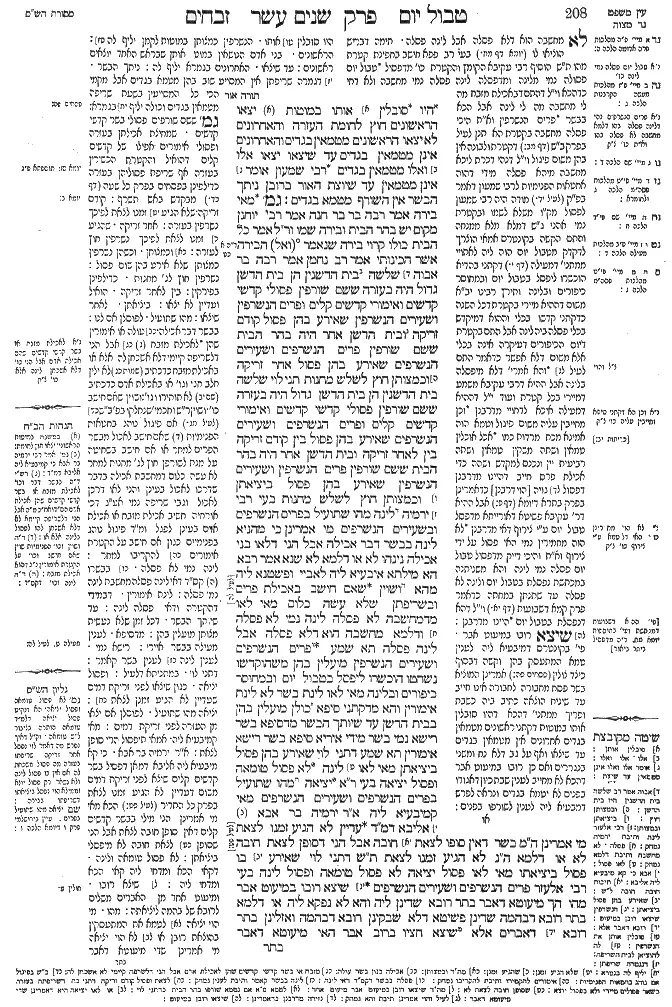
Zevahim 104b - Guemara
היו סובלין אותו במוטות יצאו הראשונים חוץ לחומת העזרה והאחרונים לא יצאו הראשונים מטמאין בגדים והאחרונים אינן מטמאין בגדים עד שיצאו יצאו אלו ואלו מטמאין בגדים רבי שמעון אומר אינן מטמאין עד שיוצת האור ברובן ניתך הבשר אין השורף מטמא בגדים:
גמ׳ מאי בירה אמר רבה בר בר חנה אמר רבי יוחנן מקום יש בהר הבית ובירה שמו ור"ל אמר כל הבית כולו קרוי בירה שנאמר (דברי הימים א כט, יט) (ואל) הבירה אשר הכינותי אמר רב נחמן אמר רבה בר אבוה שלשה בית הדשנין הן בית הדשן גדול היה בעזרה ששם שורפין פסולי קדשי קדשים ואימורי קדשים קלים ופרים הנשרפין ושעירים הנשרפין שאירע בהן פסול קודם זריקה ובית הדשן אחר היה בהר הבית ששם שורפין פרים הנשרפים ושעירים הנשרפים שאירע בהן פסול אחר זריקה וכמצותן חוץ לשלש מחנות תני לוי שלשה בית הדשנין הן בית הדשן גדול היה בעזרה ששם שורפין פסולי קדשי קדשים ואימורי קדשים קלים ופרים הנשרפים ושעירים הנשרפים שאירע בהן פסול בין קודם זריקה בין לאחר זריקה ובית הדשן אחר היה בהר הבית ששם שורפין פרים הנשרפין ושעירים הנשרפין שאירע בהן פסול ביציאתן וכמצותן חוץ לשלש מחנות בעי רבי ירמיה לינה מהו שתועיל בפרים הנשרפים ובשעירים הנשרפים מי אמרינן כי מהניא לינה בבשר דבר אכילה אבל הני דלאו בני אכילה נינהו לא או דלמא לא שנא אמר רבא הא מילתא איבעיא ליה לאביי ופשטנא ליה מהא ושוין שאם חישב באכילת פרים ובשריפתן שלא עשה כלום מאי לאו מדמחשבה לא פסלה לינה נמי לא פסלה ודלמא מחשבה הוא דלא פסלה אבל לינה פסלה תא שמע פרים הנשרפים ושעירים הנשרפין מועלין בהן משהוקדשו נשחטו הוכשרו ליפסל בטבול יום ובמחוסר כיפורים ובלינה מאי לאו לינת בשר לא לינת אימורין והא מדקתני סיפא כולן מועלין בהן בבית הדשן עד שיותך הבשר מדסיפא בשר רישא נמי בשר מידי איריא סיפא בשר רישא אימורין תא שמע דתני לוי שאירע בהן פסול ביציאתן מאי לאו לינה לא פסול טומאה ופסול יציאה בעי ר"א יציאה מהו שתועיל בפרים הנשרפים ושעירים הנשרפים מאי קמיבעיא ליה א"ר ירמיה בר אבא אליבא דמ"ד עדיין לא הגיע זמנו לצאת מי אמרינן ה"מ בשר דאין סופו לצאת חובה אבל הני דסופן לצאת חובה לא או דלמא ה"נ לא הגיע זמנו לצאת ת"ש דתני לוי שאירע בו פסול ביציאתו מאי לאו פסול יציאה לא פסול טומאה ופסול לינה בעי רבי אלעזר פרים הנשרפים ושעירים הנשרפים שיצא רובו במיעוט אבר מהו הך מיעוטא דאבר בתר רובא שדינן ליה והא לא נפקא ליה או דלמא בתר רובא דבהמה שדינן פשיטא דלא שבקינן רובא דבהמה ואזלינן בתר רובא דאברים אלא שיצא חציו ברוב אבר האי מיעוטא דאבר
Comments from Rashi on Masechet Zevahim Page 104b
היו סובלין אותו . הנשרפין כמצותן במוטות לקמן יליף לה: הראשונים . בני אדם הנושאין במוט אותן שבראש האחר יוצאים ראשונים: עד שיצאו . האחרונים בגמרא יליף לה: ניתך הבשר . דגמרה שריפתן אין המסייע שוב בהן מטמא בגדים אבל מקמי הכי כל המסייעין בשעת שריפה מטמאין בגדים וכולה יליף בגמרא: גמ' ששם שורפים פסולי בשר קדשי קדשים . שמחיצת אכילתן בעזרה ופסולי אימורים אפילו של קדשים קלים דהואיל והקטרת הכשירין בעזרה אף שריפת פסוליהן בעזרה כדילפינן בפסחים בפרק כל שעה (דף כד.) מבקדש באש תשרף: קודם זריקה . שלא הגיע זמנו לצאת לפיכך נשרפין בעזרה: אחר זריקה . שהגיע זמנו לצאת לפיכך נשרפין חוץ לעזרה: וכמצותן . וכשהן נשרפין כמצותן שלא אירע בהן שום פסול: נשרפין חוץ לג' מחנות . כדילפינן בפירקין: בין לאחר זריקה . הואיל ועדיין לא יצאו: ביציאתן . לאחר שיצאו: מהו שתועיל . לפוסלן אם לנו: בבשר דבר אכילה . עולה או אימורין שהן לאכילת מזבח אבל הני דלשריפה קיימי דלא אשכחן לה אלא או באכילת מזבח כדכתיב (שמות כג) לא ילין חלב חגי וגו' או באכילת אדם כדכתיב (שם יב) לא תותירו וגו': ושוין שאם חישב כו' . ושוין ר"ש וחכמי' שנחלקו בפ' ב"ש (לעיל זבחים מג.) אם פיגול נוהג בחטאות הפנימיות שאם חישב לאכול מבשר הפרים למחר או אם חישב בשחיטה על מנת לשורפן חוץ לג' מחנות למחר לא עשה כלום דמחשבת אכילה בדבר שדרכו לאכול בעינן והני לאו דרכן לאכול וגבי שריפה נמי אע"ג דכי אורחיה חשיב אכילת מזבח או אכילת אדם בעינן לפגל ומ"ד פיגול נוהג בפנימיים כגון אם חישב על הקטרת אימורים להקריבו למחר: לינה נמי לא פסלה . בבשרו קס"ד דאי לינה פסלה מחשבת לינה נמי פסלה: לינת אימורין . דבמידי דהקטרה ודאי פסלה לינה: עד שיותך הבשר . דכל זמן שלא נעשית מצותן מועלין בהן: מדסיפא . לענין מעילה בבשר איירי: רישא נמי . לענין לינה לענין בשר קאמר: דתני לוי . במתניתא דלעיל: ופסול יציאה . כגון שיצאו לפני זריקת דמים שעדיין לא הגיע זמנן לצאת: יציאה מהו שתועיל . לפוסלן אם יצאו מן העזרה לפני זריקת דמים: מאי קמיבעיא ליה . אמאי תיפסול הרי סופן לצאת: א"ר ירמיה בר אבא . כי קא מיבעיא ליה אליבא דמאן דפסיל בשר קדשים קלים שיצא לפני זריקת דמים משום דעדיין לא הגיע זמנו לצאת בפרק כל התדיר (לעיל זבחים פט:) הכא מאי מי אמרינן הני מילי בבשר קדשים קלים דאין סופן חובה לצאת אבל הני שסופן לצאת חובה לא מיפסלי ביציאתן: לא פסול טומאה ולינה . דקאי הכא ומדחי ליה קאי הכא ומדחי ליה: שיצא רובו . ומיעוט אחד מן האברים משלים לרובא של בהמה ליציאתה: מהו . מי הוי יציאה לטמא את המתעסקין בהוצאת רובן או לא הוי יציאה מי אמרינן שדי מיעוטא דאבר בתר רוב האבר והוה ליה כמאן דלא נפק ואין כאן רוב הבהמה לחוץ ולענין טומאת בגדים מחוץ למחנה בעי (האי מיעוטא דאבר שיצא לחוץ): אלא שיצא חציו . של פר ברוב אבר בחצי הפר (הג"ה) יצא רוב אחד מן האברים ומיעוטו בחצי הפר שבפנים האי מיעוטא דאבר שנשאר בפנים בתר רובא דאבר שיצא שדינן ליה והוה ליה כמאן דנפק ואשתכח רוב בהמה מבחוץ:
Comments from Tosafot - Zevahim 104b
לא מחשבה הוא דלא פסלה אבל לינה פסלה . תימה דבריש הוציאו לו (יומא דף מח.) בעי רב פפא חישב בחפינת קטרת מהו ת"ש הוסיף רבי עקיבא הקומץ והקטרת כו' מדפסיל טבול יום פסולה נמי מלינה ומדפסלה לינה פסלה נמי מחשבה ולא דחי כדהכא וי"ל דהתם דבאכילת מזבח מה לי מחשבה מה לי לינה אבל הכא בבשר פרים הנשרפין וא"ת היכי פסלה מחשבה בקטרת הא תנן לעיל בפרק ב"ש (זבחים דף מב:) דקטרת ולבונה אין בהן משום פיגול וי"ל דנהי דכרת ליכא מחשבה מיהא פסלה מידי דהוה אחטאות הפנימיות לרבי שמעון דאמר בפ"ק (לעיל זבחים יד.) מודה היה רבי שמעון לפסול מק"ו משלא לשמו ובקטרת נמי אהני ג"ש דמלא מלא ממנחה והתם הקשה בקונטרס אמאי הוצרך לדקדק מטבול יום הוה ליה לאתויי ממתני' דמעילה (דף י.) דקתני בהדיא הוכשרו ליפסל בטבול יום ובמחוסר כיפורים ובלינה ותירץ רבינו יב"א משום דההיא מיירי בקטרת דכל השנה כדקתני קדשו בכלי וההוא דמיקדש בכלי פסלה ביה לינה אבל התם בקטרת דיום הכיפורים דעיקרה אינה בכלי אלא משום דלא אפשר כדאמר התם לעיל והא אמרי' דלא מיפסלה בלינה אבל ההיא דרבי עקיבא משמע דמיירי בכל קטרת ועוד י"ל דההיא דמעילה איכא לדחויי מדרבנן וכן מחייבין עליה משום פיגול וטמא הוה אמינא מכת מרדות כמו אכל אוכלין טמאין ושתה משקין טמאין ושתה רביעית יין ונכנס למקדש ושהה כדי אכילת פרס חייב דהיינו מדרבנן דפסול גויה [הוי דרבנן] כדאמרינן בפרק בתרא דיומא (דף פ:) אבל ההיא דר' עקיבא פשיטא דאורייתא מדפסל טבול יום ע"י צירוף דאי מדרבנן לא הוה מחמירין נמי האי פסול על ידי צירוף וא"ת והיכי דייק מדפסיל טבול יום פסלה נמי לינה והא משניתנה במכתשת נפסלת בטבול יום ולינה לא פסלה עד שתנתן במחתה כדאמר פרק קמא דשבועות (דף יא.) וי"ל דהא דנפסלת בטבול יום היינו מדרבנן: שיצא רובו במיעוט אבר . פי' בקונטרס דמיבעיא ליה לענין טמא המתעסק בהן וקשה דבסוף כיצד צולין (פסחים פה:) אמרינן המוציא בשר פסח מחבורה לחבורה אינו חייב עד שיניח הוצאה כתיב ביה כשבת ופריך ממתני' דהכא דהיו סובלין אותו במוטות דקתני ראשונים מטמאין בגדים אחרונים אין מטמאין בגדים עד שיצאו ואף על גב דלא נח ומשני בנגררים ואם כן רובו במיעוט אבר דהכא לא מחייב לענין שבת כיון דאגודו בפנים לא יטמא בגדים ונראה לפרש דמבעיא ליה לענין לשורפו בפנים:
Zevahim 104b - Mishnah translated into english
The priests would carry the bulls and the goats that are burned suspended on poles. When the first priests, carrying the front of the pole, emerged outside the wall of the Temple courtyard and the latter priests did not yet emerge, the first priests render their garments impure, and the latter priests do not render their garments impure until they emerge. When both these and those priests emerged, they render their garments impure. Rabbi Shimon says: They do not render their garments impure, as this halakha applies only to those who burn the offerings. And even then their garments do not become ritually impure until the fire is ignited in the majority of the offerings. Once the flesh is completely scorched, with no moisture remaining, one who then burns the remains does not render his garments impure.
GEMARA: The mishna teaches that if offerings of a type that are burned were disqualified, they are burned in a place of burning called the bira. The Gemara asks: What is the bira? Rabba bar bar Ḥana says that Rabbi Yoḥanan says: There is a place on the Temple Mount, and its name is bira, and this is where they would burn these offerings. And Reish Lakish says: The entire Temple is called the bira, as it is stated in the prayer of David: “And give unto Solomon my son a whole heart, to keep Your commandments, Your testimonies, and Your statutes, and to do all this, and to build the Temple [bira] for which I have made provision” (I Chronicles 29:19).
§ Rav Naḥman says that Rabba bar Avuh says: There are three places of the ashes. First was the great place of the ashes that was in the Temple courtyard, where the priests would burn the disqualified offerings of the most sacred order, and the disqualified sacrificial portions of offerings of lesser sanctity, and bulls that are burned and goats that are burned if they were disqualified prior to the sprinkling of the blood.
And there was another place of the ashes on the Temple Mount, where the priests would burn bulls that are burned and goats that are burned if they were disqualified after the sprinkling of the blood. And the third place of the ashes was for the bulls and goats that were burned in accordance with their mitzva, outside the three camps, i.e., outside the walls of Jerusalem.
Levi teaches a different version of this baraita: There are three places of the ashes. First was the great place of the ashes that was in the Temple courtyard, where the priests would burn the disqualified offerings of the most sacred order, and the disqualified sacrificial portions of offerings of lesser sanctity, and bulls that are burned and goats that are burned if they were disqualified, whether prior to the sprinkling of the blood or after the sprinkling of the blood. And there was another place of the ashes on the Temple Mount, where the priests would burn bulls that are burned and goats that are burned if they were disqualified upon emerging from the Temple courtyard. And the third was for bulls and goats burned in accordance with their mitzva, outside the three camps.
§ Rabbi Yirmeya raises a dilemma: The flesh of most offerings is disqualified by being left overnight. What is the halakha as to whether being left overnight is effective to disqualify bulls that are burned and goats that are burned? Given that their flesh is neither eaten nor burned on the altar, do we say: When being left overnight is effective to disqualify flesh, this is only in a case of flesh that is fit for consumption, either by the altar or by human beings; but in the case of these bulls and goats that are burned, which are not fit for consumption, being left overnight does not disqualify the flesh? Or perhaps this case is no different, and being left overnight disqualifies the flesh.
Rava said: This matter, Rabbi Yirmeya’s dilemma, was raised by Abaye, and I resolved it from this baraita: The mishna (43a) records a dispute as to whether the sacrificial portions of bulls that are burned are subject to disqualification by intent to burn them beyond their designated time [piggul]. But the disputants agree that if the priest intended for the consumption of the bulls’ meat and their burning to be beyond their designated time, he did nothing, as piggul applies only to flesh consumed by human beings or the altar. What, is it not the case that since the intention of burning after the designated time does not disqualify bulls that are burned, one can infer that being left overnight also does not disqualify bulls that are burned?
The Gemara responds: But perhaps it is only improper intention that does not disqualify such offerings, but being left overnight does disqualify them.
The Gemara suggests: Come and hear a mishna (Me’ila 9a): With regard to bulls that are burned and goats that are burned, one who benefits from them is liable for misuse of consecrated property from the time that they were consecrated. Once they have been slaughtered, they are susceptible to be rendered disqualified for sacrifice through contact with one who immersed that day, and through contact with one who has not yet brought an atonement offering, and through being left overnight without the requirements of the offering having been fulfilled. What, is it not referring to the flesh of bulls, indicating that the flesh is disqualified if left overnight?
The Gemara responds: No, the mishna indicates only that the offerings’ sacrificial portions are disqualified if left overnight, since they must be burned on the altar.
The Gemara responds: But evidence to the contrary can be adduced from the fact that the latter clause of the mishna teaches: In all of those cases, one who benefits from them is liable for misuse of consecrated property if he derives benefit while they are burned in the place of the ashes, until the flesh is completely incinerated. The Gemara explains: From the fact that the latter clause is discussing flesh, infer that the first clause also discusses flesh, and not the sacrificial portions. The Gemara rejects this: Are the cases comparable? The latter clause discusses flesh, and the first clause discusses sacrificial portions.
The Gemara suggests: Come and hear that which Levi teaches in the baraita: There was another place of the ashes on the Temple Mount, where the priests would burn bulls that are burned and goats that are burned if they were disqualified upon emerging from the Temple courtyard. What, is it not referring to offerings disqualified by being left overnight? The Gemara rejects this: No, it is referring to disqualification by contracting ritual impurity or disqualification by leaving the courtyard before the blood was sprinkled on the altar. The dilemma of Rabbi Yirmeya stands unresolved.
§ Rabbi Elazar raises a dilemma: In general, the flesh of offerings is disqualified by leaving the Temple courtyard. What is the halakha as to whether leaving is effective to disqualify bulls that are burned and goats that are burned?
The Gemara asks: What is the dilemma he is raising? Here it is a mitzva to burn the flesh of these offerings outside the Temple courtyard. Rabbi Yirmeya bar Abba said: Rabbi Elazar raises his dilemma in accordance with the opinion of the one who says: With regard to offerings of lesser sanctity, even though the flesh may be consumed anywhere in Jerusalem, nevertheless, if it emerges from the Temple courtyard before the sprinkling of the blood, it is disqualified, because its time to leave from the Temple courtyard has not yet arrived. Perhaps the same halakha applies to bulls and goats that are burned: Even though the flesh must eventually leave the Temple, if it leaves before its designated time, it is disqualified.
The dilemma is: Do we say that this matter, disqualification by leaving the Temple courtyard prematurely, applies only to flesh that need not eventually leave due to an obligation? One may consume the meat of offerings of lesser sanctity in the Temple courtyard if he wishes. But perhaps these bulls and goats that are burned, which must eventually leave due to an obligation, are not disqualified by emerging prematurely. Or perhaps here too the flesh is disqualified if its time to leave has not yet arrived.
The Gemara suggests: Come and hear that which Levi teaches in the baraita: There was another place of the ashes on the Temple Mount, where the priests would burn bulls that are burned and goats that are burned if they were disqualified upon emerging from the Temple courtyard. What, is it not referring to disqualification by leaving the Temple courtyard before the sprinkling of the blood? The Gemara responds: No, it is referring to disqualification by contracting ritual impurity or disqualification by being left overnight. The dilemma of Rabbi Elazar stands unresolved.
§ Rabbi Elazar raises another dilemma: With regard to bulls that are burned and goats that are burned, if the majority of the animal’s body emerged from the Temple courtyard, but it consists of a majority only by inclusion of the minority of a limb, the majority of which remains inside the courtyard, what is the halakha? Do we determine the status of this minority of a limb by casting it after the majority of that limb, and the majority of that limb did not leave? Or perhaps we determine its status by casting it after the majority of the animal, and therefore a majority of the animal has left?
The Gemara clarifies: Isn’t it obvious that we do not disregard the majority of the animal and instead follow the majority of the limbs? Rather, Rabbi Elazar’s dilemma must be as follows: In a case where half of the animal emerged from the courtyard such that the majority of a certain limb emerged, but a minority of the limb remained inside, what is the halakha? Do we determine the status of this minority of a limb
Traduction : The William Davidson digital edition of the Koren Noé Talmud, with commentary by Rabbi Adin Even-Israel Steinsaltz.