 Talmud Bavli
Zevahim 100b : Youtube
Daf TubeYoutube
2 video classes :
Zevahim Page 100b
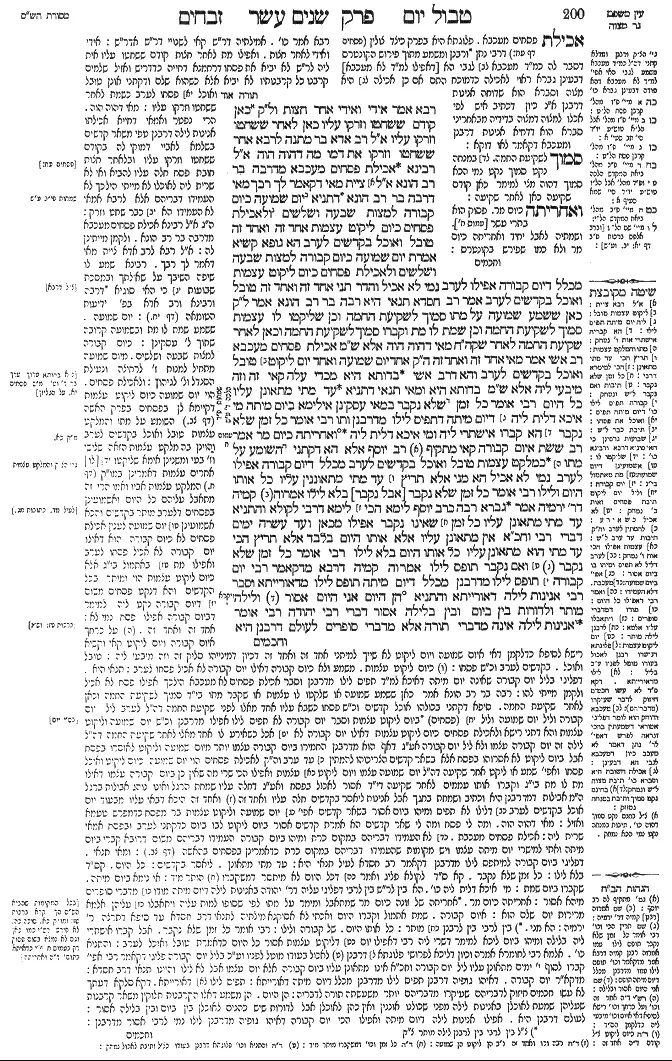
Zevahim 100b - Guemara
רבא אמר אידי ואידי אחר חצות ול"ק כאן קודם ששחטו וזרקו עליו כאן לאחר ששחטו וזרקו עליו א"ל רב אדא בר מתנה לרבא אחר ששחטו וזרקו את דמו מה דהוה הוה א"ל רבינא אכילת פסחים מעכבא מדרבה בר רב הונא א"ל ציית מאי דקאמר לך רבך מאי דרבה בר רב הונא דתניא יום שמועה כיום קבורה למצות שבעה ושלשים ולאכילת פסחים כיום ליקוט עצמות אחד זה ואחד זה טובל ואוכל בקדשים לערב הא גופא קשיא אמרת יום שמועה כיום קבורה למצות שבעה ושלשים ולאכילת פסחים כיום ליקוט עצמות מכלל דיום קבורה אפילו לערב נמי לא אכיל והדר תני אחד זה ואחד זה טובל ואוכל בקדשים לערב אמר רב חסדא תנאי היא רבה בר רב הונא אמר ל"ק כאן ששמע שמועה על מתו סמוך לשקיעת החמה וכן שליקטו לו עצמות סמוך לשקיעת החמה וכן שמת לו מת וקברו סמוך לשקיעת החמה וכאן לאחר שקיעת החמה לאחר שקה"ח מאי דהוה הוה אלא ש"מ אכילת פסחים מעכבא רב אשי אמר מאי אחד זה ואחד זה ה"ק אחד יום שמועה ואחד יום ליקוט טובל ואוכל בקדשים לערב והא דרב אשי בדותא היא מכדי עלה קאי זה וזה מיבעי ליה אלא ש"מ בדותא היא ומאי תנאי דתניא עד מתי מתאונן עליו כל היום רבי אומר כל זמן שלא נקבר במאי עסקינן אילימא ביום מיתה מי איכא דלית ליה דיום מיתה דתפיס לילו מדרבנן ותו רבי אומר כל זמן שלא נקבר הא קברו אישתרי ליה ומי איכא דלית ליה (עמוס ח, י) ואחריתה כיום מר אמר רב ששת איום קבורה קאי מתקיף רב יוסף אלא הא דקתני השומע על מתו כמלקט עצמות טובל ואוכל בקדשים לערב מכלל דיום קבורה אפילו לערב נמי לא אכיל הא מני אלא תריץ עד מתי מתאוננין עליו כל אותו היום ולילו רבי אומר כל זמן שלא נקבר [אבל נקבר] בלא לילו אמרוה קמיה דר' ירמיה אמר גברא רבה כרב יוסף לימא הכי לימא דרבי לקולא והתניא עד מתי מתאונן עליו כל זמן שאינו נקבר אפילו מכאן ועד עשרה ימים דברי רבי וחכ"א אין מתאונן עליו אלא אותו היום בלבד אלא תריץ הכי עד מתי הוא מתאונן עליו כל אותו היום בלא לילו רבי אומר כל זמן שלא נקבר ואם נקבר תופס לילו אמרוה קמיה דרבא מדקאמר רבי יום קבורה תופס לילו מדרבנן מכלל דיום מיתה תופס לילו מדאורייתא וסבר רבי אנינות לילה דאורייתא והתניא (ויקרא י, יט) הן היום אני היום אסור ולילה מותר ולדורות בין ביום ובין בלילה אסור דברי רבי יהודה רבי אומר אנינות לילה אינה מדברי תורה אלא מדברי סופרים לעולם דרבנן היא
Comments from Rashi on Masechet Zevahim Page 100b
רבא אמר כו' . אמילתיה דר"ש קאי לשנויי דר"ש אדר"ש: אידי ואידי לאחר חצות . ואפילו מת לאחר חצות קודם ששחטו עליו אית ליה לר"ש לא יביא את פסחו דרחמנא דחייה כדדריש ואזיל שלמים קרבנו כל קרבנותיו לא יביא אלא כשהוא שלם ודקתני אונן טובל ואוכל פסחו לערב כשמת לאחר ששחטו וזרקו עליו: מאי דהוה הוה . הרי נפטר ואמאי דחייא אכילתו אנינות לילה דרבנן טפי משאר קדשים בשלמא לאביי דמוקי לה בקודם ששחטו וזרקו עליו ובלאחר חצות חובת פסח חלה עליו להביא ואי לא שרית ליה לאוכלו לא מייתי הילכך לא העמידו דבריהם אלא לרבא אמאי לא העמידו הא כבר שחט וזרק: ה"ג א"ל רבינא אכילת פסחים מעכבא מדרבה בר רב הונא . ולקמן מייתינן לה: א"ל רבא לרב אדא ציית מאי דאמר לך רבך . רבינא שמע לו שיפה השיבך על שאילתך ובמסכת שבועות כי האי סוגיא דרבה ורבינא ורב אדא בפ' ידיעות הטומאה (דף יח.): יום שמועה . ששמע שמת לו מת ובשמועה קרובה שתוך ל' עסקינן: כיום קבורה למצות שבעה ושלשים . מיום שמועה מתחיל למנות ז' לרחיצה ונעילת הסנדל ול' לגיהוץ: ולאכילת פסחים . הוי יום שמועה כיום ליקוט עצמות דקיימא לן בפסחים בפרק האשה (דף צב.) השומע על מתו והמלקט עצמות טובל ואוכל בקדשים לערב והוינן בה מלקט עצמות הזאה שלישי וז' בעי ומשנינן אימא שליקטו אחרים עצמות דאמרינן במו"ק (דף ח.) המלקט עצמות אביו ואמו הרי זה מתאבל עליהם כל היום ואשמועינן בפסחים דלערב מותר בקדשים והכא אשמועינן יום שמועה לענין אכילת פסחים לא כיום קבורה הוא דאילו יום קבורה לא אכיל פסחו לערב ואפילו מת באתמול בי"ג אלא כיום ליקוט עצמות הוי ומותר בכל הקדשים והא דנקט פסחים משום דיום קבורה נקט ליה למימר דביום קבורה אפילו פסח נמי לא: אחד זה ואחד זה . על כרחך איום קבורה ויום ליקוט קאי וקשיא רישא לסיפא כדלקמן דאי איום שמועה ויום ליקוט לא שייך למיתני אחד זה ואחד זה דכיון דמינייהו סליק זה וזה מיבעי ליה: טובל ואוכל . בקדשים לערב וכ"ש פסחו: כיום ליקוט עצמות . משמע ולא כיום קבורה דאילו יום קבורה לא אכיל פסחו לערב: תנאי היא . דפליגי בליל יום קבורה שאינה יום מיתה דאיכא למ"ד תפיס לילו מדרבנן וסבר אכילת פסחים לא מעכבא הילכך אפילו פסח לא אכיל ולקמן מייתי להו: רבה בר רב הונא אמר כאן ששמע שמועה או שלקטו לו עצמות או שקבר מתו בי"ד סמוך לשקיעת החמה וכאן לאחר שקיעת החמה . סיפא דקתני בכולהו אוכל קדשים וכ"ש פסחו כשבא עליו אחד מאלו לפני שקיעת החמה דה"ל לערב ליל יום קבורה וליל יום שמועה וליל (פסחים) ביום ליקוט עצמות וסבר יום קבורה לא תפיס לילו אפילו מדרבנן וכ"ש יום שמועה וליקוט עצמות והא דתני רישא ולאכילת פסחים כיום ליקוט עצמות דאילו יום קבורה לא אכל כשאירע לו אחד מאלו לאחר שקיעת החמה דה"ל לילה זה יום קבורה עצמו ולא ליל יום קבורה אע"ג דאף הוא מדרבנן החמירו ביום קבורה עצמו יותר מיום שמועה וליקוט לאוסרו בפסח אבל ביום ליקוט לא אסרוהו בפסח אלא בשאר קדשים הצריכוהו להמתין עד ערב וה"ק לאכילת פסחים הוי יום שמועה כיום ליקוט ואוכל פסחו ואפי' שמע או ליקט אחר שקיעה דה"ל יום שמועה עצמו ויום ליקוט עצמות ואפילו הכי שרי מה שאין כן ביום קבורה עצמו דאילו מת לו מת בי"ג וקברו אותו עממים לאחר שקיעה די"ד אסור לאכול בפסח ואע"ג דחלה עליו שמחת הרגל ואינו נוהג אבילות ברגל ה"מ אבילות דמדרבנן היא וכתיב ושמחת בחגך אבל אנינות ליאסר בקדשים חלה עליו ואחד זה ואחד זה היכא דבאו עליו מבעוד יום אוכל בקדשים לערב דלילו לא תפיס ומיהו ביום אסור בשאר קדשים אפי' יום שמועה וליקוט עצמות בר מפסח כדמפרש טעמא ואזיל: מאי דהוה הוה . ומה לי פסח ומה לי שאר קדשים הא אמרת קדשים אסור ביום ליקוט לבו ביום כדקתני לערב ובפסח אמאי שרית ליה: אכילת פסחים מעכבת . לא העמידו דבריהם במקום כרת ומיהו ביום קבורה העמידו דבריהם משום דרובא קברי ביום מיתה ואתי למישרי יום מיתה עצמו ויש מקומות שהעמידו דבריהם במקום כרת כדאמרינן בפסחים בהאשה (דף צב.): ומאי תנאי . דפליגי ביום קבורה למיתפס לילו מדרבנן דקאמר רב חסדא לעיל תנאי היא: עד מתי מתאונן . ליאסר בקדשים: כל היום . קס"ד בלא לילו: כל זמן שלא נקבר . קא ס"ד לקולא פליג ואמר דכל היום לא מיתסר דמשקברו הותר מיד: אי נימא ביום מיתה . שקברו ביום שמת: מי איכא דלית ליה כו' . הא בין לר"ש בין לרבי דפליגי עליה דר' יהודה באנינות לילה דיום מיתה מודו מדברי סופרים מיהא אסור: אחריתה כיום מר . אחריתה של זונה כיום מר שמתאבל ומימר על מתו לפי שסופו למות עליה ויתאבלו עליהן אלמא מרירות יום שלם הוא: איום קבורה . שמת אתמול וקברו היום ואכתי לא אסיקנא מילתיה לתנאי דרב חסדא עד סיפא דתרצה ר' ירמיה: הא מני . בין לרבי בין לרבנן מותר: כל אותו היום . של קבורה ולילו: רבי אומר כל זמן שלא נקבר . אבל קברו אישתרי ליה בלילה ומיהו ביום ליכא למימר דשרי ליה רבי דאפילו יום דליקוט עצמות אסור כל היום כדאמרת טובל ואוכל לערב: והתניא כו' . אלמא רבי לחומרא אמרה וכיון דליכא לפרושי פלוגתא דרבנן לאכול בעודו מוטל לפניו וע"כ בליל יום קבורה פליגי דקאמר רבי אפי' קברו לסוף י' ימים מתאונן עליו ליל יום קבורה וחכ"א אינו מתאונן עליו ביום קבורה אלא יום עצמו אבל לא לילו והיינו תנאי דרב חסדא: מדקא"ר יום קבורה . דאיהו גופיה דרבנן תפיס לילו מדרבנן מכלל דיום מיתה דאורייתא: תפיס לילו דאורייתא . דקא סלקא דעתך לא עשו חכמים חיזוק לדבריהם שעיקרו מדבריהם יותר משעשתה תורה לדבריה: הן היום . הן משמע דאלו הקרבנות חלוקין משאר קרבנות שעליהן שמעת לאוכלן באנינות לילה מפני שכולנו אוננין ואין כהן לאוכלן אבל לדורות שיש כהנים לאוכלן בין ביום ובין בלילה אסור: לעולם דרבנן היא . אפילו אנינות לילה דיום מיתה ואפילו הכי יום קבורה דאיהו גופיה מדרבנן לילו נמי לרבי אסור מדרבנן:
Comments from Tosafot - Zevahim 100b
אכילת פסחים מעכבא . פלוגתא היא בפרק כיצד צולין (פסחים דף עח:) דרבי נתן ורבנן ומשמע מתוך פירוש הקונטרס דסבר לה כמ"ד מעכבא לגבי הא [דאפילו למ"ד לא מעכבא] דבעינן גברא ראוי לאכילה כדמוכח התם אם כן אכילה היא מצוה וסברא הוא שדוחה אנינות דרבנן א"נ כיון דכתיב איש לפי אכלו למצוה דמצוה בדידיה מבאחריני סברא הוא דדחיא אנינות דרבנן ומעכבא דקאמר לאו דוקא: סמוך לשקיעת החמה . במנחה נקט סמוך נקט נמי הכא סמוך דהוה מצי למימר כאן קודם שקיעה כאן לאחר שקיעה: ואחריתה כיום מר . פסוק הוא בתרי עשר [עמוס ח']. ושמתיה לאבל יחיד ואחריתה כיום מר ולא כמו שפירש בקונטרס:
Zevahim 100b - Mishnah translated into english
Rava said there is a different resolution to the contradiction between the statements of Rabbi Shimon. Both this baraita and that baraita are discussing cases where the relative died after midday on the fourteenth of Nisan, and still it is not difficult. Here, his relative died before the priests would have slaughtered the Paschal offering and sprinkled its blood on his account, and he may not send the offering. There, the relative died after the priests slaughtered the Paschal offering and sprinkled its blood on his account. Since acute mourning at night is by rabbinic law, it is suspended to allow him to consume an offering that was already sacrificed.
Rav Adda bar Mattana said to Rava: In a case where one’s relative died after the priests slaughtered the Paschal offering and sprinkled its blood, why should he be permitted to partake of the Paschal offering? What was, was, and although the offering was sacrificed, isn’t he still an acute mourner by rabbinic law? Ravina said to Rav Adda bar Mattana: Partaking of the Paschal offering is indispensable for the mitzva, as is seen from that which Rabba bar Rav Huna taught, as the Gemara will explain. Therefore, the Sages did not prohibit the acute mourner from partaking of the Paschal offering as they do for other offerings, for which consumption of the meat is dispensable. Rava said to Rav Adda bar Mattana: Listen to what your master, Ravina, told you, as his explanation is correct.
What is the statement of Rabba bar Rav Huna that teaches that partaking of the Paschal offering is indispensable? As it is taught in a baraita: The day that a person receives tidings that his relative died is considered as if it were the day of burial with regard to the mitzva of the seven-day mourning period, when he may not bathe or wear shoes, and with regard to the thirty-day period when he may not wear ironed garments. And with regard to partaking of the Paschal offering, the day he receives the tidings is like the day of the gathering of the bones of the deceased after the flesh decomposed (see Pesaḥim 92a). In both this and that case, he immerses and partakes of sacrificial meat in the evening.
The Gemara challenges: This baraita itself is difficult. At first you say: The day of tidings is considered as if it were the day of burial for the mitzva of the seven-day and thirty-day mourning periods; and with regard to partaking of the Paschal offering, it is like the day of the gathering of bones, when one may immerse and partake of sacrificial meat in the evening. By inference, one concludes that on the day of burial, he may not partake of the Paschal offering even in the evening, and all the more so other sacrificial meat. And then it is taught: In both this and that case, i.e., on both the day of burial and the day of the gathering of bones, he immerses and partakes of sacrificial meat in the evening.
Rav Ḥisda said: Whether it is permitted to partake of sacrificial meat the night after the day of burial is a dispute between tanna’im, as the Gemara will explain.
Rabba bar Rav Huna said: This is not difficult. Here, in the latter clause, where the baraita teaches that on both the day of burial and the day of the gathering of bones he immerses and partakes of sacrificial meat in the evening, it is referring to a case where he heard tidings of his dead relative just before sunset, and likewise a case where they gathered the bones for him just before sunset, and likewise a case where his relative died and he buried him just before sunset. But there, in the first clause, from which it is inferred that he may not consume any sacrificial meat the night after the day of burial, the burial occurred after sunset, i.e., on the night of the fifteenth of Nisan itself.
The Gemara objects: If so, why not say that even if he gathered bones after sunset, then what was, was? Why did the Sages permit him to partake of the Paschal offering, as opposed to other sacrificial meat? Rather, learn from this baraita that partaking of the Paschal offering is indispensable to fulfilling the obligation, and due to the severity of the mitzva, the Sages suspended their decree prohibiting one from partaking of it.
Rav Ashi said there is another resolution to this question: What is meant by the latter clause in the baraita: In both this and that case? It does not mean both the day of burial and the day of the gathering of bones. Rather, this is what the baraita is saying: Both on the day of tidings and on the day of the gathering of bones, the mourner immerses and partakes of sacrificial meat in the evening. But after the day of burial, he may not partake of the Paschal offering, and all the more so of other sacrificial meat, as indicated in the first clause in the baraita.
The Gemara notes: And this resolution of Rav Ashi is a mistake, since the tanna is already discussing those two cases and equating them. According to Rav Ashi’s resolution, it is extraneous to say: In both this and that case; the tanna should have simply said: In this and that case. Rather, learn from the language of the baraita that Rav Ashi’s resolution is a mistake.
The Gemara returns to discuss Rav Ḥisda’s resolution: And what is the dispute between tanna’im with regard to the night following the day of burial? As it is taught in a baraita: Until when does a person mourn acutely for his relative, such that he is prohibited to partake of sacrificial meat? The entire day. Rabbi Yehuda HaNasi says: As long as his relative has not been buried.
The Gemara asks: What are we dealing with? If we say we are dealing with the day of death, is there a tanna who does not hold that the day of death takes hold of its following night, at least by rabbinic law? In accordance with whose opinion is the statement of the first tanna, who says that the acute mourning is only during the day, and not at night?
And furthermore, if we are dealing with the day of death, then when Rabbi Yehuda HaNasi says: As long as his relative has not been buried, it indicates that consequently, once he has buried him, it becomes permitted for him to partake of sacrificial meat, even on the day of death itself. But is there a tanna who does not hold that acute mourning extends for the entire day of death, even after burial? The verse states: “And I will turn your feasts into mourning, and all your songs into lamentation; and I will bring up sackcloth upon all loins, and baldness upon every head; and I will make it as the mourning for an only son, and the end thereof as a bitter day” (Amos 8:10).
Rav Sheshet said: The tanna of this baraita is discussing the day of burial when it is not the day of death. The tanna’im disagree whether the acute mourning lasts only until the burial, or until the end of the day of burial.
Rav Yosef objects to this: But there is that which is taught in a baraita: One who hears tidings of his dead relative is considered as one who gathers his relative’s bones, in that he may immerse and partake of sacrificial meat in the evening. By inference, on the day of burial he may not partake even in the evening. In accordance with whose opinion is this? This is the opinion of neither the first tanna nor Rabbi Yehuda HaNasi. Rather, one must answer that the baraita means: Until when does a person mourn acutely for his relative? That entire day of burial and its following night. Rabbi Yehuda HaNasi says: He continues into the night only as long as his relative has not been buried; but once he is buried, the acute mourning lasts only for the rest of the day, without its night.
The Sages said this statement of Rav Yosef before Rabbi Yirmeya. Rabbi Yirmeya said in surprise: Would a great man like Rav Yosef say this? Would he say that the opinion of Rabbi Yehuda HaNasi is the more lenient of the two? But isn’t it taught in a baraita: Until when does a person mourn acutely for his relative? As long as his relative has not been buried, even if he remains unburied from now until ten days from now. This is the statement of Rabbi Yehuda HaNasi. And the Sages say: He mourns acutely for his relative only on that same day. The opinion of Rabbi Yehuda HaNasi is more stringent than that of the Sages.
Rather, answer like this: Until when does a person mourn acutely for his relative? That entire day of burial, without its night. Rabbi Yehuda HaNasi says: The acute mourning continues as long as his relative has not been buried, even for ten days, and once he is buried, that day takes hold of its night. This is the dispute to which Rav Ḥisda referred.
The Sages said this statement before Rava. Rava said: Since Rabbi Yehuda HaNasi says that the day of burial, when acute mourning is by rabbinic law, takes hold of its night by rabbinic law, by inference, he must hold that the day of death, when acute mourning is by Torah law, takes hold of its night by Torah law. The Sages would not be more stringent with their ordinance than the parallel law of the Torah.
The Gemara objects: And does Rabbi Yehuda HaNasi hold that acute mourning at night is by Torah law? But isn’t it taught in a baraita: On the last day of the inauguration of the Tabernacle, after two of Aaron’s sons died, Aaron said to Moses: “Behold, today…there have befallen me such things as these; and if I had consumed the sin offering today, would it have been good in the eyes of the Lord?” (Leviticus 10:19). The word “today” teaches that Aaron is saying: I am prohibited from partaking today but permitted to partake at night; but for future generations, an acute mourner is prohibited from partaking of sacrificial meat whether during the day or at night. This is the statement of Rabbi Yehuda. Rabbi Yehuda HaNasi says: For future generations, acute mourning at night is not by Torah law, but rather by rabbinic law.
The Gemara answers: Actually, Rabbi Yehuda HaNasi holds that acute mourning on the night after death is by rabbinic law, not Torah law.
Traduction : The William Davidson digital edition of the Koren Noé Talmud, with commentary by Rabbi Adin Even-Israel Steinsaltz.