 Talmud Bavli
The learning on the whole site is dedicated : L'ilui Nishmat אסתר בת חיים
The learning on the whole site is dedicated : L'ilui Nishmat Reuven ben Rivka SEBBAG
The learning on the whole site is dedicated : L'ilui Nishmat Rav Chlomo Ben Jamilla
Avodah Zarah 27a : Youtube
Daf TubeYoutube
2 video classes :
Avodah Zarah Page 27a
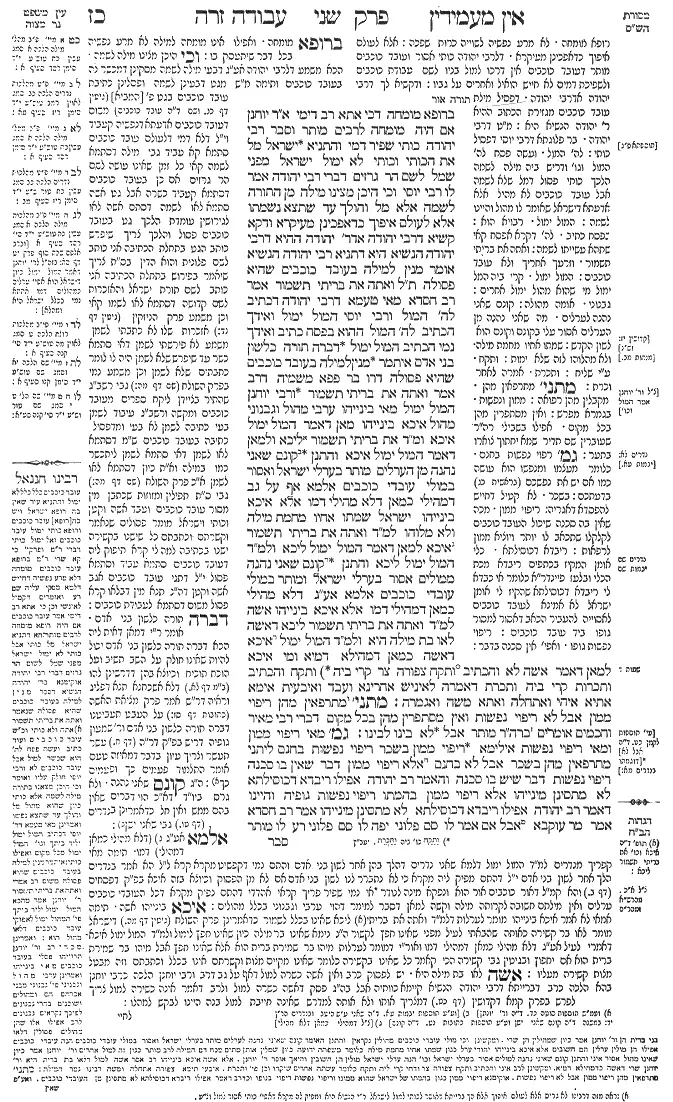
Avodah Zarah 27a - Guemara
ברופא מומחה דכי אתא רב דימי א"ר יוחנן אם היה מומחה לרבים מותר וסבר רבי יהודה כותי שפיר דמי והתניא ישראל מל את הכותי וכותי לא ימול ישראל מפני שמל לשם הר גרזים דברי רבי יהודה אמר לו רבי יוסי וכי היכן מצינו מילה מן התורה לשמה אלא מל והולך עד שתצא נשמתו אלא לעולם איפוך כדאפכינן מעיקרא ודקא קשיא דרבי יהודה אדר' יהודה ההיא דרבי יהודה הנשיא היא דתניא רבי יהודה הנשיא אומר מנין למילה בעובד כוכבים שהיא פסולה ת"ל ואתה את בריתי תשמור אמר רב חסדא מאי טעמא דרבי יהודה דכתיב לה' המול ורבי יוסי המול ימול ואידך הכתיב לה' המול ההוא בפסח כתיב ואידך נמי הכתיב המול ימול דברה תורה כלשון בני אדם איתמר מנין למילה בעובד כוכבים שהיא פסולה דרו בר פפא משמיה דרב אמר ואתה את בריתי תשמור ורבי יוחנן המול ימול מאי בינייהו ערבי מהול וגבנוני מהול איכא בינייהו מאן דאמר המול ימול איכא ומ"ד את בריתי תשמור ליכא ולמאן דאמר המול ימול איכא והתנן קונם שאני נהנה מן הערלים מותר בערלי ישראל ואסור במולי עובדי כוכבים אלמא אף על גב דמהילי כמאן דלא מהילי דמו אלא איכא בינייהו ישראל שמתו אחיו מחמת מילה ולא מלוהו למ"ד ואתה את בריתי תשמור איכא למאן דאמר המול ימול ליכא ולמ"ד המול ימול ליכא והתנן קונם שאני נהנה ממולים אסור בערלי ישראל ומותר במולי עובדי כוכבים אלמא אע"ג דלא מהילי כמאן דמהילי דמו אלא איכא בינייהו אשה למ"ד ואתה את בריתי תשמור ליכא דאשה לאו בת מילה היא ולמ"ד המול ימול איכא דאשה כמאן דמהילא דמיא ומי איכא למאן דאמר אשה לא והכתיב (שמות ד, כה) ותקח צפורה צר קרי ביה ותקח והכתיב ותכרות קרי ביה ותכרת דאמרה לאיניש אחרינא ועבד ואיבעית אימא אתיא איהי ואתחלה ואתא משה ואגמרה:
מתני׳ מתרפאין מהן ריפוי ממון אבל לא ריפוי נפשות ואין מסתפרין מהן בכל מקום דברי רבי מאיר וחכמים אומרים ברה"ר מותר אבל לא בינו לבינו:
גמ׳ מאי ריפוי ממון ומאי ריפוי נפשות אילימא ריפוי ממון בשכר ריפוי נפשות בחנם ליתני מתרפאין מהן בשכר אבל לא בחנם אלא ריפוי ממון דבר שאין בו סכנה ריפוי נפשות דבר שיש בו סכנה והאמר רב יהודה אפילו ריבדא דכוסילתא לא מתסינן מינייהו אלא ריפוי ממון בהמתו ריפוי נפשות גופיה והיינו דאמר רב יהודה אפילו ריבדא דכוסילתא לא מתסינן מינייהו אמר רב חסדא אמר מר עוקבא אבל אם אמר לו סם פלוני יפה לו סם פלוני רע לו מותר
Comments from Rashi on Masechet Avodah Zarah Page 27a
רופא מומחה . לא מרע נפשיה לשוייה כרות שפכה: אלא לעולם איפוך כדאפכינן מעיקרא . דלרבי יהודה כותי אסור ועובד כוכבים מותר דעובד כוכבים אין דרכו למול בניו לשם עבודת כוכבים ולשפיכת דמים לא חייש הואיל ואחרים על גביו: ודקשיא לך דרבי יהודה אדרבי יהודה . דפסיל מילת עובד כוכבים מגזירת הכתוב ההיא ר' יהודה הנשיא היא: מ"ט דרבי יהודה . בר פלוגתא דרבי יוסי דפסיל כותי: לה' המול . ועשה פסח לה' המול וגו' ודריש ביה מילה לשמה הלכך כותי פסול דמל שלא לשמה אבל עובד כוכבים לא מהיל אלא אדעתא דישראל שאומר לו מהול והיינו לשמה: המול ימול . רבויא הוא: בפסח כתיב . לה' דקרא אפסח קאי שתהא עשייתו לשמה: ואתה את בריתי תשמור . וזרעך אחריך ולא עובד כוכבים: המול ימול . קרי ביה המל ימול מי שהוא מהול ימול אחרים: גבנוני . אומה מהולה: קונם שאני נהנה לערלים . מה שאני נהנה מן הערלים אסור עלי בקונם וקונם הוא לשון הקדש: שמתו אחיו מחמת מילה . ולא מהלוהו לזה שלא ימות: ותקח . ע"י שליח: ותכרת . אמרה לאחר וכרת: מתני' מתרפאין מהן . מקבלין מהן רפואה: ממון ונפשות . בגמרא מפרש: ואין מסתפרין מהן בכל מקום . אפילו בשבילי רה"ר שעוברין שם תדיר שמא יחתוך צוארו בתער: גמ' רפוי נפשות בחנם . כלומר מעצמו ומנפשו הוא עושה כמו אם יש את נפשכם (בראשית כג) בדעתכם: בשכר . לא קטיל דחייש להפסדא דאגריה: ריפוי ממון מכה שאין בה סכנה . שיכול העובד כוכבים לקלקלו שתכאב לו יותר ויוציא ממון לרפאות: ריבדא דכוסילתא . כלי אומן המקיז בכתפים. ריבדא מכת הכלי ובלעז פיינדר"א. כלומר אי כבדא לי ריבדא דכוסילתא שהקיז לי אומן ישראל לא אמינא לעובד כוכבים לאסוייה להעביר הכאב דאסור למסור גופו ביד עובד כוכבים: ריפוי נפשות גופו . ואפי' אין סכנה בדבר:
Comments from Tosafot - Avodah Zarah 27a
ברופא מומחה . ואפילו אינו מומחה למילה לא מרע נפשיה בכל דבר שיתעסק בו: וכי היכן מצינו מילה לשמה . הכא משמע דלרבי יהודה אע"ג דבעי מילה לשמה מסקינן דמכשר לה בעובד כוכבים ותימה מ"ש מגט דבעינן לשמה ופסלינן כתיבת עובד כוכבים בגט פ' [המביא] (גיטין דף כג. ושם ד"ה עובד כוכבים) משום דעובד כוכבים אדעתא דנפשיה קעביד וי"ל דלא דמי דלעולם עובד כוכבים סתמא קא עביד גבי מילה דסתמא לשמה קאי כל זמן שאינו עושה לשם הר גרזים אם כן בעובד כוכבים דסתמא קעביד כשרה אבל גט אשה סתמא לאו לשמה דסתם אשה לאו לגירושין עומדת הלכך גט בעובד כוכבים פסול והלכך צריך שיפרש כותב הגט בתחלת הכתיבה אני כותב לשם פלונית והוא הדין בס"ת צריך שיאמר בפירוש בתחלת הכתיבה אני כותב לשם תורת ישראל והאזכרות לשם קדושה דסתמא לאו לשמו קאי וכן משמע פרק הניזקין (גיטין דף נד:) אזכרות שלו לא כתבתי לשמן משמע לא פירשתי לשמן דאי סתמא כשר עד שיפרש שלא לשמן היה לו לומר כתבתים שלא לשמן וכן משמע נמי בפרק השולח (שם דף מה:) גבי רשב"ג שהתיר בציידן ליקח ספרים מעובד כוכבים ומקשה ורשב"ג עיבוד לשמן בעי כתיבה לשמן לא בעי ומדפסיל כתיבה בעובד כוכבים ש"מ דסתמא לאו לשמן דאי סתמא לשמן ליתכשר כמו במילה וא"ת כיון דסתמא לאו לשמן א"כ פרק השולח (שם דף מה:) גבי ס"ת תפילין ומזוזות שכתבן מין מסור עובד כוכבים ועבד אשה וקטן וכותי וישראל מומר פסולים שנאמר וקשרתם וכתבתם כל שישנו בקשירה ישנו בכתיבה למה לי קרא תיפוק ליה דעובד כוכבים סתמא עביד וסתמא פסול י"ל דתני עובד כוכבים אגב אשה וקטן דה"נ תנא מין דבלאו קרא פסול משום דסתמא לעבודת כוכבים: דברה תורה כלשון בני אדם . אומר ר"י דמאן דאית ליה הכא דברה תורה כלשון בני אדם יכול להיות שאינו חולק על השב תשיב ועל הוכח תוכיח וכיוצא בהן דדרשינן להו (ב"מ דף לא.) דלא אשכחנא תנא דפליג וראיה דר"ש אמר פרק מציאת האשה (כתובות דף סז:) על העבט תעביטנו דברה תורה כלשון בני אדם ור' שמעון גופיה דריש בפ"ק דר"ה (דף ח.) עשר תעשר וצריך עיון בדבר דמאיזה טעם אומר התלמוד פעמים כך ופעמים כך: ה"ג קונם שאני נהנה . ולא גרס ביו"ד דא"כ הוי דברים שאין בהם ממש ואין חל כדאמרינן בנדרים (דף טו.) גבי שאני ישן: אלמא אע"ג (דלא מהילי כמאן דמהילי) דמו . תימה מאי קפריך מנדרים למ"ד המול ימול דלמא שאני נדרים דהלך בהן אחר לשון בני אדם והתם נמי דקפשיט מקרא קרא ל"ל הא אמר בנדרים הלך אחר לשון בני אדם י"ל דהתם מפיק ליה מקרא כי לא נתברר לנו לשון בני אדם אם לא מן הפסוק וכיוצא בזה איכא בפ"ק דפסחים (דף ב.) והא קמ"ל דאור כוכבים אור הוא ונפקא מינה לנודר אי נמי שפיר פריך קראי אהדדי דהתם נפיק מקרא דכל העובדי כוכבים ערלים ואין מילתם חשובה לקרותה מילה וקשה למאן דסבר למימר דהוי ערבי וגבנוני בכלל מהולים: איכא בינייהו אשה . תימה אמאי לא אמר איכא בינייהו מומר לערלות דלמ"ד ואתה את בריתי ליכא שאינו בכלל לשמור כדאמרינן פרק השולח (גיטין דף מה.) דישראל מומר לאו בר קשירה כאותה שהבאתי לעיל מפני שאינו חפץ לקשור ה"נ נימא שאינו בר מילה כיון שאינו חפץ לימול ולמ"ד המול ימול איכא דאמרי לעיל אע"ג דלא מהילי כמאן דמהילי דמו ואור"י דמומר לערלות מיהו בר שמירת ברית הוא אלא שאינו חפץ אבל מיהו בר שמירת ברית הוא אם יחפוץ ובגיטין גבי קשירה הכי קאמר כל שאינו בקשירה כלומר שאינו מקיים מצות וקשרתם אינו בכלל וכתבתם וזה מבטל מצות קשירה מעליו: אשה לאו בת מילה היא . יש לפסוק כרב ואין אשה כשרה למול דאף על גב דרב ורבי יוחנן הלכה כרבי יוחנן בהא הלכה כרב דברייתא דרבי יהודה הנשיא קיימא כוותיה אבל בה"ג פסק דאשה כשרה למול ולרב דאמר אינה כשירה למול צריך לפרש בפרק קמא דקדושין (דף כט.) דמצריך אותו ולא אותה למדרש שאינה חייבת למול בנה היינו לבקש למהלו:
Avodah Zarah 27a - Mishnah translated into english
We are dealing with an expert physician, who will not risk his reputation by harming a child. This is similar to that which Rabbi Yoḥanan said, as when Rav Dimi came from Eretz Yisrael to Babylonia, he said that Rabbi Yoḥanan says: If the physician was considered a recognized expert, it is permitted for one to be healed by him. When Rabbi Meir said that an Aramean may circumcise a Jewish boy, he was referring specifically to a doctor who is known for his expertise.
The latter clause of the baraita states that Rabbi Yehuda maintains that a Samaritan may circumcise a Jewish infant. The Gemara asks: And does Rabbi Yehuda actually hold that it is permitted for a Samaritan to perform circumcision? But isn’t it taught in a baraita: A Jew may circumcise a Samaritan but a Samaritan may not be allowed to circumcise a Jew, because he circumcises him for the sake of Mount Gerizim; this is the statement of Rabbi Yehuda.
Rabbi Yosei said to him: And where do we find that the mitzva of circumcision from the Torah must be performed for the sake of fulfilling God’s will? Rather, a Samaritan may continue to circumcise Jews until his soul leaves his body, i.e., until the Samaritan dies, and there is no room for concern. But Rabbi Yehuda explicitly states above that circumcision may not be performed by a Samaritan.
Rather, actually you should reverse the opinions in the baraita as we reversed them initially. And as for the difficulty raised with regard to one statement of Rabbi Yehuda against the other statement of Rabbi Yehuda, that opinion, that a gentile may not perform circumcision, is actually the opinion of Rabbi Yehuda HaNasi. Conversely, the first baraita, which is reversed and therefore cites Rabbi Yehuda as maintaining that an Aramean may perform circumcision, is referring to Rabbi Yehuda bar Ilai. Accordingly, the different opinions reflect a dispute between tanna’im rather than a contradiction.
The Gemara cites a proof that according to the opinion of Rabbi Yehuda HaNasi a gentile is not qualified to perform circumcision. As it is taught in a baraita that Rabbi Yehuda HaNasi says: From where is it derived with regard to circumcision performed by a gentile that it is not valid? The verse states: “And God said to Abraham: And as for you, you shall keep My covenant, you, and your seed after you throughout their generations” (Genesis 17:9).
§ It was stated that according to the opinion of Rabbi Yehuda circumcision must be performed for the sake of fulfilling a mitzva, whereas Rabbi Yosei holds that no particular intention is necessary. The Gemara analyzes these opinions. Rav Ḥisda said: What is the reasoning of Rabbi Yehuda? As it is written: “And when a stranger shall sojourn with thee, and will keep the Passover to the Lord let all his males be circumcised” (Exodus 12:48). It can be inferred from the verse that the males must be circumcised “to the Lord,” i.e., for the sake of fulfilling God’s will. The Gemara asks: And what is the reasoning of Rabbi Yosei? It is written: “He must be circumcised [himmol yimmol]” (Genesis 17:13). The usage of the doubled verb teaches that circumcision may be performed by anyone.
The Gemara asks: And according to the other Sage, i.e., Rabbi Yosei, isn’t it written: “To the Lord let all his males be circumcised,” which indicates that circumcision must be performed for the sake of fulfilling God’s will? The Gemara answers: That is written with regard to Passover. According to Rabbi Yosei, the phrase “to the Lord” is referring to the previous mention of the Paschal offering, rather than to circumcision. Accordingly, the verse should be read: “Will keep Passover to the Lord.” The Gemara asks: And according to the other Sage, Rabbi Yehuda, isn’t it also written: “He must be circumcised [himmol yimmol],” indicating that circumcision may be performed by anyone? The Gemara answers: The Torah spoke in the language of people, i.e., the doubled verb is the usual style of the Torah, which does not serve to teach a novel halakha.
§ The Gemara continues discussing the issue of circumcisions performed by gentiles. It was stated: From where is it derived with regard to circumcision performed by a gentile that it is not valid? Daru bar Pappa says in the name of Rav: This is derived from a verse, as it is stated: And God said to Abraham: “And as for you, you shall keep My covenant, you, and your seed after you throughout their generations.” And Rabbi Yoḥanan says that it is derived from the verse: “He must be circumcised [himmol yimmol].” According to Rabbi Yoḥanan, this verse teaches that a Jew must be circumcised by one who is already circumcised.
The Gemara asks: What is the practical difference between these two opinions? There is a practical difference between them with regard to a circumcised Arab or a circumcised hill person [gavnuni]. According to the one who says that the halakha that a Jewish infant may be circumcised only by one who has been circumcised himself is derived from the verse: “He must be circumcised [himmol yimmol],” there is reason to permit an Arab or gavnuni to perform the circumcision, as they are circumcised. And according to the one who says that circumcision may not be performed by a gentile is derived from the phrase: “You shall keep my covenant,” there is no reason to permit an Arab or Gibeonite to perform circumcision.
The Gemara raises an objection: And is it so, according to the one who says it is derived from the verse: “He must be circumcised [himmol yimmol],” that a Jew may not be circumcised by a gentile, that there is reason to permit a circumcised gentile to perform circumcision? But didn’t we learn in a mishna (Nedarim 31b): With regard to one who vows: Deriving benefit from those who are uncircumcised is konam for me, he is permitted to derive benefit from uncircumcised Jews because they are not regarded as uncircumcised, but he is prohibited from deriving benefit from the uncircumcised of the nations of the world? Apparently, even though some gentiles are circumcised, they are nevertheless considered as those who are uncircumcised.
Rather, there is a difference between them with regard to a Jew whose brothers died due to circumcision, and as a result, they did not circumcise him. According to the one who says that the halakha is derived from the verse: “And as for you, you shall keep My covenant,” there is reason to permit such a person to perform circumcision, as he is a Jew. According to the one who says that the halakha is derived from the phrase: “He must be circumcised [himmol yimmol],” there is no reason to permit this Jew to perform circumcision, as he is not circumcised himself.
The Gemara rejects this suggestion as well: And is it so that according to the one who says that the halakha is derived from the verse: “He must be circumcised [himmol yimmol],” there is no reason to permit an uncircumcised Jew to perform circumcision? But didn’t we learn in a mishna (Nedarim 31b): With regard to one who vows: Deriving benefit from those who are circumcised is konam for me, he is prohibited from deriving benefit even from uncircumcised Jews and he is permitted to derive benefit from the circumcised of the nations of the world. Apparently, even though some Jews are not circumcised, they are nevertheless considered as those who are circumcised.
Rather, there is a difference between these two opinions with regard to a woman. According to the one who says that the halakha is derived from the verse: “And as for you, you shall keep My covenant,” there is no reason to permit a woman to perform circumcision, as a woman is not subject to the mitzva of circumcision, and therefore she is not included in those who must keep God’s covenant. And according to the one who says that the halakha is derived from the verse: “He must be circumcised [himmol yimmol],” there is reason to permit a woman to perform circumcision, as a woman is considered as one who is naturally circumcised.
The Gemara raises a difficulty against this explanation: And is there anyone who says that a woman may not perform circumcision? But isn’t it written: “Then Zipporah took [vattikkaḥ] a flint and cut off the foreskin of her son” (Exodus 4:25). This verse explicitly states that a circumcision was performed by a woman. The Gemara answers that one should read into the verse: And she caused to be taken [vattakkaḥ], i.e., she did not take a flint herself. But isn’t it written: And she cut off [vattikhrot]? Read into the verse: And she caused to be cut off [vattakhret], as she told another person to take a flint and cut off her son’s foreskin, and he did so. The Gemara provides an alternative explanation: And if you wish, say instead: She came and began the act, and Moses came and completed the circumcision.
MISHNA: The mishna discusses the issue of accepting certain professional services from a gentile. One may be treated by gentiles, provided that it is monetary treatment, but not personal treatment. And one may not have his hair cut by them anywhere, due to the danger that the gentile will kill him with the razor; this is the statement of Rabbi Meir. And the Rabbis say: In the public thoroughfare, it is permitted to have one’s hair cut by a gentile, but not when the Jew and gentile are alone together.
GEMARA: What is monetary treatment, and what is personal treatment? If we say that monetary treatment is medical attention provided in exchange for payment, whereas personal treatment is medical attention provided for free, then let the mishna teach: One may be treated by gentiles in exchange for payment, but not for free.
The Gemara suggests another explanation: Rather, monetary treatment is referring to medical treatment for a matter that poses no life-threatening danger, whereas personal treatment is referring to treatment for a matter that does pose life-threatening danger. The Gemara rejects this suggestion as well. But doesn’t Rav Yehuda say: Even with regard to the wound of a bloodletting incision [rivda dekhusilta] we are not permitted to be treated by gentiles. The wound left after bloodletting certainly does not pose life-threatening danger, and yet a Jew is prohibited from having it treated by a gentile.
Rather, monetary treatment is referring to medical treatment provided for one’s animal, whereas personal treatment is referring to treatment provided for his own body, and this is in accordance with that which Rav Yehuda says: Even with regard to the wound of a bloodletting incision, we are not permitted to be treated by them.
Rav Ḥisda says that Mar Ukva says: But if a gentile said to him: Such and such a potion is beneficial for this ailment, or such and such a potion is harmful for this ailment, it is permitted to adhere to the gentile’s advice.
Traduction : The William Davidson digital edition of the Koren Noé Talmud, with commentary by Rabbi Adin Even-Israel Steinsaltz.