 Talmud Bavli
The learning on the whole site is dedicated : L'ilui Nishmat רינה בת לדיסיה
The learning on the whole site is dedicated : L'ilui Nishmat Amram ben Itshak Loubaton
The learning on the whole site is dedicated : L'ilui Nishmat יוסף בן מושה
Avodah Zarah 51a : Youtube
Daf TubeYoutube
2 video classes :
Avodah Zarah Page 51a
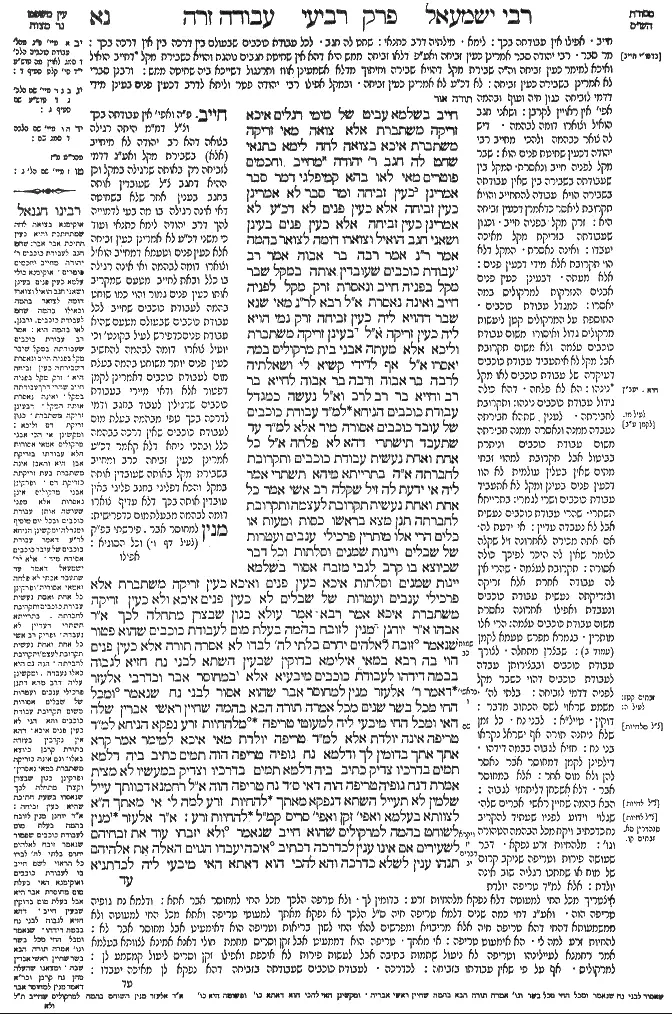
Avodah Zarah 51a - Guemara
חייב בשלמא עביט של מימי רגלים איכא זריקה משתברת אלא צואה מאי זריקה משתברת איכא בצואה לחה לימא כתנאי שחט לה חגב ר' יהודה מחייב וחכמים פוטרים מאי לאו בהא קמיפלגי דמר סבר אמרינן כעין זביחה ומר סבר לא אמרינן כעין זביחה אלא כעין פנים לא דכ"ע לא אמרינן כעין זביחה אלא כעין פנים בעינן ושאני חגב הואיל וצוארו דומה לצואר בהמה אמר ר"נ אמר רבה בר אבוה אמר רב עבודת כוכבים שעובדין אותה במקל שבר מקל בפניה חייב ונאסרת זרק מקל לפניה חייב ואינה נאסרת א"ל רבא לר"נ מאי שנא שבר דהויא ליה כעין זביחה זרק נמי הויא ליה כעין זריקה א"ל בעינן זריקה משתברת וליכא אלא מעתה אבני בית מרקוליס במה יאסרו א"ל אף לדידי קשיא לי ושאלתיה לרבה בר אבוה ורבה בר אבוה לחייא בר רב וחייא בר רב לרב וא"ל נעשה כמגדל עבודת כוכבים הניחא למ"ד עבודת כוכבים של עובד כוכבים אסורה מיד אלא למ"ד עד שתעבד תישתרי דהא לא פלחה א"ל כל אחת ואחת נעשית עבודת כוכבים ותקרובת לחברתה א"ה בתרייתא מיהא תשתרי אמר ליה אי ידעת לה זיל שקלה רב אשי אמר כל אחת ואחת נעשית תקרובת לעצמה ותקרובת לחברתה תנן מצא בראשו כסות ומעות או כלים הרי אלו מותרין פרכילי ענבים ועטרות של שבלים ויינות שמנים וסלתות וכל דבר שכיוצא בו קרב לגבי מזבח אסור בשלמא יינות שמנים וסלתות איכא כעין פנים ואיכא כעין זריקה משתברת אלא פרכילי ענבים ועטרות של שבלים לא כעין פנים איכא ולא כעין זריקה משתברת איכא אמר רבא אמר עולא כגון שבצרן מתחלה לכך א"ר אבהו א"ר יוחנן מנין לזובח בהמה בעלת מום לעבודת כוכבים שהוא פטור שנאמר (שמות כב, יט) זובח לאלהים יחרם בלתי לה' לבדו לא אסרה תורה אלא כעין פנים הוי בה רבא במאי אילימא בדוקין שבעין השתא לבני נח חזיא לגבוה בבמה דידהו לעבודת כוכבים מיבעיא אלא במחוסר אבר וכדרבי אלעזר דאמר ר' אלעזר מנין למחוסר אבר שהוא אסור לבני נח שנאמר (בראשית ו, יט) ומכל החי מכל בשר שנים מכל אמרה תורה הבא בהמה שחיין ראשי אברין שלה האי ומכל החי מיבעי ליה למעוטי טריפה (בראשית ז, ג) מלהחיות זרע נפקא הניחא למ"ד טריפה אינה יולדת אלא למ"ד טריפה יולדת מאי איכא למימר אמר קרא אתך אתך בדומין לך ודלמא נח גופיה טריפה הוה תמים כתיב ביה דלמא תמים בדרכיו צדיק כתיב ביה דלמא תמים בדרכיו וצדיק במעשיו לא מצית אמרת דנח גופיה טריפה הוה דאי ס"ד נח טריפה הוה א"ל רחמנא דכוותך עייל שלמין לא תעייל השתא דנפקא מאתך להחיות זרע למה לי אי מאתך ה"א לצוותא בעלמא ואפי' זקן ואפי' סריס קמ"ל להחיות זרע:
א"ר אלעזר מנין לשוחט בהמה למרקוליס שהוא חייב שנאמר (ויקרא יז, ז) ולא יזבחו עוד את זבחיהם לשעירים אם אינו ענין לכדרכה דכתיב (דברים יב, ל) איכה יעבדו הגוים האלה את אלהיהם תנהו ענין לשלא כדרכה והא להכי הוא דאתא האי מיבעי ליה לכדתניא
Comments from Rashi on Masechet Avodah Zarah Page 51a
חייב . אפילו אין עבודתה בכך: לימא . מילתיה דרב כתנאי: שחט לה חגב . לכל עבודת כוכבים שבעולם בין דרכה בין אין דרכה בכך: מר סבר . רבי יהודה סבר אמרינן כעין זביחה ואע"פ דלאו זביחה ממש היא דהא אין שחיטת חגבים נוהגת והויא כשבירת מקל דחייב הואיל ואיכא למימר כעין זביחה וה"ה שבירת מקל דהויא שבירה וחיתוך מדלא אשמעינן אווז ותרנגול דשייכא ביה שחיטה ממש: ורבנן סברי לא אמרינן בשבירה כעין זביחה: לא דכ"ע לא אמרינן כעין זביחה . ובמקל אפילו רבי יהודה פטר וליתא לדרב דכעין פנים בעינן מידי דדמי לזביחה כגון חיה ועוף ובהמה אפי' אין ראויין לקרבן: ושאני חגב הואיל וצוארו דומה לבהמה . דיש לה צואר כבהמה ולהכי מחייב רבי יהודה דכעין שחיטת פנים הוא: שבר מקל לפניה חייב ונאסרת . המקל בין שעבודתה בשבירה בין שאין עבודתה בשבירה הויא עבודה להתחייב והויא תקרובת ליאסר כדאמרן דכעין זביחה היא: זרק מקל בפניה חייב . וכגון שעבודתה בזריקת מקל מאיכה יעבדו: ואינה נאסרת . המקל דלא הוי תקרובת אלא מידי דכעין פנים: אלא מעתה . דבעינן כעין פנים אבנים הנזרקות למרקוליס במה יאסרו: כמגדל עבודת כוכבים . התוספת על המרקוליס קטן ליעשות מרקוליס גדול ואיסורו משום עבודת כוכבים עצמה ולא משום תקרובת אבל מקל לא איתעביד עבודת כוכבים דעיקרה של עבודת כוכבים לאו מקל נינהו: הא לא פלחה . דהא כולה גידול עבודת כוכבים נינהו: ותקרובת לחבירתה . לענין שתהא חבירתה נעבדה ממנה ונאסרה ממנה חבירתה משום עבודת כוכבים וניתרת בביטול אבל תקרובת למהוי זבחי מתים שאין בטלין עולמית לא הוו דכעין פנים בעינן ומקל לא אתעביד עבודת כוכבים ושרי לגמרי: בתרייתא תשתרי . שהרי עבודת כוכבים נעשית אבל לא נעבדה עדיין: אי ידעת לה . אם אתה מכירה לאחרונה זיל שקלה כלומר שאין לה היכר לפיכך כולה אסורה: תקרובת לעצמה . שהרי אין לה עבודה אחרת אלא זריקה ובזריקתה נעשית עבודת כוכבים ונעבדת ואפילו אחרונה נאסרת משום עבודת כוכבים עצמה: הרי אלו מותרין . בגמרא מפרש טעמא לקמן (עמוד ב): שבצרן מתחלה . לצורך עבודת כוכבים ובבצירותן עבדה לעבודת כוכבים דהוי כשבר מקל לפניה דדמי לזביחה: בלתי לה' . משמע שראוי לשם הכתוב מדבר: דוקין . טייל"א: לבני נח . כל זמן שלא ניתנה תורה אף ישראל נקראו בני נח: חזיא לגבוה בבמה דידהו . דילפינן לקמן דמחוסר אבר נאסר להן ולא מום אחר: אלא במחוסר אבר . דלא אשכחן דליתחזי לגבוה: הבא בהמה שחיין ראשי אברים שלה . שגלוי וידוע לפניו שעתיד להקריב נח כדכתיב ויקח מכל הבהמה הטהורה וגו': מלהחיות זרע נפקא . דבר שעושה פירות וטריפה שניקב קרום של מוח או שחתכו רגליה שוב אינה יולדת: אלא למ"ד טריפה יולדת . איצטריך מכל החי למעוטה דלא נפקא מלהחיות זרע: בדומין לך . ולא טרפה הלכך מכל החי למחוסר אבר אתא: ודלמא נח גופיה טריפה הוה . ואע"ג דחי כמה שנים דלמא טריפה חיה ס"ל הלכך לא נפקא מאתך למעוטי טריפה ואתא מכל החי למעוטה ולא ממשמעותא דהחי דהא טריפה חיה אלא מריבויא ומפרשים להאי החי לשון בריאות וטריפה הוא דאימעיט אבל מחוסר אבר לא: להחיות זרע למה לי . הא אימעוט טריפה: אי מאתך . טריפה הוא דממעיט אבל זקן וסריס מחמת חולי דאנא אמינא לצוותא בעלמא אמר רחמנא לעיילינהו וטריפה לא ניעול שתמות בתיבה אבל לעשות פירות לא איכפת ואפילו זקן וסריס ליעול קמשמע לן: למרקוליס . אף על פי שאין עבודתו בזביחה: לכדרכה . לעבודת כוכבים שעבודתה בזביחה דהא נפקא לן מאיכה יעבדו:
Comments from Tosafot - Avodah Zarah 51a
חייב . פ"ה ואפי' אין עבודתה בכך וצ"ל דמ"מ היתה רגילה בצואה דהא רב יהודה לא מיחייב (אלא) בשבירת מקל ואע"ג דדמי לזביחה רק באותה שרגילה במקל וכן ההיא דחגב צ"ל שעובדין אותה בחגב בענין אחר שלא בשחיטה דאי אינה רגילה בו מה בעי לדמוייה להך דרב יהודה לימא כתנאי ועוד כי משני דכ"ע לא אמרינן כעין זביחה אלא כעין פנים וטעמא דמחייב הואיל וצוארו דומה לבהמה ואי אינה רגילה בו כלל ובאת לחייב מטעם שמקריב אותו כעין פנים גמור והוי כמו שוחט בהמה לעבודת כוכבים שחייב לכל עבודת כוכבים שבעולם מטעם שהיא עבודת פנים כדפירש לעיל בקונט' וכי יועיל צוארו דומה לבהמה להחשיב כעין פנים יותר משוחט בהמה בעלת מום לעבודת כוכבים דאמרינן לקמן דפטור אלא ודאי מיירי בעבודת כוכבים שרגילין לעבוד בחגב ודמי לדרכה בכך טפי מבהמה בעלת מום לעבודת כוכבים שאין דרכה בבהמה כלל ובהכי ניחא דלא קאמר דכ"ע אמרינן כעין זביחה כרב ומחייב בשבירת מקל באותה שעובדין אותה במקל והכא דפליגי בחגב פליגי באין עובדין אותה בכך דלא עדיף צוארו דומה לבהמה מבעלת מום כדפרישית: מנין למחוסר אבר . פירשתי בפ"ק (לעיל עבודה זרה דף ו.) וכל הסוגיא:
Avodah Zarah 51a - Mishnah translated into english
is liable, even though these substances are repugnant, and even when this is not the typical manner of worshipping that idol. Granted, when one pours a chamber pot of urine before the idol, there is an act of throwing that scatters the offering. But in the case of excrement, what act of throwing that scatters the offering is there? The Gemara answers: This is stated with regard to moist excrement, which breaks apart when thrown.
The Gemara suggests: Let us say that one’s liability for breaking a stick as a form of idol worship is the subject of a dispute between tanna’im: If one slaughtered a locust for an idol, Rabbi Yehuda deems him liable, and the Rabbis deem him exempt from punishment.
What, is it not about this issue that they disagree: One Sage, Rabbi Yehuda, holds that we say that one is liable even in the case of a rite that merely resembles slaughtering an animal, e.g., slaughtering a locust or breaking a stick. And one Sage, i.e., the Rabbis, holds that we do not say that it is sufficient for the rite to merely resemble slaughtering an animal. Rather, the rite must be like the type of slaughtering performed inside the Temple. One is therefore not liable for slaughtering a locust, since locusts are not slaughtered in the Temple.
The Gemara rejects this suggestion: No, everyone holds that we do not say that one is liable even for a rite that merely resembles slaughtering an animal. Rather, we require the rite to be like the type of slaughtering performed inside the Temple. And the case of a locust is different, since its neck is similar to the neck of an animal. Rabbi Yehuda therefore considers slaughtering a locust similar to the type of slaughter performed in the Temple.
§ Rav Naḥman says that Rabba bar Avuh says that Rav says: In the case of an object of idol worship that is worshipped by means of a stick, if one broke a stick before it, he is liable and the stick is rendered prohibited. If he threw a stick before it, he is liable, as its typical manner of worship involves a stick, but the stick is not rendered prohibited.
Rava said to Rav Naḥman: What is different about the case where one broke a stick? In this case the stick is rendered forbidden as it is similar to slaughtering an offering, which is a rite performed in the Temple; so too, in the case where one threw a stick, it is similar to the sprinkling of the blood on the altar. Rav Naḥman said to Rava: In order for a sacrificial rite to be similar to the sprinkling of blood, we require a form of throwing that scatters the offering, and that is not the case here.
Rava asked Rav Naḥman: If that is so, by what means are the stones of a place of worship dedicated to Mercury rendered prohibited, as they do not break apart when they are thrown? Rav Naḥman said to Rava: This question was difficult for me as well, and I asked Rabba bar Avuh about it, and Rabba bar Avuh asked Ḥiyya bar Rav, and Ḥiyya bar Rav asked Rav. And Rav said to Ḥiyya bar Rav: This action is comparable to the act of enlarging the object of idol worship. The stones are not rendered prohibited as an offering brought in idol worship; rather, they are considered part of the pile dedicated to Mercury itself.
Rava said to Rav Naḥman: This works out well according to the one who says that the object of idol worship of a gentile is prohibited immediately. But according to the one who says it is not forbidden until it is worshipped, let it be permitted, as he did not worship it, since he sacrificed no offering to it. Rav Naḥman said to Rava: Each and every one of the stones becomes part of the object of idol worship and is also considered an offering to the other stone that preceded it.
Rava replied: If so, at least the last stone should be permitted, as nothing has yet been sacrificed to it. Rav Naḥman said to Rava: If you know which one it is, you may go and take it, as it is indeed permitted. Rav Ashi says: Even the last stone is forbidden, as each and every one of the stones becomes an offering to itself and also an offering to the other stone that preceded it.
We learned in a mishna (51b): If one found a garment, money, or vessels at the head of Mercury, they are permitted, as they are not an offering but were left there for some other reason. If one found vine branches [parkilei] laden with clusters of grapes, or wreaths made of stalks, or containers of wine, oil, or flour, or any other item the like of which is sacrificed on the altar there, that item is prohibited.
The Gemara asks: Granted, with regard to wine, oil, or flour, there is a sacrificial rite comparable to those rites performed inside the Temple, and there is a rite that is similar to the sprinkling of blood that scatters the offering. But in the case of vine branches laden with clusters of grapes, and wreaths made of stalks, there is neither a sacrificial rite comparable to those rites performed inside the Temple, as these items are not sacrificed on the altar in the Temple, nor is there a rite that is similar to the sprinkling of blood on the altar that scatters the offering.
Rava said that Ulla said: The mishna is referring to a case where he initially picked the grapes for that purpose, in order to sacrifice them in idolatrous worship. The act of picking the fruit is comparable to slaughtering an animal, and it renders them forbidden.
§ Rabbi Abbahu says that Rabbi Yoḥanan says: From where is it derived concerning one who slaughters a blemished animal in idolatrous worship that he is exempt? It is derived from a verse, as it is stated: “He that sacrifices to the gods, save to the Lord only, shall be utterly destroyed” (Exodus 22:19). The verse contrasts sacrificing an offering to the Lord with sacrificing an offering to other gods, indicating that the Torah prohibits only sacrificial rites that are comparable to those rites performed inside the Temple, and blemished animals are disqualified from being sacrificed in the Temple.
Rava discussed this matter: With regard to what type of blemish does this apply? If we say that it applies in the case of a blemish on the cornea of the eye, that is difficult: Now that such an offering is fit for descendants of Noah to offer to the Most High on their personal altar, is it necessary to state that it is considered an offering with regard to the prohibition of idol worship?
Rather, the halakha that one who slaughters a blemished animal in idolatrous worship is exempt is stated with regard to an animal that is lacking a limb, and it is in accordance with the statement of Rabbi Elazar. As Rabbi Elazar says: From where is it derived that with regard to an animal that is lacking a limb, it is prohibited for descendants of Noah to sacrifice it? This is derived from a verse, as it is stated: “And of every living thing of all flesh, two of every sort you shall bring into the ark, to keep them alive with you” (Genesis 6:19). The Torah stated: “Of every living thing,” indicating that Noah should bring into the ark an animal whose extremities are living, as some of the animals would subsequently be used as offerings.
The Gemara asks: Isn’t that phrase: “And of every living thing,” required to exclude an animal with a wound that will cause it to die within twelve months [tereifa], which is disqualified as an offering? The Gemara answers: The disqualification of a tereifa is derived from the verse: “Of the fowl also of the air, seven and seven, male and female, to keep seed alive upon the face of all the earth” (Genesis 7:3), as a tereifa cannot procreate.
The Gemara asks: This works out well according to the one who says that a tereifa cannot bear offspring. But according to the one who says that a tereifa can bear offspring, what can be said? According to this opinion, a tereifa cannot be excluded by the phrase “to keep seed alive,” as it can procreate.
The Gemara answers: The verse states: “You shall bring into the ark, to keep them alive with you” (Genesis 6:19). The term “with you” indicates that the verse is referring to animals that are similar to you, excluding a tereifa. The Gemara challenges: But perhaps Noah himself was a tereifa. In that case, one cannot exclude a tereifa from the comparison of animals to Noah. The Gemara explains: It is written about Noah that he was “a man righteous and without blemish” (Genesis 6:9), indicating that he was physically whole.
The Gemara challenges: Perhaps the term “without blemish” is referring to his conduct, and not to his physical attributes. The Gemara explains: The term “righteous” is written about him, indicating that his conduct was faultless, and therefore the term “without blemish” is necessarily referring to his physical completeness.
The Gemara challenges: Perhaps the term “without blemish” is referring to his conduct, and the term “righteous” is referring to his good deeds. The Gemara explains: You cannot say that Noah himself was a tereifa, as, if it enters your mind to say that Noah was a tereifa, you must say that the Merciful One said to Noah: Bring into the ark animals that are similar to you, i.e., tereifot, but do not bring whole, unblemished animals, and this is clearly not reasonable.
The Gemara asks: Now that the disqualification of a tereifa is derived from the term “with you,” why do I need the phrase “to keep seed alive”? The Gemara answers: If one excluded a tereifa only from the term “with you,” I would say that Noah brought the animals into the ark merely for the purpose of companionship, and therefore even an aged animal who could not bear offspring and even one who was castrated could be brought into the ark. The phrase “to keep seed alive” therefore teaches us that only animals that could reproduce were brought into the ark.
§ Rabbi Elazar says: From where is it derived concerning one who slaughters an animal as an offering to Mercury that he is liable even though it is not typically worshipped in this manner? This is derived from a verse, as it is stated: “And they shall not slaughter their offerings anymore to the se’irim after whom they go astray; this shall be to them an eternal statute, throughout their generations” (Leviticus 17:7). If this verse is not needed for the matter of prohibiting the worship of an idol in its typical manner, it must apply to another matter. The verse cannot be referring to idols that are typically worshipped by slaughtering offerings, as this prohibition is written in the verse: “And lest you inquire after their gods, saying: How do these nations serve their gods? Even so will I do likewise” (Deuteronomy 12:30). One must therefore apply the verse to the matter of prohibiting the worship of an idol in an atypical manner.
The Gemara asks: But with regard to this verse, does it come to teach this prohibition? This verse is required for that which is taught in a baraita, with regard to the prohibition against sacrificing offerings outside the Tabernacle:
Traduction : The William Davidson digital edition of the Koren Noé Talmud, with commentary by Rabbi Adin Even-Israel Steinsaltz.