 Talmud Bavli
The learning on the whole site is dedicated : L'ilui Nishmat Yaakov ben Myriam
The learning on the whole site is dedicated : L'ilui Nishmat יוסף בן מושה
The learning on the whole site is dedicated : L'ilui Nishmat Rav Chlomo Ben Jamilla
Avodah Zarah 42a : Youtube
Daf TubeYoutube
2 video classes :
Avodah Zarah Page 42a
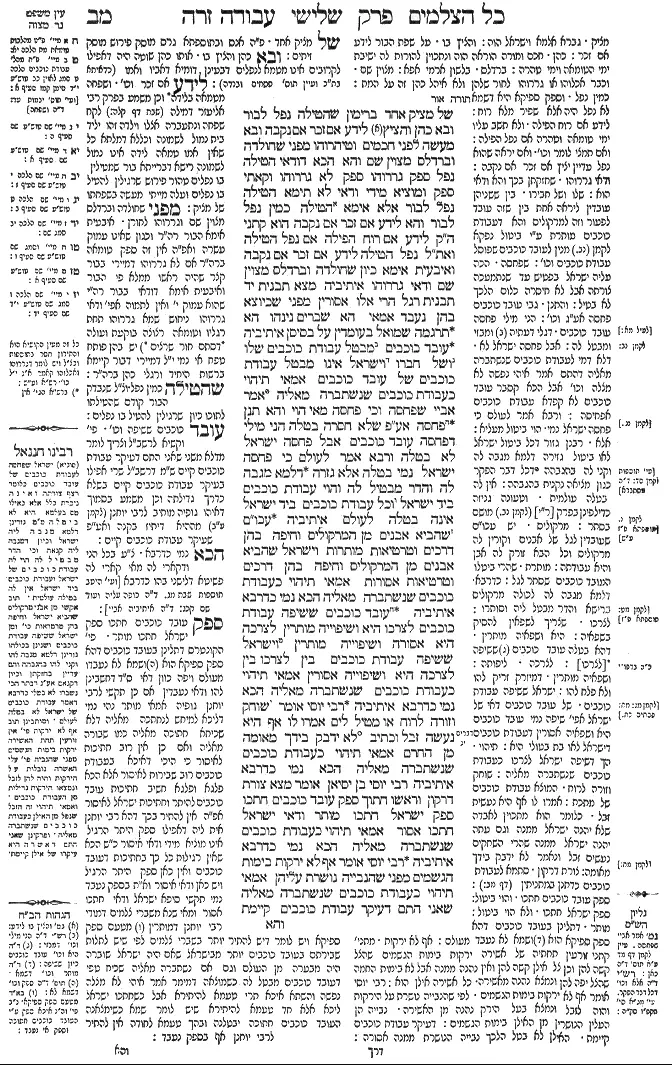
Avodah Zarah 42a - Guemara
של מציק אחד ברימון שהטילה נפל לבור ובא כהן והציץ לידע אם זכר אם נקבה ובא מעשה לפני חכמים וטיהרוהו מפני שחולדה וברדלס מצוין שם והא הכא דודאי הטילה נפל ספק גררוהו ספק לא גררוהו וקאתי ספק ומוציא מידי ודאי לא תימא הטילה נפל לבור אלא אימא הטילה כמין נפל לבור והא לידע אם זכר אם נקבה הוא קתני ה"ק לידע אם רוח הפילה אם נפל הטילה ואת"ל נפל הטילה לידע אם זכר אם נקבה ואיבעית אימא כיון שחולדה וברדלס מצוין שם ודאי גררוהו איתיביה מצא תבנית יד תבנית רגל הרי אלו אסורין מפני שכיוצא בהן נעבד אמאי הא שברים נינהו הא תרגמה שמואל בעומדין על בסיסן איתיביה עובד כוכבים מבטל עבודת כוכבים שלו ושל חברו וישראל אינו מבטל עבודת כוכבים של עובד כוכבים אמאי תיהוי כעבודת כוכבים שנשתברה מאליה אמר אביי שפחסה וכי פחסה מאי הוי והא תנן פחסה אע"פ שלא חסרה בטלה הני מילי דפחסה עובד כוכבים אבל פחסה ישראל לא בטלה ורבא אמר לעולם כי פחסה ישראל נמי בטלה אלא גזרה דלמא מגבה לה והדר מבטיל לה והוי עבודת כוכבים ביד ישראל וכל עבודת כוכבים ביד ישראל אינה בטלה לעולם איתיביה עכו"ם שהביא אבנים מן המרקוליס וחיפה בהן דרכים וטרטיאות מותרות וישראל שהביא אבנים מן המרקוליס וחיפה בהן דרכים וטרטיאות אסורות אמאי תיהוי כעבודת כוכבים שנשתברה מאליה הכא נמי כדרבא איתיביה עובד כוכבים ששיפה עבודת כוכבים לצרכו היא ושיפוייה מותרין לצרכה היא אסורה ושיפוייה מותרין וישראל ששיפה עבודת כוכבים בין לצרכו בין לצרכה היא ושיפוייה אסורין אמאי תיהוי כעבודת כוכבים שנשתברה מאליה הכא נמי כדרבא איתיביה רבי יוסי אומר שוחק וזורה לרוח או מטיל לים אמרו לו אף היא נעשה זבל וכתיב (דברים יג, יח) לא ידבק בידך מאומה מן החרם אמאי תיהוי כעבודת כוכבים שנשתברה מאליה הכא נמי כדרבא איתיביה רבי יוסי בן יסיאן אומר מצא צורת דרקון וראשו חתוך ספק עובד כוכבים חתכו ספק ישראל חתכו מותר ודאי ישראל חתכו אסור אמאי תיהוי כעבודת כוכבים שנשתברה מאליה הכא נמי כדרבא איתיביה רבי יוסי אומר אף לא ירקות בימות הגשמים מפני שהנבייה נושרת עליהן אמאי תיהוי כעבודת כוכבים שנשתברה מאליה שאני התם דעיקר עבודת כוכבים קיימת
Comments from Rashi on Masechet Avodah Zarah Page 42a
מציק . גברא אלמא וישראל הוה: והציץ בו . על שפת הבור לידע אם זכר: כהן . חכם ומורה הוראה הוה ונתכוין להורות לה ישיבת ימי הטומאה וימי טהרה: ברדלס . בלשון ארמי אפא: מצוין שם . וכבר אכלוהו או גררוהו לחור שלהן ולא איהל כהן זה על המת: כמין נפל . וספק ספיקא היא דשמא לא נפל היה אלא שפיר מלא רוח: לידע אם רוח הפילה . ולא תשב עליו ימי טומאה וטהרה. אם נפל הפילה: ואם תמצי לומר וכו' . ואם יראה שהוא נפל עדיין יציץ אם זכר אם נקבה: ודאי גררוהו . שחזקתן בכך והא ודאי הוא: שלו ושל חבירו . בין ששניהן עובדין ליראה אחת בין שזה עובד לפעור וזה למרקוליס. והא דעבודת כוכבים מותרת ע"י ביטול נפקא לקמן (עבודה זרה נב.) מנין לעובד כוכבים שפוסל עבודת כוכבים וכו': שפחסה . הכה עליה ישראל בפטיש עד שנתמעכה צורתה אבל לא חיסרה כלום הלכך לא בטיל: והתנן . גבי עובד כוכבים פחסה אע"ג וכו': הני מילי פחסה עובד כוכבים . דגלי דעתיה ומבזי ומבטל לה: אבל פחסה ישראל לא . דלא דמי לעבודת כוכבים שנשתברה מאליה דהתם אמר איהי נפשה לא מצלה וכו' אבל הכא קסבר עובד כוכבים לא קפדא עבודת כוכבים אפחיסה: ורבא אמר לעולם כי פחסה ישראל נמי . הוי ביטול מעליא: אלא . רבנן גזור דכל ביטול ישראל לאו ביטול גזירה דלמא מגבה לה וקני לה בהגבהה דכל דבר הפקר כגון מציאה נקנית בהגבהה: אין לה בטלה עולמית . וטעונה גניזה כדילפינן בפרק [ר"י] (לקמן עבודה זרה נב.) מושם בסתר: מרקוליס . יש עכו"ם שעובדין לגל של אבנים וקורין לה מרקוליס וכל הבא זורק לה אבן והיא עבודתה: מותרת . שהרי ביטלו העובד כוכבים שסתר לגל: כדרבא . דלמא מגבה לה לכולה מרקוליס ברישא והדר מבטל ליה וסותרו: לצרכו . שצריך לשפאין להסיק בשפאיה: היא ושפאיה מותרין . דהא בטלה עובד כוכבים ששיפה [לצרכו]: לצרכה . ליפותה: ושפאיה מותרין . דמיזרק זריק להו ולא פלח להו: ישראל ששיפה עבודת כוכבים . של עובד כוכבים דאי של ישראל אפי' שיפה נמי עובד כוכבים היא ושפאיה אסורין דעבודת כוכבים דישראל לאו בת בטולי היא: תיהוי . הך דשיפה ישראל לצרכו כעבודת כוכבים שנשתברה מאליה: שוחק וזורה לרוח . המוצא עבודת כוכבים של מתכת: אמרו לו אף היא נעשית זבל . כלומר הוא מתכוין לאבדה שלא יהנה ישראל ממנה וגם עתה יהנה ישראל ממנה שהרי השחקים נעשים זבל ונאמר לא ידבק בידך מאומה: צורת דרקון . סתמא לעבודת כוכבים כדתנן במתניתין (דף מב:): ספק עובד כוכבים חתכו . והוי ביטול: ספק ישראל חתכו . ולא הוי ביטול: מותר . דתלינן בעובד כוכבים דהא ספק ספיקא הוא ושמא לא נעבד מעולם: אף לא ירקות . מתני' קתני זורעין תחתיה של אשירה ירקות בימות הגשמים שהצל קשה להן וכן צל אילן קשה להן ואין נהנה ממנה אבל לא בימות החמה שהצל יפה להן ונמצא נהנה מאשירה. כל אשירה אילן הוא: רבי יוסי אומר אף לא ירקות בימות הגשמים לפי שהנבייה נושרת . על הירקות והוה לזבל ונמצא בעל הירק נהנה מן האשירה. נבייה הן העלין הנושרין מן האילן בימות הגשמים: דעיקר עבודת כוכבים קיימת . האילן לא בטל הלכך נבייה הנושרת ממנה אסורה:
Comments from Tosafot - Avodah Zarah 42a
של מציק אחד . פ"ה אנס ובתוספתא גרס מוסק פירוש מוסק זיתים: ובא כהן והציץ בו . אותו כהן שוטה היה דאפילו לקרובים אינו מטמא לנפלים דבעינן דומיא דאביו ואמו (כדאיתא בת"כ ועיין תוס' פסחים ובנדה): לידע אם זכר וכו' . ושפחה מטמאה בלידה וכן משמע בפרק רבי אליעזר דמילה (שבת דף קלה:) לקח שפחה ונתעברה אצלו וילדה זהו יליד בית נמול לשמונה וכללא דמלתא כל שאין אמו טמאה לידה אינו נמול לשמונה רישא דברייתא בור שמטילין בו נפלים טהור פירוש שרגילין להטיל בו נפלים ועלה מייתי מעשה בשפחתו של מציק: מפני שחולדה וברדלס מצוין שם וגררוהו לחורן . איבעית אימא הבור רה"ר וכגון שאינו עמוק עשרה ואפ"ה אין זה ספק טומאה ברה"ר אם לא גררוהו דמיירי בבור קצר שהיה ראשו ממלא פי הבור ואיבעית אימא דודאי בבור רה"י שהוא עמוק י' ואין לתמוה אפי' ודאי גררוהו ניחוש שמא גררוהו תחת רגליו וטומאה רצוצה בוקעת ועולה דסתם חור שרצים יש בהן פותח טפח אי נמי י"ל דמיירי דבור קיימא ברשות היחיד ורגלי כהן ברה"ר: שהטילה כמין נפל . וצ"ל שנבדק הבור קודם שהטילתו לתוכו כיון שרגילין להטיל בו נפלים: עובד כוכבים ששיפה וכו' . פי' וקשיא לרשב"ל וצריך לומר מדלא משני שאני התם דעיקר עבודת כוכבים קיים ש"מ דרשב"ל שרי אפילו בעיקר עבודת כוכבים קיים בשלא כדרך גדילתה וכן משמע בסמוך דאיהו גופיה מותיב לרבי יוחנן (לקמן ע"ב) מההיא דיתיז בקנה ואע"פ שעיקר עבודת כוכבים קיים: הכא נמי כדרבא . צ"ע בכל הני ודקארי לה מאי קארי לה פשיטא דלישני בהו כדרבא [ועי' היטב תוספות שבת מג. ד"ה כופה עליה ועוד שם קכג: ד"ה איתיביה אביי]: ספק עובד כוכבים חתכו ספק ישראל חתכו מותר . פי' הקונטרס דתלינן בעובד כוכבים דהא ספק ספיקא הוא ושמא לא נעבדו מעולם ויפה כוון דאי ס"ד דחשבינן להו ודאי נעבדין אם כן תקשי לרבי יוחנן גופיה אמאי מותר נהי נמי דליכא למיחש לנחתכה מאליה דלא שכיחא חתוכה מאליה כמו שבורה מאליה ואם כן אין רוב חתיכות לאיסור כי היכי דאיכא בעבודת כוכבים רוב שבירות לאיסור אלא הכא פלגא ופלגא חשיב חתיכות עובד כוכבים להיתר וחתיכות ישראל לאיסור אפ"ה אין להתיר בכך דהא רבי יוחנן אית ליה דאפילו ספק היתר הרגיל אינו מוציא מידי ודאי איסור כ"ש הכא שאין רגילות כל כך בחתיכות דעובד כוכבים ואין כאן ספק היתר הרגיל ויש כאן ודאי איסור וא"ת בספק נעבד נמי תקשי סיפא ישראל ודאי חתכו אסור ומאי שנא משברי צלמים דמודי רבי יוחנן דמותרין מטעם ספק ספיקא ויש לומר דיש להתיר יותר בשברי צלמים לפי שיש לתלות שבירתם בעובד כוכבים יותר מבישראל שאם היה ישראל שוברה היה מבערה מן העולם וגם אם נשתברה מאליה שכיח טפי דעובד כוכבים מבטל לה כשמוצאה דמימר אמר איהי לא מצלה נפשה והשתא איכא תרי טעמא להיתירא אבל כשחתכו ישראל ליכא אלא חד טעמא להיתירא שיש לומר שמא כשימצאנה העובד כוכבים חתוכה יבטלנה ובהך טעמא לחודה אין להתיר לרבי יוחנן אף בספק נעבד:
Avodah Zarah 42a - Mishnah translated into english
of one violent person [metzik] in the city of Rimon, who cast a non-viable newborn into a pit, and a priest came and looked into the pit to ascertain whether the baby was male or whether it was female, as the length of time of a woman’s ritual impurity after childbirth, even if she gave birth to a non-viable newborn, depends on whether the child was male or female (see Leviticus, chapter 12). And the incident came before the Sages to rule whether or not the priest had contracted ritual impurity while standing over the corpse, and they deemed him ritually pure. The basis for this ruling was due to the fact that as martens and polecats [bardelas] are common there, it is likely that the body was dragged away before the priest arrived at the pit.
The Gemara concludes its objection: And here, in this case, where it is certain that the woman cast the non-viable newborn into the pit, and it is uncertain whether an animal dragged it away and it is uncertain whether no animal dragged it away, the Sages nevertheless ruled that an uncertainty comes and overrides a certainty.
The Gemara rejects this interpretation of the baraita: Do not say that the woman certainly cast a non-viable newborn into a pit; rather, say that she cast an object similar to a non-viable newborn into a pit. Perhaps it was not the body of an infant; it might have merely been congealed blood, which does not impart impurity. Therefore, it is a conflict between uncertainty and uncertainty; it is unclear whether the item that was cast into the pit could have rendered the priest ritually impure, and even if it could have, it might have already been dragged away.
The Gemara asks: But isn’t it taught in the baraita: To ascertain whether it was male or whether it was female, indicating that the only uncertainty was with regard to its sex, as it was certainly a non-viable newborn?
The Gemara answers that this is what the baraita is saying: The priest attempted to examine two aspects of the miscarried entity. He sought to ascertain whether the woman miscarried, bearing an amorphous mass, or whether she cast a non-viable newborn into the pit; and if you say that she cast a non-viable newborn, he sought to ascertain whether it was male or whether it was female.
And if you wish, say that there is a different answer: This case is not a conflict between certainty and uncertainty; rather it is a conflict between certainty and certainty. Since martens and polecats are common there, they certainly dragged the body away. Consequently, the ruling in this case does not contradict the principle that an uncertainty does not override a certainty.
§ The Gemara returns to the dispute with regard to an idol that broke. Rabbi Yoḥanan raised an objection to the opinion of Reish Lakish from the mishna: If one found an object in the figure of a hand or in the figure of a foot, these are forbidden, as objects similar to those are worshipped. Rabbi Yoḥanan asks: Why are they forbidden? Aren’t they fragments, which according to Reish Lakish should be permitted?
The Gemara answers: Didn’t Shmuel interpret the mishna as referring to a case where these objects are standing on their pedestals, which shows that they were designed this way initially?
Rabbi Yoḥanan raised another objection to the opinion of Reish Lakish from a mishna (52b): A gentile can revoke the idolatrous status of his own object of idol worship or that of another gentile, but a Jew cannot revoke the status of a gentile’s object of idol worship. Rabbi Yoḥanan asks: Why can’t a Jew revoke the status of a gentile’s idol according to Reish Lakish? Let it be treated like an object of idol worship that broke on its own, which Reish Lakish deems permitted.
Abaye said: That mishna is referring to a case where the Jew bent the idol out of shape without actually breaking it. The Gemara asks: And if he merely bent the idol out of shape, what of it? But didn’t we learn in a mishna (53a) that if one bent an idol, changing its shape, even if he did not remove any part of it, he thereby revoked its status as an object of idol worship?
The Gemara answers: This statement applies only in a case where a gentile bent the idol, changing its shape; but in a case where a Jew bent it, changing its shape, its status as an object of idol worship is not revoked.
And Rava said a different answer: Actually, the basic halakha is that in a case where a Jew bent it, changing its shape, its status as an object of idol worship is also revoked. But the Sages issued a decree that such an idol retains its idolatrous status, lest a Jew first lift it up and then attempt to revoke its status. In this case the idol’s status is not revoked, as when a Jew lifts an idol he acquires it, and it becomes an object of idol worship in a Jew’s possession, and any object of idol worship in a Jew’s possession can never have its idolatrous status revoked. Therefore, only when an idol breaks on its own does Reish Lakish maintain that its status is revoked.
Rabbi Yoḥanan raised another objection to the opinion of Reish Lakish from a baraita: In the case of a gentile who brought stones from stone heaps that were used in the worship of the deity Mercury [HaMarkulis], and who then paved roads and built theaters [vetarteiot] with them, it is permitted to derive benefit from them, as the gentile revoked their idolatrous status. But in the case of a Jew who brought stones that were used in the worship of Mercury and who then paved roads and built theaters with them, it is prohibited to derive benefit from them. Rabbi Yoḥanan asked: According to Reish Lakish, why does a stone such as this retain its idolatrous status? Let it be treated like an object of idol worship that broke on its own, which Reish Lakish deems permitted.
The Gemara answers: Here too, Rabbi Yoḥanan’s question may be answered in accordance with the opinion of Rava that the Sages issued a decree that an object of idol worship retains its idolatrous status when a Jew attempts to revoke it, lest the Jew lift and acquire the idol, which would make it impossible to subsequently revoke its status.
Rabbi Yoḥanan raised another objection to the opinion of Reish Lakish from a baraita: In the case of a gentile who shaved down an object of idol worship for his own sake, as he needed the shavings, the idol itself and its shavings are then permitted. If he did it for the sake of the idol, to improve its appearance, the idol is forbidden, but its shavings are permitted. But in the case of a Jew who shaved down an object of idol worship, whether he did it for his own sake or for the sake of the idol, the idol itself and its shavings are forbidden. Rabbi Yoḥanan asked: According to Reish Lakish, in a case where a Jew shaved the idol for his own sake, why are the shavings forbidden? Let it be treated like an object of idol worship that broke on its own.
The Gemara answers: Here too, Rabbi Yoḥanan’s question may be answered in accordance with the opinion of Rava that the Sages issued a decree that an object of idol worship retains its idolatrous status when a Jew attempts to cause it to be revoked.
Rabbi Yoḥanan raised another objection to the opinion of Reish Lakish from a mishna (43a): Rabbi Yosei says: When one encounters an idol, he should grind the idol and throw the dust to the wind or cast it into the sea. The Rabbis said to him: What is the good of that? That also gives a Jew benefit from the idol, as it becomes fertilizer for his crops, and deriving any kind of benefit is prohibited, as it is written: “And nothing of the proscribed items shall cleave to your hand” (Deuteronomy 13:18). Rabbi Yoḥanan asked: According to Reish Lakish, why is this prohibited? Let it be treated like an object of idol worship that broke on its own.
The Gemara answers: Here too, Rabbi Yoḥanan’s question may be answered in accordance with the opinion of Rava cited above, that the Sages issued a decree with regard to this matter.
Rabbi Yoḥanan raised another objection to the opinion of Reish Lakish from a baraita: Rabbi Yosei ben Yasian says: If one found an object in the figure of a dragon [derakon] with its head severed, but it is uncertain whether a gentile severed it and it is uncertain whether a Jew severed it, the object is permitted. But if it is certain that a Jew severed it, it is forbidden. Rabbi Yoḥanan asked: According to Reish Lakish, why is it forbidden? Let it be treated like an object of idol worship that broke on its own.
The Gemara answers: Here too, Rabbi Yoḥanan’s question may be answered in accordance with the opinion of Rava that the Sages issued a decree with regard to this matter.
Rabbi Yoḥanan raised another objection to the opinion of Reish Lakish from a baraita: Rabbi Yosei says that one may not even plant vegetables in the rainy season under a tree worshipped as an idol, as foliage may fall on them, serving as fertilizer. Rabbi Yoḥanan asked: According to Reish Lakish, why should a leaf from such a tree retain its idolatrous status? Let it be treated like an object of idol worship that broke on its own.
The Gemara answers: There it is different, as the main object of idol worship, the tree, still exists fully intact.
Traduction : The William Davidson digital edition of the Koren Noé Talmud, with commentary by Rabbi Adin Even-Israel Steinsaltz.