 Talmud Bavli
The learning on the whole site is dedicated : L'ilui Nishmat Yaakov ben Myriam
The learning on the whole site is dedicated : L'ilui Nishmat רינה בת לדיסיה
The learning on the whole site is dedicated : L'ilui Nishmat Jacques Isaac Ben Amram Loubaton
Avodah Zarah 64a : Youtube
Daf TubeYoutube
2 video classes :
Avodah Zarah Page 64a
Avodah Zarah 64a - Guemara
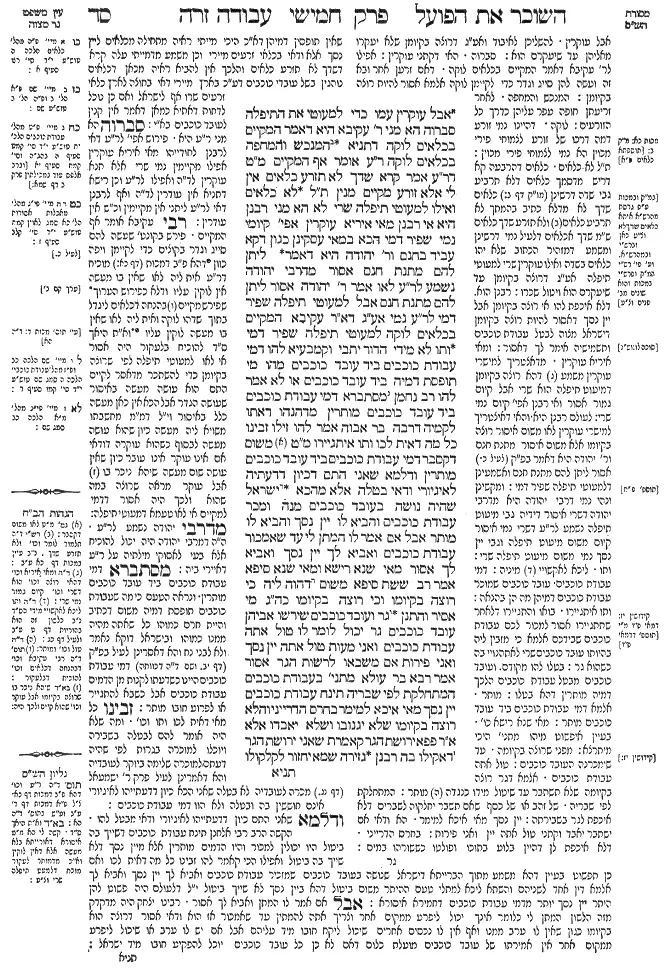
אבל עוקרין עמו כדי למעוטי את התיפלה סברוה הא מני ר' עקיבא היא דאמר המקיים בכלאים לוקה דתניא המנכש והמחפה בכלאים לוקה ר"ע אומר אף המקיים מ"ט דר"ע אמר קרא שדך לא תזרע כלאים אין לי אלא זורע מקיים מנין ת"ל לא כלאים ואילו למעוטי תיפלה שרי לא הא מני רבנן היא אי רבנן מאי איריא עוקרין אפי' קיומי נמי שפיר דמי הכא במאי עסקינן כגון דקא עביד בחנם ור' יהודה היא דאמר ליתן להם מתנת חנם אסור מדרבי יהודה נשמע לר"ע לאו אמר ר' יהודה אסור ליתן להם מתנת חנם אבל למעוטי תיפלה שפיר דמי לר"ע נמי אע"ג דא"ר עקיבא המקיים בכלאים לוקה למעוטי תיפלה שפיר דמי ותו לא מידי הדור יתבי וקמבעיא להו דמי עבודת כוכבים ביד עובד כוכבים מהו מי תופסת דמיה ביד עובד כוכבים או לא אמר להו רב נחמן מסתברא דמי עבודת כוכבים ביד עובד כוכבים מותרין מדהנהו דאתו לקמיה דרבה בר אבוה אמר להו זילו זבינו כל מה דאית לכו ותו איתגיירו מ"ט משום דקסבר דמי עבודת כוכבים ביד עובד כוכבים מותרין ודלמא שאני התם דכיון דדעתיה לאיגיורי ודאי בטלה אלא מהכא ישראל שהיה נושה בעובד כוכבים מנה ומכר עבודת כוכבים והביא לו יין נסך והביא לו מותר אבל אם אמר לו המתן לי עד שאמכור עבודת כוכבים ואביא לך יין נסך ואביא לך אסור מאי שנא רישא ומאי שנא סיפא אמר רב ששת סיפא משום דהוה ליה כי רוצה בקיומו וכי רוצה בקיומו כה"ג מי אסיר והתנן גר ועובד כוכבים שירשו אביהן עובד כוכבים גר יכול לומר לו טול אתה עבודת כוכבים ואני מעות טול אתה יין נסך ואני פירות אם משבאו לרשות הגר אסור אמר רבא בר עולא מתני' בעבודת כוכבים המתחלקת לפי שבריה תינח עבודת כוכבים יין נסך מאי איכא למימר בחרס הדרייני והלא רוצה בקיומו שלא יגנובו ושלא יאבדו אלא א"ר פפא ירושת הגר קאמרת שאני ירושת הגר דאקילו בה רבנן גזירה שמא יחזור לקלקולו
Comments from Rashi on Masechet Avodah Zarah Page 64a
אבל עוקרין . להשליכן לאיבוד ואע"ג דרוצה בקיומן שלא יעקרו מאליהן עד שיעקרם הוא: סברוה . האי דקתני עוקרין: אפילו לר' עקיבא דאמר המקיים בכלאים לוקה . דאם זרען אחר ובא זה ועשה להן סייג וגדר כדי לקיימן לוקה אלמא אסור להיות רוצה בקיומן: המנכש והמחפה . לאחר זריעתן חופה עפר עליהן כדרך כל הזורעים: לוקה . דהיינו נמי זורע דמה דרכו של זורע לצמוחי פירי מכוין הא נמי לצמוחי פירי מכוין: ת"ל לא כלאים . כלאים דהרבעה קא דריש מדסמך כלאים דלא תרביע גבי שדה דרשינן (מו"ק דף ב:) כלאים שדך לא מדלא כתיב בהמתך לא תרביע כלאים ולא תזרע שדך כלאים ש"מ שדך אכלאים דלעיל נמי דרשינן ומשמע דמזהיר הכתוב שלא יהו כלאים בשדה ואילו עוקרין שרי למעוטי תיפלה אע"ג דרוצה בקיומן עד שיעקרם הוא ויטול שכרו: רבנן הוא . דלא איכפת להו אי רוצה בקיומן אבל יין נסך דאסור להיות רוצה בקיומן דישראל מצוה לבטל עבודת כוכבים ותשמישיה אימר לך דאסור: ומאי איריא עוקרין . מדאצטריך למישרי עוקרין משמע דהא רוצה בקיומן דמיעוט תיפלה הוא שרי אבל קיום גמור אסור ואי רבנן אפי' קיום נמי שרי: לעולם רבנן היא . והאי דאיצטריך למישרי עוקרין לאו משום איסור רוצה בקיומו אלא משום איסור מתנת חנם ור' יהודה היא דאמר בפ"ק (לעיל עבודה זרה כ.) אסור ליתן להם מתנת חנם ואשמעינן דלמעוטי תיפלה שפיר דמי:
ומקשינן ונהי נמי דרבי יהודה היא מדרבי יהודה דשרי איסור דידיה גבי מיעוט תיפלה נשמע לר"ע דשרי נמי איסור קיום משום מיעוט תיפלה וגבי יין נסך נמי משום מיעוט תיפלה שרי: ותו . ליכא לאקשויי מיניה: דמי עבודת כוכבים . עובד כוכבים שמוכר עבודת כוכבים דמיהן מה הן בהנאה: ותו איתגיירו . בואו והתגיירו דלאחר שתתגיירו אסור למכור לכם עבודת כוכבים שבידכם. אלמא כי מזבין ליה בהיותו עובד כוכבים שרי לאתהנויי בה כשהוא גר: בטלו להו מקודם . ועובד כוכבים מבטל עבודת כוכבים הלכך דמיה מותרין דהא בטלו: מותר . אלמא דמי עבודת כוכבים ביד עובד כוכבים מותר: מאי שנא רישא כו' . בעיין איפשוט מיהו מתני' היכי מיתרצא: מפני שרוצה בקיומה . עד שימכרנה העובד כוכבים: טול אתה עבודת כוכבים . אלמא דגר רוצה בקיומה שלא תשתבר עד שיטול מידו כנגדה מותר: המתחלקת לפי שבריה . של זהב או של כסף שאם תשבר יחלקוה לשברים דלא איכפת לגר בשבירתה: יין נסך מאי איכא למימר . הא ודאי אם ישתבר יאבד וקתני טול אתה יין ואני פירות: בחרס הדרייני . דלא איכפת לן דהיין בלוע בתוכו ופולטו כששורהו במים:
Comments from Tosafot - Avodah Zarah 64a
סברוה הא מני ר"ע היא . פירוש אפי' לר"ע דאי לרבנן לחודייהו מאי איריא עוקרין אפילו מקיימין נמי שרי אלא תנא עוקרין לד"ה ואפילו לר"ע וכן רישא דתניא אין עודרין לד"ה ואף לרבנן דאי לר"ע ליתני אין מקיימין וכ"ש אין עודרין: רבי עקיבא אומר אף המקיים . פירש בקונט' שעשה להם סייג וגדר בקוצים כדי לקיימן ויפה כוון דהא פ"ב דמכות (דף כא:) מוכיח דר"ע אית ליה לאו שאין בו מעשה אין לוקין עליו ודלא כפירוש הערוך שפירש מקיים בהנחה דכלאים ליגדל בתוך שדהו לוקה ואית ליה לאו שאין בו מעשה לוקין עליו וא"ת היאך ס"ד להוכיח בלעקור היה אסור אי לאו למעוטי תיפלה לפי שרוצה בקיומן כדי להשתכר מדאסר לקיים התם הוא עושה מעשה באיסור שעושה הגדר אבל הכא אין כאן מעשה כלל באיסור וי"ל דמ"מ מחשבתו משויא ליה מעשה כיון שהוא עושה מעשה לבסוף כשהוא עוקרה דודאי אם אינו עוקר אינו עובר כיון שאין עושה שום מעשה שיהא ניכר בו אבל עוקר מראה שרוצה במה שהוא ולכך היה אסור דדמי למקיים אי לאו טעמא דמעוטי תיפלה: מדרבי יהודה נשמע לר"ע . ה"ה דמרבי יהודה היה יכול להוכיח אלא בעי לאסוקי מילתיה על ר"ע דאיירי ביה: מסתברא דמי עבודת כוכבים ביד עובד כוכבים מותרין . ונראה הטעם כי מה שעבודת כוכבים תופסת דמיה משום דכתיב והיית חרם כמוהו כל שאתה מהיה ממנו כמוהו ובישראל דוקא נאמר ולא לבני נח והא דאסרינן לעיל בפ"ק (עבודה זרה דף יב. ושם ד"ה דכוותה) דמי עבודת כוכבים היינו כשדעתו לקנות מן הדמים עבודת כוכבים אבל כשבא להתגייר או לפרוע חובו מותר: זבינו כל מאי דאית לכו ותו וכו' . ומה שלא היה אומר להם לבטלה בשבירה ויוכלו למוכרה בגרות לפי שהיה דעתם למוכרה שלימה ביוקר לעובדיה והא דאמרינן לעיל פרק ר' ישמעאל (עבודה זרה דף נג.) מכרה לעובדיה לא בטלה שאני הכא כיון דדעתייהו לאיגיורי אינם חוששין בה ובטלה ולא הוו דמי עבודת כוכבים: ודלמא שאני התם כיון דדעתייהו לאיגיורי ודאי מבטל להו . הקשה הרב רבי אלחנן תינח עבודת כוכבים דשייך בה ביטול היו יכולין למכור והיו הדמים מותרין אלא מיין נסך דלא שייך בה ביטול ואפילו הכי קאמר להו זבינו כל מה דאית לכו ואם כן תפשוט בעיין דהא משמע מתוך הברייתא דישראל שנושה בעובד כוכבים שמזכיר עבודת כוכבים ואביא לך יין נסך ואביא לך אלמא דין אחד לשניהם והשתא ליכא למתלי טעם ההיתר משום ביטול דהא ביין נסך לא שייך ביטול י"ל דלעולם היה פשוט להן היתר יין נסך יותר מדמי עבודת כוכבים דחמירא איסורא: אבל אם אמר לו המתן ואביא לך אסור . רבינו יצחק היה מדקדק מזה הלשון המתן לי כלומר אינך יכול ליפרע ממקום אחר וצריך אתה להמתין עד שאמכור אז הוא ודאי אסור דרוצה הוא בקיומו כגון שאין לו ערב ממנו ואף אין לו נכסים אחרים שיכול ליקח חובו מיד עליהם אבל אם יש לו ערב או שיכול ליפרע ממקום אחר אין אמירתו של עובד כוכבים מועלת כלום דאם לא כן כל עובד כוכבים יוכל להפקיע חובו מיד ישראל:
Avodah Zarah 64a - Mishnah translated into english
but one may uproot diverse kinds with him, in order to reduce impropriety.
The Sages initially assumed that in accordance with whose opinion is this baraita? It is in accordance with the opinion of Rabbi Akiva, who says that not only one who sows or grows diverse kinds, but even one who maintains diverse kinds, is flogged. As it is taught in a baraita: One who removes the weeds interfering with the growth of the plants or who covers up the seeds of diverse kinds with earth is flogged. Rabbi Akiva says: Even one who maintains them instead of actively uprooting them is flogged.
The Gemara asks: What is the reasoning of Rabbi Akiva? The Gemara answers: The verse states: “You shall not sow your field with diverse kinds of seed” (Leviticus 19:19). I have derived only the case of one who sows. From where is it derived that one who maintains diverse kinds also receives lashes? The verse states: “Not…diverse kinds of seed,” indicating that there should not be diverse kinds in one’s field.
The Gemara concludes its support for the opinion of Rav Naḥman: It is prohibited to maintain diverse kinds, but nevertheless, if one wishes to maintain diverse kinds temporarily in order to be paid for uprooting them, thereby reducing impropriety, it is permitted. Similarly, it is permitted for one to receive payment for breaking barrels of wine used for a libation.
The Gemara rejects this explanation: No, in accordance with whose opinion is this baraita, which deems it permitted for one to uproot diverse kinds with a gentile? It is in accordance with the opinion of the Rabbis, who permit one to maintain diverse kinds, but prohibit one from maintaining wine used for a libation, so there is no proof from this baraita in support of Rav Naḥman’s opinion.
The Gemara asks: If the baraita is in accordance with the opinion of the Rabbis, why does the tanna specifically permit uprooting with a gentile? Even maintaining the diverse kinds is permitted. The Gemara answers: Here we are dealing with a case where he performed the uprooting unpaid, and it is in accordance with the opinion of Rabbi Yehuda, who says that giving an unpaid gift to a gentile is prohibited.
The Gemara reasons that Rav Naḥman’s ruling can in any event be proven from this baraita: From the opinion of Rabbi Yehuda we may understand the halakha according to the opinion of Rabbi Akiva. Doesn’t Rabbi Yehuda say that it is prohibited to give a gentile an unpaid gift, but to reduce impropriety he holds that it is permitted to work with a gentile? The same can be said according to Rabbi Akiva as well: Although Rabbi Akiva says that one who maintains diverse kinds is flogged, he presumably holds that if the purpose is to reduce impropriety, it is permitted. The Gemara concludes: And nothing more is to be said on this matter.
§ Rav Naḥman, Ulla, Avimi bar Pappi, and Rabbi Ḥiyya bar Ami were sitting again and a dilemma was raised before them: With regard to the proceeds from the sale of an object of idol worship that are in the possession of a gentile, who sold the object to another, what is the halakha? Does the object of idol worship transfer its forbidden status to the money that is in the possession of a gentile, as it would to money in the possession of a Jew, or not?
Rav Naḥman said to them: It stands to reason that the proceeds from the sale of an object of idol worship in the possession of a gentile are permitted. This may be proven from certain gentiles who came before Rabba bar Avuh to convert. Rabba bar Avuh said to them: Go sell everything that you have, including your objects of idol worship, and then come back to me to convert.
What is the reason he gave this advice? Isn’t it because he maintains that the proceeds from the sale of an object of idol worship in the possession of a gentile are permitted, and therefore he suggested they sell the objects of idol worship so they could derive benefit from the money after they converted? The Gemara rejects this proof: But perhaps it is different there, as since their intention is to convert, they certainly revoked the idolatrous status of these objects, and when they sold them they were selling permitted items.
Rather, proof may be brought from here, as it is taught in a baraita: In the case of a Jew who was a creditor to a gentile for the amount of one hundred dinars, and the gentile sold an object of idol worship and from the proceeds brought him the payment of the debt, or sold wine used for a libation and from the proceeds brought him the payment of the debt, the money is permitted. But if the gentile said to him: Wait for me until I sell an object of idol worship and from the proceeds I will bring you the payment of the debt, or: Wait until I sell wine used for a libation and from the proceeds I will bring you the payment of the debt, this money is forbidden. This proves that the proceeds of an object of idol worship in the possession of a gentile are permitted.
The Gemara asks: What is different in the first clause that it is permitted, and what is different in the latter clause that it is forbidden? Rav Sheshet said: In the latter clause the proceeds are forbidden because the Jew desires the preservation of the object of idol worship or wine used for a libation, since he knows that the gentile must sell it in order to repay the debt.
The Gemara asks: And if he desires its preservation in a case like this, is the money forbidden? But didn’t we learn in a mishna (Demai 6:10): In the case of a convert and a gentile who inherited from their gentile father, the convert can say to his gentile brother: You take the objects of idol worship and I will take the money, or: You take the wine used for a libation and I will take the produce; but if they make this exchange after the property came into the possession of the convert, it is forbidden.
Rava bar Ulla said: The ruling of the mishna is stated with regard to an object of idol worship whose value can be distributed among its shards, i.e., even if it were broken to pieces its value would remain, so the convert does not desire its preservation.
The Gemara asks: This resolution works out well in the case of objects of idol worship, but with regard to wine used for a libation, what is there to say? There is no situation in which the convert does not desire the preservation of the wine until the exchange. The Gemara answers: The ruling of the mishna is stated with regard to Hadrianic earthenware permeated with wine used for a libation. Since the wine can be extracted by soaking the earthenware in water, the convert does not desire that the vessel remain intact.
The Gemara asks: But doesn’t he desire its preservation in the sense that it should not be stolen or lost? Rather, Rav Pappa said that there is a different resolution: You say there is a difficulty from the case of the inheritance of a convert? The inheritance of a convert is different, as the Sages were lenient with regard to it, as a rabbinic decree, lest he return to his corrupted ways if it were prohibited for him to inherit property from his father. In the case of one who is not a convert and desires the preservation of an object of idol worship, it is prohibited for him to profit from it.
Traduction : The William Davidson digital edition of the Koren Noé Talmud, with commentary by Rabbi Adin Even-Israel Steinsaltz.