 Talmud Bavli
The learning on the whole site is dedicated : L'ilui Nishmat אסתר בת חיים
The learning on the whole site is dedicated : L'ilui Nishmat Rav Chlomo Ben Jamilla
The learning on the whole site is dedicated : L'ilui Nishmat Yechayahou ben Moche
Avodah Zarah 37a : Youtube
Daf TubeYoutube
2 video classes :
Avodah Zarah Page 37a
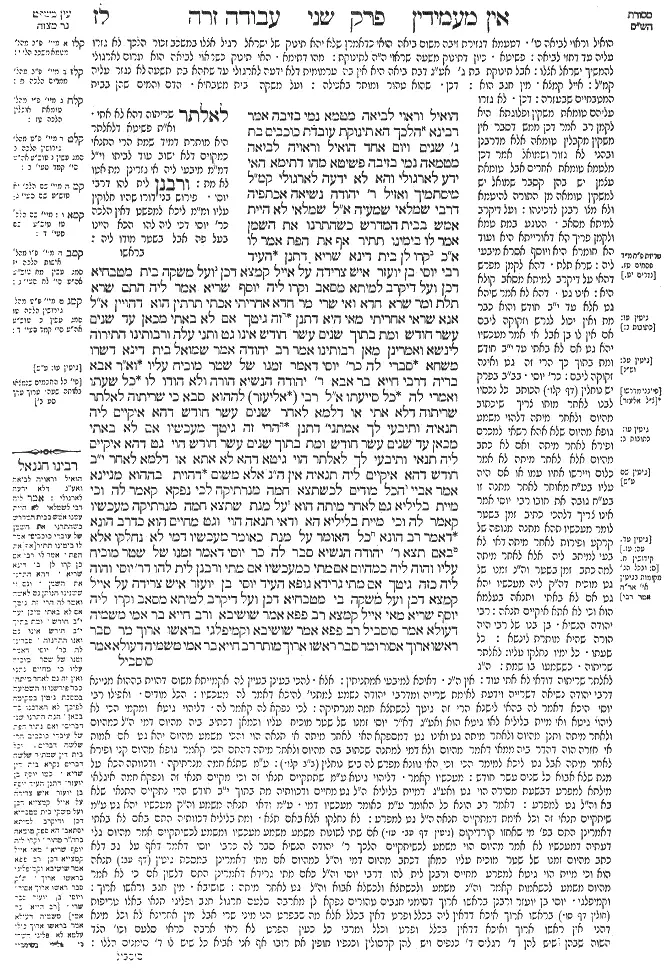
Avodah Zarah 37a - Guemara
הואיל וראוי לביאה מטמא נמי בזיבה אמר רבינא הלכך הא תינוקת עובדת כוכבים בת ג' שנים ויום אחד הואיל וראויה לביאה מטמאה נמי בזיבה פשיטא מהו דתימא האי ידע לארגולי והא לא ידעה לארגולי קמ"ל מיסתמיך ואזיל ר' יהודה נשיאה אכתפיה דרבי שמלאי שמעיה א"ל שמלאי לא היית אמש בבית המדרש כשהתרנו את השמן אמר לו בימינו תתיר אף את הפת אמר לו א"כ קרו לן בית דינא שריא דתנן העיד רבי יוסי בן יועזר איש צרידה על אייל קמצא דכן ועל משקה בית מטבחיא דכן ועל דיקרב למיתא מסאב וקרו ליה יוסף שריא אמר ליה התם שרא תלת ומר שרא חדא ואי שרי מר חדא אחריתי אכתי תרתין הוא דהויין א"ל אנא שראי אחריתי מאי היא דתנן זה גיטך אם לא באתי מכאן עד שנים עשר חודש ומת בתוך שנים עשר חודש אינו גט ותני עלה ורבותינו התירוה לינשא ואמרינן מאן רבותינו אמר רב יהודה אמר שמואל בית דינא דשרו משחא סברי לה כר' יוסי דאמר זמנו של שטר מוכיח עליו וא"ר אבא בריה דרבי חייא בר אבא ר' יהודה הנשיא הורה ולא הודו לו כל שעתו ואמרי לה כל סייעתו א"ל רבי (אליעזר) [אלעזר] לההוא סבא כי שריתוה לאלתר שריתוה דלא אתי או דלמא לאחר שנים עשר חודש דהא איקיים ליה תנאיה ותיבעי לך אמתני' דתנן הרי זה גיטך מעכשיו אם לא באתי מכאן עד שנים עשר חודש ומת בתוך שנים עשר חודש הוי גט דהא איקיים ליה תנאי ותיבעי לך לאלתר הוי גיטא דהא לא אתא או דלמא לאחר י"ב חודש דהא איקיים ליה תנאיה אין ה"נ אלא משום דהוית בההוא מניינא אמר אביי הכל מודים לכשתצא חמה מנרתיקה לכי נפקא קאמר לה וכי מיית בליליא גט לאחר מיתה הוא על מנת שתצא חמה מנרתיקה מעכשיו קאמר לה וכי מיית בליליא הא ודאי תנאה הוי וגט מחיים הוא כדרב הונא דאמר רב הונא כל האומר על מנת כאומר מעכשיו דמי לא נחלקו אלא באם תצא ר' יהודה הנשיא סבר לה כר' יוסי דאמר זמנו של שטר מוכיח עליו והוה ליה כמהיום אם מתי כמעכשיו אם מתי ורבנן לית להו דר' יוסי והוה ליה כזה גיטך אם מתי גרידא גופא העיד יוסי בן יועזר איש צרידה על אייל קמצא דכן ועל משקה בי מטבחיא דכן ועל דיקרב למיתא מסאב וקרו ליה יוסף שריא מאי אייל קמצא רב פפא אמר שושיבא ורב חייא בר אמי משמיה דעולא אמר סוסביל רב פפא אמר שושיבא וקמיפלגי בראשו ארוך מר סבר ראשו ארוך אסור ומר סבר ראשו ארוך מותר רב חייא בר אמי משמיה דעולא אמר
Comments from Rashi on Masechet Avodah Zarah Page 37a
הואיל וראוי לביאה כו' . דטעמא דגזירת זיבה משום ביאה הואי כדאמרן שלא יהא תינוק של ישראל רגיל אצלו במשכב זכור הלכך לא גזרו עליה עד דחזי לביאה: פשיטא . כיון דתינוק משעה שראוי ה"ה לתינוקת: מהו דתימא האי . תינוק כשראוי לביאה הוא ערום לארגולי להמשיך ישראל אצלו: אבל תינוקת בת ג' אע"ג דבת ביאה היא אין בה ערמומית דלא ידעה לארגולי עד שתהא בת תשעה לא נגזר עליה קמ"ל: אייל קמצא . מין חגב הוא: דכן . שהוא טהור ומותר באכילה: ועל משקה בית מטבחיא . הדם והמים שהן בבית המטבחיים שבעזרה: דכן . לא גזרו עליהם טומאת משקין. ופלוגתא היא לקמן רב אמר דכן ממש דסבר אין משקין מקבלין טומאה אלא מדרבנן ובהני לא גזור ושמואל אמר דכן מלטמא טומאת אחרים אבל טומאת עצמן יש בהן קסבר שמואל יש למשקין טומאה מן התורה להיטמא ולא מצו רבנן לדכינהו: ועל דיקרב למיתא מסאב . הנוגע במת טמא. ולקמן פריך הא דאורייתא היא ועוד הא חומרא היא ויוסף אסרא מיבעי ליה: שרא תלת . דהא לקמן מפרש דהאי על דיקרב למיתא מסאב קולא היא: אינו גט . דהא לא אמר שיהא גט אלא עד י"ב חודש והוא כבר מת ואין יכול לגרש וזקוקה ליבם אם אין לו בן. אבל אי אמר מעכשיו יהא גט אם לא באתי עד י"ב חודש ומת בתוך כך הרי זה גט ואינה זקוקה ליבם: כר' יוסי . בב"ב בפרק יש נוחלין (דף קלו.) הכותב כל נכסיו לבנו לאחר מותו צריך שיכתוב מהיום ולאחר מיתה דלהוי משמע גופא מהיום שלא אהא רשאי למכרם ופירא לאחר מיתה ואם לא כתב מהיום אלא לאחר מיתה לא אמר כלום ויירשו אחיו עמו או אם היה עליו בע"ח מאוחר לאחר מתנה זו בע"ח גובה את חובו רבי יוסי אמר אינו צריך דלהכי כתיב זמן בשטר לומר מעכשיו תהא מתנה מגופה של קרקע ופירות לאחר מיתה דאי לא בעי למיתב ליה אלא לאחר מיתה למה כתב זמן בשטר. וה"נ זמנו של גט מוכיח דה"ק ליה מעכשיו יהא גט אם לא באתי ותנאה בעלמא הוא וכי לא אתא איקיים תנאה: רבי יהודה הנשיא . בן בנו של רבי היה הורה שהיא מותרת לינשא: כל שעתו . כל ימיו נחלקו עליו: לאלתר שריתוה . כששמעו בו שמת: ה"ג לאלתר שריתוה דודאי לא אתי עוד: אין ה"נ . דאיכא למיבעי אמתניתין: אלא . להכי בעינן בעיין לה אקמייתא משום דהוית בההוא מניינא דרבי יהודה נשיאה דשרייה וידעת לאימת שרייה ומדרבי יהודה נשמע למתני' להיכא דאמר לה מעכשיו: הכל מודים . ואפילו רבי יוסי היכא דאמר לה בהאי לישנא הרי זה גיטך לכשתצא חמה מנרתיקה: לכי נפקא לה קאמר לה . דליהוי גיטא ומקמי הכי לא ליהוי גיטא ואי מיית בליליא לאו גיטא הוא ואע"ג דא"ר יוסי זמנו של שטר מוכיח עליו וכמאן דכתיב ביה מהיום דמי ה"ל כמהיום ולאחר מיתה ותנן מהיום ולאחר מיתה גט ואינו גט דמספקא האי לאחר מיתה אי תנאה הוי והכי משמע מהיום יהא גט אם אמות אי חזרה הוה דהדר ביה ממאי דאמר מהיום ולא דמי למתנה שכתוב בה מהיום ולאחר מיתה דהתם הכי קאמר גופא מהיום קני ופירא לאחר מיתה אבל גט ליכא למימר הכי וכי האי גוונא מפרש לה ביש נוחלין (ב"ב קלו.): ע"מ שתצא חמה מנרתיקה . ודכוותה הכא על מנת שלא אבוא כל שנים עשר חודש: מעכשיו קאמר . דליהוי גיטא ע"מ שתתקיים תנאי זה וכי מקיים תנאי זה ונפקא חמה איגלאי מילתא למפרע דבשעת מסירה הוי גט ואע"ג דמיית בליליא ה"ל גט מחיים ודכוותיה מת בתוך י"ב חודש הרי נתקיים התנאי שלא בא וה"ל גט למפרע: דאמר רב הונא כל האומר ע"מ כאומר מעכשיו דמי . ע"מ ודאי תנאה משמע וה"ק מעכשיו יהא גט ע"מ שיתקיים תנאי זה וכל אימת דמתקיים תנאה ה"ל גט למפרע: לא נחלקו אלא באם תצא . ומת בליליא דכוותיה התם באם לא באתי דאמרינן התם בפ' מי שאחזו קורדיקוס (גיטין דף עב. עז.) אם שתי לשונות משמע משמע מעכשיו ומשמע לכשיתקיים אמר מהיום גלי דעתיה דמעכשיו לא אמר מהיום הוי משמע לכשיתקיים. הלכך ר' יהודה הנשיא סבר לה כרבי יוסי דאמר דאף על גב דלא כתב מהיום זמנו של שטר מוכיח עליו כמאן דכתב מהיום דמי וה"ל כמהיום אם מתי דאמרינן במסכת גיטין (דף עב:) תנאה הוא וכי מיית הוי גיטא למפרע מחיים ורבנן לית להו דרבי יוסי וה"ל כאם מתי גרידא דאמרינן התם דלשון אם כי לא אמר מהיום משמע לכשאמות קאמר וה"נ משמע ולכשתצא ולכשלא אבוא וה"ל גט לאחר מיתה: שושיבא . מין חגב וראשו ארוך: וקמיפלגי . יוסי בן יועזר ורבנן בראשו ארוך דסימני חגבים טהורים נפקא לן מארבה סלעם חרגול חגב ופליגי תנאי באלו טריפות (חולין דף סו.) בראשו ארוך איכא דדאין ליה בכלל ופרט דאין בכלל אלא מה שבפרט הני מיני שרי אבל מין אחרינא לא וכל מינא דהני אין ראשו ארוך ואיכא דדאין בכלל ופרט וכלל ומרבי כל כעין הפרט לא ראי ארבה כראי סלעם וכו' הצד השוה שבהן שיש להן ד' רגלים ד' כנפים ויש להן קרסולין וכנפיו חופין את רובו אף אני אביא כל שיש לו ד' סימנים הללו:
Comments from Tosafot - Avodah Zarah 37a
לאלתר שריתוה דהא לא אתי . וא"ת פשיטא דלאלתר היא מותרת דמיד שמת הרי התנאי כמקוים דלא ישוב עוד לביתו וי"ל דמ"מ מיבעי ליה אי גזרינן מת אטו לא מת: ורבנן לית להו דרבי יוסי . פירוש בני דורו שהיו חלוקין עליו ומ"מ ליכא למפשט דאין הלכה כר' יוסי דכי ליה להו הכא היינו בעל פה אבל בשטר מודו ליה:
Avodah Zarah 37a - Mishnah translated into english
The Gemara explains the reason for this opinion: Since a nine-year-old boy is fit to engage in intercourse, he also imparts ritual impurity as one who experienced ziva. Ravina said: Therefore, with regard to a female gentile child who is three years and one day old, since she is fit to engage in intercourse at that age, she also imparts impurity as one who experienced ziva.
The Gemara asks: Isn’t that obvious? The Gemara explains: It was necessary to state this ruling, lest you say that the halakha that a gentile who is suited for intercourse imparts impurity does not apply to a female. The possible difference between a male and female child is based on the fact that whereas that child, a nine-year-old male gentile, knows how to accustom others to sin by employing persuasion, this child, a three-year-old female gentile, does not know how to accustom others to sin until she matures. Therefore, Ravina teaches us that the halakha nevertheless applies to both male and female children.
The Gemara relates a relevant incident: Rabbi Yehuda Nesia was traveling while leaning upon the shoulder of Rabbi Simlai, his attendant. Rabbi Yehuda Nesia said to him: Simlai, you were not in the study hall last night when we permitted the oil of gentiles. Rabbi Simlai said to him: In our days, you will permit bread of gentiles as well. Rabbi Yehuda Nesia said to him: If so, people will call us a permissive court. As we learned in a mishna (Eduyyot 8:4): Rabbi Yosei ben Yo’ezer of Tzereida testified with regard to the eil kamtza, a type of locust, that it is kosher, and with regard to the liquids of the slaughterhouse in the Temple that they are ritually pure, and with regard to one who touches a corpse that he is impure, as soon explained by the Gemara. And as a result, they called him: Yosef the Permissive.
Rabbi Simlai said to him: There, Yosei ben Yo’ezer permitted three matters, but the Master has permitted only one, and even if the Master permits one other matter, these will still constitute only two permissive rulings. Rabbi Yehuda Nesia said to him: I have already permitted another matter. The Gemara asks: What is the other matter that he permitted?
The Gemara explains that this is as we learned in a mishna (Gittin 76b) that if one says to his wife: This is your bill of divorce if I do not arrive from now until twelve months’ time, and he died within twelve months, then it is not a valid bill of divorce because it would not take effect until after the husband’s death. And it is taught with regard to that mishna that our Rabbis nevertheless permitted her to marry. The Gemara continues: And we say: Who is the mishna referring to when it mentions our Rabbis? Rav Yehuda said that Shmuel said: This is referring to the court that permitted the oil of gentiles.
Tangentially, the Gemara examines the reason for the ruling of Rabbi Yehuda Nesia’s court concerning a bill of divorce. They hold in accordance with the opinion of Rabbi Yosei, who says: The date written in a document proves when it takes effect. In other words, the bill of divorce takes effect at the time written on it. Therefore, the divorce actually goes into effect before the husband’s death, because it is retroactively initiated on the day that the bill was issued. The Gemara adds: And Rabbi Abba, son of Rabbi Ḥiyya bar Abba, says: In an earlier period, Rabbi Yehuda HaNasi also ruled that the bill of divorce should be valid, but the other Sages did not concede to his opinion during his entire lifetime [sha’ato]. And some say that all of his colleagues [si’ato] did not concede to his opinion.
Rabbi Elazar said to a certain elderly man, who was a member of Rabbi Yehuda Nesia’s court: When you permitted this woman to remarry, did you permit her immediately after the husband died, as he certainly will not arrive within the twelve months, or perhaps you permitted her only after twelve months, because only then was the condition fulfilled?
That elderly man said to Rabbi Elazar: And let the dilemma be raised with regard to the mishna itself, as we learned in the next line of the mishna in Gittin: If one says to his wife: This is your bill of divorce from now if I do not arrive from now until twelve months have elapsed, and he died within twelve months, this is a valid bill of divorce. The reason is that its condition was fulfilled, as the husband stated explicitly that the bill takes effect immediately.
He explains: And let the dilemma be raised with regard to this case: Is the bill of divorce valid immediately upon the husband’s death because he will certainly not arrive? Or perhaps the bill of divorce is valid only after twelve months have elapsed, because only then is his condition fulfilled? Rabbi Elazar answered: Yes, it is indeed so; this question can be asked with regard to the case of the mishna itself. The Gemara adds: But Rabbi Elazar asked that elder about the decision of Rabbi Yehuda Nesia’s court because he was present at that assembly, and therefore he could report on what had actually occurred.
Abaye says: All concede that one who says that a bill of divorce will take effect once the sun emerges from its sheath is saying to his wife that it will be valid once the sun comes out in the morning. And therefore, if the husband dies during the night, before sunrise, it is a posthumous bill of divorce, which is invalid.
Furthermore, if he said to her: On the condition that the sun will come out of its sheath, then he is saying to his wife that the bill of divorce will take effect retroactively from now, on the condition that the sun emerges. And accordingly, if he dies during the night, this is certainly a fulfilled condition, and it is a bill of divorce which takes effect retroactively, while he is alive; in accordance with the statement of Rav Huna. As Rav Huna says: With regard to anyone who states a provision employing the language: On the condition, it is tantamount to his stating in the provision that the document takes effect retroactively from now.
They disagreed only in the case of one who said to his wife: This will be your bill of divorce if the sun emerges from its sheath, and the husband died during the night. Rabbi Yehuda HaNasi holds in accordance with the opinion of Rabbi Yosei, who says that the date written in a document proves when it takes effect, and it is therefore considered as though the husband said: From today if I die, or as though he said: From now if I die. And the Sages do not accept the opinion of Rabbi Yosei, and consequently they maintain that it is considered as though the husband said only: This is your bill of divorce if I die, in which case the bill of divorce is not valid, as it would take effect only after the husband’s death.
§ The Gemara returns to the matter itself: Yosei ben Yo’ezer of Tzereida testified with regard to the eil kamtza that it is kosher, and with regard to the liquids of the slaughterhouse in the Temple that they are ritually pure, and with regard to one who touches a corpse that he is impure. And as a result, they called him: Yosef the Permissive. The Gemara asks: What is the eil kamtza? Rav Pappa says: It is a long-headed locust called shoshiva, and Rav Ḥiyya bar Ami says in the name of Ulla: It is a locust called susbil.
The Gemara explains: Rav Pappa says it is a shoshiva, and accordingly Yosei ben Yo’ezer and the other Rabbis disagree with regard to a long-headed locust: One Sage, the Rabbis, holds that a long-headed locust is prohibited, and one Sage, Yosei ben Yo’ezer, holds that a long-headed locust is permitted. Rav Ḥiyya bar Ami says in the name of Ulla that
Traduction : The William Davidson digital edition of the Koren Noé Talmud, with commentary by Rabbi Adin Even-Israel Steinsaltz.