 Talmud Bavli
The learning on the whole site is dedicated : L'ilui Nishmat Ledicia bat David Banoun
The learning on the whole site is dedicated : L'ilui Nishmat Rav Chlomo Ben Jamilla
The learning on the whole site is dedicated : For the success of Elyahou ben H'anna & family
Avodah Zarah 29a : Youtube
Daf TubeYoutube
2 video classes :
Avodah Zarah Page 29a
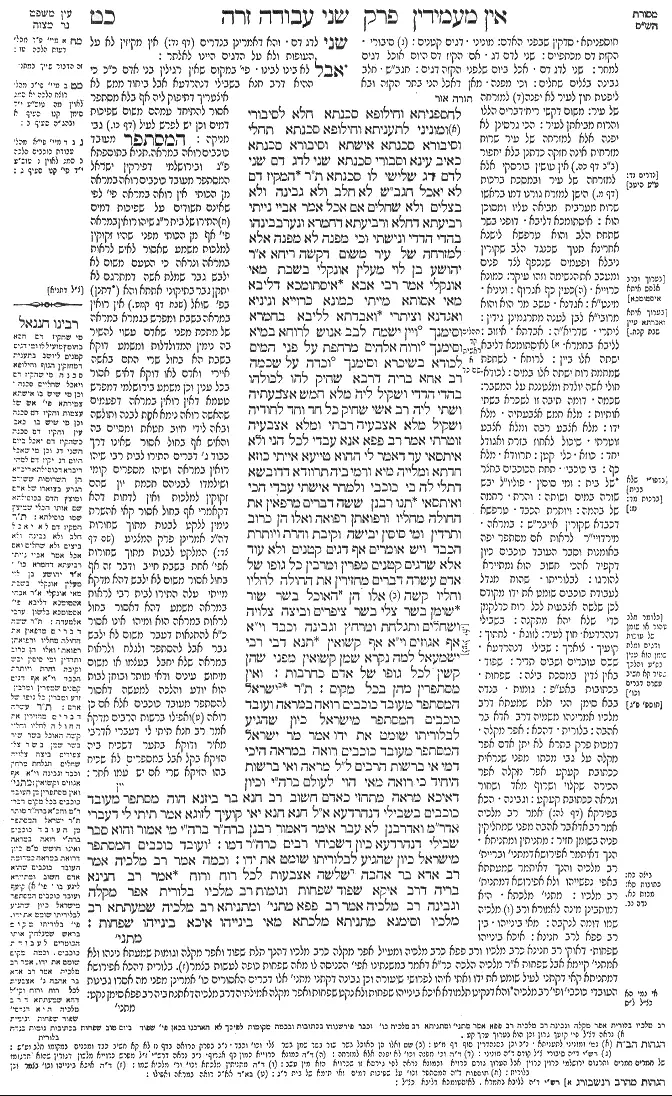
Avodah Zarah 29a - Guemara
לחספניתא וחילופא סכנתא חלא לסיבורי ומוניני לתעניתא וחילופא סכנתא תחלי וסיבורא סכנתא אישתא וסיבורא סכנתא כאיב עינא וסבורי סכנתא שני לדג דם שני לדם דג שלישי לו סכנתא ת"ר המקיז דם לא יאכל חגב"ש לא חלב ולא גבינה ולא בצלים ולא שחלים אם אכל אמר אביי נייתי רביעתא דחלא ורביעתא דחמרא ונערבבינהו בהדי הדדי ונישתי וכי מפנה לא מפנה אלא למזרחה של עיר משום דקשה ריחא א"ר יהושע בן לוי מעלין אונקלי בשבת מאי אונקלי אמר רבי אבא איסתומכא דליבא מאי אסותא מייתי כמונא כרוייא וניניא ואגדנא וציתרי ואבדתא לליבא בחמרא וסימנך (תהלים קד, טו) ויין ישמח לבב אנוש לרוחא במיא וסימנך (בראשית א, ב) ורוח אלהים מרחפת על פני המים לכודא בשיכרא וסימנך (בראשית כד, טו) וכדה על שכמה רב אחא בריה דרבא שחיק להו לכולהו בהדי הדדי ושקיל ליה מלא חמש אצבעתיה ושתי ליה רב אשי שחיק כל חד וחד לחודיה ושקיל מלא אצבעיה רבתי ומלא אצבעיה זוטרתי אמר רב פפא אנא עבדי לכל הני ולא איתסאי עד דאמר לי ההוא טייעא אייתי כוזא חדתא ומלייה מיא ורמי ביה תרוודא דדובשא דתלי לה בי כוכבי ולמחר אישתי עבדי הכי ואיתסאי תנו רבנן ששה דברים מרפאין את החולה מחליו ורפואתן רפואה ואלו הן כרוב ותרדין ומי סיסין יבישה וקיבת והרת ויותרת הכבד ויש אומרים אף דגים קטנים ולא עוד אלא שדגים קטנים מפרין ומרבין כל גופו של אדם עשרה דברים מחזירין את החולה לחליו וחליו קשה אלו הן האוכל בשר שור שומן בשר צלי בשר ציפרים וביצה צלויה ושחלים ותגלחת ומרחץ וגבינה וכבד וי"א אף אגוזים וי"א אף קשואין תנא דבי רבי ישמעאל למה נקרא שמן קשואין מפני שהן קשין לכל גופו של אדם כחרבות:
ואין מסתפרין מהן בכל מקום:
ת"ר ישראל המסתפר מעובד כוכבים רואה במראה ועובד כוכבים המסתפר מישראל כיון שהגיע לבלוריתו שומט את ידו אמר מר ישראל המסתפר מעובד כוכבים רואה במראה היכי דמי אי ברשות הרבים ל"ל מראה ואי ברשות היחיד כי רואה מאי הוי לעולם ברה"י וכיון דאיכא מראה מתחזי כאדם חשוב רב חנא בר ביזנא הוה מסתפר מעובד כוכבים בשבילי דנהרדעא א"ל חנא חנא יאי קועיך לזוגא אמר תיתי לי דעברי אדר"מ ואדרבנן לא עבר אימר דאמור רבנן ברה"ר ברה"י מי אמור והוא סבר שבילי דנהרדעא כיון דשכיחי רבים כרה"ר דמו:
ועובד כוכבים המסתפר מישראל כיון שהגיע לבלוריתו שומט את ידו:
וכמה אמר רב מלכיה אמר רב אדא בר אהבה שלשה אצבעות לכל רוח ורוח אמר רב חנינא בריה דרב איקא שפוד שפחות וגומות רב מלכיו בלורית אפר מקלה וגבינה רב מלכיה אמר רב פפא מתני' ומתניתא רב מלכיה שמעתתא רב מלכיו וסימנא מתניתא מלכתא מאי בינייהו איכא בינייהו שפחות:
Comments from Rashi on Masechet Avodah Zarah Page 29a
חוספניתא . סדקין שבפני האדם: מוניני . דגים קטנים: סיבורי . הקזת דם מכתפיים: שני לדם דג . אם הקיז דם היום אוכל דגים למחר: שני לדג דם . אכל ביום שלפני הקזה דגים: חגב"ש . חלב גבינה בצלים שחלים: וכי מפנה . מאן דאכל הני בתר הקזה ובא ליפנות חוץ לעיר לא יפנה למזרחה של עיר: משום דקשי ריח . דברים הללו והרוח מביאתן לעיר: הכי גרסינן לא יפנה אלא למזרחה של עיר . שרוח מזרחית אינה חזקה כדתנן בלא יחפור (ב"ב דף כה.) אין עושין בורסקי אלא למזרחה של עיר ובמסכת ברכות (דף מ.) הישן למזרח גורנו דמו בראשו שרוח מערבית מביאה עליו ומסוכן הוא: איסתומכא דליבא . דופני בשר שתחת הלב והוא טרפשא. לישנא אחרינא תנוך שכנגד הלב שקורין ניבל"א ופעמים שנכפף לצד פנים ומעכב את הנשימה וזהו עיקר: כמונא כרוייא . כעין כף אגרוף: וניניא . מינט"א: אגדנא . עשב מר הוא והוא מרובי"א לבן. לענה מתרגמינן גידין: ציתרי . שדריא"ה: אבדתא . איזוב: לליבא בחמרא . לאיסתומכא דליבא ישתה אלו ביין: לרוחא . לשחפת שמחמת רוח ישתה אלו במים: לכודא . חולי אשה יולדת ומצטננת על המשבר: שכמה . דומה תיבה זו לשכרא בשתי אותיות: מלא חמש אצבעתיה . מלא ידו: מלא אצבע רבה ומלא אצבע זוטרתי . שיכול לאחוז בזרת ואגודל יחד: כוזא . כלי קטן: תרוודא . מלא כף: בי כוכבי . תחת הכוכבים בחצר של בית: ומי סיסין . פוליו"ל יבש שורה במים ושותה: והרת . רחמה של בהמה: ויותרת הכבד . טרפשא דכבדא שקורין אייבר"ש: במראה . מירדויי"ר לראות אם מסתפר יפה באומנות וסבר העובד כוכבים כיון דקפיד אהכי חשוב הוא ומתיירא להורגו: לבלוריתו . שהוא מגדל לעבודת כוכבים שומט את ידו מקודם לכן שלשה אצבעות לכל רוח כדלקמן כדי שלא יהא מתקנה: בשבילי דנהרדעא . חוץ לעיר: לזוגא . לחתוך: קועיך . צוארך: שבילי דנהרדעא . ששם עוברים ושבים תדיר: שפוד . באין צדין במסכת ביצה: שפחות . בכתובות באע"פ: גומות . בנדה בבא סימן הני תלת שמעתא דרב מלכיו אמרינהו משמיה דרב אדא בר אהבה: בלורית . דהכא: אפר מקלה . דמכות פרק בתרא לא יתן אדם אפר מקלה על גבי מכתו מפני שנראית ככתובת קעקע. אפר מקלה אפר הכירה שקלוי ושרוף מאד ושחור ונראה ככתובת קעקע: וגבינה . הכא בפירקא (דף לה:) אמר רב מלכיה אמר רב אדא בר אהבה מפני שמחליקין פניה בשומן חזיר: מתניתין ומתניתא . הנך דאיתמר אפירושא דמתני' ובריית' רב מלכיה והנך דאיתמר שמעתתא באפי נפשייהו ולא אפירושא דמתנית' רב מלכיו: מתני' מלכתא . היא דמותבינן מינה לאמורא ורב מלכיה שמו דומה לנקבה: מאי בינייהו . בין רב פפא לרב חנינא: איכא בינייהו שפחות . דאוקי רב חנינא כרב מלכיו ורב פפא כרב מלכיה ומעייל אפר מקלה כרב מלכיו דהנך תלת שפוד ואפר מקלה וגומות שמעתא נינהו ולא אמתני' קיימא אבל שפחות א"ר מלכיה הלכה כר"א דאמר במשנתינו אפי' הכניסה לו מאה שפחות כופה לעשות בצמר בלורית דהכא אפירושא דמתניתא קאי דקתני לעיל שומט את ידו ואתי איהו לפרושי שיעורה וכן גבינה דקתני מתני' אלו דברים האסורים כו' אמרינן מפני מה אסרו גבינות העובדי כוכבי' ופי' רב מלכיה. והא דנקיט תלמודא איכא בינייהו שפחות ולא נקט שפחות ואפר מקלה אמילתיה דרב מלכיה דאתנח ביה רב פפא סימן נקט:
Comments from Tosafot - Avodah Zarah 29a
שני לדג דם . והא דאמרינן בנדרים (דף נד:) אין מקיזין לא על העופות ולא על הדגים היינו לאלתר: אבל לא בינו לבינו . פי' במקום שאין רגילין בני אדם כ"כ כי ההיא דרב חנא בשבילי דנהרדעא אבל ביחוד ממש לא איצטריך דתיפוק ליה אף בלא מסתפר אסור להתיחד עמהם משום שפיכות דמים וכן יש לפרש לעיל (עבודה זרה דף כו.) גבי מניקה: המסתפר מעובד כוכבים רואה במראה . תניא בתוספתא פ"ג ובירושלמי דפירקין ישראל המסתפר מעובד כוכבים רואה במראה מן הכותי אין רואה במראה פי' לפי שאינם חשודים על שפיכות דמים התירו של בית ר"ג שיהו רואין במראה פי' אף מן הכותי מפני שהיו זקוקין למלכות משמע שאסור לאיש לראות במראה ונראה כי הטעם משום לא ילבש גבר שמלת אשה דמתרגם לא יתקן גבר בתיקוני אתתא והא (דתנן) בפ' שואל (שבת דף קמט.) אין רואין במראה בשבת ומפרש בגמרא במראה של מתכת מפני שאדם עשוי להשיר בה נימין המדולדלות ומשמע דוקא בשבת הא בחול שרי התם באשה איירי ואדם לאו דוקא דאיש אסור בכל ענין וכן משמע בירושלמי דמפרש טעמא דאין רואין במראה דפעמים שהאשה רואה נימא אחת לבנה ותולשה ובאה לידי חיוב חטאת ומסיים בה והאיש אף בחול אסור שאינו דרך כבוד ג' דברים התירו לבית רבי שיהו רואין במראה ושיהו מספרים קומי ושילמדו לבניהם חכמת יון שהם זקוקין למלכות ואין לדחות דהא דקאמרי אף בחול אסור קאי אהשרת נימין ללקט לבנות מתוך שחורות דה"נ אמרינן פרק המצניע (שם דף צד:) המלקט לבנות מתוך שחורות אפי' אחת בשבת חייב ודבר זה אף בחול אסור משום לא ילבש דהא מדקא מייתי עלה התירו לבית רבי לראות במראה משמע דהא דאסור בחול לראות במראה הוא ומיהו אינו אסור כ"א להתנאות דעבר משום לא ילבש גבר אבל להסתפר ולגלח ולראות במראה שלא יחבל בעצמו או משום מיחוש עינים ודאי מותר ובוחן לבות הוא יודע והלכה למעשה דאסור להסתפר מעובד כוכבים אלא אם כן רואה ואפילו ברשות הרבים מדקא אמר רב חנא תיתי לי דעברי אדרבי מאיר ודוקא בתער דשכיח ביה הזיקא בקל אבל במספרים לא שכיח בהו הזיקא שרי אם יש עמו אחר:
Avodah Zarah 29a - Mishnah translated into english
for facial wounds, but the reverse presents a danger.
Vinegar is good for one to consume after bloodletting, and eating small fish is good for one who has completed a fast, but the reverse is a danger. Eating cress and then undergoing bloodletting poses a danger. With regard to one who suffers from a fever and undergoes bloodletting, this poses a danger to his life. Similarly, one who suffers from pain of the eye and undergoes bloodletting endangers to his life. On the second day after eating fish one may let blood, and on the second day after letting blood one may eat fish. With regard to eating fish on the third day after letting blood, or letting blood on the third day after eating fish, both of these actions pose a danger.
§ The Gemara presents a series of health-related statements. The Sages taught: One who lets blood may not eat the following foods, corresponding to the acronym ḥet, gimmel, beit, shin. That is, he may consume neither milk [ḥalav], nor cheese [gevina], nor onions [betzalim], nor cress [sheḥalim]. If he ate one of these, Abaye said: He should bring a quarter-log of vinegar and a quarter-log of wine and mix them together and drink the mixture. And when he defecates, he should defecate only toward the east of the city, because the odor of the excrement after that treatment is offensive. Since the wind does not usually blow from the east, it is less likely to spread the stench.
Rabbi Yehoshua ben Levi says: One may lift the unkali on Shabbat. The Gemara asks: What is the unkali? Rabbi Abba said: It is the edge of the ribs [istumkha] near the heart which sometimes bend inward, in which case they must be lifted and straightened into their proper position. The Gemara asks: What is the cure for one whose unkali has been bent? He should take cumin, caraway, mint [ninya], wormwood, satureja, and hyssop.
This remedy is beneficial for several ailments, and the Gemara presents each of these in turn: For curing the heart, the above combination should be taken with wine, and your mnemonic for this is the verse: “And wine that makes glad the heart of man” (Psalms 104:15). For curing an ailment that arises due to the wind [ruḥa], one drinks the mixture in water, and your mnemonic for this is the verse: “And the spirit [ruaḥ] of God hovered over the face of the waters” (Genesis 1:2). For childbirth [lekhuda], a woman in labor drinks the mixture with beer [shikhra], and your mnemonic for this is the verse: “With her pitcher [vekhadah] upon her shoulder [shikhmah]” (Genesis 24:15).
Rav Aḥa, son of Rava, ground all of these together and took a handful of the mixture and drank it. Rav Ashi ground each and every one of the herbs separately and he took all that he could hold between his large finger and his small finger and drank it. Rav Pappa said: I tried all these remedies and I was not healed until a certain Arab said to me: Bring a new jug and fill it with water and place in it a ladle [tarvada] of honey that is suspended among the stars, i.e., add the ladle at night, and drink it on the next day. Rav Pappa concludes: I did this and I was healed.
The Sages taught: Six items heal a sick person from his illness and their cure is a permanent cure, and these are: Cabbage, beets, water in which dried chamomile was soaked, and the stomach contents of an animal, and the womb of an animal, and the lobe of the liver. And some say: Small fish are also included in this list. And moreover, eating small fish causes a person’s entire body to flourish and to grow.
Ten items return a sick person to his illness, and his illness becomes even more severe than it originally was, and they are: One who eats ox meat, fat, roasted meat, bird meat, and a roasted egg, and cress; and the act of shaving, and bathing, and the consumption of cheese, and liver. And some say: Nuts are also included in this list. And some say: Cucumbers are also included in this list. The school of Rabbi Yishmael taught: Why are they called cucumbers [kishu’in]? Because they are as harmful [kashin] to a person’s entire body as swords.
§ The mishna teaches: And one may not have his hair cut by gentiles anywhere. The Sages taught in a baraita: A Jew who has his hair cut by a gentile should observe the gentile’s actions in a mirror while he cuts his hair. And in the case of a gentile who has his hair cut by a Jew, when the Jew reaches the gentile’s forelock he removes his hand and does not cut it, because it is associated with idol worship.
The Master said: A Jew who has his hair cut by a gentile should observe the gentile’s actions in a mirror. The Gemara asks: What are the circumstances of this case? If it is referring to a haircut performed in a public domain, why do I need a mirror? After all, the gentile will not harm a Jew in public. And if it occurs in a private domain, even if the Jews observes the gentile’s actions, what of it? How does the fact that the Jew is watching prevent the gentile barber from harming him? The Gemara explains: Actually, this is referring to a haircut in a private domain, but since there is a mirror in place, the Jew appears as an important person whom the gentile will hesitate to attack.
The Gemara relates a relevant incident: Rav Ḥana bar Bizna was having his hair cut by a gentile in one of the side streets of Neharde’a. The barber said to him: Ḥana, Ḥana; Your throat is appealing to the razor. Rav Ḥana bar Bizna said: I have this coming to me, as I violated the ruling of Rabbi Meir, who stated that one may not have his hair cut by a gentile in any location.
The Gemara asks: And didn’t Rav Ḥana bar Bizna violate the ruling of the Rabbis as well? Say that when the Rabbis stated that it is permitted to have one’s hair cut by a gentile, they were referring to a haircut performed in a public domain; but with regard to a haircut performed in a private domain, did they say that it is permitted? Since the side streets of Neharde’a cannot be considered a public domain, evidently Rav Ḥana bar Bizna violated the ruling of the Rabbis. The Gemara explains: And Rav Ḥana bar Bizna maintains: With regard to the side streets of Neharde’a, since many people are present there, they are similar to a public domain, and it would therefore be permitted to have one’s hair cut there according to the opinion of the Rabbis.
The baraita stated: And in the case of a gentile who has his hair cut by a Jew, when the Jew reaches the gentile’s forelock, he removes his hand and does not cut it, because it is associated with idol worship. The Gemara asks: And how much space should the Jew leave around the forelock? Rav Malkiyya says that Rav Adda bar Ahava says: Three fingerbreadths in each and every direction.
In addition to Rav Malkiyya, whose ruling was just cited, there was another amora known as Rav Malkiyyu. In order to avoid confusing the two, the Gemara records their respective rulings. Rav Ḥanina, son of Rav Ika, says: The statements concerning a skewer, maidservants, and follicles were issued by Rav Malkiyyu; the rulings concerning a forelock, burnt ashes, and cheese were stated by Rav Malkiyya.
Rav Pappa said a different opinion: Statements from the Mishna and baraita were issued by Rav Malkiyya, whereas rulings of halakha that are not related to a mishna or baraita were taught by Rav Malkiyyu. And the mnemonic to remember this is: The Mishna is a queen [malketa], i.e., the statements that are referring to a mishna were made by Rav Malkiyya, whose name is similar to the Aramaic term for queen. The Gemara asks: What is the difference between the opinions of Rav Ḥanina and Rav Pappa? The Gemara answers: There is a difference between them with regard to the halakha concerning maidservants. According to Rav Ḥanina, this halakha was stated by Rav Malkiyyu, whereas Rav Pappa holds that it was taught by Rav Malkiyya, as it is referring to a dispute in a mishna.
Traduction : The William Davidson digital edition of the Koren Noé Talmud, with commentary by Rabbi Adin Even-Israel Steinsaltz.