 Talmud Bavli
The learning on the whole site is dedicated : L'ilui Nishmat Amram ben Itshak Loubaton
The learning on the whole site is dedicated : L'ilui Nishmat Nissim ben Barukh Malka
The learning on the whole site is dedicated : L'ilui Nishmat Avraham Ben Simha
Avodah Zarah 75a : Youtube
Daf TubeYoutube
2 video classes :
Avodah Zarah Page 75a
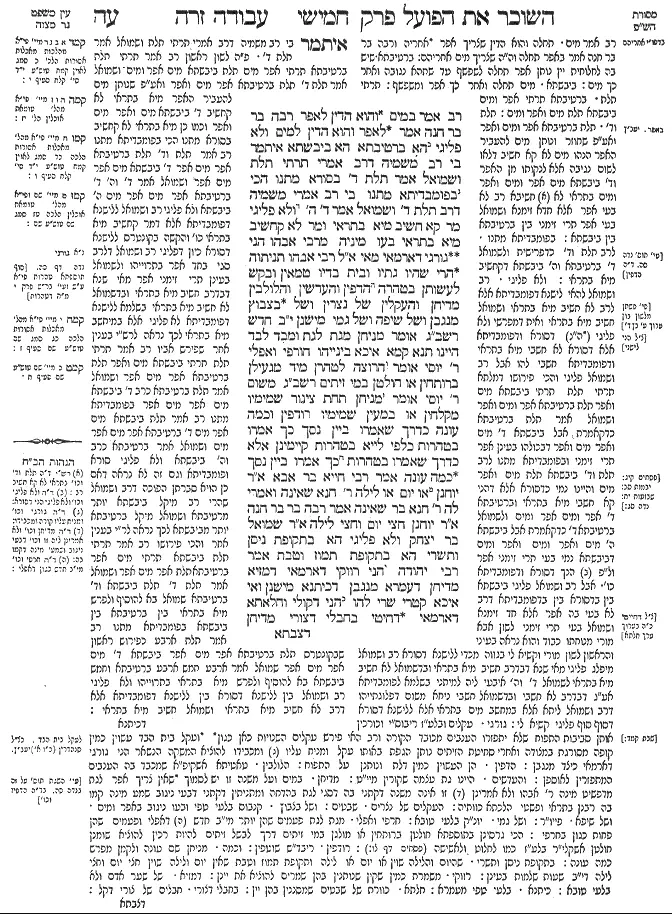
Avodah Zarah 75a - Guemara
רב אמר במים והוא הדין לאפר רבה בר בר חנה אמר לאפר והוא הדין למים ולא פליגי הא ברטיבתא הא ביבשתא איתמר בי רב משמיה דרב אמרי תרתי תלת ושמואל אמר תלת ד' בסורא מתנו הכי בפומבדיתא מתנו בי רב אמרי משמיה דרב תלת ד' ושמואל אמר ד' ה' ולא פליגי מר קא חשיב מיא בתראי ומר לא קחשיב מיא בתראי בעו מיניה מרבי אבהו הני גורגי דארמאי מאי א"ל רבי אבהו תניתוה הרי שהיו גתיו ובית בדיו טמאין ובקש לעשותן בטהרה הדפין והעדשין והלולבין מדיחן והעקלין של נצרין ושל בצבוץ מנגבן ושל שיפה ושל גמי מישנן י"ב חדש רשב"ג אומר מניחן מגת לגת ומבד לבד היינו תנא קמא איכא בינייהו חורפי ואפלי ר' יוסי אומר הרוצה לטהרן מיד מגעילן ברותחין או חולטן במי זיתים רשב"ג משום ר' יוסי אומר מניחן תחת צינור שמימיו מקלחין או במעין שמימיו רודפין וכמה עונה כדרך שאמרו ביין נסך כך אמרו בטהרות כלפי לייא בטהרות קיימינן אלא כדרך שאמרו בטהרות כך אמרו ביין נסך כמה עונה אמר רבי חייא בר אבא א"ר יוחנן או יום או לילה ר' חנא שאינה ואמרי לה ר' חנא בר שאינה אמר רבה בר בר חנה א"ר יוחנן חצי יום וחצי לילה א"ר שמואל בר יצחק ולא פליגי הא בתקופת ניסן ותשרי הא בתקופת תמוז וטבת אמר רבי יהודה הני רווקי דארמאי דמזיא מדיחן דעמרא מנגבן דכיתנא מישנן ואי איכא קטרי שרי להו הני דקולי וחלאתא דארמאי דחיטי בחבלי דצורי מדיחן
Comments from Rashi on Masechet Avodah Zarah Page 75a
רב אמר מים . תחלה והוא הדין שצריך אפר אחריה ורבה בר בר חנה אמר באפר תחלה וה"ה שצריך מים אחריהם: ברטיבתא . שיש בה לחלוחית יין נותן אפר תחלה לשפשף עד שתהא נגובה ואחר כך מים: ביבשתא . מים תחלה ואחר כך אפר ומשפשף: תרתי תלת . ברטיבתא תרתי אפר ומים ביבשתא תלת מים ואפר ומים: תלת וד' . תלת ברטיבתא אפר ומים ואפר ואע"פ שחוזר ונותן מים להעביר האפר הנהו מים לא קא חשיב דלאו לשום נגיבה אלא לנקותו מן האפר וד' ביבשתא מים אפר ומים ואפר ומים בתראי לא חשיבא. רב לא בעי אפר אלא חדא זימנא ושמואל בעי אפר תרי זימני בין ברטיבתא בין ביבשתא: בפומבדיתא מתנו . לרב תלת וד' כדפרישית ולשמואל ד' ברטיבתא וה' ביבשתא דקחשיב מיא בתראי: ולא פליגי . רב ושמואל להאי לישנא דפומבדיתא אלא לרב לא חשיב מיא בתראי ושמואל חשיב מיא בתראי ואית דמפרשי ולא פליגי ה"נ דסורא ודפומבדיתא אלא דסורא לא חשבי מיא בתראי. ודפומבדיתא חשבי להו אבל רב ושמואל פליגי והכי פירושו דמלתא תרתי תלת תרתי ביבשתא מים ואפר תלת ברטיבתא אפר ומים ואפר ושמואל אמר תלת ברטיבתא כדקאמרת אבל ביבשתא ד' מים ואפר מים ואפר דבכולהו בעינן אפר תרי זימני ובפומבדיתא מתנו לרב תלת וד' ביבשתא תלת מים ואפר מים והיינו נמי כדסורא אלא דהני קא חשבי מיא בתראי וברטיבתא ד' אפר ומים אפר ומים ולשמואל ברטיבתא ד' כדקאמרת אבל ביבשתא ה' מים ואפר ומים ואפר ומים דביבשתא נמי בעי תרי זימני אפר ול"פ הנך דסורא ודפומבדיתא כו' אבל רב ושמואל פליגי ביבשתא בין בדסורא בין בדפומבדיתא דרב לא בעי בה אפר אלא חד זימנא ושמואל בעי תרי זימני לשון אבא מורי מנוחתו כבוד והוא נראה בעיני. והראשון לשון מורי וקשיא לי בגווה מכדי ללישנא דסורא רב ושמואל מיפלג פליגי מאי שנא דבדרב חשיב מיא בתראי ובדשמואל לא חשיב מיא בתראי לשמואל ד' וה' איבעי ליה למיתני בשלמא לפומבדיתא אע"ג דבדרב לא חשבי ובדשמואל חשבי ניחא משום דפלוגתייהו דרב ושמואל ליתא אלא במחשב מים בתראי אלא ללישנא דסורא דסוף סוף פליגי קשיא לי: גורגי . עקלים ובלע"ז ריבוט"י וכורכין אותן סביבות התפוח שלא יתפזרו הענבים מכובד הקורה. ורב האי פירש עקלים השנויות כאן כגון ועקל בית הבד עשוין כמין קופה מסורגת במצודה ואחרי סחיטת הזיתים נותן הגפת באותו עקל ומניח עליו ומכבידו להוציא המשקה הנשאר. הני גורגי דארמאי כיצד מנגבן: הדפין . הן העשוין כמין דלת ונותנן על התפוח: הלולבין . טאטיתא אשקופ"א שמכבד בה הענבים המתפזרין לאוספן: והעדשים . היינו גת עצמה שקורין מיי"ט: מדיחן . במים. ועל משנה זו יש לסמוך שאין צריך אפר לגת מדפשיט מינה ר' אבהו ולא אמרינן זו אינה משנה דקתני בה דסגי לגת בהדחה ומתניתין דקתני דבעי ניגוב שמע מינה קמו בה רבנן בתראי ופשטי הלכתא כוותיה: העקלים של נצרים . שבטים: ושל בצבוץ . קנבוס בלעי טפי ובעו ניגוב באפר ומים: ושל שיפא . פייו"ר: ושל גמי . יונ"ק בלעי טובא: חרפי ואפלי . מגת לגת פעמים שהן יותר מי"ב חדש דאפלי ופעמים שהן פחות כגון בחרפי: הכי גרסינן בתוספתא חולטן ברותחין או מולגן במי זיתים . דרך לבשל זיתים להיות רכין להוציא שומנן. חולטין אשקלי"ר בלע"ז כמו לחלוט ולאשישה (פסחים דף לו:): רודפין . ריבד"ש שוטפין: וכמה . מניחן שם עונה ולקמן מפרש כמה עונה: בתקופת ניסן ותשרי . שהיום והלילה שוין או יום או לילה ותקופת תמוז וטבת שאין יום ולילה שוין חצי יום וחצי לילה די"ב שעות שלמות בעינן: רווקי . משמרת כמין שקין שנותנין בהן שמרים להוציא את יינן: דמזיא . של שער אדם ולא בלעי טובא: כיתנא . בלעי טפי מעמרא: חלתא . כוורת של שבטים שמסננין בהן יין: בחבלי דצורי . חבלים של צורי דקל:
Comments from Tosafot - Avodah Zarah 75a
איתמר בי רב משמיה דרב אמרי תרתי תלת ושמואל אמר תלת ד' . פ"ה לשון ראשון רב אמר תרתי תלת ברטיבתא תרתי אפר מים תלת ביבשתא מים אפר ומים ושמואל אמר תלת ד' תלת ברטיבתא אפר מים ואפר ואע"פ שנותן מים להעביר האפר מיא בתראי לא קחשיב ד' ביבשתא מים ואפר מים ואפר וכמו כן מיא בתראי לא קחשיב בסורא מתנו הכי בפומבדיתא מתנו רב אמר תלת וד' תלת ברטיבתא אפר מים אפר ד' ביבשתא מים אפר מים אפר ושמואל אמר ד' וה' ד' ברטיבתא אפר מים אפר מים ה' ביבשתא ולא פליגי רב ושמואל ללישנא דפומבדיתא אלא דמר קחשיב מיא בתראי כו' והקשה בקונטרס ללישנא דסורא כיון דפליגי רב ושמואל דלרב סגי בחד אפר בתרוייהו ולשמואל בעינן תרי זימני אפר מאי שנא דבדרב חשיב מיא בתראי ובדשמואל לא חשיב מיא בתראי בשלמא ללישנא דפומבדיתא לא פליגי אלא במיחשב מיא בתראי לכך נראה לרש"י בענין אחר שפירש אביו רב אמר תרתי תלת תרתי ביבשתא מים ואפר תלת ברטיבתא אפר מים אפר ושמואל אמר תלת ברטיבתא כרב ד' ביבשתא מים אפר מים אפר בפומבדיתא מתנו רב אמר תלת ביבשתא מים אפר מים ד' ברטיבתא אפר מים אפר מים ושמואל אמר ברטיבתא כרב וה' ביבשתא ולא פליגי סורא ופומבדיתא וגם זה לא נראה דאם כן הויא סברתן הפוכה דרב ושמואל שהרי רב מיקל ביבשתא יותר מרטיבתא ושמואל מיקל ברטיבתא יותר מביבשתא לכך נראה לר"י בענין אחר והכי פירושו רב אמר תרתי תלת ביבשתא תרתי מים אפר ברטיבתא תלת אפר מים אפר ושמואל אמר תלת ד' תלת ביבשתא וד' ברטיבתא שמואל בא להוסיף ולפרש מיא בתראי בין ברטיבתא בין ביבשתא בפומבדיתא מתנו רב אמר תלת ארבע כפירוש ראשון שבקונטרס תלת ברטיבתא אפר מים אפר ביבשתא ד' מים אפר מים אפר שמואל אמר ארבע חמש ארבע ברטיבתא וחמש ביבשתא בא להוסיף ולפרש מיא בתראי בתרוייהו ולא פליגי רב ושמואל בין ללישנא דסורא בין ללישנא דפומבדיתא אלא דרב לא חשיב מיא בתראי ושמואל חשיב מיא בתראי:
Avodah Zarah 75a - Mishnah translated into english
Rav says: One must cleanse it with water first, and the same must be done with ashes subsequently, and Rabba bar bar Ḥana says: One must cleanse it with ashes first, and the same must be done with water subsequently. The Gemara comments: And they do not disagree. This statement, that it must be cleansed first with ashes and subsequently with water, was stated with regard to a damp winepress. That statement, that first it must be moistened with water and then cleansed with ashes, was stated with regard to a dry winepress.
A dispute was stated with regard to this matter: The Sages of the school of Rav say in the name of Rav that the cleansing process consists of two stages for a damp winepress, namely, ashes and water, and three stages for a dry winepress, namely, water, ashes, and water. And Shmuel says that it consists of three stages for a damp winepress, namely, ashes, water, and ashes, and four stages for a dry winepress, namely, water, ashes, water, and ashes.
In Sura they taught the dispute in this preceding manner, but in Pumbedita they taught it in the following manner: The Sages of the school of Rav said in the name of Rav that the cleansing process consists of three stages for a damp winepress, namely, ashes, water, and ashes, and four stages for a dry winepress, namely, water, ashes, water, and ashes. And Shmuel says that it consists of four stages for a damp winepress, namely, ashes, water, ashes, and water, and five stages for a dry winepress, namely, water, ashes, water, ashes, and water.
The Gemara comments with regard to the latter version of the dispute: And they do not actually disagree. One Sage, Shmuel, counts the last rinsing with water, which is only in order to remove the ashes, and the other Sage, Rav, does not count the last rinsing with water. Therefore Rav counts three and four stages, whereas Shmuel counts four and five.
§ The students asked Rabbi Abbahu with regard to a similar issue of cleansing a utensil from wine of gentiles: With regard to those wicker nets [gorgei] used to hold the grapes during the treading, which belong to gentiles, what is the way to cleanse them?
Rabbi Abbahu said to them: You learned this in a baraita: In the case of one whose winepresses or olive presses were impure, and he wished to prepare his grapes and olives in a state of purity, he must first cleanse the presses from the impure produce for which they were used. He must rinse the planks used as a frame in the winepress, and the troughs, and the twigs used as brooms in the winepress; and he must cleanse the pressing baskets with ashes and water if they were made of palm leaves or of hemp [bitzbutz], or leave them dormant twelve months if they were made of bulrush or of reeds, because these absorb more of the wine. Rabban Shimon ben Gamliel says: He may leave them dormant from one wine-pressing season to the next wine-pressing season, or from one olive-pressing season to the next olive-pressing season.
The Gemara interjects: Isn’t this opinion of Rabban Shimon ben Gamliel the same as that of the first tanna, as twelve months pass from one wine-pressing season to the next? The Gemara responds: The difference between them is with regard to early-ripening grapes and late-ripening grapes. Rabban Shimon ben Gamliel does not require a precise measure of twelve months, as the lapse between ripening seasons may be greater or less.
The baraita continues: Rabbi Yosei says: One who wishes to purify the winepress or olive press immediately without waiting a year can purge them by pouring boiling water over them, or scald them in water used for cooking olives. Rabban Shimon ben Gamliel says in the name of Rabbi Yosei: He can place them under a pipe whose water flows constantly or in a spring with rapid waters. And for how long should he leave them there? He should leave them for an interval of time, as the Gemara will explain.
The baraita adds: In the same way that the Sages stated these cleansing instructions with regard to a winepress used for libation wine, so they stated these instructions with regard to matters of purity.
The Gemara asks with regard to this last clause: Isn’t it the opposite? We are dealing in this baraita with matters of purity, not with the matter of wine used for a libation. Rather, the baraita should be emended: In the same way that the Sages stated this with regard to matters of purity, so they stated this with regard to libation wine.
The Gemara asks: How long is an interval of time? Rabbi Ḥiyya bar Abba says that Rabbi Yoḥanan says: It is either an entire day or an entire night. Rabbi Ḥana Sha’ina, and some say Rabbi Ḥana bar Sha’ina, says that Rabba bar bar Ḥana says that Rabbi Yoḥanan says: It is half a day and half a night.
Rabbi Shmuel bar Yitzḥak says: And they do not disagree. This statement, that it is either a day or a night, is referring to the season of Nisan or Tishrei, i.e., the fall or spring, when the day and the night are of equal length, and that statement, that it is half a day and half a night, is referring to the season of Tammuz or Tevet, i.e., the summer or winter, when they are not equal, and so twelve hours are measured by half the day and half the night.
§ Rav Yehuda says: In order to cleanse those gentiles’ straining bags [ravukei], which are used for straining yeast from wine, with regard to those made of hair, which is not absorbent, one may rinse them. With regard to those made of wool, one must cleanse them with ashes and water. With regard to those made of flax, which is more absorbent, one must leave them dormant. And if there are knots, one must undo them. In order to cleanse those gentiles’ baskets and strainers, with regard to those that are plaited from palm strips, one may rinse them.
Traduction : The William Davidson digital edition of the Koren Noé Talmud, with commentary by Rabbi Adin Even-Israel Steinsaltz.