 Talmud Bavli
The learning on the whole site is dedicated : L'ilui Nishmat Jacques Isaac Ben Amram Loubaton
The learning on the whole site is dedicated : L'ilui Nishmat Avraham Ben Simha
The learning on the whole site is dedicated : L'ilui Nishmat Rav Chlomo Ben Jamilla
Avodah Zarah 47a : Youtube
Daf TubeYoutube
2 video classes :
Avodah Zarah Page 47a
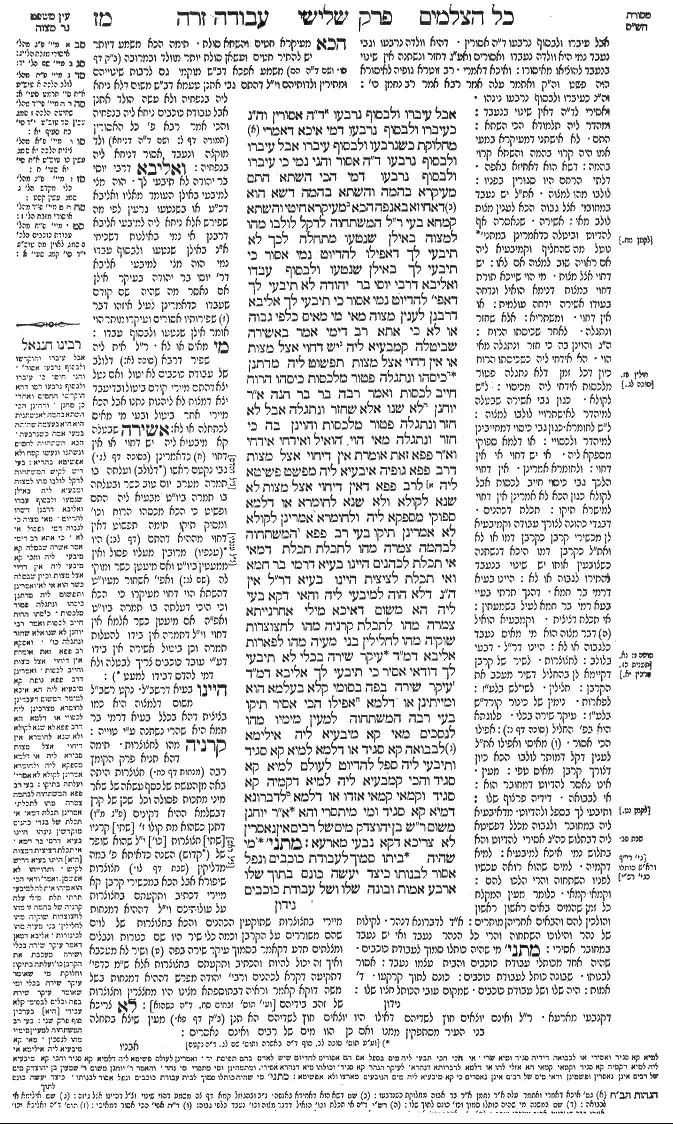
Avodah Zarah 47a - Guemara
אבל עיברו ולבסוף נרבעו ד"ה אסורין וה"נ כעיברו ולבסוף נרבעו דמי איכא דאמרי מחלוקת כשנרבעו ולבסוף עיברו אבל עיברו ולבסוף נרבעו ד"ה אסור והני נמי כי עיברו ולבסוף נרבעו דמי הכי השתא התם מעיקרא בהמה והשתא בהמה דשא הוא דאחיזא באנפה הכא מעיקרא חיטי והשתא קמחא בעי ר"ל המשתחוה לדקל לולבו מהו למצוה באילן שנטעו מתחלה לכך לא תיבעי לך דאפילו להדיוט נמי אסור כי תיבעי לך באילן שנטעו ולבסוף עבדו ואליבא דרבי יוסי בר יהודה לא תיבעי לך דאפי' להדיוט נמי אסור כי תיבעי לך אליבא דרבנן לענין מצוה מאי מי מאיס כלפי גבוה או לא כי אתא רב דימי אמר באשירה שביטלה קמבעיא ליה יש דחוי אצל מצות או אין דחוי אצל מצות תפשוט ליה מדתנן כיסהו ונתגלה פטור מלכסות כיסהו הרוח חייב לכסות ואמר רבה בר בר חנה א"ר יוחנן לא שנו אלא שחזר ונתגלה אבל לא חזר ונתגלה פטור מלכסות והוינן בה כי חזר ונתגלה מאי הוי הואיל ואידחי אידחי וא"ר פפא זאת אומרת אין דיחוי אצל מצות דרב פפא גופיה איבעיא ליה מפשט פשיטא ליה לרב פפא דאין דיחוי אצל מצות לא שנא לקולא ולא שנא לחומרא או דלמא ספוקי מספקא ליה ולחומרא אמרינן לקולא לא אמרינן תיקו בעי רב פפא המשתחוה לבהמה צמרה מהו לתכלת תכלת דמאי אי תכלת לכהנים היינו בעיא דרמי בר חמא ואי תכלת לציצית היינו בעיא דר"ל אין ה"נ דלא הוה למיבעי ליה והאי דקא בעי ליה הא משום דאיכא מילי אחרנייתא צמרה מהו לתכלת קרניה מהו לחצוצרות שוקיה מהו לחלילין בני מעיה מהו לפארות אליבא דמ"ד עיקר שירה בכלי לא תיבעי לך דודאי אסיר כי תיבעי לך אליבא דמ"ד עיקר שירה בפה בסומי קלא בעלמא הוא ומייתינן או דלמא אפילו הכי אסיר תיקו בעי רבה המשתחוה למעין מימיו מהו לנסכים מאי קא מיבעיא ליה אילימא לבבואה קא סגיד או דלמא למיא קא סגיד ותיבעי ליה ספל להדיוט לעולם למיא קא סגיד והכי קמבעיא ליה למיא דקמיה קא סגיד וקמאי קמאי אזדו או דלמא לדברונא דמיא קא סגיד ומי מיתסרי והא א"ר יוחנן משום ר"ש בן יהוצדק מים של רבים אין נאסרין לא צריכא דקא נבעי מארעא:
מתני׳ מי שהיה ביתו סמוך לעבודת כוכבים ונפל אסור לבנותו כיצד יעשה כונס בתוך שלו ארבע אמות ובונה שלו ושל עבודת כוכבים
Comments from Rashi on Masechet Avodah Zarah Page 47a
אבל עיברו ולבסוף נרבעו ד"ה אסורין . דהיא וולדה נרבעו. וגבי נעבד נמי היא וולדה נעבדו ואסורים ואע"ג דחזר ונשתנה אין שינוי בנעבד להוציאו מאיסורו: ואיכא דאמרי . רב זוטרא גופיה לאיסורא הוה פשט וה"ק ואתמר עלה אמר רבא אמר רב נחמן כו': וה"נ כעיברו ולבסוף נרבעו נינהו . ואסירי לד"ה דאין שינוי בנעבד:
ומהדר ליה תלמודא הכי השתא: התם . לא אישתני דמעיקרא במעי אמו היה קרוי בהמה והשתא קרוי בהמה: דשא הוא דאחיזא באפה . דלתי הרחם היו סגורין בפניו: לולבו מהו למצוה . את"ל יש נעבד במחובר אצל גבוה הכא לענין מצות לולב מאי: אשירה . שנאסרה אף להדיוט וביטלה כדאמרינן במתני' נוטל מה שהחליף וקמיבעיא ליה אם ראויה שוב למצוה אם לאו: יש דחוי אצל מצות . מי הוי שייכא תורת דחוי במצות דנימא הואיל ונדחה בעודו אשירה ידחה עולמית: או אין דחוי . ומשתריא: אלא שחזר ונתגלה . לאחר שכיסתו הרוח: ה"ג והוינן בה כי חזר ונתגלה מאי הוי . הא אידחי ליה כשכיסתו הרוח כיון דכל זמן דלא נתגלה פטור מלכסות אידחי ליה מכיסוי: ל"ש לקולא . כגון גבי אשירה שבטלה למיהדר לאישתרויי לולבו למצוה: ל"ש לחומרא . כגון גבי כיסוי דמחייבינן למיהדר ולכסויי: או דלמא ספוקי מספקא ליה . אי יש דחוי אי אין דחוי: ולחומרא אמרינן . אין דחוי הלכך גבי כיסוי חייב לכסות אבל לקולא כגון הכא לא אמרינן אין דחוי למישרא תיקו: תכלת דכהנים . דבגדי כהונה לצורך עבודה וקמיבעיא לן מכשירי קרבן כקרבן דמו או לא ואת"ל כקרבן דמו היכא דנשתנה כשצובעין אותו יש שינוי בנעבד להתירו לגבוה או לא: היינו בעיא דרמי בר חמא . דהנך תרתי בעיי בעא רמי בר חמא לעיל בשמעתין: אי תכלת דציצית . וקמבעיא הואיל דבר מצוה הוא מי מאיס נעבד כלגבוה או לא: היינו דר"ל . דבעי בלולב: לחצוצרות . לשיר של קרבן דקיימא לן בהחליל דשיר מעכב את הקרבן: חלילין . לשיל"ש בלע"ז: לפארות . נימין של כינור. קורד"ש בלע"ז: עיקר שירה בכלי . פלוגתא היא בפ' החליל (סוכה דף נ:): אפילו הכי אסור . מאיסי ואפילו את"ל לענין דקל דמותר לולבו הכא כיון דצורך קרבן מאיס טפי: מעין . אינו נאסר להדיוט דמחובר הוא: אי לבבואה . דידיה פרצוף שלו: ותיבעי לך בספל ולהדיוט . מדאיבעיא ליה במחובר ולגבוה מכלל דפשיטא ליה דבתלוש כה"ג אסירי להדיוט והא בתלוש נמי איכא למיבעיא: למיא דקמיה . למים שהוא רואה עכשיו לפניו השתחוה והרי הלכו להם: וקמאי קמאי . כלומר מעין המקלח כל זמן שהמים באים ראשון ראשון והולכין להם והבאים אחריהן מותרים: א"ד לדברונא דנהר . לקילוח של נהר והילוכו השתחוה והרי כל הנהר נעבד ואי יש נעבד במחובר אסירי: מתני' מי שהיה כותלו סמוך לעבודת כוכבים . שהיה אחד מכותלי עבודת כוכבים והבית עצמו נעבד: אסור לבנותו . שבונה כותל לעבודת כוכבים: כונס לתוך קרקעו . ד' אמות: היה שלו ושל עבודת כוכבים . שמקום עובי הכותל חציו שלו:
Comments from Tosafot - Avodah Zarah 47a
הכא מעיקרא חטים והשתא סולת . תימה הכא משמע דיותר יש להתיר חטים ועשאן סולת יותר מוולד ובמרובה (ב"ק דף סו. ושם ד"ה הם) משמע אפכא דב"ש מוקמי גם לרבות שינוייהם ומתירין ולדותיהם וי"ל דהתם גבי אתנן טעמא דב"ש משום דלא ניחא ליה בנפחיה ולא עשה הולד אתנן אבל עבודת כוכבים ניחא ליה בנפחיה והכי אמר רבא פ' כל האסורין (תמורה דף ל: ושם ד"ה דניחא) ולד מוקצה ונעבד אסור דניחא ליה בנפחיה: ואליבא דרבי יוסי בר יהודה לא תיבעי לך . הוה מצי למיבעי באילן העומד מאליו ואליבא דכ"ע או בשנטעו גרעין לפי מה שפירש אלא ניחא ליה למיבעי אליבא דרבנן אי נמי באילנות דשכיחי א"נ באילן שנטעו ולבסוף עבדו נמי הוה מצי למיבעי אליבא דר' יוסי בר יהודה בעיקר אילן אם נאסר מה שהיה שם קודם שעבדו כדאמרינן לעיל איזהו דבר שפירותיו אסורים ועיקרו מותר הוי אומר אילן שנטעו ולבסוף עבדו: מי מאיס או לא . ר"ל אית ליה שפיר דרבא (סוכה לא:) דלולב של עבודת כוכבים לא יטול ואם נטל יצא דהתם מיירי קודם ביטול ובדיעבד יצא דמצות לא ליהנות נתנו אבל הכא מיירי אחר ביטול ובעי מי מאיס לכתחלה או לא: אשירה שבטלה קא מיבעיא ליה יש דחוי או אין דחוי . כדאמרינן (בסוכה דף לג.) גבי נקטם ראשו (דלולב) ועלתה בו תמרה מערב יום טוב כשר ובעלתה בו תמרה ביו"ט מבעיא ליה התם ופשיט כי הכא מכסהו הרוח וכו' ומסיק תיקו תימה תפשוט דאין דחוי מההיא דהתם (דף לב:) היו (ענפיו) מרובין מעליו פסול ואין ממעטין ביו"ט ואם מיעטן כשר ומוקי לה (שם לג:) ואפי' אשחור מעיו"ט דהשתא הוי דחוי מעיקרו כי הכא וכי היכי דעלתה בו תמרה ביו"ט ואפ"ה אם מיעטן כשר אלמא אין דחוי וי"ל דתמרה אין בידו להעלות תמרה וכן ביטול אשירה אין בידו דע"י עובד כוכבים צריך לבטלה ולא דמי להדס דבידו למעט: היינו בעיא דרשב"ל . נקט רשב"ל משום דלמצוה היא כמו בציצית דהא בכלל בעיא דרמי בר חמא היא שהרי נשתנה ע"י טוייה: קרניה מהו לחצוצרות . תימה דהא תניא פרק הקומץ רבה (מנחות דף כח.) חצוצרות היתה באה מן העשת של כסף עשאה של שאר מיני מתכות פסולה וכל שכן של קרן דבשלמא ההיא דקינים (פ"ג מ"ו) דתנן כשהוא מת קולו ז' [שתי] קרניו [שתי] חצוצרות [כו'] י"ל שהוא שופר של (קדוש) השנה כדאיתא פ' במה מדליקין (שבת דף לו.) חצוצרות שיפורא אבל הכא במכשירי קרבן קא מיירי דכתיב ותקעתם בחצוצרות על עולותיכם וי"ל דההיא דמנחות מיירי בחצוצרות שתוקעין הכהנים והכא בחצוצרות של לוים שהם משוררים על הקרבן וכמה כלי שיר היו שם כנורות ונבלים ומצלתים תדע דקאמר בסמוך עיקר שירה בפה ושיר לא מעכבא ואיך זה יכול להיות והכתיב ותקעתם בחצוצרות אלא ש"מ כדפי' דתקיעה דקרא לכהנים ורבי' יהודה מפרש דההיא דמנחות בשל משה דוקא קאמר וראיה דבתוספתא מצינו היו מחצצרין וחצוצרות של זהב בידיהם [ועי' תוס' זבחים סח. ד"ה כשהוא]: לא צריכא דקנבעי מארעא . ר"ל ואינם יוצאים חוץ לשדיהם דאילו היו יוצאים חוץ לשדיהם הא תנן (ב"ק דף פא.) מעין שיצא בתחלה בני העיר מסתפקין ממנו ואם כן הוו מים של רבים ואינם נאסרים:
Avodah Zarah 47a - Mishnah translated into english
But if they became pregnant and later a person engaged in bestiality with them, all agree that the offspring are forbidden because the offspring were involved in the act of bestiality, albeit in their fetal state. And here too, the case of the wheat is similar to the case where they became pregnant and later a person engaged in bestiality with them, because the flour was also worshipped, albeit in the form of a stalk of wheat.
There are those who say that Mar Zutra himself quoted Rav Naḥman’s statement: The dispute is with regard to a case where it became prohibited to use the animals as offerings because a person engaged in bestiality with them and later they became pregnant. But if they became pregnant and later a person engaged in bestiality with them, all agree that the offspring are forbidden. And these stalks of wheat, as well, are similar to the case where they became pregnant and later a person engaged in bestiality with them.
The Gemara asks: How can these cases be compared? There, in the case of offspring that it is prohibited to bring as an offering, it was initially an animal, in its fetal state, and now it is still an animal. A fetus is treated as a full-fledged animal, and the opening of the womb is compared to a closed door that holds it in its place. Here, in the case of the flour, it was initially wheat and now it is flour; it is in a totally new form. Therefore, no proof can be derived from the mishna.
§ Reish Lakish raises a dilemma: In the case of one who bows to a palm tree, what is the halakha with regard to its lulav? Is it permitted to use a lulav cut from it for the mitzva or not?
The Gemara narrows down the dilemma: With regard to a tree that one initially planted for such an idolatrous purpose, do not raise the dilemma. In that case the halakha is clear, as it is prohibited to use it even for an ordinary, non-mitzva, purpose. Rather, raise the dilemma with regard to a tree that one planted and subsequently worshipped.
And do not raise the dilemma according to the opinion of Rabbi Yosei bar Yehuda, who holds that even for an ordinary purpose it is forbidden (see 45b). Rather, when should you raise the dilemma? Raise it according to the opinion of the Rabbis, who hold that such a tree does not become forbidden: What is the halakha with regard to using a lulav from such a worshipped tree for a mitzva? Is it nevertheless forbidden because it is considered repulsive to use such a lulav for the Most High, i.e., for a mitzva, or not?
When Rav Dimi came from Eretz Yisrael to Babylonia, he presented a different understanding of Reish Lakish’s dilemma. He said: Reish Lakish raises the dilemma with regard to an ashera whose status as an object of idol worship was revoked. His dilemma is as follows: Is there disqualification with regard to mitzvot or is there no disqualification with regard to mitzvot? This lulav was once unfit for the mitzva, since it was worshipped while attached to the tree. Is it permanently disqualified, i.e., can it never be rendered fit? Or is the halakha that there is no permanent disqualification with regard to mitzvot, and consequently when the tree’s status as an object of idol worship was revoked, the lulav became fit for the mitzva?
The Gemara suggests: Resolve the dilemma from that which we learned in a mishna (Ḥullin 37a): With regard to one who slaughtered an undomesticated animal or a bird and is obligated to cover the blood, if he covered the blood and it was then uncovered he is exempt from the obligation to cover it a second time. But if the wind blew dust and covered the blood and no person was involved, he is obligated to cover it. And Rabba bar bar Ḥana says that Rabbi Yoḥanan says: The mishna taught that one is obligated to cover the blood after the wind covered it only in a case where the blood was then exposed. But if it was not then exposed, he is exempt from the obligation to cover it.
And we discussed this issue and asked: When the blood was then exposed, what of it? Why is one obligated to cover it a second time? Once it was disqualified, it should remain disqualified. When the wind covered the blood, the person was exempted from covering the blood. If so, even if the blood is subsequently uncovered, he should remain exempt. Why, then, is he obligated to cover the blood in that case?
And Rav Pappa says: That is to say that there is no disqualification with regard to mitzvot. Once the cause of the exemption from the obligation is removed, one is once again obligated to fulfill the mitzva. If so, Reish Lakish’s dilemma is resolved.
The Gemara rejects this suggestion: It is with regard to Rav Pappa’s resolution itself that Reish Lakish raised the dilemma. Is it obvious to Rav Pappa, based on the discussion with regard to the blood, that there is no disqualification with regard to mitzvot; and there is no difference whether that ruling leads to leniency, as in the case of the worshipped tree whose status as an object of idol worship was revoked, thereby permitting its lulav branch to be used for a mitzva, and there is no difference whether that ruling leads to stringency, as in the case of the blood, where one is obligated to cover it anew?
Or perhaps is he uncertain, and therefore, when that ruling leads to stringency, we say that there is no disqualification with regard to mitzvot, and one must perform the mitzva. But when that ruling leads to leniency, we do not say that there is no disqualification with regard to mitzvot. The Gemara concludes: The question shall stand unresolved.
§ Rav Pappa raises a dilemma: In the case of one who bows to an animal, what is the halakha with regard to its wool? May it be used for the sky-blue wool?
The Gemara asks: The sky-blue wool in question is for which mitzva? If it is the sky-blue wool for the ritual garments worn by priests, then Rav Pappa’s dilemma is the same as the dilemma raised by Rami bar Ḥama earlier (46b) with regard to the use in the Temple of worshipped items that have since changed in form. And if the sky-blue wool in question is for the mitzva of ritual fringes, this is the same as the dilemma raised by Reish Lakish with regard to the use of a branch of a worshipped palm tree for performing the mitzva of lulav.
The Gemara answers: Yes, it is indeed so that Rav Pappa did not need to raise this dilemma, as it was previously addressed. And the reason that he raises this dilemma is due to other matters that he needed to clarify, concerning the use of parts of a worshipped animal in the Levites’ ritual song. With regard to its wool, what is the halakha concerning using it for sky-blue wool used in the performance of a mitzva? With regard to its horns, what is the halakha concerning their use for trumpets? With regard to the bones of its thighs, what is the halakha concerning their use for flutes? With regard to its innards, what is the halakha concerning their use for harp strings [leforot]?
According to the opinion of the one who says that the primary element of song in the Temple is the accompaniment by musical instruments, do not raise the dilemma, as it is certain that use of a worshipped animal is prohibited, because the musical instruments are items used to facilitate an offering.
When should you raise the dilemma? Raise it according to the opinion of the one who says that the primary element of song in the Temple is singing with the mouth, and that the musical instruments are used merely to sweeten the sound, i.e., to accompany and enhance the singing. And accordingly, can one bring musical instruments made of a worshipped animal’s parts, as they are not an essential element of the Temple service? Or perhaps is it nevertheless forbidden since it is repulsive to use such instruments in the course of the Temple service? The Gemara concludes: The question shall stand unresolved.
§ Rava raises a dilemma: In the case of one who bows to a spring of water, what is the halakha with regard to using its water for libations? The Gemara asks: What is the dilemma he is raising? If we say that the dilemma concerns whether he is bowing to his own reflection or perhaps he is bowing to the water, why then is this a dilemma only with regard to libations in the Temple? Let him raise the dilemma with regard to the use of a pail of water that a person bowed to, even for ordinary purposes.
The Gemara answers: Actually, it is clear that he is bowing to the water. And this is the dilemma Rava raises: Is he bowing to the water before him, and therefore it follows that the first waters, i.e., those that were present at the time of his bowing, are gone, and the water that is currently flowing is permitted, or perhaps is he bowing to the flow of the water, which would render it prohibited to use all the water that flows in that spring for libations.
The Gemara asks: And is the water actually rendered forbidden by his worship? But doesn’t Rabbi Yoḥanan say in the name of Rabbi Shimon ben Yehotzadak: Water that belongs to the public cannot become forbidden? The Gemara answers: No, the dilemma is not with regard to a public spring. Rather, it is necessary with regard to a spring that flows from the ground in one specific location that is privately owned.
MISHNA: In the case of one whose house was adjacent to a house of idol worship and the dividing wall fell, it is prohibited to rebuild it. What should he do? He should withdraw into his own property four cubits and build the wall there.
In talmudic times, external walls to homes were often built in two parts, with a functional space between them. If the space between the two parts of the wall belonged to him and to the house of idol worship,
Traduction : The William Davidson digital edition of the Koren Noé Talmud, with commentary by Rabbi Adin Even-Israel Steinsaltz.