 Talmud Bavli
The learning on the whole site is dedicated : L'ilui Nishmat Rav Chlomo Ben Jamilla
The learning on the whole site is dedicated : L'ilui Nishmat אסתר בת חיים
The learning on the whole site is dedicated : L'ilui Nishmat Amram ben Itshak Loubaton
Avodah Zarah 25a : Youtube
Daf TubeYoutube
2 video classes :
Avodah Zarah Page 25a
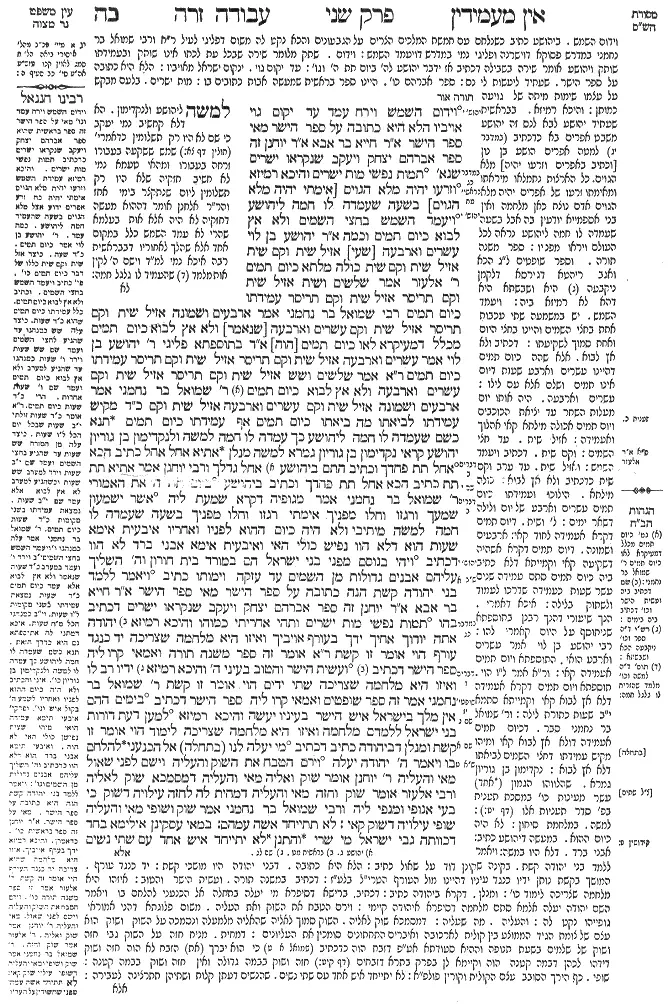
Avodah Zarah 25a - Guemara
(יהושע י, יג) וידום השמש וירח עמד עד יקום גוי אויביו הלא היא כתובה על ספר הישר מאי ספר הישר א"ר חייא בר אבא א"ר יוחנן זה ספר אברהם יצחק ויעקב שנקראו ישרים שנא' (במדבר כג, י) תמות נפשי מות ישרים והיכא רמיזא (בראשית מח, יט) וזרעו יהיה מלא הגוים [אימתי יהיה מלא הגוים] בשעה שעמדה לו חמה ליהושע (יהושע י, יג) ויעמד השמש בחצי השמים ולא אץ לבוא כיום תמים וכמה א"ר יהושע בן לוי עשרים וארבעה [שעי] אזיל שית וקם שית אזיל שית וקם שית כולה מלתא כיום תמים ר' אלעזר אמר שלשים ושית אזיל שית וקם תריסר אזיל שית וקם תריסר עמידתו כיום תמים רבי שמואל בר נחמני אמר ארבעים ושמונה אזיל שית וקם תריסר אזיל שית וקם עשרים וארבעה [שנאמר] ולא אץ לבוא כיום תמים מכלל דמעיקרא לאו כיום תמים [הוה] א"ד בתוספתא פליגי ר' יהושע בן לוי אמר עשרים וארבעה אזיל שית וקם תריסר אזיל שית וקם תריסר עמידתו כיום תמים ר"א אמר שלשים ושש אזיל שית וקם תריסר אזיל שית וקם עשרים וארבעה ולא אץ לבוא כיום תמים ר' שמואל בר נחמני אמר ארבעים ושמונה אזיל שית וקם עשרים וארבעה אזיל שית וקם כ"ד מקיש עמידתו לביאתו מה ביאתו כיום תמים אף עמידתו כיום תמים תנא כשם שעמדה לו חמה ליהושע כך עמדה לו חמה למשה ולנקדימון בן גוריון יהושע קראי נקדימון בן גוריון גמרא למשה מנלן אתיא אחל אחל כתיב הכא (דברים ב, כה) אחל תת פחדך וכתיב התם ביהושע אחל גדלך ורבי יוחנן אמר אתיא תת תת כתיב הכא אחל תת פחדך וכתיב ביהושע (יהושע י, יב) ביום תת ה' את האמורי ר' שמואל בר נחמני אמר מגופיה דקרא שמעת ליה (דברים ב, כה) אשר ישמעון שמעך ורגזו וחלו מפניך אימתי רגזו וחלו מפניך בשעה שעמדה לו חמה למשה מיתיבי ולא היה כיום ההוא לפניו ואחריו איבעית אימא שעות הוא דלא הוו נפיש כולי האי ואיבעית אימא אבני ברד לא הוו דכתיב (יהושע י, יא) ויהי בנוסם מפני בני ישראל הם במורד בית חורון וה' השליך עליהם אבנים גדולות מן השמים עד עזקה וימותו כתיב (שמואל ב א, יח) ויאמר ללמד בני יהודה קשת הנה כתובה על ספר הישר מאי ספר הישר א"ר חייא בר אבא א"ר יוחנן זה ספר אברהם יצחק ויעקב שנקראו ישרים דכתיב בהו (במדבר כג, י) תמות נפשי מות ישרים ותהי אחריתי כמוהו והיכא רמיזא יהודה אתה יודוך אחיך ידך בעורף אויביך ואיזו היא מלחמה שצריכה יד כנגד עורף הוי אומר זו קשת ר"א אומר זה ספר משנה תורה ואמאי קרו ליה ספר הישר דכתיב (דברים ו, יח) ועשית הישר והטוב בעיני ה' והיכא רמיזא ידיו רב לו ואיזו היא מלחמה שצריכה שתי ידים הוי אומר זו קשת ר' שמואל בר נחמני אמר זה ספר שופטים ואמאי קרו ליה ספר הישר דכתיב (שופטים יז, ו) בימים ההם אין מלך בישראל איש הישר בעיניו יעשה והיכא רמיזא (שופטים ג, ב) למען דעת דורות בני ישראל ללמדם מלחמה ואיזו היא מלחמה שצריכה לימוד הוי אומר זו קשת ומנלן דביהודה כתיב דכתיב (שופטים א, א) מי יעלה לנו בתחלה אל הכנעני להלחם בו ויאמר ה' יהודה יעלה (שמואל א ט, כד) וירם הטבח את השוק והעליה וישם לפני שאול מאי והעליה ר' יוחנן אומר שוק ואליה מאי והעליה דמסמכא שוק לאליה ורבי אלעזר אומר שוק וחזה מאי והעליה דמחית לה לחזה עילויה דשוק כי בעי אנופי ומנפי ליה ורבי שמואל בר נחמני אמר שוק ושופי מאי והעליה שופי עילויה דשוק קאי:
לא תתייחד אשה עמהם:
במאי עסקינן אילימא בחד דכוותה גבי ישראל מי שרי והתנן לא יתייחד איש אחד עם שתי נשים
Comments from Rashi on Masechet Avodah Zarah Page 25a
וידום השמש . ביהושע כתיב כשנלחם עם חמשת המלכים הצרים על הגבעונים. והכא נקט לה משום דפליגי לעיל ר"א ורבי שמואל בר נחמני במדרש פסוקא דוישרנה ופליגי נמי במדרש דויעמד השמש: וידום . שתק מלומר שירה שבכל עת לכתו אינו שותק ובעמידתו שותק ויהושע אומר שירה בשבילה דכתיב אז ידבר יהושע לה' ביום תת ה' וגו': עד יקום גוי . ינקום ישראל מאויביו: הלא היא כתובה על ספר הישר . שעתיד ליעשות לי נס: ספר אברהם כו' . היינו ספר בראשית שמעשה אבות כתובים בו: מות ישרים . בלעם מבקש על עצמו שימות מיתה של גויעה כמותן: והיכא רמיזא . בבראשית שעתיד יהושע לבא לנס זה. יהושע משבט אפרים בא כדכתיב (במדבר יג) למטה אפרים הושע בן נון [וכתיב באפרים וזרעו יהיה] מלא הגוים כל הארצות נתמלאו מיראתו ומאימתו זרעו של אפרים יהיה מלא הגוים אדם נוצח כאן מלחמה ואין בני אספמייא יודעין בה אבל בשעה שעמדה לו חמה ליהושע נראה לכל העולם ויראו מפניו: ספר משנה תורה וספר שופטים . ל"ג הכא ואגב ריהטא דגירסא דלקמן ניקבעה היא ושבשתא היא דהא לא רמיזא ביה: ויעמד השמש . יש במשמעה שתי עכבות אחת בחצי השמים והיינו בחצי היום ואחת סמוך לשקיעתו: דכתיב ולא אץ לבוא . אלא שהה כיום תמים דהיינו עשרים וארבע שעות דיום אינו תמים ושלם אלא עם לילו: עשרים וארבעה . היה אותו יום מעלות השחר עד יציאת הכוכבים ויום תמים אכולה מילתא קאי אהלוך ואעמידה: אזיל שית . עד חצי השמים: וקם שית . דכתיב ויעמד השמש: ואזיל שית . עד ערב וקם שית כדכתיב ולא אץ לבוא: כולה מילתא . הילוכו ועמידתו כיום תמים עשרים וארבע של יום ולילה דשאר ימים: ל' ושית . דיום תמים דקרא אעמידה לחוד קאי: ארבעים ושמונה . דיום תמים דקרא אשהיה דשקיעה קאי וקמייתא דלא כתיב ביה כיום תמים סתם עמידה שנים עשר שעות כעמידה שדרכו לעמוד ולשתוק בלילה: איכא דאמרי . הנך שיעורי דהנך רבנן בתוספתא שניתוסף על היום קאמרי להו: רבי יהושע בן לוי אמר עשרים וארבע . הואי התוספתא ויום תמים אעמידה קאי: ור"א אמר ל"ו . הוי תוספתא ויום תמים דקרא אעמידה דלא אץ לבוא קאי וקמייתא סתמא י"ב שעות כתורת לילה: ור' שמואל בר נחמני . סבר דכיום תמים אעמידה דולא אץ לבוא קאי ומיהו מקיש עמידתו דחצי השמים לביאתו דלא אץ לבוא: נקדימון בן גוריון גמרא . שהלווהו הגמון אחד עשר מעינות כו' במסכת תענית בפ' סדר תעניות אלו (דף יט:): למשה . במלחמת סיחון: לא היה כיום ההוא . במעשה דיהושע כתיב: אבני ברד . דלא היו במשה: ויאמר ללמד בני יהודה קשת . בקינה שקונן דוד על שאול כתיב: הלא היא כתובה . דבני יהודה היו מושכי קשת: יד כנגד עורף . המושך בקשת נותן ידיו כנגד עיניו דהיינו מול העורף הטרי"ל בלע"ז: דכתיב . במשנה תורה ועשית הישר והטוב: איזהו היא מלחמה שצריכה לימוד כו': ומנלן . דקרא ביהודה כתיב: דכתיב . ברישא דסיפרא מי יעלה בתחלה אל הכנעני להלחם בו ויאמר השם יהודה יעלה אלמא סתם מלחמה דסיפרא איהודה קיימי: וירם הטבח את השוק ואת העליה . משום פלוגתא דהני אמוראי גופייהו נקט לה: והעליה . מה שעליה: דמסמכא שוק לאליה . השוק סמוך לאליה שהאליה מלמעלה ונסמכה על השוק ושוק הוא עצם של צומת הגיד הממוצע בין קולית לארכובה ואיברים התחתונים סומכין את העליונים: דמחית . מניח חזה על השוק גבי חזה ושוק של שלמים בשעת תנופה וההיא סעודתא אע"פ דזבח הוה כדכתיב (שמואל א ט) כי הוא יברך (את) הזבח לא הוה חזה ושוק דידהו לכהן דבמה קטנה הוה וקיימא לן בפרק בתרא דזבחים (דף קיט:) חזה ושוק בבמה גדולה ואין חזה ושוק בבמה קטנה: שופי . כף הירך הסובב עצם הקולית וקורין פולפ"א: לא יתייחד איש אחד עם שתי נשים . שהנשים דעתן קלות ושתיהן תתרצינה לעבירה:
Comments from Tosafot - Avodah Zarah 25a
למשה ליהושע ולנקדימון . הא דלא קחשיב נמי יעקב כי שם לא היו רק תשלומין כדאמרי' (חולין דף צא:) שמש ששקעה בעבורו זרחה בעבורו ומהאי טעמא נמי לא חשיב חזקיה שלא היו רק תשלומין ליום שנתקצר בימי אחז והר"ר אלחנן אומר דההוא מעשה דחזקיה לא היה אלא אות בעלמא שהרי לא עמד השמש כלל במקום אחד אלא שהלך לאחוריו דבבראשית רבה איכא נמי למ"ד וישם ה' לקין אות מלמד שהעמיד לו גלגל חמה:
Avodah Zarah 25a - Mishnah translated into english
§ The Gemara cites a series of expositions with regard to what is called the book of Yashar. The verse states: “And the sun stood still, and the moon stayed, until the nation had avenged themselves of their enemies. Is this not written in the book of Yashar”? (Joshua 10:13). The Gemara asks: What is the book of Yashar? Rabbi Ḥiyya bar Abba says that Rabbi Yoḥanan says: This is Genesis, which is the book of Abraham, Isaac, and Jacob, who were called righteous [yesharim], as it is stated: “Let me die the death of the righteous [yesharim]” (Numbers 23:10).
The Gemara asks: And where is it alluded to in Genesis that the sun would stand still for Joshua? The verse states in reference to Ephraim, who was Joshua’s ancestor: “And his seed shall become a multitude of nations” (Genesis 48:19). The Gemara asks: When will he become a multitude of nations? He became a multitude of nations at the time when the sun stood in place for Joshua, as it is written: “And the sun stayed in the midst of heaven, and hastened not to go down for an entire day” (Joshua 10:13).
The Gemara inquires: And how much time elapsed before the sun finally set? Rabbi Yehoshua ben Levi said that it took twenty-four hours: It traveled across the sky for six hours and stood still for six hours, and again traveled six hours and stood still for six hours, so that the entire matter lasted the duration of an entire day.
Rabbi Elazar said that it lasted thirty-six hours: The sun traveled for six hours and stood for twelve hours, and again traveled six hours and stood for twelve hours, so that the accumulated time of its suspension was that of an entire day. Rabbi Shmuel bar Naḥmani said: Forty-eight hours elapsed before it set. It traveled six hours and stood for twelve hours, and then traveled six hours and stood for twenty-four hours, as it is stated: “And the sun stayed in the midst of heaven,” and then: “And hastened not to go down for an entire day.” By inference, it can be understood that initially it was not suspended for an entire day. Rather, at first it stood still for twelve hours, and was later suspended for an entire day.
There are those who say that these Sages do not disagree over how much time had elapsed before the sun set. Rather, they disagree with regard to the additional time by which the day was extended. Rabbi Yehoshua ben Levi said: Twenty-four hours were added to that day, because the sun traveled six hours and stood twelve hours, and again traveled six hours and stood for another twelve hours, which meant that its standing time lasted for an entire day. Rabbi Elazar said that thirty-six hours were added: It traveled six hours and stood for twelve hours, and then traveled six hours and stood for twenty-four more hours. It is with regard to the second suspension that the verse states: “And hastened not to go down for an entire day.”
Rabbi Shmuel bar Naḥmani said: The time the sun stood in place was forty-eight hours in total. The sun traveled six hours and stood twenty-four hours, and then traveled another six hours and stood for another twenty-four hours. His reasoning is that the verse juxtaposes the sun’s suspension to its motion: Just as the sun is in motion for an entire day, so too, its suspension was for an entire day.
It is taught: Just as the sun stood still for Joshua, so too the sun stood still for Moses and for Nakdimon ben Guryon. It is known that it stood still for Joshua from a verse, and it is known that it stood still for Nakdimon ben Guryon by tradition. From where do we derive that it stood still for Moses as well? The Gemara answers: It is derived by means of a verbal analogy between the terms “I will begin” and “I will begin.” The Gemara elaborates: It is written here, with regard to Moses: “I will begin to deliver the dread of you and the fear of you upon the peoples” (Deuteronomy 2:25), and it is written there, with regard to Joshua: “I will begin to magnify you” (Joshua 3:7).
And Rabbi Yoḥanan says: It is derived from a verbal analogy between the words “delivered” and “delivered.” It is written here, with regard to Moses: “I will begin to deliver the dread of you,” and it is written there, with regard to Joshua: “In the day when the Lord delivered up the Amorites before the children of Israel” (Joshua 10:12).
Rabbi Shmuel bar Naḥmani said that there is no need for a verbal analogy, as you can learn this idea from the verse itself: “This day will I begin to deliver the dread of you and the fear of you upon the peoples that are under the whole heaven, who, when they hear the report of you, shall tremble and be in anguish because of you” (Deuteronomy 2:25). When was the fulfillment of the prophecy that all the nations “shall tremble and be in anguish because of you”? It was at the time when the sun stood still for Moses.
The Gemara raises an objection: After the sun stood still, the verse states: “And there was no day like that before it or after it” (Joshua 10:14). If there was no day comparable to it, how can it be asserted that the sun stood still for Moses as well? The Gemara answers: If you wish, say that the number of hours the sun stood still for Moses were not as many as in the case of Joshua. And if you wish, say instead: When the sun stood still for Moses there were no hailstones, whereas in the case of Joshua there were hailstones, as it is written: “And it came to pass, as they fled from before the children of Israel, while they were in the descent of Beth Horon, that the Lord cast down great stones from heaven upon them into Azeka and they died” (Joshua 10:11).
The Gemara cites another exposition with regard to the book of Yashar. It is written: “And said: To teach the sons of Judah the bow. Behold, it is written in the book of Yashar” (II Samuel 1:18). The Gemara again asks: What is the book of Yashar? Rabbi Ḥiyya bar Abba says that Rabbi Yoḥanan says: This is the book of Abraham, Isaac, and Jacob, who were called righteous [yesharim], as it is written with regard to them: “Let me die the death of the righteous [yesharim] and let my end be like his” (Numbers 23:10).
The Gemara further analyzes the verse in Samuel: And where is it alluded to in Genesis that Judah must be taught to use the bow? The verse states: “Judah, your brothers shall praise you; your hand shall be on the nape of your enemies” (Genesis 49:8). The Gemara explains: What is the form of warfare that requires one’s hand to be held opposite the nape? You must say that this is referring to the use of a bow. This is the referent of the verse in Samuel.
The Gemara cites a different interpretation: Rabbi Elazar says that the book of Yashar is the book of Deuteronomy. And why did they call it the book of Yashar? As it is written: “And you shall do that which is right [yashar] and good in the sight of the Lord” (Deuteronomy 6:18). And where is it alluded to in Deuteronomy that Judah must be taught to use the bow? The verse states: “And this for Judah, and he said: Hear, Lord, the voice of Judah, and bring him in unto his people; his hands shall contend for him” (Deuteronomy 33:7). What is the form of warfare that requires the use of two hands? You must say that this is referring to the use of a bow. This is the referent of the verse in Samuel.
The Gemara provides yet another explanation: Rabbi Shmuel bar Naḥmani says that the book of Yashar is the book of Judges. And why did they call it the book of Yashar? As it is written: “In those days there was no king in Israel; every man did that which was right [yashar] in his own eyes” (Judges 17:6). And where is it alluded to in Judges that Judah must be taught to use the bow? The verse states: “Only that the generations of the children of Israel might know, to teach them war” (Judges 3:2). What is the form of warfare that requires teaching? You must say that this is referring to the use of a bow. This is the referent of the verse in Samuel.
The Gemara asks: And from where do we derive that Judges 3:2 is written in reference to Judah? We derive it as it is written: “The children of Israel asked the Lord, saying: Who shall go up for us first against the Canaanites, to fight against them? And the Lord said: Judah shall go up” (Judges 1:1–2).
§ The Gemara cites another dispute between the same amora’im. The verse states: “And the cook took up the thigh, and that which was upon it [vehe’aleha], and set it before Saul” (I Samuel 9:24). To what does the term “and that which was upon it” refer? Rabbi Yoḥanan says: It refers to the thigh and the tail. The Gemara asks: What is the reason that the tail is referred to as: “And that which was upon it”? The reason is that the thigh supports the tail, as it rests upon it.
And Rabbi Elazar says: The verse refers to the thigh and the breast. What is the reason that the breast is referred to as: “And that which was upon it”? The reason is that one places the breast upon the thigh when it requires sacrificial waving, and waves it. And Rabbi Shmuel bar Naḥmani says: The verse refers to the thigh and the cap [shofi], i.e., the very top part of the leg. What is the reason that the cap is referred to as: “And that which was upon it”? It is because it is referring to the cap that stands above the thigh.
§ The mishna teaches that a woman may not seclude herself with gentiles. The Gemara asks: What are we dealing with? If we say that we are dealing with a woman who secludes herself with one gentile, is this permitted in the corresponding situation involving a Jew? But didn’t we learn in a mishna (Kiddushin 80b): One man may not seclude himself even with two women? It is certainly forbidden for one man to be secluded with one woman.
Traduction : The William Davidson digital edition of the Koren Noé Talmud, with commentary by Rabbi Adin Even-Israel Steinsaltz.