 Talmud Bavli
The learning on the whole site is dedicated : L'ilui Nishmat Chemouel Eliezer ben Batcheva
The learning on the whole site is dedicated : L'ilui Nishmat רינה בת לדיסיה
The learning on the whole site is dedicated : L'ilui Nishmat Jacques Isaac Ben Amram Loubaton
Avodah Zarah 43a : Youtube
Daf TubeYoutube
2 video classes :
Avodah Zarah Page 43a
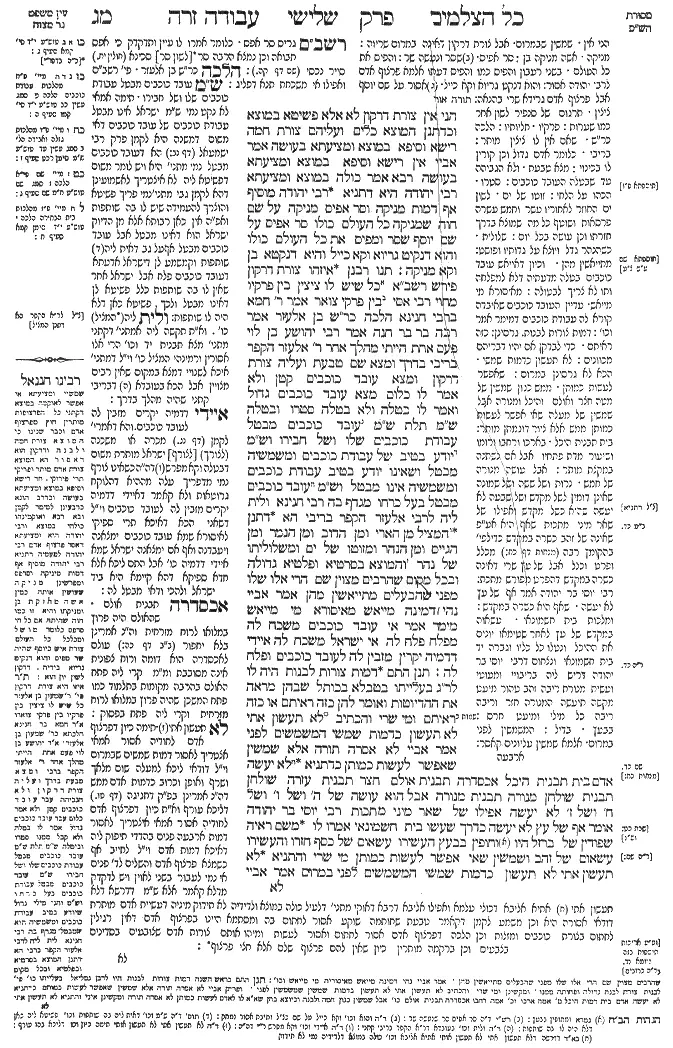
Avodah Zarah 43a - Guemara
הני אין צורת דרקון לא אלא פשיטא במוצא וכדתנן המוצא כלים ועליהם צורת חמה רישא וסיפא במוצא ומציעתא בעושה אמר אביי אין רישא וסיפא במוצא ומציעתא בעושה רבא אמר כולה במוצא ומציעתא רבי יהודה היא דתניא רבי יהודה מוסיף אף דמות מניקה וסר אפיס מניקה על שם חוה שמניקה כל העולם כולו סר אפיס על שם יוסף שסר ומפיס את כל העולם כולו והוא דנקיט גריוא וקא כייל והיא דנקטא בן וקא מניקה:
תנו רבנן איזהו צורת דרקון פירש רשב"א כל שיש לו ציצין בין פרקיו מחוי רבי אסי בין פרקי צואר אמר ר' חמא ברבי חנינא הלכה כר"ש בן אלעזר אמר רבה בר בר חנה אמר רבי יהושע בן לוי פעם אחת הייתי מהלך אחר ר' אלעזר הקפר בריבי בדרך ומצא שם טבעת ועליה צורת דרקון ומצא עובד כוכבים קטן ולא אמר לו כלום מצא עובד כוכבים גדול ואמר לו בטלה ולא בטלה סטרו ובטלה ש"מ תלת ש"מ עובד כוכבים מבטל עבודת כוכבים שלו ושל חבירו וש"מ יודע בטיב של עבודת כוכבים ומשמשיה מבטל ושאינו יודע בטיב עבודת כוכבים ומשמשיה אינו מבטל וש"מ עובד כוכבים מבטל בעל כרחו מגדף בה רבי חנינא ולית ליה לרבי אלעזר הקפר בריבי הא דתנן המציל מן הארי ומן הדוב ומן הנמר ומן הגייס ומן הנהר ומזוטו של ים ומשלוליתו של נהר והמוצא בסרטיא ופלטיא גדולה ובכל מקום שהרבים מצוין שם הרי אלו שלו מפני שהבעלים מתייאשין מהן אמר אביי נהי דמינה מייאש מאיסורא מי מייאש מימר אמר אי עובד כוכבים משכח לה מפלח פלח לה אי ישראל משכח לה איידי דדמיה יקרין מזבין לה לעובד כוכבים ופלח לה:
תנן התם דמות צורות לבנות היה לו לר"ג בעלייתו בטבלא בכותל שבהן מראה את ההדיוטות ואומר להן כזה ראיתם או כזה ראיתם ומי שרי והכתיב (שמות כ, כג) לא תעשון אתי לא תעשון כדמות שמשי המשמשים לפני אמר אביי לא אסרה תורה אלא שמשין שאפשר לעשות כמותן כדתניא לא יעשה אדם בית תבנית היכל אכסדרה תבנית אולם חצר תבנית עזרה שולחן תבנית שולחן מנורה תבנית מנורה אבל הוא עושה של ה' ושל ו' ושל ח' ושל ז' לא יעשה אפילו של שאר מיני מתכות רבי יוסי בר יהודה אומר אף של עץ לא יעשה כדרך שעשו בית חשמונאי אמרו לו משם ראיה שפודין של ברזל היו וחופין בבעץ העשירו עשאום של כסף חזרו והעשירו עשאום של זהב ושמשין שאי אפשר לעשות כמותן מי שרי והתניא לא תעשון אתי לא תעשון כדמות שמשי המשמשים לפני במרום אמר אביי
Comments from Rashi on Masechet Avodah Zarah Page 43a
הני אין . שמשין שבמרום. אבל צורת דרקון דאינה במרום שריוה: מניקה . אשה מניקה בן: סר אפיס . שסר ונעשה שר: והפיס את כל העולם . בשני רעבון. והפיס כמו והפיס דעתו. אלמא פרצוף אדם לרבי יהודה אסור: והוא דנקט גריוא וקא כייל . אסור על שם יוסף אבל פרצוף אדם גרידא שרי בהנאה: ציצין . תרגום של סנפיר. לשון אחר כמו שערות: פרקיו . חליותיו: הלכה כר"ש . שאם אין לו ציצין מותר: בריבי . כלומר אדם גדול וכן קורין לו בכינוי: מצא טבעת . ולא הגביהה עד שבטלה העובד כוכבים: סטרו . הכהו על הלחי: זוטו של ים . לשון ים החוזר לאחוריו עשר וחמש עשרה פרסאות ושוטף כל מה שמוצא בדרך חזרתו וכן עושה בכל יום: שלולית . כשהנהר גדל ויוצא על גדותיו ופושט: מתייאשין מהן . וכיון דאייאש עובד כוכבים בטלה מדעתיה דלא למפלחה ותו לא צריך לבטולה: מאיסורא מי מייאש . עדיין העובד כוכבים שאיבדה קורא לה עבודת כוכבים דמימר אמר וכו': דמות צורות לבנות . גרסינן: כזה ראיתם . כדי לבדקן אם יהיו דבריהם מכוונים: לא תעשון כדמות שמשי . הכא לא גרסינן במרום: שאפשר לעשות כמותן . ממש כגון שמשין של מטה חצר ואולם והיכל ומנורה אבל שמשין של מעלה שאי אפשר לעשות כמותן ממש אלא ציור דוגמתן מותר: בית תבנית היכל . בארכו ורחבו ורומו ושיעור מדת פתחיו אבל אם נשתנה במקצת מותר: אבל עושה . מנורה של חמש נרות ושל ששה ושל שמונה שאינן דומין לשל מקדש. ושל שבעה לא יעשה שהיא כשל מקדש ואפילו של שאר מיני מתכות שאף היא אע"פ שאינה של זהב כשרה במקדש כדילפי' בהקומץ רבה (מנחות דף כח:) מכלל ופרט וכלל אבל של עץ שרי דאינה כשרה במקדש דהפרט מפורש מתכת: רבי יוסי בר יהודה אמר אף של עץ לא יעשה . שאף היא כשרה במקדש: ומלכות בית חשמונאי עשאוה במקדש של עץ לאחר שטימאו יונים את ההיכל ונטלו כל כליו וגברה יד בית חשמונאי ונצחום. דרבי יוסי בר יהודה דריש ליה בריבויי ומעוטי ועשית מנורת ריבה זהב טהור מיעט מקשה תיעשה המנורה חזר וריבה ריבה כל מילי ומיעט חרס: בבעץ . בדיל: המשמשין לפני במרום . אלמא שמשין עליונים קאסר:
Comments from Tosafot - Avodah Zarah 43a
רשב"ם גריס סר אפס . כלומר אמרו לו עיין ותדקדק כי אפס תבואה וכן נמצא הרבה סר [לשון סר] סכינא (חולין יח.) סייר נכסי (שם דף קה.): הלכה כר"ש בן אלעזר . פי' רשב"ם ואפילו אי משכחת תנא דפליג: ש"מ עובד כוכבים מבטל עבודת כוכבים שלו ושל חבירו . תימה אמאי לא נקט נמי ש"מ ישראל אינו מבטל עבודת כוכבים של עובד כוכבים דאי משום דמשנה היא לקמן פרק רבי ישמעאל (עבודה זרה דף נב:) הא דעובד כוכבים מבטל נמי מתני' היא ויש לומר משום דפשיטא ליה לא איצטריך לאשמועינן דהא לקמן גבי מתני' נמי פריך פשיטא והוצרך להעמידה שיש לו בה שותפות ואפ"ה אין כאן רבותא אלא מן הדיוק ישראל הוא דאינו מבטל אבל עובד כוכבים מבטל אף על גב דאית ליה שותפות וקמשמע לן דישראל אדעתא דעובד כוכבים פלח אבל ישראל אחר שאין לו בה שותפות כלל פשיטא לן דאינו מבטל ולכך פשיטא כאן דלא היה לו שותפות: ולית ליה (המציל) כו' . וא"ת תקשה ליה אמתני' דקתני מתני' מצא תבנית יד וכו' הרי אלו אסורין ורמינהי המציל כו' וי"ל דמתני' איכא לשנויי דמצא במקום שאין רבים מצויין אבל הכא בעובדא דבריבי קתני שהיה מהלך בדרך: איידי דדמיה יקרים מזבין לה לעובד כוכבים . והא דאמרי' לקמן (עבודה זרה דף נג.) מכרה או משכנה (לצורך) [לצורף] ישראל מותרת משום דבטלה וקא מפרש דה"ה כשאינו צורף נמי מדפריך עלה מההיא דהלוקח גרוטאות ולא קאמר דאיידי דדמיה יקרים מזבין לה לעובד כוכבים וי"ל דשאני הכא דאיכא תרי ספיקי לאיסורא שמא עובד כוכבים ימצאנה ויעבדנה ואף אם ימצאנה ישראל שמא איידי דדמיה כו' אבל התם ליכא אלא חדא ספיקא דהא קיימא היא ביד ישראל ולהכי ודאי מבטל לה: אכסדרה תבנית אולם . שהאולם היה פרוץ במלואו לרוח מזרחית וה"נ אמרינן בלא יחפור (ב"ב דף כה:) עולם לאכסדרה הוא דומה ורוח צפונית אינה מסובבת ומ"מ קרי ליה פתח האולם בהרבה מקומות בתלמוד כמו פתח המשכן שהיה פרוץ במלואו לרוח מזרחית וקרי ליה פתח בפסוק: לא תעשון אתי' . תימה כיון דפרצוף אדם לחודיה אסור אמאי אצטריך לאסור דמות שמשים שבמרום וי"ל דודאי ליכא למעלה שום מלאך ושרף ואופן וכרוב כדמות אדם ממש דה"נ אמרינן בפ"ק דחגיגה (דף טו.) דליכא עורף וא"ת כיון דפרצוף אדם לחודיה אסור אמאי איצטריך לאסור דמות ארבעה פנים בהדדי תיפוק ליה דאיכא דמות אדם וי"ל לחייב אף כשמצא פרצוף אדם והשלים לד' פנים אי נמי לעבור בשני לאוין ויש לדקדק מדלא קאמר אלא ש"מ דדרשא דלא תעשון אתי אתיא אליבא דכולי עלמא ואפילו אליבא דרבא דאוקי מתני' דלעיל כולה במוצא ולדידיה לא תידוק מיניה דעשיית אדם מותרת דודאי אסורה היא וכן משמע לקמן דקאמר טבעת שחותמה שוקע אסור לחתום בה ומסתמא היינו בפרצוף אדם דאין רגילין לחתום בצורת כוכבים ומזלות וכן הלכה דפרצוף אדם אסור לחתום ואסור לעשות ומיהו אותם צורות אדם שצובעים בסדינים בצבעים וכן ברקמה מותרין כיון שאין להם פרצוף שלם אלא חצי פרצוף:
Avodah Zarah 43a - Mishnah translated into english
The Sages interpret this verse as referring to the heavenly constellations, which indicates that it is prohibited to form only these figures, but it is not prohibited to form a figure of a dragon.
Rather, the Gemara concludes, it is obvious that this halakha is referring to a case where one finds a vessel with the figure of a dragon, and this is as we learned in the mishna: In the case of one who finds vessels, and upon them is a figure of the sun, a figure of the moon, or a figure of a dragon, he must take them and cast them into the Dead Sea.
The Gemara asks about the lack of consistency between the clauses of Rav Sheshet’s statement: Can it be that the first clause and the last clause are referring to a case where one finds vessels with the specified figures, and the middle clause is referring to a case where one forms these figures?
Abaye said: Indeed, the first clause and the last clause are referring to cases where one finds vessels with figures, and the middle clause is referring to a case where one forms figures.
Rava said: The entire statement of Rav Sheshet is referring to a case where one finds vessels with these figures, and the middle clause is in accordance with the opinion of Rabbi Yehuda. As it is taught in a baraita that Rabbi Yehuda adds to the list of forbidden figures even a figure of a nursing woman and Sar Apis. The figure of a nursing woman is worshipped as it symbolizes Eve, who nurses the entire world. The figure of Sar Apis is worshipped as it symbolizes Joseph, who ruled over [sar] and appeased [mefis] the entire world by distributing food during the seven years of famine (see Genesis, chapter 41). But the figure of Sar Apis is forbidden only when it is holding a dry measure and measuring with it; and the figure of a nursing woman is forbidden only when she is holding a child and nursing it.
§ The Sages taught: What is a figure of a dragon? Rabbi Shimon ben Elazar explained: It is any figure that has scales between its joints. Rabbi Asi motioned with his hands to depict scales between the joints of the neck. Rabbi Ḥama, son of Rabbi Ḥanina, says: The halakha is in accordance with the opinion of Rabbi Shimon ben Elazar.
Rabba bar bar Ḥana says that Rabbi Yehoshua ben Levi says: Once, I was following Rabbi Elazar HaKappar the Distinguished on the road, and he found a ring there, and there was a figure of a dragon on it. And he then encountered a minor gentile boy, but did not say anything to him. He then encountered an adult gentile, and said to him: Revoke the ring’s idolatrous status. But the gentile did not revoke it. Rabbi Elazar HaKappar then slapped him across his face, whereupon the gentile succumbed and revoked its idolatrous status.
The Gemara comments: Learn from this incident the following three halakhot: Learn from it that a gentile can revoke the idolatrous status of both his object of idol worship and that of another gentile. And learn from the fact that Rabbi Elazar HaKappar waited to find an adult gentile, that only one who is aware of the nature of idol worship and its accessories can revoke the idol’s status, but one who is not aware of the nature of idol worship and its accessories, such as a minor, cannot revoke the idol’s status. And finally, learn from it that a gentile can revoke the status of an idol even against his will.
Rabbi Ḥanina ridiculed this ruling and asked: But why was it necessary to have a gentile actively revoke the idolatrous status of the ring? Doesn’t Rabbi Elazar HaKappar the Distinguished maintain in accordance with that which we learned in a baraita: In the case of one who saves an object from a lion, or from a bear, or from a cheetah, or from a troop of soldiers, or from a river, or from the tide of the sea, or from the flooding of a river, or similarly one who finds an object in a main thoroughfare or in a large plaza, or for that matter, anywhere frequented by the public, in all these cases, the objects belong to him, because the owners despair of recovering them? Therefore, in the case of a lost ring with an idolatrous figure on it, its idolatrous status is automatically revoked, as its owner despairs of recovering it.
Abaye said: Granted, the owner despairs of recovering the object itself, but does he despair of its forbidden [me’issura] idolatrous status? The owner does not assume that the object will never be worshipped again; rather, he says to himself: If a gentile finds it, he will worship it. If a Jew finds it, since it is valuable, he will sell it to a gentile who will then worship it. Therefore, Rabbi Elazar HaKappar had to have the ring’s idolatrous status revoked.
§ We learned in a mishna there (Rosh HaShana 24a): Rabban Gamliel had diagrams of the different figures of moons drawn on a tablet that hung on the wall of his attic, which he would show to the ordinary people [hahedyotot] who came to testify about sighting the new moon but who were unable to adequately describe what they had seen. And he would say to them: Did you see an image like this, or did you see an image like that?
The Gemara asks: And is it permitted to form these figures? But isn’t it written: “You shall not make with Me gods of silver, or gods of gold” (Exodus 20:20), which is interpreted to mean: You shall not make figures of My attendants who serve before Me, i.e., those celestial bodies that were created to serve God, including the sun and the moon.
In answering, Abaye said: The Torah prohibited only the figures of those attendants that one can possibly reproduce something that is truly in their likeness. Since it is impossible to reproduce the sun and the moon, the prohibition does not apply to these entities.
As it is taught in a baraita: A person may not construct a house in the exact image of the Sanctuary, nor a portico in the exact image of the Entrance Hall of the Sanctuary, nor a courtyard corresponding to the Temple courtyard, nor a table corresponding to the Table in the Temple, nor a candelabrum corresponding to the Candelabrum in the Temple. But one may fashion a candelabrum of five or of six or of eight lamps. And one may not fashion a candelabrum of seven lamps even if he constructs it from other kinds of metal rather than gold, as in extenuating circumstances the Candelabrum in the Temple may be fashioned from other metals.
The baraita continues: Rabbi Yosei bar Yehuda says: One may not fashion a candelabrum of wood either, in the manner that the kings of the Hasmonean monarchy fashioned it. When they first purified the Temple they had to fashion the Candelabrum out of wood as no other material was available. Since a wooden candelabrum is fit for the Temple, it is prohibited to fashion one of this kind for oneself.
The Rabbis said to Rabbi Yosei bar Yehuda: Do you seek to cite a proof from there, i.e., from the Hasmonean era, that a candelabrum fashioned of wood is fit for the Temple? During that era the branches of the Candelabrum were fashioned from spits [shappudin] of iron, and they covered them with tin [beva’atz]. Later, when they grew richer and could afford a Candelabrum of higher-quality material, they fashioned the Candelabrum from silver. When they grew even richer, they fashioned the Candelabrum from gold. In any event, Abaye proves from this baraita that the prohibition against forming a figure applies only to items that can be reconstructed in an accurate manner. Since this is not possible in the case of the moon, Rabban Gamliel’s figures were permitted.
The Gemara asks: And is it actually permitted to fashion figures of those attendants of God concerning which it is impossible to reproduce their likeness? But isn’t it taught in a baraita that the verse: “You shall not make with Me gods of silver” (Exodus 20:20), is interpreted to mean: You shall not make figures of My attendants who serve before Me on high? Apparently, this includes the sun and the moon.
Abaye said:
Traduction : The William Davidson digital edition of the Koren Noé Talmud, with commentary by Rabbi Adin Even-Israel Steinsaltz.