 Talmud Bavli
The learning on the whole site is dedicated : L'ilui Nishmat יוסף בן מושה
The learning on the whole site is dedicated : L'ilui Nishmat Rav Chlomo Ben Jamilla
The learning on the whole site is dedicated : L'ilui Nishmat Amram ben Itshak Loubaton
Avodah Zarah 65a : Youtube
Daf TubeYoutube
2 video classes :
Avodah Zarah Page 65a
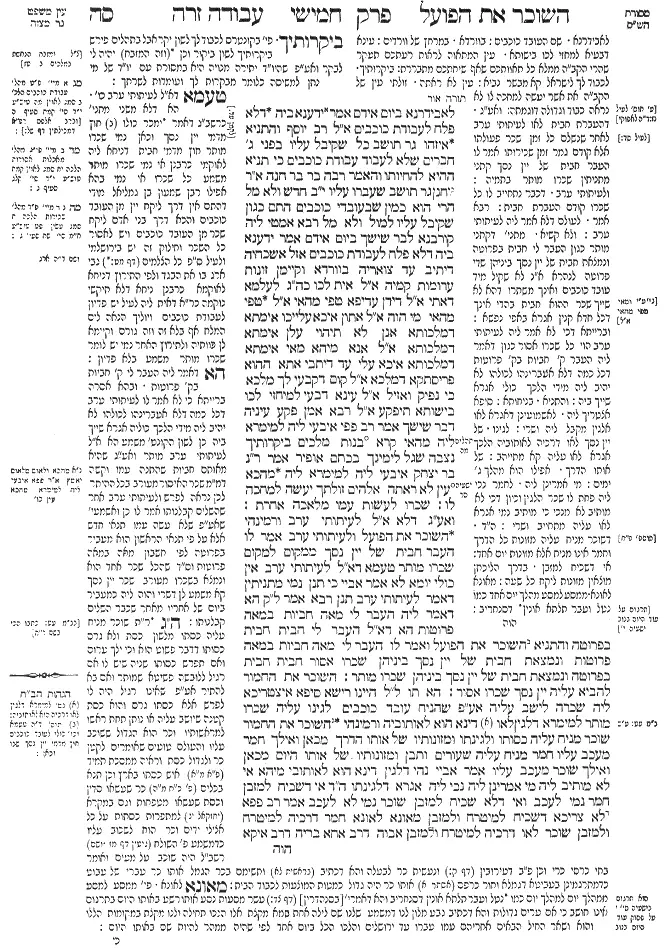
Avodah Zarah 65a - Guemara
לאבידרנא ביום אידם אמר ידענא ביה דלא פלח לעבודת כוכבים א"ל רב יוסף והתניא איזהו גר תושב כל שקיבל עליו בפני ג' חברים שלא לעבוד עבודת כוכבים כי תניא ההיא להחיותו והאמר רבה בר בר חנה א"ר יוחנן גר תושב שעברו עליו י"ב חדש ולא מל הרי הוא כמין שבעובדי כוכבים התם כגון שקיבל עליו למול ולא מל רבא אמטי ליה קורבנא לבר שישך ביום אידם אמר ידענא ביה דלא פלח לעבודת כוכבים אזל אשכחיה דיתיב עד צואריה בוורדא וקיימן זונות ערומות קמיה א"ל אית לכו כה"ג לעלמא דאתי א"ל דידן עדיפא טפי מהאי א"ל טפי מהאי מי הוה א"ל אתון איכא עלייכו אימתא דמלכותא אנן לא תיהוי עלן אימתא דמלכותא א"ל אנא מיהא מאי אימתא דמלכותא איכא עלי עד דיתבי אתא ההוא פריסתקא דמלכא א"ל קום דקבעי לך מלכא כי נפיק ואזיל א"ל עינא דבעי למיחזי לכו בישותא תיפקע א"ל רבא אמן פקע עיניה דבר שישך אמר רב פפי איבעי ליה למימרא ליה מהאי קרא (תהלים מה, י) בנות מלכים ביקרותיך נצבה שגל לימינך בכתם אופיר אמר ר"נ בר יצחק איבעי ליה למימרא ליה מהכא (ישעיהו סד, ג) עין לא ראתה אלהים זולתך יעשה למחכה לו:
שכרו לעשות עמו מלאכה אחרת:
ואע"ג דלא א"ל לעיתותי ערב ורמינהי השוכר את הפועל ולעיתותי ערב אמר לו העבר חבית של יין נסך ממקום למקום שכרו מותר טעמא דא"ל לעיתותי ערב אין כולי יומא לא אמר אביי כי תנן נמי מתניתין דאמר לעיתותי ערב תנן רבא אמר ל"ק הא דאמר ליה העבר לי מאה חביות במאה פרוטות הא דא"ל העבר לי חבית חבית בפרוטה והתניא השוכר את הפועל ואמר לו העבר לי מאה חביות במאה פרוטות ונמצאת חבית של יין נסך ביניהן שכרו אסור חבית חבית בפרוטה ונמצאת חבית של יין נסך ביניהן שכרו מותר:
השוכר את החמור להביא עליה יין נסך שכרו אסור:
הא תו ל"ל היינו רישא סיפא איצטריכא ליה שכרה לישב עליה אע"פ שהניח עובד כוכבים לגינו עליה שכרו מותר למימרא דלגין לאו דינא הוא לאותוביה ורמינהי השוכר את החמור שוכר מניח עליה כסותו ולגינתו ומזונותיו של אותו הדרך מכאן ואילך חמר מעכב עליו חמר מניח עליה שעורים ותבן ומזונותיו של אותו היום מכאן ואילך שוכר מעכב עליו אמר אביי נהי דלגין דינא הוא לאותובי מיהא אי לא מותיב ליה מי אמרינן ליה נכי ליה אגרא דלגינתו ה"ד אי דשכיח למזבן חמר נמי לעכב ואי דלא שכיח למזבן שוכר נמי לא לעכב אמר רב פפא לא צריכא דשכיח למיטרח ולמזבן מאונא לאונא חמר דרכיה למיטרח ולמזבן שוכר לאו דרכיה למיטרח ולמזבן אבוה דרב אחא בריה דרב איקא
Comments from Rashi on Masechet Avodah Zarah Page 65a
לאבידרנא . שם העובד כוכבים: בוורדא . במרחץ של וורדים: עינא דבעיא למחזי לכו בישותא . עין המתאוה לראות רעתכם תעקר שהרי הקב"ה ממלא כל תאוותכם שאף שיחתכם מתבררת: ביקרותיך . לכבוד לך. לישראל קא מבשר נביא: עין לא ראתה . זולתי עין של הקב"ה את אשר יעשה למחכה לו לא נראה כבוד וגדולה דוגמתה: ואע"ג . דהעברת חבית לאו לעיתותי ערב לאחר שנשלם כל זמן שכר פעולתו אלא קודם גמר זמן שכירותו אמר לו העבר חבית של יין נסך קתני מתניתין שכרו מותר בתמיה: ולעיתותי ערב . דכבר נתחייב לו כל שכרו קודם העברת חבית: רבא אמר . לעולם דלא אמר ליה לעיתותי ערב: ולא קשיא . מתני' דקתני מותר כגון העבר לי חבית בפרוטה ונמצאת חבית של יין נסך ביניהן שדי פרוטה לנהרא א"נ לא שקיל מיד עובד כוכבים ואינך משתרו דהא לא שייך שכר ההוא חבית בהדי אינך דכל חדא קנין אגרא באפי נפשא: וברייתא דכי לא אמר ליה לעיתותי ערב הוי כל שכרו אסור כגון דאמר ליה העבר ק' חביות בק' פרוטות דכל כמה דלא אעברינהו לכולהו לא יהיב ליה מידי הלכך כולי אגרא שייך ביה: והתניא . בניחותא: סיפא אצטריך ליה . לאשמועינן דאגרא לאו אלגין מקבל ליה ושרי: לגינו . של יין נסך לאו דרכיה לאותוביה הלכך אגרא לאו עליה קא מתייהב: של אותו הדרך . אפילו הוא מהלך ג' ימים: מי אמרינן ליה . לחמר נכי ליה פחת לו שכר הלגין וכיון דכי לא מותיב לא מנכי כי מותיב נמי אגרא לאו עליה מתחייב ושרי: ה"ד . דשוכר מניח עליה מזונות כל הדרך וחמר אינו מניח אלא מזונות יום אחד: אי דשכיח למזבן . בדרך הליכתן מוצאין מזונות ליקח כל שעה: מאונא לאונא . ממסע למסע מהלך יום אחד כמו נטל ועבר תלתא אונין דסנחריב:
Comments from Tosafot - Avodah Zarah 65a
ביקרותיך . פי' בקונטרס לכבוד לך לשון יקר אבל בתהלים פירש ביקרותיך לשון ביקור וכן (וזה המזבח) יהיה לי לבקר ואע"פ שהיו"ד יתירה מנויה היא במסורת עם יו"ד של מי נתן למשיסה כלומר מבקרות לך ועומדות לשרתך: טעמא דא"ל לעיתותי ערב כו' . הא דלא משני מתני' כרשב"ג דאמר ימכר כולו חוץ מדמי יין נסך וכאן נמי שכרו מותר חוץ מדמי חבית דניחא ליה לאוקמי כרבנן אי נמי שכרו מותר משמע כל שכרו אי נמי בהא אפילו רבן שמעון בן גמליאל מודי דהתם אין דרך ליקח יין מן העובד כוכבים והכא דרך בני אדם ליקח שכר מן העובד כוכבים ויש לאסור כל השכר וחילוק זה יש בירושלמי ולעיל ס"פ כל הצלמים (דף מט:) גבי ארג בו את הבגד ולפי התירוץ דניחא לאוקמא כרבנן ניחא דלא תיקשי נוקמה כר"א דאית ליה לעיל יש פדיון לעבודת כוכבים ויוליך הנאה לים המלח אף בלא זה וזה גורם וקיימא לן כוותיה ולתירוץ האחר נמי יש לומר שכרו מותר משמע בלא פדיון: הא דאמר ליה העבר לי ק' חביות בק' פרוטות . ובהא אסרה ברייתא כי לא אמר לו לעיתותי ערב דכל כמה דלא אעברינהו לכולהו לא יהיב ליה מידי הלכך כוליה אגרא שייך ביה כן לשון הקונט' משמע הא א"ל לעיתותי ערב מותר ואע"ג שהיא מאותם חביות שהתנה עמו וקשה דמ"מ שכר האיסור מעורב בכל ההיתר לכן נראה לפרש ולעיתותי ערב אחר שהשלים קבלנותו אמר לו כן ואשמעי' שאע"פ שלא עשה עמו תנאי חדש אלא על פי תנאי הראשון הוא מעביר בפרוטה לפי חשבון מאה במאה פרוטות וס"ד שהכל שכר אחד הוא ונמצא בשכרו מעורב שכר יין נסך קא משמע לן דשרי והוה ליה כמעביר ביום של אחריו מאחר שכבר השלים קבלנותו: ה"ג . ר"ת שוכר מניח עליה כסתו מלשון כסת ולא גרס כסותו דדבר פשוט הוא וכי ילך ערום ואם תפרש כסותו שניה שיש לו אם רגיל ללובשה פשיטא שמותר ואם בא להתיר אע"פ שאינו רגיל היה לו לפרש אלא כסתו גרס והוא כסת קטנה שיושב עליה או נותן תחת ראשו למראשותיו וכר הוא הגדול ששוכב עליו והעולם טועים שאומרים לקטן כר ולגדול כסת וראיה ממסכת תמיד (פ"א מ"א) איש כסתו בארץ וכן תנא בכלים (פ' כ"ח מ"ה) כר שעשאו סדין וכסת שעשאו מטפחות וגם במקרא (יחזקאל יג) למתפרות כסתות על כל אצילי ידים וכר הוא לשכוב עליו כדמשמע פ' השולח (גיטין דף מז. ושם) רשב"ל היה שוכב על מעים ואומר בתי כרסי כרי וכן פ"ב דעירובין (דף ק:) ונעשית כר לבעלה והא דכתיב (בראשית לא) ותשימם בכר הגמל אותו כר עברי של עבוט כדמתרגמינן בעביטא דגמלא וחור כרפס (אסתר א) אותו כר היה גדול כמטות המוצעות לכבוד הבית: מאונא לאונא . פי' ממסע למסע ממהלך יום למהלך יום כמו נטל ועבר תלתא אונין דסנחריב והא דאמרי' [בסנהדרין] (דף צד:) עשר מסעות נסע אותו רשע באותו היום בתרגום אינו חושב כי אם ערים גדולות והא דכתיב גבע מלון לנו דמשמע שלנו שם לילה אחת שמא מקצת אלו הלכו תחילה ולנו מקצת במקומות הללו והוא ושאר החיל הבאים אחריהם עמו עברו עד ירושלים והלכו הכל ביום אחד לפי שהיה ממהר להיות שם באותו היום:
Avodah Zarah 65a - Mishnah translated into english
to a gentile named Avidarna on their festival day. Rav Yehuda said: I know of him that he does not worship idols, so he is not considered a gentile with regard to the prohibition against giving a gift to a gentile on their festival. Rav Yosef said to him: But isn’t it taught in a baraita: Who is a ger toshav? It is anyone who has accepted upon himself before three ḥaverim to not worship idols. Avidarna had not accepted this upon himself before three Jews. Rav Yehuda replied to him: When that baraita is taught, it is with regard to the mitzva to sustain him.
Rav Yosef further objected: But doesn’t Rabba bar bar Ḥana say that Rabbi Yoḥanan says: A ger toshav for whom twelve months passed without him circumcising himself is considered as a heretic of the gentiles, and certainly this Avidarna is not circumcised. Rav Yehuda replied: There, Rabbi Yoḥanan is referring to a case where the gentile who desired to become a ger toshav took it upon himself to become circumcised, but he recanted and did not circumcise himself, and in such a case it is assumed that he did not circumcise himself due to apostasy. Generally, in the case of a ger toshav who did not take this upon himself, this is not required of him.
The Gemara relates: Rava brought a gift to a minister named bar Sheshakh on their festival day. Rava said: I know of him that he does not worship idols. Rava went to him and found him sitting up to his neck in rose water, and naked prostitutes were standing before him. Bar Sheshakh said to him: Do you have anything as fine as this in the World-to-Come? Rava said to him: Ours is better than this. Bar Sheshakh said to him: Is there anything finer than this? Rava said to him: You have the fear of the government upon you; we will not have the fear of the government upon us in the World-to-Come. Bar Sheshakh said to him: As for me, in any event, what fear of the government is there upon me? I am a powerful man.
While they were sitting, a certain royal officer [peristaka] came and said to bar Sheshakh: Rise, as the king requires you to appear before him. As he was going out, he said to Rava: May any eye that wishes to see evil upon you burst, as it is clear that you were correct. Rava said to him: Amen. And then bar Sheshakh’s eye burst.
Rav Pappi said: Rava should have said a response to him from this verse: “Kings’ daughters are among your favorites; at your right hand stands the queen in gold of Ophir” (Psalms 45:10), indicating that in the World-to-Come, the daughters of kings will serve the Jewish people. Rav Naḥman bar Yitzḥak said: He should have said a response to him from here: The reward of the Jewish people will be such that “no eye has seen it, God, aside from You, Who will do for those who await Him” (Isaiah 64:3).
§ The mishna teaches: If the gentile hired him to do other work with him, even if he said to him while he was working with him: Transport the barrel of wine used for a libation for me from this place to that place, his wage is permitted, i.e., it is permitted for the Jew to derive benefit from the money. The Gemara notes that this formulation of the mishna indicates that this wage is permitted even if the gentile did not say to him to transport the barrel of wine toward evening, i.e., toward the end of his workday.
And the Gemara raises a contradiction from a baraita: In the case of one who hires a laborer, and toward evening the employer said to him: Transport this barrel of wine used for a libation from this place to that place, his wage is permitted. By inference, the reason for this ruling is that the employer said it to him toward evening, and therefore yes, it is permitted, as it is clear that he has completed the labor for which he is being paid and the wage is not for moving the barrel. But if this happened during the entire day, not toward evening, this would not be permitted.
Abaye said: When we learned this in the mishna as well, we learned this with regard to the case where the employer said this toward evening. Rava said: This is not difficult. This case, where the wage is forbidden if it was not toward evening, is a case where the employer said to him: Transport one hundred barrels for me for one hundred perutot, in which case moving all of the barrels is considered a single task, and if one of the barrels was wine used for a libation, the entire wage is forbidden. That case, in which the wage is permitted in any event, is a case where the employer said to him: Transport each barrel for me for one peruta, such that each barrel is its own task.
And so it is taught in a baraita: In the case of one who hires a laborer and said to him: Transport one hundred barrels for me for one hundred perutot, and a barrel of wine used for a libation was found among them, his wage is forbidden. But if the employer said to him: Transport each barrel for one peruta, and there was a barrel of wine used for a libation among them, his wage is permitted.
§ The mishna teaches: With regard to a gentile who rents a Jew’s donkey to carry wine used for a libation on it, its rental fee is forbidden. The Gemara asks: Why do I need this additional clause? This is the same as the first clause, as the principle is the same; only the example is different. The Gemara answers: It was necessary to teach the latter clause in order to teach that if the gentile rented the donkey to sit upon it, even if the gentile placed his jug of wine used for a libation on it, its rental fee is permitted.
The Gemara asks: Is this to say that it is not the legal right of the renter to place a jug upon the donkey, and therefore placing the jug on the donkey was not included in the rental?
And the Gemara raises a contradiction to this from a baraita: With regard to one who rents a donkey to ride on, the renter may place on it his garment, his water jug, and his food for that journey. Beyond those items, the donkey driver, who would take the renter on the journey, may prevent him from placing anything on the animal by saying that he does not wish to further burden the donkey. The donkey driver may place on it barley and hay for the donkey and his food for that first day alone. Beyond those items, the renter may prevent him from placing anything on the animal, on the grounds that it will inhibit its progress.
Abaye said: Granted that it is the legal right of the renter to place a jug upon the donkey, but in any event, if he does not place it on the donkey, can we say to the driver: Deduct the fee of his jug from the rental? Since the donkey driver will not deduct any amount from the rental fee if he does not place the jug on the donkey, therefore, even if he does place it, the rental fee is not forbidden.
With regard to the main point of the baraita, the Gemara asks: What are the circumstances? If locations in which one is able to purchase provisions on the way are common, the donkey driver can also prevent the renter from putting provisions on the donkey for the entire journey, and if locations in which one is able to purchase provisions along the way are uncommon, the renter cannot prevent the driver from taking his provisions for the journey either.
Rav Pappa said: No, it is necessary to teach this halakha with regard to a case where locations in which one is able to go to the trouble of purchasing provisions are common between station and station, i.e., one can find locations to purchase provisions along the way, but only with difficulty. A donkey driver is accustomed to troubling himself to purchase provisions along the way, so it is not permitted for him to pack provisions for the entire journey on the donkey. A renter is not accustomed to troubling himself to purchase provisions along the way, so he is allowed to pack all of his provisions.
The Gemara relates: The father of Rav Aḥa, son of Rav Ika,
Traduction : The William Davidson digital edition of the Koren Noé Talmud, with commentary by Rabbi Adin Even-Israel Steinsaltz.