 Talmud Bavli
The learning on the whole site is dedicated : For the success of Elyahou ben H'anna & family
The learning on the whole site is dedicated : L'ilui Nishmat Ledicia bat David Banoun
The learning on the whole site is dedicated : L'ilui Nishmat אסתר בת חיים
Avodah Zarah 13a : Youtube
Daf TubeYoutube
2 video classes :
Avodah Zarah Page 13a
Avodah Zarah 13a - Guemara
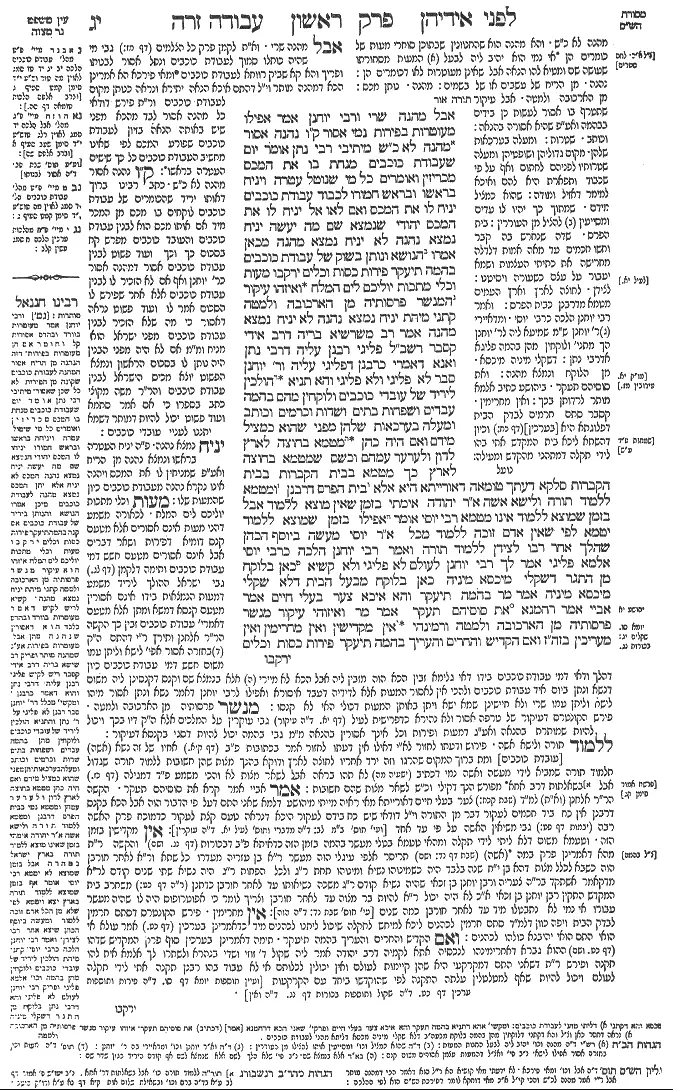
אבל מהנה שרי ורבי יוחנן אמר אפילו מעוטרות בפירות נמי אסור ק"ו נהנה אסור מהנה לא כ"ש מיתיבי רבי נתן אומר יום שעבודת כוכבים מנחת בו את המכס מכריזין ואומרים כל מי שנוטל עטרה ויניח בראשו ובראש חמורו לכבוד עבודת כוכבים יניח לו את המכס ואם לאו אל יניח לו את המכס יהודי שנמצא שם מה יעשה יניח נמצא נהנה לא יניח נמצא מהנה מכאן אמרו הנושא ונותן בשוק של עבודת כוכבים בהמה תיעקר פירות כסות וכלים ירקבו מעות וכלי מתכות יוליכם לים המלח ואיזהו עיקור המנשר פרסותיה מן הארכובה ולמטה קתני מיהת יניח נמצא נהנה לא יניח נמצא מהנה אמר רב משרשיא בריה דרב אידי קסבר רשב"ל פליגי רבנן עליה דרבי נתן ואנא דאמרי כרבנן דפליגי עליה ור' יוחנן סבר לא פליגי ולא פליגי והא תניא הולכין ליריד של עובדי כוכבים ולוקחין מהם בהמה עבדים ושפחות בתים ושדות וכרמים וכותב ומעלה בערכאות שלהן מפני שהוא כמציל מידם ואם היה כהן מטמא בחוצה לארץ לדון ולערער עמהם וכשם שמטמא בחוצה לארץ כך מטמא בבית הקברות בבית הקברות סלקא דעתך טומאה דאורייתא היא אלא בית הפרס דרבנן ומטמא ללמוד תורה ולישא אשה א"ר יהודה אימתי בזמן שאין מוצא ללמוד אבל בזמן שמוצא ללמוד אינו מטמא רבי יוסי אומר אפילו בזמן שמוצא ללמוד יטמא לפי שאין אדם זוכה ללמוד מכל א"ר יוסי מעשה ביוסף הכהן שהלך אחר רבו לצידן ללמוד תורה ואמר רבי יוחנן הלכה כרבי יוסי אלמא פליגי אמר לך רבי יוחנן לעולם לא פליגי ולא קשיא כאן בלוקח מן התגר דשקלי מיכסא מיניה כאן בלוקח מבעל הבית דלא שקלי מיכסא מיניה אמר מר בהמה תיעקר והא איכא צער בעלי חיים אמר אביי אמר רחמנא (יהושע יא, ו) את סוסיהם תעקר אמר מר ואיזוהי עיקור מנשר פרסותיה מן הארכובה ולמטה ורמינהי אין מקדישין ואין מחרימין ואין מעריכין בזה"ז ואם הקדיש והחרים והעריך בהמה תיעקר פירות כסות וכלים
Comments from Rashi on Masechet Avodah Zarah Page 13a
מהנה לא כ"ש . והא מהנה הוא שהחנוונין שבתוכן סוחרי מעות של כומרים הן אי נמי הוא יהיב ליה לבעל המעות מסחורתו שעושה שם ומטיא להו הנאה אבל שאינן מעוטרות לאו דכומרים הן: נהנה . מן הריח של עשבים או של בשמים: מהנה . נותן מכס: מן הארכובה ולמטה . אבל עיקור שתטרף בו אסור לעשות כן בידים בבהמה ואע"פ שהיא אסורה בהנאה: וכותב . שטרות: ומעלה בערכאות שלהן . מקום גדוליהן ושופטיהן ומעלה שטרותיו לפניהם לחתום ואף על פי שכבוד ותפארת היא להם ואיכא למימר דאזיל ומודה: שהוא כמציל מידם . שמתוך כך יהיו לו עדים ומסייעין להציל מן העוררין: בית הפרס . שדה שנחרש בה קבר וחשו חכמים עד מאה אמות דלדלה מחרישה את כתיתי העצמות ושמא יעבור על עצם כשעורה ויסיטנו: לצידן . לחוצה לארץ וארץ העמים מטמא מדרבנן כבית הפרס: ואמר רבי יוחנן הלכה כרבי יוסי . ומדאיירי ר' יוחנן ש"מ שמיעא ליה לר' יוחנן הך מתני' ולוקחין מהן בהמה פליגא אדרבי נתן: דשקלי מיניה מיכסא . מן הלוקח ונמצא מהנה: ואת סוסיהם תעקר . ביהושע כתיב. אלמא מותר לרדותן בכך: ואין מחרימין . קסבר סתם חרמים לבדק הבית דפלוגתא היא [בערכין] (דף כח:) וכיון דהשתא ליכא בית המקדש אתי בהו לידי תקלה דמתהני מהקדש ומעילה:
Comments from Tosafot - Avodah Zarah 13a
אבל מהנה שרי . וא"ת לקמן פרק כל הצלמים (עבודה זרה דף מז:) גבי מי שהיה כותלו סמוך לעבודת כוכבים ונפל אסור לבנותו ופריך והא קא שביק רווחא לעבודת כוכבים ומאי פירכא הא אמרינן הכא דמהנה מותר וי"ל דהתם איכא הנאה יתירא ונראה כנותן מקום לעבודת כוכבים ור"ת פירש דודאי כל מהנה אסור לבד מהכא מפני שיש באותה הנאה בזיון לעבודת כוכבים שפורע המכס לפי שאינו מחשיב העבודת כוכבים כל כך שישים העטרה בראשו: ק"ו נהנה אסור מהנה לא כ"ש . כתב רבינו ברוך דאותו יריד שהכומרים של עבודת כוכבים לוקחים בו מכס מן המכר מיד אם אותו מכס הוא לבנין עבודת כוכבים והעובד כוכבים מפרש קח בסכום כך וכך ועוד פשוט לבנין עבודת כוכבים אסור דמהנה אסור כר' יוחנן ואף אם לא הזכיר לו לבנין עבודת כוכבים אלא אחר שפירש לו הסכום אמר לו ועוד פשוט נראה דאסור כי מה שלא הזכיר לבנין עבודת כוכבים מפני ישראל הוא מניח ומ"מ אם לא היה מפני הבנין היה נותן לו בסכום הראשון ונמצא הפשוט יוצא מכיס הישראל לבנין עבודת כוכבים והר"ר משה מקוצי כתב בספרו כי אם אמר סתמא ועוד פשוט יכול להיות דמותר דשמא יתננו לעניי עובדי כוכבים: יניח נמצא נהנה . פ"ה יניח העטרה בראשו ונמצא נהנה מן הריח ואע"פ שמניחין לו את המכס ויהנה אינו נקרא נהנה מעבודת כוכבים כיון שהמעות שלו: מעות וכלי מתכות יוליכם לים המלח . לכאורה משמע דהני מעות אינם אסורים אלא מטעם קנס דומיא דפירות ושאר דברים אבל אינם אסורים מטעם חשש דמי עבודת כוכבים ותימה דלקמן (עבודה זרה דף לג.) גבי ישראל ההולך ליריד משמע דמעות הנמצאות בידו אינם אסורין מטעם קנסא דמשא ומתן אלא מטעם דאמרי' עבודת כוכבים זבין כך הקשה הר"ר אלחנן ותירץ ר"י דהתם ה"ק בחזרה אסור אפי' לישא וליתן עמו משום חשש דמי עבודת כוכבים כיון דהלך ודאי דמי עבודת כוכבים בידו דאי גלימא זבין הכא הוה מזבין ליה אבל הכא לא מיירי אלא בנמצא שם וקנס דקנסינן ליה משום דנשא ונתן ביום איד עבודת כוכבים ולהכי אין לאסור המעות אלא לדידיה דעבד איסורא ואפילו לרבי יוחנן דאמר נשא ונתן אסור מיהו לישא וליתן עמו שרי ולא חיישינן שמא ישא ויתן באותן המעות דכולי האי לא קנסו: מנשר פרסותיה מן הארכובה ולמטה . פירש הקונטרס דעיקור של טרפה אסור ולא נהירא כדפרישית לעיל (עבודה זרה דף יא. ד"ה עיקור) גבי עוקרין על המלכים אלא ה"ק דיו בכך ויכול להיות שמותרת בהנאה ואע"ג דמעות ופירות וכל אינך אסורין בהנאה מ"מ גבי בהמה יכול להיות דסגי בקנסא דעיקור: ללמוד תורה ולישא אשה . פירוש ודעתו לחזור לא"י דאילו אין דעתו לחזור אמר בכתובות פ"ב (דף קיא.) אחיו של זה נשא (אשה) [עובדת כוכבים] ומת ברוך המקום שהרגו וזה ירד אחריו לחוצה לארץ ודוקא בהנך מצות שהן חשובות ללמוד תורה שגדול תלמוד תורה שמביא לידי מעשה ואשה נמי דכתיב (ישעיהו מה) לא תהו בראה אבל לשאר מצות לא והכי משמע פ"ד דמגילה (דף כז.) אבל בשאלתות דרב אחא מפורש הנך דקילי וכ"ש לשאר מצות שהם חשובות: אמר אביי אמר קרא את סוסיהם תעקר . הקשה הר"ר אלחנן (וא"ת) למ"ד (שבת קכח:) צער בעלי חיים דאורייתא מאי ראיה מייתי מיהושע דלמא שאני התם דעל פי הדבור הוה אבל הכא בקנס דרבנן אין כח ביד חכמים לעקור דבר מן התורה וי"ל דודאי שיש כח בידם לעקור היכא דנראה טעם קצת לעקור כדמוכח פרק האשה רבה (יבמות דף פט:) גבי משיאין האשה על פי עד אחד [ועי' תוס' ב"מ לב: ד"ה מדברי ותוס' לעיל (עבודה זרה יא.) ד"ה עוקרין]: אין מקדישין בזמן הזה . וטעמא משום דלא ליתי לידי תקלה ומהאי טעמא בטלי מעשר בהמה בזמן הזה כדאיתא פ"ב דבכורות (דף נג. ושם) והקשה ר"ת מהא דאמרינן פרק במה (אשה) (שבת דף נד: ושם) תריסר אלפי עיגלי הוה מעשר ר"א בן עזריה מעדרו כל שתא ור"א לאחר חורבן הוה כשבא לכלל מצות דהא בן י"ח שנה בלבד היה כשמינוהו נשיא ומינוהו תחת ר"ג ולכל הפחות ר"ג היה נשיא שתי שנים קודם לר"א מדקאמר אשתקד בר"ה צעריה ורבן יוחנן בן זכאי שהיה נשיא קודם ר"ג משכה נשיאותו עד לאחר חורבן כדתנן (ר"ה דף כט:) משחרב בית המקדש התקין רבן יוחנן בן זכאי א"כ לא היה יכול ר"א להיות בר מצוה עד לאחר חורבן וצריך לומר כי אפוטרופוס היה לו שהיה מעשר עבורו אי נמי לא נתבטלו מיד עד לאחר חורבן כמה שנים [עי' תוס' שבת נד: ד"ה הוה]: אין מחרימין . פירש הקונטרס דסתם חרמין לבדק הבית ויפה כוון דלמ"ד סתם חרמין לכהנים ליכא למיחש לתקלה שיכול ליתנו לכהנים מיד כדאמרינן בערכין (דף כט.) אמר עולא אי הואי התם הואי יהיבנא כולהו לכהנים: ואם הקדיש והחרים והעריך בהמה תיעקר . תימה דאמרינן בערכין סוף פרק המקדיש שדהו (דף כט. ושם) ההוא גברא דאחרימינהו לנכסיה אתא לקמיה דרב יהודה אמר ליה שקול ד' זוזי ושדי בנהרא ולשתרו לך אלמא אית להו תקנה ופירש ר"ת דשאני התם דמקרקעי היא שהן קיימות לעולם ואין יכולין לכלותם אי לא עבוד בהו רבנן תקנה אתי לידי תקלה לעולם ויכול להיות שאף למטלטלין עלתה התקנה לפי שהוקדשו ביחד עם הקרקעות [ועיין תוספות יומא דף סו. ד"ה פירות ותוספות ערכין דף כט. ד"ה שקול ותוספות בכורות דף נג. ד"ה ואין]:
Avodah Zarah 13a - Mishnah translated into english
but it is permitted to cause benefit. Although by buying from the store one indirectly supports idol worship, as a portion of the sales are given to support idol worship, this is not prohibited by Torah law. And Rabbi Yoḥanan says: Even if the stores are adorned only with fruit one is also prohibited from buying from them. This is derived by an a fortiori inference: If it is prohibited to derive benefit from idol worship, is it not all the more so prohibited to cause benefit to idol worship?
The Gemara raises an objection to Reish Lakish’s opinion from a baraita. Rabbi Natan says: On the day in which a reduction is made from the tax in honor of idol worship, they announce and say: Anyone who takes a wreath of roses and places it on his head and on the head of his donkey in honor of the object of idol worship, his tax will be reduced. And if one does not place a wreath on one’s head, his tax will not be reduced.
What should a Jew who is present there do? If he places the wreath on his head and on the head of his donkey, he will be found to derive benefit from idol worship. And if he does not place the wreath on his head, he will be found to cause benefit to idol worship, through the tax that he pays.
From here the Sages stated: One who conducts business in a market of idol worship will be forced either to benefit from or cause benefit to idol worship. Therefore, any animal he bought there should be destroyed, any produce, clothing or vessels should be left to decompose, and with regard to any money or metal vessels, which would not decompose on their own, one should take them and cast them into the Dead Sea. And what constitutes destroying the animal? One cuts off the hooves of the animal from the knee and below.
The Gemara explains the objection to Reish Lakish’s statement. In any event, the baraita teaches that it is prohibited to cause benefit to idol worship, as it states: If he places the wreath on his head then he will be found to derive benefit from idol worship, and if he does not place the wreath on his head, he will be found to cause benefit to idol worship. How, then, can Reish Lakish claim that it is permitted to cause benefit to idol worship?
Rav Mesharshiyya, son of Rav Idi, said: Rabbi Shimon ben Lakish holds as follows: The Rabbis disagree with Rabbi Natan, whose opinion is cited in the baraita, and I spoke in accordance with the opinion of the Rabbis who disagree with Rabbi Natan. The Gemara notes: And Rabbi Yoḥanan, who rules in accordance with the statement of Rabbi Natan, holds that the Rabbis do not disagree with Rabbi Natan; rather, everyone agrees that it is prohibited to cause benefit to idol worship.
The Gemara asks: And is it so that they do not disagree? But isn’t it taught in a baraita: One may go to a fair of gentiles, whose purpose is to honor idol worship, and buy from the gentiles animals, and slaves, and maidservants, as the purchase raises the items to a more sanctified state; and he may buy houses, fields, and vineyards from them, due to the mitzva to settle Eretz Yisrael. And one may write the necessary deeds and confirm them in their gentile courts [be’arkaot], although this involves an acknowledgement of their authority, because it is as though he is rescuing his property from their hands, as the court’s confirmation and stamp of approval prevents the seller from denying the sale and claiming that the property still belongs to him.
And if he is a priest, he may become ritually impure by going outside Eretz Yisrael, even though a priest is usually prohibited from leaving Eretz Yisrael to the impure land outside, in order to litigate with them and to contest their claims. And just as a priest may become ritually impure by going outside Eretz Yisrael, so may he become ritually impure for this purpose by entering a cemetery.
The Gemara interrupts its citation of the baraita to express surprise at this last ruling: Can it enter your mind to say that a priest may become impure by entering a cemetery? The halakha that a cemetery imparts ritual impurity to a priest is by Torah law; how could the Sages override this prohibition? Rather, the baraita is referring to an area where there is uncertainty with regard to the location of a grave or a corpse [beit haperas], owing to the fact that a grave had been unwittingly plowed over, and the bones may have become scattered throughout the field. Such a field imparts ritual impurity by rabbinic law.
The baraita continues: And a priest may likewise become ritually impure and leave Eretz Yisrael in order to study Torah or in order to marry a woman. Rabbi Yehuda says: When does this allowance apply? It applies when he cannot find a place to study in Eretz Yisrael. But when the priest can find a place to study in Eretz Yisrael, he may not become ritually impure by leaving the country.
Rabbi Yosei says: Even when he can find a place to study Torah in Eretz Yisrael, he may leave the country and become ritually impure, because a person does not merit to learn from everyone, and it is possible that the more suitable teacher for him lives outside of Eretz Yisrael.
Rabbi Yosei says, in support of his opinion: There was an incident involving Yosef the priest, who followed his teacher to the city of Sidon, outside of Eretz Yisrael, to learn Torah even though the preeminent Sage of his generation, Rabban Yoḥanan ben Zakkai, lived in Eretz Yisrael. And Rabbi Yoḥanan says about this: The halakha is in accordance with the opinion of Rabbi Yosei.
The Gemara returns to the issue at hand. This baraita apparently indicates that the Rabbis do disagree with Rabbi Natan, as they hold that it is permitted to buy items from a gentile fair and cause benefit to idol worship, whereas the ruling of Rabbi Natan is a minority opinion. The Gemara responds: Rabbi Yoḥanan could have said to you: Actually, the Rabbis do not disagree with Rabbi Natan, and even according to this baraita one is prohibited from causing benefit for idol worship.
The Gemara elaborates: And the fact that the baraita permits buying at a gentile fair is not difficult, as here, where Rabbi Natan prohibits buying items from a gentile fair, he states his ruling with regard to one who buys from a merchant, as a tax is taken from him for the benefit of idol worship; whereas there, in the baraita that permits buying items at the fair, it states its ruling with regard to one who buys from a homeowner, i.e., a private individual, where a tax is not taken from him.
§ The Gemara returns to discuss the baraita that cited the opinion of Rabbi Natan. The Master said above: Any animal that one bought there should be destroyed. The Gemara asks: But isn’t there a requirement to prevent suffering to animals? Abaye said: Although there is an enjoinder against causing suffering to a living creature, it is permitted when necessary, as the Merciful One states to Joshua: “You shall destroy their horses” (Joshua 11:6).
The Master said above: And what constitutes destroying the animal? One cuts the hooves of the animal from the knee and below. The Gemara raises a contradiction from a baraita: One may neither consecrate objects, nor dedicate items for sacred use, nor valuate an item’s worth based on its appraisal (see Leviticus, chapter 27) and dedicate its monetary worth to the Temple treasury, in the present time, when the Temple no longer exists. And if one did consecrate, or dedicate, or valuate items for sacred use, the presence of these items might lead to the violation of the prohibition against using consecrated property. Therefore, if one dedicated an animal it should be destroyed. If he dedicated produce, garments, or vessels made from materials that decompose,
Traduction : The William Davidson digital edition of the Koren Noé Talmud, with commentary by Rabbi Adin Even-Israel Steinsaltz.